
Why Earning CE Credits Matters for Your Career

If you need to earn CE credits, here are the primary ways healthcare professionals fulfill their requirements:
- Online courses – Complete accredited coursework at your own pace from home
- Live webinars – Attend real-time virtual sessions for interactive learning
- In-person conferences and workshops – Network while earning credits at professional events
- Publishing or teaching – Contribute to your field through articles or educational activities
- Employer-sponsored training – Use workplace learning opportunities that qualify for credits
Most licensed healthcare professionals must complete continuing education (CE) credits regularly to maintain their credentials. For radiologic technologists, this typically means earning 24 credits every two years through ARRT-approved courses. Nurses, pharmacists, physical therapists, and other healthcare workers face similar requirements set by their respective boards.
The good news? The process doesn’t have to be complicated or expensive.
Finding time for professional development while managing patient care, family responsibilities, and irregular shifts is one of the biggest challenges healthcare workers face. Add in the cost of courses and the confusion around accreditation requirements, and it’s easy to see why many professionals feel stressed about their CE obligations.
But here’s what most people don’t realize: earning CE credits can actually be convenient, affordable, and directly beneficial to your daily practice. Online learning has transformed continuing education from a dreaded checkbox into an opportunity for real career growth.
Whether you’re a radiologic technologist needing ARRT credits, a nurse working toward license renewal, or any other healthcare professional looking to stay current, this guide will show you exactly how to earn CE credits efficiently while advancing your skills and protecting your license.
As Zita Ewert, I’ve spent my career helping imaging professionals earn CE credits through accessible, high-quality online education that fits into busy schedules. I’ve seen how the right approach to continuing education can transform compliance from a burden into a career accelerator.
The What and Why of Continuing Education Credits
Continuing Education (CE) credits are units awarded for participation in approved learning activities designed to maintain and improve professional competence. Think of them as proof that you’re staying sharp and up-to-date in your field. For many professionals, these credits are not just a nice-to-have; they are a mandatory requirement to keep your license or certification active.
Why are these credits so important? It boils down to several key reasons:
- Professional Obligation: As healthcare professionals, we have a duty to our patients and our profession to deliver the highest standard of care. This means continuously updating our knowledge and skills.
- Skill Improvement: The medical and technological landscapes are constantly evolving. CE courses ensure we learn about new techniques, technologies, and best practices. For instance, new digital radiography techniques or advanced imaging protocols mean we must keep learning.
- Patient Safety: Outdated knowledge can lead to errors. By staying current, we directly contribute to better patient outcomes and reduced risks.
- Career Advancement: Earning CE credits often opens doors to new opportunities, specializations, and promotions. It demonstrates initiative and dedication to our growth.
- Increased Earning Potential: Professionals who consistently upgrade their skills through CE are often more valuable to employers and can command higher salaries. Our internal article, 5 Benefits of Continuing Radiology Education, dives deeper into this.
This requirement isn’t unique to healthcare; professionals in finance, IT, and other regulated fields also need ongoing education to maintain their credentials. This isn’t just about ticking a box; it’s about being an effective, responsible, and competitive professional.
The Benefits Beyond the Requirements
While meeting minimum requirements is essential, the true value of continuing education extends far beyond mere compliance. Actively pursuing CE can open up a wealth of benefits that truly accelerate our careers and personal growth.
- Specialization Opportunities: CE allows us to dig into niche areas, gaining expertise that can lead to new roles or certifications. For example, a radiologic technologist might pursue advanced courses in mammography or CT, expanding their capabilities and marketability.
- Networking: Conferences and live workshops are excellent places to connect with peers, mentors, and industry leaders. These connections can lead to collaborations, job opportunities, and invaluable insights.
- Increased Confidence: Mastering new skills or deepening our understanding of complex topics builds confidence in our abilities, which translates into better performance and patient care.
- Staying Competitive: In a rapidly changing job market, continuous learning keeps us relevant and adaptable. It ensures we’re not just keeping up, but staying ahead.
- Adapting to New Technology: From AI in diagnostics to new software for patient management, technology is constantly reshaping healthcare. CE courses help us accept these changes, rather than being overwhelmed by them. For more on this, check out our guide on Professional Development Healthcare.
CE vs. CEU vs. CME: What’s the Difference?
The world of continuing education can sometimes feel like an alphabet soup of acronyms! While often used interchangeably, there are subtle differences between CE, CEU, and CME that are important to understand, especially when dealing with specific professional boards.
- CE (Continuing Education): This is the broadest term, referring to any post-licensure or post-certification learning activity that helps maintain professional competency. It’s an umbrella term for all types of ongoing professional development.
- CEU (Continuing Education Unit): A CEU is a standardized measure of participation in recognized continuing education programs. Typically, one CEU is equivalent to 10 hours of instruction. The exact conversion from contact hours to CEUs can vary by accrediting body, so it’s always best to check your specific board’s guidelines.
- CME (Continuing Medical Education): This term is specifically used for medical professionals (physicians, physician assistants, etc.) to describe educational activities that maintain, develop, or increase the knowledge, skills, and professional performance they use to provide services for patients, the public, or the profession.
For nurses, you might hear “contact hours” more frequently, which are usually a direct measure of instructional time (e.g., 1 contact hour = 60 minutes of instruction). Regardless of the specific term, the core purpose remains the same: ensuring ongoing professional development. Always double-check your licensing or certifying board’s preferred terminology and unit conversion to ensure accurate reporting.
How Professionals Can Earn CE Credits
Earning CE credits has never been more flexible, thanks to a wide array of options designed to fit different learning styles and schedules. Whether you prefer structured online courses or dynamic in-person events, there’s a path for everyone.

Here’s a list of common CE activities that often qualify for credits:
- Online Courses: These are perhaps the most popular and convenient method. Platforms like Scrubs CE and other online providers offer a vast array of self-paced, online modules covering various topics.
- Webinars: Live or recorded online seminars provide expert instruction and often allow for interactive Q&A sessions. For some accredited webinars, attendees must be registered, attend in its entirety, and answer self-assessment questions.
- Conferences and Workshops: Attending industry conferences provides intensive learning, networking, and exposure to cutting-edge research.
- Publishing or Presenting: Writing articles for peer-reviewed journals, authoring book chapters, or presenting at professional events can often earn significant CE credits.
- Teaching or Mentoring: Instructing a course, leading a workshop, or formally mentoring a colleague can be recognized as a CE activity.
- Employer-Sponsored Training: Many healthcare facilities offer in-house training programs that are pre-approved for CE credits.
- Academic Coursework: Completing relevant college-level courses from accredited institutions can also count towards CE requirements.
- Professional Organization Activities: Participation in committees, leadership roles, or special projects within professional bodies (like ASRT) can sometimes earn credits. ASRT membership, for example, provides access to numerous CE credits and courses.
We understand the need for convenience, which is why we offer a wide range of options to earn CE credits in formats that suit your busy life.
The Rise of Online Learning: How to Earn CE Credits from Home
Online learning has revolutionized how professionals earn CE credits, offering unparalleled flexibility and accessibility. It’s a game-changer for busy healthcare workers juggling demanding schedules.
- Flexibility: Online courses allow us to learn at our own pace, on our own schedule. No more rushing to make a class or taking time off work. We can fit learning into lunch breaks, evenings, or weekends.
- Self-Paced Learning: We can take as much or as little time as needed to grasp the material, revisiting complex topics and moving quickly through familiar ones.
- Course Variety: The online world offers an extensive catalog of courses, from broad overviews to highly specialized topics. Whether you need Digital Radiography CE Complete Guide or a refresher on patient safety, you’ll find it online.
- Live Webinars: These combine the convenience of online learning with the interactivity of a live event. We can ask questions, engage with instructors, and participate in discussions from the comfort of our homes.
- On-Demand Content: Many platforms offer recorded webinars and courses that can be accessed anytime, anywhere, making it easy to catch up or review.
The breadth and depth of online offerings available today are vast, with many providers emphasizing convenience through features like automatic reporting and instant certificates. Our CE Course Online options are designed with your convenience in mind, providing high-quality content whenever and wherever you need it.
Interactive and Hands-On Learning: Workshops and Live Training
While online learning offers incredible flexibility, there’s still immense value in interactive, hands-on learning experiences. These formats provide unique benefits that complement self-paced study.
- Networking Benefits: Attending workshops and live training sessions allows us to connect face-to-face with peers, instructors, and industry experts. These interactions can lead to valuable professional relationships, mentorship opportunities, and the exchange of real-world experiences.
- Hands-On Training: For certain skills, especially those involving equipment or specific procedures, hands-on practice is irreplaceable. Workshops often provide simulators, practical exercises, and direct feedback from instructors.
- Expert Panels: Live events frequently feature panels of experts discussing current trends, challenges, and future directions in the field. This direct access to thought leaders can provide perspectives not found in online modules.
- Industry Events: Major conferences and trade shows are hubs for innovation. We can learn about new technologies, see product demonstrations, and gain a broader understanding of industry developments.
- Focused Learning: The immersive environment of a dedicated workshop or conference allows for deep dives into specific topics without the distractions of our daily routines.
For example, some conferences offer advanced technical workshops and panel sessions by industry experts over several days, allowing professionals to earn a significant number of CEUs in a focused environment. These types of events are crucial for developing specialized skills and staying abreast of the latest advancements.
Navigating the Maze: CE Requirements and Quality
Understanding the nuances of CE requirements is crucial for every professional. It’s not just about earning credits, but earning the right credits from the right sources. Failing to do so can have serious repercussions.

- Accreditation: This is your primary indicator of quality and acceptance. CE activities must be accredited by recognized bodies relevant to your profession. For nurses, this might be ANCC; for pharmacists, ACPE; for radiologic technologists, organizations like the ASRT. Accreditation ensures the content meets specific educational standards and will be accepted by your licensing board.
- Board Requirements: Each licensing or certifying board (e.g., ARRT, state nursing boards) sets its own specific rules regarding the number of credits, the type of activities accepted, and often, specific topic mandates (e.g., ethics, radiation safety).
- State Mandates: Beyond national certifications, individual states may have their own unique CE requirements. For instance, some states might require specific hours in pain management or cultural competency. Always check both your national board and your state board.
- Quality Assurance: High-quality CE courses are developed by subject-matter experts, are evidence-based, and often undergo peer review. They should have clear learning objectives and provide content that is relevant to your practice.
- Consequences of Non-Compliance: This is a critical point. Not meeting CE requirements can lead to fines, temporary suspension of your license, or in severe cases, permanent revocation. This means you would be unable to legally practice your profession. For example, some certifying bodies require you to complete the full examination process again if you let a certification expire. Don’t let your hard-earned credentials lapse!
How Requirements Vary by Profession
CE requirements are highly individualized, varying significantly across professions and even within subspecialties. What’s mandatory for a nurse will differ from a radiologic technologist.
Here’s a snapshot of how requirements can vary for healthcare professionals:
| Profession/Certification | Governing Body | Typical Requirement | Renewal Cycle | Key Insights |
|---|---|---|---|---|
| Radiologic Technologist | ARRT | 24 CE credits | Every 2 years | Must be ARRT-approved. Structured education may be required for CQR. |
| Registered Nurse | State Boards / ANCC | Varies by state (e.g., 20-30 contact hours) | Every 2-3 years | Requirements can include specific topics like ethics or patient safety. |
| Pharmacists / Pharmacy Techs | ACPE / PTCB | Varies by state/certification | Varies (e.g., annual, biennial) | Must use NABP e-Profile ID for CPE Monitor reporting. |
(Note: Specific numbers can change. Always verify with your respective board.)
For radiologic technologists, the ARRT mandates specific requirements, including structured education hours, which our ASRT CE Requirements Complete Guide can help clarify. This highlights the importance of ensuring your CE content is relevant to your certification.
The key takeaway? Always consult your specific licensing or certifying body’s official website for the most accurate and up-to-date requirements for your profession and jurisdiction.
Ensuring Your CE Courses are High-Quality and Relevant
Choosing the right CE courses is just as important as accumulating the credits. A low-quality or irrelevant course won’t genuinely improve your skills, and it might not even be accepted by your licensing board. Here’s how to ensure your choices are top-notch:
- Accredited Providers: Always prioritize courses from accredited providers. This is the gold standard for quality assurance. For example, for nurses, look for ANCC-approved courses. For pharmacy professionals, ACPE accreditation is key. For radiology, ensure courses meet ARRT requirements.
- Expert-Led Content: Who developed and teaches the course matters. Look for content created and presented by recognized subject-matter experts in the field. Our Expert-Led Courses are a testament to this principle.
- Peer-Reviewed Content: High-quality CE is often peer-reviewed, meaning other experts have vetted the material for accuracy, completeness, and adherence to current best practices.
- Clear Course Objectives: Before enrolling, check that the course has clearly stated learning objectives. These should align with the knowledge and skills you want to acquire or need to refresh.
- User Reviews and Testimonials: While not a substitute for accreditation, positive feedback from other professionals who have taken the course can be a good indicator of its practical value and effectiveness.
- Relevance to Your Practice: This is critical. Does the course directly relate to your current role, future career goals, or specific areas where you need improvement? Many boards, for instance, explicitly check if course content relates to exam objectives. Don’t just pick a course to get credits; pick one that genuinely helps you grow.
- Structured Education: For some certifications, like those under ARRT’s Continuing Qualification Requirements (CQR), “structured education” is specifically required. This means the content must be directly related to the clinical practice of your discipline. Our article What You Need to Know About ARRT’s Structured Education Solutions and Requirements provides detailed guidance on this.
By being discerning in our course selection, we not only fulfill our obligations but also make a meaningful investment in our professional development.
Tracking, Submitting, and Finding Your Credits
Once you’ve started earning those valuable CE credits, the next crucial step is managing them effectively. This involves careful record-keeping, understanding submission processes, and knowing where to find new opportunities.
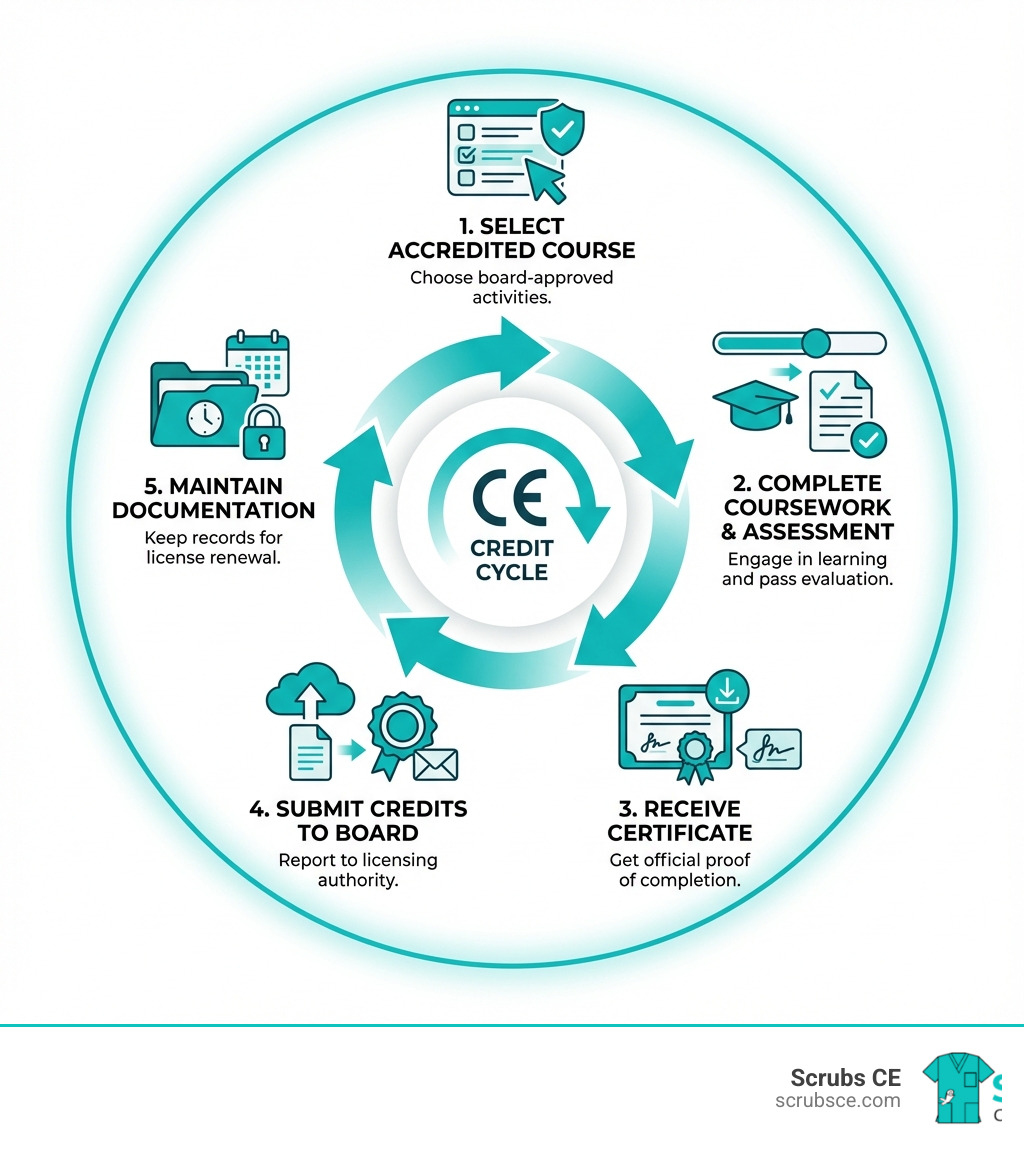
- Record Keeping: Always keep meticulous records of every CE activity you complete. This includes certificates of completion, course descriptions, dates, and the number of credits earned. Digital storage is often best, ensuring you can access them anytime.
- Digital Trackers: Many professional organizations and CE providers offer digital tracking tools. Some organizations and providers offer digital trackers to automatically add CE credits. These can simplify the process and help you monitor your progress towards renewal requirements.
- Submission Portals: Most licensing boards have online portals for submitting your CE credits. Familiarize yourself with your board’s specific system well before your renewal deadline.
- Certificates of Completion: High-quality providers offer instant certificates upon successful completion of a course. These are your official proof of completion and are essential for submission and audit purposes.
- Finding Opportunities: Knowing where to reliably find CE opportunities is key to staying ahead. Professional organizations, accredited online providers, and industry conferences are excellent starting points. For a quick guide on how to get started, check out How to Enroll in X-Ray CE Fast.
The Process for Submitting and Tracking Your CE Credits
The process of submitting and tracking CE credits, while seemingly administrative, is a critical step in maintaining your professional license. Here’s a breakdown to help you steer it smoothly:
- Understand Your Renewal Cycle and Deadlines: Each profession and state has a specific renewal period (e.g., every 2 years for ARRT). Mark your calendar with these deadlines, and ideally, aim to complete your credits well in advance. Our Rad Tech License Renewal Complete Guide offers detailed insights for radiology professionals.
- Gather All Documentation: For every CE activity, ensure you have the certificate of completion, which should clearly state the course title, date, provider, and number of credits/hours earned. Keep these organized in a dedicated digital folder.
- Use Reporting Systems (e.g., CE Broker, CPE Monitor):
- CE Broker: Many healthcare professions, particularly in Florida and other states, use CE Broker for reporting. Many providers offer automatic reporting to CE Broker, which can save you time and ensure accuracy.
- CPE Monitor: For pharmacy professionals, the National Association of Boards of Pharmacy (NABP) operates CPE Monitor. When you earn CE credits from ACPE-accredited providers, your NABP e-Profile ID is used to submit your completed credits directly. You’ll log into the NABP CPE submission site to claim live CPE credits using a session code.
- Submit Credits to Your Licensing Board: Even with automatic reporting systems, you may still need to log into your specific licensing board’s portal to confirm your credits are reflected correctly or to formally renew your license. Follow their instructions precisely.
- Audit Preparedness: Licensing boards regularly conduct audits to verify CE compliance. Even if you’ve submitted everything, keep all your certificates and documentation for several years beyond the renewal cycle, as specified by your board. This ensures you’re ready if selected for an audit.
By staying organized and familiarizing ourselves with these processes, we can avoid last-minute stress and ensure seamless license renewal.
Where to Find Free and Low-Cost Options to Earn CE Credits
We understand that professional development can sometimes be an unexpected expense. The good news is that there are many avenues to earn CE credits without breaking the bank.
- Professional Organizations: Many professional associations offer free or significantly discounted CE opportunities as a member benefit. For example, ASRT membership provides access to numerous CE credits and a library with hundreds of courses. Joining relevant organizations can pay for itself in CE savings alone.
- Employer-Sponsored Training: Check with your employer! Many hospitals, clinics, or companies offer in-house training, workshops, or subscriptions to CE platforms that count towards your requirements.
- Free Webinars: Keep an eye out for free webinars offered by reputable organizations and CE providers. These are often advertised through newsletters or social media.
- Open Educational Resources (OER): Some universities or public health organizations provide free educational content, though you’ll need to verify if they offer formal CE credits that your board will accept.
- Course Bundles and All-Access Subscriptions: While not entirely free, many providers offer cost-effective bundles or unlimited CE subscriptions. These can significantly reduce the per-credit cost if you need a large number of hours.
- Evaluating Free Options: When pursuing free or low-cost options, always double-check the provider’s accreditation and ensure the course content is relevant to your practice and accepted by your licensing board. Just because it’s free doesn’t mean it’s valid for your specific needs.
For those in radiology, we have dedicated resources like Affordable CE Credits and Free CE Radiology Credits to help you find budget-friendly options.
Frequently Asked Questions about Earning CE Credits
How many CE credits do I need to earn?
Credit requirements vary significantly based on your profession, state, and specific certifications. Always check directly with your licensing board (like the ARRT or your state’s Department of Health) for the exact number of credits and any specific topic requirements for your renewal period. How Many X-Ray CE Credits Do I Need for Radiography?
Can I get all my CE credits online?
For many professions, yes. Online learning is a widely accepted format. However, some boards may require a certain number of “live” credits, which can often be fulfilled through live webinars. It is crucial to verify your specific board’s rules on course formats. Online CEU Credits
What happens if I don’t complete my CE credits on time?
Failing to meet CE requirements by your deadline can have serious consequences, including fines, license suspension, or even revocation. This would prevent you from legally working in your profession. Some boards may offer a grace period or remediation plan, but it’s best to avoid this situation entirely.
Conclusion
Earning CE credits isn’t just a regulatory hurdle; it’s a powerful tool for lifelong learning, career empowerment, and ensuring we provide the best possible care to our patients. By understanding the “what, why, and how” of continuing education, we can transform compliance from a dreaded task into a valuable investment in ourselves and our professional futures.
We’ve explored the diverse ways to earn CE credits, from flexible online courses and webinars to engaging in-person conferences. We’ve highlighted the critical importance of understanding varied professional requirements, ensuring course quality and relevance, and diligently tracking our progress. The goal is always to stay current, sharpen our skills, and adapt to the changing demands of our professions.
At Scrubs CE, we are committed to making this process straightforward and accessible. We offer convenient, affordable online continuing education courses designed to help you meet your licensure requirements and advance your career without added stress.
Take control of your professional development today by exploring our extensive library of X-Ray CEU courses.
Recent Comments