
Why Bone Densitometry CE Matters for Your Career and Patient Care
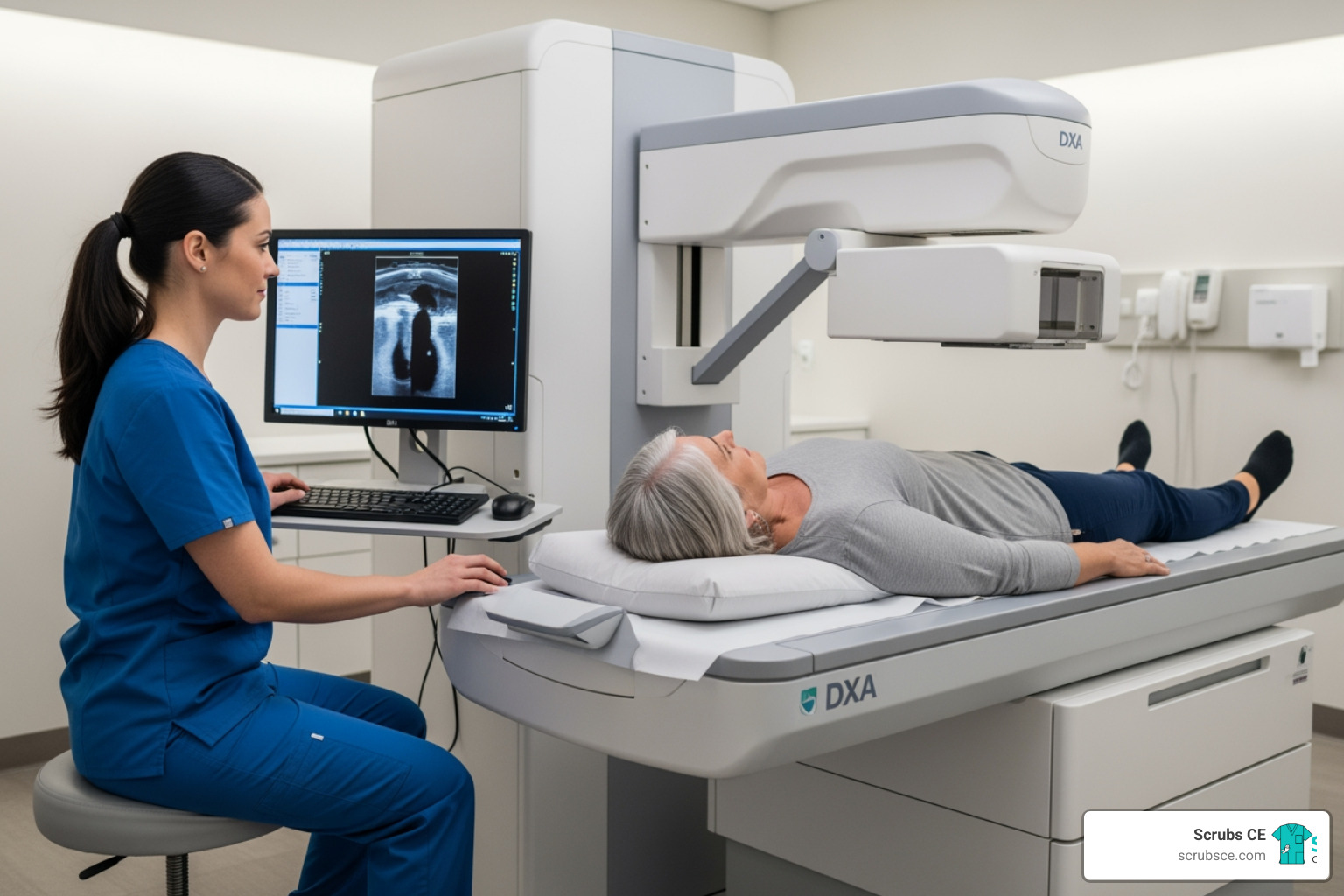
Bone densitometry CE (continuing education) is essential for radiologic technologists who want to maintain their ARRT® certification, meet state licensure requirements, and provide the highest quality care to patients at risk for osteoporosis. Here’s what you need to know:
Quick Overview: Bone Densitometry CE Essentials
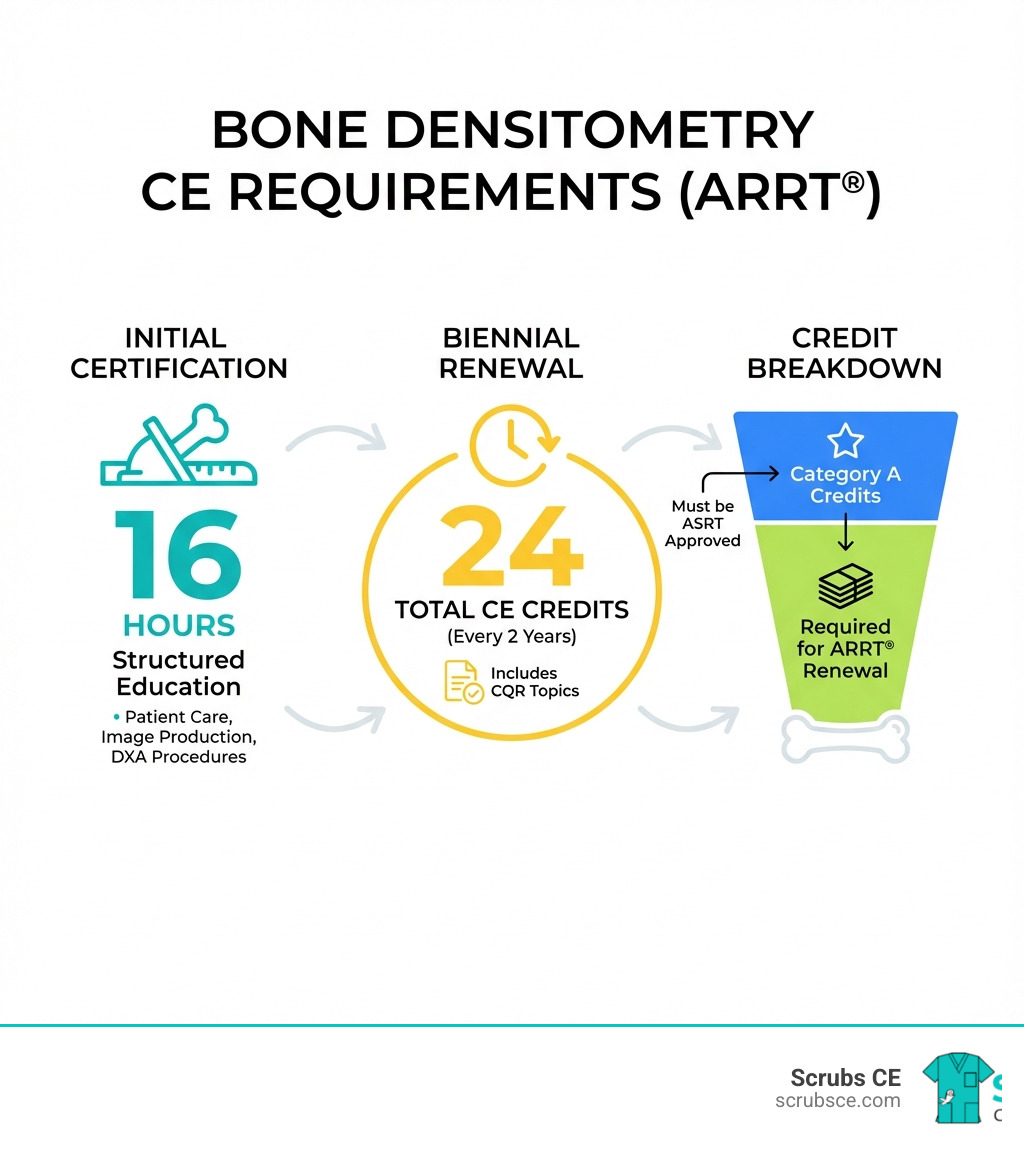
- Initial Certification: Requires 16 hours of structured education covering patient care, image production, and DXA procedures
- Maintaining Certification: Complete prescribed Continuing Qualification Requirements (CQR) topics every two years
- Biennial Requirements: 24 CE credits total, which can include your CQR hours
- Course Approval: Must be Category A credits approved by ASRT and accepted by ARRT®
- Clinical Experience: Document 125 mandatory procedures plus 3 elective procedures for certification
- State Requirements: Varies by state—check California, Florida, and Texas requirements if applicable
Bone densitometry plays a critical role in diagnosing osteoporosis and assessing fracture risk, particularly as our population ages. DXA (dual-energy x-ray absorptiometry) is the gold standard for measuring bone mineral density, using extremely low radiation doses—less than one-tenth of a standard chest x-ray. As a technologist, your precision and technical skill directly impact whether patients receive accurate diagnoses and appropriate treatment for conditions that could lead to debilitating fractures.
The clinical utility of DXA depends entirely on the quality of scan acquisition, analysis, and interpretation. Poor-quality scans can lead to misdiagnosis, inappropriate treatment decisions, or failure to treat patients who need intervention. This is why maintaining your skills through continuing education isn’t just a regulatory requirement—it’s a professional responsibility.
As Zita Ewert, I’ve spent years helping imaging professionals steer their continuing education requirements, including comprehensive bone densitometry CE options that meet ARRT®, AHRA®, and state licensing standards. At SCRUBS Continuing Education®, we’ve designed our courses to be practical, affordable, and accessible for busy technologists who need to maintain certification while managing demanding work schedules.
Quick Bone densitometry CE definitions:
Navigating ARRT® and State Certification Requirements
For radiologic technologists, navigating certification and licensure can sometimes feel like solving a complex puzzle. But don’t worry, we’re here to help explain the requirements for bone densitometry CE and how our courses can help you stay compliant and excel in your field.
The American Registry of Radiologic Technologists (ARRT®) sets the gold standard for certification in our profession. To maintain your primary certification, you’ll need to complete 24 biennial continuing education (CE) credits. For those looking to specialize in bone densitometry, the ARRT® offers a post-primary eligibility pathway that recognizes your expertise. This pathway has specific requirements, and fulfilling them means you’re not just meeting a quota, but genuinely enhancing your skills in a crucial diagnostic area.
All our CE courses are carefully designed to be approved as Category A or A+ CE Credits by the American Society of Radiologic Technologists (ASRT), which the ARRT® designates to provide this approval. This means that when you complete our bone densitometry CE courses, you can be confident that your efforts will be accepted for your ARRT® certification and registration.
Beyond national certification, state licensure is another critical piece of the puzzle. While requirements can vary, we’re proud to share that our courses are widely accepted. For instance, all our courses are approved by the Florida Department of Health and are accepted by the ARRT®, California, Texas, and all other states. This broad acceptance ensures that whether you’re working in a busy metropolitan hospital or a quiet rural clinic, your continuing education efforts with us will count. Additionally, our CE credits are accepted by the International Society for Clinical Densitometry (ISCD), further broadening their utility for your professional development.
State licensing requirements for bone densitometry vary, so it’s always a good idea to contact your state agency to ensure you are compliant. The ASRT® website is a helpful resource for individual state licensure information. We believe in empowering you with the knowledge to make informed decisions about your career path.
Understanding Structured Education vs. CQR
Let’s clarify two important terms often encountered when pursuing or maintaining your bone densitometry credentials: Structured Education and Continuing Qualification Requirements (CQR). While both involve continuing education, they serve different purposes.
Structured Education is specifically for technologists seeking initial certification in bone densitometry through the ARRT® post-primary pathway. This isn’t just any CE; it’s a vital component designed to ensure you master the necessary knowledge before sitting for your certification exam. For bone densitometry, you’ll need to complete 16 hours of structured education. These hours must cover key areas such as patient care, image production, and DXA procedures, with at least one credit from each major category. The ARRT® requires that these 16 hours of structured education be completed within 24 months before you submit your post-primary application. The good news? The ARRT® is typically quite efficient, reviewing and approving these submissions within two business days. We offer comprehensive packages that satisfy these 16-credit Structured Education Requirements for Bone Densitometry, ensuring you’re fully prepared. You can find More info about Bone Densitometry CE Requirements on our site.
Continuing Qualification Requirements (CQR), on the other hand, are for technologists who are already certified and need to maintain their credentials. CQR is part of your biennial renewal process and involves an individualized Structured Self-Assessment. The beauty of CQR is its flexibility: the hours assigned for bone densitometry CQR can also be applied to your required 24 biennial CE hours. This means you’re not doing double the work; you’re fulfilling multiple requirements with a single, targeted educational effort. Our courses are designed to align with CQR prescriptions, making it easier for you to stay current and compliant.
Fulfilling Clinical Experience Requirements
Beyond the classroom learning, practical experience is paramount. For those pursuing ARRT® certification in bone densitometry, fulfilling clinical experience requirements is a mandatory step in the post-primary pathway. This involves hands-on application of your knowledge under supervision.
Specifically, you must document the performance of 125 mandatory procedures. These are the core DXA scans that every bone densitometry technologist must master. In addition to these, you’ll need to complete 3 additional elective procedures. These electives allow for some flexibility, reflecting the diverse range of studies performed in real-world settings.
Each procedure’s completion must be certified by a registered technologist, a supervisor, or a licensed physician. This ensures that your practical skills are validated by experienced professionals. We understand that documenting these procedures can be a meticulous task, but it’s a crucial step in demonstrating your competence and readiness for certification. The ARRT® provides online tools to help you submit your documented procedures efficiently. For a detailed breakdown of what’s required, you can refer to the Clinical Experience Requirements handbook directly from the ARRT®.
What to Expect: Core Topics in Bone Densitometry Courses
When you enroll in our bone densitometry CE courses, you’re not just signing up for credits; you’re investing in a comprehensive learning experience designed to deepen your understanding and improve your practical skills. Our goal is to prepare you thoroughly for certification exams and empower you to excel in your daily practice.
Our courses cover a wide array of topics, mirroring the content specifications for certification exams. This includes extensive exam preparation, often featuring registry-style questions to get you comfortable with the format and challenge of the actual tests. For instance, some of our online courses include over 170 registry-style post-test questions, giving you ample practice. Whether you’re aiming for ARRT® or ISCD certification, knowing that the ISCD exam consists of 150 total multiple-choice questions covering best practices and industry standards helps us tailor our content to your success.
Key areas of focus in our bone densitometry CE curriculum include:
- Quality Control (QC): Understanding how to maintain the accuracy and reliability of DXA equipment, including daily phantom scans and precision assessments.
- Patient Care: From proper patient preparation and communication to understanding contraindications and providing a comfortable, safe experience.
- Image Production: Mastering the technical aspects of acquiring high-quality DXA images, minimizing artifacts, and troubleshooting common issues.
- DXA Procedures: In-depth knowledge of scanning specific anatomical sites, analysis techniques, and interpreting results.
We believe that a strong foundation in these areas is crucial for every bone densitometry technologist. You can explore more about our offerings and their specific content on our More info about Bone Densitometry CE Courses page.
Foundational Knowledge and Patient Care
A robust bone densitometry CE program begins with foundational knowledge—the bedrock upon which all advanced skills are built. Our courses dig into the essential science behind bone health and the critical aspects of patient interaction.
Here’s a glimpse of the foundational topics we cover:
- Osteology: Understanding the anatomy and composition of bones, the types of joints, and how they relate to bone mineral density measurements.
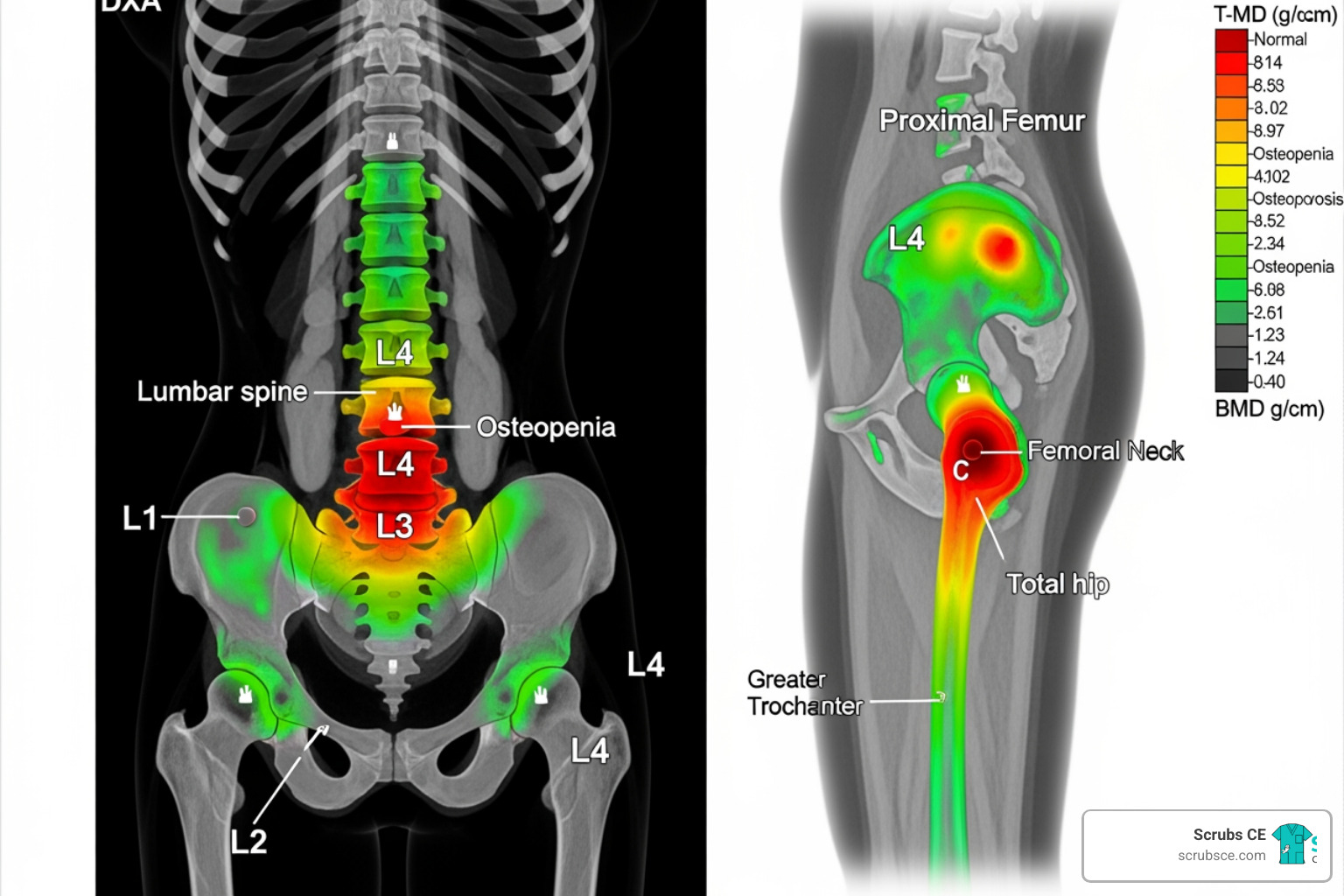
- Bone Pathology: Defining key terms related to bone diseases, especially osteoporosis, and recognizing risk factors. Did you know that a T-score of -1 and above is considered normal, while -2.5 and below defines osteoporosis? Understanding these classifications is vital for accurate reporting.
- Osteoporosis Risk Factors: Identifying who is most susceptible to bone loss. For example, all women 65 or older and men 70 or older should be screened for asymptomatic osteoporosis.
- Treatment and Prevention: Exploring lifestyle factors that affect bone mineral density and the various medications and interventions available.
- Patient Preparation: Learning how to effectively prepare patients for DXA scans, including contraindications and necessary documentation. This ensures accurate results and patient safety.
- Radiation Safety: DXA uses an extremely small amount of radiation—less than one-tenth the dose of a standard chest x-ray. Our courses emphasize safe practices, understanding radiation dose, and minimizing exposure for both patients and technologists.
- Pediatric Skeletal Health: Addressing the unique considerations for osteoporosis in pediatric patients, indications for DXA scanning in children, and diseases affecting their bone health.
These modules ensure that you not only operate the equipment but also understand the clinical context of your work, improving your ability to provide excellent patient care.
Advanced Scanning Techniques and Analysis
Once the foundations are solid, our bone densitometry CE courses progress to advanced scanning techniques and sophisticated data analysis. This is where your expertise truly shines, allowing you to produce highly accurate and clinically useful results.
Key advanced topics include:
- DXA Equipment Principles: A deep dive into how dual-energy x-ray absorptiometry works, including different manufacturers’ equipment and beam configurations. Understanding these principles helps you troubleshoot and optimize scan quality.
- Scanning the Lumbar Spine: Detailed guidance on identifying anatomical landmarks, regions of interest, and mastering scan parameters for standard and modified techniques.
- Scanning the Proximal Femur: Identifying hip anatomy, methods for accurate femur scan acquisition, and evaluating DXA scans, including techniques to overcome common problems.
- Scanning the Forearm: Understanding the anatomy of hand and forearm bones, and step-by-step instructions for scanning this site, especially when hip and spine scans are not feasible or interpretable.
- Vertebral Fracture Assessment (VFA): Learning about this tool for assessing vertebral fractures, its indications, advantages, and disadvantages, and methods for reporting findings.
- FRAX Tool: Mastering the fracture risk assessment tool, its history, development, and application as a diagnostic aid to predict 10-year fracture probability.
- Precision Studies: Understanding accuracy, precision, and trueness in DXA, and how to perform precision assessments. This is crucial for determining the Least Significant Change (LSC)—the smallest change in BMD that is statistically significant and indicates a real biological change. For example, the LSC for technologists should not exceed 5.3% for the lumbar spine, 5.0% for the total proximal femur, and 6.9% for the femoral neck.
- Serial Scanning: Learning best practices for comparing scans over time, applying LSC, and ensuring consistent scan quality for monitoring treatment effectiveness. Our courses cover how to design and implement quality control and assurance practices, including weekly spine phantom BMD measurements to ensure performance stability within a tight ±1.5% tolerance.
DXA bone density testing is widely recognized as the best standardized method for diagnosing osteoporosis and accurately estimating fracture risk. These tests are usually completed within 10 to 30 minutes, depending on the equipment and body parts examined. By mastering these advanced techniques, you ensure that every scan you perform contributes to optimal patient care and accurate diagnostic outcomes. Our courses emphasize using manufacturer’s technical standards and having detailed, updated Standard Operating Procedures (SOPs) for DXA performance.
Choosing the Right Bone Densitometry CE Course for You
Choosing the right bone densitometry CE course is a crucial decision for your professional development. It’s not just about accumulating credits; it’s about finding education that genuinely improves your skills, fits your lifestyle, and meets your specific certification and licensure needs.
When evaluating your options, consider these key factors:
- Course Formats: Do you prefer the flexibility of self-paced online learning, where you can study anytime, anywhere? Or do you thrive in the structured environment of a live webinar? Many programs, including some we offer, provide both options. Self-paced online courses often give you a generous timeframe, like six months, to complete the program.
- Credit Hours: Ensure the course offers the exact number of Category A credits you need, whether it’s for your biennial renewal (24 hours), structured education (16 hours), or CQR. We offer packages with 24+ ASRT®-approved CE credits, often bundled with multiple training courses.
- Cost Considerations: Look for affordable options that don’t compromise on quality. Investing in your education is an investment in your career.
- Provider Accreditation: Verify that the provider’s courses are approved by recognized bodies like the ASRT and accepted by the ARRT® and relevant state boards. This is non-negotiable for compliance.
Evaluating Online Bone Densitometry CE Providers
When you’re looking for online bone densitometry CE courses, you want a provider that offers reliability, convenience, and quality. Here’s what sets us apart:
| Feature | Scrubs CE Approach |
|---|---|
| ASRT Approval | All courses are Category A or A+ approved by the ASRT. |
| State Acceptance | Accepted for licensure renewal in all states, including Florida, California, and Texas. |
| Course Variety | A comprehensive catalog of courses, including bundles for biennial renewal and structured education. |
| Certificate Access | Instant access to your certificate of completion as soon as you pass the post-test. |
| Customer Support | Responsive and helpful customer support available to assist you with any questions. |
| Pass Guarantee | We offer a pass guarantee to ensure you succeed. |
Recent Comments