
Why Nuclear Medicine Professionals Need Continuing Education
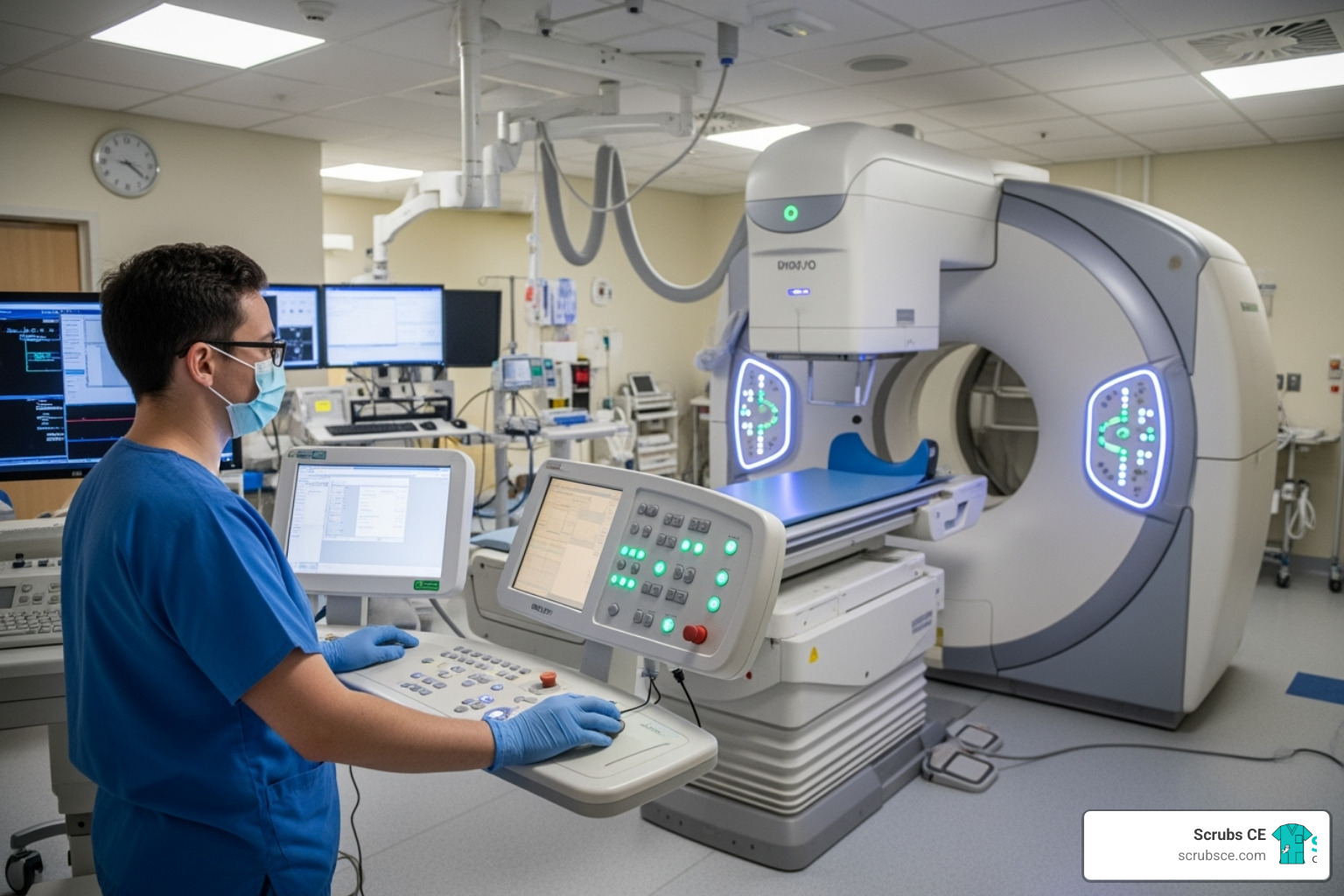
Nuclear medicine continuing education is a requirement for maintaining your certification and staying current in this rapidly evolving field. Whether you hold ARRT (N), NMTCB (CNMT), or NMTCB(CT) credentials, you need to complete continuing education credits regularly to keep your license active.
Quick Answer: CE Requirements for Nuclear Medicine Professionals
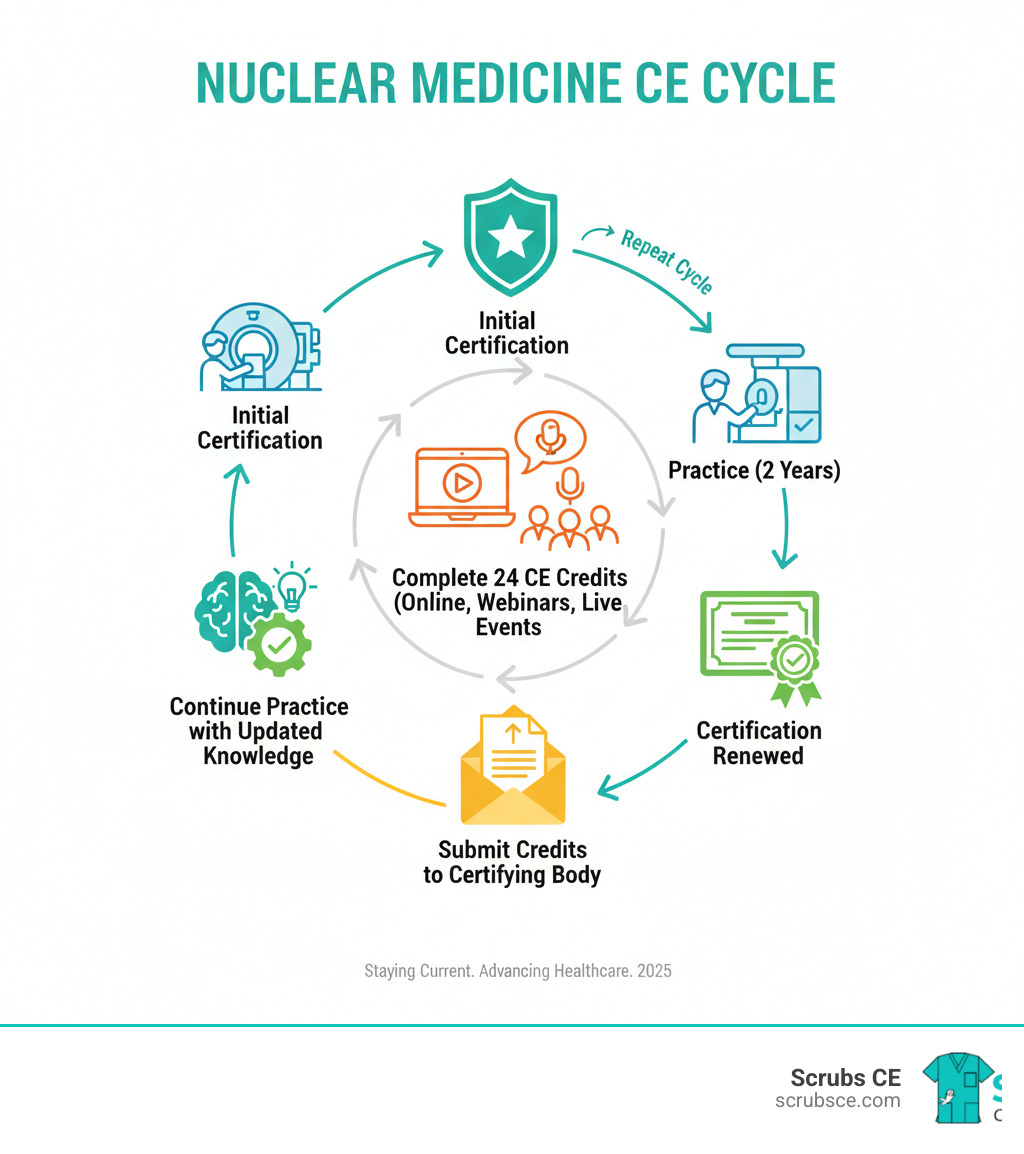
- ARRT (N): 24 Category A CE credits every 2 years
- NMTCB (CNMT): 24 CE credits every 2 years (related to nuclear medicine)
- NMTCB(CT): 24 CE credits every 2 years (12 must be CT-specific)
- State Requirements: Vary by state (California requires specific credits in four scopes: Therapy, Radiopharmacy, Imaging, and Non-Imaging)
- Approval Bodies: VOICE (SNMMI), ARRT Category A, NMTCB-recognized providers
As one nuclear medicine education provider notes, “Nuclear medicine is a rapidly evolving and fast-growing field. It is essential for professionals to keep up to date with dynamic developments to ensure their competencies are maintained.”
The challenge? Finding quality, affordable CE courses that fit your busy schedule and tight budget. Between long shifts, patient care responsibilities, and personal commitments, carving out time and money for professional development can feel overwhelming.
This guide helps you steer the landscape of nuclear medicine continuing education without breaking the bank. We’ll cover your certification requirements, explore budget-friendly options including free courses, and highlight the most relevant topics in modern nuclear medicine—from theranostics to hybrid imaging to radiation safety updates.
Why Continuing Education is Crucial in Nuclear Medicine
While juggling long shifts and patient care, coursework can feel like a burden. But nuclear medicine continuing education isn’t just a requirement—it’s what keeps you sharp and relevant in a rapidly evolving field.
The most immediate reason for CE is keeping your certification active. Both the American Registry of Radiologic Technologists (ARRT) and the Nuclear Medicine Technology Certification Board (NMTCB) mandate regular continuing education. Without these credits, your credentials can lapse, putting your ability to practice at risk.
Beyond compliance, CE strengthens your clinical skills. As new imaging techniques, novel radiopharmaceuticals, and therapeutic applications emerge, continuing education provides the tools to improve diagnostic accuracy and treatment delivery. This continuous learning directly impacts patient safety, which is paramount. Updated knowledge of radiation safety, dose optimization, and proper handling of new radiopharmaceuticals is essential for protecting your patients.
There’s also a compelling professional reason: career advancement. Specializing in hot topics like theranostics or hybrid imaging can open doors to new roles, leadership positions, and higher salaries. These opportunities often go to professionals who demonstrate a commitment to growth.
Finally, staying current with technology and new radiopharmaceuticals is how we remain effective. CE bridges the gap between cutting-edge research and practical application, turning scientific breakthroughs into better patient outcomes.
Understanding CE Requirements and Accreditations
Keeping track of nuclear medicine continuing education requirements can be confusing. Between different certifications, state licenses, and accrediting bodies, it’s important to know the specifics for your situation.
For most professionals with ARRT (N) or NMTCB (CNMT) certification, the requirement is 24 CE credits every two years. For ARRT, these must be Category A credits. For NMTCB, they must be related to nuclear medicine practice. If you hold the NMTCB(CT) credential, 12 of your 24 credits must be CT-specific.
You can learn more about the major organizations behind CE standards here: American Registry of Radiologic Technologists, Nuclear Medicine Technology Certification Board, and the Society of Nuclear Medicine and Molecular Imaging.
Category A credits are the gold standard, signifying that a CE activity has been approved by a recognized accrediting body and is relevant to your practice.
State-specific licenses can add another layer of complexity. For example, California requires CEUs across four scopes: Therapy, Radiopharmacy, Imaging, and Non-Imaging. Critically, California typically accepts only courses approved by the VOICE program from the Society of Nuclear Medicine and Molecular Imaging (SNMMI). If you practice in California, verifying VOICE approval is essential.
You may also see CME (Continuing Medical Education) credits mentioned, but these are for physicians. As a technologist, you need CE credits, though some courses offer both.
Here’s a comparison of the most common CE requirements:
| Certification/License | CE Hours Required | Frequency | Specifics | Primary Approval Bodies |
|---|---|---|---|---|
| ARRT (N) | 24 Category A | Every 2 years | Must be Category A | ARRT-recognized providers |
| NMTCB (CNMT) | 24 | Every 2 years | Related to nuclear medicine | NMTCB-recognized providers, VOICE |
| NMTCB(CT) | 24 | Every 2 years | 12 must be CT-specific | NMTCB-recognized providers, VOICE |
| California Technologist | Varies (e.g., 5 CEUs per scope) | Varies | Specific scopes (Therapy, Radiopharmacy, Imaging, Non-Imaging) | VOICE (SNMMI) only accepted |
The bottom line: Always verify requirements with your specific certifying board and state licensing agency before starting a course. Requirements can change, and confirming them beforehand will save you from completing coursework that doesn’t count toward your renewal.
Finding Affordable Nuclear Medicine Continuing Education
Now that we understand the “why” and “what” of nuclear medicine continuing education, let’s tackle the “how”—specifically, how to find high-quality, budget-friendly options.
Balancing professional growth with financial constraints is a common challenge. Fortunately, the digital age has made quality CE more affordable and accessible than ever. Gone are the days of expensive travel for conferences; now you can earn credits from your couch. The key is knowing where to look.
Online course providers are the backbone of modern CE, offering self-paced learning that fits your schedule. These platforms have lower overhead than in-person seminars, passing those savings to you. Professional societies also offer extensive educational catalogs, often with member discounts that make the membership fee worthwhile.
Webinars—both live and on-demand—are another budget-friendly option, bringing expert speakers to your screen at a fraction of the cost of in-person events. Many are offered for free by industry partners or professional organizations.
Course bundles offer significant savings by reducing your per-credit cost. Think of it like buying in bulk—the more you get, the better the deal.
Finally, free CE options do exist. Employer-sponsored programs, industry-funded courses, and professional organization resources can help you earn credits without spending a dime. The secret is to be strategic: compare prices, watch for promotions, and always verify that courses are approved by your certifying bodies before you commit.

Online Platforms and Self-Paced Courses
Online platforms and self-paced courses have revolutionized nuclear medicine continuing education. The beauty of self-paced learning is its flexibility; you control when and where you study, which is invaluable for professionals with varied shifts.
Cost-effectiveness is a major advantage. Online providers save on venue and material costs, translating into lower prices. Some platforms offer per-credit pricing, while others use subscription models with a flat annual fee for unlimited access to their course catalog.
Course bundles are another smart way to save, as a package of 25 CE hours can be much cheaper than purchasing credits individually.
With 24/7 accessibility, learning fits into your life without travel costs or time off work. Most reputable platforms also provide instant certificates upon completion, so you can submit your credits to your certifying body right away.
At Scrubs CE, we’re committed to offering convenient, affordable online continuing education courses for nuclear medicine professionals. Our self-paced format means you can complete your requirements on your schedule, and our instant certificates help you stay organized and compliant.
More info about nuclear medicine courses
Live and On-Demand Webinars
Webinars bring the energy and expertise of live events directly to your screen for nuclear medicine continuing education, but without the high cost of travel.
Live webinars create a real-time connection, allowing you to ask expert speakers questions and engage with colleagues. Topics often focus on cutting-edge areas like lymphatic mapping, sentinel lymph node biopsy techniques, or the rapidly evolving field of theranostics. Many are offered free or at a low cost, particularly when sponsored by professional organizations.
On-demand webinars solve scheduling conflicts. If you miss a live session, you can watch the recording later and still earn the same credits. Both formats are often approved by major certifying bodies, allowing you to learn about the latest developments while meeting your requirements. The interactive nature of webinars, with procedure demonstrations and case studies, helps make complex topics more digestible.
Free and Low-Cost CE Resources
Yes, free CE courses exist, and you don’t have to sacrifice quality. Finding legitimate free and low-cost resources for nuclear medicine continuing education just requires knowing where to look.
Employer-sponsored courses are an excellent starting point. Many healthcare facilities partner with educational providers to offer CE at no cost to employees. Additionally, some radiopharmaceutical manufacturers fund educational courses related to their products or therapeutic areas. While these companies provide funding, the courses maintain educational integrity and typically carry ARRT Category A approval.
Professional organization resources can be goldmines of affordable education. Membership often includes discounted or free CE offerings, such as complimentary webinars or on-demand training sessions.
The key with free resources is verification. Before investing your time, always confirm that the course is approved by your specific certifying body—whether that’s ARRT Category A, VOICE-approved, or NMTCB-recognized. A free course that doesn’t count toward your requirements is no bargain.
We believe quality education should be accessible to all healthcare professionals. That’s why we work hard to keep our courses affordable and occasionally offer special promotions.
Access Scrubs CE’s free and low-cost nuclear medicine CE options
Key Topics in Modern Nuclear Medicine CE
Nuclear medicine is one of the most exciting fields in healthcare, with breakthrough treatments and cutting-edge technology changing how we diagnose and treat disease. Staying current through nuclear medicine continuing education is essential to provide the best care possible. Let’s explore the key topics shaping our field.
The Rise of Theranostics and Personalized Medicine
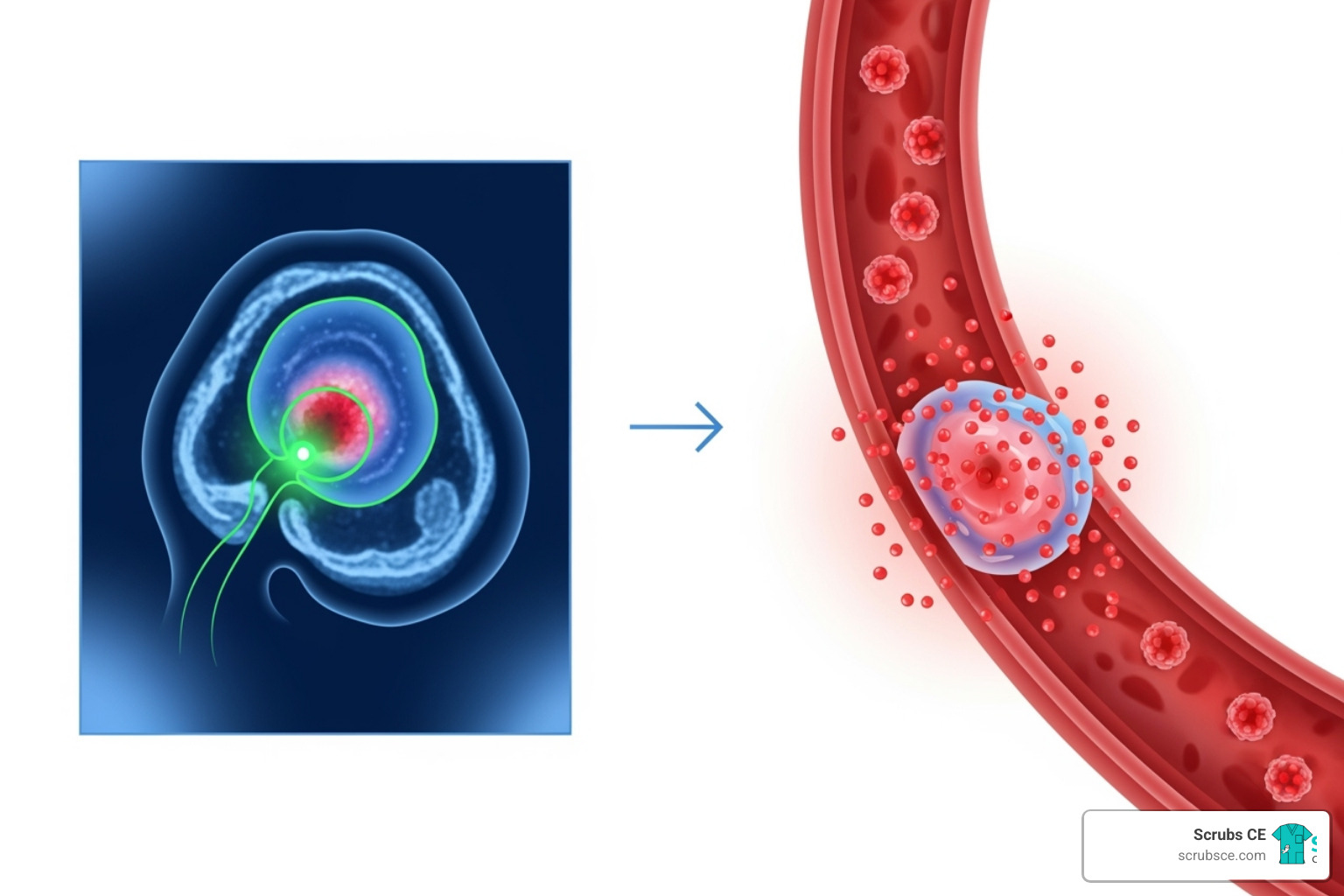
Theranostics is revolutionizing modern nuclear medicine by combining diagnosis and therapy. We use the same molecular target to first visualize a disease and then deliver precisely targeted treatment. This is personalized medicine at its finest, tailoring therapy to each patient.
Key examples include Lu-177 PSMA therapy for metastatic prostate cancer and Lutathera therapy for neuroendocrine tumors. CE courses on these topics cover the radiopharmaceuticals, isotopes, and clinical applications, including both alpha and beta emitters in molecular targeted therapy. A crucial aspect is the role of PET/CT in treatment planning and dosimetry monitoring, which helps optimize therapeutic delivery. In-depth programs on this topic can help you employ best practices for theranostic radiation safety and improve patient care.
Advancements in Imaging and Instrumentation
Advances in imaging technology are constantly improving our ability to see disease at the molecular level.
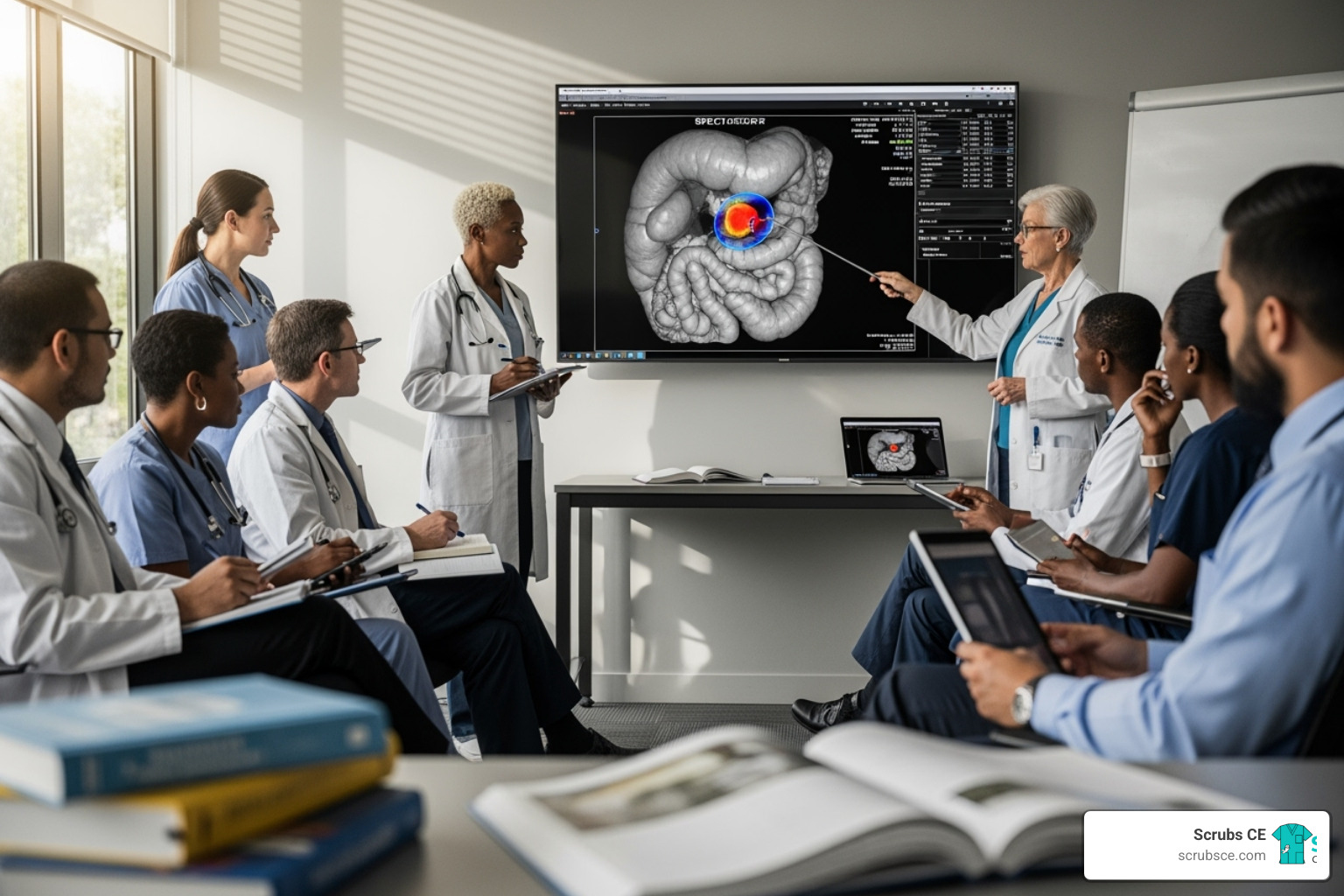
Hybrid imaging like PET/CT and SPECT/CT is now standard practice, providing both functional and anatomical information in a single study. CE courses in this area teach protocol optimization, image fusion, and interpretation. Understanding the equipment is also vital, which is why courses on PET & PET/CT Instrumentation and Gamma Counters are so valuable for maintaining high image quality.
Specialized diagnostic agents are also expanding our capabilities. CE courses cover agents like DaTscan (Ioflupane I 123 Injection) for Parkinsonian Syndrome, AMYVID (Florbetapir F-18 Injection) for Alzheimer’s evaluation, and CERIANNA (F-18 Fluoroestradiol) for breast cancer detection. Learning about these radiopharmaceuticals expands your diagnostic toolkit.
Essential Updates in Radiation Safety and Compliance
Radiation safety can never take a backseat in nuclear medicine. Your nuclear medicine continuing education must include robust training in safety and compliance.
Courses on fundamental radiation protection principles are the foundation of safe practice. Regulatory compliance is also critical, with new standards like USP <825> setting guidelines for handling hazardous radiopharmaceuticals. Related courses cover radiochemical purity testing and USP standards to ensure agent quality.
Special populations also require specific knowledge. Courses in pediatric radiation safety teach protocol modification for children, while understanding the Role of the Radiation Safety Officer (RSO) is essential for managing a radiation program. Staying current on safety creates a culture where everyone’s health is protected.
Frequently Asked Questions about Nuclear Medicine CE
Navigating nuclear medicine continuing education can bring up many questions. Here are answers to some of the most common ones.
How many CE credits do I need for my nuclear medicine certification?
It depends on your certification and state. Most technologists with ARRT (N) or NMTCB (CNMT) credentials need 24 Category A credits every two years.
However, there are nuances. If you hold the NMTCB(CT) credential, 12 of those 24 credits must be CT-specific. California technologists have state-specific requirements, needing CEUs across four scopes (Therapy, Radiopharmacy, Imaging, Non-Imaging) and typically only accepting VOICE-approved courses from SNMMI.
Our best advice: Always verify requirements directly with your certifying board and state licensing agency, as rules can change.
Can I get all my nuclear medicine continuing education credits online?
Yes, absolutely. Certifying bodies like ARRT and NMTCB fully accept online, self-paced courses and webinars for all required credits, as long as they come from an approved provider.
Look for the ARRT Category A designation or VOICE approval to ensure the credits count. This flexibility allows you to complete your education on your schedule, without the cost and time of travel. That’s why we focus on providing convenient, self-paced online courses.
Are free CE courses legitimate?
Yes, many free CE courses are completely legitimate and can help you meet your nuclear medicine continuing education requirements. They are often offered by professional organizations or funded by educational grants from industry partners.
The critical step is verification. Before starting any free course, confirm that it is approved by your specific certifying body (e.g., ARRT Category A, VOICE-approved, NMTCB-recognized). If it carries the proper accreditation, you’ve found a valuable resource to help fulfill your requirements without cost. Just because a course is free doesn’t mean it’s low quality, but verification is key.
Conclusion
Staying current in nuclear medicine is about more than renewing credentials—it’s about embracing lifelong learning to ensure better patient outcomes, safer practices, and a more fulfilling career. The field is evolving rapidly, and quality nuclear medicine continuing education is essential for keeping pace.
The good news is that obtaining excellent CE doesn’t have to be expensive or difficult. With self-paced online courses, webinars, and affordable course bundles, you can find options that fit your schedule and budget.
We created Scrubs CE because we believe every nuclear medicine professional deserves access to high-quality, convenient, and affordable continuing education. Your dedication inspires us, and we’re here to support your professional journey with courses designed for your needs.
The path of continuous learning is a path worth walking. Each credit you earn represents knowledge gained, skills sharpened, and lives improved.

Ready to take the next step in your professional development? We’re here to help you move forward with confidence.
Explore affordable nuclear medicine CE courses to advance your career
Recent Comments