
Why CE for CT Technologists Matters for Your Career and Certification
CE for CT technologists is a mandatory requirement to maintain your ARRT certification and state licensure, ensuring you stay current with evolving imaging technology and radiation safety practices while providing the highest standard of patient care.
Quick Answer: CE Requirements for CT Technologists
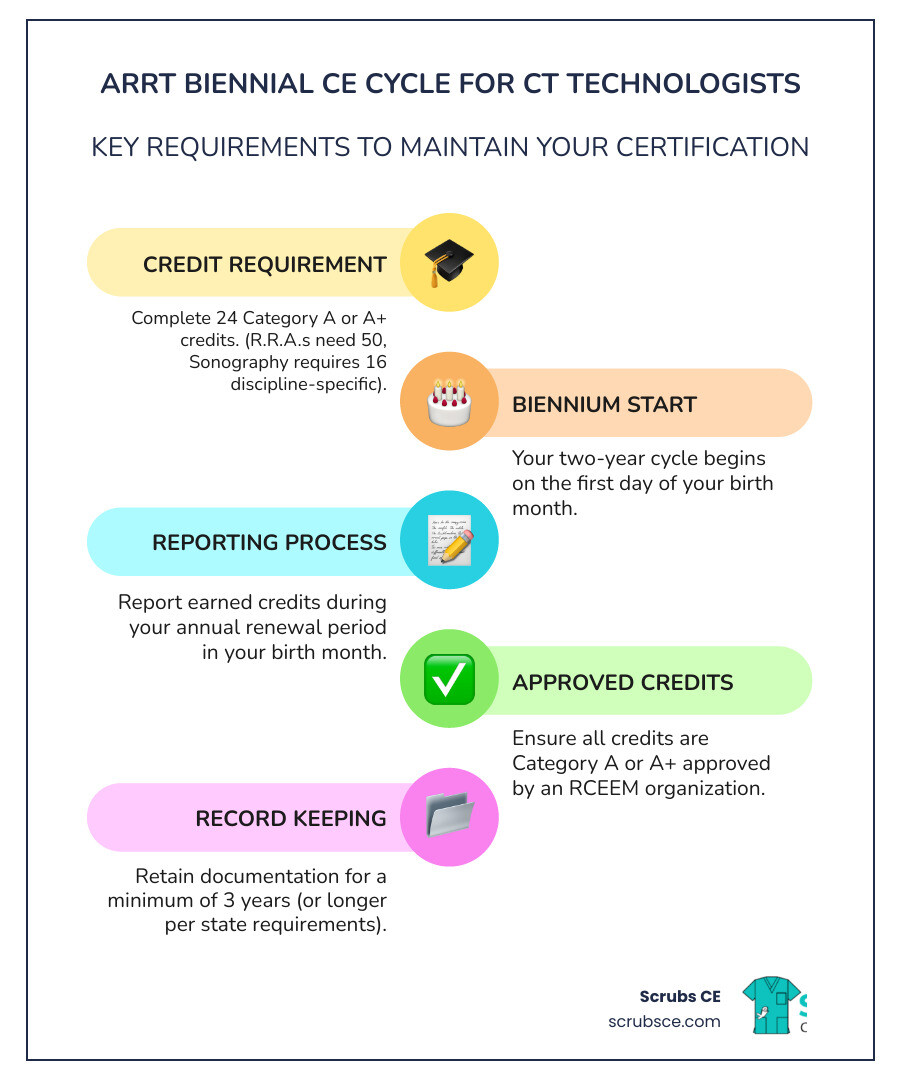
- 24 CE credits required every 2 years (biennium) for most ARRT-certified technologists
- Credits must be Category A or A+ approved by RCEEM organizations
- Report credits during annual renewal in your birth month
- 16 structured education credits required if pursuing ARRT post-primary CT certification
- Keep documentation for minimum 3 years (or longer per state requirements)
- Some states have additional requirements beyond ARRT standards
As a CT technologist, you’re performing advanced imaging procedures that directly impact diagnostic accuracy and patient safety. Every scan you perform requires balancing image quality with radiation dose, operating complex equipment, and managing patient anxiety. Your continuing education isn’t just about checking a box—it’s about staying sharp in a field where technology and best practices evolve rapidly.
The American Registry of Radiologic Technologists (ARRT) requires most certified technologists to complete 24 approved CE credits every two years. If you hold an R.R.A. credential, you’ll need 50 credits. Those with Sonography credentials must ensure 16 of those credits relate directly to that discipline. Beyond these baseline requirements, many states impose their own licensing standards, and the American College of Radiology (ACR) recommends technologists be certified and actively registered in the modalities they perform.
I’m Zita Ewert, and I’ve spent my career helping imaging professionals steer the complexities of continuing education requirements and regulatory compliance. Through SCRUBS Continuing Education, I’ve worked directly with thousands of CT technologists to ensure they meet their CE for CT technologists requirements while advancing their clinical skills and career prospects.
Decoding ARRT’s Biennial CE Requirements
For most CT technologists, navigating continuing education starts with understanding the ARRT’s biennial requirements. The term “biennium” simply refers to a two-year period during which you must complete your required CE credits. This period isn’t a fixed calendar cycle; instead, it’s personal to you, beginning on the first day of your birth month every other year. Once established, your CE reporting dates remain consistent throughout your career, even if you earn additional credentials.
Most R.T.s (Registered Technologists) are required to earn 24 approved CE credits during their bienniums. However, there are exceptions. If you hold an R.R.A. (Registered Radiologist Assistant) credential, your requirement jumps to 50 approved CE credits each biennium. Additionally, if you hold a Sonography credential, 16 of your biennial CE credits must be directly related to that specific discipline. The ARRT has indicated that discipline-specific credit requirements may extend to other modalities in the future, so staying informed is crucial.

We understand that keeping track of these cycles and requirements can feel like a puzzle, but with a clear understanding, it becomes much more manageable. Our goal is to help you piece it all together so you can focus on what you do best: providing excellent patient care.
What Counts? Accepted CE Activities
Not all educational activities are created equal when it comes to satisfying ARRT’s requirements. The ARRT is quite specific about what they accept for biennial CE credit. Here’s a breakdown of the types of activities that generally count:
- Category A or A+ Activities: These are the gold standard. They must be approved by an RCEEM (Recognized Continuing Education Evaluation Mechanism) or RCEEM+, such as the American Society of Radiologic Technologists (ASRT). These activities are specifically designed to meet professional standards and are widely accepted. All of our Scrubs CE courses are designed to meet these rigorous standards, ensuring your hard work counts.
- Academic Courses: If you’re pursuing higher education, you’re likely earning CE credits simultaneously. Academic courses relevant to the radiologic sciences can be converted into CE credits. For every academic semester credit, you can earn 16 CE credits, and for each academic quarter credit, you’ll receive 12 CE credits. This is a fantastic way to double-dip on your educational efforts!
- Advanced CPR Certification: While basic CPR certification (BLS) doesn’t count towards CE, advanced certifications like Advanced Cardiac Life Support (ACLS) or Pediatric Advanced Life Support (PALS) do. You can earn up to six (6) credits per biennium for maintaining these advanced certifications. It’s a vital skill that also helps you meet your CE needs.
- Authoring Published Articles: For those with a flair for writing and research, authoring an article published in an ARRT-accepted peer-reviewed medical journal can earn you valuable CE credits. This is a great way to contribute to the professional body of knowledge while fulfilling your requirements.
- State Licensing Activities: In some specific states, certain CE activities completed for state licensing purposes may also be applicable towards your ARRT requirements. States like Florida, Kentucky, Massachusetts, or Oregon have provisions for this. Always check your state’s specific guidelines and cross-reference with ARRT’s accepted activities.
However, it’s just as important to know what doesn’t count. For instance, clinical instructorships, while valuable for teaching, are not accepted for CE credit. Similarly, simply earning a new credential alone doesn’t satisfy your CE requirements, though the activities you completed to pursue that credential might.
For a comprehensive list and more detailed information, we highly recommend reviewing the ARRT Education Requirements for Obtaining and Maintaining Certification and Registration. This document is your definitive guide to what activities are accepted.
Reporting Your Credits
Once you’ve diligently earned your CE for CT technologists credits, the next step is to report them to the ARRT. This process happens every other year, during your annual renewal cycle. You can typically begin reporting online two months before your birth month, and the deadline is the last day of your birth month.
It’s crucial to complete all your CE activities within your biennium. You then have an additional month beyond your biennium to report them. For example, if your biennium ends in June, you have until the end of July to report all necessary credits. A key point to remember is to enter all applicable CE before completing the renewal process, as no changes can be made once your submission is finalized.
The ARRT does not act as a record-keeper for your CE activities. This means that while you report your credits to them, you are responsible for maintaining copies of all your certificates of completion and documentation. Think of it like keeping tax records—you don’t send all your receipts to the IRS, but you need to have them on hand in case of an audit. We’ll dig deeper into record-keeping later, but for now, just know that saving those certificates is vital!
Advanced Pathways and Specialized CE for CT Technologists
As a CT technologist, your career isn’t static. The field of computed tomography is constantly advancing, bringing new techniques, protocols, and technologies. This means your learning shouldn’t be static either! Going beyond the basic biennial requirements for CE for CT technologists can open up new career opportunities, allow you to specialize in advanced procedures, and ultimately improve the quality of care you provide.
Many of us pursue additional credentials or specialties in CT, which often come with their own specific educational demands. These advanced pathways often involve Structured Education (SE) and Continuing Qualifications Requirements (CQR), which are distinct from your general biennial CE. Understanding these differences is key to strategic career growth.
Structured Education (SE) for Post-Primary Certification
If you’re looking to earn a post-primary ARRT certification in Computed Tomography (CT), you’ll encounter a specific requirement known as Structured Education (SE). This is a focused set of educational activities designed to provide the foundational knowledge necessary for the advanced credential.
For the CT credential, the ARRT requires 16 credits of Structured Education. These credits are different from your general biennial CE. While general CE keeps you updated, SE is about building a new knowledge base for a specific modality. For instance, some organizations offer course series specifically designed to satisfy these 16-credit Structured Education requirements, preparing technologists for the ARRT CT exam.
We’ve seen many technologists successfully steer this path. Structured Education ensures that you have a comprehensive understanding of the principles, procedures, and patient care aspects unique to CT, setting you up for success in your advanced certification exam. If you’re considering this exciting step, we encourage you to explore our guide on What’s Required for a Post-Primary Computed Tomography Certification? and review the official ARRT’s Structured Education Requirements for CT.
Understanding Continuing Qualifications Requirements (CQR)
Beyond the biennial CE, some ARRT-certified professionals will also encounter Continuing Qualifications Requirements (CQR). This is a separate, more in-depth process designed to ensure that technologists who earned their primary certification in 2011 or later (or hold an R.R.A. credential) maintain competence throughout their careers.
CQR operates on a 10-year cycle. The process typically involves a professional development plan that starts with a self-assessment. Based on the results of this assessment, the ARRT will prescribe specific CE activities custom to your individual knowledge gaps. These prescribed CE activities then need to be completed within a certain timeframe.
Think of CQR as a check-up for your professional knowledge. It’s designed to identify areas where you might need to brush up, ensuring that your skills remain top-notch as technology and best practices evolve. Many online CE providers offer tools to help you identify the most cost-effective courses to meet these specific requirements. We ensure our courses are clearly marked for CQR applicability where appropriate, making your planning straightforward.
State-Specific CE Requirements
While the ARRT sets national standards, many states have their own licensing boards that impose additional or slightly different CE for CT technologists requirements. It’s crucial not to overlook these, as state licensure is often necessary to practice, regardless of your ARRT certification.
For example, in Connecticut, licensed radiographers must either maintain their ARRT registration or earn a minimum of 24 hours of qualifying continuing education within a 24-month period. One contact hour is defined as a minimum of 50 minutes of activity, and records must be retained for at least three years. The Connecticut Department of Public Health does not pre-approve courses, placing the responsibility on the provider and practitioner to ensure compliance.
Similarly, states like California, Florida, and Texas often have specific mandates. Some online CE providers explicitly state if their courses are accepted by these states. For instance, some providers are approved by the Florida Department of Health and submit credits directly on behalf of technologists. The American College of Radiology also recommends that state-licensed technologists complete 24 hours of CE every two years, with the CE being relevant to imaging, radiologic sciences, patient care, and pertinent to their ACR-accredited clinical practice.
The golden rule here is: always check with your state’s specific licensing board. What satisfies ARRT might not entirely cover your state’s unique demands. We always advise our technologists to verify acceptance to ensure full compliance. You can find more detailed information on state requirements, such as Connecticut’s radiographer CE requirements, by visiting their official websites.
Finding and Selecting the Right CT Courses
With so many options available, finding the right CE for CT technologists can feel overwhelming. Fortunately, there are numerous avenues to explore, each with its own advantages. These typically include online platforms, professional societies, in-person conferences, and even employer-provided training. The key is to choose courses that not only fulfill your credit requirements but also improve your skills and knowledge in practical ways.
How to Choose Your CE for CT Technologists
Selecting the right CE courses involves more than just picking a topic that sounds interesting. Here’s what we recommend considering:
- Verify Approval: This is paramount. Ensure the course is approved for Category A or A+ credits by a recognized RCEEM or RCEEM+. All of our Scrubs CE courses are designed with this in mind, and reputable providers explicitly state that their courses are approved for ARRT® certification and registration, and most state licensing agencies. The ARRT provides a handy biennial CE search tool that allows you to look up approved activities.
- Relevance to CT Practice: While general radiology CE is fine, focusing on CT-specific topics will be more beneficial for your professional growth. Look for courses that cover CT equipment components, scan parameters, pathology, external landmarks, major body cavities, and radiation safety in CT. The American College of Radiology (ACR) recommends that CE includes credits pertinent to the technologist’s ACR-accredited clinical practice.
- Course Content and Quality: Does the course dig deep enough into the subject matter? Is it current? Does it offer practical insights you can apply in your daily work? Many providers offer comprehensive courses that cover modern CT procedures, radiation safety, and patient care.
- Learning Format: Do you prefer reading, watching videos, or interactive modules? Online platforms offer a variety of formats to suit different learning styles.
Exploring Online Course Options
Online platforms have revolutionized how CT technologists fulfill their CE requirements, offering unparalleled convenience and flexibility. We’ve seen how busy professionals appreciate the ability to learn at their own pace, on their own schedule.
Here at Scrubs CE, we pride ourselves on providing high-quality, self-paced online courses. For example, our Computed Tomography for Technologists and Cardiac and Vascular Computed Tomography courses allow you to study when and where it’s convenient for you. Many online providers, including ourselves, offer instant certificates upon completion, which is a huge relief when you’re up against a deadline. You’ll find a growing library of courses covering everything from basic CT principles to specialized areas like CT procedures for bariatric patients or CT cardiac imaging.
The benefits of online learning are clear: no travel time, no rigid class schedules, and often, more affordable options. Plus, the best platforms regularly add new content, ensuring you always have access to the latest information.
Costs, Packages, and Free CE for CT Technologists
The cost of CE for CT technologists can vary significantly. Individual courses might range from $30 to $150, depending on the number of credits and the complexity of the material. For example, a comprehensive course on the principles of computed tomography might offer a substantial number of Category A Credits, representing a significant investment in your education.
However, many providers offer more economical solutions through unlimited access packages or bundled deals. For instance, some providers offer unlimited CE access for a low annual fee, providing access to hundreds of credits. These packages are often the best value if you need a large number of credits or want to explore a wide range of topics. We also offer various CT/MRI CE packages designed to be cost-effective and convenient.
If you work in a larger department, ask about group rates. Many CE providers offer discounted pricing for multiple technologists, which can be a win-win for both employees and employers.
And yes, there are free options! Professional societies like the ASRT often provide free CE credits as a benefit of membership. While these might not cover all your needs, they’re a great way to supplement your education budget. Sometimes, medical equipment vendors or pharmaceutical companies also offer free, sponsored educational content that qualifies for CE. Keep an eye out for these opportunities!
ARRT Postprimary Pathway in Computed Tomography
If you’re a radiographer looking to advance your career and specialize in CT, the ARRT Postprimary Pathway is your roadmap. This pathway is designed for individuals who already hold a primary ARRT certification (e.g., in Radiography) and wish to add a specialized credential like Computed Tomography. It signifies a higher level of expertise and dedication to the CT modality.
ARRT Postprimary Pathway in Computed Tomography
Earning an ARRT postprimary certification in CT involves a structured set of requirements to ensure you are fully qualified to perform the role of a computed tomographer. Here’s a summary of the key components:
- Eligibility – Supporting Discipline: To be eligible for the CT postprimary certification, you must hold a current ARRT certification and registration in an approved supporting discipline, most commonly Radiography (R). This ensures you have a foundational understanding of medical imaging principles.
- Clinical Experience Requirements: The ARRT mandates specific clinical experience, detailing the type and quantity of CT procedures you need to complete. This hands-on experience is critical for developing practical skills and competence. You can find the exact requirements in the ARRT’s Clinical Experience Requirements document.
- Structured Education (SE): As mentioned earlier, you’ll need to complete 16 credits of Structured Education specifically related to CT. These are targeted educational activities that cover the theoretical knowledge required for the CT modality. The ARRT’s Structured Education Requirements for CT provides the outline for this.
- Examination Content: Finally, you must pass the ARRT CT certification examination. This exam covers various topics, including patient care, CT physics, instrumentation, image acquisition, and pathology. The Examination Content Specifications document details what to expect on the exam.
We highly recommend downloading and thoroughly reviewing the ARRT’s postprimary handbook for a complete understanding of this pathway. It provides all the necessary details to guide you through the application process.
| Requirement | ARRT (CT) Postprimary Certification |
| :———————————————— | :—————————————————————————————————————————————————————————————————————————————————————————————————————————————————————————————————————————————————————————————————————————————————————————————————————————————————————————————————————————————————————————————————————————————————————————————————————————————————————————————————————————————————————————————————————————————————————————————————————————————————————————————————————————————————————————————————————————————————————————————————————————————————————————————————————————————————————————————————————————————————————————————————————————————————————————————————————————————————————————————————————————————————————————————————————————————————————————————————————————————————————————————————————————————————————————————————————————————————————————————————————————————————————————————————————————————————————————————————————————————————————————————————————————————————————————————————————————————————————————————————————————————————————————————————————————————————————————————————————————————————————————————————————————————————————————————————————————————————————————————————————————————————————————————————————————————————————————————————————————————————————————————————————————————————————————————————————————————————————————————————————————————————————————————————————————————————————————————————————————————————————————————————————————————————————————————————————————————————————————————————————————————————————————————————————————————————————————————————————————————————————————————————————————————————————————————————————————————————————————————————————————————————————————————————————————————————————————————————————————————————————————————————————————————————————————————————————————————————————————————————————————————————————————————————————————————————————————————————————————————————————————————————————————————————————————————————————————————————————————————————————————————————————————————————————————————————————————————————————————————————————————————————————————————————————————————————————————————————————————————————————————————————————————————————————————————————————————————————————————————————————————————————————————————————————————————————————————————————————————————————————————————————————————————————————————————————————————————————————————————————————————————————————————————————————————————————————————————————————————————————————————————————————————————————————————————————————————————————————————————————————————————————————————————————————————————————————————————————————————————————————————————————————————————————————————————————————————————————————————————————————————————————————————————————————————————————————————————————————————————————————————————————————————————————————————————————————————————————————————————————————————————————————————————————————————————————————————————————————————————————————————————————————————————————————————————————————————————————————————————————————————————————————————————————————————————————————————————————————————————————————————————————————————————————————————————————————————————————————————————————————————————————————————————————————————————————————————————————————————————————————————————————————————————————————————————————————————————————————————————————————————————————————————————————————————————————————————————————————————————————————————————————————————————————————————————————————————————————————————————————————————————————————————————————————————————————————————————————————————————————————————————————————————————————————————————————————————————————————————————————————————————————————————————————————————————————————————————————————————————————————————————————————————————————————————————————————————————————————————————————————————————————————————————————————————————————————————————————————————————————————————————————————————————————————————————————————————————————————————————————————————————————————————————————————————————————————————————————————————————————————————————————————————————————————————————————————————————————————————————————————————————————————————————————————————————————————————————————————————————————————————————————————————————————————————————————————————————————————————————————————————————————————————————————————————————————————————————————————————————————————————————————————————————————————————————————————————————————————————————————————————————————————————————————————————————————————————————————————————————————————————————————————————————————————————————————————————————————————————————————————————————————————————————————————————————————————————————————————————————————————————————————————————————————————————————————————————————————————————————————————————————————————————————————————————————————————————————————————————————————————————————————————————————————————————————————————————————————————————————————————————————————————————————————————————————————————————————————————————————————————————————————————————————————————————————————————————————————————————————————————————————————————————————————————————————————————————————————————————————————————————————————————————————————————————————————————————————————————————————————————————————————————————————————————————————————————————————————————————————————————————————————————————————————————————————————————————————————————————————————————————————————————————————————————————————————————————————————————————————————————————————————————————————————————————————————————————————————————————————————————————————————————————————————————————————————————————————————————————————————————————————————————————————————————————————————————————————————————————————————————————————————————————————————————————————————————————————————————————————————————————————————————————————————————————————————————————————————————————————————————————————————————————————————————————————————————————————————————————————————————————————————————————————————————————————————————————————————————————————————————————————————————————————————————————————————————————————————————————————————————————————————————————————————————————————————————————————————————————————————————————————————————————————————————————————————————————————————————————————————————————————————————————————————————————————————————————————————————————————————————————————————————————————————————————————————————————————————————————————————————————————————————————————————————————————————————————————————————————————————————————————————————————————————————————————————————————————————————————————————————————————————————————————————————————————————————————————————————————————————————————————————————————————————————————————————————————————————————————————————————————————————————————————————————————————————————————————————————————————————————————————————————————————————————————————————————————————————————————————————————————————————————————————————————————————————————————————————————————————————————————————————————————————————————————————————————————————————————————————————————————————————————————————————————————————————————————————————————————————————————————————————————————————————————————————————————————————————————————————————————————————————————————————————————————————————————————————————————————————————————————————————————————————————————————————————————————————————————————————————————————————————————————————————————————————————————————————————————————————————————————————————————————————————————————————————————————————————————————————————————————————————————————————————————————————————————————————————————————————————————————————————————————————————————————————————————————————————————————————————————————————————————————————————————————————————————————————————————————————————————————————————————————————————————————————————————————————————————————————————————————————————————————————————————————————————————————————————————————————————————————————————————————————————————————————————————————————————————————————————————————————————————————————————————————————————————————————————————————————————————————————————————————————————————————————————————————————————————————————————————————————————————————————————————————————————————————————————————————————————————————————————————————————————————————————————————————————————————————————————————————————————————————————————————————————————————————————————————————————————————————————————————————————————————————————————————————————————————————————————————————————————————————————————————————————————————————————————————————————————————————————————————————————————————————————————————————————————————————————————————————————————————————————————————————————————————————————————————————————————————————————————————————————————————————————————————————————————————————————————————————————————————————————————————————————————————————————————————————————————————————————————————————————————————————————————————————————————————————————————————————————————————————————————————————————————————————————————————————————————————————————————————————————————————————————————————————————————————————————————————————————————————————————————————————————————————————————————————————————————————————————————————————————————————————————————————————————————————————————————————————————————————————————————————————————————————————————————————————————————————————————————————————————————————————————————————————————————————————————————————————————————————————————————————————————————————————————————————————————————————————————————————————————————————————————————————————————————————————————————————————————————————————————————————————————————————————————————————————————————————————————————————————————————————————————————————————————————————————————————————————————————————————————————————————————————————————————————————————————————————————————————————————————————————————————————————————————————————————————————————————————————————————————————————————————————————————————————————————————————————————————————————————————————————————————————————————————————————————————————————————————————————————————————————————————————————————————————————————————————————————————————————————————————————————————————————————————————————————————————————————————————————————————————————————————————————————————————————————————————————————————————————————————————————————————————————————————————————————————————————————————————————————————————————————————————————————————————————————————————————————————————————————————————————————————————————————————————————————————————————————————————————————————————————————————————————————————————————————————————————————————————————————————————————————————————————————————————————————————————————————————————————————————————————————————————————————————————————————————————————————————————————————————————————————————————————————————————————————————————————————————————————————————————————————————————————————————————————————————————————————————————————————————————————————————————————————————————————————————————————————————————————————————————————————————————————————————————————————————————————————————————————————————————————————————————————————————————————————————————————————————————————————————————————————————————————————————————————————————————————————————————————————————————————————————————————————————————————————————————————————————————————————————————————————————————————————————————————————————————————————————————————————————————————————————————————————————————————————————————————————————————————————————————————————————————————————————————————————————————————————————————————————————————————————————————————————————————————————————————————————————————————————————————————————————————————————————————————————————————————————————————————————————————————————————————————————————————————————————————————————————————————————————————————————————————————————————————————————————————————————————————————————————————————————————————————————————————————————————————————————————————————————————————————————————————————————————————————————————————————————————————————————————————————————————————————————————————————————————————————————————————————————————————————————————————————————————————————————————————————————————————————————————————————————————————————————————————————————————————————————————————————————————————————————————————————————————————————————————————————————————————————————————————————————————————————————————————————————————————————————————————————————————————————————————————————————————————————————————————————————————————————————————————————————————————————————————————————————————————————————————————————————————————————————————————————————————————————————————————————————————————————————————————————————————————————————————————————————————————————————————————————————————————————————————————————————————————————————————————————————————————————————————————————————————————————————————————————————————————————————————————————————————————————————————————————————————————————————————————————————————————————————————————————————————————————————————————————————————————————————————————————————————————————————————————————————————————————————————————————————————————————————————————————————————————————————————————————————————————————————————————————————————————————————————————————————————————————————————————————————————————————————————————————————————————————————————————————————————————————————————————————————————————————————————————————————————————————————————————————————————————————————————————————————————————————————————————————————————————————————————————————————————————————————————————————————————————————————————————————————————————————————————————————————————————————————————————————————————————————————————————————————————————————————————————————————————————————————————————————————————————————————————————————————————————————————————————————————————————————————————————————————————————————————————————————————————————————————————————————————————————————————————————————————————————————————————————————————————————————————————————————————————————————————————————————————————————————————————————————————————————————————————————————————————————————————————————————————————————————————————————————————————————————————————————————————————————————————————————————————————————————————————————————————————————————————————————————————————————————————————————————————————————————————————————————————————————————————————————————————————————————————————————————————————————————————————————————————————————————————————————————————————————————————————————————————————————————————————————————————————————————————————————————————————————————————————————————————————————————————————————————————————————————————————————————————————————————————————————————————————————————————————————————————————————————————————————————————————————————————————————————————————————————————————————————————————————————————————————————————————————————————————————————————————————————————————————————————————————————————————————————————————————————————————————————————————————————————————————————————————————————————————————————————————————————————————————————————————————————————————————————————————————————————————————————————————————————————————————————————————————————————————————————————————————————————————————————————————————————————————————————————————————————————————————————————————————————————————————————————————————————————————————————————————————————————————————————————————————————————————————————————————————————————————————————————————————————————————————————————————————————————————————————————————————————————————————————————————————————————————————————————————————————————————————————————————————————————————————————————————————————————————————————————————————————————————————————————————————————————————————————————————————————————————————————————————————————————————————————————————————————————————————————————————————————————————————————————————————————————————————————————————————————————————————————————————————————————————————————————————————————————————————————————————————————————————————————————————————————————————————————————————————————————————————————————————————————————————————————————————————————————————————————————————————————————————————————————————————————————————————————————————————————————————————————————————————————————————————————————————————————————————————————————————————————————————————————————————————————————————————————————————————————————————————————————————————————————————————————————————————————————————————————————————————————————————————————————————————————————————————————————————————————————————————————————————————————————————————————————————————————————————————————————————————————————————————————————————————————————————————————————————————————————————————————————————————————————————————————————————————————————————————————————————————————————————————————————————————————————————————————————————————————————————————————————————————————————————————————————————————————————————————————————————————————————————————————————————————————————————————————————————————————————————————————————————————————————————————————————————————————————————————————————————————————————————————————————————————————————————————————————————————————————————————————————————————————————————————————————————————————————————————————————————————————————————————————————————————————————————————————————————————————————————————————————————————————————————————————————————————————————————————————————————————————————————————————————————————————————————————————————————————————————————————————————————————————————————————————————————————————————————————————————————————————————————————————————————————————————————————————————————————————————————————————————————————————————————————————————————————————————————————————————————————————————————————————————————————————————————————————————————————————————————————————————————————————————————————————————————————————————————————————————————————————————————————————————————————————————————————————————————————————————————————————————————————————————————————————————————————————————————————————————————————————————————————————————————————————————————————————————————————————————————————————————————————————————————————————————————————————————————————————————————————————————————————————————————————————————————————————————————————————————————————————————————————————————————————————————————————————————————————————————————————————————————————————————————————————————————————————————————————————————————————————————————————————————————————————————————————————————————————————————————————————————————————————————————————————————————————————————————————————————————————————————————————————————————————————————————————————————————————————————————————————————————————————————————————————————————————————————————————————————————————————————————————————————————————————————————————————————————————————————————————————————————————————————————————————————————————————————————————————————————————————————————————————————————————————————————————————————————————————————————————————————————————————————————————————————————————————————————————————————————————————————————————————————————————————————————————————————————————————————————————————————————————————————————————————————————————————————————————————————————————————————————————————————————————————————————————————————————————————————————————————————————————————————————————————————————————————————————————————————————————————————————————————————————————————————————————————————————————————————————————————————————————————————————————————————————————————————————————————————————————————————————————————————————————————————————————————————————————————————————————————————————————————————————————————————————————————————————————————————————————————————————————————————————————————————————————————————————————————————————————————————————————————————————————————————————————————————————————————————————————————————————————————————————————————————————————————————————————————————————————————————————————————————————————————————————————————————————————————————————————————————————————————————————————————————————————————————————————————- to be considered for this article?
Frequently Asked Questions about CT Technologist CE
How long do I need to keep my CE documentation?
The ARRT recommends you keep records of your completed CE activities for at least five years. However, state licensing boards may have different requirements, so always check with your specific state. For instance, Connecticut requires you to retain records for a minimum of three years. We encourage you to keep these documents indefinitely, as they are crucial for verification during audits or for future reference.
Can I use the same CE credits for my ARRT and state license renewal?
In most cases, yes! Many CE activities that meet ARRT requirements (Category A or A+ approved by an RCEEM) are also accepted by state licensing agencies. Providers like Scrubs CE ensure our courses meet these broad approval standards. However, some states may have unique requirements that go beyond ARRT’s general guidelines. For example, some states might require specific topic areas or have stricter limitations on online courses. We always advise our technologists to:
- Confirm ARRT Acceptance: Ensure the course is ARRT-approved.
- Verify State Acceptance: Check your specific state’s licensing board website or regulations to confirm that the course type and content are accepted for your state licensure renewal. This is especially important for states known for specific requirements, such as California, Florida, or Texas.
Many online CE providers list their state approvals explicitly, which can simplify this verification process for you.
What happens if I don’t complete my CE on time?
Failing to complete your CE for CT technologists by your biennium deadline can lead to serious consequences for your certification and ability to practice. The ARRT has a structured process for dealing with non-compliance:
- CE Probation: Initially, you may be placed on CE probation. This means your certification is at risk, and you’ll typically be given a grace period to complete your outstanding CE credits, often with additional fees or requirements.
- Lapsed Certification: If you fail to meet the requirements even after probation, your ARRT certification and registration can lapse. This is a significant setback, as it means you are no longer recognized as a certified technologist by the ARRT.
- Inability to Practice: A lapsed ARRT certification can directly impact your ability to work, as many employers and state licensing boards require active ARRT certification.
Reinstatement of a lapsed certification is often possible, but it typically involves additional steps, such as completing all outstanding CE, paying reinstatement fees, and potentially even re-taking a certification exam if your lapse is prolonged. It’s a much more arduous process than simply staying compliant in the first place. Therefore, we cannot stress enough the importance of planning your CE well in advance and keeping track of your deadlines.
Conclusion: Investing in Your CT Career
Staying at the forefront of computed tomography is a continuous journey, and fulfilling your CE for CT technologists requirements is a critical part of that path. It’s more than just a regulatory hurdle; it’s an investment in your expertise, your patients’ well-being, and your career longevity.
Throughout this guide, we’ve explored the essential aspects of CE for CT technologists, from the biennial ARRT requirements and accepted activities to specialized Structured Education for advanced credentials and the nuances of state-specific mandates. We’ve also highlighted the convenience and affordability of online platforms, which offer flexible, self-paced learning options to fit your busy schedule.
By staying current with the latest advancements, best practices, and safety protocols, you not only maintain your certification but also improve your skills, increase your value in the workplace, and ensure you’re providing the highest quality of care. We at Scrubs CE are dedicated to supporting you on this journey, offering convenient online courses that meet both ARRT and state requirements. We aim to make your continuing education seamless and impactful, empowering you to thrive in your vital role.
Ready to take the next step in your professional development? Explore our complete guide to Computed Tomography CE and find courses designed to keep you sharp and ahead in your CT career.
Recent Comments