
Why Online Radiology Training Matters for Today’s Healthcare Professionals
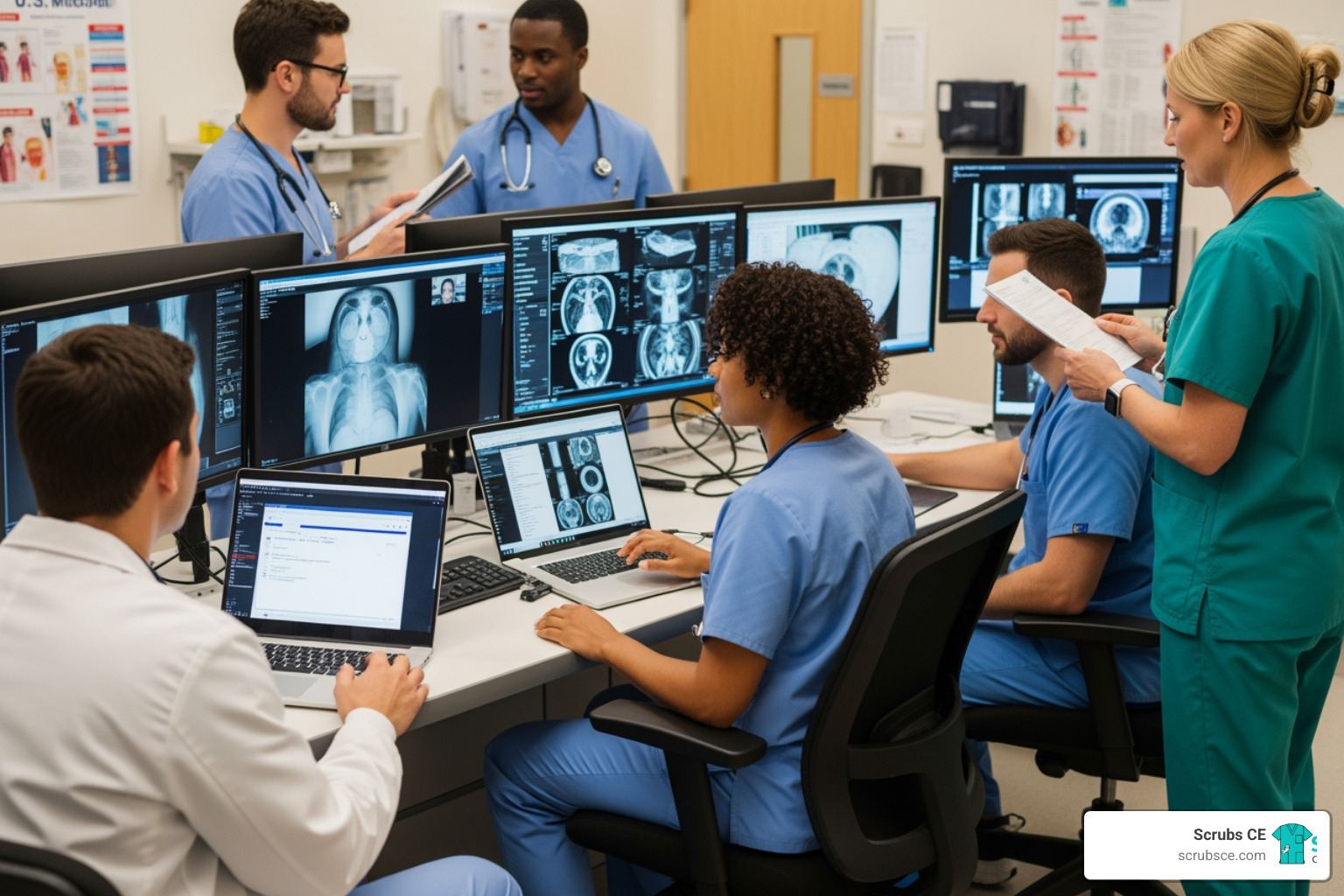
Online Radiology training has transformed how radiologic technologists, radiologists, and imaging professionals earn credits, update skills, and advance their careers. Whether you need fast-track certification programs (8 months for limited-scope technicians), accredited CME/CPD courses for license renewal, or specialty training in MRI safety, AI applications, or advanced imaging techniques, online platforms now offer flexible, affordable access to thousands of hours of expert instruction, case reviews, and virtual simulations—many accredited for AMA PRA Category 1 Credits™.
Quick Overview: Types of Online Radiology Training
| Learner Level | Training Type | Example Programs | Typical Duration |
|---|---|---|---|
| Aspiring Technicians | Certificate/Diploma Programs | Limited-Scope Certificate Programs | 8 months (blended) |
| Medical Students & Residents | Foundational Courses | Anatomy tutorials, case-based learning, interactive modules | Varies (self-paced) |
| Practicing Professionals | CME/CPD Courses | Professional Society Courses, specialty webinars | 1-7+ credits per course |
| All Levels | AI & Emerging Tech | Specialized AI Certificates (Foundational to Advanced) | Varies by level |
The Radiology field is evolving rapidly—with 6% projected job growth for technicians through 2033, expanding use of AI in diagnostics, and ongoing requirements for continuing education. Online training offers working professionals the flexibility to learn during off-hours, access world-class faculty without travel costs, and revisit complex material as needed. Certain platforms provide free access to learners in 125 low- and middle-income regions, while professional libraries deliver everything from basic X-ray interpretation to advanced perfusion MRI protocols.
For busy healthcare professionals, finding time for online Radiology training while managing clinical duties and family responsibilities is a constant challenge. The shift from traditional classroom sessions to digital platforms means you can now earn required credits from your home or office, pause a lecture to handle an urgent call, and build expertise in emerging areas like cardiac CT or interventional techniques without disrupting patient care schedules.
I’m Zita Ewert, and I’ve spent years helping imaging professionals steer continuing education requirements through accessible, accredited online Radiology training at SCRUBS Continuing Education. In this guide, I’ll walk you through the full spectrum of online options—from entry-level certification to advanced subspecialty CME—so you can find the right path for your career stage and learning goals.
The Spectrum of Online Radiology Training
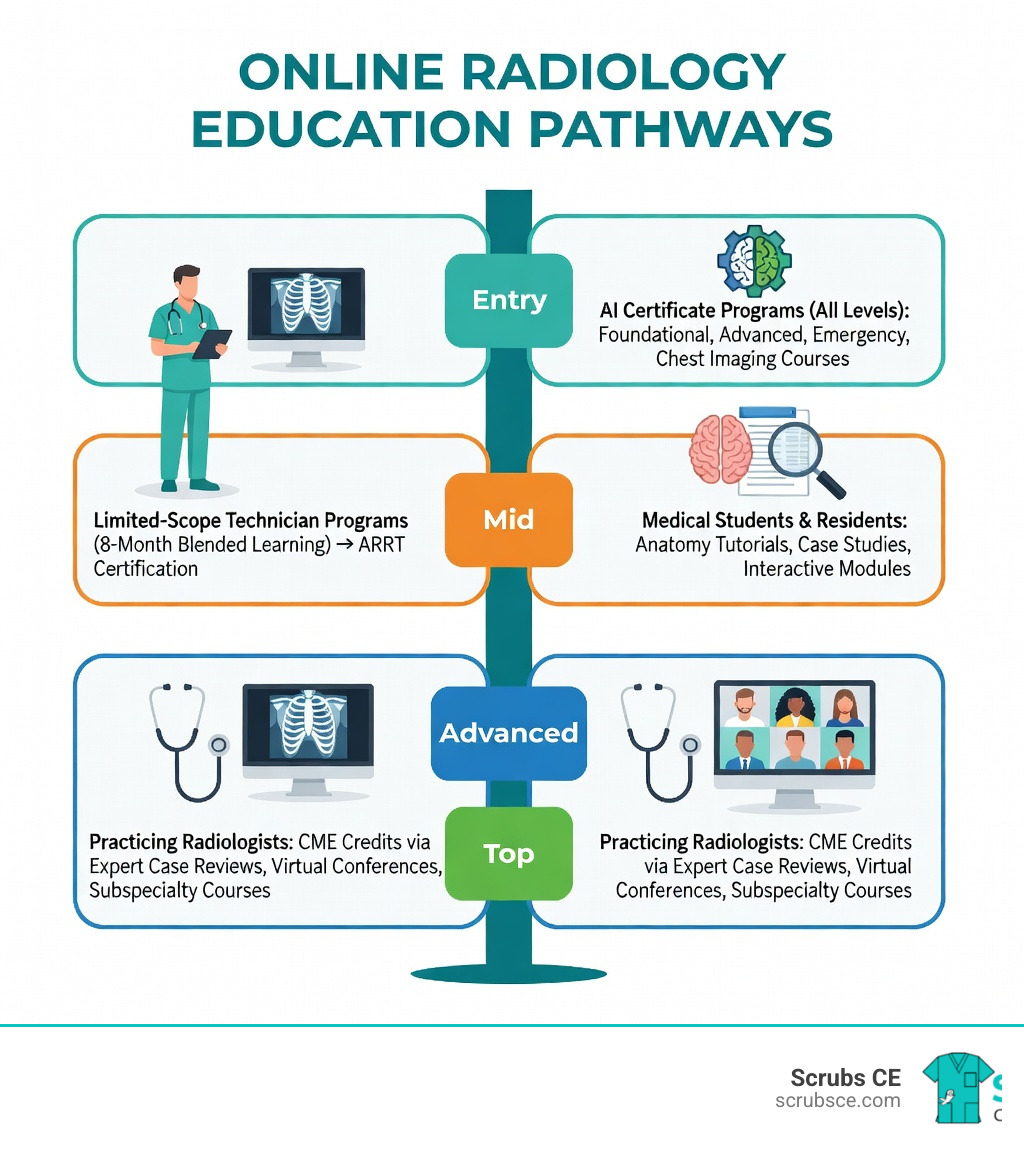
When we talk about online Radiology training, we aren’t just talking about one-size-fits-all webinars. The digital landscape has matured into a sophisticated ecosystem that caters to every stage of a medical career. Whether we are just starting out as students or we are seasoned veterans looking to master the latest MRI safety protocols, there is a digital seat waiting for us.
The beauty of modern platforms is how they segment content. We see learners divided into distinct tiers: medical students building their foundational knowledge, residents preparing for board exams, and practicing professionals fulfilling their mandatory Continuing Medical Education (CME) or Continuing Professional Development (CPD) requirements.

For Aspiring Technicians and Technologists
For those of us looking to break into the field quickly, the rise of “fast-track” programs has been a game-changer. Take, for instance, the limited-scope training programs offered by specialized vocational centers. These are often 8-month programs designed to get you career-ready in record time.
These programs typically use a blended learning model. This means we spend about four months in the virtual classroom, engaging with live online lectures, simulations, and labs. The final four months are dedicated to hands-on externships at actual medical facilities. This combination ensures we meet the requirements for the American Registry of Radiologic Technologists (ARRT) certification while maintaining the flexibility of online study. It’s an ideal path for those who need to balance education with existing work or family commitments.
For Medical Students and Residents
If we are currently in medical school, the sheer volume of anatomy and pathology we need to memorize can feel overwhelming. Fortunately, the internet is packed with high-quality, often free, resources.
Foundational knowledge is the bedrock of Radiology. We highly recommend starting with an interactive online tutorial for students, which was created by university faculty and is used globally. For those of us struggling with the complexities of the human torso, there is a resource for cross-sectional anatomy that provides cadaver and CT image comparisons—essential for mastering M1 and M2 level coursework.
Residents can also benefit from case-based learning. Leading sites offer over 500 hours of content in their All-Access Library, including 15 workshops and 28 anatomy modules. This allows us to move beyond textbooks and see how pathology actually presents in a clinical setting.
For Practicing Radiologists and Specialists
Once we are in practice, the focus shifts to maintaining our edge. online Radiology training at this level is dominated by CME and CPD. Professional organizations are even transitioning away from on-site training entirely by 2026, moving their high-caliber courses to virtual formats.
We can now access sub-specialty courses on everything from “Abdominal CT Essentials” to “Stroke Learning Pathways.” These aren’t just dry lectures; they often include interactive video cases where we can scroll through stacks just like we would at a workstation. Virtual conferences have also exploded in popularity, with some annual events now standing as the largest virtual gatherings in the world, offering hundreds of AMA PRA Category 1 Credits™.
Key Benefits and Features of Digital Learning
Why are so many of us ditching the hotel ballrooms and expensive flights for a laptop in our home office? The answer lies in the unique advantages that digital platforms provide.
Advantages Over Traditional In-Person Training
The most obvious benefit is flexibility. We can learn from anywhere—whether that’s a quiet corner of the hospital library or our own living room. This eliminates travel costs, which can easily run into thousands of dollars when you factor in airfare, hotels, and meals.
But it’s not just about the money. Online platforms allow us to:
- Revisit complex topics: If a lecture on “Physics of MRI” goes over our heads, we can simply hit rewind.
- Self-paced learning: We can complete a 7-hour “Emergency Radiology” course over a week of lunch breaks instead of cramming it into a single day.
- Access global experts: We are no longer limited to the faculty at our local university. We can learn from world-renowned specialists in London, Sydney, or New York with the click of a button.
What to Look For in an Online Radiology Platform
Not all platforms are created equal. When we are evaluating where to spend our time (and money), we look for several key features:
- Extensive Case Libraries: A good platform should have thousands of expert-reviewed cases. Some platforms, for example, feature over 400 “case reads” in their libraries.
- Interactive Content: Look for “case stacks” that allow you to scroll through images, mimicking a real PACS environment.
- Self-Assessment Tools: Quizzes and mock exams are vital for consolidating knowledge. Some platforms offer over 1,600 questions in their banks.
- Accreditation: Ensure the courses offer recognized credits (like AMA PRA Category 1 Credits™) that your local board will actually accept.
- Peer-Reviewed Material: To ensure accuracy, the content should be overseen by an editorial board or subject matter experts.
Navigating Accreditation, CME, and Costs in Online Radiology Training
Understanding the “paperwork” side of education is just as important as the learning itself. We need to make sure our efforts count toward our license.
Fulfilling CME/CPD Requirements with Online Radiology Training
Most of us are required to earn a specific number of credits every year or two to maintain our professional standing. Online courses are a highly efficient way to do this. Many activities are designated for AMA PRA Category 1 Credits™, which are the gold standard in the United States and are recognized internationally through mutual recognition agreements.
For example, the Accreditation Council for Continuing Medical Education (ACCME) provides the framework for these credits. You can find more information on the ACCME accreditation system to see how these credits are vetted. Some platforms offer a staggering amount of credit—up to 413 credits in a single library—allowing us to meet our requirements for years to come.
Tracking these hours is also easier online. Most platforms provide a “CME Profile” page that automatically tallies our time and allows us to download certificates instantly. This is a huge relief when audit season rolls around!
Understanding Costs and Accessibility
The cost of online Radiology training varies wildly, but there is usually an option for every budget:
- Subscription Models: An “All-Access Pass” (often ranging from a few hundred dollars) usually gives you a year of unlimited access to everything.
- Pay-per-course: Great if you only need a specific topic, like “Pediatric MSK X-ray.”
- Free Resources: Many sites offer “Case of the Week” or introductory tutorials for free.
- Equitable Access: We love that some platforms offer tiered pricing or even 100% free access to healthcare workers in low-to-middle-income countries. This helps foster a more equitable global medical community.
How to Assess the Quality of Online Radiology Training
Before you enter your credit card details, do a quick quality check:
- Check the “About” page: Who is the Editor-in-Chief? Is there an Education Board?
- Look for Editorial Independence: Ensure the platform isn’t just a front for a specific medical device company.
- Read User Reviews: What are other techs and radiologists saying on forums?
- Verify Credentials: Are the instructors recognized experts in their sub-specialty?
The Future of Radiology: Career Growth and AI
The field of Radiology isn’t standing still, and neither should our education. The future is bright, but it requires us to stay technologically fluent.
Career Paths and Job Outlook
The job market for imaging professionals is robust. The U.S. Bureau of Labor Statistics projects a 6% growth rate for Radiology technicians through 2033, which is faster than the average for all occupations. This translates to roughly 16,000 job openings every year!
Beyond entry-level roles, online training can help us pivot into:
- Radiology Management: Where salaries can range from $110,000 to $130,000.
- Advanced Modalities: Moving from X-ray to MRI or PET/CT often requires additional specialized training.
- Interventional Radiology: A field that combines imaging with minimally invasive surgery.
The Growing Role of Artificial Intelligence (AI)
We can’t talk about the future without mentioning AI. Far from replacing us, AI is becoming a powerful tool in our arsenal. Online programs are now offering specific AI Certificate Programs.
Professional societies, for example, offer a four-course certificate program:
- Foundational: Understanding the basics of machine learning.
- Advanced: Deep diving into algorithm integration.
- Emergency: Using AI to flag urgent findings like intracranial hemorrhages.
- Chest: Focusing on AI applications for lung nodules and pneumonia.
By engaging with online Radiology training focused on AI, we ensure that we are the ones “driving the machine” rather than being left behind by it.
Frequently Asked Questions about Online Radiology Training
What are the main types of online Radiology training available?
Training ranges from foundational courses for medical students (anatomy and physics) and certificate programs for technicians (like limited-scope X-ray) to advanced Continuing Medical Education (CME) for practicing radiologists. These advanced courses cover sub-specialties like neuroradiology, musculoskeletal imaging, and even AI-integrated diagnosis.
How do online courses help professionals meet CME requirements?
Accredited online platforms offer courses that provide AMA PRA Category 1 Credits™. These credits are recognized by most state medical boards and national organizations (like the ARRT or ABR) for maintaining licensure and certification. Most platforms also provide automated tracking and instant certificates for easy documentation.
What is the job outlook for individuals with Radiology training?
The outlook is excellent! The U.S. Bureau of Labor Statistics projects a 6% growth for Radiology technicians over the next decade. Driven by an aging population and the increasing reliance on diagnostic imaging, there are expected to be approximately 16,000 job openings annually in the U.S. alone.
Conclusion
The shift from traditional classrooms to digital platforms is more than just a convenience; it’s a necessary evolution in a high-speed medical world. By embracing online Radiology training, we aren’t just checking a box for our license—we are committing to lifelong learning that directly improves patient outcomes.
Whether we are a student using interactive academic tutorials or a specialist earning credits through accredited virtual courses, the tools to advance our careers are now at our fingertips. At Scrubs CE, we believe that professional development should be high-quality, self-paced, and affordable. We are proud to be part of this digital shift, helping healthcare professionals like you stay at the forefront of medical imaging.
Ready to take the next step in your career? Explore online Radiology CE courses today and see how easy it is to stay certified and informed.
Recent Comments