
What is a Limited Scope X-ray Technician and Why Does Healthcare Need Them?
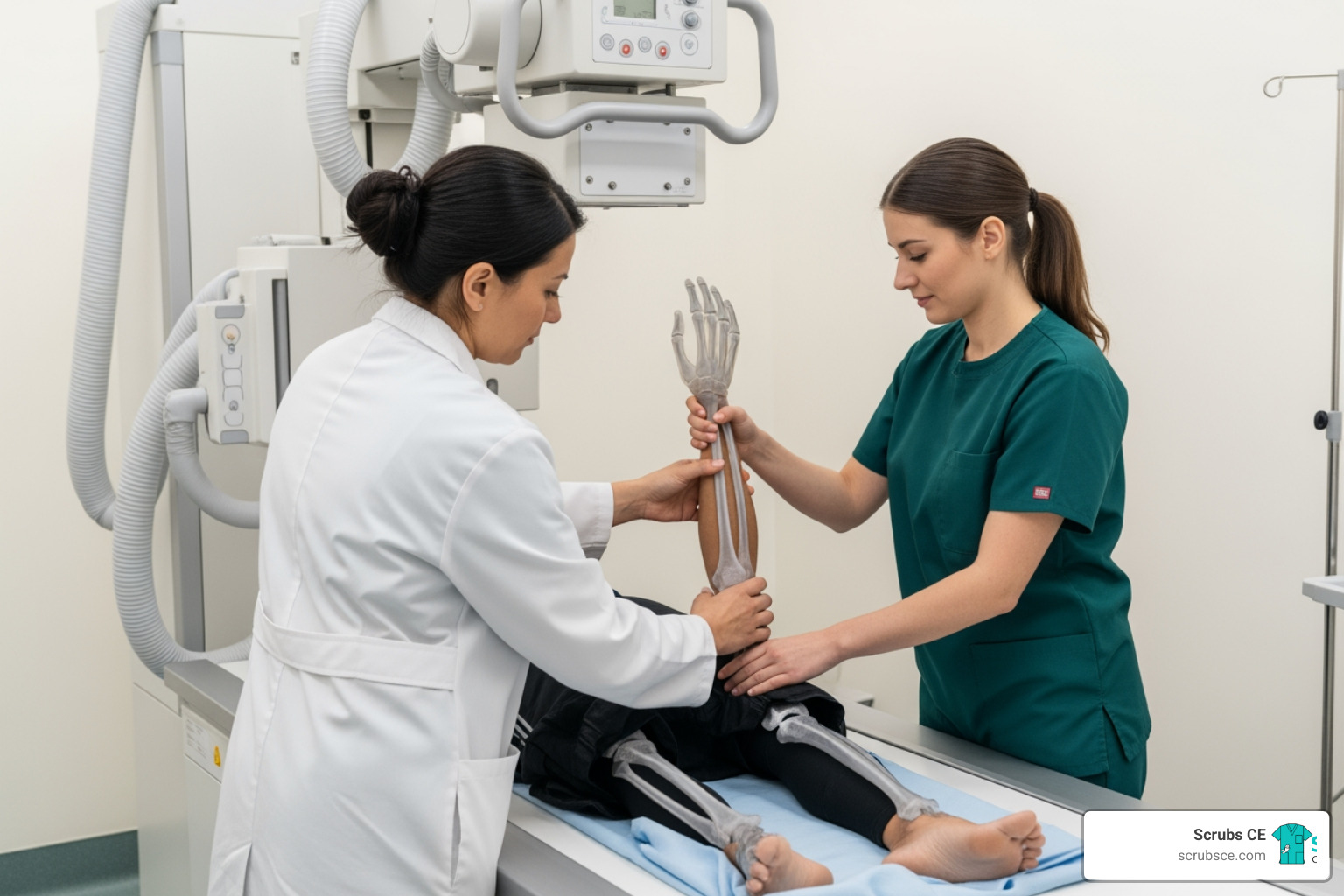
Limited scope X-ray technicians—also called Limited X-ray Machine Operators (LXMOs)—are healthcare professionals trained to perform specific diagnostic X-ray procedures on selected anatomical sites.
Quick Answer:
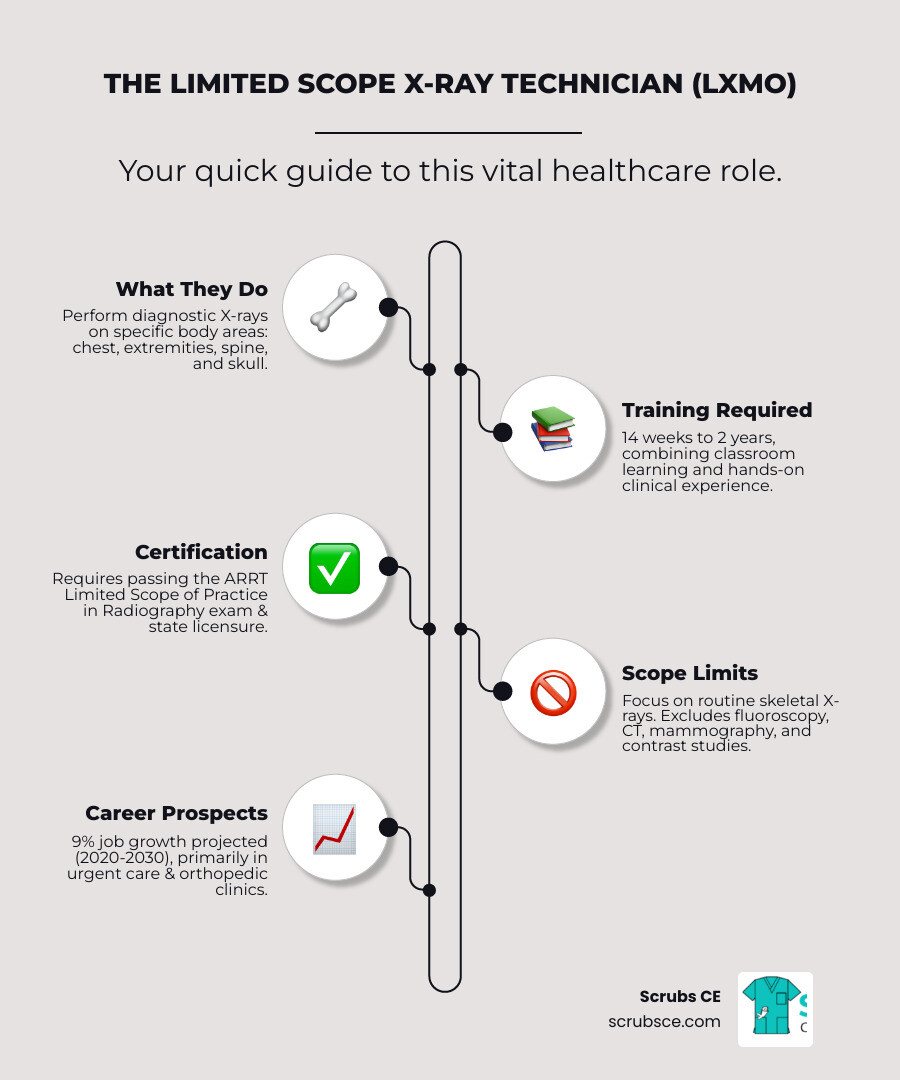
- Definition: An LXMO performs diagnostic X-ray procedures on specific body areas like the chest, extremities, spine, and skull.
- Training: Typically 14 weeks to 2 years, including didactic instruction and clinical experience.
- Certification: ARRT Limited Scope of Practice in Radiography exam plus state licensure.
- Scope: Routine skeletal X-rays only—no fluoroscopy, CT, mammography, or contrast procedures.
- Work Settings: Urgent care centers, orthopedic clinics, and outpatient facilities.
- Job Outlook: 9% growth projected through 2030, driven by a nationwide shortage of radiologic technologists.
In the field of healthcare, Radiology plays a crucial role in diagnosing medical conditions. X-ray technology is one of the most commonly used imaging techniques, and Limited Scope X-ray Technicians are an integral part of the Radiology team, especially in settings where full-scope radiologic technologists are difficult to recruit.
A 2019 survey by the American Society of Radiologic Technologists (ASRT) revealed that Radiology departments were 8.5% understaffed. The Bureau of Labor Statistics projects a 6% growth in demand—approximately 17,000 positions annually—which will compound the existing shortage.
LXMOs are essential because most Urgent Care centers perform fewer than 10 X-rays per day, primarily routine skeletal imaging. Requiring a full-scope technologist for these basic procedures pulls highly trained professionals away from high-acuity facilities. Limited Scope X-ray licensing addresses this gap by allowing qualified individuals to perform focused imaging safely.
As Zita Ewert, I’ve spent years helping imaging professionals steer continuing education requirements. Understanding the LXMO role is essential for anyone considering this career path or facilities looking to address staffing challenges while maintaining quality patient care.
Limited scope X-ray basics:
Understanding the Role of a Limited scope X-ray Technician
The field of Radiology is vast, but not every diagnostic need requires the full breadth of a Radiologic Technologist’s expertise. The Limited scope X-ray Technician (LXMO) provides essential imaging services for common injuries and conditions.

The ASRT defines an LXMO as an individual who performs diagnostic X-ray procedures on selected anatomical sites. This focused practice ensures high-quality imaging while optimizing healthcare resources. As the CDC explains in their Facts About X-Rays, these procedures help detect issues like bone fractures or pneumonia. LXMOs are trained to apply these principles with a strong emphasis on patient safety.
For those interested in educational paths, we offer More info about Limited License Radiologic Tech services to help guide your career.
What is a Limited scope X-ray Machine Operator (LXMO)?
An LXMO is a healthcare professional authorized to perform a restricted set of radiographic procedures. Unlike a full-scope technologist, an LXMO concentrates on specific anatomical sites, allowing for a quicker training pathway. According to ASRT Curriculum Guidelines, LXMOs typically focus on:
- Chest and thorax
- Upper and lower extremities
- Vertebral column (spine)
- Cranium (skull) and Podiatric (feet)
Primary Job Responsibilities and Daily Tasks
LXMO tasks revolve around patient care, image acquisition, and radiation safety:
- Conducting X-ray examinations: Performing procedures on selected sites following safety protocols.
- Patient positioning: Accurately positioning patients to obtain clear diagnostic images.
- Radiation protection: Using lead shielding and monitoring exposure (ALARA principles).
- Image production: Adjusting settings (kVp and mAs) and critiquing images for quality.
- Documentation: Maintaining accurate patient records and using medical terminology.
- Professional standards: Adhering to HIPAA and ethical codes of conduct.
For those looking to maintain certification, we provide More info about Limited License Radiology CE options.
LXMO vs. Radiologic Technologist: Key Differences
Understanding the distinction between a Limited scope X-ray Technician (LXMO) and a full-scope Radiologic Technologist (RT) is crucial. While both are integral to Radiology, their training and scope differ significantly.
| Feature | Limited Scope X-ray Technician (LXMO) | Radiologic Technologist (RT) |
|---|---|---|
| Scope of Practice | Selected anatomical sites (e.g., chest, spine). | All anatomical sites and advanced modalities. |
| Advanced Modalities | No contrast, fluoroscopy, CT, or MRI. | Performs CT, MRI, mammography, and contrast studies. |
| Education | 14 weeks to 2 years (Certificate). | 2-4 years (Associate’s or Bachelor’s). |
| Certification | ARRT Limited Scope exam. | ARRT Radiography (R) certification. |
| Work Settings | Urgent care, orthopedic clinics. | Hospitals, ER, specialized imaging centers. |
| Salary | Generally lower due to limited scope. | Generally higher due to broader skillset. |
Limitations of the Limited scope X-ray Practice
The “limited” in Limited scope X-ray refers to specific boundaries. LXMOs are restricted from performing:
- Fluoroscopy: Real-time motion imaging.
- CT Scans: Advanced cross-sectional imaging.
- Mammography: Specialized breast imaging.
- Contrast Procedures: Using barium or iodine to visualize organs.
Their focus remains on basic diagnostic X-rays of bony anatomy, such as a standard chest X-ray, ensuring safety within their defined expertise.
Work Environments for Limited Scope Professionals
LXMOs are invaluable in settings that require routine imaging without the need for a full-scope RT’s broad expertise:
- Urgent care centers: Handling sprains and fractures.
- Orthopedic clinics: Focusing on musculoskeletal conditions.
- Physician offices: Providing convenient in-house X-rays.
- Outpatient and Sports medicine centers: Efficiently handling routine diagnostic requests.
These settings benefit from the cost-effectiveness of LXMOs, allowing timely services without underusing the advanced skills of a full-scope RT.
Educational Pathways and Certification Requirements
Becoming a Limited scope X-ray Technician involves a pathway combining classroom learning with clinical experience. Programs are often certificate-based, making them an accessible entry point into Radiology.
The core curriculum covers:
- Anatomy and Physiology: Emphasis on the skeletal system.
- Imaging Principles: Understanding X-ray production, physics, and image quality (kVp, mAs).
- Radiographic Procedures: Positioning for the chest, extremities, spine, and cranium.
- Patient Care: Safety, infection control, and emergency response.
- Radiation Protection: Dose limits (ALARA) and biological effects.
- Digital Imaging: PACS and DICOM standards.
Clinical experience is vital. Proposed minimums for LXMO programs include:
- Didactic Instruction: Approximately 80 hours.
- Clinical Hours: Ranging from 160 to 240 hours per anatomical area (e.g., chest, extremities, spine).
Many programs, like those in our Radiography Essentials for Limited Practice Ebook, offer hybrid models for flexibility.
The ARRT Limited Scope of Practice in Radiography Exam
The ARRT maintains high standards through its certification exam, which validates an LXMO’s competence. The exam consists of a “Core” section and modules for specific anatomical areas. A passing score of 75% is typically required.
Updates effective January 1, 2023, reflect evolving technology, including expanded sections on legal issues, ergonomics, biological effects of radiation, and imaging informatics. For more details, refer to the ARRT Exam Details and Content.
State Licensure and Clinical Training Hours
State licensure is the final requirement. Currently, 14 states and D.C. have restrictive requirements or prohibit Limited Scope X-rays entirely. In states like Texas, candidates must pass the ARRT exam and a Jurisprudence (JP) exam through the Texas Medical Board.
Colorado requires 80 didactic hours and 480 clinical hours under supervision. Because regulations vary, always consult your state’s medical board or radiation control agency for the most current requirements.
The Growing Demand for LXMOs in Modern Healthcare
The demand for Limited scope X-ray Technicians is rising due to a nationwide shortage of full-scope Radiologic Technologists. The Bureau of Labor Statistics forecasts a 9% increase in employment for imaging professionals through 2030.
This demand is particularly high in the 11,000+ Urgent Care Centers across the US. Most of these facilities perform fewer than 10 X-rays daily, usually routine skeletal images. Limited scope X-ray licensing allows these centers to provide immediate on-site diagnostics efficiently.
The Urgent Care Association (UCA) advocates for this licensing as a solution to the RT shortage. By training qualified individuals like Medical Assistants to perform focused procedures, full-scope RTs can be deployed to high-acuity hospitals where their advanced training is most needed.
Benefits of an LXMO career include:
- Accessible Entry: Faster route into the Radiology field.
- High Demand: Strong job prospects in community settings.
- Career Advancement: A solid foundation for future RT certification.
- Efficiency: Helping alleviate staffing shortages and improving patient access.
Frequently Asked Questions about LXMO Careers
What types of X-ray examinations are typically performed by an LXMO?
LXMOs perform routine diagnostic procedures for the chest, extremities (arms, legs, shoulders, hips), vertebral column (spine), cranium (skull), and podiatric sites. They cannot perform procedures involving contrast media, fluoroscopy, mammography, or CT scans.
How does state licensure for LXMOs vary across the country?
Licensure varies significantly. While many states use the ARRT Limited Scope exam, they differ in:
- Scope of Practice: Which anatomical sites are permitted.
- Hour Requirements: Variations in didactic and clinical training hours.
- Continuing Education: States like Colorado require 24 hours of Radiology-related CE every two years.
- Reciprocity: Licenses rarely transfer automatically between states.
What is the role of Medical Assistants in Limited Scope X-ray practice?
In many states, Medical Assistants (MAs) can pursue additional training to become LXMOs. This dual role is highly efficient for urgent care centers, as MAs already have foundational knowledge in patient care and anatomy. Training MAs in Limited scope X-ray often leads to higher employee satisfaction and better patient flow in outpatient settings.
Conclusion
The role of a Limited scope X-ray Technician is vital to modern healthcare. LXMOs provide essential diagnostic services that address the nationwide shortage of full-scope technologists, ensuring patients receive timely care in orthopedic and urgent care settings.
Becoming an LXMO offers an accessible entry point into Radiology with a strong job outlook. At Scrubs CE, we support your professional journey with convenient resources. Our Continuing Education Courses for X-ray Technologists are designed to help you meet licensure requirements and stay updated in this rewarding field. Whether you are starting your career or maintaining your license, we provide the tools you need for lifelong learning and success.
Recent Comments