
Why Becoming a Florida X-ray Tech is a Smart Career Move
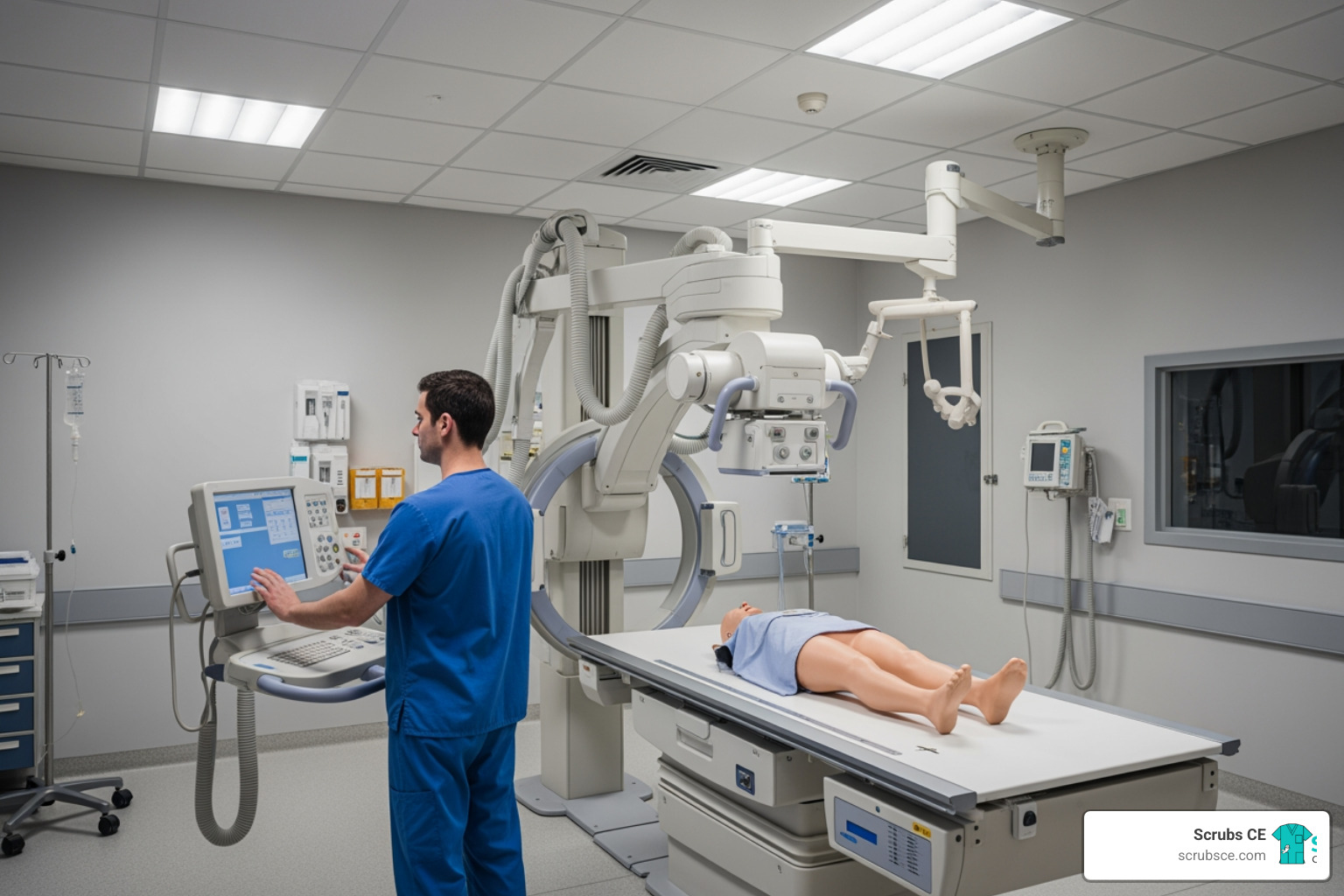
Florida X-ray tech professionals are in high demand across the state’s growing healthcare system. If you’re considering this career path, you need to know the educational requirements, certification process, and ongoing obligations to practice legally in Florida.
Quick Answer: To become a Florida X-ray tech, you must:
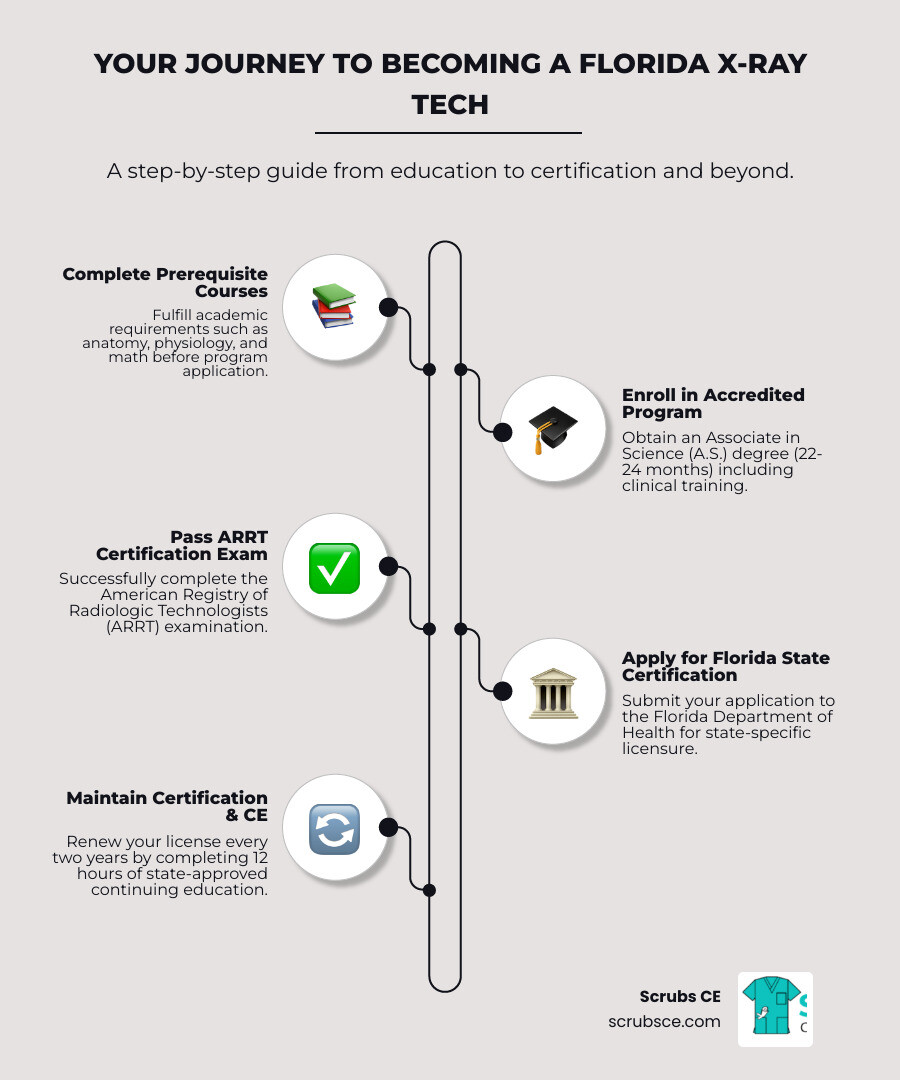
- Complete an accredited radiologic technology program (typically 22-24 months for an Associate degree)
- Pass a certification exam administered by the American Registry of Radiologic Technologists (ARRT)
- Apply for Florida state certification through the Florida Department of Health
- Maintain your license with 12 hours of continuing education every two years
Florida currently has over 27,000 active radiologic technology professionals certified to practice in the state. The job outlook remains strong, with approximately 3,000 national openings per year for radiologic technologists. New graduates in Florida can expect an average starting salary of around $41,612, with opportunities for advancement through specialized certifications in areas like computed tomography (CT), mammography, or radiation therapy.
The path to becoming a Florida X-ray tech is straightforward but requires commitment. You’ll need to complete specific educational requirements, pass state-approved examinations, and meet the Florida Department of Health’s regulatory standards. Whether you’re just starting your healthcare career or considering a career change, this guide walks you through every step of the journey—from choosing an accredited program to maintaining your certification throughout your career.
Educational Pathways: Your First Step to Becoming a Florida X-ray Tech
Your journey to becoming a Florida X-ray tech starts in the classroom, where you’ll build the foundation for a career combining technology with patient care. You’ll learn to operate sophisticated imaging equipment, understand radiation safety, and develop critical thinking skills.
Most aspiring radiologic technologists pursue an Associate in Science (A.S.) degree in Radiography. These intensive programs typically take 22 to 24 months of full-time study, allowing you to start your career in less than two years.
The curriculum blends classroom instruction with hands-on clinical education. For example, the College of Central Florida and Florida SouthWestern State College offer 77-credit hour A.S. programs that take about 22 months. The Mayo Clinic also runs a respected 20-month Radiography Program with small class sizes.
Before enrolling, you’ll need to complete prerequisite courses. These typically include college-level math (like College Algebra) and foundational sciences such as Anatomy and Physiology.
Choosing an Accredited Radiologic Technology Program
When researching programs, look for accreditation. This guarantees a program meets national standards and is essential for your career.
The primary accrediting body is the Joint Review Committee on Education in Radiologic Technology (JRCERT), recognized by the U.S. Department of Education. Top Florida programs, like those at the College of Central Florida and Florida SouthWestern State College, hold JRCERT’s highest 8-year accreditation.
Programs may also have regional accreditation from the Southern Association of Colleges and Schools Commission on Colleges (SACSCOC). Always verify a program’s status directly with the Joint Review Committee on Education in Radiologic Technology (JRCERT). Colleges may also provide details in resources like a Radiography Information Packet.
Graduating from an accredited program is required to sit for the ARRT certification exam, which is necessary to practice as a Florida X-ray tech.
What to Expect in Your X-ray Tech Curriculum
Your radiologic technology education is a dynamic blend of theory and practice.
Classroom learning forms the academic backbone, covering subjects like human anatomy and physiology, radiographic physics, radiation protection, and image evaluation.
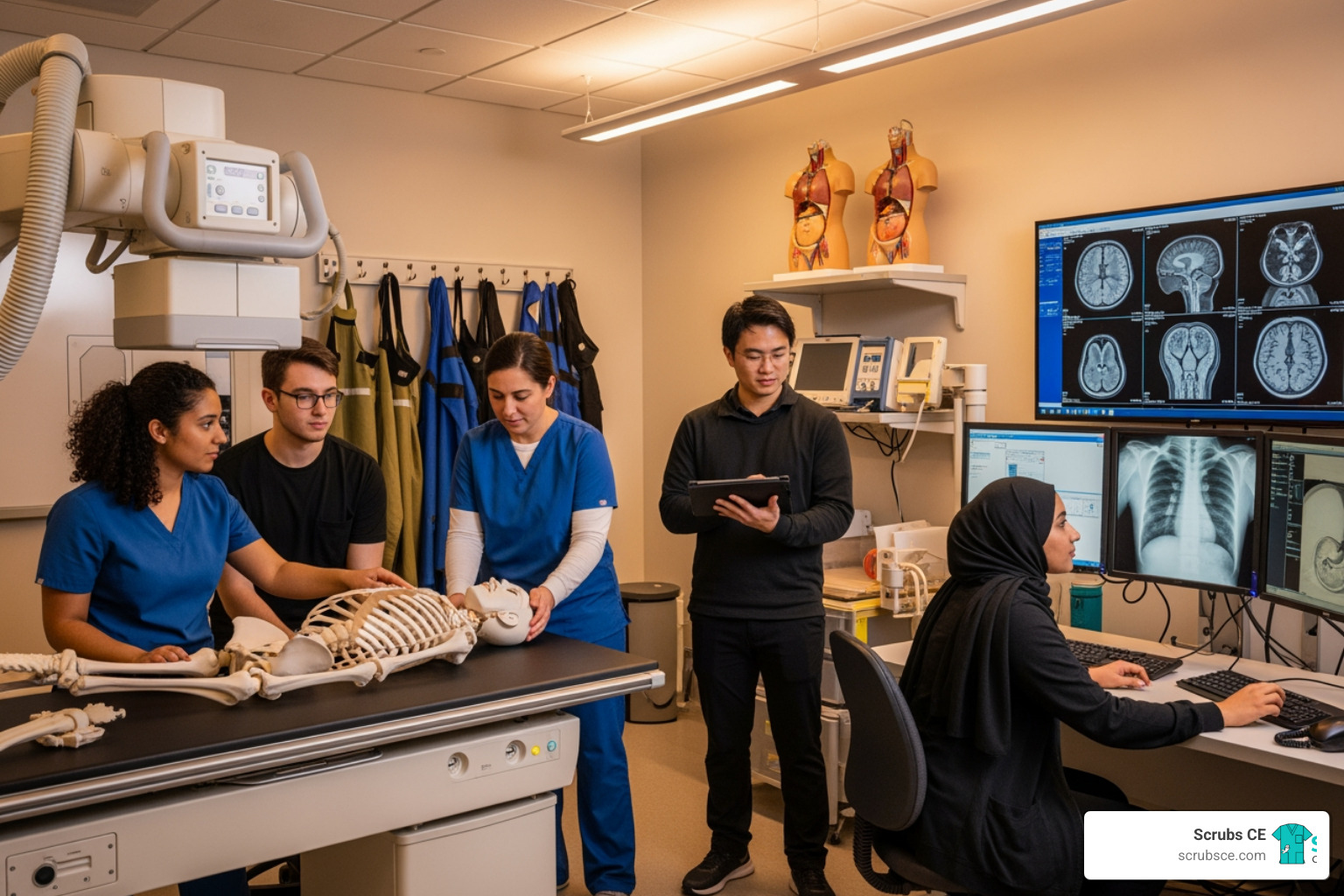
You’ll also get extensive hands-on training in radiography labs. This is where you’ll practice patient positioning and operate X-ray equipment in a safe, supervised environment before working with real patients.
The most transformative part of your education is your clinical externships. You’ll spend significant time in hospitals and clinics, working with experienced technologists and real patients under close supervision. Clinical rotations have specific requirements, including drug screens, background checks, physical exams, and immunizations. You will also need reliable transportation, as clinical sites may be spread across multiple counties.
These clinical hours develop your technical skills and the critical thinking, communication, and professionalism needed to excel. You’ll learn to work under pressure, comfort patients, and collaborate with healthcare teams. By the time you complete your program, you’ll have the skills and confidence to start your career as a certified Florida X-ray tech.
Certification and Licensing in the Sunshine State
After completing your educational program, you’re ready for the final steps to become a practicing Florida X-ray tech. The process is straightforward but involves state-specific requirements. Florida prioritizes radiation safety, so it has its own certification rules beyond the ARRT exam. You’ll work with the Florida Department of Health (FDOH), through its Bureau of Radiation Control and Medical Quality Assurance (MQA) services, which ensures all professionals meet state safety and competency standards.
The Role of the Florida Department of Health
The Florida Department of Health’s mission is to protect patients and healthcare workers from unnecessary radiation exposure. As a Florida X-ray tech, you’ll work with ionizing radiation, so this oversight is crucial.
The Radiologic Technologist Certification Act (Florida Statute Chapter 468) outlines the state’s guidelines for certification. The FDOH’s Bureau of Radiation Control handles licensing, monitoring, and discipline, and verifies certifications during facility inspections.
Florida has over 27,000 active radiologic technology professionals. The state maintains detailed records and conducts regular inspections. You can find the complete regulations here: Florida’s Radiologic Technology regulations. The FDOH is your licensing authority, and you must have their approval to practice in Florida, even with an ARRT certification.
Step-by-Step Guide to Florida X-ray Tech Certification
Florida certification requires attention to detail. There are two pathways: Certification by Examination for new technologists and Certification by Endorsement for those licensed in another state.
First, the basics for all applicants. You must be at least 18 years old, be of good moral character, and pass a criminal background check. You must disclose any past criminal convictions, as certain crimes listed in Florida Statute 435.03 can disqualify you from certification.
If you’re pursuing Certification by Examination, you need proof of completing a two-year accredited Radiologic Technology Program. Florida contracts with the American Registry of Radiologic Technologists (ARRT) for its exam. After the FDOH approves your application, you’ll get an “Exam Approval” letter to schedule your exam within a 90-day testing window. On exam day, bring two forms of identification with names that exactly match your eligibility letter. Exam fees vary by certification type: $150 for BXMO and $200 for GR, NMT, or RTT (as of January 1, 2022). After passing, your results are processed in about two weeks, and you can work once your online status is “Active”.
If you’re applying for Certification by Endorsement, this path is for technologists with a current license from another state. You’ll submit an application and demonstrate that your out-of-state requirements were equivalent to Florida’s standards.
Ready to get started? You can apply online through the FDOH portal: Apply for a License online. For more details, see our comprehensive guide: More info on the licensing process. This process is the final hurdle to becoming a certified Florida X-ray tech. Stay organized, and you’ll soon be ready to start your career.
Exploring X-ray Tech Roles and Specializations
As a Florida X-ray tech, you’ll find a diverse field with multiple career paths and opportunities for growth, from basic roles to advanced specializations.
Different Levels of Florida X-ray Tech Roles
Florida certifies several levels of radiologic technology professionals, each with distinct educational requirements and scopes of practice.
The Basic X-ray Machine Operator (BXMO) certification is an entry point that doesn’t require a full accredited program. Applicants study specific materials and pass a state exam. The scope of practice is limited to certain procedures under direct supervision. You can learn more about this pathway here: How to Become a Limited License Radiologic Tech in Florida.
The General Radiographer (GR) role, or RT(R), is the most common certification, requiring a full two-year accredited program. A General Radiographer can perform a wide range of diagnostic imaging procedures. The RT(R) credential from ARRT is nationally recognized and provides broad career opportunities.
Advancing Your Career with Specializations
Once you are a General Radiographer, advanced specializations offer a path to becoming an expert in specific technologies, often leading to more responsibility and higher pay. These post-primary certifications require your RT(R) credential, additional education, clinical experience, and another exam. Florida certifies several advanced specialties:
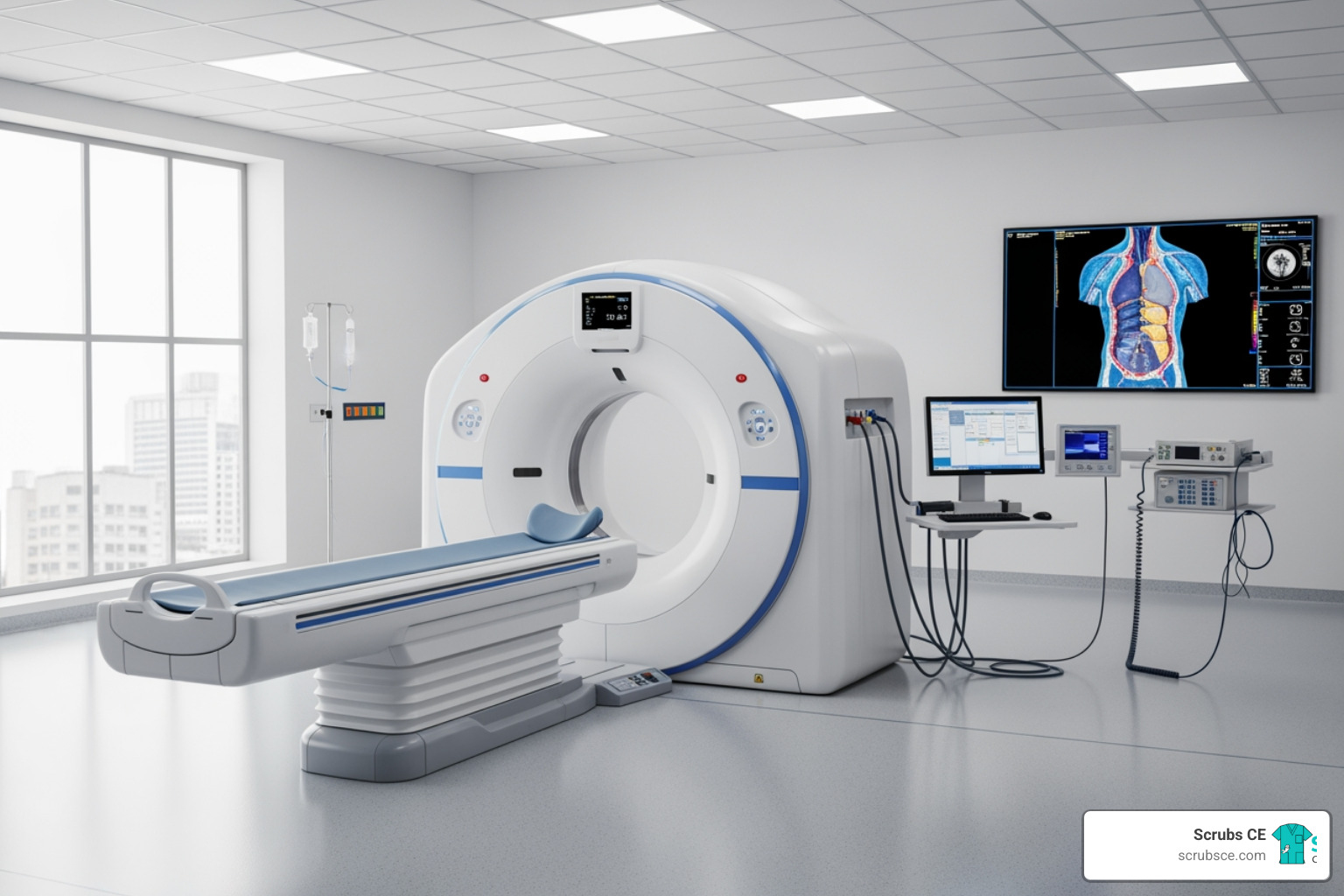
- Computed Tomography (CT): Operate scanners that create detailed cross-sectional images to diagnose injuries and diseases.
- Mammography: Specialize in breast imaging, playing a vital role in the early detection of breast cancer. This role requires precision and compassion.
- Radiation Therapy: Administer radiation doses to treat cancer as part of an oncology team, requiring meticulous attention to detail.
- Nuclear Medicine: Use radioactive pharmaceuticals to image organ function, not just structure.
- Positron Emission Tomography (PET): A nuclear medicine specialty that creates 3D images of metabolic processes, useful for oncology, cardiology, and neurology.
- Radiologist Assistant (RA): An advanced practice role requiring a master’s degree. RAs perform certain radiologic procedures under a radiologist’s supervision.
Each specialization opens new doors for a Florida X-ray tech. You can continuously learn and grow in the area that best fits your interests. To explore all six certification options in Florida, check out our guide: Explore different certification options.
Job Outlook and Career Maintenance in Florida
Once you’ve earned your certification and are working as a Florida X-ray tech, you’ll want to know what your career prospects look like and how to keep your license active. The good news? The healthcare field in Florida is thriving, and maintaining your certification is straightforward when you know what’s required.
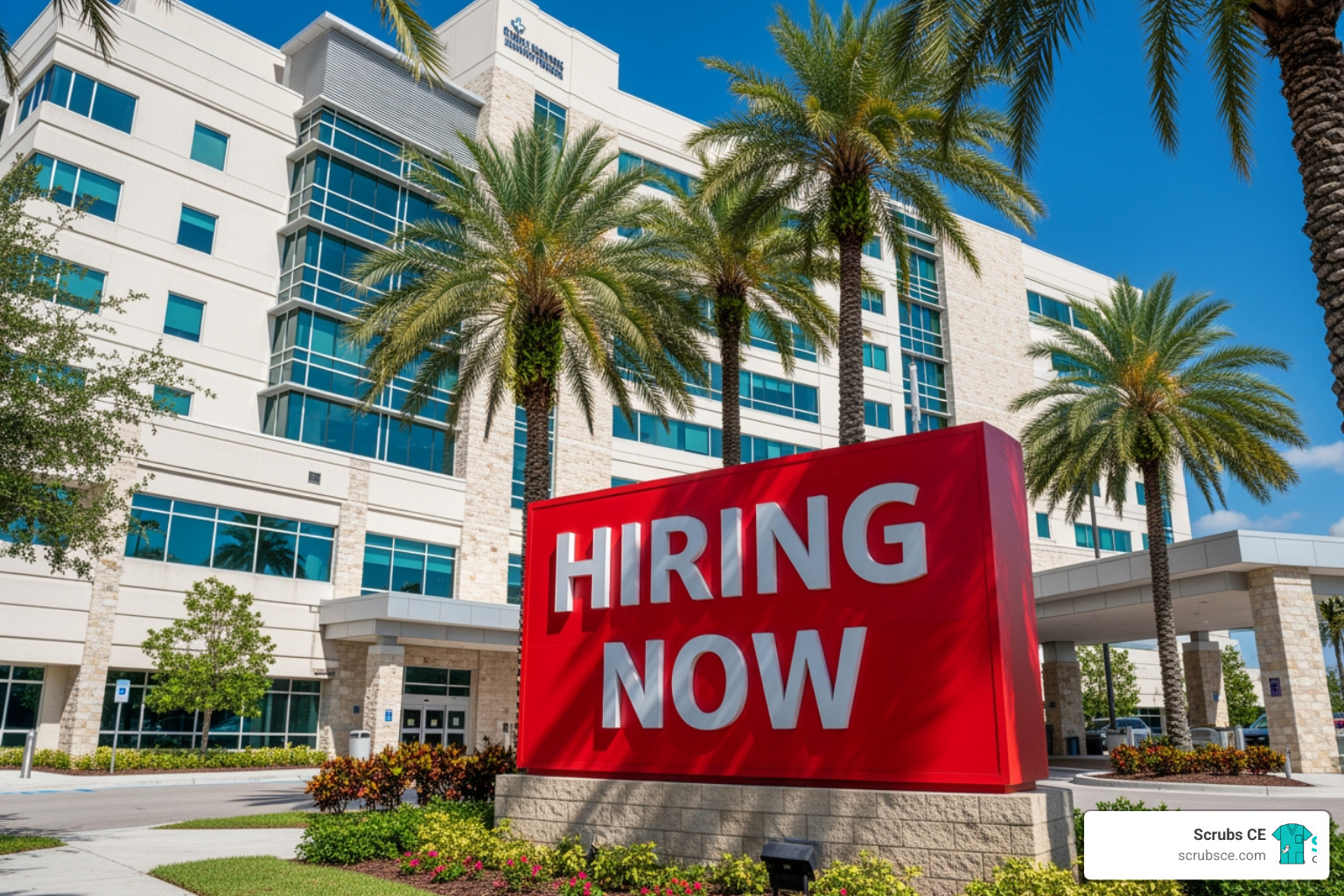
Salary and Job Market for Florida Radiologic Technologists
Florida’s expanding healthcare industry creates consistent demand for qualified radiologic technologists, offering excellent career stability.
The Department of Labor reports approximately 3,000 national openings for radiologic technologists annually, ensuring strong job security. Many Florida programs boast high placement rates, with some reporting 90% of graduates finding local work.
Regarding earning potential, new graduates in Florida can expect an average starting salary of around $41,612 per year. This figure grows with experience and advanced certifications in specialties like CT or mammography. Salaries can also be higher in major metropolitan areas.
Your earning potential as a Florida X-ray tech depends on your professional development. For more career and salary information, the Occupational Outlook Handbook is a valuable resource.
Maintaining Your Certification: Continuing Education (CE) Requirements
To continue practicing in Florida, you must maintain your certification through continuing education (CE), ensuring you stay current with evolving technology and techniques.
Your Florida certificate is valid for two years. To renew, you must complete 12 hours of approved continuing education. Make sure your courses are from state-approved sources, which you can find here: Find state-approved CE Providers. Scrubs CE is an approved provider offering convenient online courses.
Of the 12 required hours, no more than 3 can be in personal development (e.g., CPR, ethics). The rest must be technical subjects related to your work, such as radiation protection or image production.
Most providers report your hours to the FDOH, but it’s wise to keep your own records. We offer resources to help you Understand Florida CE requirements and Learn how to self-submit CE credits.
If your certificate lapses, you can reactivate it for up to 10 years by submitting forms, paying fees, and providing proof of CE.
At Scrubs CE, we understand that your schedule is packed. That’s why we offer high-quality, self-paced courses with instant certificates to make maintaining your Florida X-ray tech certification as convenient and stress-free as possible, so you can focus on what matters most—providing excellent patient care.
Frequently Asked Questions about Florida X-ray Techs
We know you might have more questions as you consider your path to becoming a Florida X-ray tech. Let’s tackle some of the most common questions we hear from aspiring and current radiologic technologists.
Do I need a Florida license if I’m already ARRT certified?
This is one of the most frequently asked questions, and the short answer is: yes, you absolutely do. While earning your American Registry of Radiologic Technologists (ARRT) certification is a significant achievement and a highly respected national credential, Florida has its own state-specific licensing requirements that you must meet to practice legally.
Here’s how it works: Florida actually contracts with ARRT for examination services, so your ARRT certification is definitely valuable and relevant. If you’re already ARRT registered, you can apply for a Florida license through a process called certification by endorsement, which typically streamlines your application. However, your ARRT credential by itself doesn’t grant you the legal authority to administer ionizing radiation to patients in Florida. You need that state-issued certificate from the Florida Department of Health to work as a Florida X-ray tech. Think of it this way: ARRT certification shows you have the knowledge and skills, but the Florida license gives you the legal permission to practice in the Sunshine State.
How long is my Florida X-ray tech certificate valid?
Your Florida radiologic technology certificate is valid for two years. This biennial renewal cycle is pretty standard across many healthcare professions, so it’s easy to keep track of.
To successfully renew your certificate when those two years are up, you’ll need to complete 12 hours of state-approved continuing education during that period. Here’s an important detail: no more than 3 of those 12 hours can be in personal development areas like CPR, ethics, or communication skills. The remaining hours need to be technical in nature, focusing on subjects directly related to radiologic technology—things like radiation protection, equipment operation, image production, and patient care. This requirement ensures you’re staying current with the latest techniques, safety protocols, and best practices in the field. It’s all about maintaining the high standards that protect both you and your patients.
Does Florida certify MRI or Ultrasound Technologists?
No, the Florida Department of Health does not issue certifications for MRI (Magnetic Resonance Imaging) or Ultrasound Technologists. This surprises a lot of people, so you’re not alone if you were wondering about this!
The reason is actually straightforward: Florida’s regulatory authority under the Radiologic Technologist Certification Act (Chapter 468, Part IV, Florida Statutes) specifically covers professionals who administer ionizing radiation to patients. This includes X-rays, CT scans, nuclear medicine, and radiation therapy—all of which use ionizing radiation. MRI uses powerful magnets and radio waves, while ultrasound uses high-frequency sound waves. Neither of these imaging modalities involves ionizing radiation, which means they fall outside the scope of Florida’s state certification requirements.
That said, if you’re interested in MRI or ultrasound, you’ll likely pursue national registries (such as ARRT for MRI or ARDMS for ultrasound), which many employers require. These are professional credentials that demonstrate your competency, but they’re not state-issued licenses in Florida. So if your heart is set on becoming a Florida X-ray tech specifically, you’ll be working with ionizing radiation equipment that does require state certification.
Conclusion
You’ve made it to the end of our comprehensive guide, and by now, you should have a clear roadmap for launching your career as a Florida X-ray tech. This isn’t just a job—it’s a profession that offers genuine stability, competitive earning potential, and the deeply satisfying opportunity to make a tangible difference in patients’ lives every single day.
Let’s recap the essential milestones on your journey: You’ll start by completing an accredited radiologic technology program, typically earning your Associate degree over 22-24 months of intensive study and clinical training. Next, you’ll steer the Florida Department of Health’s certification process, which includes passing your ARRT exam and meeting all state-specific requirements. Once certified, you’ll join over 27,000 active radiologic technology professionals already practicing across Florida’s dynamic healthcare landscape.
But here’s the thing—earning your certification is just the beginning of your professional story. The field of radiologic technology is constantly evolving, with new imaging techniques, equipment updates, and best practices emerging regularly. That’s why Florida requires 12 hours of continuing education every two years to keep your license active. This isn’t just a bureaucratic checkbox; it’s your opportunity to stay sharp, learn cutting-edge techniques, and ensure you’re delivering the highest quality care to your patients.
Whether you choose to remain a general radiographer or pursue advanced specializations in areas like CT, mammography, or nuclear medicine, your commitment to ongoing learning will define your career trajectory. The good news? Meeting your continuing education requirements doesn’t have to be complicated or time-consuming.
At Scrubs CE, we understand the demanding schedules healthcare professionals juggle. That’s why we’ve designed our state-approved courses to be convenient, affordable, and genuinely valuable to your practice. Our self-paced format means you can learn on your schedule—whether that’s during a quiet evening at home or between shifts. And with instant certificates upon completion, you’ll never have to worry about last-minute scrambles before your renewal deadline.
Your career as a Florida X-ray tech holds tremendous potential. You’ll work with state-of-the-art technology, collaborate with dedicated healthcare teams, and play a crucial role in diagnosing and treating patients across Florida’s diverse communities. The path requires dedication, but the rewards—both personal and professional—make every step worthwhile.
Ready to maintain your Florida Radiologic Technologist license? Explore our approved CE courses today! We’re here to support you every step of the way as you build a fulfilling, impactful career in radiologic technology.
Recent Comments