
Why Mammography CEUs Matter for Your Career and Compliance

Mammography CEUs (Continuing Education Units) are required credits that mammography technologists must earn to maintain their certification and meet regulatory standards. Here’s what you need to know:
Quick Answer:
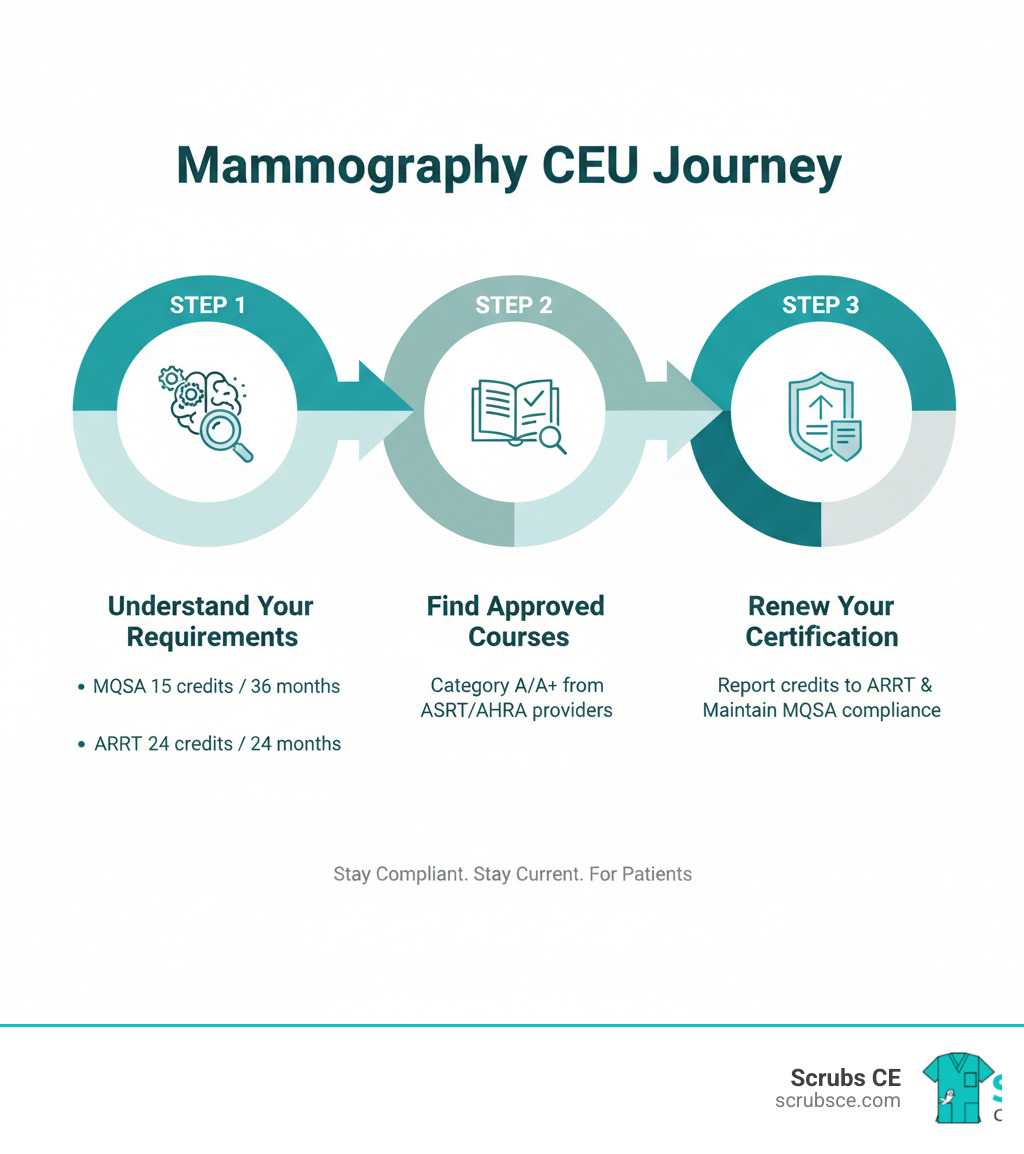
- MQSA Requirement: 15 CE credits every 36 months, with at least 6 credits specific to each modality you use
- ARRT® Requirement: 24 CE credits every 24 months (biennium) for certification renewal
- Credit Types: Category A or A+ credits approved by an ARRT-recognized RCEEM
- Formats Available: Online courses, e-books, mailed materials, or test-only options
- Typical Cost: Individual courses range from $28-50, packages from $29.99
For mammography technologists, continuing education is vital for patient safety, career advancement, and staying current with evolving technology like Digital Breast Tomosynthesis (DBT).
Navigating the regulatory landscape can be challenging, with requirements from the MQSA (Mammography Quality Standards Act), ARRT® (American Registry of Radiologic Technologists), and state licensing boards. However, understanding these requirements simplifies the process. Knowing what credits you need and where to find quality courses ensures you remain compliant and confident, whether you’re facing an MQSA inspection or an ARRT® renewal.
Modern CE options are designed for busy professionals, with self-paced online courses, instant certificates, and affordable packages that allow you to learn on your schedule and easily meet all requirements.
Understanding Your Mammography CEU Requirements
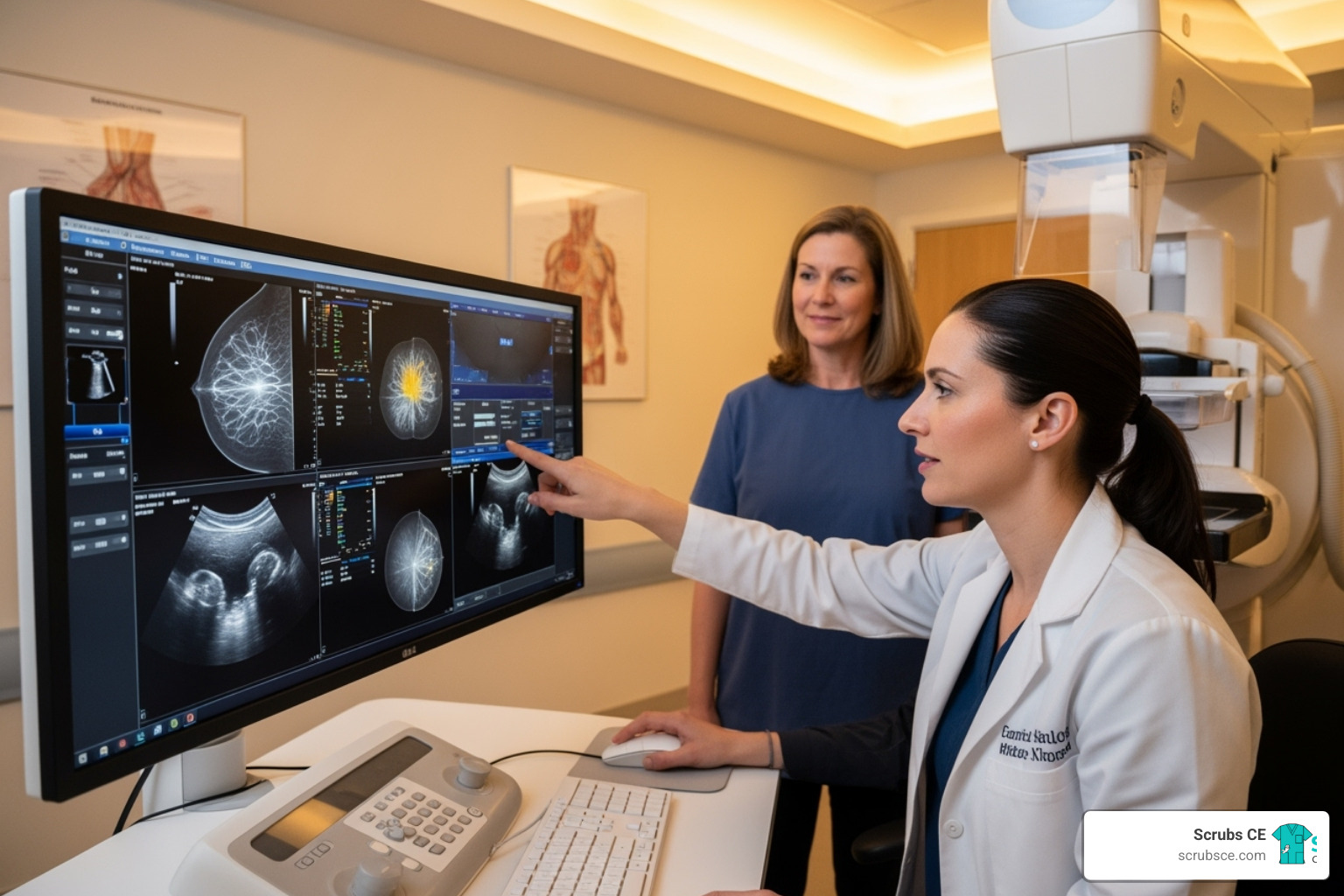
Keeping track of mammography CEUs can feel overwhelming due to overlapping MQSA, ARRT®, and state licensing rules. This section breaks down the mandatory educational requirements to help you stay compliant and certified without the stress.
MQSA Continuing Education Requirements
The Mammography Quality Standards Act (MQSA) is the FDA’s way of ensuring every mammographer maintains the skills for accurate, safe breast imaging. The FDA MQSA requires you to complete 15 continuing education units in mammography within the 36-month period before your facility’s annual inspection. This is a rolling three-year window.
A key detail is that at least 6 of those 15 CEUs must be specific to each modality you use. If you work with both Digital Breast Tomosynthesis (DBT) and Full-Field Digital Mammography (FFDM), you need at least 6 credits for DBT and 6 for FFDM within that 36-month period. This requirement reflects how quickly breast imaging technology evolves. Many courses cover multiple modalities, so you just need to ensure your credits align with the equipment you use.
For a deeper dive into these regulations, check out our guide on Mammography Continuing Education Requirements.
ARRT® Certification and Renewal
While MQSA focuses on facility compliance, the American Registry of Radiologic Technologists (ARRT®) handles your personal certification. For ARRT® renewal, you need 24 CE credits during each biennium (a two-year period). Your biennium starts on the first day of your birth month and ends two years later on the last day of the month before your birth month.
The ARRT® has also introduced Continuing Qualifications Requirements (CQR) for some specialties. If CQR applies to you, a periodic assessment identifies knowledge gaps. You must then complete structured education—specific courses designed to fill those gaps. This targeted learning addresses the exact areas where you need a refresher. The structured education requirement is 16 credits of your total 24 during that biennium.
Your ARRT® certification is often a prerequisite for state licensure and employment. For more on the renewal process, our article on Mammography Technologist License Renewal walks you through it.
Initial Training vs. Ongoing CE
It’s important to distinguish between the initial training required to become a mammographer and the ongoing mammography CEUs needed to maintain certification.
Initial training was your foundation: 40 hours of instruction, 25 supervised exams, and 8 hours of hands-on modality training. Ongoing CE is about keeping those skills sharp, learning about new technologies, and staying current with best practices.
Here’s how they compare:
| Requirement Type | Initial Mammography Training | Ongoing Mammography CE |
|---|---|---|
| Purpose | Establish foundational knowledge & skills | Maintain & update knowledge, adapt to new tech & best practices |
| Hours/Credits | 40 hours of didactic training | 15 CE credits (MQSA) / 24 CE credits (ARRT®) |
| Practical Component | 25 mammography examinations under supervision | N/A (focus on theoretical knowledge & skill refresh) |
| Modality Specific | 8 hours of modality-specific training for each modality prior to independent use (e.g., FFDM, DBT) | At least 6 CE credits related to each mammographic modality used within the 36-month MQSA period |
| Frequency | One-time requirement to qualify | Every 36 months (MQSA) / Every 24 months (ARRT®) |
| Topics Covered | Breast anatomy, physiology, positioning, compression, quality assurance, QC, imaging breast implants | Advanced positioning, digital image acquisition, breast pathologies, biopsy techniques, quality management, new modalities |
Your initial training got you in the door. Your continuing education keeps you there—and helps you excel at what you do.
Navigating Your Options for Mammography CEUs

Once you know your credit requirements, the next step is choosing how to earn them. Modern continuing education offers flexible formats to fit your schedule, from online courses and e-books to test-only options. The topics are also diverse, covering everything from new imaging technology to patient communication.
Course Formats: Online, Print, and More
Because you’re busy, CE providers have created flexible options that work around your schedule.
Online courses are the most popular choice. You can learn at your own pace from any device, and instant certificates are available upon completion, helping you meet deadlines without hassle.
E-books offer comprehensive content in a digital textbook format. You can highlight, bookmark, and access them offline, making them a great reference tool.
For those who prefer physical materials, mailed courses are still available. You’ll receive a book or booklet, study at your leisure, and complete the assessment online or by mail.
A major time-saver is the test-only option. If you’re already confident in a topic, you can skip the course material and proceed directly to the exam to demonstrate your knowledge. It’s an efficient and cost-effective way to earn credits. For example, consider our Breast Imaging: The Requisites Test Only Emailed option.
The bottom line? Your mammography CEUs should fit your learning style and schedule, not force you into someone else’s box.
Key Topics in Mammography Continuing Education
CE courses are opportunities to deepen your expertise and provide better patient care.
- Breast anatomy and pathology courses sharpen your ability to recognize subtle differences between normal tissue and potential pathologies, improving your positioning and communication with radiologists.
- Positioning techniques courses provide strategies for challenging real-world scenarios, helping you capture diagnostic-quality images even in difficult cases.
- Quality management and control courses cover MQSA regulations and equipment calibration, ensuring you and your facility remain compliant.
- Digital Breast Tomosynthesis (DBT) has become essential. Courses on 3D imaging principles and acquisition techniques will keep you ahead of the curve. We offer dedicated courses on Digital Breast Tomosynthesis to help you master this technology.
- Stereotactic biopsy and other interventional techniques require precision and specialized training. CE courses cover targeting methods, equipment, and patient preparation.
- Breast implants present unique challenges. Courses on modified positioning (like the Eklund view) and potential complications help you provide safe, effective care.
- Patient care and communication courses focus on the human side of mammography, helping you refine your skills to support anxious patients and provide better education.
For a deeper dive, explore our article on 7 Topics You Will Cover in Mammography Continuing Education. Today’s mammography CEUs are designed to make you a better technologist.
How to Choose High-Quality, Approved Courses
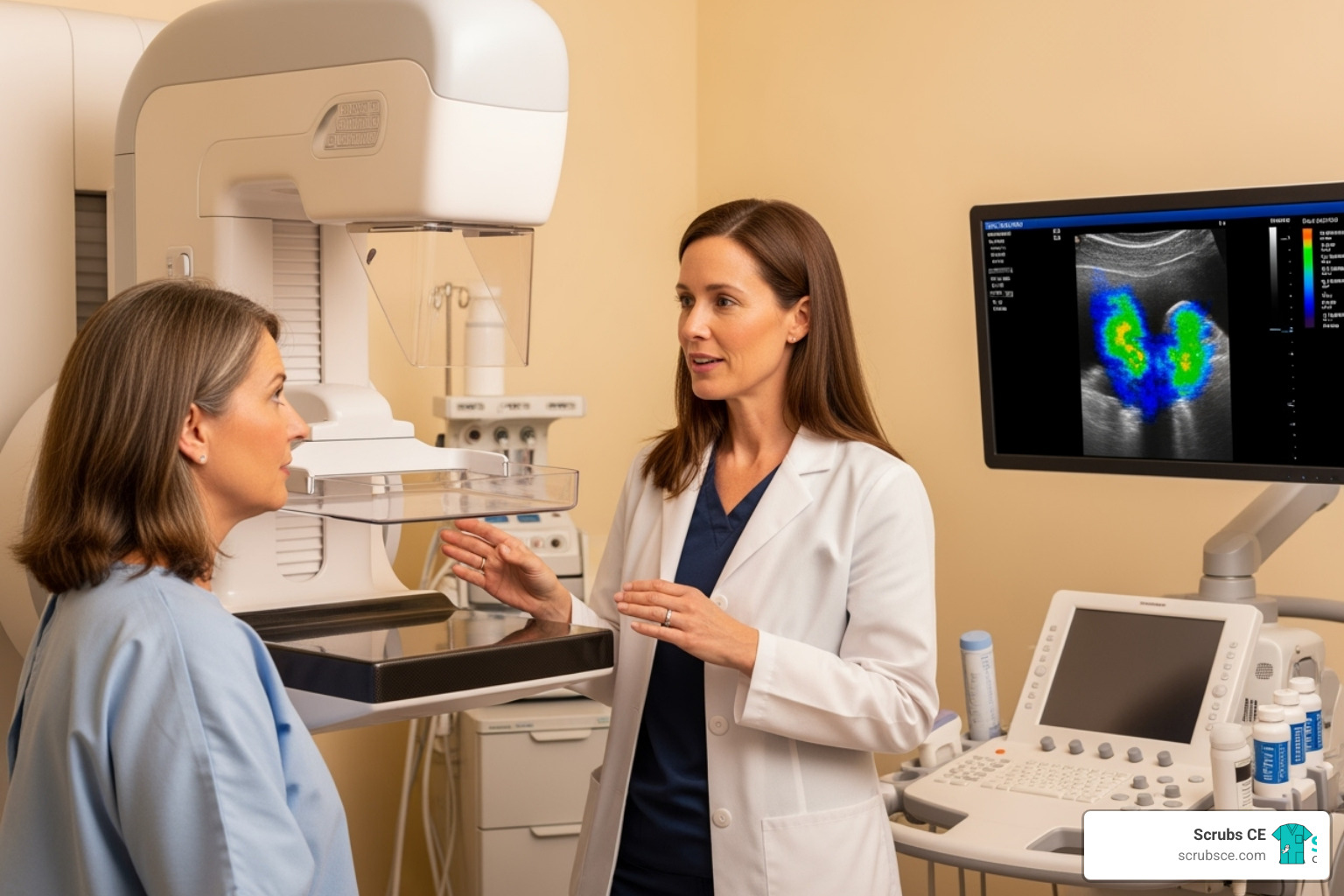
Selecting the right mammography CEUs isn’t just about finding interesting topics; it’s about ensuring every credit counts toward your certification and compliance. The last thing you want is to complete a course only to find it’s not accepted. This section will help you verify accreditation and ensure your credits are recognized.
Verifying Course Acceptance
Not all CE courses are created equal. Your job is to spot the difference before you enroll.
The most important factor is ARRT® acceptance. Your courses must come from a Recognized Continuing Education Evaluation Mechanism (RCEEM). Look for a clear statement that the activity is RCEEM-approved to ensure it meets ARRT® standards.
For mammography, you also need MQSA compliance. Your course provider should explicitly state that their mammography CEUs satisfy MQSA requirements, including the 15 CEUs in 36 months and the 6 CEUs per modality.
You’ll see courses listed as Category A credits or Category A+ credits. Both are accepted by the ARRT®. Category A credits are approved by an RCEEM, while Category A+ credits undergo a more rigorous peer-review process. Either type will fulfill your requirements.
Finally, check with your state licensing agency. While most states accept ARRT®-approved credits, some have unique requirements. A quick check can prevent future headaches. We work to ensure our courses are widely accepted, but it’s always smart to confirm.
Fulfilling Structured Education and CQR
The ARRT® has introduced specific mechanisms for targeted learning. If you’re hearing terms like Structured Education and CQR, here’s what they mean.
Structured Education refers to courses designed to meet specific learning objectives for a particular credential. For mammography, the ARRT® requires 16 credits of Structured Education for technologists seeking certain credentials. These credits must be in predefined content areas. Many providers clearly label which courses satisfy this requirement. For example, our Breast Imaging Essentials: The Series is specifically designed to fulfill this requirement, giving you a comprehensive learning experience that checks all the boxes.
Continuing Qualifications Requirements (CQR) is the ARRT®’s process for ensuring ongoing competence. If you’re subject to CQR, you’ll take an assessment that identifies knowledge gaps. The ARRT® then prescribes specific structured education to strengthen those areas. It’s a personalized learning system that addresses your specific needs.
When selecting courses, especially for a new credential or CQR, always verify that the content aligns with ARRT® requirements. This ensures you’re not just earning credits but building expertise where you need it most.
Finding the Best Value: Costs and Course Packages
Let’s talk money. Continuing education is an investment in your career, but it shouldn’t break the bank. This section covers how to get the most out of your budget with affordable course options, packages, and discounts, ensuring you can meet your mammography CEUs requirements without financial stress.
Typical Costs for Mammography CEUs
Prices for mammography CEUs can vary. Understanding the options helps you make smart spending decisions.
Individual courses are a straightforward option, typically ranging from $25 to $50 depending on the number of credit hours. This works well if you only need a few specific credits or want to try a new provider.
Package deals offer the best savings. Instead of buying courses one by one, providers bundle them to meet your complete MQSA or ARRT® requirements. For example, a package offering 26 online CE credits for just $29.99 provides everything you need at a fraction of the per-credit cost.
All-access passes are another great value, giving you unlimited access to an entire library of courses for a flat fee, often around $49.99 for a year. This is ideal if you need many credits or enjoy continuous learning.
We also offer discounts and a price-match guarantee on our Category A Radiology CE courses to ensure you get the best deal. For current pricing, check out our Mammography CE Courses page.
Money-Saving Options
We’re committed to making continuing education accessible and affordable. Here are some smart strategies to stretch your CE budget.
Combination packs are your secret weapon for value. These curated bundles cover your complete MQSA and ARRT® requirements in one purchase, often saving you 50% or more compared to buying courses separately.
If you’re a seasoned professional, test-only options can be a game-changer. Instead of paying for a full course, you pay only for the assessment. You prove your knowledge, earn your credits, and save money. Our Mammography Breast Imaging Prep 3rd Ed. Test Only Mailed option is a perfect example.
Don’t overlook free resources. Many providers offer free e-books or sample courses that can supplement your learning without any cost.
Finally, ask about group discounts. If several colleagues need CEUs, many providers, including us, offer reduced rates for bulk purchases. It’s a win-win for everyone on your team.
Frequently Asked Questions about Mammography CEUs
We know you might still have some questions, so let’s tackle the most common ones we hear about mammography CEUs.
How many mammography CEUs do I need for MQSA?
The FDA MQSA requires 15 continuing education units (CEUs) specific to mammography within the 36 months before your facility’s annual inspection. Crucially, at least 6 of these credits must relate to each specific mammographic modality you use. For example, if you use both Digital Breast Tomosynthesis (DBT) and Full-Field Digital Mammography (FFDM), you need 6 CEUs for DBT and 6 CEUs for FFDM within that 36-month period, plus 3 more general mammography credits to reach the total of 15.
For more details, see our guide on Mammography Continuing Education Requirements.
Can I use the same CEUs for my ARRT® renewal and MQSA requirements?
Yes, this is a great way to make your CE more efficient. As long as your mammography CEUs are approved as Category A or A+ by an ARRT®-recognized RCEEM, they can count toward both your ARRT® renewal (24 credits every 24 months) and your MQSA requirements (15 credits every 36 months). This overlap is a huge time-saver.
If you’re approaching your renewal deadline, our article on Mammography Technologist License Renewal: What You Need to Know can guide you.
What is the difference between Category A and A+ CE credits?
Both Category A and A+ credits are fully accepted by the ARRT® for renewal. The difference lies in the review process.
- Category A credits are approved by an ARRT® Recognized Continuing Education Evaluation Mechanism (RCEEM), meeting established quality standards.
- Category A+ credits undergo an even more rigorous peer-review process by a RCEEM+ organization for the highest level of quality assurance.
For compliance purposes, both types of mammography CEUs are equally valid. You can confidently choose courses based on content and convenience, knowing either credit type will count.
Conclusion: Invest in Your Mammography Career Today
You’re now equipped with everything you need to tackle your mammography CEUs with confidence. This isn’t just about checking boxes; it’s about investing in yourself and the patients who trust you with their care.
Every course you complete improves your skills. Studying advanced positioning helps ensure clearer images. Learning about Digital Breast Tomosynthesis keeps you ahead of technology that can detect cancers earlier. Your continuing education has a direct, positive impact on patient outcomes.
We’ve covered the MQSA 15-credit rule and ARRT®’s 24-credit biennium. We’ve explored flexible online courses, e-books, and test-only options that fit your schedule. We’ve also shown you how to verify course acceptance and find affordable packages.
The path forward is clear: choose accredited courses recognized by both ARRT® and MQSA, look for package deals, and take advantage of self-paced learning. You’re not just maintaining a certification—you’re sharpening the skills that make you a better technologist.
Don’t let your next deadline sneak up on you. Getting ahead of your requirements means less stress and more time to focus on what you do best: providing exceptional patient care.
Ready to get started? Explore our comprehensive Mammography CEUs and find courses designed for busy professionals like you. With instant certificates and affordable pricing, you can invest in your career today.
Recent Comments