
Why Continuing Education is Crucial for Rad Techs
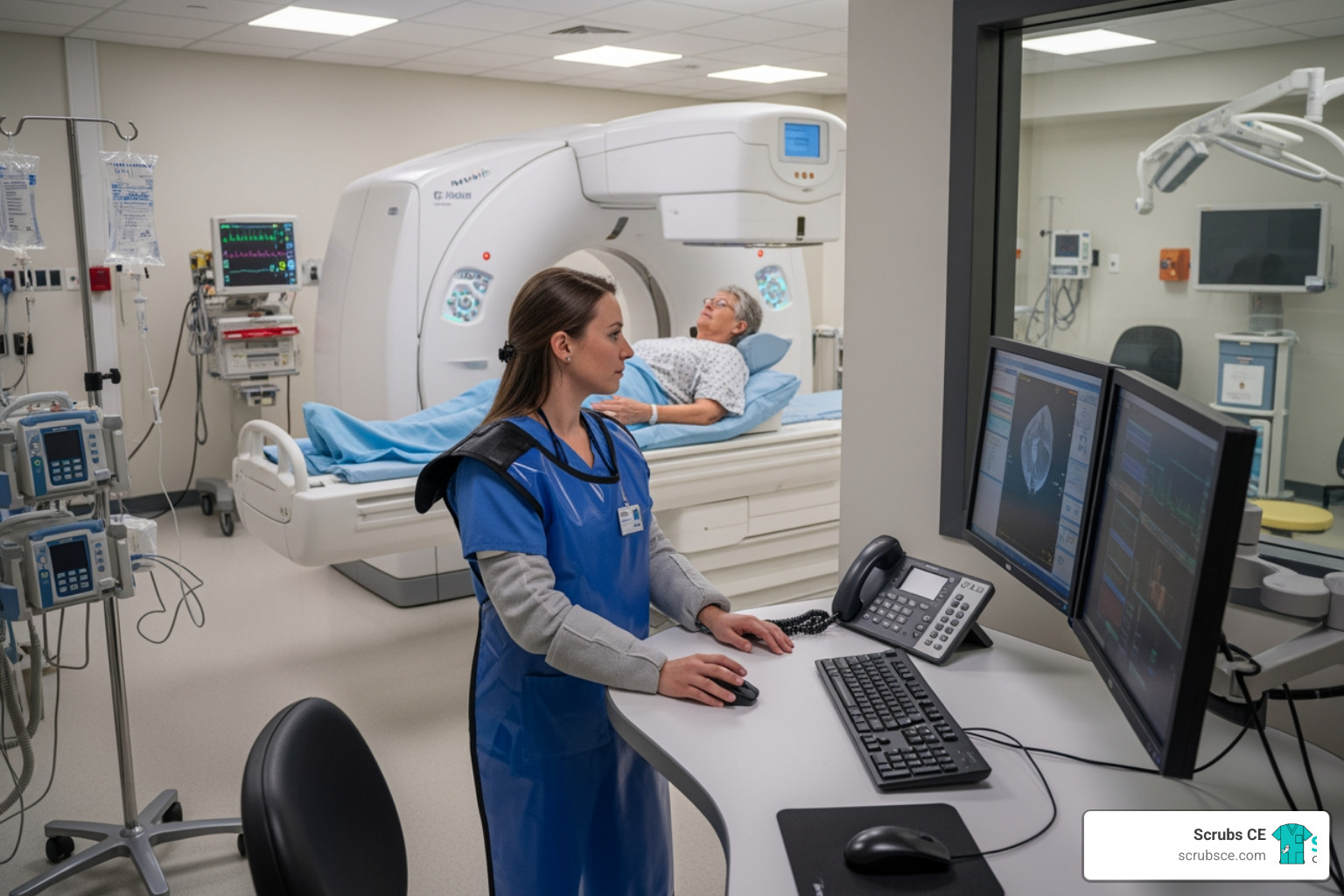
Radiologic technologist continuing education credits are required to maintain your ARRT certification and registration. Here’s what you need to know:
Basic CE Requirements:
- Standard R.T. credentials: 24 approved CE credits every biennium (2 years)
- R.R.A. (Radiologist Assistant): 50 approved CE credits every biennium
- Sonography credential holders: 16 of your 24 credits must be discipline-specific
- Annual renewal: Required every year with a fee
- CQR (Continuing Qualifications Requirements): Separate 10-year requirement for R.R.A.s and R.T.s certified in 2011 or later
Your CE credits must be approved by ARRT-recognized organizations like ASRT or AHRA. Courses are available online, through home study, or at in-person conferences.
The stakes are high. As medical imaging technology advances rapidly, continuing education isn’t just a regulatory checkbox—it’s essential for patient safety and quality care. Without meeting your CE requirements, you risk CE probation or losing your certification entirely.
The challenge? Finding time for learning while managing demanding work schedules, ensuring your courses are properly approved, and tracking everything correctly for ARRT reporting.
I’m Zita Ewert, and I’ve spent years helping imaging professionals steer radiologic technologist continuing education credits through SCRUBS Continuing Education®. We’ve developed over 1,500 approved courses specifically designed to meet your certification needs while fitting into your busy schedule.
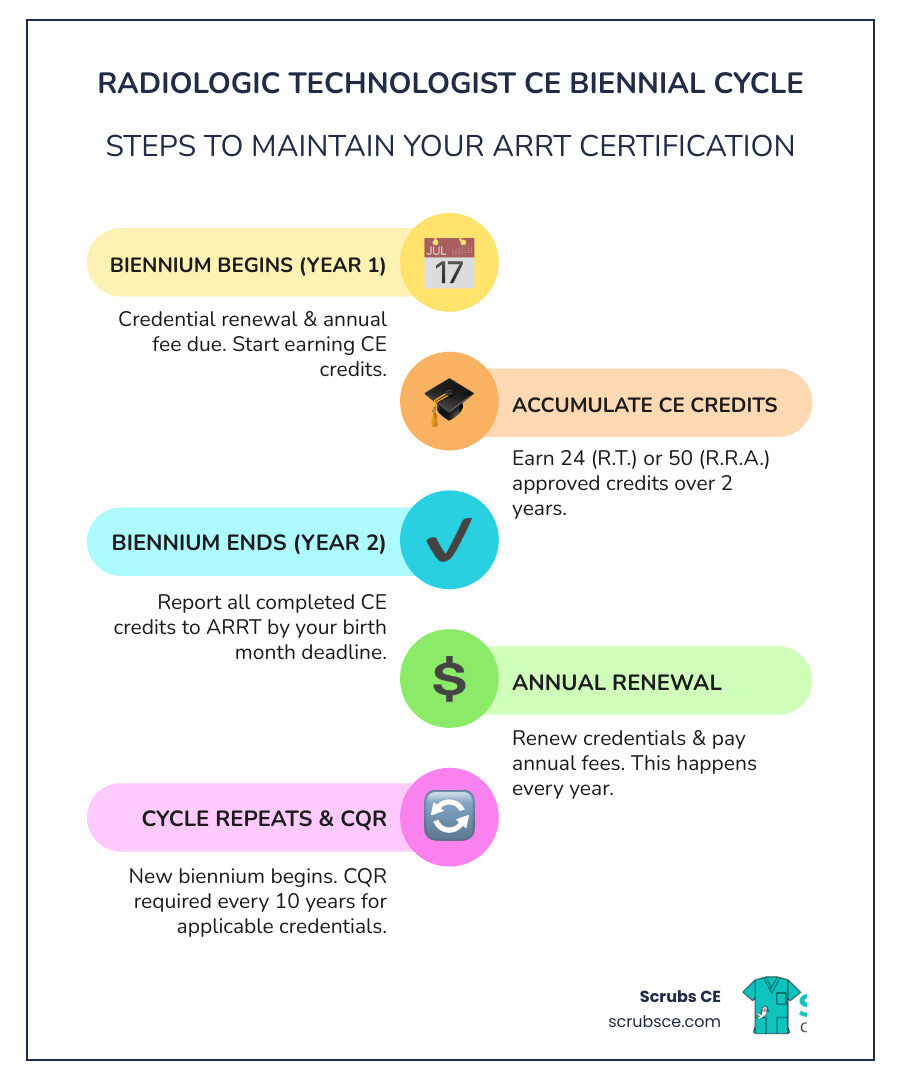
Understanding ARRT and Radiologic Technologist Continuing Education Credits
The American Registry of Radiologic Technologists (ARRT) stands as the leading credentialing organization for radiologic technologists in the United States. Its mission is to ensure high standards of patient care by certifying and registering qualified individuals across various radiologic disciplines. With over 360,000 registrants, the ARRT plays a pivotal role in the careers of medical imaging and radiation therapy professionals. Maintaining your ARRT certification and registration is paramount, and a cornerstone of this maintenance is regularly completing radiologic technologist continuing education credits.
We understand that keeping up with these requirements can feel like a maze, so let’s shed some light on the essentials. The ARRT mandates that all R.T.s complete biennial continuing education (CE) requirements. “Biennial” simply means “every two years.” This two-year period, known as your biennium, is a fixed cycle that begins the first day of your birth month and ends two years later. You’ll also need to renew your credentials annually and pay a fee, as outlined in the Guide to Maintaining Your ARRT Credential. For more on the renewal process, check out our guide on ARRT CE Renewal.
It’s important to differentiate between general CE credits and other ARRT requirements, such as the Continuing Qualifications Requirements (CQR) and Structured Education. While CE credits are about maintaining your active registration every two years, CQR is a separate, decennial (every 10 years) requirement for Registered Radiologist Assistants (R.R.A.s) and those who earned their R.T. certification and registration in 2011 or later. Structured Education, on the other hand, typically refers to specific educational activities needed to qualify for a new, post-primary ARRT certification, not for routine maintenance. We’ll dig deeper into Structured Education later, but for now, these are distinct components of your professional journey.

How Many CE Credits Are Required?
This is often the first question our technologists ask, and for good reason! The number of radiologic technologist continuing education credits you need depends on your specific ARRT credential.
Most R.T.s (Radiologic Technologists) are required to earn 24 approved CE credits during their bienniums. This is the standard for primary certifications like Radiography (R).
However, if you hold an R.R.A. (Registered Radiologist Assistant) credential, your requirement is significantly higher: 50 approved CE credits each biennium. This reflects the advanced scope of practice for R.R.A.s.
For those holding a Sonography credential, there’s a specific discipline-related component: 16 of your biennial CE credits need to be directly related to this discipline. This ensures specialized knowledge remains current.
Here’s a quick summary:
| ARRT Credential | CE Credits Required per Biennium | Discipline-Specific Credits (if applicable) |
|---|---|---|
| R.T. (most) | 24 | N/A |
| R.R.A. | 50 | N/A |
| Sonography | 24 (total) | 16 must be Sonography-related |
If you’re wondering How many X-ray CE credits do I need for radiography?, the answer is generally 24.
A common concern is how earning additional credentials impacts your CE reporting dates. Good news! Your CE reporting dates will always remain the same, even if you earn additional credentials later. This consistency helps avoid confusion. While the dates are fixed, you can, however, request to change the year of your CE biennium if needed, though this is less common.
Complying with ARRT Rules and Ethics
Maintaining your professional standing goes beyond just accumulating radiologic technologist continuing education credits. It fundamentally involves adhering to the strict guidelines set forth by the ARRT. We cannot stress enough the importance of remaining compliant with the ARRT Rules and Regulations and the ARRT Standards of Ethics. These documents are your professional compass, guiding your conduct and ensuring patient safety and public trust.
Professional conduct is not just a suggestion; it’s a core expectation. Any breach of these rules or ethical standards can have severe consequences for your certification and, by extension, your career. The ARRT takes these matters very seriously, as they underpin the integrity of the entire profession.
Furthermore, if you hold postprimary credentials (e.g., CT, MRI, Mammography), it’s crucial to maintain certification and registration in a supporting discipline. This means your primary certification (like Radiography) must remain active for your advanced credentials to stay valid. Think of it as a professional ecosystem where all parts need to thrive. Continuous Professional Development Healthcare is key to staying informed and compliant.
Navigating CE Course Types, Providers, and Formats
Understanding the “what” and “how” of your radiologic technologist continuing education credits is vital. Not all CE is created equal, and knowing the types of credits, who approves them, and the formats available will make your life much easier.
When looking for CE, you’ll often encounter “Category A” and sometimes “Category A+” credits. Category A credits are the bread and butter of ARRT’s CE requirements. These are activities approved by an ARRT-recognized CE mechanism, like the American Society of Radiologic Technologists (ASRT) or the American Healthcare Radiology Administrators (AHRA). Essentially, Category A credits are directly relevant to medical imaging or radiation therapy and are designed to improve your professional knowledge and skills. Category A+ credits are typically associated with Structured Education requirements, often for post-primary certification. Always ensure your chosen courses are approved for Category A credit to count towards your ARRT biennium. Our Radiology CE Credits Complete Guide can help you steer this.
The beauty of modern continuing education is the flexibility in formats. We offer a robust selection of convenient options to fit your busy life:
- Online Courses: These are incredibly popular for a reason! They offer unparalleled flexibility, allowing you to learn at your own pace, anytime, anywhere. Many platforms, like ours, offer instant certificates upon completion. Some providers even boast that you can earn 24 credits in as little as one week, which is a lifesaver when deadlines loom.
- Home Study: Similar to online courses, home study allows you to review materials (often textbooks or digital modules) and complete tests at your convenience.
- Group CE Purchases: For radiology departments or larger teams, group purchases can be a cost-effective and efficient way to ensure all staff members meet their CE requirements simultaneously. It’s a great way to foster team learning and ensure consistent professional development across the board.

Finding Approved Radiologic Technologist Continuing Education Credits
So, how do you ensure the courses you’re taking actually count? The key lies with the approving organizations. The ARRT doesn’t directly approve individual courses; instead, it relies on recognized CE mechanisms to do so. The two most prominent organizations that approve CE courses for radiologic technologists are:
- The American Society of Radiologic Technologists (ASRT): This is the largest professional organization for medical imaging and radiation therapy professionals. ASRT approval is widely recognized and accepted by the ARRT.
- The American Healthcare Radiology Administrators (AHRA): AHRA also approves CE activities that meet ARRT’s standards.
When you’re looking for courses, always look for explicit statements of approval from the ASRT or AHRA, often indicated by an ASRT approval number. This is your guarantee that the course will be accepted by the ARRT. For a comprehensive look at what to expect, our ASRT CE Requirements Complete Guide is an excellent resource.
We also make it easy to find Online CEU Credits that meet these crucial approval standards.
Becoming a member of professional organizations like the ASRT offers significant benefits. In addition to providing resources for finding approved CE, membership offers invaluable opportunities for networking, professional advocacy, and staying current in your field. We highly encourage joining these organizations to support your career growth.
What Kinds of Courses Can You Take?
The world of radiology is vast and changing, and your radiologic technologist continuing education credits should reflect that diversity. We offer a wide array of courses to not only fulfill your requirements but also to expand your knowledge and potentially even open doors to new career paths.
Here’s a list of popular course topics and modalities you can typically find:
- General Radiography: Covering everything from basic principles to advanced positioning and image analysis.
- Computed Tomography (CT): Including topics on imaging protocols, dose reduction, and advanced applications. You can explore our CT/MRI CE offerings.
- Magnetic Resonance Imaging (MRI): Courses often dig into physics, safety, and specific body region imaging. Our CT/MRI CE also covers MRI.
- Mammography: Essential for those specializing in breast imaging, often covering MQSA requirements and new technologies. See our Mammography CE Courses.
- Ultrasound/Sonography: From basic principles to specialized vascular or cardiac ultrasound. Check out our Ultrasound CE Courses.
- Fluoroscopy: Focusing on radiation safety, patient care during procedures, and specific applications. We have dedicated Fluoroscopy CE Courses.
- Nuclear Medicine: Covering radiopharmaceuticals, imaging techniques, and safety.
- Cardiac Interventional Radiography: Specialized topics for those in cardiac cath labs.
- Leadership and Management: For those looking to advance into supervisory or administrative roles.
- Patient Safety and Radiation Protection: Fundamental topics crucial for all imaging professionals.
- Cross-Sectional Anatomy: Enhancing your understanding of anatomical structures.
- Digital Imaging and PACS: Keeping you up-to-date with digital technology.
Many providers, including us, offer Expert-Led Courses to ensure you’re learning from the best in the field. Whether you’re looking to deepen your expertise in your current modality or explore a new one, there’s a CE course out there for you!
Specialized and State-Specific CE Requirements
While the ARRT sets the national standard for certification, it’s crucial to remember that state licensure often comes with its own set of rules. This is where things can get a little tricky, as state requirements for radiologic technologist continuing education credits don’t always perfectly align with ARRT’s mandates. Your state license is what legally allows you to practice within that state, and fulfilling its CE requirements is just as important as maintaining your ARRT certification.
We always advise our technologists to consult their specific State Agencies or licensing boards to confirm their exact CE requirements. It’s not uncommon for states to have additional mandates, such as specific courses in radiation safety, ethics, or even modality-specific training, regardless of your ARRT status.
For our international colleagues, the concept of continuing professional development (CPD) is similar to CE. Many of our courses are recognized for international Radiographers’ CPD requirements, making it easier for professionals worldwide to maintain their credentials. Always check with your local regulatory body for specific acceptance.
State-Specific Radiologic Technologist Continuing Education Credits
Let’s look at some examples of how state-specific requirements can differ:
- California: Known for its stringent regulations, California often requires specific courses beyond general ARRT CE. This can include specialized training in Fluoroscopy Radiation Safety, Digital Radiography, and Nuclear Medicine. It’s vital to ensure your courses are explicitly approved for California. For a detailed breakdown, see our California CE Requirements.
- Florida: Professionals in Florida need to ensure their CE providers are recognized by the Florida Department of Health, Bureau of Radiation Control (DOH-BRC). This ensures the courses meet the state’s unique standards. Our Florida License Radiologic Technologist Ultimate Guide provides all the necessary information.
- Texas: The Texas Medical Board often requires directly related x-ray continuing education radiology CE courses. This means the content must be highly pertinent to your area of practice. Our Texas Radiology CEU Complete Guide can help you steer these specifics.
- Other States: While not as frequently highlighted, states like Iowa, Illinois, and Kentucky also have their own specific requirements. Always double-check!
CE for Advanced Modalities and Specialties
Beyond general and state-specific requirements, certain advanced modalities and specialties have their own dedicated radiologic technologist continuing education credits that must be met. These ensure that professionals working with specialized equipment and procedures maintain a high level of expertise and safety.
- Mammography (MQSA): For mammographers, federal regulations are key. The FDA’s Mammography Quality Standards Act (MQSA) mandates specific CE requirements to ensure quality and safety in breast imaging. These are in addition to ARRT or state requirements. Our Mammography Continuing Education Requirements guide covers this in detail.
- MRI: As MRI technology advances, so do the CE needs. Courses often focus on MRI safety, advanced imaging techniques, and protocol optimization. Understanding why Why MRI Programs for Continuing Education Are Important can highlight the value of these specialized credits.
- Ultrasound/Sonography: As mentioned earlier, if you hold a Sonography credential, 16 of your biennial CE credits must be directly related to this discipline. This ensures you stay current with the latest in sonographic techniques and patient care. Our CE for Sonographers Guide offers comprehensive information.
- Nuclear Medicine: Professionals in nuclear medicine need CE that addresses radiation safety, new radiopharmaceuticals, and evolving imaging procedures. You can find more information on Nuclear Medicine Continuing Education.
- Cardiac Interventional Radiography: This highly specialized field requires CE that focuses on cardiac anatomy, interventional procedures, and patient monitoring. Our Cardiac Interventional Radiography Certification Guide can help you understand the requirements for this area.
These specialized CE requirements are designed to ensure that professionals in these critical areas possess the most up-to-date knowledge and skills, ultimately benefiting patient outcomes.
Managing Your CE: Tracking, Reporting, and Compliance
Completing your radiologic technologist continuing education credits is only half the battle; the other half is effectively managing them. This involves meticulous tracking, timely reporting to the ARRT, and understanding the implications of an audit or non-compliance.
The ARRT provides an online dashboard for technologists to track and report their completed CE credits. It’s a convenient tool, but it relies on you accurately inputting your information. We recommend reporting your credits as you earn them, rather than waiting until the last minute. This prevents forgotten courses or lost certificates.
Maintaining thorough records is paramount. Always keep copies of your CE certificates of completion, detailing the course name, provider, date completed, and the number of CE credits awarded. While ARRT performs random audits, it’s not a matter of “if” but “when” you might be selected. Being prepared with your documentation will make the audit process smooth and stress-free.
What happens if you fall short of your CE requirements? The ARRT has a clear process for this. You might first enter a period of CE probation, which gives you a limited time to make up the deficit. If you fail to meet the requirements even during probation, your certification and registration could lapse. Reinstatement is possible but involves additional steps, fees, and often more rigorous CE requirements. Understanding this process is vital for your career, and our Rad-Tech License Renewal: Complete Guide provides further details.
The consequences of non-compliance can be severe, ranging from temporary suspension to permanent loss of your ARRT certification. This not only impacts your professional standing but also your ability to legally practice as a radiologic technologist. So, staying ahead of your CE is not just good practice—it’s essential for your livelihood.
Frequently Asked Questions about Rad Tech CE Credits
We receive a lot of questions about radiologic technologist continuing education credits, and we’re happy to clear up some of the most common ones.
Can I change my CE biennium dates?
Once you earn your initial ARRT certification and registration, your CE reporting dates are assigned and will always remain the same. This consistency helps manage your professional obligations. However, we understand that life happens, and sometimes a change might be necessary. You can request to change the year of your CE biennium, but it’s not a simple process and typically requires a valid reason. If you need to make such a request, you can Download the ARRT biennium change form directly from the ARRT website. Be aware that changing your biennium will shift your reporting period and may require careful planning to avoid any gaps or overlaps in your CE compliance.
What is the difference between CE and Structured Education?
This is a point of confusion for many. Radiologic technologist continuing education credits (CE) are what you earn biennially to maintain your existing ARRT certification and registration. As we’ve discussed, this is typically 24 credits for most R.T.s. Think of it as keeping your current professional license active and up-to-date. Our Radiologic Technologist CE Complete Guide digs into this further.
Structured Education, on the other hand, is a specific set of educational requirements you must meet to qualify for and earn a new, post-primary ARRT certification (e.g., CT, MRI, Mammography). It’s not for renewing an existing credential. These usually involve 16 hours of specific coursework covering the content specifications for the new certification you’re pursuing. It’s a pathway to expand your credentials, not just maintain them. If you’re considering a new certification, you’ll definitely want to read What you need to know about ARRT’s Structured Education Solutions and Requirements.
Can I use academic courses for CE credit?
Yes, in many cases, you can use academic courses from accredited colleges or universities for radiologic technologist continuing education credits. However, there are specific conditions:
- Relevance: The course content must be relevant to the radiologic sciences. This typically means courses in anatomy, physiology, pathology, physics, radiation biology, medical ethics, or specific imaging modalities. General education courses like history or literature usually won’t count.
- Grade Requirements: You typically need to earn a grade of “C” or better (or “pass” for pass/fail courses) for the credits to be accepted by ARRT.
- Conversion: Academic credit hours need to be converted into CE credits. The general rule of thumb is that one semester hour equals 16 CE credits, and one quarter hour equals 10 CE credits. Always verify the current conversion rates with the ARRT or your specific state board, as these can sometimes change.
This option can be particularly beneficial if you’re pursuing a higher degree while also needing to fulfill your biennial CE requirements.
Conclusion: Investing in Your Career Through Continuing Education
As we’ve explored, radiologic technologist continuing education credits are far more than just a bureaucratic hurdle; they are a vital investment in your professional growth, patient safety, and career longevity. In a field as dynamic as medical imaging, where technology and best practices are constantly evolving, lifelong learning isn’t just a recommendation—it’s a necessity.
By diligently meeting your CE requirements, you ensure you remain compliant with ARRT standards, uphold ethical conduct, and keep your skills sharp. This commitment to ongoing education directly translates into improved patient care and increased confidence in your abilities. If you need more convincing, consider the 5 Benefits of Continuing Radiology Education.
We understand the challenges of fitting education into a busy schedule, which is why we’ve dedicated ourselves to making the process of earning your radiologic technologist continuing education credits as convenient and straightforward as possible. Our comprehensive, self-paced online courses are designed to help you meet your requirements with ease, offering high-quality content and instant certificates to streamline your reporting process.
Don’t let your CE requirements become a source of stress. Take control of your professional development today. We invite you to Explore our comprehensive catalog of radiology CE courses and find how simple and rewarding continuing education can be. Your patients, your employer, and your career will thank you for it!
Recent Comments