
What is Diagnostic Medical Sonography and Why Does It Matter?
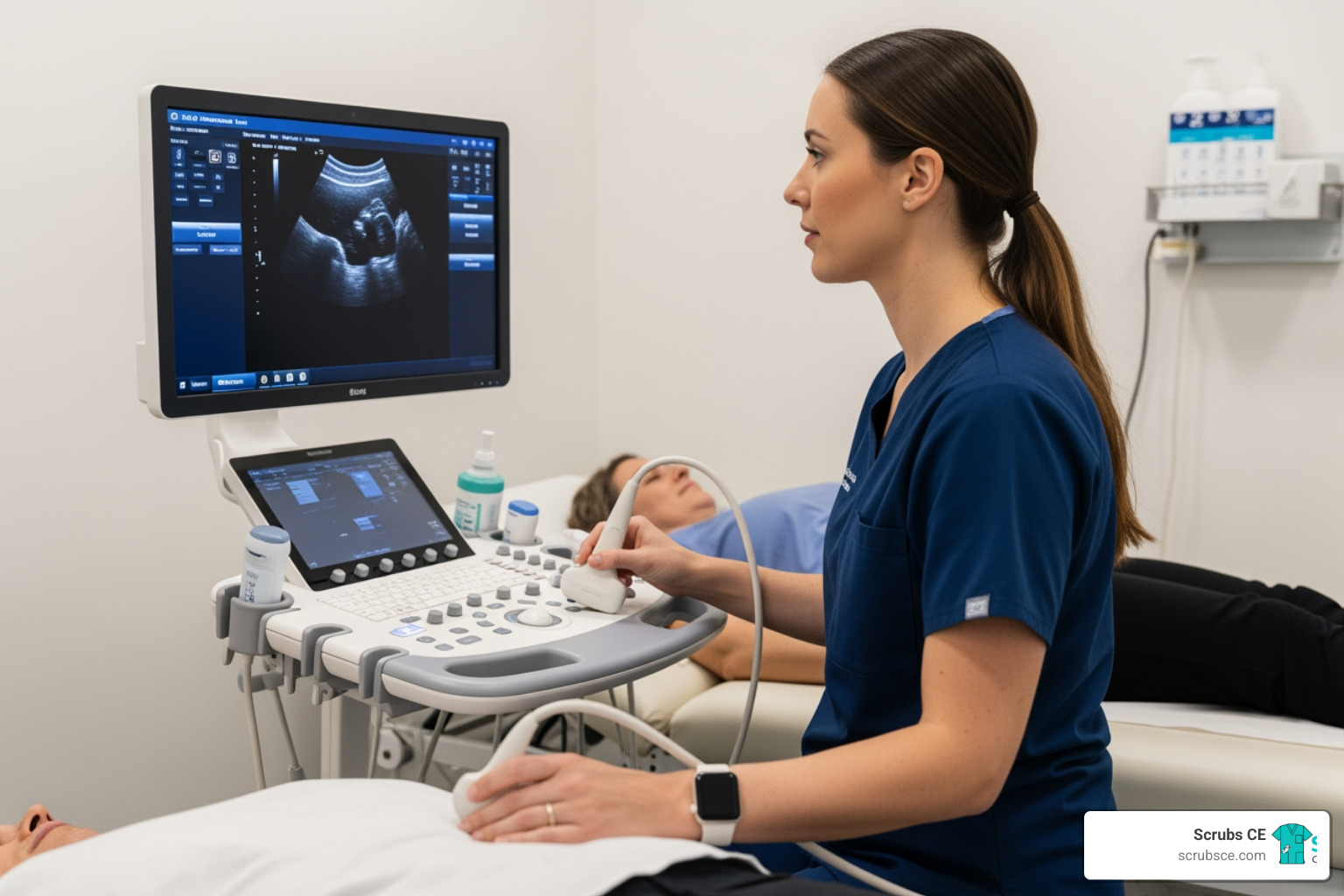
Diagnostic medical sonography is a specialized healthcare profession that uses high-frequency sound waves to create images of the inside of the body, helping physicians diagnose and treat medical conditions without invasive procedures.
Quick Definition:
- What it is: A non-invasive imaging technique using ultrasound technology to visualize internal organs, tissues, and blood flow
- Who performs it: Diagnostic medical sonographers (also called ultrasound technicians or technologists)
- How it works: A transducer emits sound pulses that bounce back as echoes, forming real-time images on a computer screen
- Why it’s used: To diagnose conditions, monitor pregnancies, guide biopsies, and assess blood flow—often as the first imaging test when disease is suspected
- Safety advantage: Uses nonionizing radiation, making it safer than X-rays or CT scans for repeated examinations
The field is growing rapidly. According to the U.S. Bureau of Labor Statistics, employment for diagnostic medical sonographers is projected to grow 15% from 2023 to 2033—much faster than the average for all occupations. With a median annual wage of $84,470 and approximately 5,700 job openings each year, this career offers strong financial prospects and job security.
Sonographers work in hospitals, clinics, physicians’ offices, and diagnostic imaging centers. They prepare patients, operate specialized equipment, analyze images for quality, and provide summaries of findings to physicians. The profession requires a unique blend of technical expertise, critical thinking, and compassionate patient care.
As someone searches for information about diagnostic medical sonography, they’re often exploring career opportunities, educational pathways, or professional development options. Whether you’re considering entering the field, advancing your specialization, or maintaining your credentials, understanding the scope and requirements of this profession is essential.
I’m Zita Ewert, and I’ve spent years supporting imaging professionals through continuing education at SCRUBS Continuing Education®, where we provide accredited courses for Radiology technologists and sonographers. My work in diagnostic medical sonography education has given me deep insight into the regulatory requirements, career pathways, and ongoing learning needs that define success in this dynamic field.
Diagnostic medical sonography further reading:
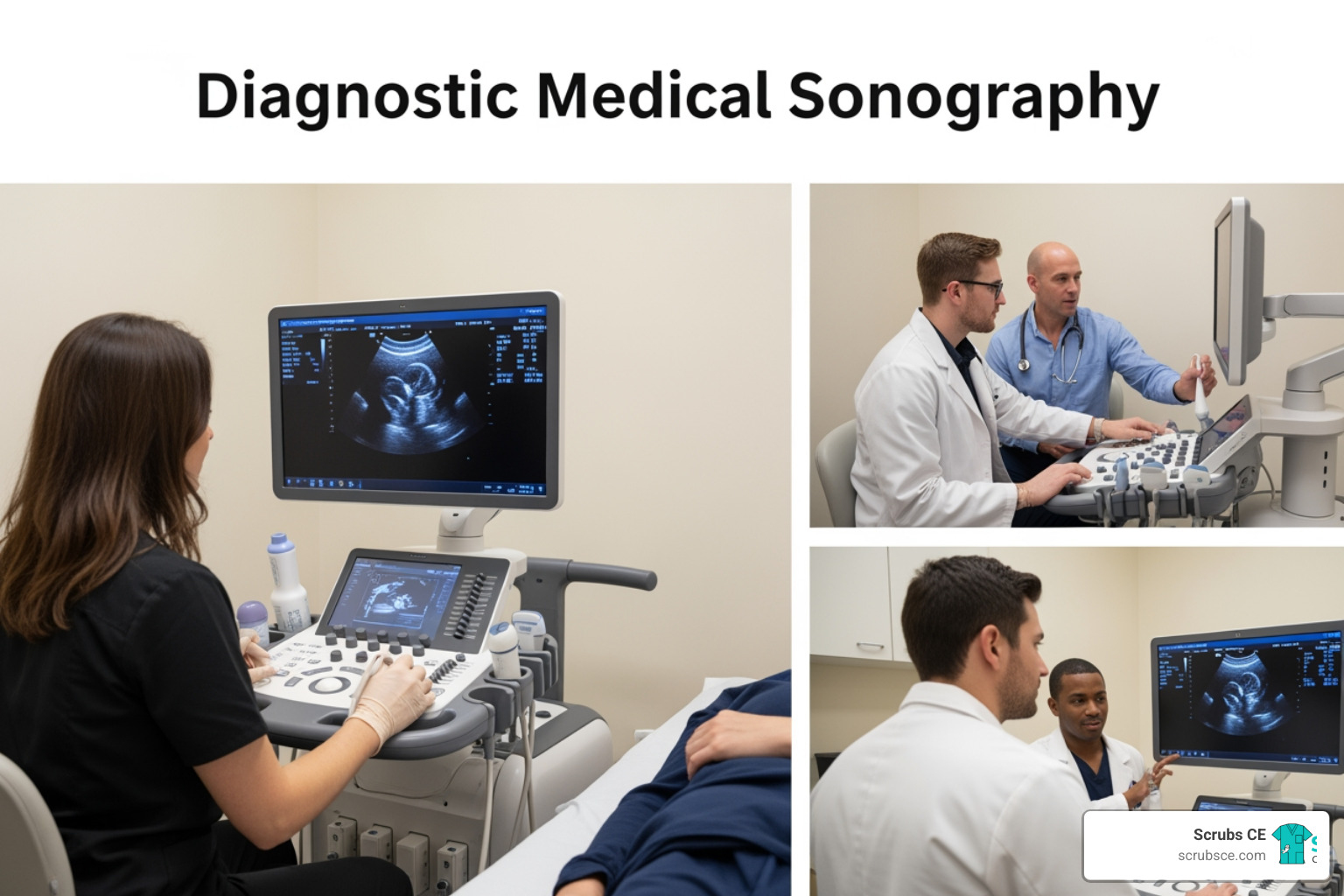
Understanding Diagnostic Medical Sonography: A Comprehensive Definition
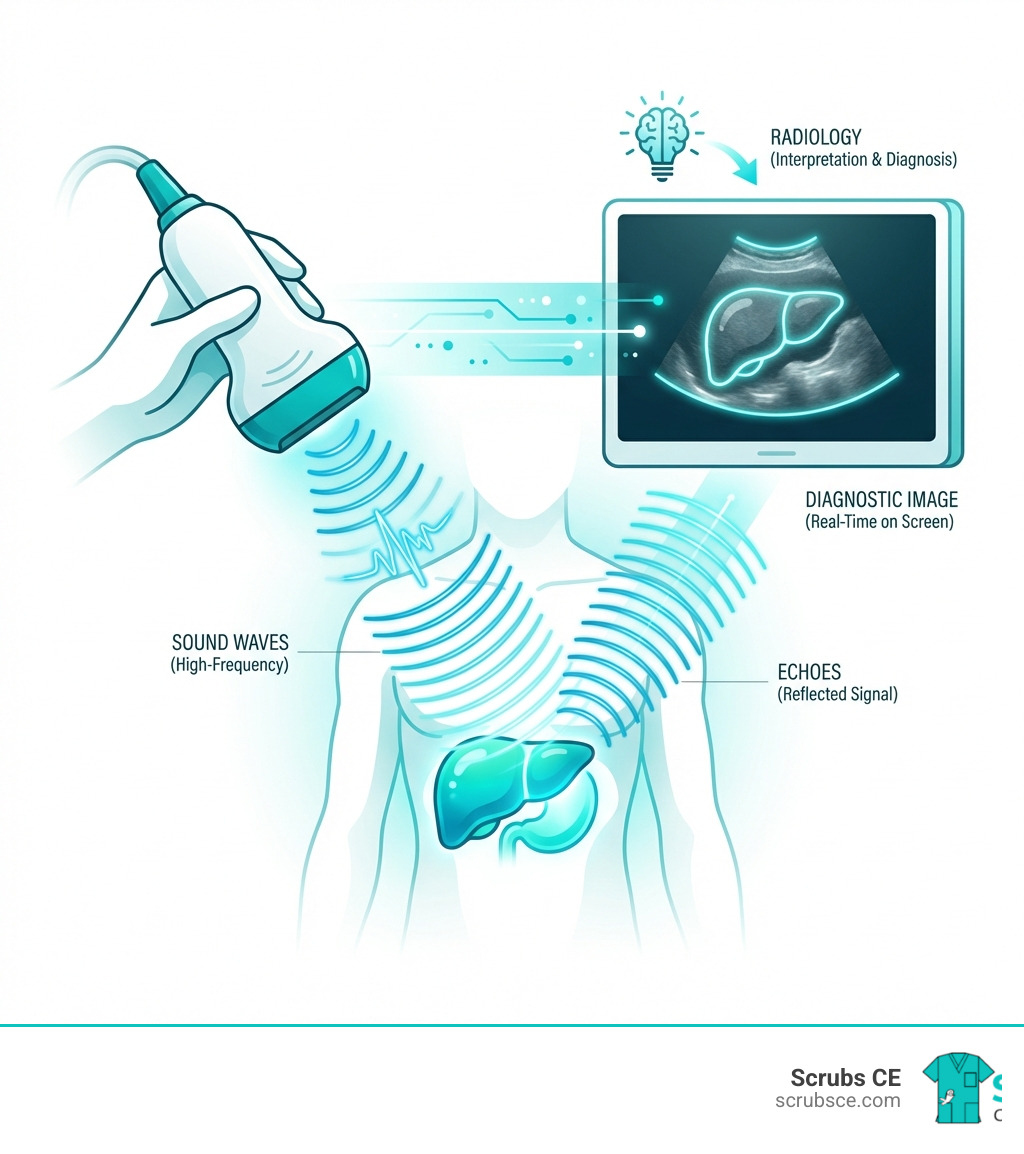
When we talk about Diagnostic medical sonography, we are describing a sophisticated marriage of physics and medicine. Often nicknamed the “bat’s flight through darkness,” sonography relies on the same principles of echolocation that bats use to steer. By sending out sound pulses and listening for the return, we can “see” what is otherwise hidden from the human eye.
At the heart of this technology is the transducer. This handheld device acts as both a speaker and a microphone. It emits pulses of high-frequency sound waves (well beyond the range of human hearing) that travel through the body. When these waves hit a boundary between tissues—such as the edge of an organ or a fluid-filled cyst—they bounce back as echoes. The computer then processes the timing and strength of these echoes to form a real-time, moving image of the patient’s internal anatomy.
What is Diagnostic Medical Sonography?
In the broader world of Radiology, sonography stands out because it uses nonionizing radiation. Unlike X-rays or CT scans, which use ionizing radiation to penetrate the body, sonography uses high-energy sound waves. This makes it the preferred modality for sensitive patients, particularly pregnant women and children.
It is a critical tool for clinical diagnostics, allowing doctors to view soft tissues like the liver, gallbladder, kidneys, and thyroid with incredible clarity. Because the images are captured in real-time, we can watch the heart beat, observe blood flowing through an artery, or see a baby move in the womb. For those looking to dive deeper into the professional landscape, the U.S. Bureau of Labor Statistics provides a great overview of the sonographer role.
Core Duties and Responsibilities
A sonographer’s day is about much more than just pushing a button. We are the “eyes” of the physician. Our core duties include:
- Patient Preparation: Explaining the procedure to ease anxiety and recording a thorough patient history.
- Equipment Calibration: Adjusting the settings on the ultrasound machine to ensure the highest image quality for that specific patient’s body type.
- Image Analysis: Recognizing the difference between normal anatomy and pathology (disease).
- Record Maintenance: Keeping detailed logs and ensuring all diagnostic data is stored securely.
- Summary Reporting: We don’t just take pictures; we provide a technical summary of our findings to help the Radiologist or physician make a final diagnosis.
To stay sharp in these duties, many professionals regularly take Ultrasound CE Courses to keep up with evolving technology and techniques.
Specializations and Career Pathways in Ultrasound
One of the most exciting aspects of Diagnostic medical sonography is the ability to specialize. Whether you are interested in the miracle of birth or the complexities of the human heart, there is a niche for you.
Specializations within Diagnostic Medical Sonography
Most sonographers begin with a general background but eventually focus on a specific area:
- Obstetrics and Gynecology (OB/GYN): Monitoring fetal development and the health of the female reproductive system.
- Abdomen-Extended: Imaging the liver, kidneys, spleen, and pancreas.
- Vascular Technology: Using ultrasound to evaluate blood flow and identify clots or blocked arteries. This is a highly specialized field with its own Vascular Sonography Clinical Competency Requirements.
- Cardiac Sonography (Echocardiography): Creating detailed images of the heart’s chambers, valves, and vessels.
- Breast Sonography: Often used to follow up on abnormalities found during a mammogram.
- Pediatric Sonography: Specializing in the unique needs and conditions of children and infants.
Specializing often requires additional certification and CME for Sonographers to maintain expertise in that specific anatomical area.
Essential Skills for Success
To thrive in this field, we need more than just book smarts. Success in sonography requires:
- Hand-Eye Coordination: You must move the transducer with precision while watching a monitor.
- Critical Thinking: You have to decide on the fly if an image shows enough detail to confirm a diagnosis.
- Interpersonal Communication: We often work with patients who are scared or in pain; a calm, professional demeanor is vital.
- Physical Stamina: Sonographers are often on their feet and may need to help move patients or heavy equipment.
- Attention to Detail: Missing a small shadow or a slight change in tissue texture could mean missing a diagnosis.
For those already in the field, there are 5 Reasons to Pursue Ultrasound Continuing Education that highlight how these skills are honed over time.
Education, Certification, and Accreditation Standards
Entering Diagnostic medical sonography requires a solid educational foundation. While there are several paths, most students choose between an Associate or a Bachelor’s degree.
Accreditation is the “gold standard” in our industry. We always recommend looking for programs accredited by the Commission on Accreditation of Allied Health Education Programs (CAAHEP) upon the recommendation of the Joint Review Committee on Education in Diagnostic Medical Sonography (JRC-DMS). These programs ensure you receive the clinical rotations and internship hours (often totaling over 1,400 hours!) needed to be job-ready. You can learn more in our CE for Sonographers Guide.
Admission and Performance Requirements
Getting into a sonography program is competitive. Most institutions, like Valencia College or Santa Fe College, have strict requirements:
- GPA Standards: Usually a 3.0 or higher in prerequisite courses like Anatomy, Physiology, Physics, and Math.
- Testing: Many programs require the ATI TEAS (Test of Essential Academic Skills).
- Technical Standards: Students must demonstrate the physical ability to lift patients and the “near vision” to see fine details on a screen.
- Vetting: Background checks, drug screenings, and full immunization records are standard.
For students in Florida, the SJR State Sonography Application process is a great example of the rigorous standards expected in this profession.
The Path to Professional Certification
Once you graduate, the journey isn’t over. Most employers require professional certification. The primary bodies are:
- ARDMS (American Registry for Diagnostic Medical Sonography): The most widely recognized credentialing body.
- ARRT (American Registry of Radiology Technologists): Offers sonography credentials often favored by those already in Radiology.
- CCI (Cardiovascular Credentialing International): Specifically for those in cardiac and vascular specialties.
Maintaining these credentials requires ongoing learning. Tools like the SDMS CME Tracker help members automatically transmit their earned credits to these organizations, simplifying the renewal process.
Job Outlook, Salary Potential, and Industry Growth
If you are looking for a “Bright Outlook” career, you’ve found it. The demand for Diagnostic medical sonography is surging as our population ages and the medical community moves toward safer, non-invasive imaging.
The statistics are impressive. With a 15% projected growth rate, the field is expanding much faster than the average job. This growth translates to roughly 5,700 new openings every year across the United States. As ultrasound technology becomes smaller and more portable, we are seeing sonographers used more frequently in emergency rooms, intensive care units, and even in rural clinics where larger imaging machines aren’t available.
Salary Expectations and Employment Trends
Let’s talk numbers. According to May 2023 data:
- Median Annual Wage: $84,470
- Median Hourly Rate: $40.61
- Top 10% Earners: Over $116,000
Where you work matters. Sonographers in hospitals generally earn more than those in physician offices, though outpatient clinics often offer more “standard” business hours. Geographic location also plays a huge role; states with higher costs of living often provide significantly higher salaries. For a deep dive into your specific area, check out the Occupation Profile for Sonographers.
To stay competitive in this high-wage market, many professionals specialize in multiple areas, which you can explore in our Category: Ultrasound Continuing Education.
Frequently Asked Questions about Sonography
What is the difference between a sonographer and a Radiology technologist?
While both work in Radiology, a Radiology technologist primarily uses X-rays and ionizing radiation to take static images (like broken bones). A sonographer uses sound waves to create real-time, moving images of soft tissues and organs.
How long does it take to become a diagnostic medical sonographer?
Most Associate degree programs take about two years of full-time study, plus an additional year if you include the necessary prerequisite courses. Bachelor’s degrees take four years but may offer more opportunities for management or research roles.
What are the typical costs of a sonography program?
Costs vary wildly. A public college in-state might cost around $13,000 to $15,000 for the entire program, while private institutions or out-of-state tuition can exceed $35,000. Remember to factor in the cost of exams, scrubs, and background checks!
Conclusion
Diagnostic medical sonography is truly a blend of art and science. It requires the technical mind of a physicist, the steady hand of an artist, and the heart of a caregiver. As the field continues to evolve with 3D and 4D imaging, the opportunities for career advancement and lifelong learning have never been better.
At Scrubs CE, we are dedicated to helping you steer this rewarding path. Whether you are just starting your journey or are a seasoned professional looking for convenient licensure renewal, we offer self-paced, high-quality courses with instant certificates.
Ready to take the next step in your professional development? Start your continuing education journey with us today and ensure you stay at the forefront of this vital healthcare field.
Recent Comments