
Unlocking Intraoral Anatomy: Top Dental Radiology CE Programs
Why Dental Radiology CE Matters for Your Practice and Career
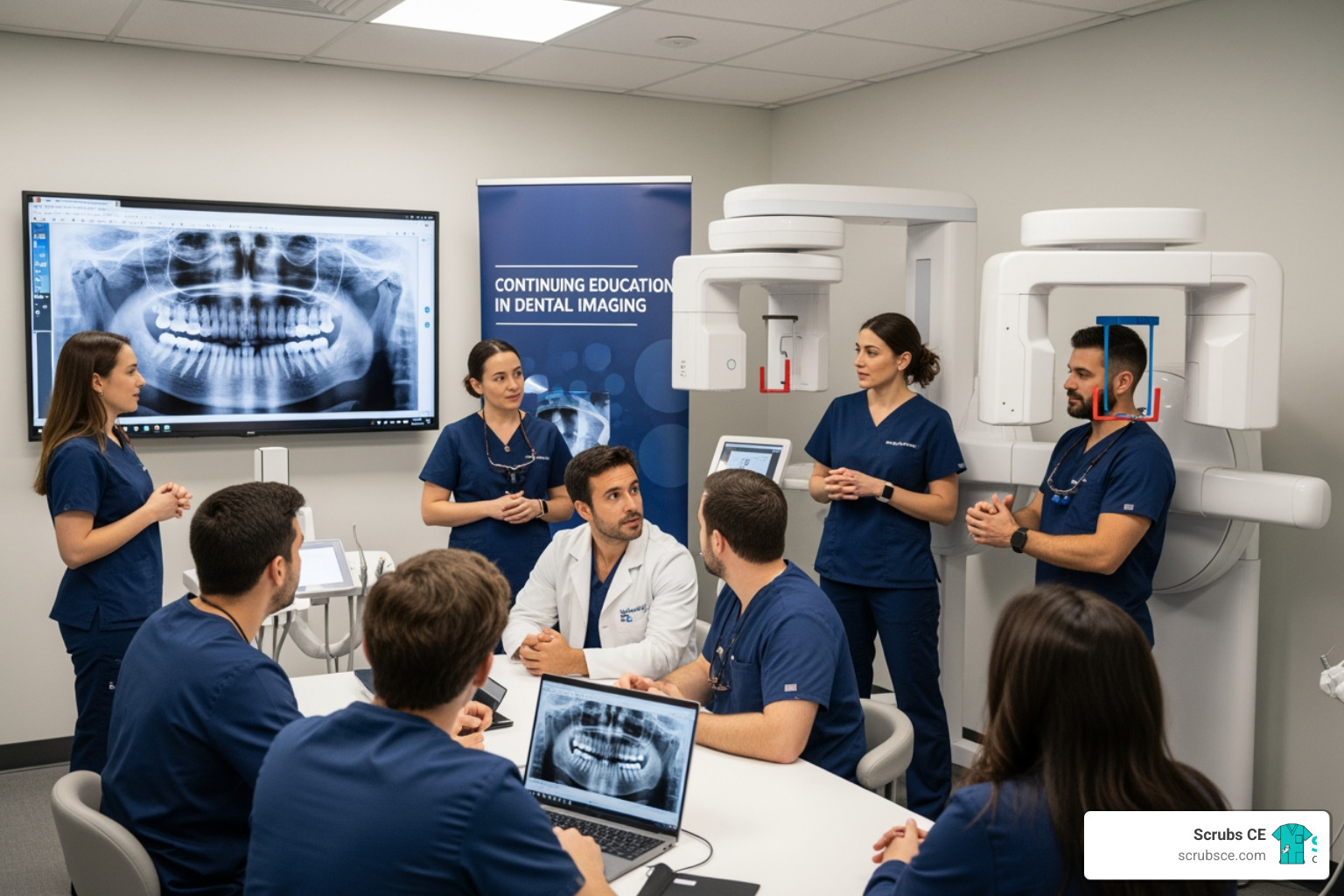
Dental radiology CE provides the essential training you need to safely capture and interpret diagnostic images while meeting state licensure requirements. These courses cover radiation safety, imaging techniques, anatomy recognition, and quality assurance—all critical for protecting patients and advancing your career.
Quick answers for dental radiology CE:
- Who needs it: Dentists, dental hygienists, dental assistants, and auxiliary personnel
- Typical credit hours: 2-32 hours depending on course type and state requirements
- Common formats: Online self-study, hybrid programs with hands-on components, in-person certification courses
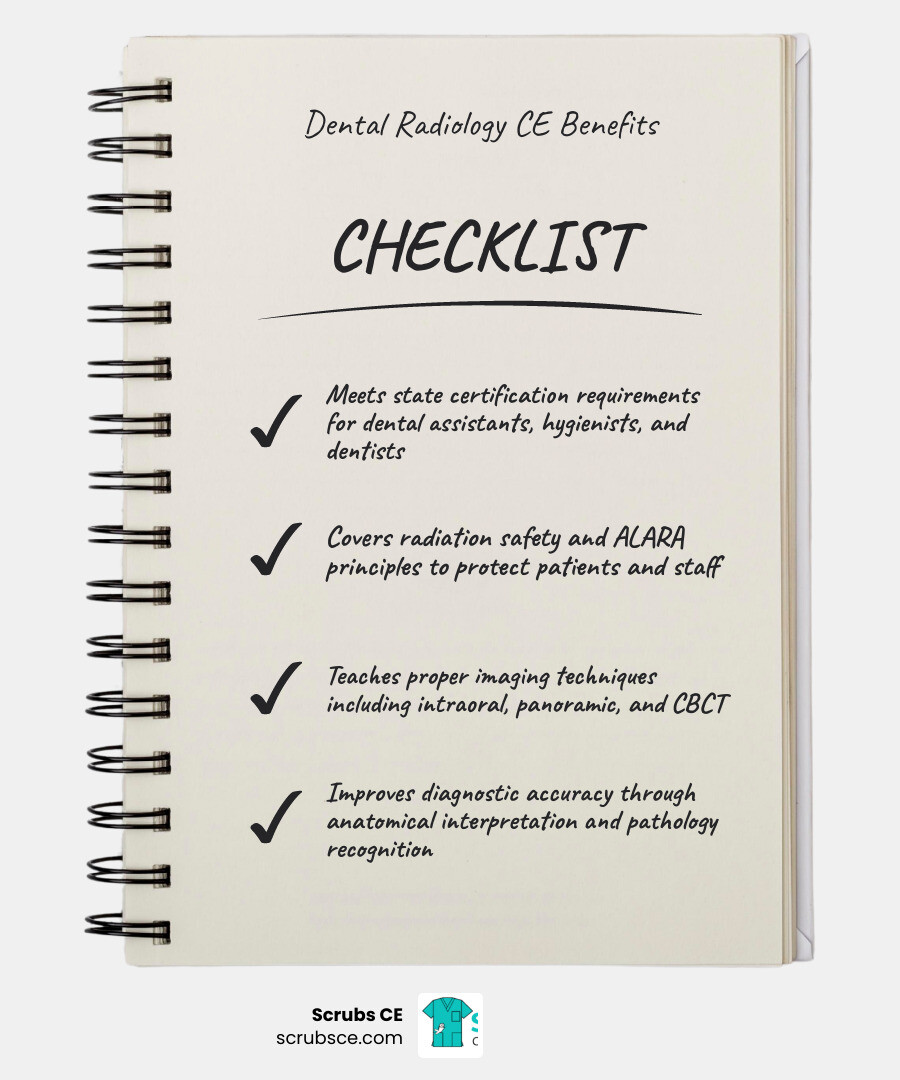
- Core topics: Radiation safety (ALARA principle), infection control, imaging techniques (intraoral, panoramic, CBCT), anatomical interpretation, error correction
- Key benefits: Meets state certification requirements, improves diagnostic accuracy, reduces patient exposure, advances career opportunities
Dental radiology is part of daily dental practice. Intraoral and extraoral imaging provide critical information to supplement clinical exams for diagnosis and treatment planning. But producing high-quality diagnostic images requires more than just equipment—it demands an in-depth understanding of ionizing radiation laws, proper technique, and the ability to recognize normal anatomical structures as a baseline for identifying abnormalities.
The stakes are high. Improper technique leads to repeat exposures, unnecessary radiation for patients, and missed diagnostic information. Meanwhile, regulatory bodies increasingly require documented training and certification. The Consumer-Patient Radiation Health and Safety Act of 1981 mandates training for dental personnel performing radiography, and states like Florida require specific certification per Administrative Code Chapter 64B5-9.011.
Whether you’re seeking initial certification, renewing credentials, or simply want to sharpen your skills in CBCT interpretation or digital workflows, the right CE course makes all the decision-making difference. The challenge is finding accredited, practical training that fits your schedule and actually improves your clinical practice.
I’m Zita Ewert, and I’ve spent years helping imaging professionals navigate the complexities of continuing education requirements, including dental radiology CE for dental auxiliaries and practitioners. My goal is to help you find the right training to meet your licensure needs while genuinely improving your diagnostic capabilities.
Core Components of Dental Radiology CE Courses
When we dive into a comprehensive dental radiology CE program, we aren’t just looking at how to push a button. These courses are designed to build a foundation of safety and technical excellence. One of the most critical pillars is radiation biology and protection. We must understand the potentially harmful effects of ionizing radiation to respect the laws that govern its use.
At the heart of every program is the ALARA principle—As Low As Reasonably Achievable. This isn’t just a suggestion; it’s a professional standard. CE courses teach us how to write office radiation policies that reduce exposure for both the clinician and the patient. This includes the proper use of protective devices, such as lead aprons and thyroid collars, and ensuring the operator stands at least six feet away or behind a suitable barrier during exposure.
Infection control is another non-negotiable component. In the dental operatory, cross-contamination is a constant risk. High-quality X-Ray CE Credits will detail specific protocols, such as:
- Placing plastic barriers on sensors and tube heads.
- Proper PPE usage for the operator.
- Disinfecting protective devices and stabilizing the Position Indicating Device (PID) without contamination.
Furthermore, we focus heavily on quality assurance and troubleshooting. Have you ever had a “cone-cut” or a distorted image that looked like a funhouse mirror? CE programs help us identify these common imaging errors—like overlapping contacts or incorrect vertical angulation—and provide the corrective measures needed to fix them the first time. This reduces the need for “retakes,” which is the best way to keep patient radiation doses low.
For those practicing in specific regions, these courses often align with strict legal mandates. For example, the Florida Administrative Code, Chapter 64B5-9.011 requires specific certification for dental radiographers. Many of these programs are taught by full-time dental radiologists to make these complex subjects easier to digest.
| Imaging Type | Primary Application | Key Benefit |
|---|---|---|
| Intraoral (Periapical/Bitewing) | Caries detection, root health | High detail for localized diagnosis |
| Panoramic | Wisdom teeth, jaw fractures, growth | Broad view of the entire maxillofacial region |
| CBCT (3D) | Implants, endodontics, TMJ | Volumetric data for precise treatment planning |
Mastering Imaging Technologies and Techniques
The transition from traditional film to digital sensors has revolutionized the dental office, but it also requires a shift in how we approach technique. In modern dental radiology CE, we explore the nuances of 2D versus 3D imaging. While 2D intraoral sensors are our daily “bread and butter,” 3D systems like Cone Beam Computed Tomography (CBCT) are becoming standard for general practitioners, not just specialists.
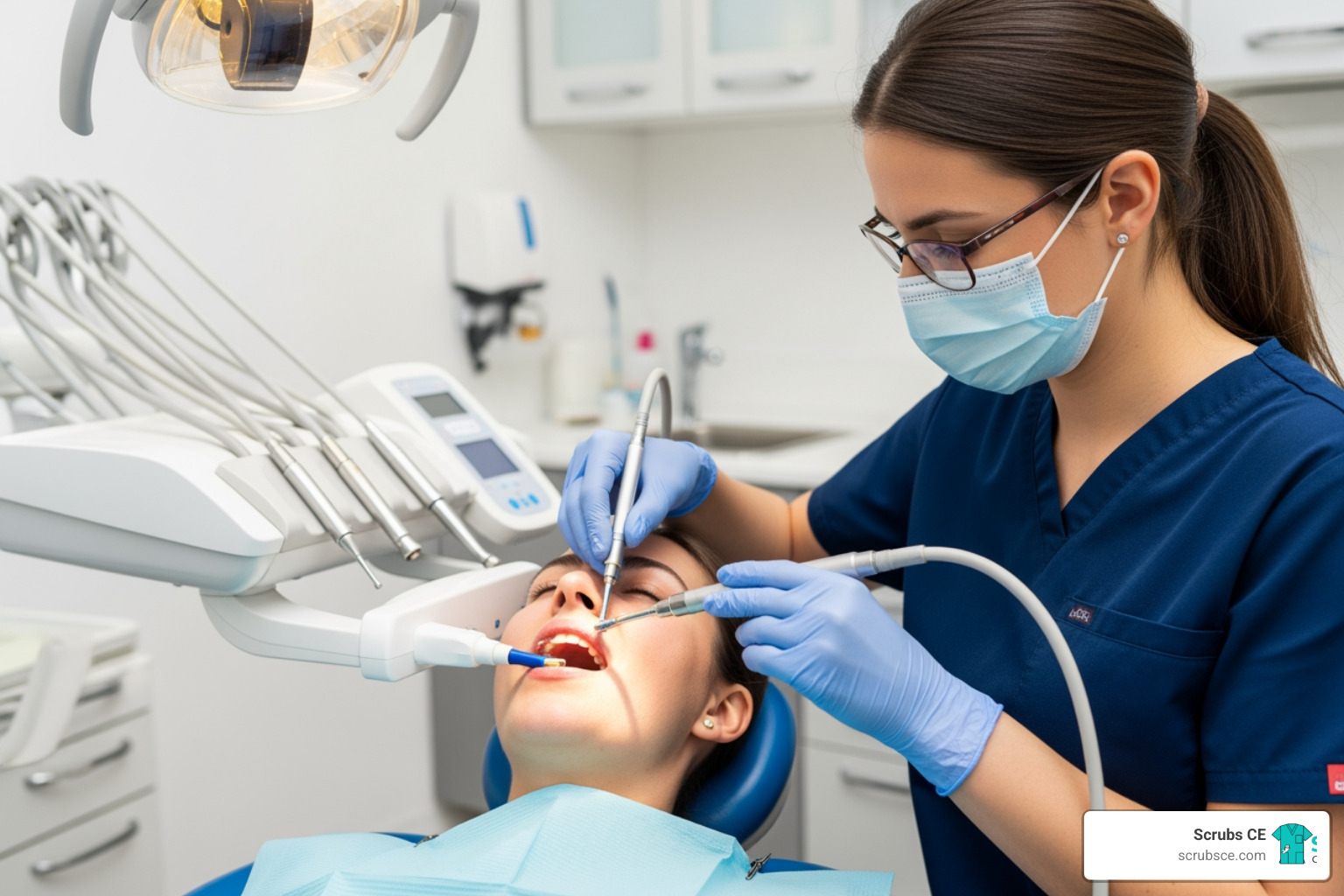
To get that perfect shot, we revisit the two primary intraoral techniques:
- Paralleling Technique: Generally considered the gold standard because it produces less distortion. The receptor is placed parallel to the long axis of the tooth.
- Bisecting Angle Technique: Useful when anatomical constraints (like a shallow palate) make paralleling impossible.
As we look toward the future, Radiology CE Courses now emphasize digital workflows. This includes the integration of intraoral scanners and 3D imaging to optimize surgical and prosthetic outcomes. For instance, using CAD/CAM technology alongside CBCT allows for “mesh ridge augmentation” or digital denture techniques that were once the stuff of science fiction.
For professionals looking to broaden their horizons beyond the dental chair, understanding ARRT continuing education online can be beneficial, especially if you are a radiologic technologist working in a maxillofacial surgery center. These advanced modules cover extraoral imaging, including cephalometric projections used in orthodontics, and the technical requirements for maintaining digital sensors to ensure long-term image quality.
Interpreting Intraoral Anatomy and Identifying Pathology
Capturing a clear image is only half the battle; the real value lies in interpretation. We use dental radiology CE to sharpen our eyes to recognize normal anatomical landmarks. If you don’t know what “normal” looks like, you’ll never spot the “abnormal.”
Key structures we must master include:
- The Maxilla: Identifying the maxillary sinus, incisive foramen, and median palatal suture.
- The Mandible: Locating the mandibular canal (crucial for implant safety), mental foramen, and genial tubercles.
- Bitewing Specifics: Evaluating periodontal bone levels and searching for interproximal caries.
One of the most profound impacts of high-quality imaging is the early diagnosis of oral squamous cell carcinoma (OSCC). Research shows that mouth cancer affects over 450 individuals worldwide each year. Research on early diagnosis of oral squamous cell carcinoma highlights that radiographs are vital for determining if a surface lesion has extended into the bone. New technologies, such as biomarkers like STRATICYTE, are even being integrated into the diagnostic conversation to help assess cancer risk objectively.
To ensure we aren’t over-radiating patients, we follow Radiographic Selection Criteria. These guidelines, often covered in courses offering Radiography CE Credits, teach us that radiographs should be individualized. We don’t take “routine” X-rays every six months just because an insurance company says so. Instead, we use clinical judgment based on the patient’s age, caries risk, and history of periodontal disease to decide when an image is truly justified.
Navigating Regulatory Requirements for dental radiology CE
Navigating the “alphabet soup” of dental regulations can be a headache, but it’s vital for staying legal. The target audience for these courses is broad, encompassing dentists, dental hygienists, and dental assistants. For many auxiliary personnel, obtaining a “Dental Radiographer Certification” is a mandatory step before they are legally allowed to position or expose radiographs.
If you’re wondering, “How Can I Get Radiology CE Credits?“, the answer usually lies in finding a provider recognized by the ADA CERP (Continuing Education Recognition Program) or AGD PACE. These recognitions ensure that the credits you earn will actually be accepted by your state board of dentistry.
Federal law, specifically the Consumer-Patient Radiation Health and Safety Act of 1981, set the stage for these requirements by mandating that anyone operating dental X-ray equipment must be properly trained. Today, this manifests as:
- DANB Clinical Hours: Often required for Certified Dental Assistants (CDAs).
- State Licensure Mandates: Such as the 14-hour participation courses required in Florida or specific review courses for Ohio radiographers.
- AGD PACE Credits: Essential for dentists maintaining their Academy of General Dentistry memberships.
At Scrubs CE, we understand that your time is valuable. That’s why we focus on providing a path to an Instant CE Certificate. Once you complete your course and pass the assessment, you should have your documentation ready for your next license renewal without waiting weeks in the mail.
Frequently Asked Questions about dental radiology CE
Who is the target audience for dental radiology CE?
The primary audience includes dentists, dental hygienists, and dental assistants. However, it also extends to dental students and auxiliary personnel who need state-specific certifications. In many states, dental assistants cannot legally perform radiography without first completing a board-approved course and obtaining a certificate.
What are the typical credit hours for a dental radiology CE course?
Credit hours vary significantly based on the depth of the course:
- Review Courses: Usually offer 2 to 4 credit hours and are perfect for license renewal.
- Contemporary Updates: Often provide 3 AGD credits focusing on new technology like CBCT.
- Initial Certification: These are more intensive, ranging from 14 to 32 total CDE hours, often involving a mix of theory and clinical participation. Always check the course expiration dates; most dental CE is valid for three years from the date of publication or last review.
Can I complete my dental radiology CE requirements online?
Yes! Many components of dental radiology CE can be completed through online self-study. This is ideal for learning radiation physics, biology, and anatomy. However, some states require a “hybrid” format for initial certification, meaning you complete the theory online but must attend a hands-on clinical session to demonstrate receptor placement and exposure techniques. For those looking for maximum flexibility, Home Study Courses allow you to learn at your own pace from the comfort of your home or office.
Conclusion
Mastering dental radiography is a journey of continuous improvement. By staying current with dental radiology CE, we ensure that our diagnostic accuracy remains sharp, our patient safety protocols are up to date, and our respect for radiation protection never wavers. Whether you are identifying the subtle shadow of early caries or navigating the complex volumes of a CBCT scan, your education is the foundation of your clinical excellence.
At Scrubs CE, we are committed to helping you meet these goals with convenient, high-quality, and affordable learning options. We believe that professional development should fit into your life, not complicate it. Ready to take the next step in your career and ensure you’re providing the best possible care for your patients? Explore dental radiology CE course options today and join thousands of dental professionals who trust us for their continuing education needs.
Recent Comments