
Level Up Your SLP Practice With the Best Speech Therapy CE Programs
Level Up Your SLP Practice With the Best Speech Therapy CE Programs
Find Speech Therapy CE That Fits Your License and Caseload

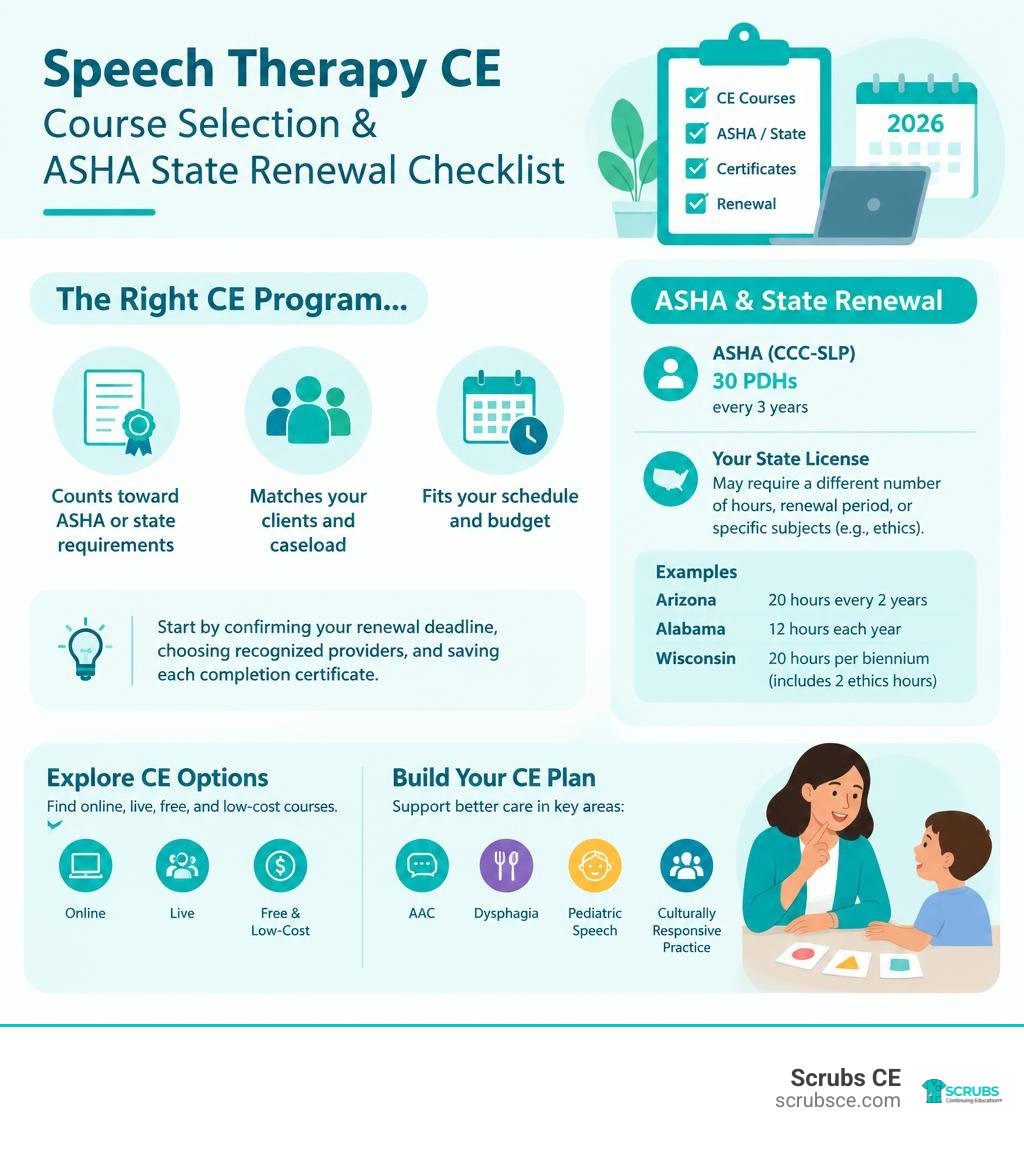
The best speech therapy CE programs are ones that do three things: count toward your ASHA or state requirements, match the clients you treat, and fit your schedule and budget. Start by confirming your renewal deadline, choosing courses from recognized providers, and saving each completion certificate as soon as you earn it.
For CCC-SLP maintenance, ASHA requires 30 professional development hours (PDHs) every three years. Your state license may require a different number of hours, renewal period, or required subjects such as ethics. For example, Arizona requires 20 CE hours every two years, Alabama requires 12 hours each year, and Wisconsin requires 20 hours per biennium, including two ethics hours.
This guide will help you find practical online, live, free, and low-cost courses, then build a CE plan that supports better care in areas such as AAC, dysphagia, pediatric speech, and culturally responsive practice.
I am Zita Ewert, a continuing education leader focused on making accredited learning clear, accessible, and affordable for busy healthcare professionals. My work in online CE and licensure guidance helps inform this practical approach to planning speech therapy CE alongside a demanding clinical schedule.
Speech therapy CE word guide:
Understanding ASHA and State Speech Therapy CE Requirements
Managing professional development requires balancing national certification requirements with individual state licensing laws. The American Speech-Language-Hearing Association (ASHA) establishes baseline standards for maintaining the Certificate of Clinical Competence (CCC-SLP), requiring clinicians to accumulate at least 30 Professional Development Hours (PDHs) over a 3-year certification interval. However, state licensing boards set their own statutory frameworks, resulting in distinct timelines, approved provider criteria, and topic mandates.
Understanding these state-specific variations ensures uninterrupted legal authority to practice. While some states mirror ASHA timelines, others operate on annual or biennial cycles that demand careful tracking of online CEU credits.
| Regulatory Body / State Board | Required CE Hours | Renewal Interval | Mandatory Course Topics |
|---|---|---|---|
| ASHA (CCC-SLP) | 30 PDHs (3.0 CEUs) | 3 Years | 1 hour Ethics; 2 hours Cultural Competency |
| Arizona | 20 Hours | Biennial (2 Years) | Relevant clinical practice |
| Alabama | 12 Hours | Annual (1 Year) | Board-approved speech pathology topics |
| Wisconsin | 20 Hours | Biennial (2 Years) | Minimum 2 hours Ethics |
Failing to complete required hours within the mandated window exposes clinicians to audit failures, late fines, temporary license suspension, or forfeiture of ASHA certification.
Mandatory Topics for Speech Therapy CE Compliance
Continuing education mandates ensure that clinicians uphold ethical integrity and deliver culturally aware care. Current ASHA standards require CCC-SLP holders to dedicate specific portions of their 30 PDHs to essential focus areas:
- Ethics Training: At least 1 hour must focus on professional ethics, covering conflicts of interest, client advocacy, and ethical decision-making frameworks. In states like Wisconsin, state boards enforce an independent 2-hour ethics requirement during each renewal biennium.
- Culturally Responsive Practice: Clinicians must complete a minimum of 2 PDHs in cultural competency, diversity, equity, and inclusion (DEI), or culturally responsive assessment methodologies.
- Supervision Requirements: SLPs who supervise clinical fellows or graduate students must complete dedicated professional development in clinical supervision prior to serving as mentors.
Clinicians can complete these mandatory topics through self-paced modules, live webinars, or formal university-level coursework.
Finding Low-Cost and Free Speech Therapy CE Opportunities
Maintaining compliance does not require spending thousands of dollars out of pocket. Many clinical organizations and assistive technology developers provide open-access or complimentary professional education modules.
Augmentative and Alternative Communication (AAC) manufacturers frequently provide complimentary, high-caliber training covering eye-gaze calibration, switch access, and dynamic display software. These technical modules often carry formal ASHA CEU credits.
Similarly, state speech-language-hearing associations and clinical education platforms frequently host sponsored webinars on dysphagia protocols, pediatric motor speech, and telepractice. By combining open-access institutional offerings with comprehensive home study courses, speech-language pathologists can meet their renewal requirements on a manageable budget.

High-Impact Clinical Specialty Courses for SLPs
Selecting continuing education that directly reflects your daily caseload improves clinical outcomes and job satisfaction. Rather than accumulating random hours to meet a deadline, targeted coursework helps clinicians master complex diagnostic and therapeutic interventions.

For pediatric specialists working with structural speech disorders, the Speech Evaluation and Intervention for Cleft Palate and Velopharyngeal Dysfunction (On Demand Webinar) provides 0.2 ASHA CEUs (2.0 PDHs) on differentiating active, passive, and compensatory articulation errors. Clinicians learn when surgical intervention is required versus when motor-learning drills and phonological approaches can resolve velopharyngeal speech distortions.
Other key specialty areas to prioritize in your professional development plan include:
- Tracheostomy and Ventilator Management: Medical SLPs benefit from hands-on training regarding speaking valve placement, cuff deflation protocols, and modified dysphagia assessments.
- Pediatric Feeding and Dysphagia: Evidence-based protocols focusing on sensory-motor feeding challenges, videofluoroscopic swallow study (VFSS) interpretation, and infant feeding development.
- Adult Neurogenic Communication: Advanced coursework addressing cognitive-communication interventions for traumatic brain injury (TBI), primary progressive aphasia, and functional maintenance programming in dementia care.
Interdisciplinary collaboration is also central to modern clinical work. Speech pathologists managing complex head, neck, and chest anatomy routinely collaborate with imaging teams. Broadening your clinical foundation by learning how allied colleagues maintain their credentials—such as how imaging specialists complete Radiologic Technologist Continuing Education Credits—fosters seamless interprofessional communication during complex diagnostic evaluations.
Strategies for Efficient Course Selection and Verification
Verifying the accreditation of a continuing education course before enrolling prevents unapproved hours from causing license renewal issues.
Follow these operational steps when evaluating potential educational programs:
- Check Approved Provider Status: Verify whether the provider is an approved ASHA CE Provider or recognized by organizations like the American Academy of Audiology (AAA) or state departments of public instruction.
- Review the State Pre-Approval Rules: If a course is hosted by an unlisted entity, determine whether your state board requires pre-approval. For instance, some state licensing boards mandate submitting detailed syllabi at least 30 calendar days before the course begins.
- Balance Live and On-Demand Learning: Integrate live interactive seminars for real-time clinical discussions with self-paced accredited CE courses to accommodate shifts in your caseload schedule.
- Confirm the CE Registry Reporting Process: When using the ASHA CE Registry, verify whether the provider submits attendance rosters directly or requires you to self-report through your certification maintenance portal.
Streamlining Clinical Practice and CE Management
Clinicians often juggle heavy treatment caseloads alongside administrative duties and continuing education requirements. Establishing efficient digital documentation systems frees up valuable time for meaningful professional development.

Modern Electronic Health Record (EHR) systems with structured templates and AI-assisted clinical documentation can significantly cut down daily administrative hours. Clinicians utilizing automated transcription and structured SOAP note generators can reduce documentation time, freeing up hours to focus on advanced coursework.
For CE management:
- Maintain a dedicated cloud folder labeled with your current renewal interval to store completion certificates immediately.
- Use automated tracking registries, such as CE Broker, where mandated by your state licensing board.
- Set scheduled quarterly milestones to complete 5 to 10 hours of a CE course online rather than rushing to fulfill requirements at the end of your cycle.
Investing in structured online education healthcare systems keeps your clinical credentials secure and your daily workflow organized.
Frequently Asked Questions About Speech Therapy CE
How many continuing education hours does ASHA require for CCC-SLP maintenance?
ASHA requires certificate holders to complete a minimum of 30 Professional Development Hours (PDHs), equivalent to 3.0 ASHA CEUs, across a rolling 3-year certification maintenance interval. This total must include at least 1 hour of ethics and 2 hours of culturally responsive practice.
Do free CE courses automatically satisfy state licensing requirements?
Not automatically. State licensing boards maintain independent criteria for course acceptance. Even if a free course awards a certificate of completion, it must come from a board-approved provider or fit the specific clinical scope defined by your state board. Always review your state licensing rules before applying unaccredited hours toward renewal.
What happens if an SLP fails to complete required CE hours on time?
Failing to meet CE requirements before your renewal deadline can result in late penalty fees, formal audit notices, license suspension, or the expiration of your CCC-SLP credential. Reinstating lapsed credentials often requires completing backlogged educational hours, paying reinstatement fees, and undergoing mandatory audits.
Conclusion
Building a successful continuing education plan requires balancing regulatory compliance, budget awareness, and clinical relevance. By tracking your state and national deadlines, selecting accredited coursework, and utilizing free and low-cost learning opportunities, you can maintain your credentials with confidence.
At Scrubs CE, we are dedicated to helping healthcare providers stay compliant, expand their clinical expertise, and balance professional growth with everyday clinical demands. Whether you are exploring interdisciplinary subjects or managing your general healthcare credentials, explore our comprehensive Radiology CE course library and healthcare continuing education resources to support your ongoing professional development.
Start Your Diagnostic Radiography Career with the Right Degree Program
Start Your Diagnostic Radiography Career with the Right Degree Program
Choose a Diagnostic Radiography Course That Leads to Practice
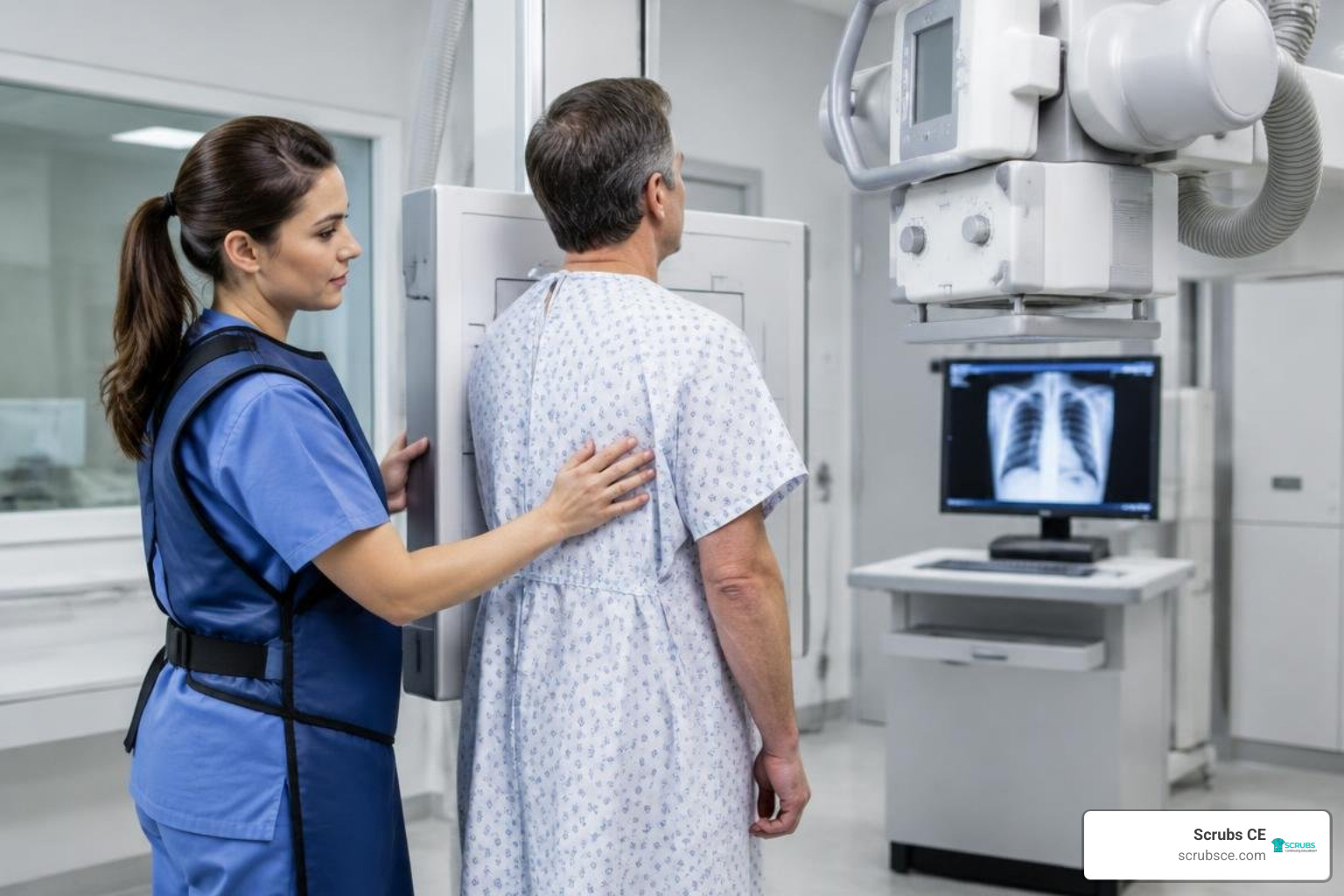
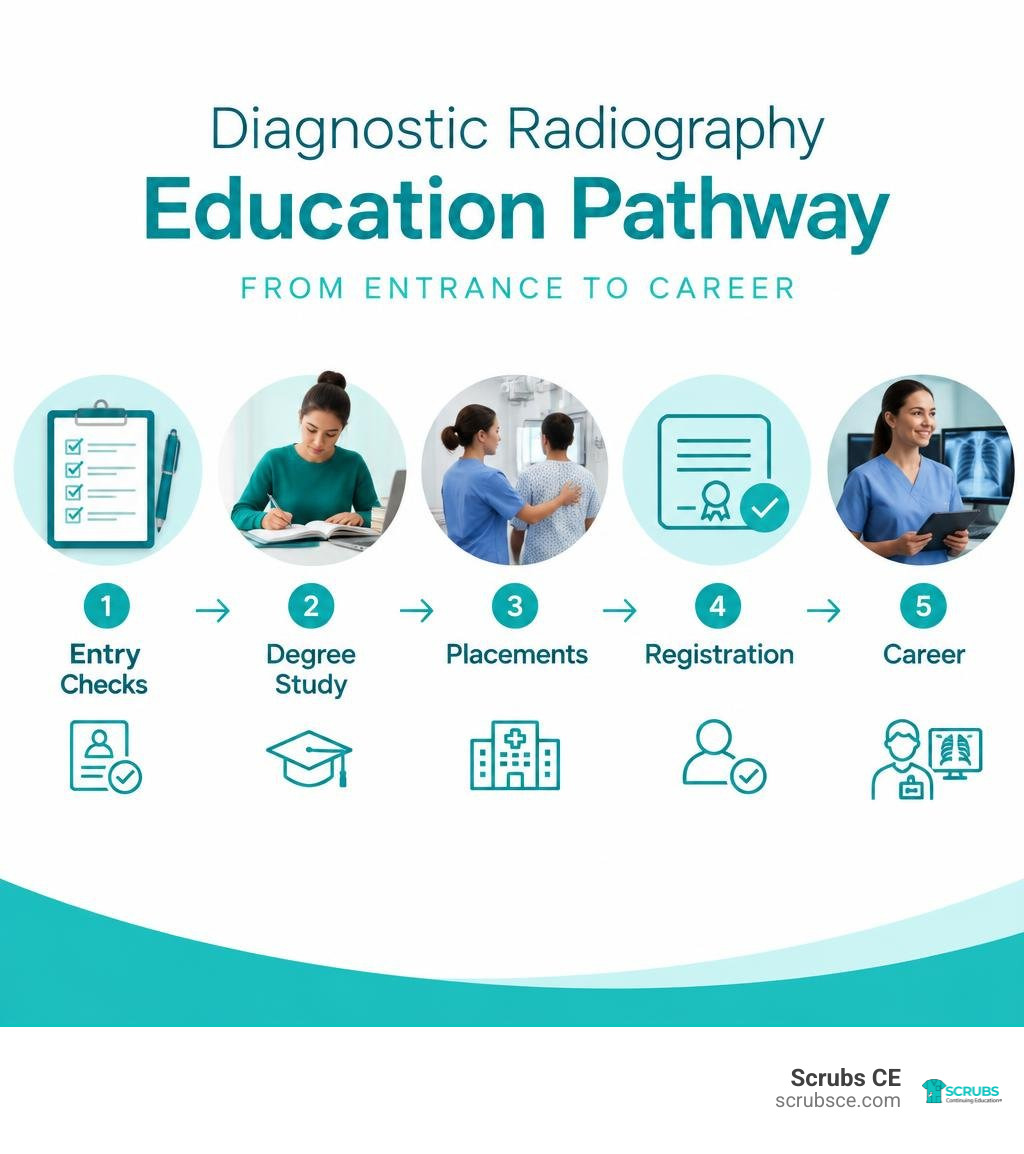
A diagnostic radiography course is the usual route into a career creating medical images that help clinicians diagnose injuries and disease. Choose a three-year, full-time degree that is approved for professional practice, includes supervised clinical placements, and teaches both patient care and imaging safety.
Before you apply, check these essentials:
- Confirm the course meets Health and Care Professions Council standards for registration eligibility.
- Check its UCAS entry requirements, including science subjects and English-language criteria.
- Look for training in X-ray, CT, MRI, fluoroscopy, ultrasound, and nuclear medicine.
- If your qualifications do not meet direct-entry requirements, explore an international foundation route.
- For UK study lasting more than six months, plan early for the relevant Student visa.
Diagnostic radiographers do far more than operate equipment. They position patients safely, use radiation responsibly, produce high-quality images, and communicate calmly with people who may be in pain or worried. A strong degree combines classroom science, simulated practice, and clinical experience so graduates can apply for registration and begin work in hospital or private imaging settings.
I am Zita Ewert, a continuing-education leader for imaging professionals and the driving force behind SCRUBS Continuing Education®. My work supporting Radiology professionals with accessible, accredited learning gives me a practical view of how a diagnostic radiography course starts a career built on safe practice and lifelong development.
Diagnostic radiography course definitions:
What to Expect from a Diagnostic Radiography Course
Entering a diagnostic radiography program means stepping into an environment where human empathy meets cutting-edge physical science. Most standard undergraduate pathways, such as the BSc Diagnostic Radiography 2026 curriculum frameworks, operate across three full academic years comprising 360 credits. From day one, you study anatomy, physiology, pathology, radiation physics, and equipment operation.
The academic structure typically splits time equally: roughly 50% in university lectures, seminars, and simulation suites, and 50% embedded in clinical hospital placements. You will learn the physics behind ionizing radiation, the biological impacts of radiation dose, and how to apply the ALARA principle (As Low As Reasonably Achievable) to ensure patient safety.
| Imaging Modality | Energy/Technology Used | Primary Diagnostic Purpose | Clinical Setting / Area |
|---|---|---|---|
| Conventional X-Ray | Ionizing Radiation | Skeletal trauma, chest pathology, acute abdominal issues | Emergency departments, outpatient clinics, operating theatres |
| Computed Tomography (CT) | Rotating X-Ray & Detectors | Cross-sectional trauma, stroke evaluation, oncology staging | Acute emergency rooms, dedicated inpatient scanning suites |
| Magnetic Resonance Imaging (MRI) | Magnetic Fields & Radio Waves | Soft tissue injury, neurological mapping, musculoskeletal tears | Specialist outpatient centers, hospital imaging departments |
| Diagnostic Ultrasound | High-Frequency Sound Waves | Obstetrics, vascular flow, abdominal organ assessment | Antenatal clinics, point-of-care emergency suites |
| Fluoroscopy | Real-Time X-Ray Video | Gastrointestinal tract studies, interventional guidance | Operating rooms, dedicated barium/interventional suites |
| Nuclear Medicine | Radiopharmaceuticals | Metabolic activity, bone metastases, functional imaging | Dedicated nuclear medicine and PET-CT departments |
Core Medical Imaging Modalities and Clinical Skills
Throughout your training, you master multiple diagnostic modalities. You start with projection radiography (plain film X-rays), mastering precise patient positioning and beam collimation. As you advance into cross-sectional imaging, mastering systematic radiographic image analysis becomes crucial for identifying artifacts, technical errors, and anatomical abnormalities.
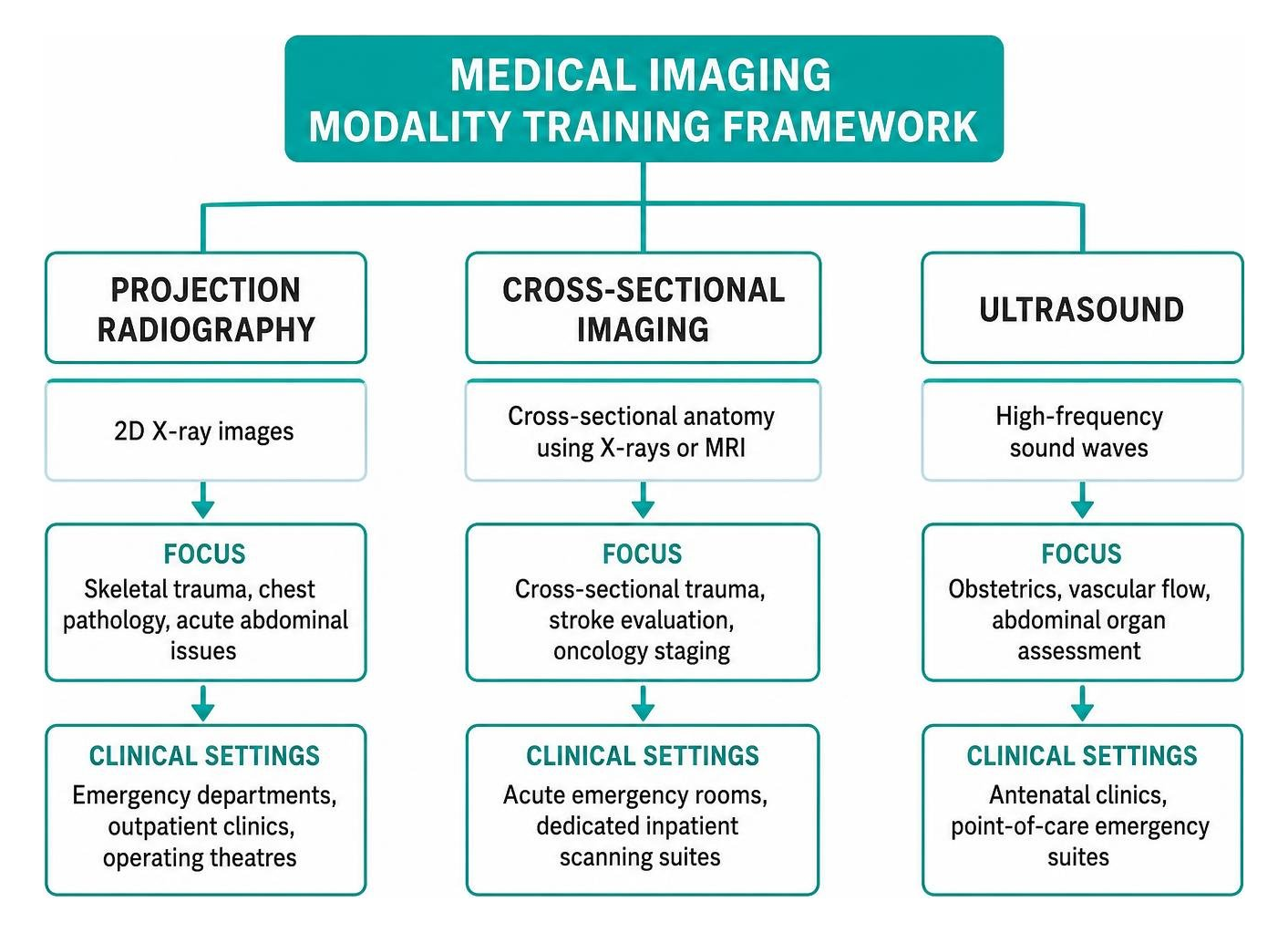
You also gain exposure to fluoroscopy—often assisting in surgical procedures using mobile C-arms—along with non-ionizing modalities like magnetic resonance imaging and medical ultrasound. Nuclear medicine rounds out your education by showing how radioactive tracers provide functional insights into metabolic processes.
Clinical Placement Structure and Simulation Training
Real-world capability comes from hands-on clinical placement. Top university programs require upwards of 1,200 to 1,260 clinical placement hours over the course of the degree. You rotate through emergency trauma centers, intensive care units, pediatric wards, and orthopedic theaters.
Modern universities complement hospital rotations with state-of-the-art simulation facilities. You will utilize virtual reality (VR) suites to practice complex patient positioning and beam angles without exposing anyone to actual radiation. Simulation allows you to make mistakes, refine your technique, and build confidence before stepping onto a busy hospital floor.
Academic Entry Requirements and International Pathways

Securing a place in an accredited diagnostic radiography degree requires a solid foundation in scientific subjects and strong interpersonal capabilities demonstrated during the selection process.
Direct Entry Criteria and UCAS Application Codes
For direct undergraduate entry into a standard three-year bachelor’s degree, universities typically require between 112 and 128 UCAS tariff points. This usually equates to A-level grades of ABB to BBC (or equivalent BTEC National Extended Diplomas at DMM–DDM level), with at least one core science such as Biology, Physics, or Chemistry.
Applications are processed through the UK central admissions service using specific UCAS application codes. The universal UCAS code for standard three-year diagnostic radiography degrees across major institutions is B821. When preparing for upcoming cycles—including the September 2026 intake for the 2026/27 academic year or planning ahead for 2027/28—carefully evaluate your options by using our checklist for Radiology course options.
Selecting a Diagnostic Radiography Course with a Foundation Year
If you do not hold direct science A-levels or fall short of the standard entry tariff points, several institutions provide four-year extended programs. These incorporate an initial foundation year designed to build baseline competence in biology, physics, and academic study skills.
For instance, programs such as the BSc (Honours) Diagnostic Radiography with Foundation Year Full-time 2027 | Sheffield Hallam University offer pathways under separate UCAS codes (such as BB14), often accepting around 72 UCAS points. Successfully passing the foundation year allows seamless progression into year one of the accredited degree.
International Qualifications and UK Student Visa Guidance
Institutions like City St George’s, University of London welcome international candidates from across the globe, evaluating regional qualifications including the International Baccalaureate (typically requiring 28–30 points with Higher Level Science), US Advanced Placement exams, and European secondary diplomas.
Because a full degree spans three to four years, overseas students must apply for a standard UK Student Visa. Key requirements include:
- Receiving a formal Confirmation of Acceptance for Studies (CAS) from an approved sponsor university.
- Proving English language proficiency (typically an IELTS Academic score of 7.0 overall with no individual sub-score below 6.5).
- Demonstrating sufficient financial funds to cover tuition and living expenses.
- Completing required health screenings and police/criminal record checks before beginning hospital placements.
If an international student’s secondary qualification is not directly recognized for undergraduate entry, universities provide dedicated International Foundation Programmes in Life and Health Sciences as a bridging mechanism.
Funding, Accreditation, and Professional Practice

Understanding regulatory standards and financial investment is essential before entering training.
Meeting Professional Radiography Standards
To practice legally as a Diagnostic Radiographer in the UK, you must hold a qualification approved by the Health and Care Professions Council (HCPC) and endorsed by the Society and College of Radiographers (SCoR). Graduating from an accredited course provides direct eligibility to register with the HCPC.
For those looking toward global mobility or US practice environments, understanding how international credentials align with the AMERICAN REGISTRY OF RADIOLOGIC TECHNOLOGISTS® (ARRT®) and the ASRT® is vital. You can review standard credential benchmarks through our guide on Radiology certification requirements.
Tuition Fees and NHS Learning Support Grants
Tuition fees vary based on residential status. For UK home students, full-time undergraduate tuition is typically capped around £9,250 to £9,790 per year. For international students, annual fees generally range from £19,200 to £32,000 depending on the institution.
Fortunately, UK home students accepted onto an approved pre-registration radiography course can access the NHS Learning Support Fund (LSF). This financial support package includes:
- A non-repayable Training Grant of £5,000 per academic year.
- A Specialist Subject Payment of £1,000 per year, due to radiography being designated a shortage profession.
- Regional travel and dual-accommodation expense reimbursements incurred during clinical placement rotations.
- Exceptional hardship funds and parental support allowances for eligible students.
Career Pathways and Post-Qualification Advancement
Graduating with an accredited radiography degree offers exceptional career security, with national graduate outcome surveys consistently reporting over 92% to 95% of graduates entering professional employment within 15 months.
Navigating Your Diagnostic Radiography Course into Clinical Practice
Upon obtaining HCPC registration, newly qualified radiographers in the UK typically begin working within NHS Trusts at Agenda for Change Band 5. In these roles, you consolidate your foundational skills across general X-ray, mobile imaging in intensive care units, and emergency trauma suites.
Beyond NHS hospitals, employment opportunities exist within private healthcare facilities, specialized orthopedic clinics, research institutes, and dedicated community diagnostic centers (CDCs).
Continuing Professional Development and Specialisation
Diagnostic radiography offers versatile career progression. After gaining initial clinical experience, practitioners often advance to Band 6 and Band 7 roles by specializing in advanced modalities or post-primary pathways:
- Cross-Sectional Imaging: Specializing as dedicated CT or MRI senior radiographers.
- Medical Ultrasound (Sonography): Completing postgraduate diplomas to perform independent obstetric, vascular, and abdominal scanning.
- Advanced Clinical Practice & Image Interpretation: Working as a Reporting Radiographer, autonomously interpreting and writing formal diagnostic medical reports for skeletal and chest examinations.
- Interventional Radiology: Operating complex equipment alongside interventional radiologists during minimally invasive vascular procedures.
- Academic & Research Roles: Pursuing Master of Science (MSc) and PhD programs to drive clinical research, artificial intelligence integration, and student mentorship.
Continuing professional development (CPD) is a mandatory lifelong requirement for maintaining professional registration. Staying current with emerging imaging technologies, radiation safety protocols, and cross-sectional anatomy is made seamless through dedicated online Radiology education.
Frequently Asked Questions About Diagnostic Radiography Training
How long does it take to complete a diagnostic radiography degree?
A standard full-time undergraduate diagnostic radiography degree takes three years in England and Wales, and four years in Scotland (or four years across the UK if enrolled in a program that includes an integrated foundation year). Students complete 360 academic credits combined with at least 1,200 hours of direct clinical placement.
What UCAS tariff points and science subjects are required?
Most UK programs ask for between 112 and 128 UCAS tariff points (equivalent to ABB–BBC at A-level). Applicants must hold at least one science subject, such as Biology, Human Biology, Physics, or Chemistry, alongside GCSE passes (Grade 4/C or above) in English Language, Mathematics, and Science.
Can international students apply for UK radiography degree programmes?
Yes. International students with equivalent secondary school diplomas or international foundation qualifications can apply directly via UCAS. International applicants must demonstrate English language proficiency (typically an IELTS score of 7.0), meet student visa requirements, and complete background checks for clinical placement eligibility.
Conclusion
Enrolling in a diagnostic radiography course is your gateway to a dynamic, technology-driven career at the very core of modern healthcare. By balancing academic rigor, practical simulation, and extensive patient-facing hospital rotations, these accredited programs ensure you graduate with the clinical competence and confidence needed to make a real difference in patient outcomes.
As your medical imaging journey unfolds—from undergraduate study through advanced clinical specialisation—we at Scrubs CE are dedicated to supporting your professional development with high-quality, self-paced learning. Ready to expand your diagnostic imaging knowledge? Explore continuing education Radiology courses to stay at the leading edge of healthcare practice.
The Stress-Free Guide to California LVN CEUs with No Tests
The Stress-Free Guide to California LVN CEUs with No Tests
California LVN CEUs With No Test: Start Here

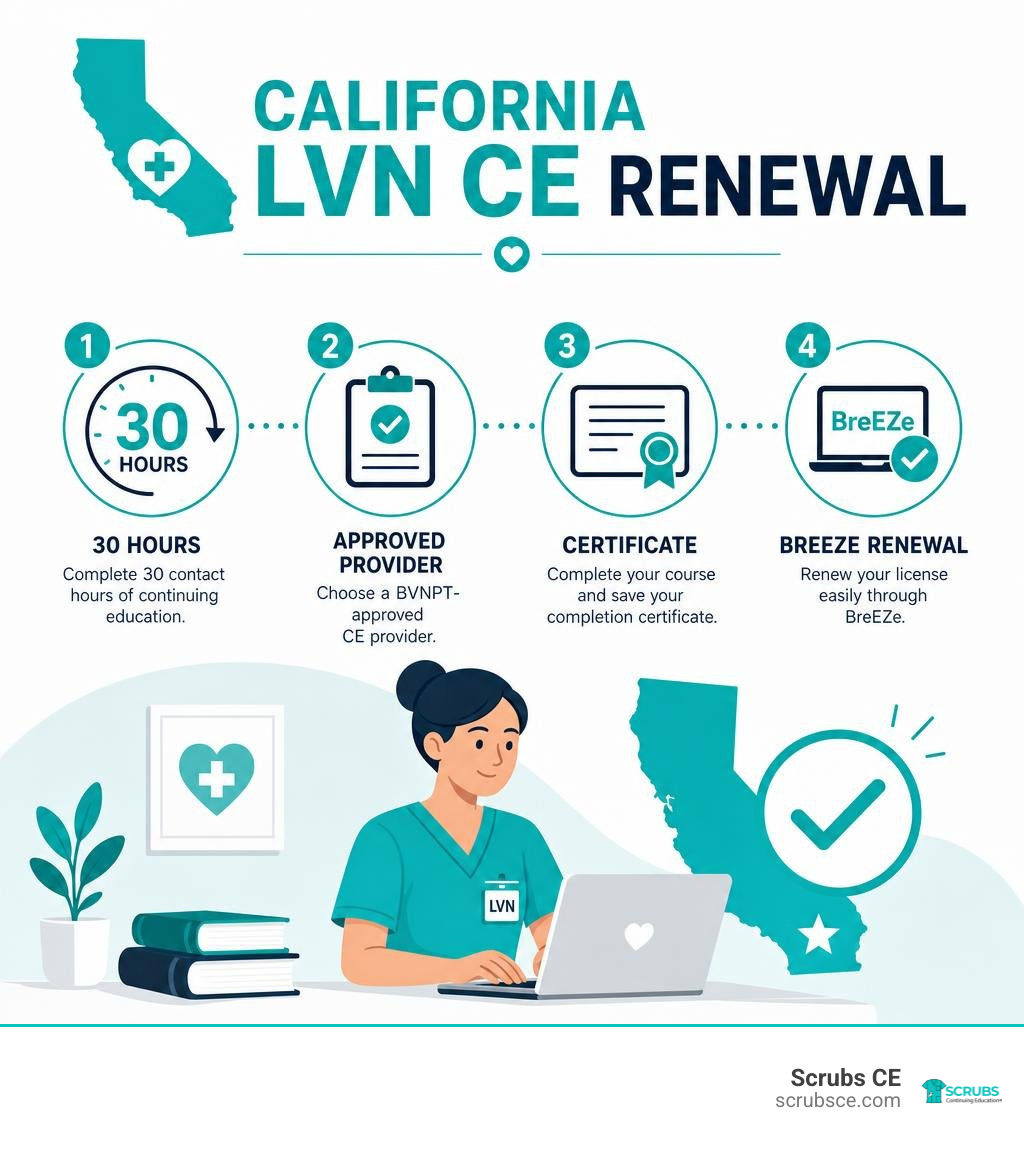
California LVNs generally need 30 contact hours of approved continuing education every two-year renewal cycle. For an LVN CEU California no test option, choose a self-study or online course from an active BVNPT-approved CE provider, complete the required learning materials, and save your completion certificate for renewal records.
Before enrolling, make sure the course and provider are accepted for California LVN renewal. A first-time renewal may be exempt from the CE requirement if the LVN passed the licensure exam within the prior two years.
I’m Zita Ewert, and I lead SCRUBS Continuing Education®, where I focus on making online and home-study CE easier to access and understand. For professionals searching for lvn ceu california no test options, this guide explains the practical steps to complete credits and renew with less stress.
Must-know lvn ceu california no test terms:
- california nursing ceu interdisciplinary collaboration
- california nursing ceu iv therapy
- nursing ceu california
Understanding California LVN Renewal and Continuing Education Requirements

Navigating continuing education does not have to feel like studying for the NCLEX all over again. In California, the Board of Vocational Nursing and Psychiatric Technicians (BVNPT) sets the standards for maintaining an active Licensed Vocational Nurse (LVN) credential.
Under BVNPT regulations, licensed vocational nurses must accumulate 30 contact hours of continuing education every two years to maintain an active license. Licenses expire every two years at the end of your birth month. Because California licenses are tied to your birth date rather than standard calendar years, tracking your personal renewal timeline is essential.
When submitting your renewal, you report your completed units directly through the state’s online BreEZe portal. Understanding everything you need to know about california ce credits ensures you choose coursework that satisfies the board’s criteria. You can also consult resources like the California PN Licensing Guide on Vivian Health for an overview of vocational nursing regulations across the Golden State.
First-Time Renewal CE Exemptions
If you recently graduated and passed your NCLEX-PN, there is good news. The BVNPT offers an exemption for newly licensed nurses during their initial renewal cycle.
If your first renewal occurs within two years of passing the National Council Licensure Examination (NCLEX-PN), you are exempt from the 30-hour CE requirement. During this initial cycle, you only need to submit your renewal application and pay the standard licensing fee. For every renewal cycle after that initial period, you must complete the full 30 contact hours from an approved provider.
College Coursework and Prior Education Credit
LVNs pursuing higher degrees or career ladder programs can often apply academic coursework toward their renewal. Under California Code of Regulations (CCR) Title 16, Section 1430, nursing education programs grant credit for prior education and clinical experience. Reviewing the Nurses Previous Education (According to regulation, CCR 1430): guidelines shows how academic units transfer into continuing education credit:
- Academic Conversion: One academic semester unit equals 15 contact hours of continuing education. A single 3-unit science or advanced nursing course can satisfy your entire 30-hour requirement for the renewal cycle.
- Quarter Units: One academic quarter unit equals 10 contact hours.
- Course Relevance: The college course must cover clinical nursing concepts, biological sciences, physical sciences, social sciences, or healthcare administration relevant to vocational nursing practice.
Beyond degree courses, challenge examinations and advanced placement pathways under CCR 1430 allow vocational nurses to demonstrate equivalence for prior education. However, for pure license renewal without career ladder testing, standard CEU options remain the fastest and most convenient route.
How to Complete Your LVN CEU California No Test Options

Many nurses ask if every continuing education course requires a formal, graded examination. The answer is no. California law does not mandate high-stress proctored testing for general continuing education.
Instead, continuing education is designed to maintain professional competence, learn updated clinical practices, and review crucial patient safety protocols. Many self-study and online modules use reflective questions, module completion checks, and course evaluations rather than high-stakes exams.
To secure affordable ce credits without spending hours studying for stressful tests, look for providers offering structured self-study modules that award certificates upon reading and evaluating the material.
| Feature | High-Stakes Test-Based CE | No-Test / Self-Study CE |
|---|---|---|
| Assessment Style | Proctored or strict passing-score exams | Knowledge checks, participation, and evaluations |
| Pacing | Timed sessions with potential retake penalties | 100% self-paced learning |
| Delivery Method | Monitored testing environments | Flexible online modules & reading materials |
| Stress Level | High | Low |
| Certificate Delivery | Delayed pending score verification | Instant download upon module completion |
Why BVNPT Allows LVN CEU California No Test Learning Formats
The BVNPT focuses on continuous professional development rather than re-testing baseline knowledge. State-approved continuing education providers develop instructional materials that reinforce real-world clinical skills. Learning about state approved ce everything you need to know for your license renewal helps you identify valid courses that fit this model.
Providers maintain an active Continuing Education Provider (CEP) number issued by the state. When a board-approved provider issues contact hours based on self-study reading, clinical reviews, and course evaluations, the BVNPT accepts those hours for your renewal.
Step-by-Step Guide to Completing an LVN CEU California No Test Course
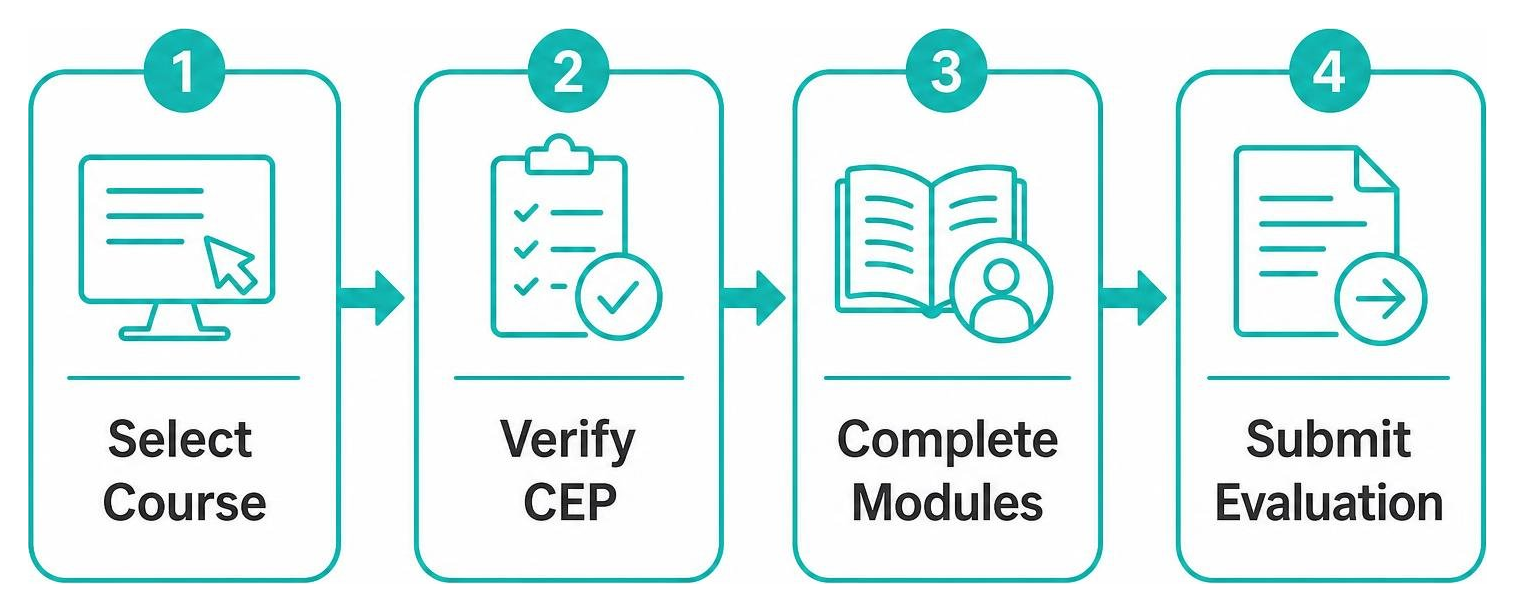
Completing your self-paced CE requirements involves a simple, straightforward process:
- Select an Approved Course: Choose topics relevant to your daily nursing practice, patient safety, or scope expansion.
- Verify Provider Approval: Confirm that the provider holds an active California CEP number.
- Complete the Learning Material: Read through the comprehensive course modules at your own pace without the pressure of a timer.
- Complete the Feedback Evaluation: Submit a brief course evaluation sharing your feedback on the instructional content.
- Download Your Certificate: Instantly receive your official certificate of completion displaying the course title, contact hours, date, and provider CEP number.
Specialty Certifications and Practical Clinical Hours
Certain clinical certifications offer CE hours while directly expanding your procedural scope of practice. For instance, vocational nurses seeking certification in intravenous therapy or blood withdrawal complete hands-on clinical modules that carry CE credits.
You can review our guide on california nursing ceu top iv therapy courses for license renewal to see how procedural training counts toward your required 30 hours. Additionally, board-approved blood withdrawal courses can award up to 9 CE units upon completing the required practical clinical hours, combining practical scope expansion with CE fulfillment.
Step-by-Step Process for California LVN License Renewal
Once you finish your 30 contact hours, completing your renewal with the BVNPT takes just a few minutes online:
- Log into BreEZe: Access the California Department of Consumer Affairs BreEZe portal (breeze.ca.gov).
- Select License Renewal: Under the “Manage Your License” menu, select your LVN renewal application.
- Self-Certify CE Hours: Enter your completed continuing education hours and provider details when prompted. You do not need to mail physical certificates unless you are selected for an audit.
- Verify Fingerprint Status: Ensure your Live Scan or electronic fingerprint records are current on file.
- Pay Renewal Fees: Pay the standard renewal fee (typically $305 for an active two-year cycle).
- Retain Records for 4 Years: California regulations require you to maintain digital or physical copies of your CE certificates for at least four years in case of a board audit.
Completing self-paced online ceu credits makes organizing and archiving these digital records straightforward.
Frequently Asked Questions About California LVN CEUs
Do California LVNs need to take an exam for every CE course?
No. California BVNPT regulations require completion of 30 approved contact hours, but courses do not all require proctored or graded exams. Many approved self-study courses award completion certificates based on reading educational modules, engaging with learning materials, and completing a post-course evaluation.
How many CE hours are required for California LVN license renewal?
California LVNs must complete 30 contact hours of continuing education every two-year renewal cycle. The only exception is for nurses renewing their license for the first time within two years of passing their NCLEX-PN exam.
How long must LVNs keep CE completion records in California?
You must keep your certificates of completion for at least four years following your license renewal. If the BVNPT conducts a random audit of your license, you will need to provide copies of these certificates showing the provider name, active CEP number, course title, and completion date.
Conclusion
Renewing your California LVN license does not have to be stressful or time-consuming. By choosing approved, self-paced courses that prioritize real learning over intimidating exams, you can meet your professional requirements on your own schedule.
At Scrubs CE, we provide straightforward, self-paced continuing education designed for busy healthcare professionals. Check out our comprehensive guide on california ce requirements to explore our course catalog, earn your hours at your own pace, and download your instant certificates today.
Master Self-Paced California RN CEU Hours for Easy License Renewal
Master Self-Paced California RN CEU Hours for Easy License Renewal
Start Your California RN CEU Self-Paced Plan

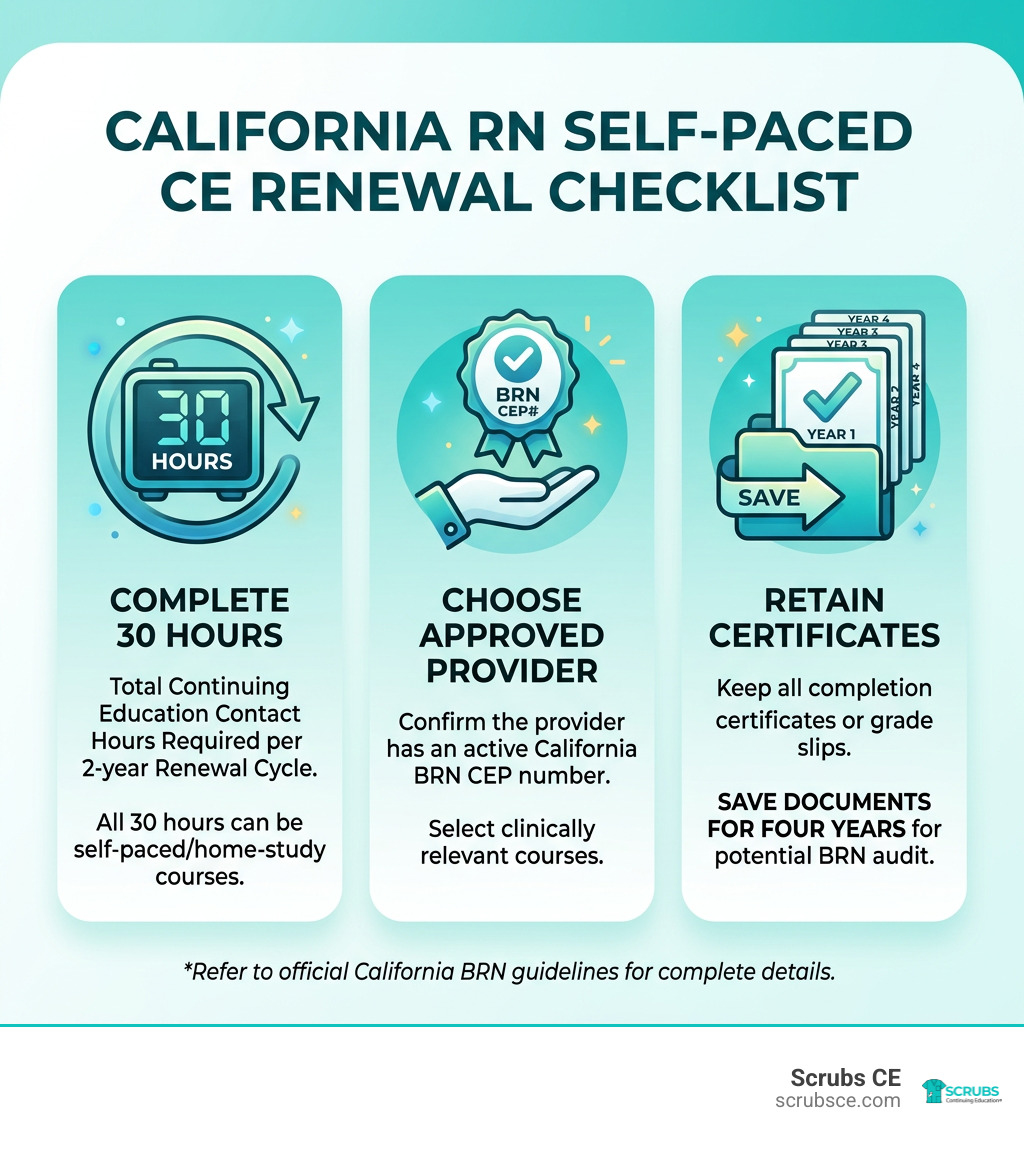
California RNs can complete all 30 required contact hours for each two-year renewal cycle through approved self-paced or home-study courses. To stay compliant, choose clinically relevant courses from a California BRN-approved provider, finish them before renewal, and save every completion certificate for four years.
For a fast, flexible plan:
- Confirm the provider has an active California BRN CEP number.
- Complete 30 contact hours of approved nursing CE at your own pace.
- Keep certificates or grade slips in case the BRN audits your renewal.
- If this is your first renewal after passing the NCLEX, check whether you are exempt from the 30-hour requirement – but remember the required one hour of direct-participation implicit bias training within your first two years of licensure.
Self-paced learning can fit around long shifts, family time, and changing schedules. The key is not simply taking online classes. The course content and provider must meet California BRN standards.
I am Zita Ewert, a continuing-education leader focused on clear, accessible online and home-study learning for healthcare professionals. My work with California RN CEU self paced education emphasizes practical course access, simple completion steps, and reliable documentation for license compliance.
Understanding Board Requirements for California RN CEU Self Paced Courses
Navigating state board regulations does not need to feel overwhelming. The California Board of Registered Nursing (BRN) mandates that all registered nurses complete 30 contact hours of continuing education every two-year renewal cycle to maintain an active license.

One of the most nurse-friendly aspects of California’s regulations is that there is zero contact-hour cap on independent learning. You can earn all 30 of your required contact hours through home-study or independent self-paced formats. You do not need to spend your rare days off sitting in a crowded conference hall or attending mandatory live webinars unless you prefer that format.
If you are enrolled in accredited college or university courses relevant to nursing practice, you can also convert those academic units into CE contact hours:
| Academic Credit Type | Conversion Formula | CE Contact Hours Earned |
|---|---|---|
| 1 Quarter Unit | 1 Quarter Unit = 10 Hours | 10 Contact Hours |
| 2 Quarter Units | 2 Quarter Units = 20 Hours | 20 Contact Hours |
| 1 Semester Unit | 1 Semester Unit = 15 Hours | 15 Contact Hours |
| 2 Semester Units | 2 Semester Units = 30 Hours | 30 Contact Hours (Full Renewal) |
As long as your courses meet Board standards for content and provider approval, independent study gives you total flexibility to finish your renewal on your own timeline.
Acceptable vs. Unacceptable Online Nursing Course Content
The California BRN maintains clear rules regarding what subjects can and cannot be counted toward your 30 contact hours. The core standard is simple: course content must be directly relevant to the practice of nursing and designed to enhance clinical knowledge and skills beyond the basic entry-to-practice level.

Choosing Valid California RN CEU Self Paced Topics
Acceptable subjects focus on scientific knowledge, clinical management, patient care, and healthcare delivery systems. Valid subjects include:
- Advanced Pharmacology & Pharmacokinetics: Drug interactions, dosage calculations, and new therapeutics.
- Pathophysiology & Disease Management: In-depth reviews of acute and chronic conditions.
- Clinical Assessment & Skills: Physical assessment techniques, telemetry, wound management, and emergency response.
- Specialty Practice Areas: Gerontology, oncology, pediatrics, critical care, psychiatric-mental health, and obstetrics.
- Category 1 CME: Continuing Medical Education courses designated for physicians that are relevant to nursing practice.
- Healthcare Ethics & Legal Issues: Informed consent, scope of practice, and medical ethics.
Non-Compliant and Unacceptable Subjects
The Board explicitly rejects courses geared toward personal growth rather than direct patient care. While personal wellness is valuable, it will not count toward your license renewal.
Unacceptable subjects include:
- Self-Improvement & Personal Development: Speed reading, memory improvement, or stress management techniques for personal use.
- Personal Financial Planning: Investing, retirement planning, tax preparation, or estate management.
- Mindfulness & Fitness Programs: Yoga classes, aerobic exercise, weight-loss programs, or meditation retreats.
- General Business Courses: Basic office administration, marketing, or general business software training.
- Layperson Courses: Basic community first-aid, babysitting safety, or CPR courses intended for the general public rather than healthcare professionals.
Even if a provider issues a completion certificate for a yoga or personal finance class, the BRN will disallow those hours during an audit.
How to Verify Approved CE Providers and National Accreditations
To ensure your self-paced coursework counts, you must confirm that the education provider is authorized to grant California nursing CE credit.
Checking California BRN Provider CEP Numbers
Approved providers in California are issued a Continuing Education Provider (CEP) number by the Board.
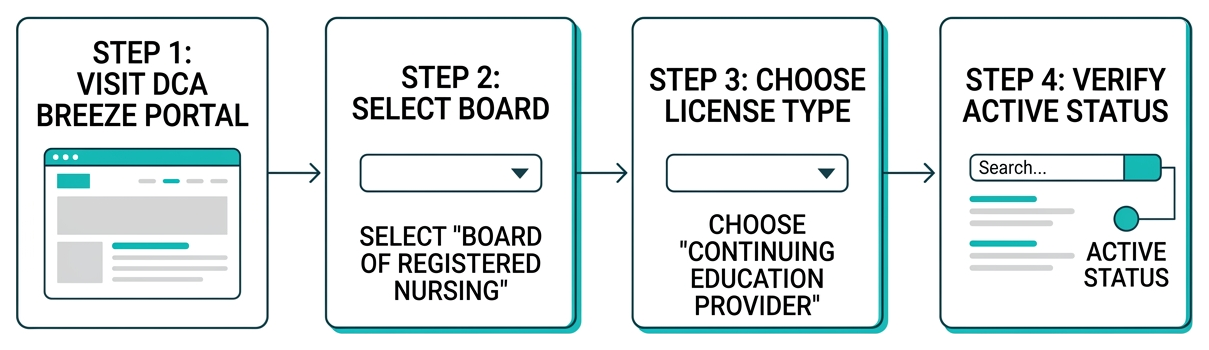
You can easily verify whether an organization holds an active status:
- Visit the Department of Consumer Affairs (DCA) BreEZe License Search portal.
- Select “Board of Registered Nursing” from the board menu.
- Choose “Continuing Education Provider” as the license type.
- Enter the provider’s name or CEP number to confirm their standing is active and clear.
Evaluating California RN CEU Self Paced National Accreditations
What if your provider is located outside California or accredited nationally? Courses approved by national nursing bodies—such as the American Nurses Credentialing Center (ANCC)—or courses recognized as Category 1 CME are widely accepted by the California BRN, provided the material meets the Board’s clinical relevance standards.
When reviewing an out-of-state or national provider, ensure that their completion certificates clearly specify their accreditation credentials (e.g., ANCC approval statement or AMA PRA Category 1 Credit™ designation) so you have ironclad documentation if audited.
Step-by-Step Guide to Completing and Reporting Your Renewal Hours
Fulfilling your renewal requirements does not have to be stressful. By following a structured process, you can complete your coursework quickly and renew your license with confidence.
Special Rules for First-Time Renewals and Implicit Bias
If you are renewing your California RN license for the very first time after passing the national licensing examination (NCLEX) within the past two years, you are generally exempt from the standard 30 contact hour CE requirement. When prompted on your renewal application, you will record “EXEMPT” as the course title and list “NCLEX” as your provider.
However, there is one crucial statutory exception:
- Implicit Bias Requirement: All licensees within their first two years of holding an active California RN license must complete one hour of direct-participation implicit bias training.
- This course must cover topics such as the impact of historical and systemic racism in healthcare, practical strategies to identify and mitigate implicit bias, and methods to improve health equity.
- Self-paced courses must meet Board requirements for interactive or direct participation to satisfy this specific mandate.
BreEZe Renewal Reporting and Audit Record Keeping
When your renewal window opens, submitting your application through the BreEZe online portal takes only a few minutes:
- Log in to your BreEZe account.
- Select the renewal link next to your active license.
- Attest that you have completed your 30 contact hours of CE (or enter your exemption details).
- Pay the required renewal fee and submit.
You do not need to mail or upload your certificates during standard renewal. However, the California BRN conducts routine, random audits to verify compliance.
Crucial Rule: You must retain physical or digital copies of all certificates of completion, transcripts, or grade slips for at least four years. If selected for an audit, you will be required to submit copies of these documents to prove you earned the hours within the appropriate two-year cycle. Failing to provide acceptable documentation can lead to inactive license status or formal disciplinary action.
Frequently Asked Questions About California RN CEUs
How many self-paced CE hours can I complete online for my California RN renewal?
You can complete 100% of your required 30 contact hours through online, self-paced, or home-study courses. The California BRN places no limit on the number of independent learning hours you may earn, as long as the courses come from an approved provider (such as an active California CEP holder or ANCC-accredited organization) and cover clinically relevant nursing topics.
What is the implicit bias requirement for new California RNs?
Under California law, any registered nurse renewing within the first two years of initial licensure must complete a one-hour course dedicated to implicit bias. This training must address systemic racism in healthcare, health disparities, and actionable techniques to reduce personal and organizational bias in clinical decision-making.
What happens if I am audited by the California Board of Registered Nursing?
If audited, you will receive a formal notice from the BRN requesting proof of your completed continuing education hours for that renewal period. You must supply copies of your certificates of completion showing the provider name, CEP number (or national accreditation), course title, date of completion, and contact hours awarded. This is why maintaining your records for at least four years is mandatory.
Conclusion
Renewing your California RN license does not need to disrupt your busy professional and personal life. By taking advantage of approved home-study options, you can fulfill your biennial requirements efficiently while brushing up on the clinical topics that matter most to your day-to-day nursing practice.
At Scrubs CE, we are dedicated to providing high-quality, fully approved continuing education tailored for busy healthcare professionals. Our platform offers streamlined, self-paced modules with instant certificate delivery upon completion, ensuring your recordkeeping remains seamless and audit-ready. For a comprehensive look at state-specific renewal rules, explore our complete overview of California CE requirements and start your coursework today.
Ohio Nursing CEUs No Test: Meet State Renewal Requirements the Easy Way
Ohio Nursing CEUs No Test: Meet State Renewal Requirements the Easy Way
Ohio Board of Nursing CE Requirements Overview

Ohio nurses can complete all 24 required continuing education (CE) contact hours through accredited, test-free learning formats. The Ohio Board of Nursing permits registered nurses (RNs) and licensed practical nurses (LPNs) to fulfill their biennial renewal mandates using independent study, recorded webinars, professional clinical monographs, and reading-based courses that verify completion through time tracking and self-attestation rather than mandatory post-tests or scored exams.
To fulfill these renewal standards, you must select state-approved CE for license renewal that aligns with board criteria. In Ohio, both RNs and LPNs must complete 24 contact hours of continuing education every two-year renewal cycle. With over 250,000 actively licensed nurses across the state, ensuring that your credits fulfill state mandates is essential for maintaining an active, unencumbered license.
One of the most important components of this mandate is Category A education. The state board requires that at least 1 of your 24 contact hours be directly related to Ohio nursing law and rules (Category A). The remaining 23 contact hours can cover general clinical topics, patient safety, pharmacology, or specialty practice areas.
| Requirement Feature | Registered Nurse (RN) | Licensed Practical Nurse (LPN) |
|---|---|---|
| Total Contact Hours | 24 hours every 2 years | 24 hours every 2 years |
| Category A Mandate | Minimum 1 contact hour (Ohio Law & Rules) | Minimum 1 contact hour (Ohio Law & Rules) |
| Home Study / Online Limit | Up to 24 hours allowed (100%) | Up to 24 hours allowed (100%) |
| Renewal Period | Odd-numbered years (by Oct 31) | Even-numbered years (by Oct 31) |
| Record Retention | 6 years post-renewal | 6 years post-renewal |
State administrative rules allow all 24 required contact hours to be earned through independent study, online modules, or home-study programs without requiring an evaluation exam for every learning activity.
Understanding Ohio Nursing CEUs No Test Options
What exactly are test-free CEUs? Traditional continuing education units often require you to read a clinical text, sit through a lecture, and then pass a post-test with a score of 70% to 80% before you can receive your certificate. While post-tests ensure comprehension, they can also add unnecessary stress and consume valuable time, especially after a grueling 12-hour shift in a demanding clinical setting.
Test-free learning formats rely on structured time-based engagement, content completion, and formal self-attestation. Instead of taking an exam at the end of the module, you review the educational materials, complete the required learning time, and submit an attestation confirming that you have thoroughly read and understood the subject matter. As long as the issuing provider is accredited or recognized by the Ohio Board of Nursing, these online CEU credits are completely valid for your renewal.
The phrase ohio nursing ceus no test is often used as shorthand for accredited courses that verify participation without a scored final exam. That does not mean the coursework is informal or untracked. A legitimate provider should still present clear learning objectives, define the contact hours awarded, document your completion date, and issue a certificate that can be produced during an audit. In other words, the learning requirement remains real; only the testing requirement is removed. This distinction is especially helpful for busy nurses who want to stay compliant while choosing education that fits into unpredictable clinical schedules.
Formats Available for Ohio Nursing CEUs No Test
Nurses seeking ohio nursing ceus no test options can take advantage of several diverse learning modalities that do not require post-course examinations:
- Peer-Reviewed Journal Articles: Reading clinical studies and monographs with structured learning objectives, followed by completing a brief course evaluation form.
- On-Demand Recorded Webinars: Watching visual presentations delivered by clinical experts where course completion is tracked by video progress and milestone check-ins.
- Audio Lectures and Podcasts: Listening to accredited healthcare discussions during your daily commute or downtime and confirming completion upon finishing.
- Interactive Digital Modules: Engaging with comprehensive online education in healthcare that tracks module progression, case study reviews, and time spent rather than administering a final test.
- Professional Monographs and Whitepapers: In-depth clinical overviews focused on emerging evidence-based practices, infection control, and pharmacology updates.
Benefits of Choosing Ohio Nursing CEUs No Test
A survey by the Ohio Nurses Association revealed that 68% of Ohio nurses prefer no-test CE options to reduce stress and save time during license renewal. Choosing test-free learning provides several clear advantages:
- Reduced Test Anxiety: Many skilled nurses experience test fatigue after years of rigorous academic training. Removing the post-test allows you to focus purely on absorbing practical clinical knowledge rather than memorizing obscure facts for an exam.
- Flexible, Self-Paced Study: You can pause, resume, and review educational materials whenever your schedule allows without worrying about test timers expiring or losing your test progress.
- Immediate Certification: Once you finish reading the material and complete the verification attestation, your certificate is generated instantly for your records.
- Maximized Efficiency: Reviewing an A-Z guide to CE hours requirements helps you quickly pick courses that fit your clinical scope and knock out your 24 hours in record time without repetitive test retakes.
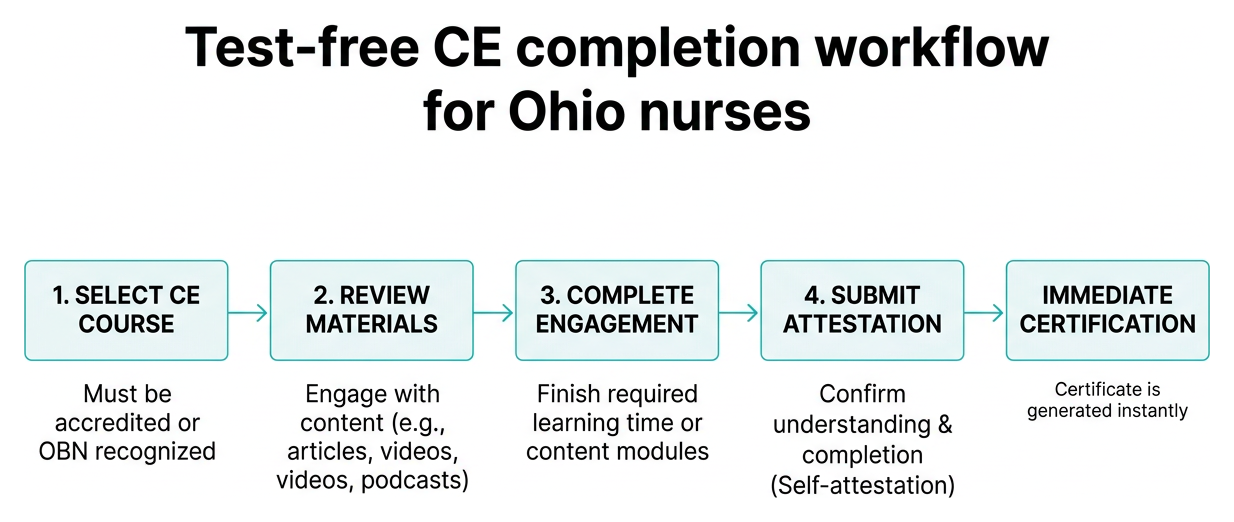
How to Verify and Complete Test-Free CE Courses in Ohio
While the Ohio Board of Nursing permits test-free formats, you must ensure that every course you take meets state accreditation standards. The board does not directly endorse individual commercial courses; instead, it accepts contact hours approved by nationally recognized accrediting bodies, state regulatory boards, or organizations holding proper credentialing authority.
To ensure your test-free courses are valid and fully compliant:
- Verify Approved Providers: Look for providers accredited by the American Nurses Credentialing Center (ANCC), national specialty nursing organizations, or state boards of nursing across the country.
- Check for Category A Approval: Ensure that your mandatory 1-hour law and rules course is explicitly designated as Category A by an OBN-approved provider or an organization authorized by the Ohio Board of Nursing to award Category A hours.
- Confirm Contact Hour Calculations: Ensure that 60 minutes of instructional study equals 1 contact hour. Courses that award fractional hours must clearly state how contact time was calculated.
- Review Certificate Details: Your completion document must clearly list your full legal name, professional license number (if applicable), course title, completion date, provider accreditation statement, and the exact number of contact hours awarded.
Following a reliable online CE courses complete guide guarantees that you never waste time or money on unaccredited coursework and that your certificates will hold up during a board review.
Tracking, Documenting, and Reporting Your CE Hours
In Ohio, nurses do not routinely mail paper certificates to the board during standard renewal. Instead, you attest on your online renewal application via the Ohio eLicense portal that you have met the 24-hour requirement. However, the Ohio Board of Nursing conducts random audits, requiring selected nurses to furnish physical or digital proof of all completed contact hours.
To protect yourself against compliance audits and avoid disciplinary action:
- Retain Certificates for 6 Years: Ohio Administrative Code mandates that nurses keep continuing education records for at least two renewal cycles (6 years) following the renewal date.
- Utilize CE Tracking Tools: Maintain digital backups of your certificates on cloud storage or tracking platforms like CE Broker to prevent lost paperwork and simplify documentation retrieval.
- Check Course Expiration Dates: Ensure all courses were completed strictly within your specific two-year licensing window (between November 1 of the prior renewal cycle and October 31 of your renewal year).
- Log Contact Hours Promptly: Upload completion records as soon as you finish each course to avoid last-minute searches for misplaced documentation during renewal week.
For a deeper dive into maintaining pristine records and staying audit-proof, our continuing education credits online guide walks you through proper logging techniques step by step.
Frequently Asked Questions About Ohio Nursing CEUs
Can Ohio nurses complete all 24 CE hours without taking a test?
Yes. The Ohio Board of Nursing allows all 24 contact hours to be earned through independent study, online modules, or home-study programs that do not require an exam, provided the course is offered by an approved, accredited provider and awards a valid certificate of completion.
Are Category A law and rule courses available with no test required?
Yes. You can complete your mandatory 1-hour Category A requirement through test-free learning formats, such as recorded video lectures or guided reading modules, as long as the content directly covers Ohio nurse practice law and rules and is issued by an OBN-approved provider.
How long must Ohio nurses keep no-test CE certificates on file?
Ohio nurses must maintain all CE completion certificates and documentation for at least 6 years (two consecutive renewal cycles) in case of a random continuing education audit by the Ohio Board of Nursing.
Conclusion
Renewing your Ohio nursing license does not have to be a source of stress or endless test-taking. By choosing accredited, test-free continuing education modules, you can fulfill your 24 contact hours efficiently while focusing on topics that enhance your clinical practice.
At Scrubs CE, we are dedicated to providing clear, accessible, and high-quality educational materials designed to support your lifelong learning journey. Whether you are knocking out your Category A requirements or completing your nursing CEU 30 hours for multi-state licenses, exploring test-free options allows you to meet your renewal goals quickly so you can focus on what matters most: delivering outstanding patient care.
Anatomy and Physiology for Healthcare Workers Made Surprisingly Simple
Anatomy and Physiology for Healthcare Workers Made Surprisingly Simple
Why Anatomy and Physiology for Healthcare Workers Is the Bedrock of Patient Care

Anatomy and physiology for healthcare workers boils down to a simple formula: anatomy is the structural blueprint of the body (organs, bones, tissues), while physiology is how those structures function and communicate to maintain life.
Mastering basic human body systems allows clinicians to recognize normal function, catch subtle warning signs of disease, and deliver safe, targeted care.
Here is how the 11 core body systems work together to keep patients alive:
- Protection and Support: Integumentary (skin barrier), Skeletal (framework and mineral storage), and Muscular (movement and heat).
- Control and Communication: Nervous (electrical signaling) and Endocrine (chemical hormone regulation).
- Transport and Maintenance: Cardiovascular (blood circulation), Respiratory (gas exchange), Lymphatic/Immune (fluid balance and defense), Digestive (nutrient absorption), and Urinary (waste filtration and fluid balance).
- Continuity: Reproductive (genetic propagation).
In healthcare, knowing where an organ sits and how it functions is what prevents clinical errors—whether you are choosing an injection site, interpreting lab values, or assessing abnormal vital signs.
I’m Zita Ewert, founder of SCRUBS Continuing Education®, where I help imaging and healthcare professionals build clinical confidence with practical courses covering anatomy and physiology for healthcare workers. Let’s break down the human body’s complex wiring into simple, actionable concepts you can apply on your very next shift.
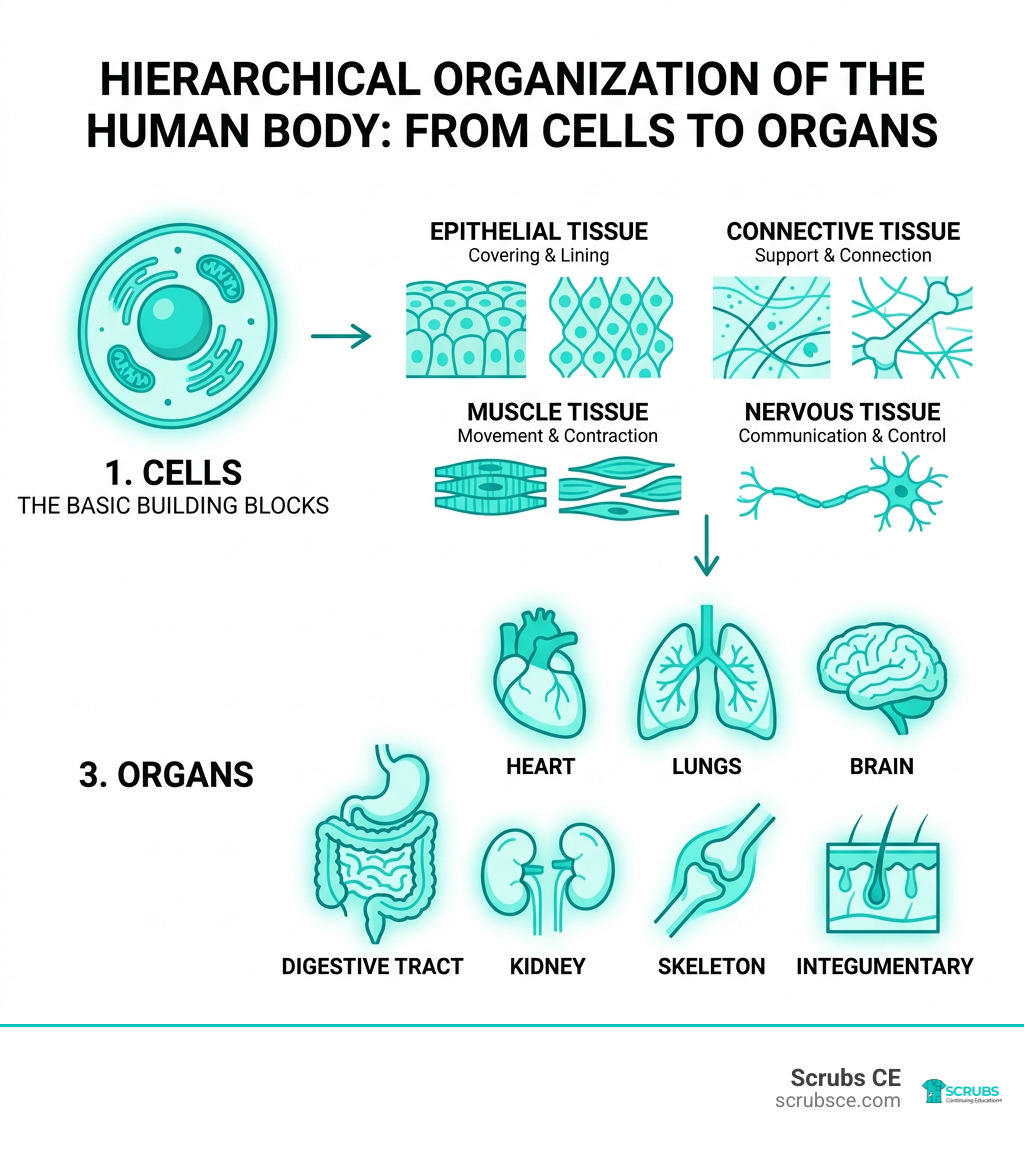
Simple anatomy and physiology for healthcare workers glossary:
- Anatomy and Physiology for Dummies
- Anatomy and Physiology for Dummies Book
- Anatomy and Physiology for Dummies Latest Edition
Core Fundamentals: Structure vs. Function in Clinical Care
Every clinical action we take—from palpating a pulse to setting an intravenous drip rate—rests on the balance between bodily structure and its functional machinery. When structure is altered by trauma, or function is derailed by disease, homeostasis breaks down. Understanding pathological anatomy enables clinicians to trace outward symptoms back to cellular disruptions.
| Dimension | Anatomy (Structure) | Physiology (Function) | Clinical Importance |
|---|---|---|---|
| Primary Focus | Physical parts, locations, landmarks, tissue layers | Chemical, electrical, and mechanical processes | Dictates safe physical entry points vs. functional targets |
| Assessment Tool | Palpation, inspection, imaging anatomy, surgical observation | Vital signs, blood panels, urinalysis, ECG tracings | Distinguishes physical abnormalities from physiological failure |
| Clinical Example | Identifying the gluteal muscle mass and sciatic nerve path | Regulating systemic vascular resistance via arterial tone | Prevents nerve damage while adjusting hypertensive drugs |
Anatomy vs. Physiology: Defining the Bodily Blueprint
To understand the living patient, we must distinguish between gross morphology and dynamic pathways. Gross anatomy deals with structures visible to the naked eye, such as the chambers of the heart or the lobes of the lungs, while microscopic histology examines cellular organization.
Conversely, physiological principles, as outlined in classical Physiology foundational resources, explain how biochemical cascades and negative feedback loops maintain constant internal equilibrium. You cannot master one without the other: anatomy provides the physical framework, while physiology gives it life.
Why Anatomy and Physiology for Healthcare Workers Drives Patient Safety
An accurate grasp of bioscience is a core patient safety competency, not merely an academic hurdle. Research shows that 91.6% of undergraduate nursing students believe every clinician must have a solid grasp of bioscience to practice safely, and 97% of final-year students recognize its direct value at the bedside (Horiuchi-Hirose et al., 2023).
When a clinician recognizes that a patient’s dropping urine output coupled with elevated respiratory rate indicates early metabolic acidosis rather than simple dehydration, they can initiate early interventions that prevent cardiac arrest.

The 11 Core Human Body Systems Explained Simply
The body operates as a linked collective rather than isolated compartments. When one system falters, neighboring systems compensate immediately to maintain life.

Structural and Protective Systems: Integumentary, Skeletal, and Muscular
- Integumentary System: As our largest organ, the skin acts as an external barrier against microbial invasion, synthesizes vitamin D, and regulates body temperature via dermal vasodilation and perspiration.
- Skeletal System: Beyond providing a rigid framework, bones act as a metabolic reservoir for calcium and host hematopoiesis within red marrow. For a focused review of osseous landmarks, review our guide to getting to know your bones.
- Muscular System: Skeletal, smooth, and cardiac muscles generate movement, propel fluids through internal vessels, and produce metabolic heat.
Regulatory and Communication Networks: Nervous and Endocrine Systems
- Nervous System: Operating via rapid electrical action potentials and neurotransmitters, this network coordinates sensory input, central integration, and motor output. Diagnostic procedures in Radiology rely on precise neural mapping, which you can explore in detail through anatomy for radiographers.
- Endocrine System: Slower but longer-lasting, the endocrine glands secrete hormones directly into the bloodstream to regulate cellular metabolism, growth, and fluid balance.
Maintenance and Transport Systems: Cardiovascular, Respiratory, Lymphatic, and Renal
- Cardiovascular System: Propels blood containing oxygen, nutrients, and immune cells through systemic and pulmonary circuits.
- Respiratory System: Facilitates external gas exchange across the alveolar-capillary membrane, while simultaneously regulating systemic pH balance by blowing off or retaining carbon dioxide.
- Lymphatic and Immune System: Collects excess interstitial fluid to prevent peripheral edema and filters it through lymph nodes stocked with B and T lymphocytes.
- Digestive System: Breaks down polymers into absorbable macronutrients while housing the human microbiome—an ecosystem of over $10^{14}$ bacterial cells that support mucosal immunity.
- Urinary System: Nephrons filter metabolic wastes, regulate intravascular volume, and modulate systemic blood pressure through the renin-angiotensin-aldosterone pathway, concepts thoroughly detailed in Fundamentals of Anatomy and Physiology.
- Reproductive System: Governs gametogenesis, hormonal feedback loops, and embryogenesis.
Practical Applications: Integrating Anatomy and Physiology for Healthcare Workers into Daily Practice
Theoretical knowledge must translate into practical bedside judgment. When we review clinical cues, biological understanding informs our hands-on actions.

Accurate Patient Assessment, Medication Routes, and Clinical Decision-Making
Every diagnostic and therapeutic maneuver relies on structural and physiological knowledge:
- Intramuscular Injections: Selecting the ventrogluteal site relies on identifying the greater trochanter and anterior superior iliac spine, preventing accidental injection into the sciatic nerve or superior gluteal artery.
- Respiratory Distress vs. COPD: Clinicians apply alveolar gas exchange theory to differentiate between acute bronchospasm (treated with bronchodilators) and progressive carbon dioxide retention.
- Renal Clearance: Calculating medication dosages depends on understanding glomerular filtration rates, preventing toxicity from drugs like digoxin or aminoglycosides, as emphasized in Human Anatomy & Physiology.
Enhancing Interprofessional Communication, Preceptorship, and Patient Trust
Using standard anatomical terminology creates clear communication across multidisciplinary teams. In radiographic anatomy, describing a finding as “inferolateral to the right renal pelvis” provides an exact coordinate that prevents confusion.
Furthermore, registered nurses who understand underlying physiology can confidently explain the “why” behind interventions during preceptorship and translate complex diagnoses into clear, reassuring language for patients.
Overcoming the Theory-Practice Gap: Modern Learning Strategies
Despite its importance, 50% of undergraduate nursing students find bioscience coursework extremely time-consuming, and 65.9% consider it more demanding than clinical nursing subjects. Bridging this gap requires effective study habits and practical clinical integration.
Tackling the Challenges of Anatomy and Physiology for Healthcare Workers
A common issue in bioscience education is the disconnect between lecture halls and hospital wards. In fact, 40.5% of registered nurses have reported that the bioscience content taught during their initial schooling felt disconnected from actual clinical practice.
Students often face heavy memorization requirements while preparing for mandatory milestones such as licensure examinations. However, when clinical programs integrate bioscience educators who focus specifically on healthcare applications, over 90% of students report a clearer understanding of patient conditions.
High-Yield Study Techniques: Mnemonics, Active Recall, and Case-Based Models
To master body systems efficiently, try replacing passive rereading with evidence-based active learning methods:
- Active Recall via Flashcards: Test yourself on structures and physiological mechanisms without looking at notes.
- Spaced Repetition: Revisit difficult concepts (such as the renal countercurrent multiplier) across increasing intervals.
- Mnemonic Devices: Use memorable phrases to recall complex lists, such as cranial nerves (“On Old Olympus Towering Tops…”) or carpal bones.
- 3D Interactive Atlases: Visualizing anatomical layers in three dimensions, as featured in texts like Ross & Wilson Anatomy and Physiology, establishes spatial relationships that stick during clinical rotations.
Frequently Asked Questions About Anatomy and Physiology in Healthcare
Why do many healthcare students find anatomy and physiology challenging?
The primary challenge stems from cognitive overload caused by dense terminology combined with abstract biochemical processes. Because students must memorize thousands of Latin-derived terms while understanding fluid, electrolyte, and electrical gradients simultaneously, it requires higher-order conceptual synthesis rather than basic memorization.
How does physiological knowledge prevent medication administration errors?
Physiology dictates pharmacokinetics: how a drug is absorbed, distributed, metabolized by the liver (cytochrome P450 enzymes), and cleared by the kidneys. Knowing a patient’s underlying organ function prevents clinicians from administering standard dosages to a patient with compromised clearance, avoiding severe drug toxicity.
What is the most effective way to retain body systems for clinical rotations?
The most reliable technique is clinical correlation using case-based study. Instead of memorizing isolated cardiac structures, review how left ventricular failure leads to pulmonary vascular congestion and fluid extravasation into the alveoli. Linking anatomical damage directly to patient symptoms creates durable mental models.
Conclusion
A deep understanding of the human body is essential for clinical competence, patient safety, and career growth. By bridging structural anatomy with functional physiology, healthcare workers can interpret vital signs accurately, spot early clinical deterioration, and perform procedures with confidence.
At Scrubs CE, we provide self-paced, high-quality continuing education designed to help healthcare professionals meet licensing requirements and excel in clinical practice. To refresh your knowledge and earn credits, explore our anatomy and physiology continuing education course.
References
Horiuchi-Hirose M, Fukuoka T, Saeki Y. “Integration of anatomy and physiology into nursing practice as perceived by undergraduate students and registered nurses: a scoping review..” BMC nursing, 2023. PMCID PMC10433554.
Stay Legally Compliant and Save Money with Free Nursing Law CEUs Online
Stay Legally Compliant and Save Money with Free Nursing Law CEUs Online
Top Sources to Find a Free Nursing Law CEU Online

Navigating state healthcare regulations does not require spending hundreds of dollars on expensive prep packages. Across the United States, regulatory bodies and professional education groups offer no-cost learning modules to help nurses understand their governing statutes.
The most reliable place to start your search is directly on your state board of nursing website. Regulatory boards exist primarily to protect public safety, so many boards create open-access education covering local Nurse Practice Acts, administrative codes, and clinical ethics.
A premier example of this is the Updated Jurisprudence Module available: Free online course with 2.0 CEUs offered by the Washington State Board of Nursing. This module provides accredited continuing education at zero cost, ensuring that both newly licensed nurses and experienced clinicians understand state-specific regulatory functions.
Beyond Washington, other state boards regularly publish open-access training videos, interactive legal scenarios, and digital brochures designed to clarify administrative rules and maintain workforce compliance.
Step-by-Step Guide to Taking a Free Nursing Law CEU Online
Completing a state-sponsored jurisprudence course is straightforward when you follow a structured process. Here is how you can access, complete, and document your hours:
- Access the Module Portal: Visit the official state board educational portal (such as the Washington State Board of Nursing site) and navigate to the continuing competency or jurisprudence section.
- Review Course Objectives: Familiarize yourself with the topics covered, which typically include the history of nursing regulation, the composition and mission of the board, and the purpose of statutory law.
- Engage with Decision-Making Tools: Take advantage of practical tools embedded in the courseware, such as the scope of practice decision tree. These tools guide clinicians through assessing whether an intervention aligns with their licensure level, institutional policy, and clinical competency.
- Learn Impaired-Practitioner Pathways: Review the non-punitive, confidential alternative programs available for healthcare workers dealing with substance use disorders or mental health crises.
- Complete the Assessment: Take the post-module quiz. Most boards require a passing score of 75% to 80%, often allowing multiple attempts.
- Download and Archive the Certificate: Save a digital copy of your 2.0 CEU certificate immediately. Maintain this record for at least two renewal cycles in case of a continuing education audit.
State Exam Prep Using Free Nursing Law CEU Online Modules and Practice Tests
In states where a standalone jurisprudence examination is a prerequisite for initial licensure or endorsement, free online modules serve as essential study aids. Rather than purchasing costly prep packages, candidates can prepare effectively using public statutes, board webinars, and no-cost digital assessments.
Nurses preparing for state-mandated tests can utilize state board practice resources and public question banks to familiarize themselves with common statutory questions, testing formats, and time constraints.
Here is how jurisprudence exam structures vary across key states:
- Texas: The Texas Board of Nursing requires all applicants for initial RN and LVN licensure—processing over 30,000 candidates annually—to pass a mandatory 50-question, open-book jurisprudence exam with a score of 75% or higher.
- Kentucky: The Kentucky Board of Nursing utilizes a 35-question jurisprudence exam covering the Kentucky Nursing Laws, requiring an 80% passing standard.
- Georgia: Candidates maintaining active practice do not face a routine jurisprudence test; however, nurses seeking re-entry after a licensing lapse of several years must complete board-approved re-entry coursework, which includes jurisprudence testing.
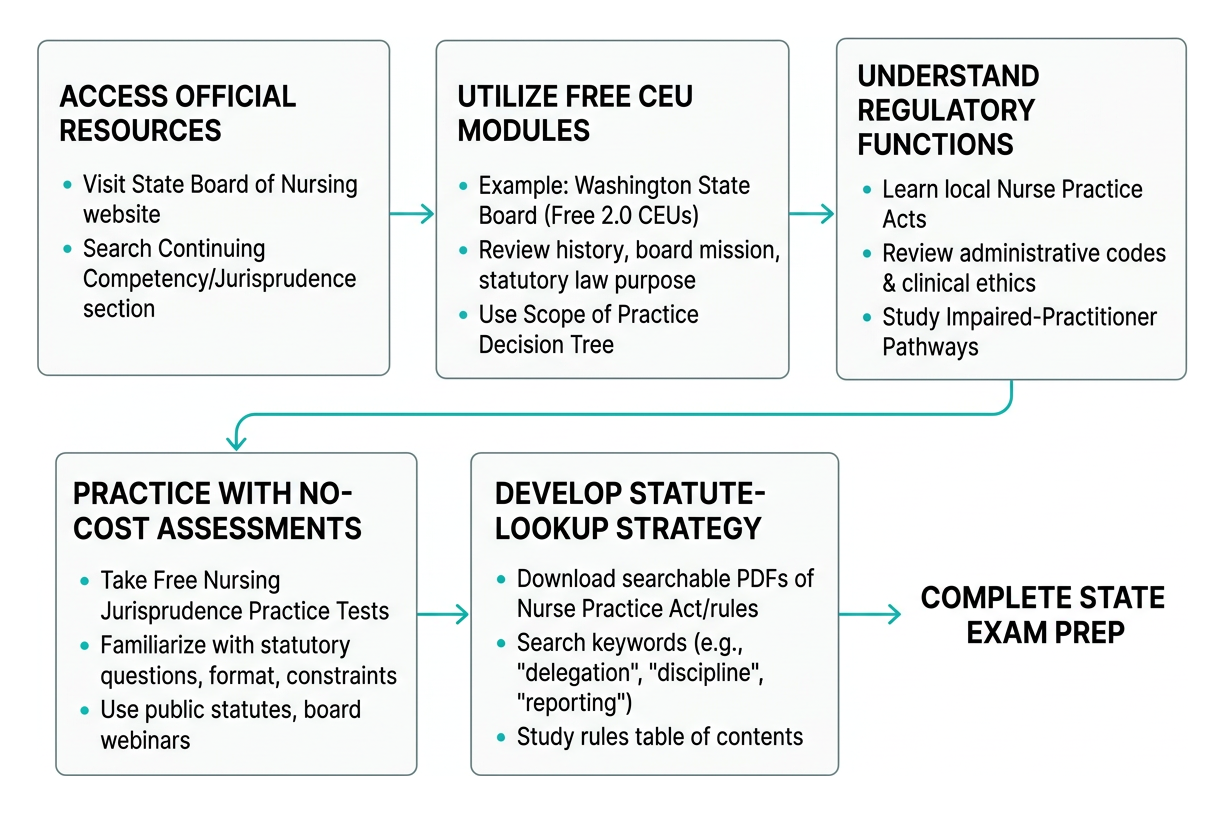
To ace open-book state exams without paying for outside tutoring, adopt an efficient statute-lookup strategy:
- Download searchable PDF copies of your state’s Nurse Practice Act and administrative rules.
- Use keyboard search commands (Ctrl+F or Cmd+F) with key legal terms like “delegation,” “grounds for discipline,” “unprofessional conduct,” and “mandatory reporting.”
- Study the table of contents of your state board rules so you immediately know which chapter governs your specific question.
Essential Legal Concepts Covered in Nursing Jurisprudence Courses
Nursing jurisprudence coursework goes beyond rote memorization of statute numbers. It focuses on the legal principles that protect both patient well-being and clinical licenses.
| Legal Concept | Practical Clinical Application | Potential Regulatory Consequence of Violation |
|---|---|---|
| Five Rights of Delegation | Assigning stable, routine tasks (e.g., vital signs) to Unlicensed Assistive Personnel (UAP) while retaining assessment duties. | Disciplinary citation for improper delegation or failure to supervise. |
| RN vs. LPN/LVN Scope | Ensuring initial comprehensive assessments and unstable patient plans remain exclusively with the RN. | Formal investigation for practicing beyond authorized statutory scope. |
| Mandatory Reporting | Reporting reasonable suspicion of child, elder, or vulnerable adult abuse immediately to civil authorities. | Misdemeanor criminal charges, civil liability, and administrative license suspension. |
| Substance Diversion Suspicion | Notifying leadership based on reasonable suspicion of impaired practice or missing controlled substances. | Disciplinary action for failing to report unsafe or impaired practice. |
| Safe Harbor Peer Review | Invoking statutory safe harbor protections prior to accepting an unsafe assignment (e.g., under Texas law). | Loss of statutory immunity if safe harbor is not invoked before accepting the assignment. |
| Patient Abandonment | Handing over patient care report to an authorized peer before departing a clinical unit. | Board citation for patient abandonment and unprofessional conduct. |
The Five Rights of Delegation (Right Task, Right Circumstance, Right Person, Right Direction/Communication, and Right Supervision/Evaluation) form the bedrock of supervisory law. Registered nurses must remember that while a task can be delegated, ultimate accountability for patient evaluation cannot.
Similarly, mandatory reporting laws require action based on reasonable suspicion rather than conclusive proof. Delaying a report while trying to investigate on your own can violate state statutory mandates.
State-by-State Jurisprudence Requirements and Licensure Compact Trends

The legal landscape of American nursing is rapidly evolving, driven largely by the nationwide adoption of the Enhanced Nurse Licensure Compact (eNLC). The compact allows nurses to hold a single multistate license issued by their primary state of residence, granting them privilege to practice in dozens of participating member states.
However, multistate privileges introduce a critical legal requirement: a nurse must practice according to the laws and regulations of the state where the patient is located at the time care is delivered.
For example, an RN practicing via telehealth from a compact home state must follow the scope of practice, delegation limitations, and reporting thresholds of the state where the receiving patient resides. Completing jurisdiction-specific jurisprudence education ensures that cross-border practitioners remain compliant with local standards.
For nurses entering the workforce or returning after a prolonged absence, the legal requirements differ significantly:
- New Graduates: State jurisprudence tests introduce new nurses to administrative accountability, teaching them that their license is a public trust rather than an absolute property right.
- Endorsement Applicants: Experienced clinicians relocating to a new state often utilize free board-issued CEU modules to learn local differences in prescriptive authority, supervisory ratios, and safe harbor procedures.
- Re-Entry Clinicians: Lapsed licenses present serious regulatory risks. Practicing even one shift on an expired credential constitutes unlicensed practice, subjecting the clinician to disciplinary sanctions. Structured re-entry programs require updated legal coursework to refresh the clinician on statutory amendments enacted during their absence.
Frequently Asked Questions About Nursing Jurisprudence CEUs
Which states mandate a nursing jurisprudence exam for initial licensure or renewal?
Texas and Kentucky require a dedicated jurisprudence examination covering their respective Nurse Practice Acts for initial licensure. Ohio requires a specific Category A law CE course for every renewal cycle. Other states, such as Georgia, reserve formal jurisprudence testing for nurses completing re-entry programs after a prolonged lapse in licensure. Most compact states expect nurses to review local practice acts independently before providing care within their borders.
Can a nurse practice legally if a license renewal application is pending after expiration?
No. Practicing nursing on an expired license is considered unlawful unlicensed practice in virtually every jurisdiction, regardless of whether a renewal application and payment are currently processing. State boards do not recognize an informal “grace period” unless expressly established in state administrative code. Clinicians face formal disciplinary investigations, monetary fines, and employer termination if they deliver care without an active, verified license status.
What is the legal duty of an RN when a prescribed medication is contraindicated?
When an RN identifies a clear medication contraindication or dosing error, their statutory duty is to withhold the medication, immediately notify the prescribing provider, clearly document the clinical rationale and communication, and escalate up the clinical chain of command if the provider insists on administration. Administering an unsafe order knowingly exposes the nurse to direct malpractice liability and board disciplinary action, as a physician’s order does not absolve the nurse of independent clinical accountability.
Conclusion
Mastering the laws that govern healthcare delivery is essential for safeguarding your career and delivering safe, ethical patient care. By taking advantage of high-quality state resources and free regulatory coursework, you can fulfill board requirements while building a thorough understanding of clinical delegation, mandatory reporting, and scope boundaries.
When you need to complete full licensing packages beyond jurisprudence, our team at Scrubs CE is here to support you. We provide self-paced, fully accredited online courses that allow you to earn instant certificates on your schedule. To explore full renewal options and simplify your licensing compliance, check out our comprehensive guide on completing your nursing CEU 30 hours requirements. Stay compliant, practice confidently, and protect the license you worked so hard to earn.
Everything You Need to Know About Virtual Support for CT Technologists
Everything You Need to Know About Virtual Support for CT Technologists
What Is CT Tech Remote Support and How Does It Work?
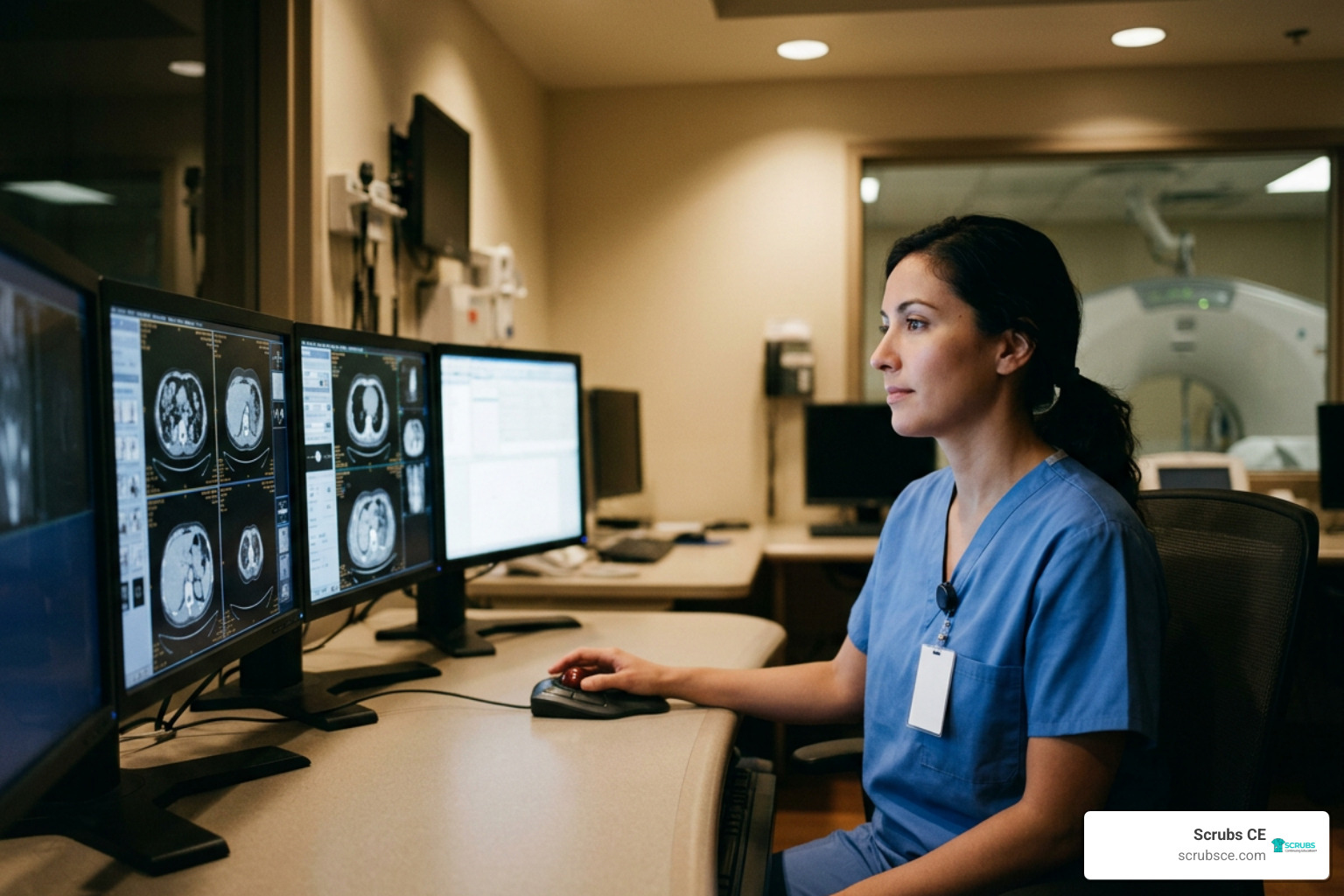
Virtual support bridges the gap between specialized clinical expertise and on-site patient care. In traditional healthcare environments, an advanced imaging department relies on having every tier of clinical and technical expertise physically present at the scanner console. When a complex protocol arises or staffing runs thin, facilities face delayed patient throughput or diverted emergency scans.
Virtual operations change this dynamic by separating physical patient handling from digital protocol configuration and system monitoring. A remote specialist connects directly to the imaging environment over high-bandwidth, encrypted networks. While the local team positions the patient and establishes intravenous access, the virtual specialist reviews order requisitions, checks previous imaging series, verifies scan boundaries, and adjusts radiation dose modulation parameters in real time.
Facilities modernizing their hardware fleets increasingly configure new scanners with teleassistance capabilities right out of the box. Investing in modern systems often ties directly into future proofing your imaging department a guide to ct hardware upgrades, ensuring that consoles can integrate with secure digital networks without degrading scan speed or image reconstruction fidelity.
| Model | Primary Location | Key Responsibilities | Patient Contact |
|---|---|---|---|
| On-Site Staffing | Scanner suite | Patient prep, IV access, positioning, physical safety, immediate contrast monitoring | Direct, continuous physical contact |
| CT Tech Remote Support | Centralized virtual cockpit / home office | Protocol management, dose optimization, live parameter adjustment, scan triggering | Virtual via high-definition audio, video, and live console share |
| IT & Field Maintenance | Remote operations center / on-site dispatch | Network uptime, OS patch deployment, hardware sensor telemetry, predictive repairs | None (system and infrastructure focused) |
Remote Scanning vs Teleassistance vs IT Maintenance
It is helpful to distinguish between the three primary tiers of off-site assistance operating across modern Radiology networks:
- Remote Scanning (Virtual Control): A qualified technologist takes direct control of the acquisition workstation from a remote console. They review the scout, set up anatomical range boxes, trigger the scan sequence, and supervise reconstruction parameters.
- Teleassistance (Real-Time Guidance): The local technologist maintains primary console control, while a remote senior specialist provides over-the-shoulder guidance via interactive screen sharing, chat, and voice feeds. This model proves invaluable for coaching junior techs through specialized pediatric, bariatric, or vascular protocols.
- IT and Hardware Monitoring: This tier focuses purely on technical uptime. Platforms such as CT Tech Support – On-Site & Remote IT Support or specialized vendor monitoring centers evaluate scanner telemetry. For instance, a Technical Service Specialist – CT Systems tracks tube temperature, gantry rotation balance, chiller loop pressures, and high-voltage electronics to catch mechanical faults before they cause equipment downtime. General support services like CTNY Tech Remote Services or CTNY Tech Computer Services: On-Site Throughout Fairfield & New Haven Counties + Global Remote Support handle supplementary IT and connectivity layers.
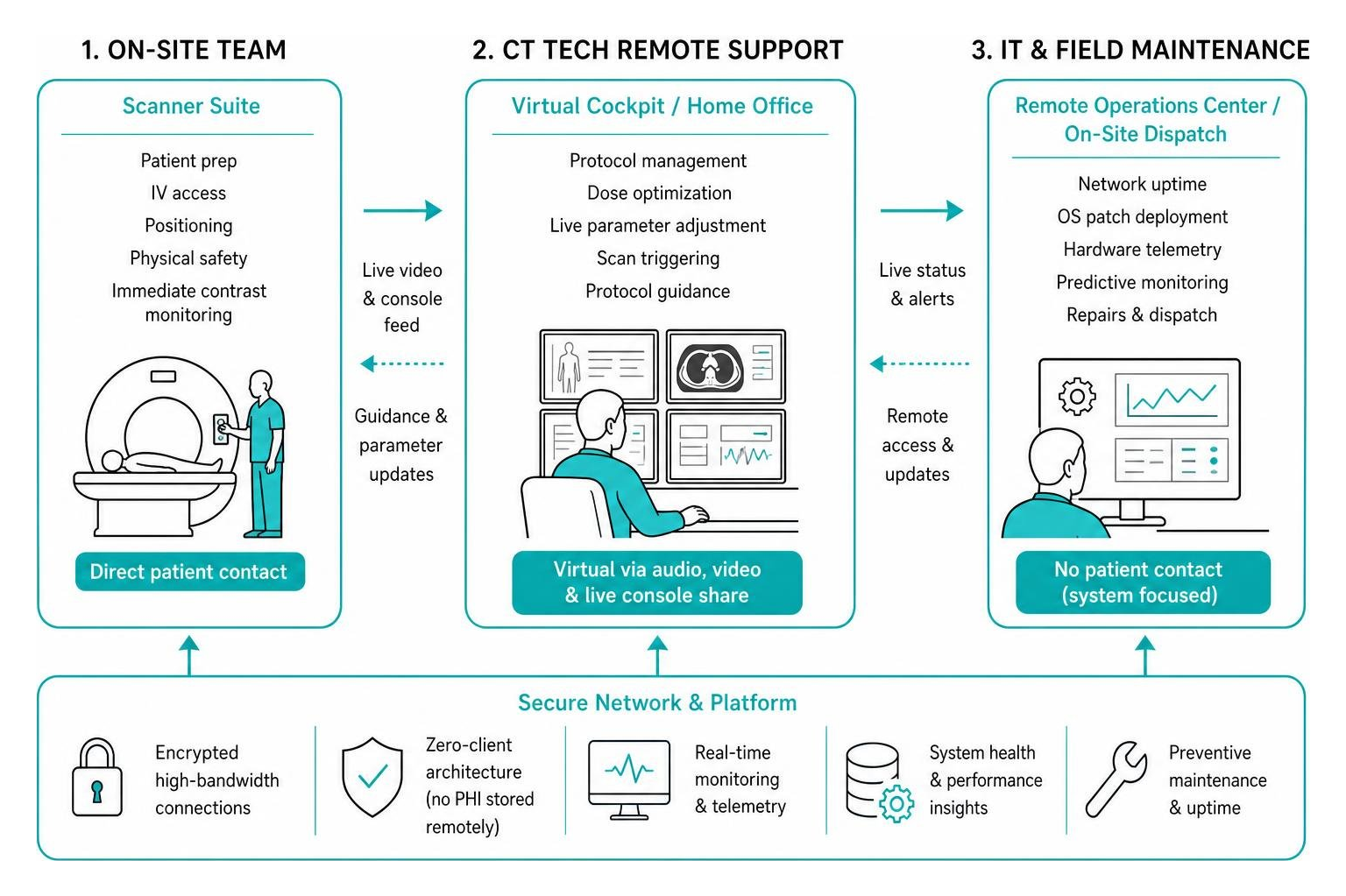
Core Technologies Powering Virtual Radiology Consoles
Modern virtual cockpits rely on software solutions that provide low-latency screen replication, bidirectional audio-video feeds, and console control without introducing perceptible lag. Platforms like Canon Remote Assist and Siemens Healthineers syngo Virtual Cockpit allow centralized technologists to oversee multiple systems concurrently.
These systems utilize zero-client architectures. In a zero-client environment, image data, patient identifiers, and diagnostic series are rendered on the host console in the hospital and transmitted as encrypted pixel streams to the remote user. No protected health information (PHI) is cached or stored on the remote computer, maintaining strict data boundaries while allowing complete operational fluidity.
Clinical and Operational Benefits for Healthcare Facilities
Distributing clinical expertise virtually helps healthcare networks solve persistent operational bottlenecks. When senior technologists can project their expertise across multiple sites, facilities experience shorter scan turnaround times, fewer protocol errors, and lower overall operational stress. Technologists interested in honing their advanced protocol skills can explore the best ce for ct technologists to stay ahead of these digital workflow shifts.
Improving Patient Care and Staffing in Rural Hospitals
Rural critical access hospitals often struggle to maintain round-the-clock specialized CT coverage. When an emergency trauma or stroke patient arrives during the night shift, a solo local technologist might have general radiography experience but feel less confident executing high-speed, dual-phase neurovascular protocols.
Virtual CT operations allow rural facilities to connect instantly with a remote specialist. The remote technologist loads the exact protocol, verifies gating parameters, and assists in scanning, ensuring that patients in remote communities receive the exact same imaging quality as patients at tertiary academic medical centers.
Real-Time Protocol Optimization for Complex Scans
Subsecond timing and precise anatomy tracking are critical for advanced applications. In emergency cardiac evaluations, combining correct ECG pulsing windows with contrast bolus tracking determines whether a study is diagnostic. Technologists managing these workflows benefit from foundational knowledge found in beyond the x ray understanding cardiac ct angiography.
Similarly, adjusting kilovolt peak (kVp) settings, mA modulation, and pitch for patients with high body mass indexes requires careful balancing of tube current and image noise. Reviewing techniques outlined in bariatric ct imaging empowers both on-site and remote teams to minimize beam hardening artifacts while keeping radiation dose ALARA (As Low As Reasonably Achievable).
The Technologist Experience: Benefits, Workflows, and Daily Operations
Working in a remote operations center or dedicated home workspace offers a distinct change of pace from traditional scanner suites:
- Elimination of Daily Commuting: Remote technologists save hours each week by working from centralized regional hubs or compliant home setups.
- Ergonomic, Low-Noise Environments: Technologists spend their shifts in quiet, ergonomically optimized workspaces away from scanner acoustic noise, gantry heat, and chaotic emergency corridors.
- Reduced Physical Strain: Virtual positions eliminate the continuous physical lifting, patient transferring, and heavy equipment maneuvering that often contribute to career-ending musculoskeletal injuries.
- Enhanced Focus on Technical Parameters: Without the physical distractions of room turnover and linen management, specialists can devote 100% of their cognitive bandwidth to protocol perfection, image reconstruction, and radiation safety.
Specialists interested in field engineering and hybrid operational structures can evaluate roles such as a Remote Field Services Engineer at CTS • $60k – $80k | Hiring.Camp to see how remote diagnostic tools integrate with hands-on service careers.
Daily Workflow in a CT Tech Remote Support Center
A typical shift begins in a multi-monitor cockpit equipped with dedicated communication panels, an enterprise RIS/PACS interface, and real-time scanner console links.
- Shift Handover and Lineup Review: The remote technologist logs into active sessions—frequently using platforms like C_Tech Remote Sessions to establish secure handshakes—and reviews scheduled contrast studies across designated partner sites.
- Pre-Scan Protocol Audit: As the local patient manager brings a patient into the scanning room, the remote specialist reviews the requisition, checks renal function labs, and verifies contrast volume requirements.
- Live Communication and Console Setup: Using dedicated voice headsets and integrated chat windows, the remote specialist confirms with the on-site tech that the IV line is patent and the patient is positioned at the laser landmark.
- Acquisition and Quality Assurance: The remote technologist triggers the scout, adjusts scan coverage margins, verifies bolus tracking triggers, and monitors the acquisition. Once reconstructed, they inspect the series for motion or contrast artifacts before releasing the patient.
Balancing Remote Flexibility with Patient Safety Considerations
While virtual assistance improves technical execution, it introduces unique responsibilities for patient safety that require tight on-site coordination.
A remote technologist cannot physically palpate an IV site during a high-pressure contrast injection. If an extravasation occurs, the on-site team must be fully trained to stop the injection immediately and assess tissue integrity. Facilities mitigate this risk by utilizing contrast injectors equipped with extravasation detection accessories (EDA) and programmable pressure limiters (typically capped between 300 and 325 psi). The remote technologist monitors injection pressure curves on their telemetry display while the on-site patient manager stays directly beside the patient during the initial contrast delivery phase.
Qualifications, Credentialing, and Training Requirements
Operating as a virtual CT specialist requires advanced clinical acumen and proven technical versatility across diverse hardware platforms.
Technologists must first meet core clinical competencies before transitioning to virtual cockpits. A solid understanding of baseline education and credential paths is outlined in our beginners guide to computed tomography technician certification, while specific state and institutional prerequisites are detailed in our breakdown of ct technologist requirements.
Meeting Professional Standards for CT Tech Remote Support
To command consoles across multiple hospitals, technologists must maintain their primary certification through the AMERICAN REGISTRY OF RADIOLOGIC TECHNOLOGISTS® (ARRT®), hold a post-primary credential in Computed Tomography (R.T.(R)(CT)(ARRT®)), and abide by the ARRT® Standards of Ethics and ASRT® Practice Standards.
Technologists must also log structured continuing education credits to keep their knowledge aligned with modern dose reduction algorithms, photon-counting detectors, and advanced cross-sectional anatomy. Technologists can maintain their credentials through convenient courses designed for ct ceu credits and broader ct mri ce requirements. Those reviewing their biennial milestones can consult our computed tomography ce complete guide or explore fast, flexible options in shockingly easy ways to earn your pediatric and ct imaging ce credits.
Military veterans transitioning into civilian diagnostic imaging can chart their trajectory using military to medical your roadmap to becoming a ct technologist, while students mapping out initial academic routes can research local options via ct and mri certificate programs near me your ticket to a high tech career.
Ensuring Strict HIPAA Compliance and Data Security
Operating across decentralized networks requires rigorous data protection protocols:
- Encrypted VPN Tunnels: All telemetry and control data stream across AES-256 encrypted virtual private networks.
- Role-Based Access Controls (RBAC): Technologists authenticate using multi-factor credentials, gaining access only to the specific scanner sessions assigned to their shift.
- Zero Local Data Caching: Host platforms prohibit local screen capturing, file exporting, or local caching of patient images, ensuring that no electronic protected health information (ePHI) ever resides on off-site hard drives.
- Audit Trails: Every mouse click, parameter change, and communication log is stamped with technologist identification for comprehensive quality assurance reviews.
Future Outlook for Virtual Imaging and Nationwide Teleassistance
The integration of artificial intelligence and high-speed fiber connectivity is transforming virtual Radiology networks into agile, multi-facility operations.

As AI algorithms automate baseline segmentation and noise filtering, remote technologists will increasingly operate as supervisory clinical conductors. Beyond standalone CT operations, hybrid imaging modalities are also embracing remote consultation models; technologists managing hybrid SPECT/CT platforms can explore foundational concepts in the spect ct scan explained how this advanced imaging works.
Cross-State Licensing and Global Remote Radiology Trends
The long-term expansion of virtual imaging operations depends on state licensing reform. As multi-state licensing compacts gain traction, specialized technologists will be able to support hospital networks across state lines during regional emergencies, off-hours spikes, or local staffing shortages. Centralized operation centers will provide round-the-clock specialized coverage, leveling the standard of imaging care across urban centers and rural community clinics alike.
Frequently Asked Questions About Virtual CT Assistance
Can a remote technologist administer contrast media or position patients?
No. Physical tasks—including patient verification, positioning at the laser landmark, IV placement, and contrast injector loading—must always be performed by a qualified on-site healthcare professional. The remote technologist focuses on protocol selection, dose parameters, timing coordination, and image acquisition.
How does remote CT scanning maintain patient safety during emergencies?
Remote systems feature instant protocol abort switches and immediate voice-link overrides. If a patient displays distress, movement, or signs of an adverse reaction, the remote technologist or the on-site staff can abort the scan immediately. The on-site team provides hands-on emergency response while the remote tech documents scan parameters and notifies the radiologist.
What certifications are required to work in virtual CT operations?
Employers generally require a current ARRT® post-primary certification in Computed Tomography, valid state licenses for the facility locations being supported, and extensive on-site clinical experience (typically 3 to 5 years) across multiple scanner platforms.
Conclusion
Virtual operations represent a major step forward in how healthcare systems deploy clinical expertise and maintain high standards of patient care. By pairing on-site patient care teams with remote specialists, hospitals can eliminate coverage gaps, optimize complex imaging protocols, and ensure rapid diagnostic services for every patient regardless of geographic location.
For imaging professionals, virtual support offers new career paths that reward deep clinical expertise, protocol mastery, and clear communication. Staying current with evolving modality standards is the key to thriving in these modern imaging workflows. We invite you to explore our course catalog and earn your computed tomography certification CE credits with SCRUBS Continuing Education® to expand your skills and lead the future of diagnostic imaging.
Everything Needed to Meet X-Ray Technician Job Requirements and Get Hired
Everything Needed to Meet X-Ray Technician Job Requirements and Get Hired
Start Meeting X-Ray Technician Job Requirements
To meet x ray technician job requirements, you will usually need to:
- Earn an associate degree in radiologic technology from an accredited program.
- Complete supervised clinical training with real patients and imaging equipment.
- Pass the Radiography certification exam through ARRT®.
- Obtain a state license if your state requires one.
- Build strong skills in patient care, anatomy, image quality, and radiation safety.
X-ray technicians, often called radiologic technologists or radiographers, create diagnostic images that help physicians identify fractures, illness, and injury. The job blends technical accuracy with calm, respectful patient care. You must position patients correctly, operate digital imaging equipment, limit radiation exposure using ALARA principles, and check images before a radiologist reviews them.
The path typically takes about two to four years, depending on your degree route and state credentialing process. Once qualified, you can work in hospitals, outpatient imaging centers, urgent care clinics, orthopedic offices, and other care settings. Continuing education also matters: it helps you maintain credentials, meet license renewal rules, and move into specialties such as CT, MRI, or mammography.
I am Zita Ewert, a continuing education leader for imaging professionals and the driving force behind SCRUBS Continuing Education®. My work focuses on helping technologists understand x ray technician job requirements, maintain credentials, and access practical education that fits demanding healthcare schedules.
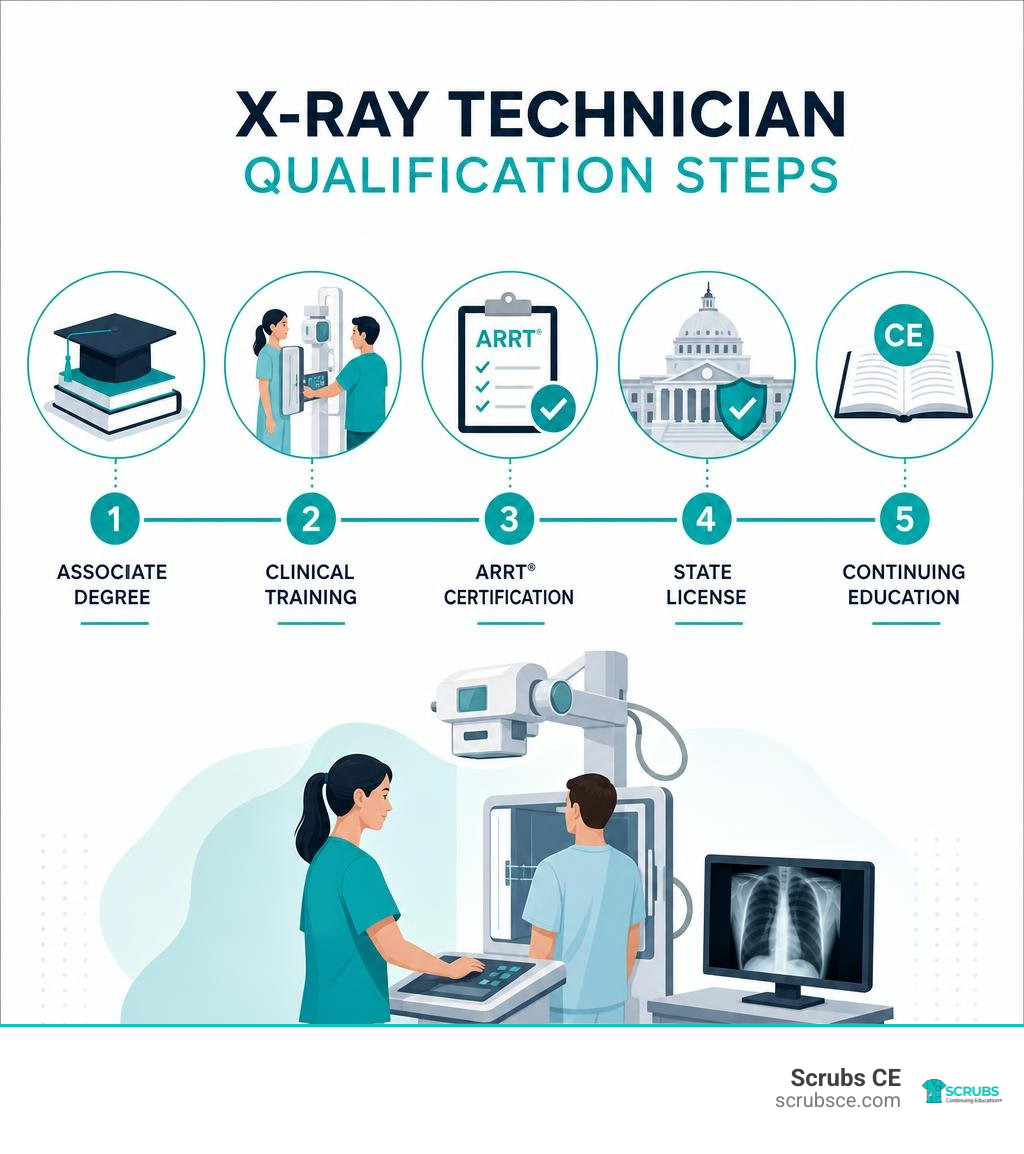
X ray technician job requirements word guide:
- radiologic technologist requirements
- requirements to be a radiologic technologist
- how to get a ARRT® certification
Core Clinical Duties and Primary X-Ray Technician Job Requirements
The daily routine of an imaging professional centers on clinical precision and empathetic patient management. Diagnostic radiography is much more than pushing a button; it involves setting precise technical exposure factors (kilovoltage peak and milliampere-seconds), evaluating patient pathology, and choosing the right projection angles to reveal hidden fractures, pulmonary consolidations, or internal trauma.
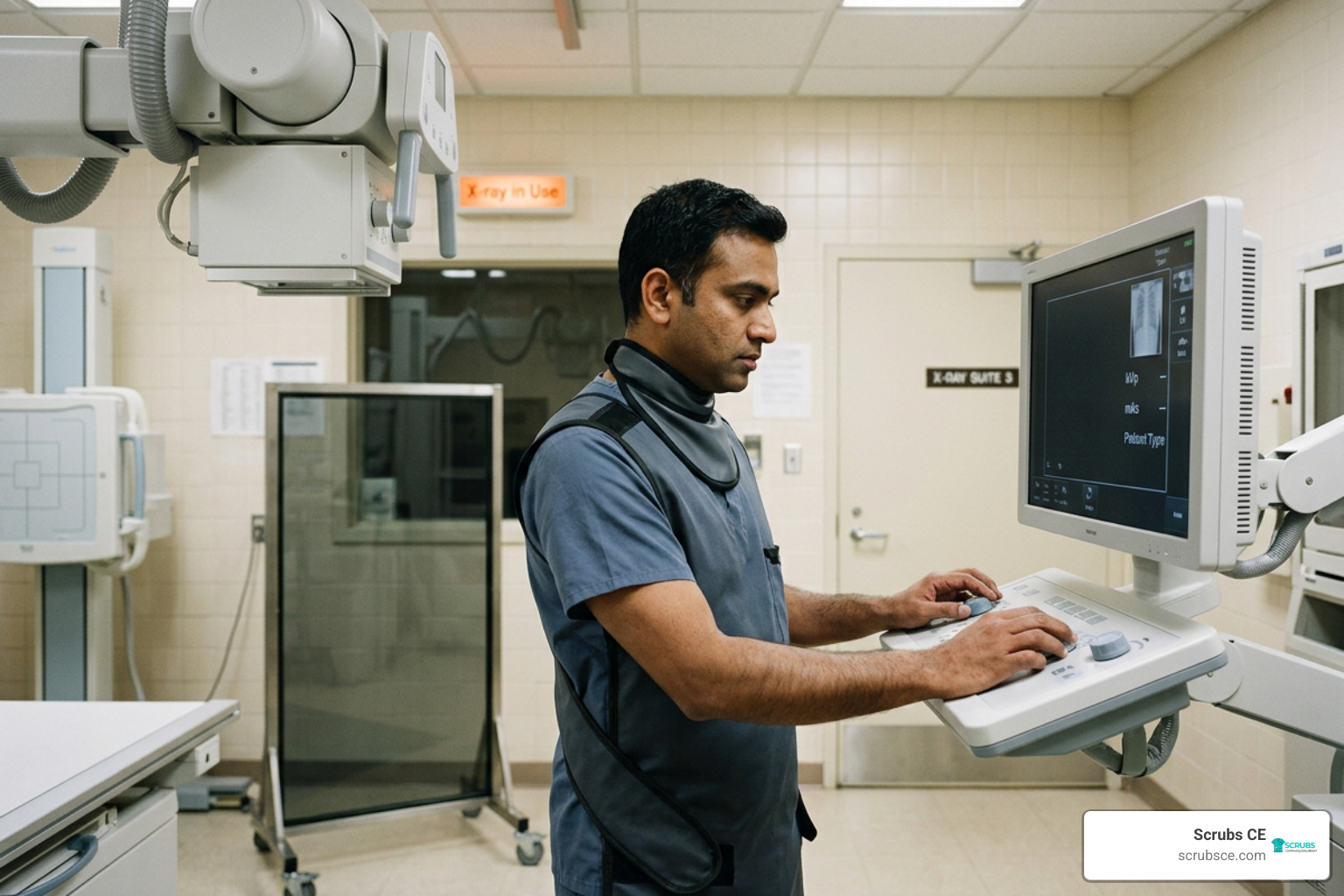
Every exam begins with thorough patient preparation. You must verify identity using two independent identifiers, confirm pregnancy status when appropriate, remove radiopaque artifacts (such as jewelry or metal snaps), and explain the procedure to reduce patient anxiety. Strict adherence to the ALARA (As Low As Reasonably Achievable) principle is mandatory across all clinical environments. Technologists protect patients and staff by utilizing beam collimation, gonadal and thyroid shielding, and precise anatomical positioning to eliminate unnecessary repeat exposures.
Once an image is acquired on a digital detector, the technician performs an immediate quality assessment. This includes checking for anatomical clipping, motion blur, foreign object artifacts, and optimal exposure index values before transmitting the study to the Picture Archiving and Communication System (PACS). Beyond direct imaging, routine maintenance tasks include conducting daily calibration checks on X-ray tubes, sanitizing examination tables between patients, and documenting procedural notes in Electronic Health Records (EHR). According to the O*NET Summary Report for Radiologic Technologists and Technicians, over 96% of imaging professionals work in environmentally controlled indoor settings with direct exposure monitoring protocols to ensure workplace safety.
Technical and Clinical X-Ray Technician Job Requirements
To produce high-quality diagnostic radiographs, you need a strong foundation across multiple clinical disciplines:
- Radiographic Anatomy & Positioning: Mastery of skeletal landmarks, joint spaces, and internal organ topography to align the central ray correctly for standard and trauma views.
- Radiation Physics & Radiobiology: Understanding X-ray photon generation, beam attenuation, scatter radiation management (using grids), and the biological cellular impacts of ionizing radiation.
- Contrast Media Protocols: Assisting radiologists during fluoroscopic examinations by preparing and administering radiopaque contrast agents (such as barium sulfate or iodinated compounds) while monitoring patients for adverse allergic reactions.
- Digital Imaging Informatics & PACS: Managing digital imaging data, adjusting window width and level for post-processing, and coordinating secure image transfers across hospital networks and EHR platforms like Epic.
Essential Physical and Interpersonal Qualities for Imaging Techs
Radiography is physically and emotionally demanding. Technologists frequently assist non-ambulatory, elderly, or pediatric patients onto exam tables, requiring physical stamina, proper body mechanics, and the ability to lift 25 to 50 pounds regularly. You must also possess excellent manual dexterity to manipulate heavy overhead X-ray tubes, position image receptors, and apply immobilization devices quickly in trauma environments.
Interpersonal communication is equally vital. Patients presenting for imaging are often experiencing significant pain, distress, or confusion. Clear, compassionate communication helps gain patient cooperation during breath-holds and uncomfortable positioning routines. Critical thinking allows you to adapt standard protocols when working with patients who have severe mobility restrictions, contractures, or acute trauma splints.
Educational Pathways and Degree Qualifications
Entering the profession requires formal post-secondary education from an accredited institution. About 73% of practicing technologists hold an associate degree, which serves as the industry standard entry qualification. When mapping out your academic path, researching everything you must know about an associate in radiologic technology ensures you choose a program recognized by the Joint Review Committee on Education in Radiologic Technology (JRCERT).
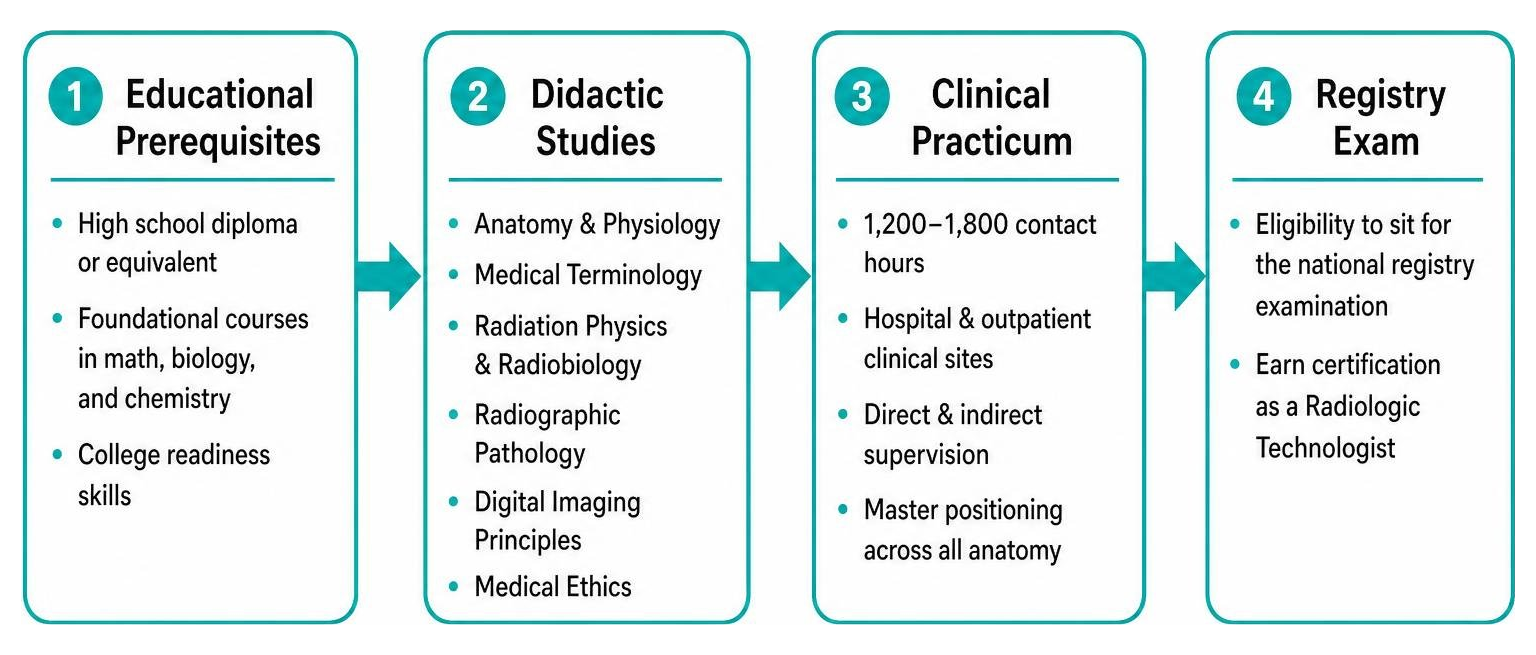
A comprehensive radiography curriculum integrates rigorous didactic coursework with extensive clinical internships:
- Didactic Studies: In-depth classroom and laboratory learning covering human anatomy and physiology, medical terminology, radiation production, radiographic pathology, digital imaging principles, and medical ethics.
- Clinical Practicum: Typically spanning 1,200 to 1,800 contact hours across hospital emergency departments, outpatient clinics, and surgery suites. Under direct and indirect supervision, students master real-world positioning competencies across all anatomical regions.
If you are exploring the initial steps of academic enrollment, reviewing how to become a radiologist technician and launch your career will help you navigate prerequisite coursework such as college algebra, biology, and physics before applying to competitive imaging programs.
Comparing Limited Scope Operators and Radiologic Technologists
The medical imaging field includes two distinct entry pathways: the fully registered Radiologic Technologist (RT) and the Limited Scope X-Ray Operator (often termed Limited X-Ray Machine Operator, or LXMO). Understanding the differences between these credentials is vital for choosing the right training route.
| Feature / Metric | Limited Scope X-Ray Operator (LXMO) | Registered Radiologic Technologist (RT) |
|---|---|---|
| Typical Education | 6–12 month diploma or certificate | 2-year Associate or 4-year Bachelor’s degree |
| Didactic Hours | 150–200 core classroom hours | 60+ semester credit hours |
| Clinical Scope | Specific anatomical regions (e.g., chest, extremities, podiatry) | Full-body diagnostic radiography, fluoroscopy, surgical imaging |
| National Credential | State-specific limited permit / ARRT® Limited Scope Exam | ARRT® Registered Technologist in Radiography: R.T.(R) |
| Modality Advancement | Restricted; cannot cross-train into advanced modalities | Eligible for post-primary credentials (CT, MRI, Mammography, IR) |
| Work Settings | Urgent care clinics, private physician offices, orthopedic centers | Level I trauma hospitals, outpatient imaging centers, specialty surgical suites |
Limited scope programs offer a rapid entry point into healthcare, focusing on targeted body areas. As outlined in the ASRT® Limited X-Ray Machine Operator Curriculum, students gain foundational instruction in basic radiation safety and selected projections. To explore whether a restricted clinical scope fits your career goals, read beyond the full scope: what is a limited scope x-ray technician?.
National Certification and State Credentialing Standards
Graduating from an accredited academic program is the primary prerequisite for national credentialing. The AMERICAN REGISTRY OF RADIOLOGIC TECHNOLOGISTS® (ARRT®) sets the gold standard for clinical competency in the United States. To earn registration, candidates must complete an ARRT®-approved program, verify all clinical mandatory and elective positioning competencies, and pass a thorough ethics pre-application review.
Before registering for your national examination, reviewing what are the requirements to be a radiologic technologist helps ensure all institutional paperwork is in order. For a structured breakdown of paperwork, clinical sign-offs, and deadlines, use this ultimate checklist for Radiology certification requirements.
State Licensing and ARRT® X-Ray Technician Job Requirements
The ARRT® primary pathway examination in Radiography is a computer-based test administered at Pearson VUE testing centers. It evaluates candidates across four main content categories:
- Patient Care: Patient interactions, pharmacology, contrast administration, vital signs, and emergency medical situations.
- Safety: Radiation physics, radiobiology, radiation protection for patients and personnel, and dose reduction techniques.
- Image Production: Technical exposure factors, image acquisition protocols, digital detector characteristics, and image quality evaluation.
- Procedures: Anatomical positioning, pathology, projection criteria, and central ray alignment for all body structures.
Beyond passing the national registry exam, technologists must obtain a state diagnostic Radiology license in most jurisdictions. State health departments (such as the California Department of Public Health or the New York State Department of Health) enforce specific licensing regulations, fees, and fingerprint background checks. Candidates preparing for testing should consult our step by step guide to x-ray tech certification requirements and read a comprehensive guide to radiologic technologist certification requirements for comprehensive state filing details.
Continuing Education and Specialty Advancements
Maintaining professional credentials requires ongoing education. To retain active registration with the ARRT® and keep state licenses current, registered technologists must earn 24 Continuing Education (CE) credits every two-year biennial cycle. Technologists must also comply with the ARRT® Continuing Qualifications Requirements (CQR) process every 10 years to identify and address any knowledge gaps.
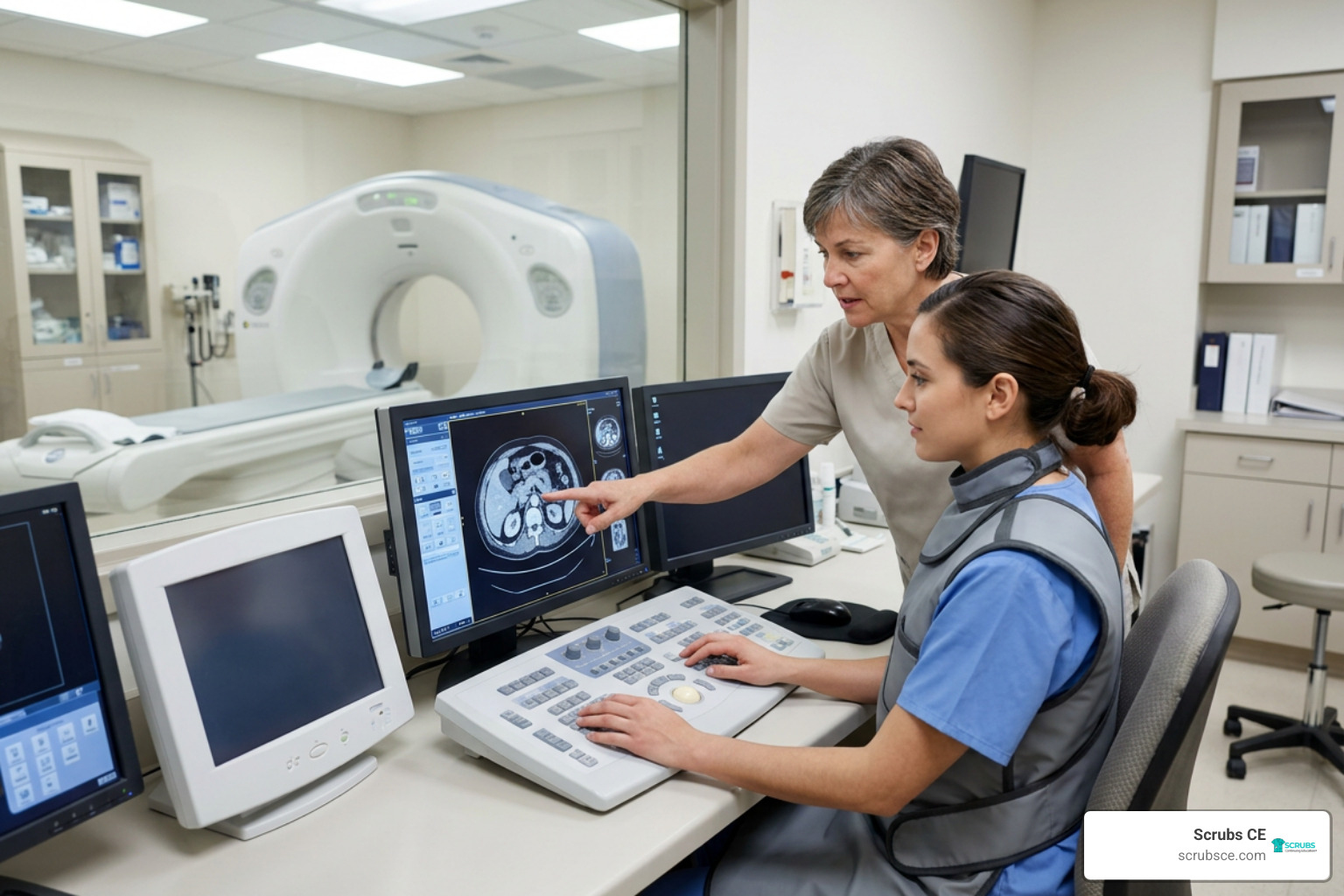
Holding a primary credential in Radiography opens direct pathways into higher-paying advanced imaging modalities through post-primary certification:
- Computed Tomography (CT): Operating advanced multi-slice helical scanners to generate high-resolution cross-sectional images for trauma, oncology, and stroke assessments.
- Magnetic Resonance Imaging (MRI): Utilizing strong magnetic fields and radiofrequency pulses to visualize complex soft tissue structures, neurological pathways, and musculoskeletal injuries.
- Mammography: Performing specialized low-dose breast imaging examinations for screening and early diagnostic detection of tissue abnormalities.
- Vascular-Interventional Radiography: Assisting interventional radiologists during minimally invasive therapeutic procedures such as angioplasty, stent placement, and embolization.
Workplace Settings, Compensation, and Career Outlook
Radiologic technologists work in a broad range of clinical environments, each offering unique workflows, schedule flexibility, and operational paces:
- Hospital Radiology Departments & Level I Trauma Centers: Fast-paced settings requiring 24/7 staffing, on-call shifts, bedside mobile radiography in intensive care units, and rapid trauma imaging in emergency suites.
- Outpatient Diagnostic Imaging Centers: Scheduled ambulatory appointments focusing on high-throughput general radiography, fluoroscopy, and advanced cross-sectional screenings.
- Urgent Care Centers & Orthopedic Clinics: Collaborative clinical roles where technicians frequently combine diagnostic X-ray procedures with basic patient triage and administrative charting.
- Mobile Imaging Units: Bringing diagnostic digital X-ray services directly to long-term nursing facilities, rural community health outposts, or industrial work sites.
According to data published by the U.S. Bureau of Labor Statistics Occupational Outlook, the median annual wage for radiologic technologists and technicians was $77,660 in May 2024, with overall earnings typically ranging between $64,910 and $121,420 depending on clinical setting, geography, and shift differentials. Modality cross-training provides an immediate earnings boost; for instance, MRI technologists earned a median annual wage of $88,180 in May 2024.
The employment outlook for radiologic and MRI technologists is projected to grow by 5% from 2024 to 2034, faster than the average for all occupations, resulting in approximately 15,400 projected job openings each year. Regional demand can be even higher; in New York State, radiologic technologist positions are projected to increase by 27% between 2022 and 2032, driven by an aging demographic and greater utilization of diagnostic imaging in preventive medicine.
Frequently Asked Questions About Radiology Careers
Can you work as an X-ray technician without a college degree?
You can work in a limited imaging capacity without an associate degree by completing a state-approved certificate program to become a Limited Scope X-Ray Operator (LXMO). However, full ARRT® certification as a Registered Radiologic Technologist requires at least an associate degree from an accredited institution. While the associate degree does not have to be specifically in radiologic sciences, you must also complete an ARRT®-approved radiography program to qualify for the national registry exam.
How long does it take to complete training and get certified?
Completing an associate degree in radiologic technology typically takes 2 years (approximately 24 to 25 months), which includes didactic coursework and required clinical contact hours. Once you graduate, scheduling and taking the ARRT® certification exam through Pearson VUE usually takes 30 to 45 days. State licensing processing times range from 4 to 8 weeks depending on the state health department’s application queue.
What is the primary difference between an X-ray technician and a radiologic technologist?
The terms are often used interchangeably in casual conversation, but they represent distinct professional scopes. An X-ray technician (or limited operator) generally completes a shorter diploma program and performs basic radiographs on limited body regions (such as the chest or extremities). A radiologic technologist completes a comprehensive collegiate degree, earns national certification through the ARRT®, and is authorized to perform complex full-body imaging, surgical fluoroscopy, trauma radiography, and cross-train into advanced modalities like CT, MRI, and interventional Radiology.
Conclusion
Building a successful career in medical imaging starts with meeting academic prerequisites, completing hands-on clinical practicums, and passing national registry examinations. By mastering radiation safety, anatomical positioning, and compassionate patient care, you secure a vital, high-demand role on the frontline of modern healthcare diagnosis.
Once you enter the workforce, maintaining your credentials through structured continuing education is essential for ongoing licensure compliance and career mobility. At Scrubs CE, we provide convenient, self-paced courses with instant certificate generation to help you meet ARRT® and state renewal requirements without disrupting your clinical shift schedule. Explore our full library of accredited Radiology courses to fulfill your biennial CE requirements and take the next step toward professional specialty advancement.
Top Hospital and College MRI Technologist Training Programs Compared
Find the Right MRI Technologist Training Program

The best MRI technologist training program depends on where you are starting. New students can choose a primary-pathway MRI program, often an associate degree or hospital-based certificate. Already credentialed Radiology professionals can usually take a shorter post-primary program to qualify for the MRI credential through ARRT®. Career changers may also find hybrid programs that lead to ARMRIT certification, though employers and state rules may prefer or require ARRT®.
When comparing MRI technologist training programs, check these four points first:
- Credential eligibility: Does the program prepare you for ARRT® or ARMRIT certification?
- Clinical training: How many supervised clinical hours are included, and does the school secure the site?
- Format and length: Options range from accelerated six-month tracks to two-year associate degrees, with online, hybrid, and in-person formats.
- Local job rules: State licensing and employer requirements can affect which credential will help you get hired.
MRI is a hands-on career. Programs teach MRI physics, anatomy, patient care, image quality, contrast safety, and strict screening for metal and implants. The programs in this comparison range from hospital-based training with extensive clinical experience to flexible college certificates designed for working technologists.
I am Zita Ewert, a continuing-education leader for imaging professionals and the force behind SCRUBS Continuing Education®. My work supporting ARRT®, ARMRIT®, and other imaging CE needs helps professionals evaluate mri technologist training programs and plan for certification, licensure, and long-term career growth.
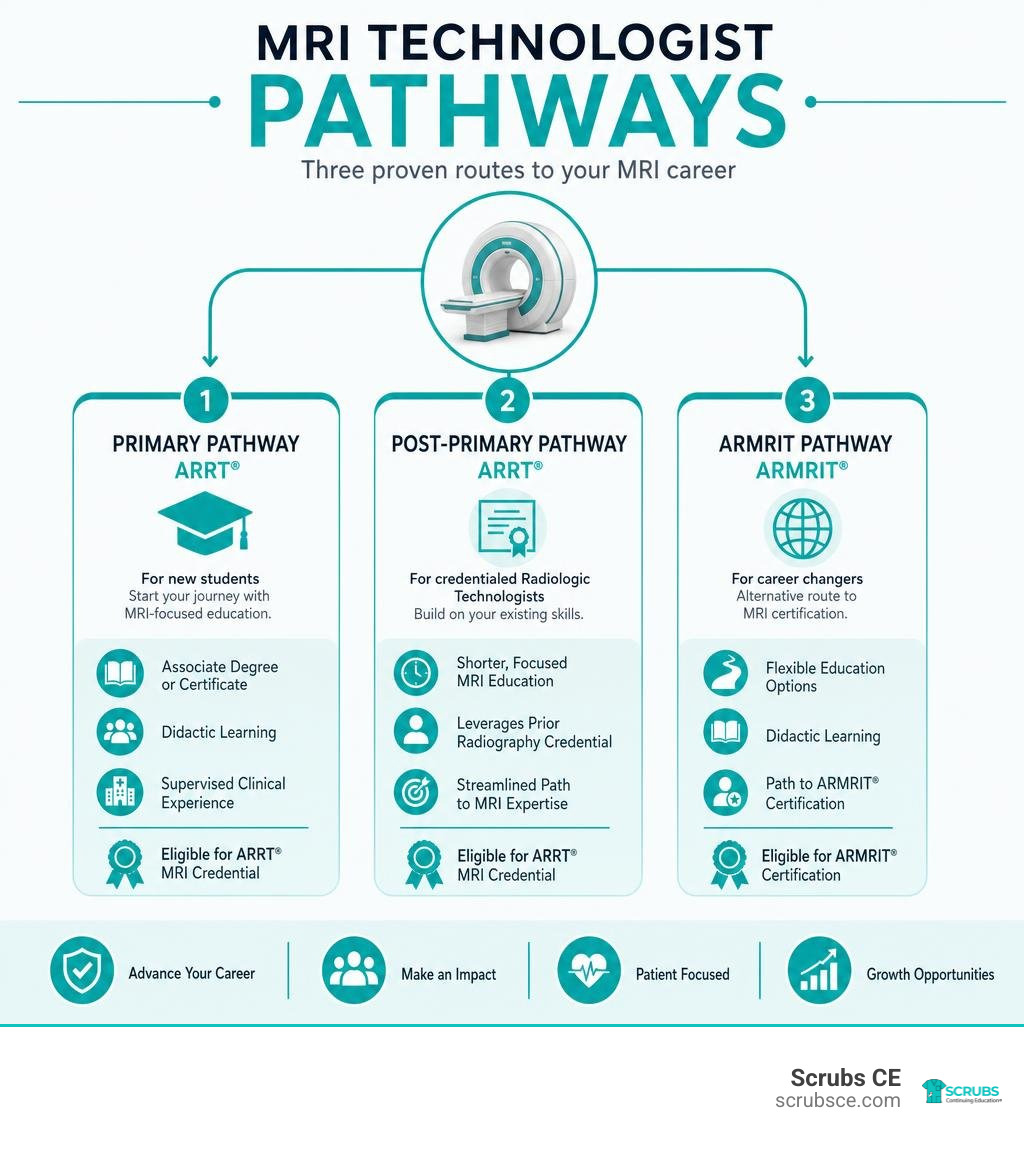
Basic mri technologist training programs terms:
Educational Pathways and Certification for MRI Technologists
Entering the field of magnetic resonance imaging requires navigating structured educational and clinical requirements. Choosing the correct route depends heavily on your prior medical background and career goals.
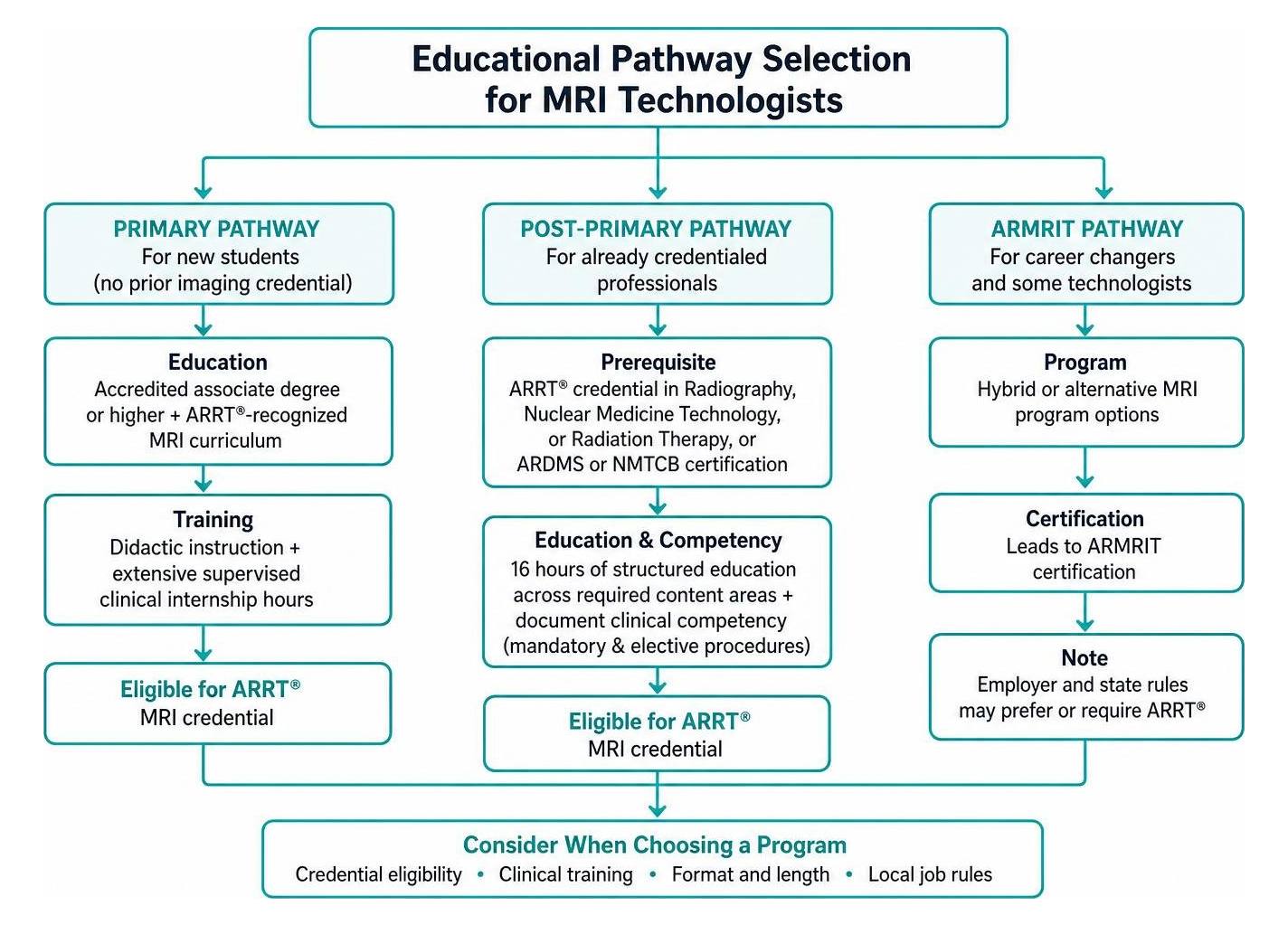
The ARRT® Primary Pathway
Introduced in 2006, the primary eligibility pathway from the AMERICAN REGISTRY OF RADIOLOGIC TECHNOLOGISTS® allows individuals without prior imaging credentials to enter MRI directly. Candidates must complete an accredited academic degree (associate degree or higher) along with an ARRT®-recognized MRI educational curriculum. This track integrates rigorous didactic instruction in cross-sectional anatomy, pulse sequences, patient care, and MRI physics with extensive supervised clinical internship hours.
The ARRT® Post-Primary Pathway
The post-primary eligibility pathway serves healthcare professionals who already hold an ARRT® credential in Radiography, Nuclear Medicine Technology, or Radiation Therapy, as well as those certified through ARDMS or NMTCB. Radiologic technologists complete 16 hours of structured education across specific content areas and document clinical competency across mandatory and elective MRI procedures. You can read a practical guide to how long it takes to become an mri tech to map out timelines for both pathways.
The ARMRIT Certification Alternative
The American Registry of Magnetic Resonance Imaging Technologists (ARMRIT) offers a specialized certification pathway focused exclusively on MRI physics, safety, and clinical scanning. ARMRIT-accredited programs allow direct entry for students and career changers without prior radiography credentials. While widely recognized, hospital systems and outpatient diagnostic centers frequently express a preference for ARRT® credentials. Verifying local employer preferences before choosing an ARMRIT-only program is critical.
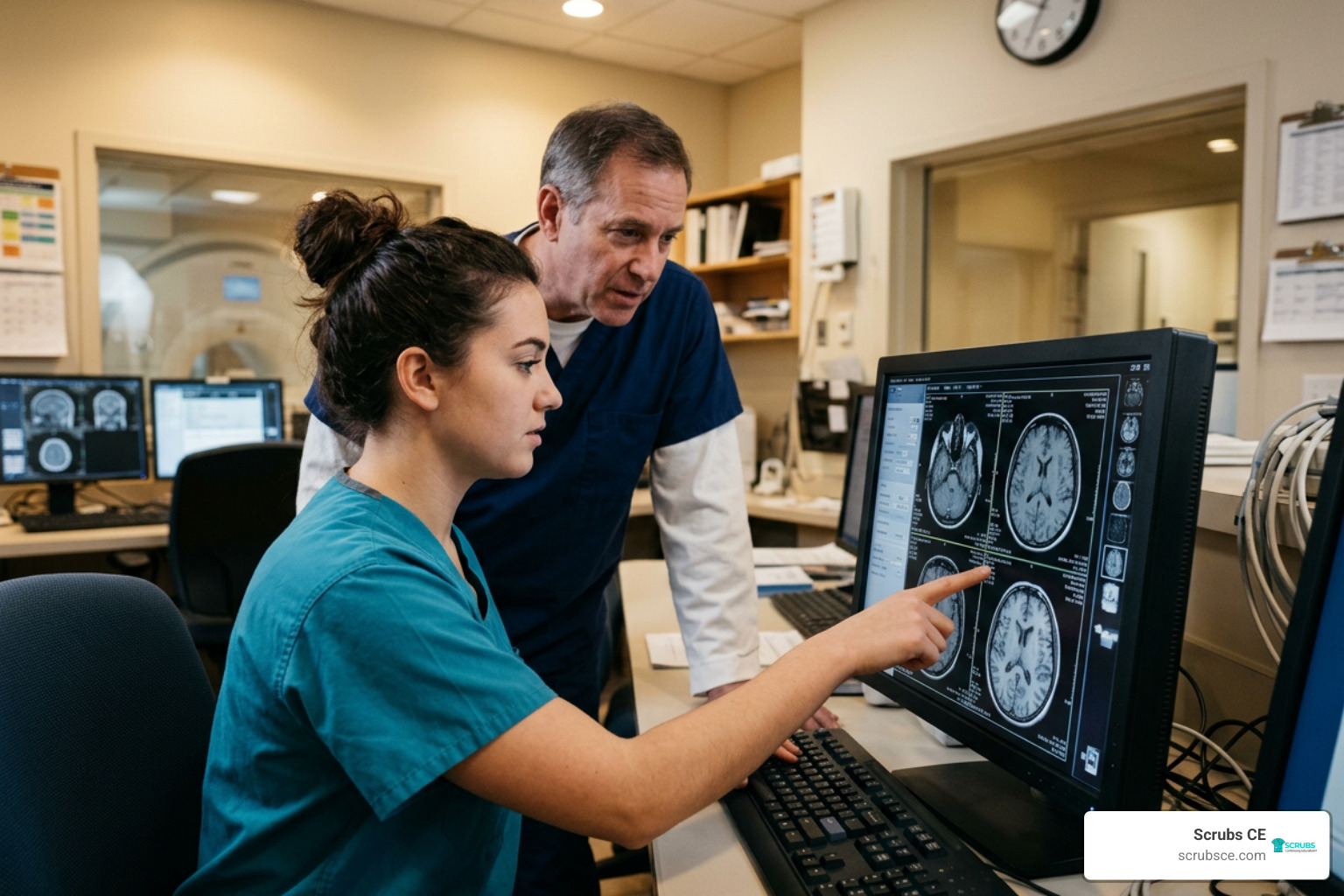
State Licensure and Exam Preparation
Licensing requirements vary substantially across state borders. Some states require state-issued licenses mandating national registry credentials, while other states (such as New Jersey) do not require independent state licenses for MRI scanners. Regardless of location, candidates must sit for credentialing exams consisting of 200 multiple-choice questions covering safety parameters, instrumentation, and clinical procedures. For actionable test strategies, see our guide on demystifying the mri tech test and how to ace it.
Comparison of Top MRI Technologist Training Programs
Program formats range from hospital fellowships to collegiate associate degrees. The table below outlines key parameters for leading programs nationwide:
| Institution | Program Type / Credential | Duration | Clinical Hours | Format | Primary Target Audience |
|---|---|---|---|---|---|
| Mayo Clinic | Certificate (JRCERT Accredited) | 12 Months | 900 Hours | In-Person | Direct Entry / Primary Candidates |
| Johns Hopkins Medicine | Post-Primary Fellowship | 12 Months | Full-time Clinical | In-Person / Paid | ARRT® Certified Radiographers |
| University of Utah Health | Certificate of Completion | 6 Months | Extensive System Rotations | In-Person / Clinical | ARRT® Radiographers & Pre-Requisite Holders |
| UNMC | BS / Post-Baccalaureate Certificate | 9 Months | 900+ Hours | Hybrid / Clinical | ARRT® Radiographers (88+ Prior Credits) |
| Bates Technical College | Associate of Applied Science (AAS) | 18 Months (6 Quarters) | Full-time (Q5-Q6) | Hybrid / In-Person | Direct Entry Students |
| Greenville Technical College | Advanced Certificate | 9 Months (2 Semesters) | 495 Hours | Online Didactic / Clinical | ARRT® Registered Radiographers |
| Atlanta Technical College | Technical Certificate (TCC) | 2 Semesters | Integrated Practicum | In-Person / Clinical | ARRT® Credentialed Imaging Professionals |
| College of DuPage | Advanced Certificate | 4 Semesters | Dedicated Affiliates | In-Person / Hospital Sites | ARRT® Certified Radiologic Techs |
Curriculum depth and clinical requirements can feel intense. If you are wondering about the academic workload, explore our breakdown on is mri tech school hard? what to expect on your journey.
Hospital-Based MRI Technologist Training Programs
Hospital-based programs provide immersion within complex clinical environments, exposing students to diverse patient populations and specialized hardware.
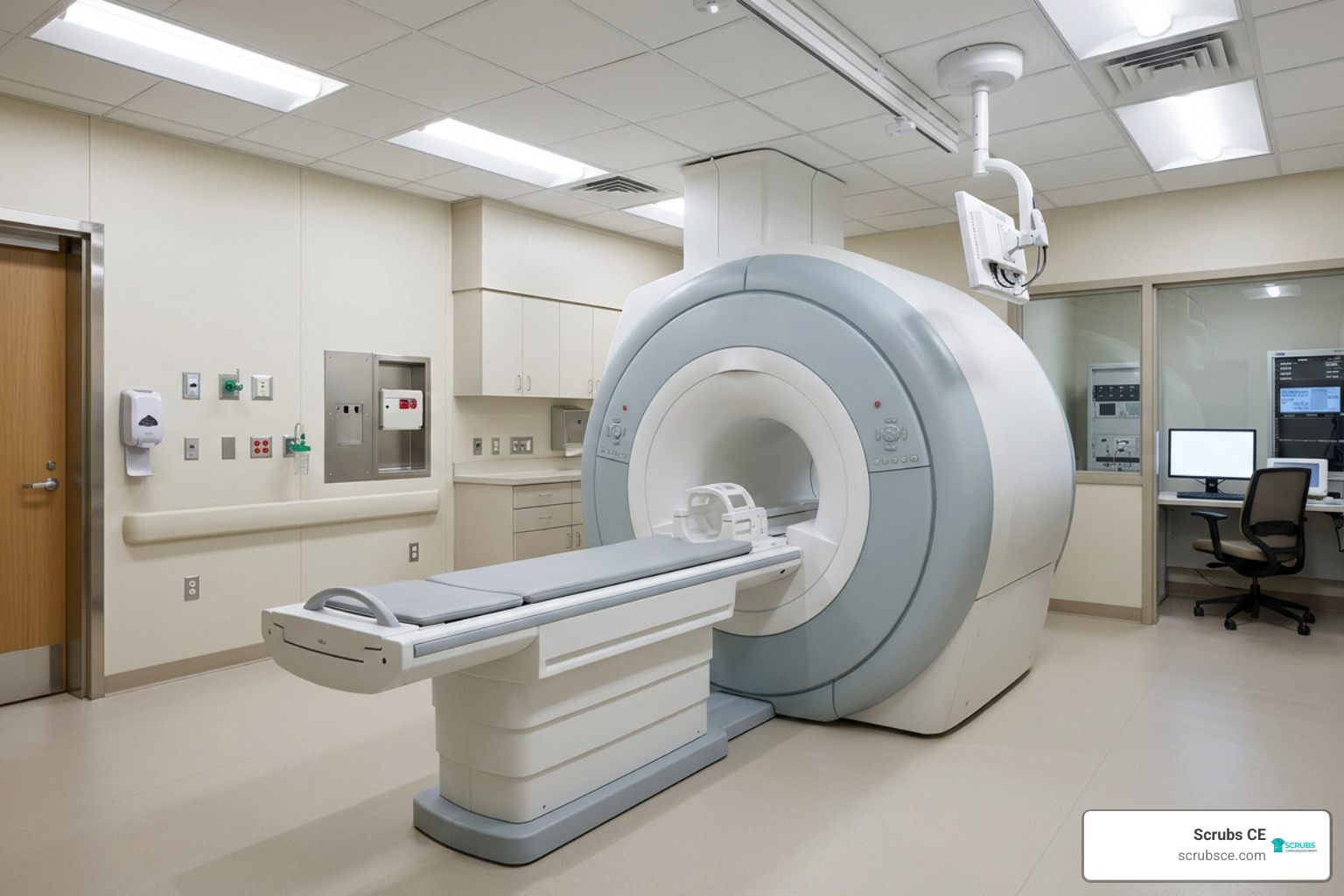
Mayo Clinic (Minnesota)
The Magnetic Resonance Imaging (MRI) Program (Minnesota) – Health Sciences Education – Mayo Clinic College of Medicine & Science is a one-year, JRCERT-accredited primary program. Admitting cohorts of up to 16 students per class, the curriculum delivers 900 clinical hours. Students begin patient care interactions after just six weeks and gain rare direct training on scanner field strengths ranging from standard 1.5 Tesla and 3.0 Tesla units up to research-grade 7.0 Tesla systems.
Johns Hopkins Medicine
The Johns Hopkins MRI Technologist Training Program offers an exceptional paid post-primary pathway for ARRT®-credentialed radiographers. The curriculum covers advanced cross-sectional anatomy, physics, protocol optimization, and IV contrast insertion. Clinical training rotates through oncology, pediatrics, trauma, and critical care suites. In exchange for paid tuition and clinical stipends, graduates agree to a two-year employment commitment at a Johns Hopkins Medicine imaging facility. The program maintains a 99% first-time ARRT® advanced certification pass rate.
University of Utah Health
Operating since 2004, the University of Utah School of Medicine offers an accelerated 6-month certificate program. Cohorts are limited to approximately 16 students per session, selected from 35 to 40 applicants. Students rotate through premier facilities, including University Hospital and Huntsman Cancer Hospital, preparing candidates directly for the ARRT® board examination.
College and University MRI Technologist Training Programs
Academic institutions offer flexible didactic structures, ranging from regional technical certificates to full bachelor’s degrees.
University of Nebraska Medical Center (UNMC)
The Magnetic Resonance Imaging < University of Nebraska Medical Center program offers two distinct pathways: a Bachelor of Science in Medical Imaging & Therapeutic Sciences and a Post-Baccalaureate Professional Certificate. Over a nine-month period, students complete more than 900 clinical hours and must document 49 core clinical competencies while training alongside board-certified radiologists and seasoned technologists.
Bates Technical College
Located in Washington State, the MRI Technology – BatesTech – BatesTech Associate of Applied Science degree spans six quarters (18 months) and 95 credits. Designed for direct-entry students, the program delivers hybrid didactic coursework and hands-on laboratory scanning before placing students in full-time clinical rotations (36 to 40 hours weekly) across affiliated regional hospitals.
Greenville Technical College
The Magnetic Resonance Imaging (MRI) Program | Greenville Technical College offers a 9-month, two-semester post-primary certificate for ARRT®-registered radiographers. Didactic instruction is conducted online, allowing working professionals to fulfill the 495 required clinical contact hours (15–18 hours per week) at approved regional medical centers. Explore additional coursework through online mri courses to support your didactic prep.
Atlanta Technical College
The Atlanta Technical College – Magnetic Resonance Imaging Specialist TCC provides a focused, 24-credit-hour certificate across two semesters. At an estimated tuition cost of $4,284, the curriculum prepares credentialed radiographers, nuclear medicine technologists, and radiation therapists for immediate ARRT® registry examination.
College of DuPage
The MRI Program Application packet details an advanced certificate curriculum spread over four semesters. Cohorts are strictly capped at 10 to 15 students per cycle. Acceptance is based on a merit evaluation system combining clinical interviews, academic history, and comprehensive magnetic safety screenings before placing students into clinical affiliate networks like Loyola University Medical Center and Advocate Good Samaritan Hospital.
Career Outlook, Salaries, and Clinical Responsibilities
Magnetic resonance imaging remains one of the most stable and financially rewarding specialties in healthcare. The U.S. Bureau of Labor Statistics (BLS) reports a national median annual wage of $88,180, with overall employment projected to grow 6% through 2033.
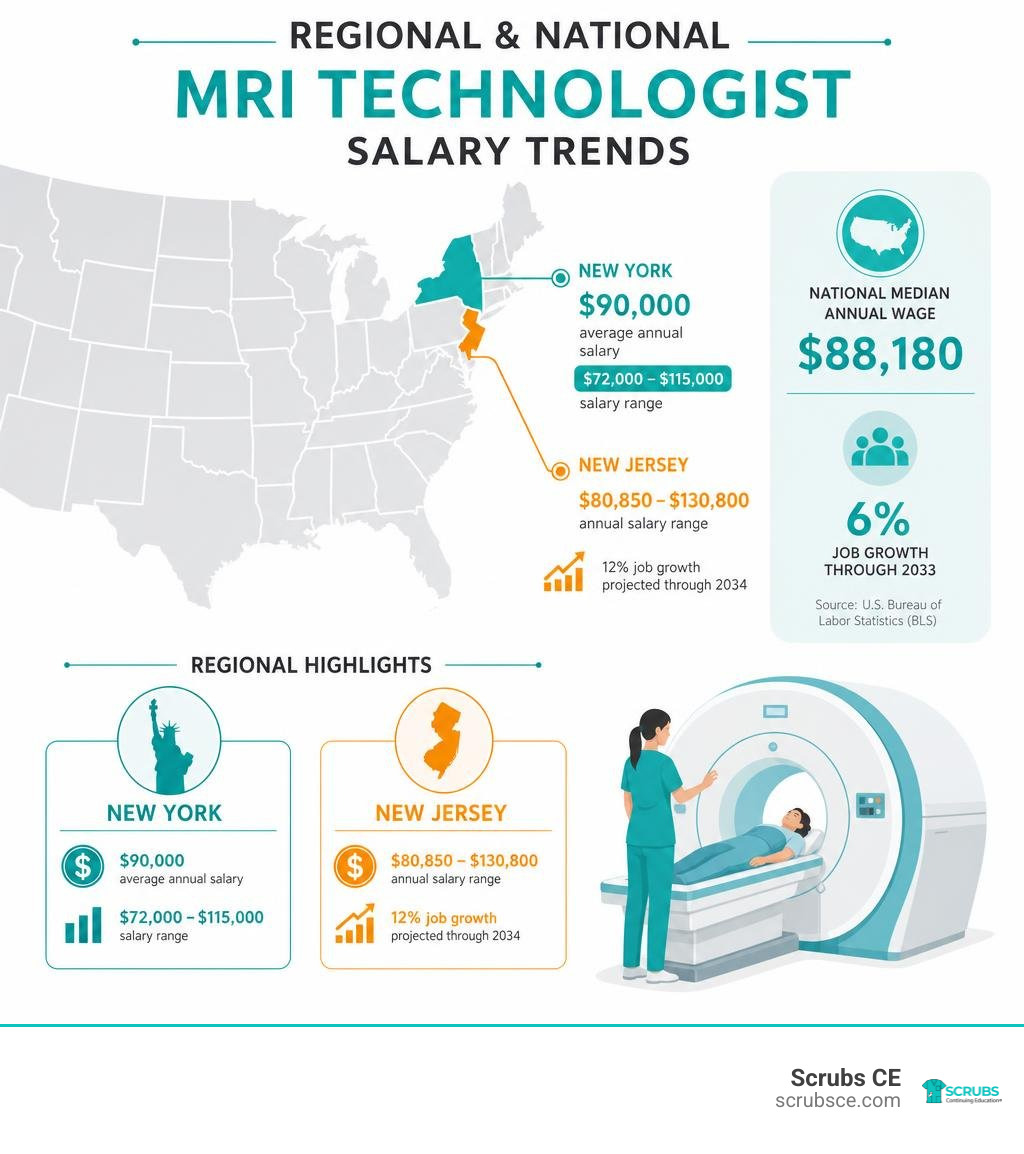
Regional demand drives compensation higher in many metropolitan areas:
- New York: MRI technologists earn an average salary of approximately $90,000 annually, with regional compensation ranging from $72,000 to $115,000 depending on experience and healthcare facility setting.
- New Jersey: Technologists earn between $80,850 and $130,800 annually, supported by a projected 12% job growth rate through 2034.
Core Clinical Responsibilities
MRI technologists operate under rigorous clinical protocols. Daily duties include:
- Safety Screening: Identifying internal ferromagnetic foreign bodies, pacemakers, cochlear implants, and surgical clips.
- Patient Care & Claustrophobia Management: Coaching anxious patients through long sequences in enclosed magnet bores.
- RF Coil Selection & Patient Positioning: Setting up appropriate anatomical surface coils and positioning patients precisely at the magnetic isocenter.
- Parameter Manipulation: Adjusting TR, TE, flip angles, slice thickness, and matrix sizes to maximize signal-to-noise ratio while minimizing artifacts.
- Contrast Media Delivery: Administering gadolinium-based contrast agents via power injectors or manual intravenous lines while monitoring for adverse reactions.
To review complete clinical workflow requirements, consult our comprehensive guide on mri technologist job description and key responsibilities and explore how mobile contracts operate in the ultimate guide to high-paying travel mri tech jobs.
Frequently Asked Questions About MRI Programs
What is the difference between ARRT® and ARMRIT certification?
ARRT® certification is granted by the AMERICAN REGISTRY OF RADIOLOGIC TECHNOLOGISTS® and represents the gold standard credential across major hospital systems, academic trauma centers, and state licensing boards. ARMRIT certification is dedicated solely to magnetic resonance imaging. While widely accepted in specialized imaging centers, some hospital networks require ARRT® registration.
How long does it take to complete an MRI training program?
Program duration depends on your educational background:
- Accelerated Certificate Tracks (6–9 Months): Intended for technologists already certified in Radiography or Sonography.
- Full-Time Hospital Programs (12 Months): Deliver 900+ clinical hours alongside intensive physics coursework.
- Associate Degree Programs (18–24 Months): Cover general education, prerequisites, and up to 1,000 clinical hours for direct-entry students.
Can I become an MRI technologist without prior Radiology experience?
Yes. You can enroll in an ARRT® primary pathway associate degree program or an ARMRIT-accredited training institution. These programs do not require prior radiography licenses, though you will need to complete prerequisite courses in college algebra, human anatomy and physiology, and communication.
Conclusion
Enrolling in an accredited MRI training program is the foundation of a rewarding medical imaging career. Whether you choose an intensive hospital fellowship like Mayo Clinic or a flexible college certificate, mastering magnetic resonance physics and patient care opens doors to long-term career growth.
Once you earn your registry credential, maintaining compliance with biennial continuing education requirements is essential. We invite you to explore continuing education courses for MRI technologists at Scrubs CE, where our self-paced, high-quality courses deliver instant certificates to keep your clinical license active.
Mastering Inmate Clinical Care Through Correctional Healthcare CE
Find Correctional Healthcare CE That Meets Clinical and Credential Requirements

The best correctional healthcare CE courses are relevant to the clinician’s role, recognized for professional credit when needed, and designed with active participation. For full-time qualified health professionals working under NCCHC standards, plan for 12 hours of continuing education each year. If you hold a Certified Correctional Health Professional credential, you need 18 CE hours annually, including at least 6 hours focused on correctional health.
Look for training that covers the daily realities of custody-based care, such as:
- Infectious disease screening and treatment, including TB, HIV, viral hepatitis, and STIs
- Behavioral health, suicide prevention, substance use, and traumatic brain injury
- Intake assessments, chronic-condition management, and emergency response
- CPR from an approved provider, which may count toward annual CE requirements
- Interactive online modules, live discussion, or skills verification rather than passive slides alone
For busy clinicians, online learning can be a practical fit, but it should document completion and include meaningful engagement, such as knowledge checks, Q&A, or assessments. Keep certificates and course records on file because employers, licensing boards, and certification programs may audit CE activity.
I am Zita Ewert, a continuing-education leader who develops accessible online and home-study learning for imaging professionals. My work in correctional healthcare CE is grounded in helping busy clinical professionals find clear, practical education that supports compliance and safer patient care.
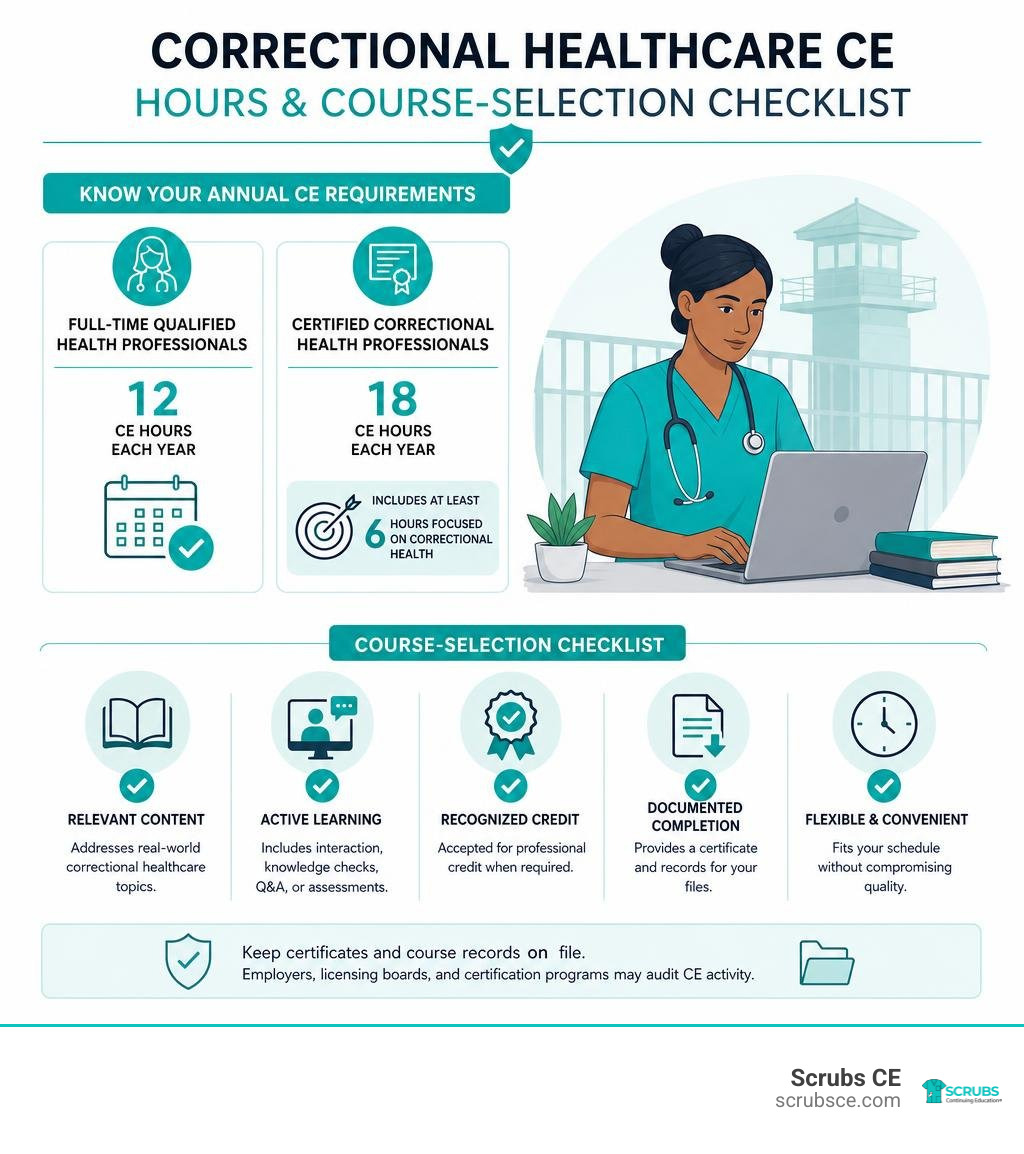
Correctional healthcare CE terms explained:
Core Standards and Mandatory Hours for Correctional Healthcare CE
Delivering comprehensive clinical care inside secure facilities presents distinct legal, ethical, and clinical challenges. In custody-based environments, continuing education is not merely a formality for license renewal; it serves as a critical operational safeguard. Navigating the intersection of custody policies, heightened patient vulnerability, and specialized epidemiological patterns requires targeted, continuous training.
NCCHC 12-Hour Annual Requirement for Clinical Staff
Under the governance of the National Commission on Correctional Health Care (NCCHC)—specifically standard J-C-03—all full-time qualified health care professionals working in correctional environments must obtain at least 12 hours of continuing education per year. This requirement applies across the clinical spectrum, encompassing correctional physicians, registered nurses, nurse practitioners, physician assistants, and mental health providers.
Meeting this benchmark ensures that staff maintain clinical competencies tailored to secure environments. The standard mandates that educational offerings reflect the unique population needs of jails and prisons. Educational records must be thoroughly documented, showing course titles, accredited providers, dates of completion, and earned credit hours.
| Clinical Role | Minimum Annual CE Hours | Correctional-Specific Focus | Compliant Delivery Formats |
|---|---|---|---|
| Correctional Physicians (MD/DO) | 12 Hours | Strongly recommended (mandatory 6 hrs for CCHP) | Accredited CME, blended interactive modules, grand rounds |
| Correctional Registered Nurses (RN/LPN) | 12 Hours | Recommended nursing protocols in custody | Interactive online modules, clinical seminars, live workshops |
| Mental Health Providers (LCSW, LPC, PsyD) | 12 Hours | Focus on custody-specific behavioral health | Accredited behavioral modules, case reviews, live Q&A sessions |
| Specialty Certified Staff (CCHP Credentials) | 18 Hours | Mandatory minimum 6 hours correctional-specific | Accredited coursework, national conferences, verified training |
CPR Certification and Delivery Formats in Correctional Healthcare CE
Emergency preparedness remains central to custodial healthcare. Attendance at an approved CPR training course counts directly toward the 12-hour annual continuing education requirement. To remain compliant, staff with direct patient contact must maintain active, verifiable CPR credentials.
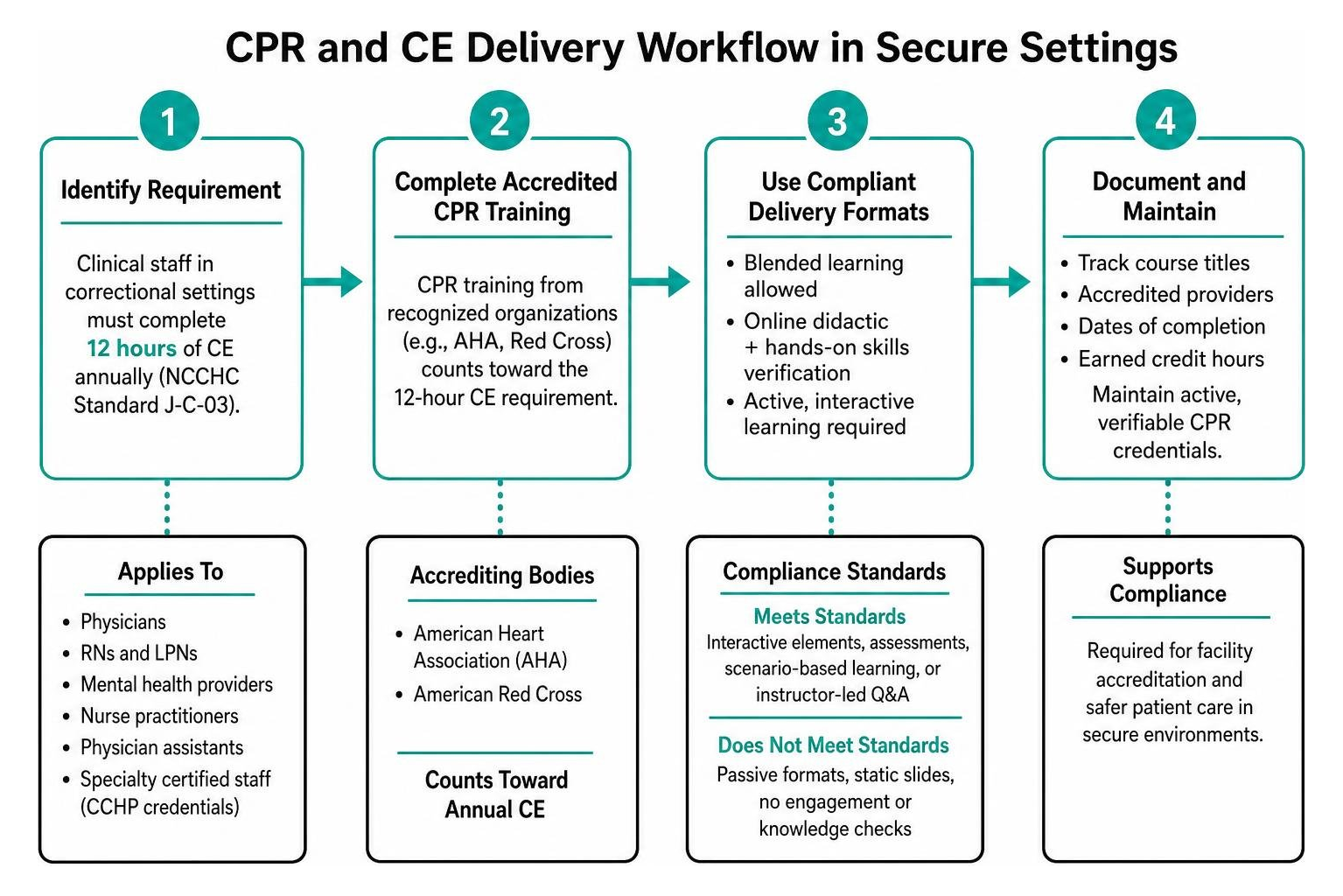
Accrediting bodies accept CPR courses from recognized organizations, such as the American Heart Association (AHA) and the American Red Cross. While blended learning formats featuring online didactic instruction are permissible, hands-on skills verification remains essential for full emergency preparedness.
When completing standard digital training, passive learning formats fall short of compliance expectations. Static PowerPoint decks lacking engagement metrics or knowledge checks do not meet NCCHC standards. Digital courses must include interactive elements—such as embedded assessments, scenario-based knowledge checks, or instructor-led Q&A—to satisfy facility accreditation auditors.
Maintaining CCHP Credentials and Specialty Recertifications
Professional accreditation through the Certified Correctional Health Professional (CCHP) program validates specialized knowledge in correctional environments. As of 2026, maintaining this credential requires structured tracking of annual continuing education credits.
Annual 18-Hour Renewal Rules and Specialty Alignment
All CCHP credential holders must complete 18 hours of continuing education annually. Of these 18 hours, a minimum of 6 hours must focus directly on correctional healthcare topics, such as custodial suicide prevention, intake triage, and correctional medical jurisprudence.
For practitioners holding advanced or specialty credentials, the renewal structure aligns automatically:
- CCHP-RN (Registered Nurse): Focuses on custody-specific nursing assessments, triage protocols, and medication administration workflows.
- CCHP-MH (Mental Health): Focuses on clinical management of acute psychiatric crises, psychotropic monitoring, and behavioral intervention in secure housing.
- CCHP-CP (Clinical Provider): Designed for physicians, PAs, and advanced practice nurses managing complex chronic and acute medical cases behind bars.
- CCHP-A (Advanced): Requires ongoing annual CE alongside a dedicated advanced professional project or published contribution to the field completed every three years.
Recertifying a specialty credential automatically renews and aligns the general CCHP certification cycle. While paper completion certificates are not submitted during standard online application processing, practitioners must retain complete documentation in their records, as the CCHP Board of Trustees conducts random annual compliance audits. Review the detailed Recertification guidelines from the National Commission on Correctional Health Care to confirm current specialty criteria.
Submission Deadlines, Fees, and Administrative Compliance
Managing recertification timelines prevents credential lapses and administrative penalties. Certification renewals operate on quarterly deadlines: March 31, June 30, September 30, and December 31.

The standard online renewal fee is $100. Submitting via physical mail or fax adds a $15 manual processing fee. Submissions completed past the quarterly expiration date incur an additional $25 late fee. If unexpected clinical obligations interfere with course completion, practitioners may submit a formal written extension request at least 30 days prior to the expiration date. A lapsed certification can be reinstated within one year before a full re-examination becomes necessary.
High-Yield Clinical Topics and Course Selection for Correctional Settings
Selecting relevant continuing education modules ensures regulatory compliance while directly improving day-to-day patient outcomes in secure environments.
Priority Infectious Disease and Chronic Care Modules in Correctional Healthcare CE
Correctional facilities experience higher transmission rates of communicable diseases compared to community baselines. Incorporating CDC guidelines into staff training curriculum ensures alignment with modern epidemiological standards:
- Tuberculosis Screening & Latent Infection: Implementing early intake symptom checklists, targeted tuberculin skin testing (TST) or interferon-gamma release assays (IGRAs), and modern short-course treatment regimens for latent tuberculosis infection.
- HIV Management & Prevention: Protocols for continuous antiretroviral therapy (ART) adherence, pre-exposure prophylaxis (PrEP) navigation, and confidentiality safeguards in custody settings.
- Viral Hepatitis (HCV/HBV): Routine screening at intake, opt-out diagnostic testing, liver disease staging, and direct-acting antiviral (DAA) treatment workflows.
- Sexually Transmitted Infections (STIs): Universal screening protocols for syphilis, gonorrhea, and chlamydia during intake processing.
- Ectoparasite Management: Rapid identification, isolation procedures, and treatment protocols for lice and scabies outbreaks in intake dormitories.
Addressing Behavioral Health and Traumatic Brain Injury
A significant proportion of incarcerated individuals present with co-occurring psychiatric and substance use disorders. High-yield education modules focus on practical intake interventions:
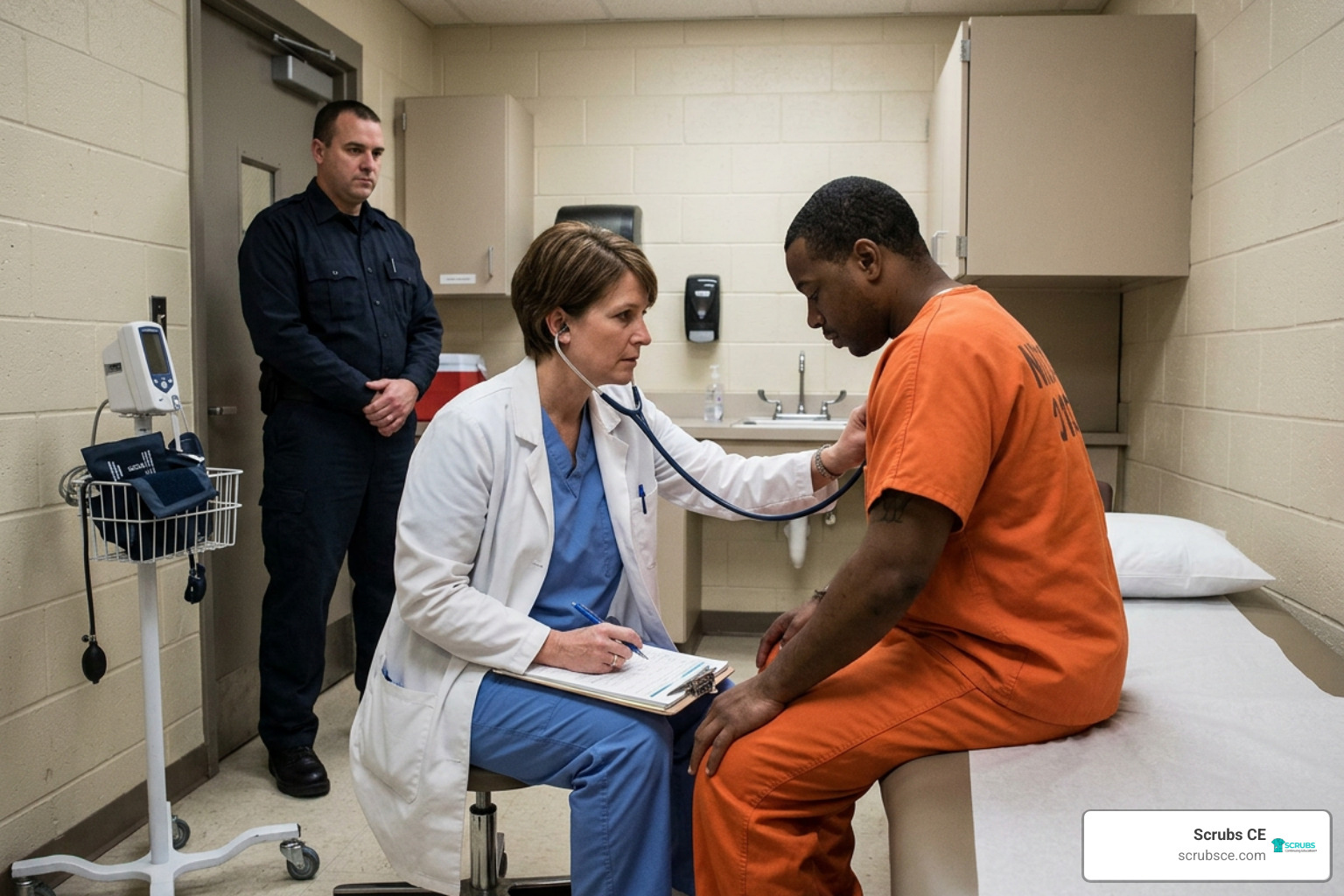
- Traumatic Brain Injury (TBI) Screening: Identifying past head trauma that may contribute to cognitive deficits, behavioral volatility, or treatment non-compliance.
- Suicide Prevention & Crisis De-escalation: Recognizing environmental and psychological triggers, conducting suicide risk assessments, and managing observation housing protocols.
- Substance Use Disorders (SUD) & MOUD: Managing acute alcohol and opioid withdrawal via standardized scoring tools (CIWA/COWS) and administering medications for opioid use disorder (MOUD).
- Intake Health Assessments: Developing standardized physical assessments within the mandated intake window to catch undiagnosed chronic conditions early.
Implementation Strategies for Correctional Health Administrators
Facility administrators often face staffing shortages, rotating shift patterns, and strict security regulations regarding internet access. Implementing sustainable professional development requires flexible educational architecture:
- Deploy Interactive Learning Management Systems (LMS): Use verified e-learning platforms that track completion timestamps, quiz scores, and user engagement metrics automatically.
- Utilize Shift-Based Modular Learning: Break down mandatory 12-hour curricula into micro-learning segments (15–30 minutes) that nurses and providers can complete during scheduled administrative windows.
- Incorporate Blended Skills Verification: Pair digital didactic modules covering CPR or clinical protocols with brief, on-site practical assessments conducted by clinical supervisors.
- Embed CE Into Continuous Quality Improvement (CQI): Align monthly CE assignments with facility CQI findings to directly address audit deficiencies or clinical trend alerts.
Frequently Asked Questions About Correctional Healthcare Continuing Education
Does CPR training count toward annual correctional CE requirements?
Yes. Attending an approved CPR training course counts directly toward the 12-hour annual continuing education requirement outlined in NCCHC standard J-C-03. The course must be delivered through an accredited organization, such as the American Heart Association or the American Red Cross, and include hands-on practical skills demonstration for staff with direct patient contact.
How many correctional-specific CE hours are needed for CCHP renewal?
Maintaining standard CCHP certification requires 18 hours of continuing education annually, with at least 6 hours dedicated specifically to correctional healthcare topics. The remaining 12 hours may cover general clinical medicine, pharmacology, or specialty topics relevant to your professional scope of practice.
Can PowerPoint presentations satisfy NCCHC training standards?
Static PowerPoint presentations alone generally do not satisfy NCCHC continuing education standards unless they are integrated into an interactive learning format. To ensure compliance, computer-based training must incorporate interactive knowledge checks, documented pre- and post-tests, or live instructor-led discussion and Q&A sessions.
Conclusion
Mastering clinical workflows in correctional facilities requires focused education that directly addresses the health complexities of justice-involved individuals. Meeting mandatory 12-hour NCCHC standards and 18-hour CCHP recertification rules ensures operational compliance and reinforces high clinical care standards across all secure facilities.
We support medical professionals across diverse technical specialties with accessible, accredited continuing education. If you are looking to expand your diagnostic capabilities or complete mandatory credits for imaging credentials, explore our convenient online Radiology CE courses to support your ongoing professional development.
Disclaimer: Continuing education requirements may vary based on facility accreditation status, individual state licensing board mandates, and specific credentialing agencies. Always verify your specific state regulations and professional board guidelines to ensure complete educational compliance.
Everything Radiologic Techs Need for a Successful ARRT Registry Review
Start Your ARRT® Registry Review With a Clear Plan

A successful ARRT® registry review starts with the official ARRT® Radiography content specifications, not a random stack of notes. Build a short study plan around the tested areas, use practice questions to find weak spots, and take timed exams so the computer-based format feels familiar before test day.
- Confirm that you meet the education, ethics, and examination requirements.
- Download the current ARRT® exam blueprint and divide study time across each content area.
- Practice active recall with registry-style questions, then review why each answer is right or wrong.
- Schedule full-length timed practice sessions to improve pacing and reduce exam-day stress.
The ARRT® Radiography examination has 200 questions and tests entry-level knowledge in patient care, safety, image production, and procedures. Your program prepares you for the profession; a focused review helps you turn that knowledge into reliable exam decisions.
I’m Zita Ewert, and I lead SCRUBS Continuing Education®, where I help imaging professionals find practical, accredited learning for licensure, career growth, and ARRT® registry review. My work centers on making continuing education and Radiology exam preparation clearer, more accessible, and easier to fit into a demanding clinical schedule.
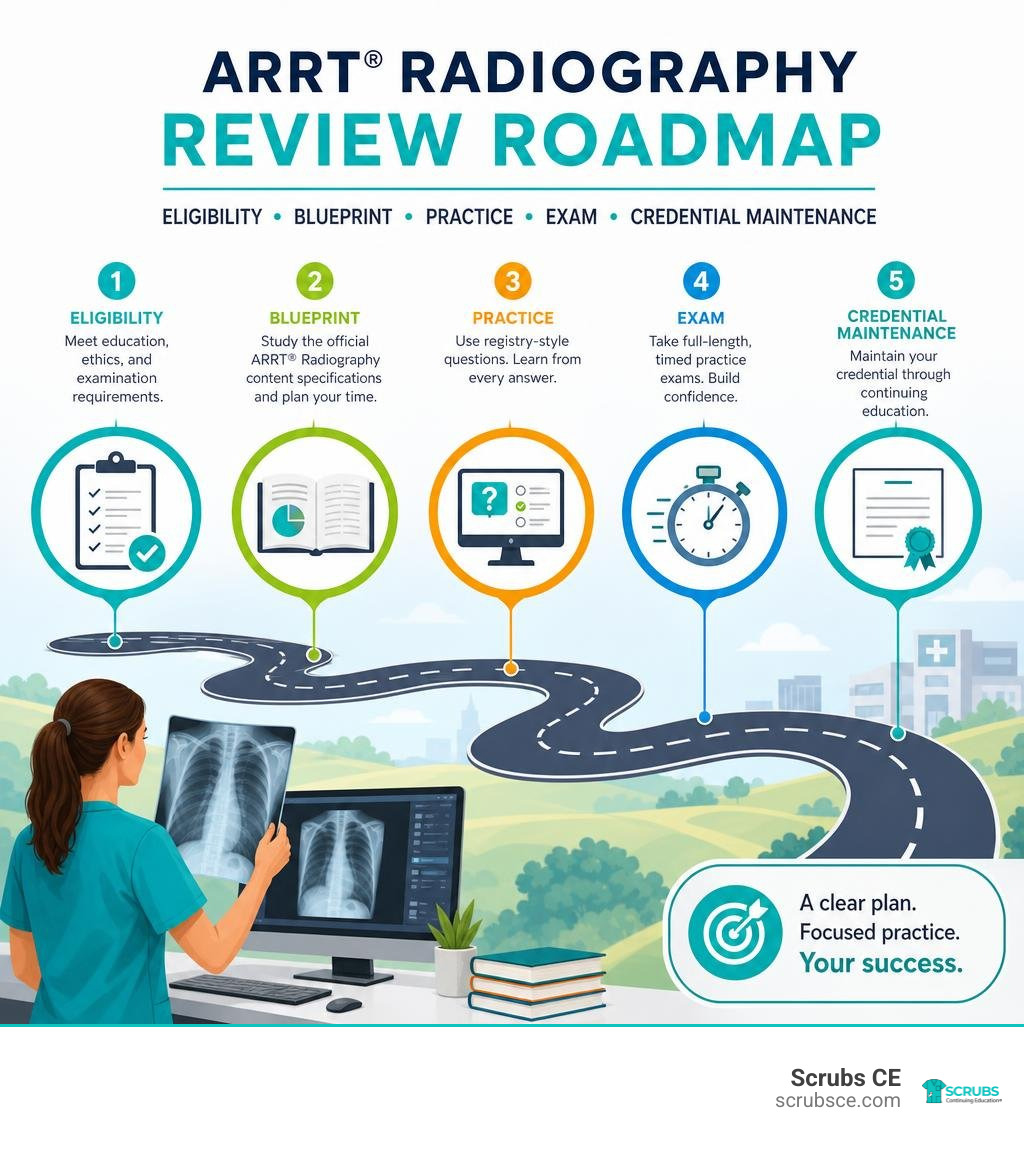
Terms related to ARRT® registry review:
ARRT® Radiography Eligibility and Examination Requirements

Earning national credentials from the AMERICAN REGISTRY OF RADIOLOGIC TECHNOLOGISTS® is a major career milestone. To qualify to sit for the examination via the primary eligibility pathway, candidates must satisfy three core pillars: education, ethics, and examination. When determining what are the requirements to be a radiologic technologist, candidates must ensure their academic records, clinical logs, and character backgrounds align with the official ARRT® RULES AND REGULATIONS .
Educational Milestones and Clinical Competencies
Candidates pursuing the primary pathway must complete an educational program accredited by an agency recognized by ARRT®. In addition to finishing the didactic curriculum, candidates must earn an associate degree or higher. This degree does not have to be specifically in radiologic technology, but it must be conferred by an accredited institution.
Clinical readiness is verified through mandatory didactic and clinical competency evaluations. You must perform mandatory and elective imaging procedures under direct and indirect supervision, logging entries for head, spine, pelvis, thorax, abdomen, and extremity views. Program directors verify these competencies before approving examination applications. Reviewing a comprehensive guide to radiologic technologist certification requirements helps ensure every log entry meets registry standards.
Ethics Review Process and Background Screening
ARRT® enforces strict ethical criteria to protect patient welfare. When completing your Eligibility application, you must report background infractions, including misdemeanor or felony convictions, drug- or alcohol-related driving offenses, military court-martials, and any disciplinary action against a professional license.
If you have potential violations on your record, you can submit an Ethics Review Pre-Application before or during your schooling for a $100 nonrefundable fee. In 2024, ARRT® processed approximately 1,309 ethics reviews, with 98% resulting in candidates maintaining their eligibility. Resolving potential flags early ensures your examination window opens smoothly upon graduation.
Eligibility Time Limits and Attempt Regulations
Regulations establish a standardized three-year eligibility window. Candidates must establish exam eligibility within three years of finishing the professional component of their educational program.
Once approved, candidates have up to three examination attempts within a three-year period starting from their initial exam window. If a candidate does not pass within three attempts or three years, they forfeit eligibility and must complete an accredited educational program again. Understanding how to get ARRT® certified without losing your mind lets you structure test dates strategically rather than rushing into an attempt unprepared.
Core Study Strategies for Your ARRT® Registry Review

A comprehensive review requires deliberate, active learning techniques. Simply highlighting textbooks leads to passive recognition rather than actual clinical recall. Utilizing a structured review tool like the radiography prep ch book test mailed gives you physical reference guides to master core formulas, physics concepts, and patient care workflows.
Structuring Content Around the ARRT® Registry Review Blueprint
ARRT® designs examination content specifications based on nationwide practice analyses. The four primary testing domains include:
- Patient Care: Ethical and legal standards, interpersonal communication, infection control, pharmacology, contrast administration, and patient monitoring.
- Safety: Radiation physics, radiobiology, beam limitation, shielding practices, dosimetry, and regulatory exposure limits.
- Image Production: Technical factor selection (mAs, kVp), exposure index calibration, digital image processing, artifact recognition, and equipment quality assurance.
- Procedures: Positioning accuracy, anatomy visualization, central ray alignment, pathology adjustments, and fluoroscopic examinations.
High-Yield Practice Questions for ARRT® Registry Review Success
Practicing with realistic test questions prepares you for the cognitive demand of registry day. The exam evaluates not just factual recall, but your ability to analyze clinical scenarios and make procedural decisions.
| Study Strategy | Daily Time Commitment | Active Engagement Level | 30-Day Knowledge Retention |
|---|---|---|---|
| Passive Textbook Reading | 2–3 Hours | Low (Mental fatigue, skimming) | 20% – 30% |
| Active Flashcards (Spaced Repetition) | 30–45 Minutes | High (Forced memory retrieval) | 65% – 75% |
| Targeted Scenario-Based Q-Banks | 1–2 Hours | High (Clinical problem-solving) | 80% – 90% |
| Timed Full-Length Mock Exams | 3.5 Hours (Weekly) | Very High (Simulates pacing & endurance) | 85% – 95% |
When completing practice questions, analyze every option thoroughly. Determine why the correct option applies clinically and why the alternative distractors are incorrect.
Avoiding Common Preparation Pitfalls
- Passive Skimming: Reading chapters without testing yourself creates an illusion of competence. Use self-quizzing after every section.
- Neglecting Radiation Protection Math: Avoid skipping inverse square law, direct square law, and grid conversion calculations. Write out formulas repeatedly until they become second nature.
- Ignoring Positioning Details: Memorize anatomy profile views, central ray angulation, and criteria for determining rotation on diagnostic radiographs.
- Cramming Before Test Day: Last-minute cramming elevates cortisol and hampers working memory. Conclude heavy studying 24 to 48 hours before the test to let your mind rest.
Understanding ARRT® Exam Formats, Question Types, and Accommodations
The ARRT® Radiography examination is administered at Pearson VUE testing centers. Familiarizing yourself with the interface using the ultimate checklist for Radiology certification requirements prevents interface confusion on test day.
Question Formats and Exam Structure
The Radiography exam includes 200 scored questions assessing foundational knowledge and cognitive application, along with pilot questions evaluated for future exams. Candidates have an allocated time limit of 3.5 hours for the exam itself, preceded by a brief computer tutorial and an agreement screen.
The test utilizes multiple modern item formats:
- Standard Multiple-Choice: Four options with a single best answer.
- Multiple-Select: Items asking you to select two or more correct answers from a list.
- Image and Illustration Analysis: Interpreting radiographs, anatomy diagrams, or equipment setups to identify structures, pathology, or positioning errors.
- Drag-and-Drop / Sorted Lists: Arranging clinical steps or radiographic workflow procedures in proper chronological order.
- Video Items: Evaluating dynamic imaging sequences to identify functional movement or fluoroscopic timing.
Requesting ADA Testing Accommodations
ARRT® complies with the Americans with Disabilities Act (ADA) by offering testing accommodations for candidates with documented physical, cognitive, or learning disabilities. Accommodations are evaluated by Paradigm Testing.
Requests must be submitted concurrently with your initial certification application before your examination window is assigned. You must submit comprehensive diagnostic records, professional evaluations, and a personal statement outlining functional limitations. Accommodations cannot be granted retroactively once a test appointment is scheduled or completed.
Post-Primary Pathways and Long-Term Credential Maintenance
Passing the primary radiography registry provides a foundation for advanced specialization. Technologists frequently expand their clinical scope by preparing for advanced credentials through specialized study, such as using an ARRT® MRI registry review how to pass on your first try guide, or pursuing advanced breast imaging with mammography mastery achieving your ARRT® certification.
Continuing Qualifications Requirements (CQR) Process
For technologists earning their credentials on or after January 1, 2011, certifications follow a 10-year time-limited structure subject to Continuing Qualifications Requirements (CQR). The CQR framework includes three phases completed across a three-year compliance window:
- Professional Profile: Documenting your clinical practice history and routine procedure volume.
- Structured Self-Assessment (SSA): An objective evaluation identifying knowledge areas requiring clinical updates.
- Prescribed Continuing Education: Targeted educational credits assigned to address any identified knowledge gaps.
To maintain active status outside of the 10-year CQR milestone, technologists must also complete their standard biennial ARRT® CE renewal by earning 24 accepted continuing education credits every two years.
Structured Self-Assessment (SSA) and Prescribed CE
The Structured Self-Assessment is not a pass/fail test; it is an evaluation tool designed to identify professional development needs. For radiography, the SSA consists of 80 timed questions covering patient care (10 questions), safety (20 questions), image production (20 questions), and procedures (30 questions).
Reviewing official documents such as the Radiography Structured Self-Assessment 2027 outline helps technologists prepare for these evaluations. If your SSA indicates areas below target competency, ARRT® assigns targeted continuing education courses to fulfill your CQR requirements. Technologists may also elect to skip the SSA and complete the maximum prescribed continuing education allocation (up to 36 CE credits) during their three-year window.
Frequently Asked Questions about the ARRT® Exam
How many questions are on the ARRT® Radiography examination?
The examination features 200 scored questions assessing knowledge in patient care, safety, image production, and procedures. It may also include unscored pilot questions used to validate items for future exams. ARRT® converts raw results into scaled scores ranging from 1 to 99, with a scaled score of 75 required to pass.
What happens if I do not pass the ARRT® exam on my first attempt?
If you do not achieve a passing score on your first attempt, you may reapply for a subsequent examination window. ARRT® rules permit up to three examination attempts within a three-year eligibility period. Candidates should review their score report breakdown, identify lower-scoring domains, and complete structured practice questions before retaking the test.
How far in advance must ADA accommodations be requested?
ADA accommodation requests must be submitted simultaneously with your initial examination application before your exam window is generated. Paradigm Testing reviews diagnostic reports and documentation to assign appropriate accommodations (such as extended testing time or private testing rooms) before exam scheduling authorization is issued.
Conclusion
Earning your professional credential from the AMERICAN REGISTRY OF RADIOLOGIC TECHNOLOGISTS® is the defining step in launching your diagnostic imaging career. By structuring your study timeline around official ARRT® content specifications, practicing with scenario-based question formats, and avoiding common preparation pitfalls, you can enter the testing center with confidence.
Once certified, maintaining clinical expertise through accredited education ensures long-term career growth. We at Scrubs CE support your professional path with convenient, self-paced courses designed to help you satisfy your biennial requirements and CQR milestones. When you are ready to earn required credits for license renewal or advanced modality preparation, explore continuing education courses for imaging professionals to keep your healthcare career moving forward.
How to Take Your Radiology Talents from Florida to South Carolina
Moving Your Radiology Career From Florida to South Carolina

No, a Florida Radiology license does not automatically transfer to South Carolina. South Carolina does not have direct reciprocity with Florida. To work there, apply for South Carolina certification through the South Carolina Radiation Quality Standards Association (SCRQSA).
For most Florida-licensed technologists, the fastest path is to:
- Keep your ARRT® certification active.
- Request proof of your Florida credential from the Florida Department of Health.
- Submit the SCRQSA application, national credential verification, and required fee.
- Wait for South Carolina certification before starting work.
Your Florida license shows you were authorized to practice in Florida. Your ARRT® credential is a national qualification that South Carolina can use in its review. They are related, but they are not the same thing.
I am Zita Ewert, a continuing-education leader for imaging professionals and the driving force behind Scrubs CE. I help technologists understand questions such as does a Florida Radiology license transfer to South Carolina and stay prepared with practical, accredited CE options as licensing rules and careers change.
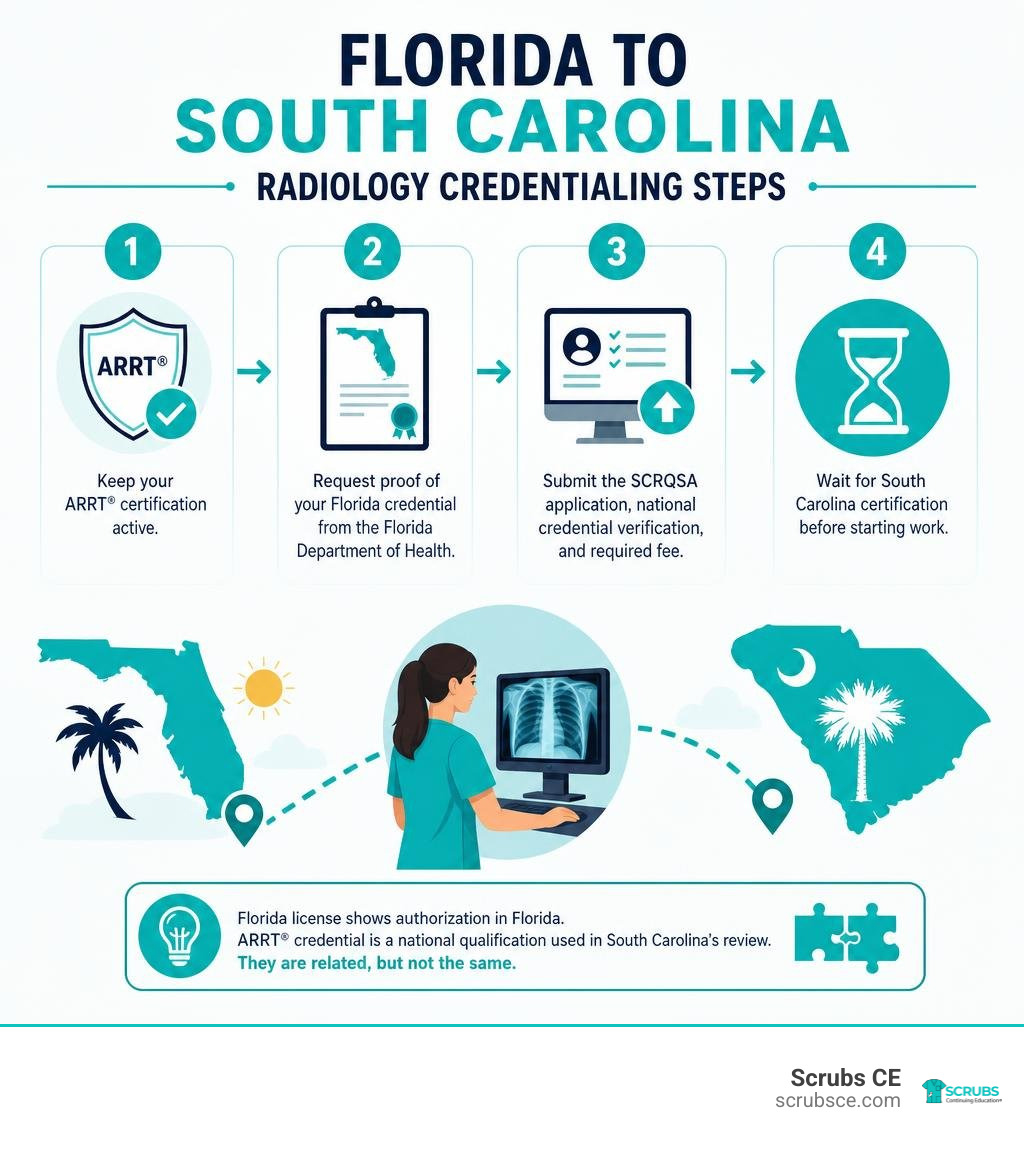
Does a Florida Radiology license transfer to South Carolina terms simplified:
- Florida Radiology license
- Florida license radiologic technologist
- Radiologic technologist license florida
Does a Florida Radiology License Transfer to South Carolina? Reciprocity and Legal Guidelines

When relocating along the Atlantic coast, many technologists wonder if their credentials simply follow them across state lines. The short answer is that no direct legal reciprocity exists between the Florida Department of Health and South Carolina. More than 75% of U.S. states have licensing laws covering the practice of radiologic technology, and each jurisdiction maintains autonomous control over who operates ionizing radiation equipment within its borders.
In Florida, the Department of Health regulates radiologic personnel under Chapter 468, Part IV, of the Florida Statutes. In South Carolina, the practice is governed under the Medical Radiation Health and Safety Act and administered by the South Carolina Radiation Quality Standards Association (SCRQSA). For specific regulatory inquiries, imaging professionals often consult the Frequently Asked Questions – Florida Department of Health to see how their Florida certifications operate when leaving the state.
Why Direct State Reciprocity Does Not Exist
True reciprocity means an agreement where State B automatically issues a license simply because you hold an active license in State A without requiring an independent application or credential review. Under South Carolina Code of Law 40-15-270, the state does not maintain direct reciprocity agreements with any other licensing jurisdiction, including Florida.
Each state sets independent statutory requirements to ensure patient safety and competency. Individual state agencies evaluate qualifications according to their own administrative rules. Rather than recognizing another state’s physical license document as an automatic pass, South Carolina requires all incoming professionals to submit a formal application demonstrating that they satisfy South Carolina standards.
The Crucial Role of ARRT® Certification
While direct state-to-state reciprocity is off the table, national credentials bridge the gap completely. The AMERICAN REGISTRY OF RADIOLOGIC TECHNOLOGISTS® (ARRT®) provides the primary standard that almost all state licensing boards rely upon.
ARRT® certification and registration is a national credential attesting that you have completed an accredited educational program, passed the rigorous national registry exam, and met continuing ethical standards. A state license, by contrast, is a legal permit granted by a state government to practice within its specific borders. South Carolina relies directly on your active ARRT® standing (or equivalent national registries like the NMTCB for nuclear medicine) to issue your South Carolina certification without making you restart your education or retake board examinations.
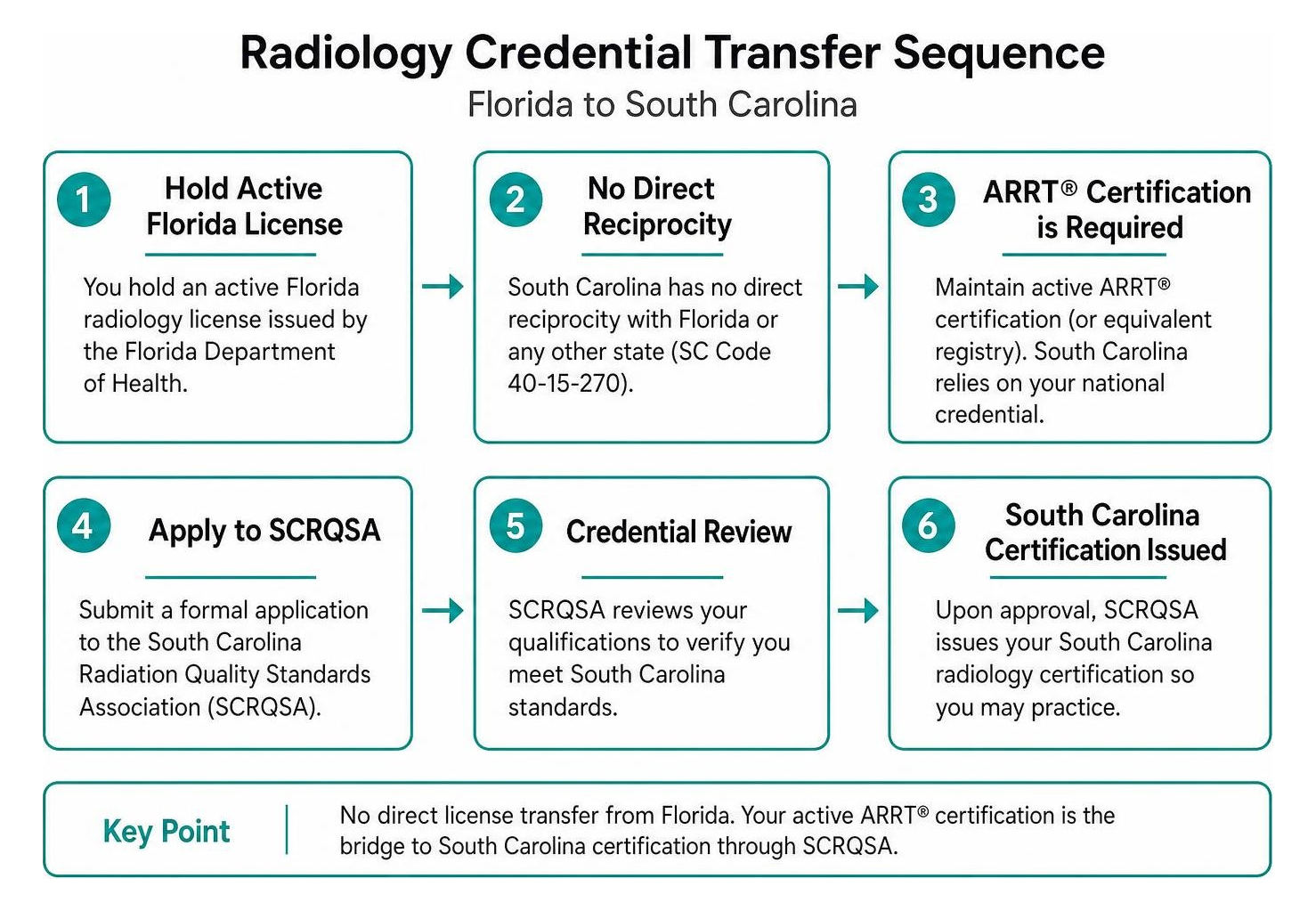
South Carolina Credentialing: The SCRQSA Application Process

The credentialing process in South Carolina is managed through the SCRQSA. Operating under state authority, the SCRQSA certifies radiographers, radiation therapists, nuclear medicine technologists, and limited practice operators.
How Does a Florida Radiology License Transfer to South Carolina Through Credentialing?
Obtaining your South Carolina credentials is an administrative endorsement pathway based on your primary credentials. If you are reviewing our Florida Radiology License Complete Guide, you know that Florida also uses the ARRT® standard with a minimum scaled passing score of 75.
To obtain your South Carolina credential:
- Complete the SCRQSA Application: Fill out the official application form covering your personal details, modality, and practice history.
- Obtain National Credential Verification: Download an official verification letter directly from the ARRT® (or NMTCB/RCIS/RCES) portal confirming your active registration in good standing.
- Pay the Required Application Fee: Submit the standard $50 application fee.
- Submit Documentation: Deliver your application and supporting materials via online upload, email, fax, or standard mail.
Standard processing takes 7 to 10 business days. If you are starting a job quickly, the SCRQSA provides an optional expedited review for an additional $25 fee, turning your application around in approximately 2 business days.
Documentation and Verification from the Florida Department of Health
Although South Carolina primarily validates your national ARRT® credential, you should ensure your Florida license history remains in good standing. If you are disclosing disciplinary history or need formal state-to-state verification, the Florida Department of Health issues official verifications using DH Form 4128 (License Verification Form).
Florida provides license verifications to other state boards free of charge. Furthermore, if you are relocating permanently, you should review Statutes & Constitution :View Statutes : Online Sunshine regarding Section 468.309. You can choose whether to maintain your Florida license as active via regular renewal, place it on inactive status for a $40 fee, or let it expire.
Comparing Practice Requirements: Florida vs. South Carolina
Understanding the operational differences between Florida and South Carolina helps you manage your credentials smoothly and avoid unexpected compliance gaps.
| Requirement / Feature | Florida (FL Department of Health) | South Carolina (SCRQSA) |
|---|---|---|
| Administering Entity | FL Department of Health / MQA | SCRQSA |
| Initial Application Fee | $45 (Endorsement) / $50 (Exam) | $50 |
| Standard Processing Time | 2 to 4 weeks | 7 to 10 business days |
| Expedited Processing | Not offered | 2 business days (+$25 fee) |
| License Renewal Cycle | Biennial (aligned to birth month) | Biennial (every 2 years) |
| Biennial Renewal Fee | Up to $75 | $50 |
| Continuing Education (CE) | 12 CE hours per biennium | 24 CE hours (satisfied by active ARRT®) |
| MRI & Diagnostic Ultrasound | Unregulated at state level | Unregulated at state level |
For detailed information on bone densitometry and specialty regulatory maps, you can review the South Carolina – ISCD public policy directory.
Modality Scopes: Radiography, CT, MRI, and Ultrasound
Both Florida and South Carolina base their licensing laws on the use of ionizing radiation on human beings:
- Radiography, Nuclear Medicine, and Radiation Therapy: Both states require formal state credentialing through primary national board certifications.
- Computed Tomography (CT) and Mammography: In South Carolina, post-primary modalities like CT and Mammography fall directly under your general Radiographer license. In Florida, these modalities are recognized as post-primary endorsements on your general certificate.
- MRI and Diagnostic Ultrasound: Neither Florida nor South Carolina issues state licenses for MRI technologists or Diagnostic Medical Sonographers because these modalities do not use ionizing radiation. Practice standards for MRI and Ultrasound are determined at the facility and employer level through ARRT® or ARDMS credentials, aligning with ASRT® practice standards.
Continuing Education and License Maintenance
Maintaining your credentials requires meeting specific continuing education standards. If you review the Rad Tech License Renewal Complete Guide, you will find that states structure their renewal hours differently:
- Florida Requirements: Florida requires 12 approved CE hours per 2-year renewal cycle. The ASRT® automatically transfers earned CE credits to the Florida Department of Health around the 15th of each month. Technologists can also review our guide on How to Master Your Florida Radiologic Technologist License Renewal to keep Florida credentials active simultaneously.
- South Carolina Requirements: South Carolina mandates 24 hours of continuing education every two years. However, maintaining your active ARRT® registration fully satisfies South Carolina’s CE requirement without needing to file separate state-specific reports.
- Approved Coursework: When completing courses to meet national and state requirements, utilizing accredited, State Approved CE Everything You Need to Know for Your License Renewal guarantees that every credit earned applies directly to your ARRT® biennium and state compliance.
Frequently Asked Questions About Moving Your Radiology Career
When moving, does a Florida Radiology license transfer to South Carolina automatically?
No. A Florida Radiology license does not transfer automatically because South Carolina does not offer direct reciprocity with any other state. You must apply directly to the SCRQSA and provide proof of your national ARRT® credential.
Does a Florida Radiology license transfer to South Carolina without retaking the examination?
Yes, as long as you hold an active national ARRT® or NMTCB certification. South Carolina recognizes national examination scores, meaning you do not have to sit for a new state-administered test to earn your South Carolina certification.
What are the application fees and processing times for South Carolina?
The initial application fee for an SCRQSA certification is $50. Standard processing takes 7 to 10 business days. You can pay an optional $25 expedite fee to have your application processed within 2 business days.
Conclusion
Transitioning your imaging career between states does not have to be stressful. While direct license reciprocity between Florida and South Carolina does not exist, holding active ARRT® credentials makes obtaining your South Carolina certification straightforward and fast through the SCRQSA.
At Scrubs CE, we are dedicated to helping radiologic technologists keep their careers moving forward. Whether you want to explore Want to Get a Florida Radiologic Technology License? 6 Types of Radiologic Technology Certification Options or need convenient, affordable online CE courses to satisfy your upcoming renewal cycle, our self-paced courses and instant certificates make compliance effortless in every state.
No Test, No Stress: Your Guide to 30 California RN CEUs
Understanding the Rules for 30 CEUs for Nurses No Test California
California registered nurses can satisfy their entire 30 CEU requirement without taking traditional exams by completing courses from approved providers that verify completion through learner evaluations, attendance tracking, and self-attestation. The California Board of Registered Nursing (BRN) does not mandate graded post-tests for continuing education; rather, it requires structured, clinically relevant coursework from licensed Continuing Education Providers (CEPs).

Navigating continuing education does not have to involve test anxiety or endless flashcards. In California, registered nurses are governed by the BRN under Title 16 of the California Code of Regulations. The state establishes clear rules designed to ensure clinical competency while allowing educational flexibility.
When you look for valid continuing education, the primary standard is that the activity must be relevant to the practice of nursing and offered by an approved provider. Earning your hours through state-approved CE guarantees that the coursework satisfies board standards without unnecessary administrative friction.
The regulation requires 30 contact hours every two years for license renewal. Notably, the BRN does not explicitly mandate that every continuing education course culminate in a graded post-test. Instead, the board emphasizes the delivery of structured content, verified learner participation, and direct course evaluations.
BRN Continuing Education Guidelines and Acceptance
To count toward your license renewal, continuing education must meet strict structural standards set by the BRN:
- The 50-Minute Rule: One contact hour equals at least 50 minutes of direct instruction, structured clinical reading, or interactive participation.
- Approved Provider Numbers: Every qualifying course must be issued by a provider holding a valid Continuing Education Provider (CEP) number issued by the BRN, or accredited by a nationally recognized body such as the American Nurses Credentialing Center (ANCC).
- Clinical Relevance: The content must enhance your scientific knowledge, patient care skills, or direct nursing practice. Courses focused solely on personal finance, basic self-help, or orientation to a specific employer do not qualify.
- Audit Trail: You must retain proof of completion to show the board if selected for an audit.
Understanding everything you need to know about completing your nursing CEU 30 hours ensures that your completed credits seamlessly satisfy regulatory guidelines while protecting your active practice status.
How to Complete 30 CEUs for Nurses No Test California Legally
Completing your required units legally without high-stakes testing comes down to how educational providers structure their courses. Many approved providers offer independent reading modules, recorded webinars, or interactive self-study materials that assess learning through course evaluation forms or self-attestations rather than rigid multiple-choice tests.
When taking self-paced home study courses, you review the clinical modules, verify that you engaged with the core concepts, and complete a mandatory end-of-course survey. This survey provides the feedback required by regulatory bodies to maintain course quality. Once submitted, your certificate of completion is issued immediately.
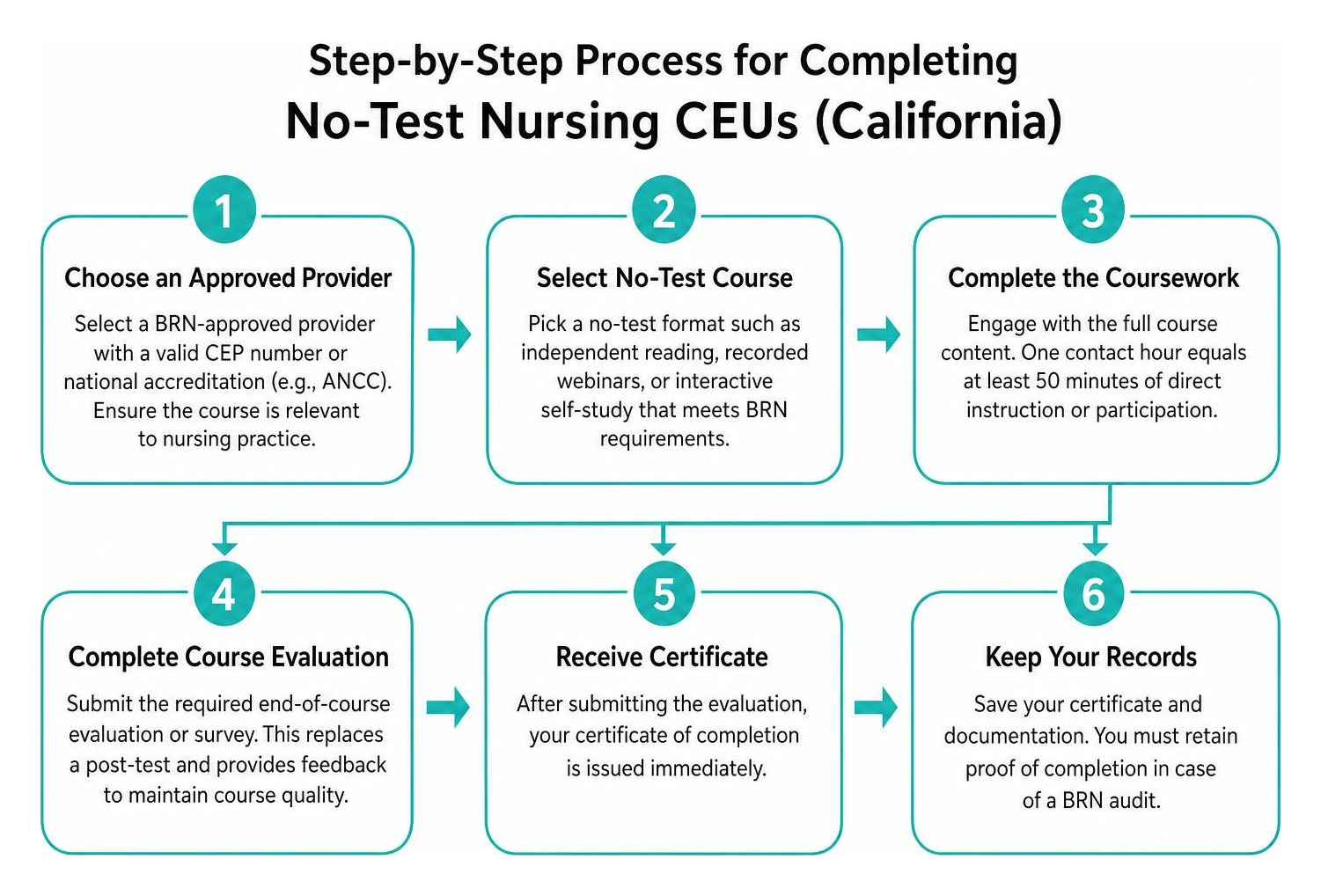
Approved Formats for Earning No-Test Nursing Credits
California RNs have several valid avenues for earning contact hours without facing traditional exams. Depending on your schedule and preferred learning style, you can mix and match these formats across your two-year renewal cycle:
- Independent Self-Study and Reading Modules: Comprehensive clinical texts and digital monographs allow you to study independently. Many providers issue credit once you read the material and submit a reflective feedback form.
- Live and On-Demand Webinars: Attending live or pre-recorded educational broadcasts satisfies CE requirements through logged attendance and participation time rather than formal testing.
- Professional Conferences and Seminars: Attending clinical lectures, hospital grand rounds, and academic symposiums awards contact hours based on documented seat time and evaluation forms.
- Academic Coursework: Taking collegiate-level courses relevant to nursing at an accredited institution converts directly into CEUs without requiring additional commercial CE exams.
- Interactive Online Modules: Engaging with structured online CEU credits allows you to progress through clinical case scenarios and practical exercises at your own pace.
Mandatory Subject Requirements and Potential Limitations
While the vast majority of your 30 hours can be fulfilled with general clinical topics, California maintains specific topic mandates that all nurses must track:
- Implicit Bias Training: Under California law (AB 1407), new graduates and renewing licensees must complete a direct, one-time course on implicit bias within their first renewal cycle. This course covers systemic barriers, historical trauma, and actionable strategies to provide equitable care.
- Clinical Relevance Limitations: Courses must clearly relate to patient care or healthcare administration. Routine CPR refresher classes, non-clinical leadership seminars, or basic office skills training cannot be claimed toward your 30-hour total.
- First Renewal Exemption: If you obtained your initial California RN license via standard examination and this is your very first renewal, you are exempt from the 30 CEU requirement for that initial cycle (except for any specific one-time statutory mandates like implicit bias, if applicable).
Reviewing specific CE credit requirements beforehand ensures you do not waste time on non-qualifying material, allowing you to focus your study time on evidence-based practice and patient outcomes.
Verifying Board Provider Numbers and Avoiding Pitfalls
The most critical step in completing your units is ensuring your course provider is legitimate. If an unapproved entity issues your certificates, the BRN will invalidate those hours during an audit, putting your license in jeopardy.
To verify a provider:
- Locate the provider’s active California CEP number on their website or course catalog.
- Verify their licensing status through the California Department of Consumer Affairs BreEZe license search portal.
- Check that your completion certificate includes the provider’s name, active CEP number, course title, completion date, and exact contact hours awarded.
- Keep every instant CE certificate in your personal records for at least four years, as required by California law to protect yourself against random board audits.
Evaluating the Advantages and Formats of Evaluation-Only CEUs
No-test continuing education shifts the focus from test-taking endurance to practical learning application. By replacing high-pressure tests with comprehensive module evaluations, healthcare professionals can absorb clinical updates more naturally.
| Feature | No-Test / Evaluation CEUs | Traditional Exam-Based CEUs |
|---|---|---|
| Assessment Method | Course evaluation & learner attestation | Graded multiple-choice examination (typically 70–80% passing score) |
| Retake Pressure | None; completion verified via material engagement | High; failing requires reviewing and retaking the exam |
| Pacing | Flexible, self-paced review of clinical literature | Fixed around exam study and question prep |
| Time Efficiency | Rapid; immediate certificate upon evaluation completion | Variable; depends on test length and retake requirements |
| Stress Level | Minimal; ideal for busy shift workers | Moderate to high |
Choosing evaluation-based coursework helps you get your California RN CEUs instantly without the stress, letting you focus on the clinical concepts that matter most to your day-to-day practice.
Cost and Convenience of 30 CEUs for Nurses No Test California
Balancing full-time bedside shifts with personal life leaves little time for inefficient studying. No-test CEU packages offer unmatched convenience, letting you log in, review the required clinical units on your phone or tablet during downtime, and finalize your credits without dedicating entire weekends to exam prep.
Most modern providers offer bundled packages or complete 30-hour bundles tailored specifically to California nurses. These packages ensure that all state-mandated topics are addressed at a predictable, budget-friendly rate. Exploring an affordable CE courses guide 2026 helps you identify the best value packages without sacrificing accreditation quality, giving you access to all necessary hours under one simple enrollment.
Frequently Asked Questions About California Nursing CEUs
Does the California BRN allow all 30 CEUs to be completed without taking an exam?
Yes. The California BRN accepts continuing education completed through independent study, webinars, and self-paced online modules from approved providers that verify completion through learner evaluations and participation tracking rather than mandatory post-tests.
How do California nurses report completed CEUs during license renewal?
You do not need to upload individual certificates when renewing online via the DCA BreEZe portal. Instead, you self-attest under penalty of perjury that you have completed the required 30 hours from an approved CEP provider. You must retain your completion certificates for at least four years in case of a BRN compliance audit.
Is implicit bias training required within the 30-hour requirement?
Yes. Under California Assembly Bill 1407, nurses must complete a direct implicit bias course as part of their continuing education requirements. This training counts toward your overall 30 contact hours.
Conclusion
Renewing your California registered nursing license does not need to be a stressful scramble filled with difficult exams. By selecting accredited, high-quality courses designed around learner engagement and evaluation, you can satisfy your complete biennial requirement efficiently and affordably.
We at Scrubs CE are dedicated to delivering streamlined, fully accredited courses that make professional development straightforward and accessible. Review the current California CE requirements today, complete your continuing education hours on your schedule, and maintain your professional license with absolute confidence.

Step-by-Step Guide to X-Ray Tech Certification Requirements
Why X-Ray Tech Certifications Are the Foundation of Your Radiology Career
X-ray tech certifications are the professional credentials that prove you have the education, ethics record, and exam scores needed to legally and safely perform diagnostic imaging. Here is a quick overview of what you need to know:
The main certifications and credentials at a glance:
| Credential | Issued By | Who It’s For |
|---|---|---|
| Radiography R.T.(R) | ARRT® | Entry-level radiographers (most common starting point) |
| Limited Scope (CLLRT) | State boards / AAH | Techs performing basic x-rays in a restricted setting |
| CT, MRI, Mammography | ARRT® (postprimary) | Experienced techs adding specialty credentials |
| CNMT | NMTCB | Nuclear medicine technologists |
| Sonography | ARDMS | Ultrasound / sonography specialists |
Over 360,000 people currently hold ARRT® credentials — making the American Registry of Radiologic Technologists® the undisputed national standard in this field.
Getting certified is not a one-time event. You also need to:
- Meet your state’s licensing requirements (rules vary widely)
- Complete 24 hours of continuing education (CE) every two years to keep your ARRT® credentials active
- Pursue postprimary specialty credentials if you want to advance
Demand is strong and growing. The Bureau of Labor Statistics projects 6% job growth for radiologic technologists from 2023 to 2033, with roughly 16,000 job openings per year. As of July 2026, CT technologist vacancies have hit an all-time high of 19.4% — meaning certified, specialized techs are in serious demand.
I’m Zita Ewert, and as the leader of SCRUBS Continuing Education®, I’ve spent years helping radiologic technologists navigate x-ray tech certifications and the ongoing CE requirements that keep those credentials active. In this guide, I’ll walk you through every step — from choosing your first credential to maintaining it throughout your career.
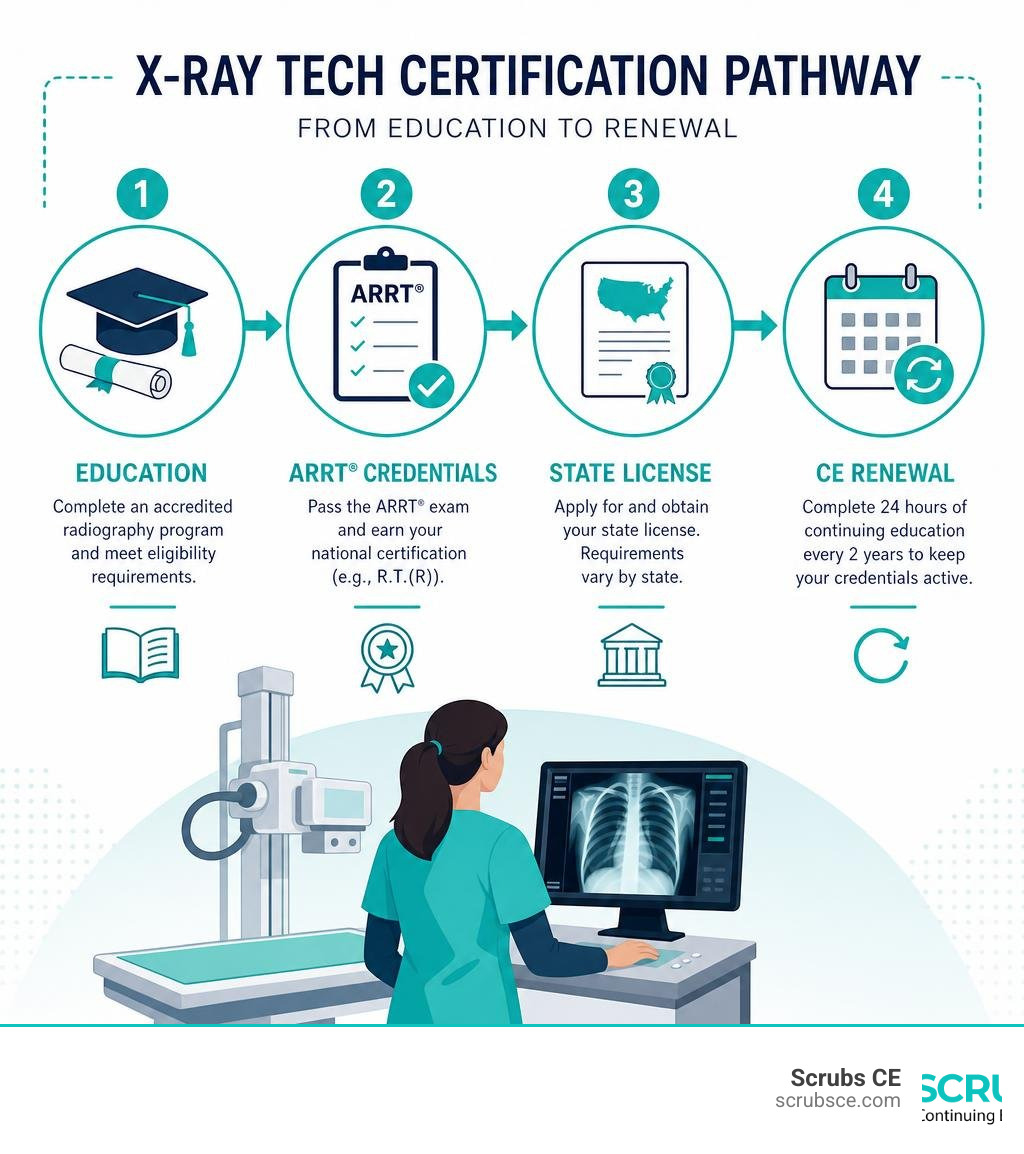
Understanding ARRT® Certification vs. State Licensing
One of the most common points of confusion for those entering the Radiology field is the difference between national certification and state licensing. While they sound like the same thing, they serve completely different purposes.
National certification is administered by professional credentialing organizations, most notably the AMERICAN REGISTRY OF RADIOLOGIC TECHNOLOGISTS® (ARRT®). When you earn your ARRT® credentials, it means you have met rigorous national standards in education, ethics, and examination. It is a badge of professional competence recognized by employers and healthcare facilities across all fifty states.
State licensing, on the other hand, is the legal permission granted by an individual state’s government allowing you to work within that specific state. Every state has its own regulatory board, and their rules vary dramatically:
- States with strict licensing: States like California, New York, Texas, and Florida require you to hold a state-specific license. To get this license, you must show proof of your ARRT® certification and pay an licensing fee.
- States that accept ARRT® directly: Many states accept your national ARRT® registration as a direct substitute for a state exam, making the licensing process much faster.
- States with no licensing laws: A small handful of states (such as Alabama and Idaho) do not have state licensing laws for radiologic technologists. However, even in these states, almost all reputable employers and hospitals will still require national ARRT® certification as a condition of employment.
Navigating these dual requirements can feel overwhelming, but we have put together a detailed roadmap to help you streamline the process. You can read more about managing this journey in our guide on How to Get ARRT Certified Without Losing Your Mind.
Primary X-Ray Tech Certifications and Educational Pathways
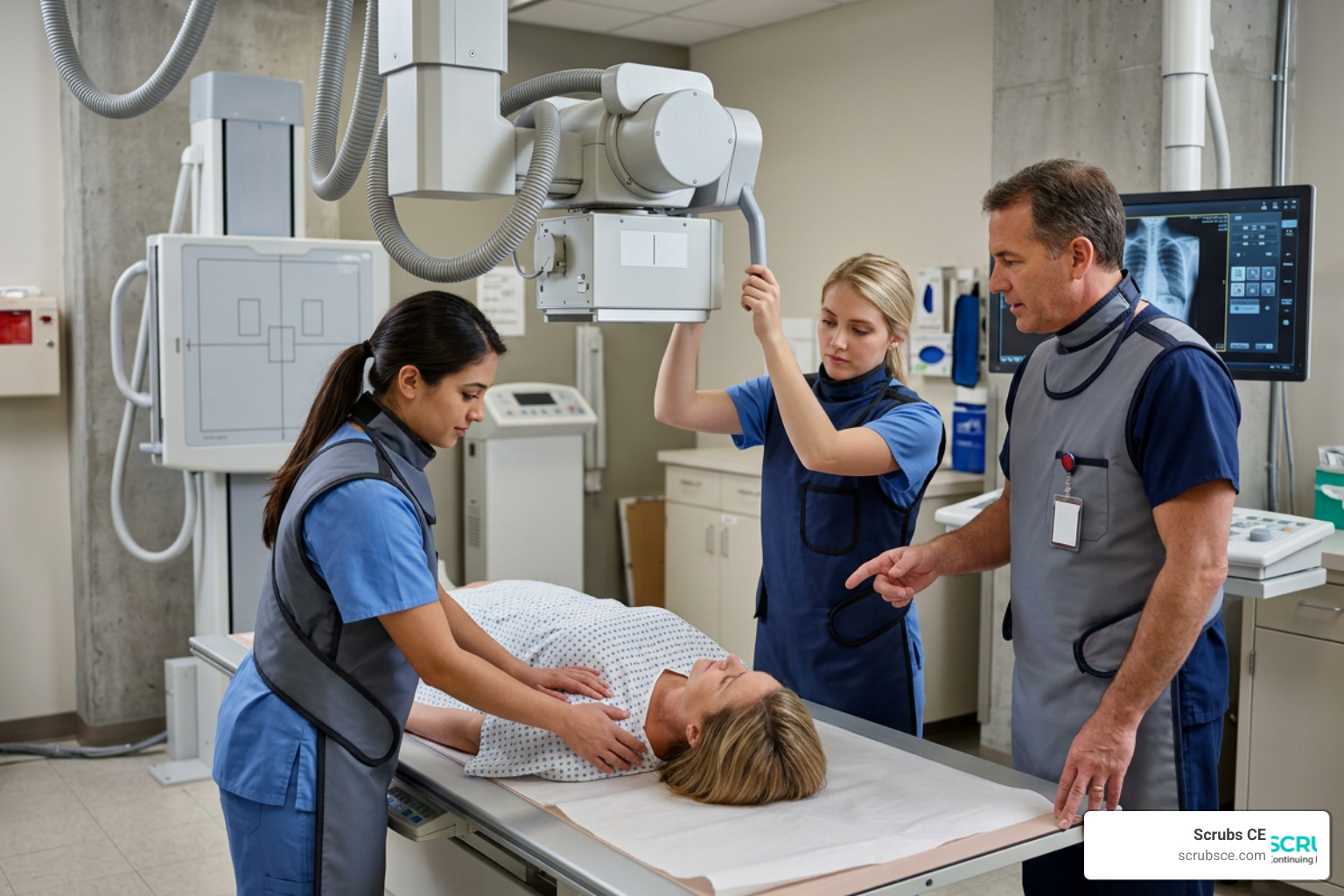
Before you can sit for any national exam, you must complete the necessary educational and clinical requirements. To qualify for a primary ARRT® credential, you must earn an associate degree or higher from an institution accredited by an agency recognized by the ARRT®.
While your degree does not have to be specifically in radiologic sciences (for example, you could hold an associate degree in general science), you must complete an educational program in your chosen imaging discipline that is accredited by the Joint Review Committee on Education in Radiologic Technology (JRCERT).
A typical radiography program combines rigorous academic coursework with hands-on clinical training. In the classroom, you will study:
- Human anatomy and physiology
- Radiation physics and safety protocols
- Radiographic positioning and patient care
- Image production and digital evaluation
In the clinical lab, you will work under the direct supervision of licensed technologists and radiologists. You must document and master a strict checklist of clinical procedures—ranging from basic chest x-rays to complex fluoroscopic exams—before your program director can sign off on your ARRT® exam eligibility.
If you are looking for structured, accredited programs, you can explore options like the Radiologic Technology (X-Ray) (3760) program, which offers an excellent blending of academic and clinical instruction. If you are just starting to plan your academic journey, check out our guide on How to Start Your X-Ray Tech Education from the Comfort of Home.
Choosing the Right Primary X-Ray Tech Certifications
When starting out, most technologists choose Radiography as their primary discipline. The ARRT® evaluates candidates using what they call the “Equation for Excellence.” This framework ensures that every certified technologist meets three core requirements:
- Education: Completing both the didactic coursework and the clinical competencies required for your specific discipline.
- Ethics: Adhering to the ARRT® Standards of Ethics. This includes a background review to ensure candidates do not have disqualifying criminal records.
- Examination: Passing the comprehensive, computer-based national registry exam.
It is also important to stay ahead of changing standards. The ARRT® regularly updates its specifications to keep pace with technological advancements. For example, updated Didactic and Clinical Competency Requirements, Examination Content Specifications, and Task Inventories are scheduled to take effect on March 1, 2027. If you are currently enrolled in a program, make sure your study materials align with these upcoming curriculum changes.
Limited Scope vs. Full ARRT® Certification
If a full two-year associate degree program feels out of reach due to time or financial constraints, there is an alternative pathway: the Limited Scope Radiology Tech Certification, also known as a Certified Limited Licensed Radiology Technologist (CLLRT) or basic x-ray machine operator.
A limited scope certification can often be completed in as little as 8 to 12 months through vocational schools or community colleges. This fast-track option is designed to prepare you to perform basic, low-risk x-ray procedures in setting like urgent care clinics, physician offices, and orthopedic practices.
However, it is crucial to understand that a limited scope certification is not the same as a full ARRT® Radiography credential. To learn more about how to position yourself for success in either path, read our comprehensive guide on How to Become a Radiologist Technician and Launch Your Career.
Comparing Limited and Full X-Ray Tech Certifications
The differences between these two x-ray tech certifications come down to the scope of practice, safety protocols, and career mobility:
- Scope of Practice: Limited scope technologists are restricted to imaging specific, uncomplicated anatomical areas. These typically include the chest, extremities (hands, feet, arms, legs), and sometimes the skull or spine. They are strictly prohibited from performing advanced modalities, working with contrast media, or conducting fluoroscopic procedures. Full ARRT® certified technologists, by contrast, can perform any diagnostic radiography procedure on any part of the body.
- Clinical Environments: While full x-ray techs are highly sought after by major trauma hospitals and advanced imaging centers, limited scope techs primarily work in smaller, outpatient environments where high-volume, specialized imaging is not required.
- Career Advancement: Holding a limited scope certificate means your career path is generally restricted to basic radiography. You cannot transition into advanced modalities like CT, MRI, or Mammography without first returning to school to complete a full associate degree and earning your primary ARRT® credential.
State-by-State Licensing Requirements, Fees, and Renewals
Because state laws vary so widely, you must keep track of your local state board’s requirements, licensing fees, and renewal cycles. Failing to renew your state license on time can lead to expensive fines or even a temporary suspension of your right to practice.
The table below outlines the licensing details for four of the most populated states:
| State | Licensing Board | Initial Application Fee | Renewal Cycle | CE Requirements |
|---|---|---|---|---|
| California | California Department of Public Health (CDPH) | $75 | Biennial (Every 2 years) | 24 approved CE credits |
| New York | New York State Department of Health | $120 | Triennial (Every 3 years) | 24 approved CE credits |
| Texas | Texas Medical Board | $80 | Biennial (Every 2 years) | 24 approved CE credits |
| Florida | Florida Department of Health | $50 | Biennial (Every 2 years) | 24 approved CE credits |
Keeping up with these shifting state rules is a major part of professional compliance. For a complete, state-by-state breakdown of licensing boards, contact information, and specific renewal steps, refer to our Rad Tech License Renewal Complete Guide.
Career Advancement: Postprimary Credentials and Specialty Imaging
Once you have earned your primary ARRT® credential in Radiography, you have unlocked the door to career advancement. The ARRT® offers a structured “postprimary pathway” that allows you to specialize in advanced imaging modalities.
Specializing is one of the fastest ways to increase your earning potential and secure high-demand positions. To qualify for a postprimary credential, you must already hold an active primary ARRT® credential, complete 16 hours of structured education directly related to the specialty within the 24 months before you apply, and document a specific number of clinical procedures.
The most popular postprimary specialties include:
- Computed Tomography (CT): Utilizing rotating x-ray machines to create cross-sectional images of the body.
- Magnetic Resonance Imaging (MRI): Using powerful magnetic fields and radio waves to image soft tissues.
- Mammography (M): Specialized, low-dose x-ray imaging of the breast.
For a detailed look at how to map out your advanced career goals, read the official ARRT® Eligibility handbook.
There are also alternative certifying bodies for specific specialties. For example, if you want to focus on nuclear medicine, you might seek credentials from the Nuclear Medicine Technology Certification Board (NMTCB). If diagnostic medical sonography (ultrasound) is your goal, the American Registry for Diagnostic Medical Sonography (ARDMS) is the premier certifying organization.
Furthermore, other healthcare professionals often cross-train into Radiology. For instance, registered nurses working in imaging departments can pursue the Certified Radiology Nurse (CRN ®) credential to validate their specialized clinical skills. In industrial settings, technicians who work with non-destructive testing and industrial x-ray equipment often obtain the IRRSP: Radiation Safety Credential to comply with federal and state safety laws.
No matter which branch of medical imaging you choose, layering multiple credentials will make you highly competitive. You can read more about how these credentials compare in our A Comprehensive Guide to Radiologic Technologist Certification Requirements.
Job Outlook, Vacancy Rates, and Salary Benefits of X-Ray Tech Certifications
Earning additional x-ray tech certifications is not just about expanding your clinical skills—it also has a direct, positive impact on your paycheck and job security.
According to data from 2023, radiologic technologists earned an average salary of $76,020 per year. However, those who specialize in advanced modalities earn significantly more. For example, if you climb the ladder to become a Radiology Manager—overseeing department operations, staffing, and equipment compliance—you can expect an average annual salary ranging from $110,000 to $130,000, making it the highest-paying job in the radiologic technology field.
The job market in July 2026 is incredibly favorable for certified technologists. The industry is facing unprecedented staffing shortages, particularly in specialized departments. The vacancy rate for computed tomography (CT) reached an all-time high of 19.4% in 2025, up from 17.7% in 2023.
This means that facilities are actively competing for certified CT and MRI technologists, often offering sign-on bonuses, flexible scheduling, and premium travel assignments. Earning your primary and postprimary credentials ensures you are positioned to capitalize on these high-paying market demands.
Maintaining Your Credentials Through Continuing Education
Earning your ARRT® certification is a massive achievement, but it is only the first step. To keep your credentials active and maintain your legal right to practice, you must participate in ongoing professional development.
The ARRT® requires all registered technologists to complete 24 hours of continuing education (CE) every two years (known as your biennium). These CE credits must meet strict guidelines established by the American Society of Radiologic Technologists (ASRT®) or other recognized organizations to ensure the courses are relevant to patient care, radiation safety, and digital imaging technology.
Staying compliant does not have to be stressful. We have created a step-by-step guide to help you track your dates and understand which courses qualify; check out our ASRT CE Requirements Complete Guide.
At SCRUBS Continuing Education®, we specialize in providing convenient, affordable, and high-quality online CE courses designed specifically for busy radiologic technologists. Our courses offer instant grading and downloadable certificates, making it easier than ever to satisfy both your national ARRT® and state licensing requirements on your own schedule.
Frequently Asked Questions About X-Ray Tech Certifications
What is the ARRT® three-year rule for exam eligibility?
The ARRT® enforces a strict three-year limit to establish eligibility and pass your registry exam after you complete your educational program. The clock starts ticking the moment you graduate. Within this three-year window, you must submit a complete application, clear your ethics review, receive your Candidate Status Report, and successfully pass the exam. If you fail to do so within three years, you lose your eligibility and must completely repeat your educational and clinical requirements to apply again.
How many times can you attempt the ARRT® certification exam?
You are allowed a maximum of three exam attempts within a three-year period starting from the date your first exam window opens. If you do not pass the exam on your third attempt—or if your three-year eligibility window expires before you pass—you must requalify. Requalifying requires you to re-enroll in and complete an entire accredited educational program, including all didactic and clinical competencies.
Do traffic violations affect ARRT® ethics reviews?
Generally, minor traffic violations (like speeding tickets or parking fines) do not need to be reported to the ARRT® and will not impact your ethics review. However, you must report traffic violations if they are charged as misdemeanors or felonies, or if they involved drugs or alcohol (such as a DUI or DWI).
The ARRT® takes its professional standards seriously, completing approximately 1,730 ethics reviews in 2023. Fortunately, the vast majority of these reviews are resolved successfully; less than 1% (only 12 cases) resulted in the revocation of credentials. It is always best to be completely honest and report any potential issues early using the ARRT® pre-application ethics review process.
Conclusion
Navigating x-ray tech certifications requires careful planning, but the professional and financial rewards are well worth the effort. From choosing your primary radiography program to mastering advanced imaging modalities, each step you take builds a more secure and lucrative healthcare career.
At SCRUBS Continuing Education®, we are committed to supporting your professional development and long-term career success. When it comes time to renew your credentials, we are here to provide the hassle-free, budget-friendly learning options you need.
Explore our complete library of approved continuing education courses for x-ray technologists today, and take control of your career advancement with confidence!

A Practical Guide to How Long It Takes to Become an MRI Tech
How Long Does It Take to Become an MRI Tech by Educational Pathway?
Becoming an MRI technologist typically takes between 6 months and 4 years, depending on your prior medical imaging experience and chosen educational pathway. For already-credentialed radiologic technologists, a post-primary certificate takes 6 to 12 months. Career changers and beginners can complete an accelerated certificate in 12 to 18 months, an associate degree in 18 to 24 months, or a four-year bachelor’s degree in 48 months.
Choosing the right educational path is the biggest factor determining your total time investment. Medical imaging offers multiple entry points depending on whether you are starting from high school, switching careers from an unrelated field, or already working in an imaging department.
When exploring CT and MRI Certificate Programs Near Me: Your Ticket to a High-Tech Career, you will find that program formats range from dedicated certificate tracks to complete collegiate degrees. Here is a clear comparison of your options:
| Educational Pathway | Typical Duration | Clinical Hours Required | Target Audience | Primary Credential Eligibility |
|---|---|---|---|---|
| Post-Primary Certificate | 6–12 Months | Structured Competencies (125+ procedures) | ARRT®-certified technologists (Radiography, Sonography, Nuclear Medicine) | ARRT® (MR) |
| Accelerated MRI Certificate | 12–18 Months | 750–1,000+ Hours | Career changers and non-imaging healthcare workers | ARMRIT / ARRT® (Primary if accredited) |
| Associate Degree (AAS in MRI) | 18–24 Months | 1,000–1,500 Hours | Beginners seeking an accredited college degree | ARRT® (MR) Primary / ARMRIT |
| Associate Degree (Radiography + MRI) | 2–3.5 Years | 1,500+ Radiography + Post-Primary MRI | Beginners wanting dual-modality career mobility | ARRT® (R) and ARRT® (MR) |
| Bachelor’s Degree (BS in Imaging) | 4 Years | 1,500+ Hours | Students pursuing imaging leadership and research | ARRT® (MR) Primary / ARMRIT |
Primary Pathway Associate Degree (18–24 Months)
An Associate of Applied Science (AAS) in Magnetic Resonance Imaging is a direct-entry option for newcomers who want a formal collegiate credential. Instead of spending two years learning diagnostic X-ray first, you focus directly on magnetic resonance imaging physics, patient safety, cross-sectional anatomy, and clinical rotations from the start.
To build foundational knowledge before your first day of class, reviewing MRI Training 101: Learn MRI Basics can help demystify core concepts like magnetic fields and radiofrequency pulses. Programs accredited by the Joint Review Committee on Education in Radiologic Technology (JRCERT) ensure your coursework qualifies you directly for the ARRT® Primary Eligibility Pathway upon graduation.
Post-Primary Pathway for Certified Technologists (6–12 Months)
If you are already an ARRT®-credentialed radiographer, nuclear medicine technologist (via ARRT® or NMTCB), or diagnostic medical sonographer (via ARRT® or ARDMS), you have the fastest route available. The post-primary pathway allows you to cross-train without enrolling in a full multi-year degree program.
This track requires completing 16 hours of structured education across MRI safety, patient care, imaging procedures, and physics, combined with hands-on clinical competencies. Most technologists accomplish this in 6 to 12 months by cross-training at their current hospital or outpatient facility while continuing to work their regular imaging shifts.
Accelerated Certificate vs. Bachelor’s Degree Timelines (12–48 Months)
Accelerated certificate programs compress the academic timeline to 12–18 months by stripping away general education electives like art history and English literature. These programs concentrate exclusively on MRI physics, safety screening, cross-sectional anatomy, and immediate clinical placement.
In contrast, a four-year Bachelor of Science in Radiologic Sciences or Medical Imaging spans 48 months. While a bachelor’s degree is rarely required for staff technologist positions, it is valuable for technologists aiming for department management, research positions, or MRI safety officer (MRSO) roles. For those balancing busy schedules, you can Master Radiology From Anywhere: The Best Online Programs to complete didactic coursework at your own pace before beginning local clinical rotations.
Key Variables and Milestones Affecting Your Completion Timeline
While program brochures list ideal completion times, real-world variables often influence your actual graduation date. Clinical site availability, prerequisite requirements, and your weekly time commitment directly shape your timeline.
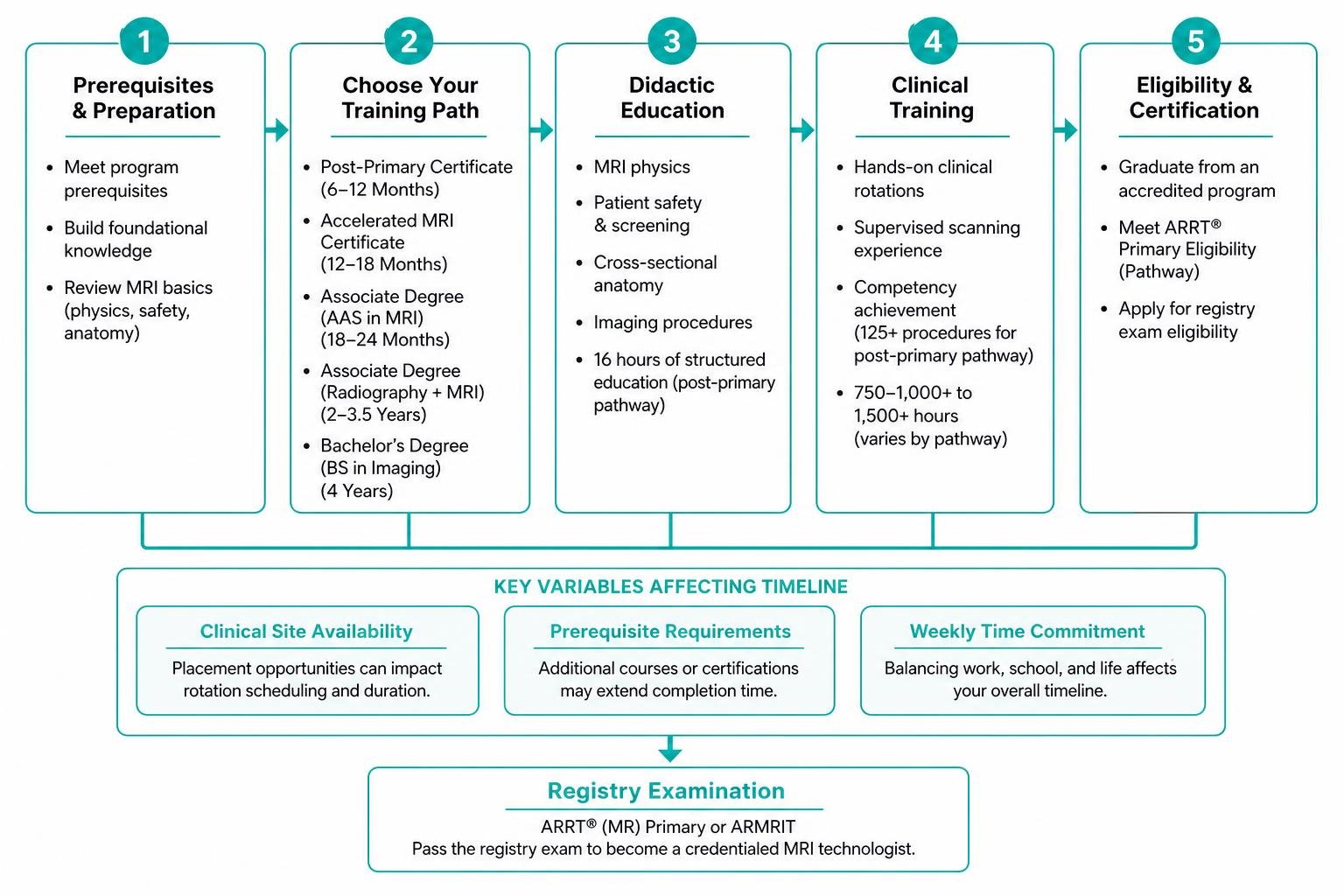
How Long Does It Take to Become an MRI Tech from Scratch?
Starting from scratch with zero medical background takes 14 to 24 months on average. If you are wondering, Is MRI Tech School Hard? What to Expect on Your Journey, the main challenge is mastering cross-sectional anatomy and magnet safety protocols rather than basic memorization.
Your timeline when starting fresh generally breaks down into distinct phases:
- Prerequisites and Clearances (1–3 Months): Completing foundational anatomy and physiology, college algebra, medical terminology, background checks, drug screenings, and CPR/BLS certification.
- Didactic Coursework (4–6 Months): Mastering pulse sequences, tissue relaxation times, artifact reduction, contrast administration, and Zone I–IV safety protocols.
- Clinical Rotations (6–12 Months): Spending 16 to 24 hours per week at an imaging facility scanning live patients under direct supervision to log competencies.
How Long Does It Take to Become an MRI Tech While Working Full-Time?
Balancing a 40-hour workweek with MRI school stretches the timeline to 18 to 24 months. While flexible Online MRI Courses allow you to study didactic modules early in the morning or on weekends, hands-on clinical rotations require dedicated daytime or evening scanner hours.
Most working students succeed by:
- Transitioning to 3×12-hour work shifts or weekend coverage at their current job.
- Scheduling two 8-hour or two 10-hour clinical scanning shifts during the week.
- Protecting 10 to 15 hours weekly for self-paced physics and anatomy study.
Attempting to work 40 hours while completing 24 hours of unpaid clinicals often leads to burnout. Planning your finances in advance to temporarily drop to 25–30 work hours per week during the clinical phase is one of the best ways to finish on schedule.
Clinical Rotations and Daily Procedure Caps
Clinical training is where theoretical physics meets real patients, and it represents the largest portion of your training hours. Most programs require between 750 and 1,000+ clinical hours.
For those on the ARRT® post-primary route, the AMERICAN REGISTRY OF RADIOLOGIC TECHNOLOGISTS® enforces clear regulatory rules:
- Daily Procedure Cap: Candidates can log a maximum of 7 clinical experience entries per day to encourage spaced repetition and deep learning over rushing.
- 24-Month Window: All logged clinical competencies must be completed within the 24 months immediately preceding exam application submission.
- In-Person Requirement: All scans must be performed physically on-site; remote or virtual scanning simulations do not count toward mandatory ARRT® clinical logs.
Carefully tracking your procedural sign-offs and maintaining digital backup copies prevents documentation disputes from delaying your exam eligibility.
Credentialing, Examination, and Licensure: The Final Stretch
Completing your didactic and clinical requirements earns your program diploma, but you cannot independently scan patients until you pass your credentialing board exam and secure state authorization.
To qualify for national board testing, you must document competency across core anatomical categories:
- Head and Neck: Routine brain, internal auditory canals, orbits, pituitary gland, and neck soft tissue.
- Spine: Cervical, thoracic, and lumbar spine protocols for disc pathology and trauma.
- Musculoskeletal (MSK): Upper and lower extremity joints including shoulders, knees, wrists, hips, and ankles.
- Body and Abdomen: Liver, MRCP (biliary system), kidneys, female pelvis, and prostate.
- Vascular (MRA/MRV): Time-of-flight and contrast-enhanced angiograms of the circle of Willis, carotids, and renal vasculature.
ARRT® vs. ARMRIT Registry Exam Timelines
The two primary credentialing bodies in the United States are the AMERICAN REGISTRY OF RADIOLOGIC TECHNOLOGISTS® (ARRT®) and the American Registry of Magnetic Resonance Imaging Technologists (ARMRIT).
- The ARRT® (MR) Exam: Consists of 220 computer-based questions (200 scored, 20 unscored pilot questions) with a 3.5-hour time limit. It evaluates image production (30%), clinical procedures (27%), patient care (26%), and safety (17%). A scaled score of 75 is required to pass.
- The ARMRIT Exam: Consists of 225 multiple-choice questions focusing on MRI physics, safety, clinical applications, and anatomy, also requiring a 75 passing score.
Scheduling your examination through a testing center typically takes 2 to 4 weeks after your educational credentials and clinical competencies are verified. Dedicating 8 to 12 weeks to an ARRT® MRI Registry Review: How to Pass on Your First Try ensures you retain vital pulse sequence mechanics and pass on your first attempt.
State Licensure and First Paycheck Timeline
After passing your board exam, state licensing takes anywhere from 2 to 12 weeks depending on your state’s health department workload. Approximately 75% of U.S. states mandate an individual state license or registration to operate diagnostic imaging equipment.
Given the ongoing national shortage of imaging technologists, with over 85% of healthcare facilities reporting recruitment challenges, many students receive conditional job offers during their final clinical rotation. For a deeper look at compensation and regional demand, explore The MRI Tech Job Outlook and Career Growth in 2026.
Frequently Asked Questions About MRI Technologist Timelines
Can you become an MRI technologist in 6 months?
A 6-month timeline is only possible for existing medical imaging professionals who already hold an ARRT® credential in radiography, sonography, or nuclear medicine. These technologists can complete structured education and clinical competencies through an accelerated post-primary pathway. For beginners with no prior imaging experience, completing didactic physics and 750+ clinical hours in 6 months is not realistic.
How many clinical hours are required to become an MRI tech?
Most comprehensive primary certificate and associate degree programs require between 750 and 1,000+ supervised clinical hours (roughly 1,500 hours for collegiate programs). For ARRT® post-primary candidates, the requirement is defined by clinical competencies: candidates must document a minimum of 125 clinical procedure repetitions across specified anatomical categories rather than a fixed hour count.
Does prior allied health experience count toward MRI clinical scanner hours?
No. While prior experience as a Patient Care Technician (PCT), Emergency Medical Technician (EMT), Certified Nursing Assistant (CNA), or Medical Assistant (MA) helps with patient transfers, vital signs, and IV placement, it does not count toward mandatory MRI scanner hours. All clinical competencies must involve direct operation of the scanner console and coils under the active supervision of a credentialed ARRT®(MR) or ARMRIT technologist.
Conclusion
Becoming an MRI technologist offers a direct route to a stable, well-compensated career in modern healthcare. Whether you choose a 6-to-12-month post-primary cross-training pathway or an 18-to-24-month direct-entry associate degree, staying consistent with your clinical shifts and exam preparation is the surest way to finish on schedule.
Once you earn your credentials, maintaining your license requires completing 24 Category A continuing education credits every two years under ARRT® guidelines. At Scrubs CE, we provide affordable, self-paced courses with instant certificates to make maintaining your credentials simple and stress-free.
Ready to map out your entire imaging journey from enrollment to clinical mastery? Explore The Ultimate Guide to Becoming an MRI Tech and Attracting Success to take your next career step with confidence.

Everything You Must Know About an Associate in Radiologic Technology
Start Your Career With an Associate in Radiologic Technology
An associate in radiologic technology is usually a two-year degree that prepares you to become a radiographer: the healthcare professional who takes diagnostic X-rays, positions patients, protects them from unnecessary radiation, and works with radiologists and other care teams.
Most programs combine college classes, imaging labs, and supervised clinical rotations. After graduating from an accredited program, you can pursue the ARRT® Radiography exam and meet your state’s licensing rules. This degree can lead to entry-level work in hospitals, imaging centers, clinics, surgical settings, and mobile imaging.
It is a practical route for people who want direct patient care and technical work without starting with a four-year degree. Programs commonly require about 66 to 93 credits, though admissions can be competitive and clinical training is not fully online.
I am Zita Ewert, a continuing-education leader for imaging professionals and the force behind SCRUBS Continuing Education®. My work supports radiographers after an associate in radiologic technology, with accessible accredited CE for maintaining credentials, meeting licensure needs, and growing into advanced imaging work.
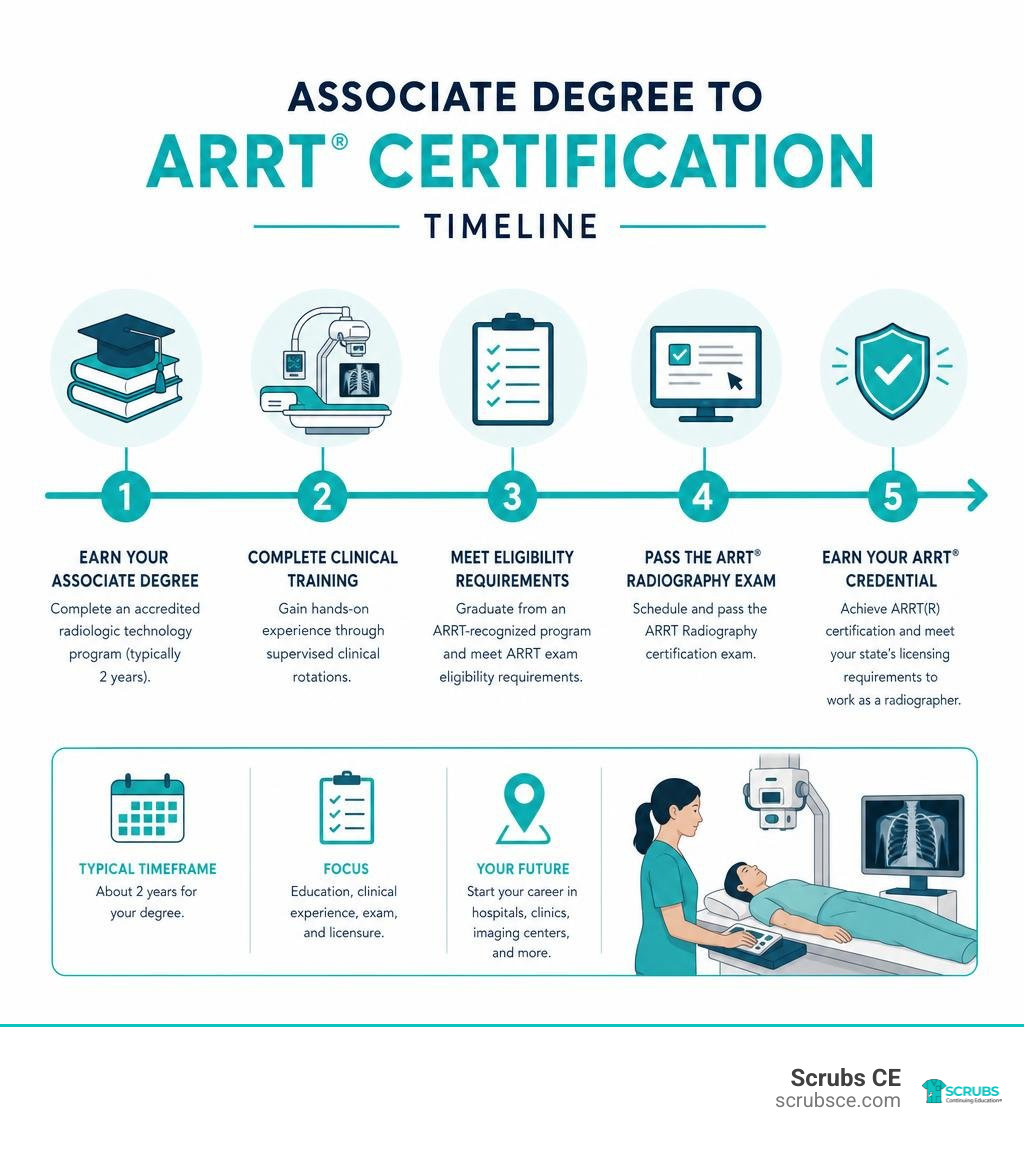
Essential associate in radiologic technology terms:
Understanding the Associate in Radiologic Technology
At its heart, medical imaging is part cutting-edge science and part compassionate art. A radiologic technologist (or radiographer) operates sophisticated diagnostic imaging equipment to capture internal views of human anatomy. These images allow physicians and radiologists to pinpoint fractures, detect acute pathology, monitor chronic illnesses, and guide life-saving interventions.
Every day on the job involves dynamic problem-solving. You evaluate patient mobility, position anatomical structures with millimeter accuracy, adjust technical exposure factors (such as kilovoltage peak and milliampere-seconds), and apply radiation safety protocols to protect everyone in the exam room. If you are wondering what are the requirements to be a radiologic technologist, the primary pathway starts with completing an accredited collegiate degree program alongside hands-on clinical training.
Earning your associate degree qualifies you to execute an extensive scope of diagnostic exams. Beyond standard chest and extremity X-rays, you will learn to perform fluoroscopic gastrointestinal studies, intraoperative surgical C-arm imaging, trauma series, and pediatric radiography. There are at least 5 types of diagnostic imaging tests you qualify to perform as a fully certified radiologic technologist, providing an immediate launchpad into high-demand clinical environments across modern healthcare systems.
Associate of Applied Science (AAS) vs. Associate of Science (AS)
When researching collegiate imaging programs, you will encounter two primary degree designations: the Associate of Applied Science (AAS) and the Associate of Science (AS). Both pathways fully satisfy the primary educational eligibility standards established by the AMERICAN REGISTRY OF RADIOLOGIC TECHNOLOGISTS® (ARRT®), but their curricular designs serve slightly different long-term academic goals.
- Associate of Applied Science (AAS): This degree is structured as a technical, workforce-ready pathway. The bulk of the coursework focuses on core radiography sciences, imaging physics, equipment operation, and hospital-based clinical practicums, paired with a foundational set of general education courses. An AAS is ideal for students who want immediate, hands-on clinical immersion and direct entry into the workforce upon graduation.
- Associate of Science (AS): This academic degree balances technical radiography coursework with a broader slate of transferable general education courses in higher-level mathematics, natural sciences, and humanities. An AS is often preferred by students who plan to transition seamlessly into a four-year Bachelor of Science in Radiologic Sciences or Healthcare Administration down the road.
Reviewing a comprehensive radiologic technology degree curriculum illustrates how both formats blend foundational classroom theory with sequential hospital practicums.
Program Length, Credit Hours, and Tuition Costs
Most associate-level radiography programs take roughly 24 months (spanning 5 to 6 consecutive full-time semesters) to finish. The overall academic load generally ranges between 66 and 93.5 credit hours, depending on regional general education mandates and institutional clinical structures.
Tuition costs vary significantly between public community colleges, regional state universities, and private institutions. Public community colleges offer exceptional affordability, especially for in-district residents, while private or accelerated programs charge higher tuition in exchange for structured cohort scheduling or specialized campus lab suites.
| Institution | Degree Type | Total Credit Hours | Estimated Duration | Key Highlight / Estimated Tuition Metric |
|---|---|---|---|---|
| Dallas College | AAS | ~66 credits | 2 years (5 semesters) | ~$4,554–$5,940 in-county tuition; 93% ARRT® 5-yr pass rate |
| Maricopa Community Colleges | AAS | 84–93.5 credits | 9 terms (incl. prerequisites) | Comprehensive curriculum; $66,600 avg. state wage |
| Kent State University | AAS | 66 credits | 2 years (6 clinical rotations) | JRCERT-accredited; robust multi-campus clinical network |
| Oklahoma State University-OKC | AAS | 68 credits | 5 semesters | Sequential cohorts; state critical occupation pathway |
| Southern Illinois University Carbondale | AAS | 67 credits | 2 years | Integrated 2+2 advanced modality specialty options |
| Mercy College of Health Sciences | AS | 78 credits | 6 semesters | Hybrid didactic format; 100% 5-yr job placement rate |
| Keiser University | AS | 90 credits | 24 months | Fast-track 4-week course terms; 40-hr clinical weeks |
| Allen College | AS | 80 credits | 2 years (year-round) | 58 core credits + 22 gen ed; seamless bachelor’s bridge |
Admissions, Prerequisites, and Accreditation Standards
Gaining entry into an accredited radiography program is a competitive process. Because clinical healthcare affiliates restrict student numbers to maintain strict 1:1 supervision ratios during patient exams, programs accept limited cohorts—often 15 to 25 students per annual cycle from applicant pools that can exceed 100 to 200 candidates.

Admissions Requirements for an Associate in Radiologic Technology
To build a competitive admissions file, prospective students must fulfill specific academic and administrative benchmarks prior to the program application deadline:
- Prerequisite College Coursework: Completion of foundational general education courses with a grade of “C” or better (many competitive programs require a cumulative prerequisite GPA of 2.75 to 3.0 or higher). Standard prerequisites include:
- Human Anatomy & Physiology I & II (with on-campus laboratory components)
- College Algebra or higher-level statistics
- English Composition I
- Medical Terminology
- Introductory Physics or General Chemistry
- Clinical Job Shadowing: Completing 4 to 8 documented observation hours inside an active hospital Radiology department or outpatient imaging center to confirm your understanding of the profession.
- Admissions Testing & Interviews: Submitting scores from standardized allied health entrance examinations (such as the HESI A2 or TEAS) and attending a formal interview with program faculty.
- Clinical Health and Background Clearances: Passing a comprehensive criminal background check, multi-panel urine drug screening, CPR certification through the American Heart Association (Basic Life Support for Healthcare Providers), and up-to-date immunizations (including Hepatitis B, MMR, Varicella, Tetanus, and TB testing).
When applicant pools feature dozens of equally qualified candidates, institutions utilize either a competitive merit-points ranking system or a computerized statistical lottery selection model to award available cohort seats.
Program Accreditation and ARRT® Eligibility
Accreditation protects your educational investment. When comparing colleges, prioritize institutions recognized by programmatic accrediting agencies—most notably the Joint Review Committee on Education in Radiologic Technology (JRCERT).
JRCERT is the premier programmatic accrediting agency recognized by the Council for Higher Education Accreditation (CHEA) and the U.S. Department of Education for radiography education. An 8-year accreditation award reflects superior educational quality, structured clinical safety benchmarks, and consistent graduate board performance. Enrolling in a JRCERT accredited radiologic technology program ensures your clinical training aligns with national credentialing expectations.
To sit for national board exams, candidates must satisfy formal ARRT® degree requirements. The ARRT® mandates that candidates successfully finish an approved, accredited educational program and hold at least an associate degree (in any field, though earning your degree directly in radiologic technology is the most straightforward route). Reviewing a comprehensive guide to radiologic technologist certification requirements clarifies how institutional and programmatic accreditations safeguard your eligibility.
Core Curriculum and Clinical Training Breakdown
Radiography education blends rigorous classroom theory, hands-on campus laboratory simulation, and immersive hospital clinical rotations. You cannot simply read about imaging physics—you must apply those concepts in energized X-ray suites using phantoms before touching real patients.
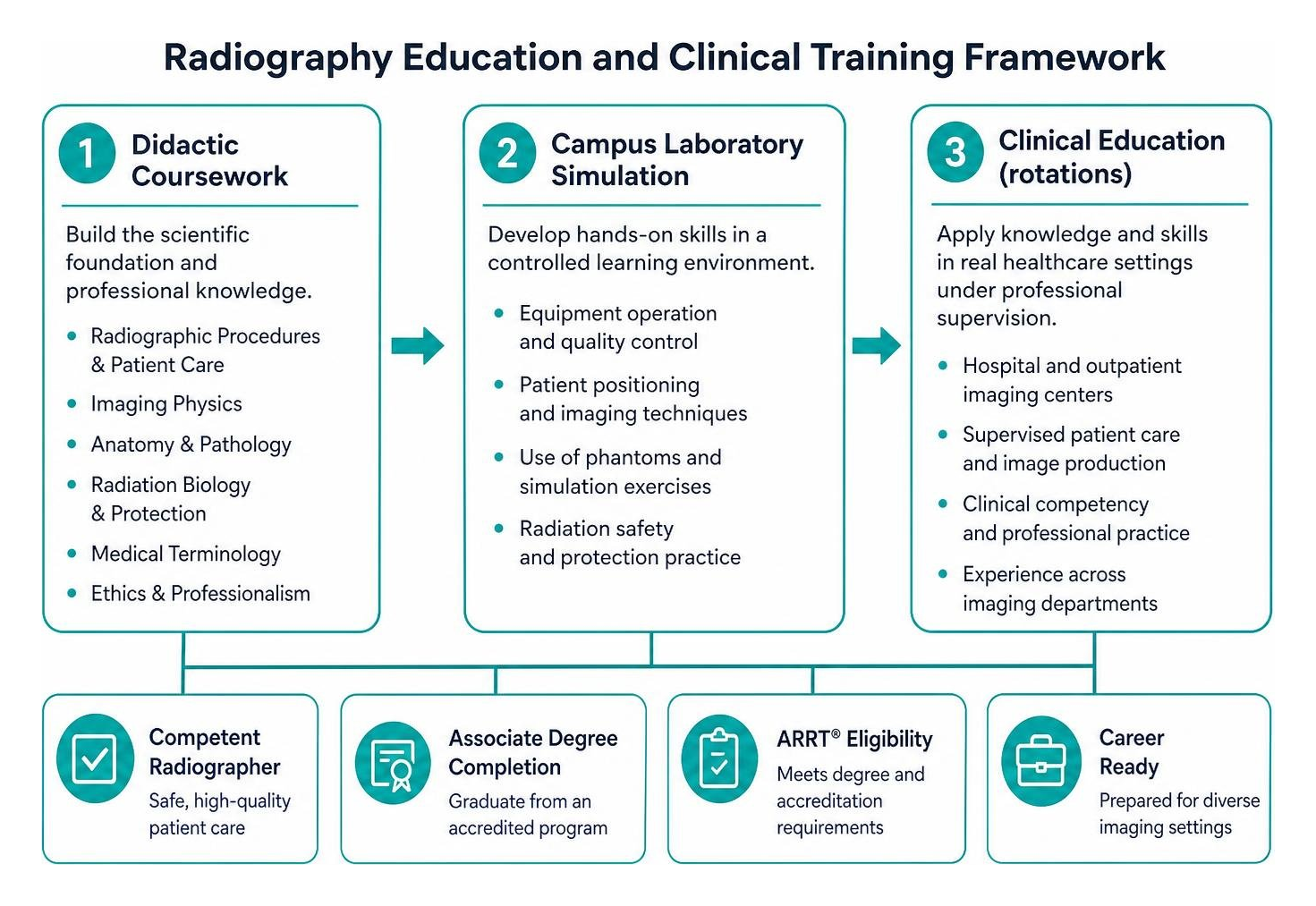
Didactic Coursework and Radiation Safety
Your academic coursework establishes the scientific foundation needed to produce diagnostic medical images safely:
- Radiographic Procedures & Patient Care: Step-by-step patient positioning, anatomical landmark palpation, immobilizer usage, sterile technique, vital sign monitoring, and medical emergency responses.
- Radiation Physics & Equipment Operation: The atomic physics of X-ray production, direct digital radiography (DR), computed radiography (CR) photostimulable phosphor plates, and Picture Archiving and Communication Systems (PACS).
- Radiobiology & Radiation Protection: Biological effects of ionizing radiation at the cellular level, occupational dose limits, patient shielding protocols, and strict adherence to ALARA (“As Low As Reasonably Achievable”) principles.
- Radiographic Pathology & Image Critique: Identifying anatomical abnormalities on radiographs, analyzing image contrast, spatial resolution, and artifact causes, and determining necessary technical adjustments without repeating unnecessary radiation exposure.
Hands-On Clinical Rotations and Competency Tracking
Clinical rotations bridge the gap between classroom textbooks and live hospital environments. Students spend between 24 and 40 hours per week embedded inside regional trauma centers, community hospitals, surgical suites, and orthopedic clinics.
Under the direct supervision of registered staff technologist preceptors, you will progress through structured clinical phases:
- Passive Observation: Shadowing registered technologists during routine exams and learning departmental workflow, equipment sanitation, and hospital electronic health record systems.
- Assisted Performance: Handling patient transfer, setting technical console parameters, placing digital image receptors, and aligning the X-ray tube under direct 1:1 guidance.
- Documented Clinical Competency: Performing diagnostic procedures independently while a certified clinical instructor evaluates positioning accuracy, radiation safety practices, and image quality.
- Advanced Rotations: Rotating through specialized areas including trauma emergency departments, operating room fluoroscopy (C-arm guidance during orthopedic fracture reductions), mobile bedside radiography in intensive care units, and pediatric suites.
All medical imaging professionals: what you need to know is that ARRT® certification requires mastering dozens of mandatory and elective clinical competencies across chest, abdominal, musculoskeletal, spine, skull, and contrast-enhanced fluoroscopic studies prior to graduation.
Career Outlook, Salaries, and Post-Primary Pathways
A career in radiologic technology provides exceptional stability, versatile work settings, and rapid entry into the healthcare workforce. Diagnostic imaging is integral to acute triage and elective diagnosis, meaning trained technologists remain in consistent demand across the country.
According to long-term projections from the U.S. Bureau of Labor Statistics, employment for radiologic and MRI technologists is projected to grow steadily over the coming decade, generating thousands of new openings annually to support aging patient populations and expanding outpatient imaging centers.
| Imaging Modality / Specialization | National Median Annual Salary | Projected Job Outlook | Typical Entry Educational Pathway |
|---|---|---|---|
| Radiologic Technologist (R.T.(R)) | $77,660 | Steady (+4% to +6%) | Associate Degree (AAS or AS) |
| Computed Tomography (CT) Technologist | $82,000–$88,000 | Fast (+8%) | Associate + Post-Primary Certification |
| Magnetic Resonance Imaging (MRI) Tech | $88,180 | Fast (+7% to +15%) | Associate Degree + ARRT® Post-Primary |
| Diagnostic Medical Sonographer (Ultrasound) | $89,340 | Much faster (+13%) | Specialized Associate or Certificate |
| Radiation Therapist | $101,990 | Steady (+4%) | Dedicated AS/BS in Radiation Therapy |
| Medical Dosimetrist | $138,110 | Steady (+5%) | Post-Baccalaureate Certificate / Master’s |
Degree Pathways: Associate in Radiologic Technology vs. Bachelor’s Degrees
An associate degree is the golden standard for entering radiography practice quickly and economically. However, if your long-term career ambitions include hospital administration, clinical research, university teaching, or departmental management, earning an advanced degree can unlock substantial upward mobility.
Many universities maintain formal 2+2 articulation agreements with community college radiography programs. These transfer pathways allow you to roll all 66+ credits from your associate degree directly toward a Bachelor of Science in Radiologic Sciences, Health Sciences, or Medical Imaging Supervision and Leadership. This flexible progression lets you work full-time as a credentialed radiographer earning competitive wages while finishing your upper-division leadership coursework online.
Post-Primary Certification in Advanced Modalities
Once you graduate with your associate degree and earn primary ARRT® credentials in Radiography (R.T.(R)), you establish the prerequisite foundation needed to cross-train into advanced imaging modalities via post-primary certification pathways:
- Computed Tomography (CT): Performing high-speed, cross-sectional volumetric scans in emergency trauma and diagnostic oncology suites.
- Magnetic Resonance Imaging (MRI): Operating multi-Tesla magnetic field scanners to generate detailed soft-tissue images of neurological, musculoskeletal, and vascular systems without ionizing radiation.
- Mammography (M): Specializing in low-dose breast imaging, diagnostic screenings, and stereotactic biopsy guidance.
- Vascular-Interventional Radiography (VI) / Cardiac Interventional (CI): Assisting interventional radiologists and cardiologists in catheterization labs during angioplasties, stent placements, and embolizations.
Pursuing post-primary credentials broadens your clinical expertise and significantly elevates your earning potential. To maintain active registration and document required structured education hours for post-primary board exams, imaging specialists rely on our comprehensive Radiology tech CE credits complete guide.
Certification, Licensure, and Continuing Education
Earning your associate degree is a monumental academic milestone, but you cannot legally take independent diagnostic X-rays on human patients until you secure professional certification and state licensure.
ARRT® Examination and State Licensure
The national standard for professional radiographers in the United States is governed by the AMERICAN REGISTRY OF RADIOLOGIC TECHNOLOGISTS®.
To obtain your primary credential in Radiography—designated as R.T.(R)(ARRT®)—you must complete three essential steps:
- Educational Verification: Successfully finish your accredited associate degree program, mastering all mandatory didactic coursework and clinical competency evaluations endorsed by your Program Director.
- ARRT® Ethics Review: Demonstrate good moral character by clearing background disclosures. Any past misdemeanor or felony convictions, academic disciplinary actions, or military discharges must be reported and reviewed by the ARRT® ethics committee.
- National Certification Exam: Pass the comprehensive computer-based ARRT® Radiography examination, which assesses your knowledge across Patient Care, Safety (Radiation Physics and Radiobiology), Image Production, and Radiographic Procedures.
Once you receive your Candidate Status Report and pass the ARRT® exam, you must check local state regulations. Over 75% of states require a specific state license to practice medical imaging. For instance, technologists practicing in the Sunshine State must fulfill the specific requirements governing a radiologic technologist license Florida through the Florida Department of Health.
To keep your credentials in good standing throughout your career, the ARRT® mandates completing 24 approved continuing education (CE) credits every two-year biennial renewal cycle, alongside a 10-year Continuing Qualification Requirements (CQR) assessment. You can explore structured options through our dedicated radiologic technologist continuing education credits catalog to meet state and national mandates smoothly.
Frequently Asked Questions About Radiologic Technology Degrees
Can I earn an associate degree in radiologic technology online?
No accredited radiography program can be completed 100% online. Because radiologic technology requires precise physical patient positioning, radiation safety adherence, and hands-on tactile manipulation of heavy medical machinery, clinical training must occur in person.
However, several institutions offer accredited hybrid associate programs. In a hybrid format, didactic classroom lectures (such as medical terminology, pathology, and healthcare law) are delivered through asynchronous online modules, while skills labs, positioning classes, and hospital clinical practicums take place at campus simulation suites and regional clinical affiliates.
What is the national ARRT® pass rate for associate radiography graduates?
The JRCERT establishes an institutional quality benchmark requiring accredited radiography programs to maintain a minimum 5-year average first-attempt ARRT® board pass rate of 75%.
High-performing associate degree programs regularly outperform this baseline, posting 5-year average credentialing pass rates between 90% and 100%. When evaluating prospective colleges, always review their published Program Effectiveness Data to inspect their historical first-attempt examination pass rates, program completion percentages, and graduate employment rates.
How do I maintain my ARRT® credential after graduation?
Maintaining your R.T.(R)(ARRT®) credential requires fulfilling three ongoing compliance standards:
- Annual Registration Renewal: Submitting your annual ARRT® renewal fee and answering mandatory compliance and ethics renewal questions.
- Biennial Continuing Education (CE): Earning 24 approved Category A or A+ CE credits every two years. Technologists satisfy this requirement efficiently through self-paced, accredited e-learning platforms using comprehensive resources outlined in our radiologic technologist CE complete guide.
- 10-Year CQR Process: Completing the Continuing Qualification Requirements (CQR) process every decade, which includes a professional profile review, a structured self-assessment, and targeted CE assignments to address any identified knowledge gaps.
Staying proactive with your radiography CE credits ensures your clinical knowledge remains aligned with evolving medical imaging technologies.
Conclusion
An associate in radiologic technology is one of the most reliable, rewarding, and cost-effective pathways into the modern healthcare sector. In just two years, you can transition from foundational college science courses to operating multi-million-dollar medical imaging systems in acute trauma centers, outpatient clinics, and surgical operating rooms.
With strong graduate job placement rates, competitive starting compensation, and clear pathways to cross-train into advanced imaging modalities like CT, MRI, and Interventional Radiography, this degree offers lifelong career flexibility.
Once you graduate and earn your national credentials, we are here to support your professional journey. At Scrubs CE, our mission is to provide medical imaging professionals with affordable, accredited, and 100% self-paced continuing education courses that make license renewal simple and stress-free.
Explore our full catalog of accredited Radiology CE Courses to fulfill your biennial requirements, expand your clinical expertise, and advance your medical imaging career with confidence.

Shockingly Easy Ways to Earn Your Pediatric and CT Imaging CE Credits
Why X Ray Tech CE CT Imaging Credits Matter for Your License and Career
If you work in x ray tech CE CT imaging, here’s what you need to know right away:
Quick Answer: CT Imaging CE Requirements at a Glance
| Requirement | Details |
|---|---|
| Credits needed | 24 Category A or A+ CE credits per biennium |
| Renewal cycle | Every 2 years (based on birth month) |
| CT post-primary certification | 16 structured education (SE) credits required |
| Approved credit type | ASRT®-approved Category A or A+ activities |
| Who sets the rules | AMERICAN REGISTRY OF RADIOLOGIC TECHNOLOGISTS® (ARRT®) plus your state board |
Keeping your Radiology credentials current is not optional — it is a career requirement. And for CT technologists, it comes with a specific set of rules that go beyond general radiography CE.
Most radiologic technologists need to complete 24 approved CE credits every two years just to stay registered. Add state licensing rules on top of that, and finding the right courses — ones that count toward both ARRT® and your state board — can feel overwhelming, especially with a demanding work schedule.
The good news? The right CT-specific CE courses can satisfy multiple requirements at once, saving you time and money.
I’m Zita Ewert, and I’ve spent years helping radiologic technologists navigate the often confusing world of x ray tech CE CT imaging requirements through my work at SCRUBS Continuing Education®. In the sections below, I’ll walk you through exactly what you need, what counts, and how to get it done efficiently.
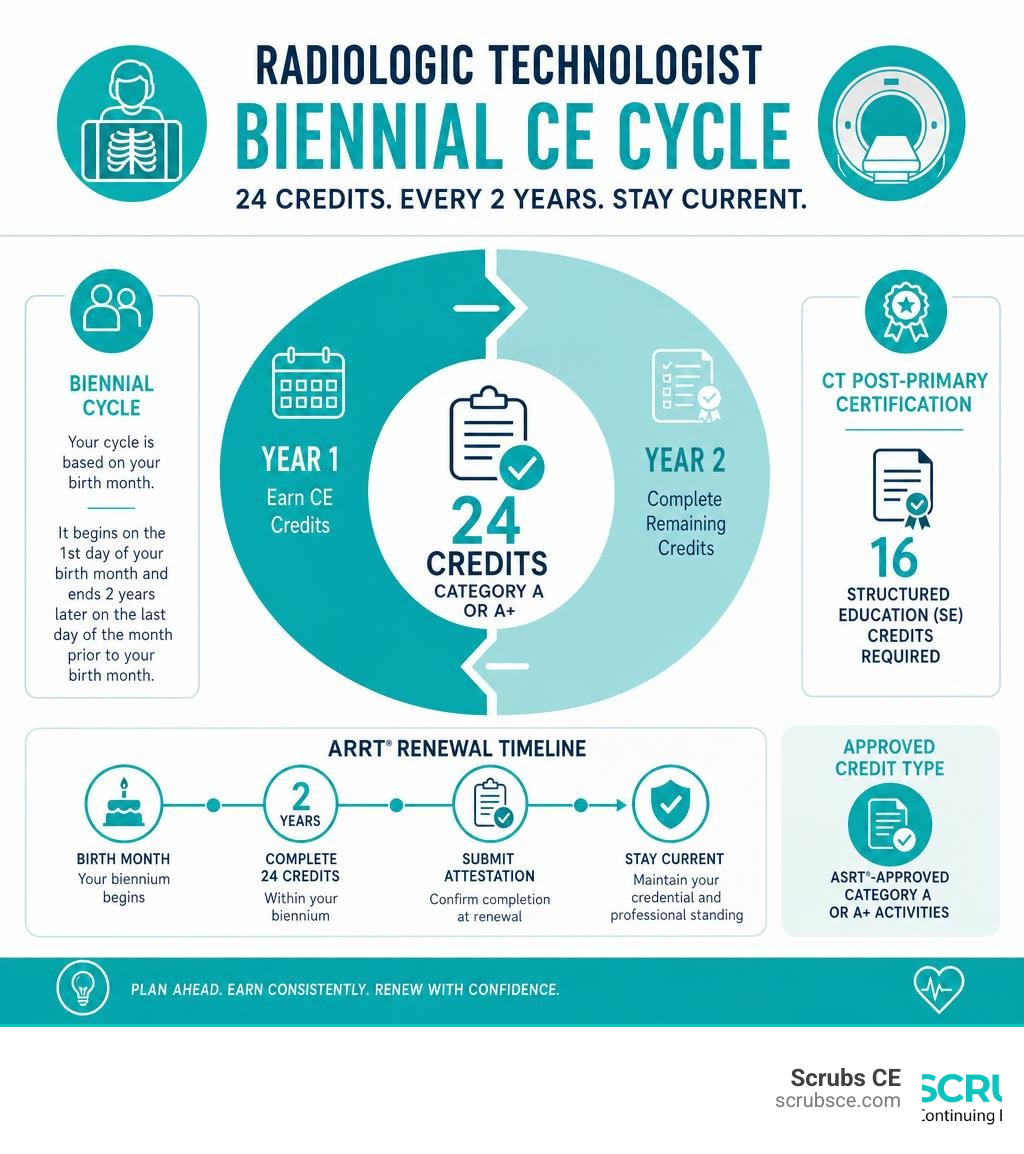
Navigating ARRT® Requirements for X Ray Tech CE CT Imaging
To maintain your professional standing, the AMERICAN REGISTRY OF RADIOLOGIC TECHNOLOGISTS® (ARRT®) requires registered technologists to complete 24 continuing education credits every two years. This two-year window is known as your biennium. Your biennium is tied directly to your birth month, beginning on the first day of your birth month and ending two years later on the last day of the month prior to your birth month.
For those specializing in Computed Tomography (CT), these credits are not just a regulatory hurdle; they are an opportunity to sharpen your clinical skills. Whether you are already registered in CT or are cross-training from general radiography, selecting targeted CT courses helps you stay at the forefront of the industry.
If you are looking for a comprehensive roadmap to guide your professional development, our Computed Tomography CE Complete Guide outlines how these credits fit into your overall career trajectory. Understanding these guidelines protects your license and ensures you remain compliant with the latest imaging standards. To learn more about the specific career benchmarks you must hit, review our detailed breakdown of CT Technologist Requirements.
Understanding Category A vs Category A+ Credits
When searching for x ray tech CE CT imaging courses, you will frequently see credits labeled as either Category A or Category A+. Understanding the difference is crucial for planning your professional development:
- Category A Credits: These are the standard credits required by the ARRT®. To qualify as Category A, the educational activity must be approved by a Recognized Continuing Education Evaluation Mechanism (RCEEM), such as the ASRT®.
- Category A+ Credits: These credits undergo the same rigorous evaluation process but are specifically approved for advanced modalities, including CT, MRI, and ultrasound.
While the ARRT® accepts Category A credits for most radiologic technologists, some state boards or advanced registries prefer or require Category A+ credits for specialized imaging roles. Fortunately, Category A+ credits are fully accepted for your standard 24-credit biennium requirement. To find courses that carry these specialized designations and keep your record spotless, explore our dedicated options for CT CEU Credits.
State-Specific Mandates and Advanced Credentials
While the ARRT® sets the baseline national standard, individual state licensing boards often enforce additional regulations. If you practice in states like California, Florida, or Texas, you must ensure your chosen CE courses satisfy both national and state-level mandates.
For instance, some states require specific hours dedicated to radiation safety, digital radiography, or fluoroscopy. Failing to meet these state-specific sub-requirements can delay your license renewal, even if you have completed 24 general Category A credits. To find the best educational pathways that satisfy these dual requirements, check out our guide on the Best CE for CT Technologists.
To help you visualize how these requirements differ, we have compiled a quick comparison table:
| State | General CE Credits Required | State-Specific Sub-Requirements | Audit & Reporting Process |
|---|---|---|---|
| California | 24 credits every 2 years | Must include 4 credits in digital radiography; specific requirements for fluoroscopy permit holders | Managed by California RHB; certificates must be retained for 4 years |
| Florida | 24 credits every 2 years | Personal development is capped at 3 credits; remaining credits must be technical | Reported monthly to Florida DOH-BRC; self-reporting required |
| Texas | 24 credits every 2 years | Must be approved by the Texas Medical Board; direct credit rules apply | Subject to random audit; certificates must be kept on file |
State-Specific Rules for X Ray Tech CE CT Imaging
Navigating state licensing boards requires close attention to detail. Let’s look at the specific rules for the three largest states:
- California Radiologic Health Branch (RHB): California requires Certified Radiologic Technologists (CRTs) to earn 24 Category A or A+ credits. If you hold a limited permit or a fluoroscopy permit, you must meet additional targets. Crucially, California mandates that at least 4 of your 24 credits focus on digital radiography.
- Florida Department of Health (DOH): Florida technologists must complete 24 credits, but the state limits non-technical “personal development” courses to a maximum of 3 credits. The rest must directly relate to clinical imaging, radiation protection, or equipment operation.
- Texas Medical Board (TMB): Texas requires 24 hours of continuing education, which must be approved by recognized organizations. They accept ARRT®-approved Category A and A+ credits, provided they directly cover the clinical application of medical radiation.

Core Topics Covered in CT Continuing Education
Continuing education in CT is designed to keep you safe, efficient, and highly accurate. High-quality CE courses focus on several core pillars of the modality:
- Radiation Safety and Dose Reduction: With the rise of multi-slice CT scanners, managing patient dose is more critical than ever. Courses cover advanced dose-reduction techniques such as automatic exposure control (AEC), tube current modulation, automatic voltage selection, and iterative reconstruction algorithms.
- Image Production and Quality: You will study how scan acquisition parameters affect spatial resolution, contrast resolution, and image noise. Understanding how to identify and resolve common artifacts (such as beam hardening or metal streaking) is essential for diagnostic-quality imaging.
- Cross-Sectional Anatomy and Pathology: CT imaging requires a deep understanding of human anatomy across axial, sagittal, and coronal planes. Courses review normal anatomical landmarks and pathological conditions of the head, neck, chest, abdomen, pelvis, and musculoskeletal systems.
- Imaging Protocols and Contrast Administration: Selecting the right scan protocol based on patient indications and managing contrast media safety (including injection rates and extravasation protocols) are critical to patient care.
If you are looking to transition into this modality or require structured academic preparation, you might consider formal programs like the Online Certificate in Computed Tomography .
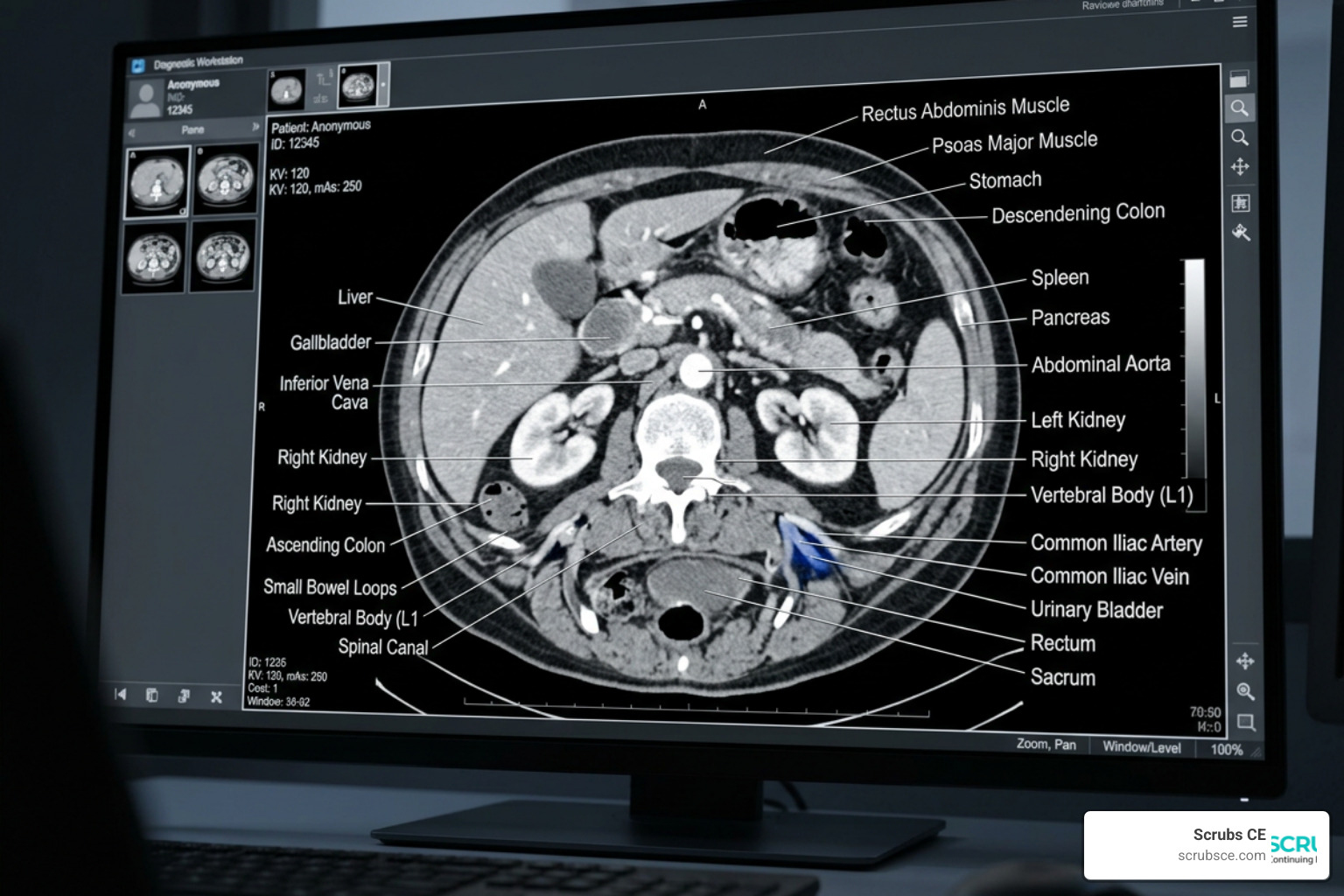
Choosing the Best Online X Ray Tech CE CT Imaging Courses
For busy imaging professionals, taking time off for in-person seminars is rarely practical. Online and home-study CE courses offer unmatched convenience, allowing you to learn at your own pace and complete exams on your own schedule.
When choosing online courses, look for providers that offer instant grading and downloadable certificates of completion. This ensures you can meet last-minute renewal deadlines without stress.
At SCRUBS Continuing Education®, we offer several popular, self-paced options designed specifically for CT professionals. For a complete textbook-based course that covers the core principles of the modality, our Computed Tomography for Radiologic Technologists course is an excellent choice.
Depending on your study preferences, we offer multiple formats to fit your needs:
- If you already have the textbook and only need to take the exam, you can choose our Computed Tomography for Technologists Test Only Emailed or Computed Tomography for Technologists Test Only Mailed options.
- For alternative CT-focused educational packages, explore our Computed Tomography Test Only Emailed CH or Computed Tomography Test Only Mailed CH exams.
- If you prefer a fully digital experience, the Computed Tomography E-Book Test CH provides instant access to your reading material and online testing.
To browse our entire catalog of advanced imaging courses, visit our Category Computed Tomography Certification page.
Frequently Asked Questions About CT CE
What is the difference between Category A and Category A+ credits?
Category A credits are general radiography continuing education credits approved by an ARRT®-recognized RCEEM (such as the ASRT®). Category A+ credits are specifically evaluated and approved for advanced modalities like CT, MRI, or Mammography. Both types count toward your standard 24-credit biennium requirement, but Category A+ credits are highly recommended for technologists working in specialized imaging departments.
How does structured education differ from biennial CE?
Biennial CE refers to the 24 credits that almost all radiologic technologists must earn every two years to maintain their active registration. Structured education, on the other hand, is a specific requirement for technologists pursuing a post-primary credential (such as earning a CT credential after initial radiography certification). The ARRT® requires 16 hours of structured education covering specific content outlines before you can sit for the post-primary CT registry exam.
How often do I need to renew my CT CE credits?
You must report your CE credits every two years (your biennium). Your specific deadline is always the last day of your birth month. As of June 2026, the ARRT® and state boards strictly enforce these deadlines. Technologists who fail to complete their 24 credits on time may be placed on CE probation, which carries additional fees and a strict six-month window to make up the missing credits.
Conclusion
Staying compliant with your x ray tech CE CT imaging requirements does not have to be a stressful ordeal. By selecting high-quality, self-paced online courses, you can easily fulfill your 24 biennial Category A or A+ credits while expanding your clinical knowledge in dose reduction, cross-sectional anatomy, and advanced CT protocols.
At SCRUBS Continuing Education®, we are committed to providing affordable, comprehensive e-learning solutions that help you protect your license and excel in your career. All our courses offer instant online testing and immediate certificate generation, making your renewal process as smooth as possible.
Ready to get started on your credits today? Explore our full library of continuing education courses for x-ray technologists and complete your requirements on your own schedule!
Demystifying the MRI Tech Test and How to Ace It
What You Need to Know Before Taking the MRI Tech Test

The MRI tech test is the certification exam you must pass to work as a licensed Magnetic Resonance Imaging technologist in the United States. Here is a quick overview of what to expect:
The two main MRI certification exams:
| Exam | Administered By | Total Questions | Results |
|---|---|---|---|
| ARRT® MRI Registry | AMERICAN REGISTRY OF RADIOLOGIC TECHNOLOGISTS® via Pearson VUE | 230 (200 scored + 30 pilot) | Provided after testing |
| ARMRIT MRI Exam | American Registry of Magnetic Resonance Imaging Technologists via PSI | Computer-based | Immediate |
The four content areas on the ARRT® MRI exam:
- Image Production – 106 questions (53% of the exam)
- Procedures – 57 questions (28.5%)
- Safety – 21 questions (10.5%)
- Patient Care – 16 questions (8%)
Passing this exam is a major career milestone, but it can feel overwhelming. The physics alone — from the Larmor equation to K-space — is dense. Add in safety protocols, clinical procedures, and state licensing rules, and it is a lot to keep straight.
The good news? The exam has a clear blueprint. When you know exactly what is tested and how many questions each section carries, studying becomes much more focused and manageable.
This guide walks you through everything: the two certification pathways, exam content, safety topics, clinical requirements, and how to maintain your credentials after you pass.
I’m Zita Ewert, and I lead Scrubs Continuing Education, where I have spent years helping imaging professionals navigate the MRI tech test and the continuing education requirements that follow. My team and I work directly with the ARRT® and ARMRIT frameworks every day to make sure our courses keep you certified and practice-ready.
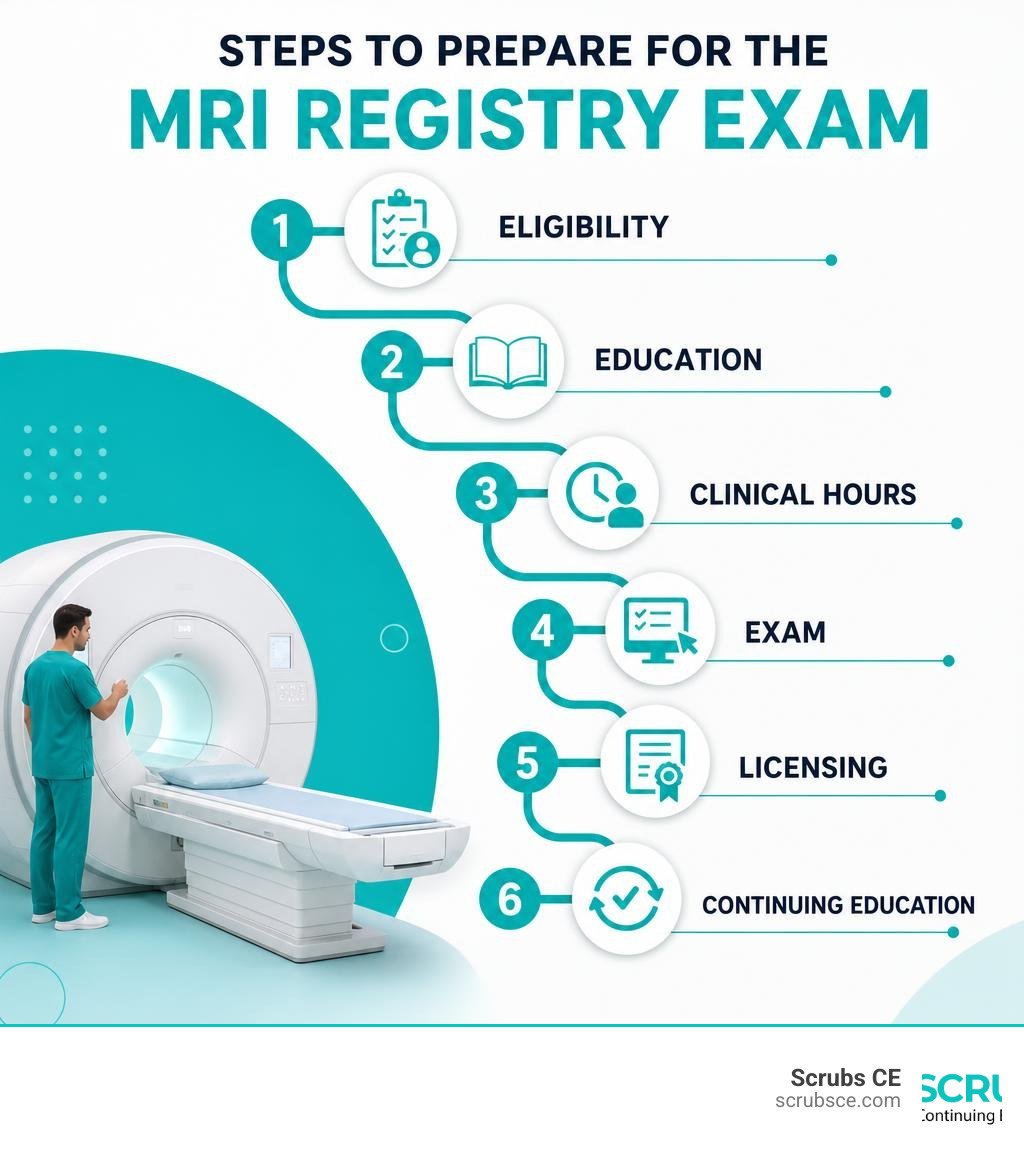
Navigating the ARRT® and ARMRIT MRI Tech Test Pathways

When you decide to pursue a career in magnetic resonance imaging, the first fork in the road is choosing your credentialing body. In the United States, two primary organizations certify MRI technologists: the AMERICAN REGISTRY OF RADIOLOGIC TECHNOLOGISTS® (ARRT®) and the American Registry of Magnetic Resonance Imaging Technologists (ARMRIT).
While both credentials are widely respected, they represent fundamentally different philosophies of medical imaging. The ARRT® views MRI as an advanced specialty that sits within the broader umbrella of Radiology. ARMRIT, on the other hand, was established on the premise that MRI is a highly specialized field utilizing non-ionizing radiation, and therefore should be treated as a distinct specialty entirely separate from traditional Radiology modalities like X-ray.
Choosing between them dictates your educational requirements, clinical training hours, and how you will prepare for your mri tech test. Understanding what each pathway requires will help you determine the best fit for your clinical background and career goals. If you are curious about the day-to-day responsibilities of this profession, you can read more in our What Does an MRI Tech Do Guide.
To help visualize how these two pathways compare, review this structural comparison:
Primary vs. Postprimary Eligibility for ARRT® Certification
For those pursuing certification through the ARRT®, there are two main entry points: the primary eligibility pathway and the postprimary eligibility pathway.
- The Primary Pathway: This is designed for students who are entering the medical imaging field for the first time. Candidates must complete an ARRT®-approved associate degree (or higher) program specifically in MRI. This pathway integrates both the academic coursework and the hands-on clinical requirements into a cohesive, multi-year curriculum.
- The Postprimary Pathway: This is the most common route for established imaging professionals. If you already hold supporting ARRT® credentials in radiography, nuclear medicine technology, radiation therapy, or sonography, you can cross-train into MRI.
The postprimary pathway is also open to professionals holding credentials from other recognized registries. For example, certified sonographers registered through the American Registry for Diagnostic Medical Sonography (ARDMS) or nuclear medicine technologists certified by the Nuclear Medicine Technology Certification Board (NMTCB) can transition into MRI. These candidates can request online account access through the ARRT® portal to begin tracking their requirements.
Regardless of your supporting credential, the postprimary pathway requires you to complete 16 hours of structured education and document extensive clinical experience. To learn more about building this foundational knowledge, check out our guide on MRI Training 101 Learn MRI Basics. You can also view the official Magnetic Resonance Imaging Clinical Competency Requirements clinical competency standards to see exactly what clinical tasks you must perform.
ARMRIT Direct Entry and Cross-Training Requirements
For individuals who do not wish to study traditional ionizing radiation modalities like X-ray, ARMRIT offers a direct entry pathway. Because MRI uses magnetic fields and radiofrequency pulses rather than harmful radiation, ARMRIT argues that requiring students to learn radiography is an unnecessary barrier to entry.
To qualify for the ARMRIT mri tech test, candidates must meet one of the following eligibility criteria:
- Approved Program Graduates: Graduation from an ARMRIT-approved MRI program that includes a minimum of 1,000 hours of clinical MRI experience.
- Cross-Trained Allied Health Professionals: Candidates with an active license or registry in an allied health field (such as nursing, physical therapy, or ultrasound) who have documented at least 1,000 hours of clinical MRI experience under the supervision of a board-certified physician.
- On-the-Job Training (OJT): Historically, up to 90% of MRI technologists were trained on the job. ARMRIT accommodates this through an equivalency clause requiring four years of full-time clinical MRI experience (equivalent to approximately 8,000 hours of hands-on scanning) and a high school diploma or equivalent.
If you are planning to apply for the ARMRIT exam, you can download the official application guidelines directly from the ARMRIT Application Guidelines document to verify your eligibility.
State-Specific Licensing and Career Outlook
Once you pass your mri tech test, you must navigate state-specific licensing laws. While national certification through the ARRT® or ARMRIT is universally demanded by employers, some states require a separate state-level license to practice.
The regulatory landscape varies significantly by state:
- No State License Required: The majority of states do not require a specific state license for MRI technologists, meaning your national ARRT® or ARMRIT certification is sufficient to gain employment.
- Strict State Licensing: States like California (regulated by the California Department of Public Health – CDPH), Texas (regulated by the Texas Medical Board), and New Jersey have rigorous licensing boards. You must submit your national credentials to receive a state license before you can legally operate an MRI scanner.
- Expanding Recognition: States like Washington have recently updated their regulations to explicitly include ARMRIT certification as a valid pathway for state licensure, matching the long-standing acceptance of ARRT® credentials.
The career outlook for MRI technologists is exceptionally strong. According to the Bureau of Labor Statistics, the national median salary for MRI technologists is $88,180 per year, with job demand projected to grow at 6% annually. High-paying states like California and Massachusetts frequently offer salaries exceeding $100,000, making this a highly lucrative specialty. For those looking to maximize their earning potential, traveling contracts offer a fantastic opportunity. Discover how to break into this market with The Ultimate Guide to High-Paying Travel MRI Tech Jobs.
Exam Blueprints: What is Covered on the Registry Exams?
To successfully pass your mri tech test, you must study according to the exam blueprints. Both the ARRT® and ARMRIT exams are highly technical, but they distribute their questions differently. Knowing the exact weight of each section allows you to study smarter, prioritizing high-yield topics over minor details.
Core Content Categories of the ARRT® MRI Tech Test
The ARRT® MRI exam is administered via computer-based testing at Pearson VUE centers. Effective for exams taken after February 1, 2025, the test features exactly 200 scored questions and an additional 30 unscored pilot questions, bringing the total length of the exam to 230 questions. You will have a total of four hours to complete the test.
The scored questions are strictly divided across four content categories:
- Image Production (106 questions – 53% of the exam): This is the largest and most challenging section. It covers the physical principles of image formation, pulse sequences (such as spin echo, gradient echo, and inversion recovery), data acquisition, K-space mapping, image artifacts, and quality control.
- Procedures (57 questions – 28.5% of the exam): This section tests your knowledge of clinical scanning protocols, patient positioning, and cross-sectional anatomy across three regions: Neurological (head, neck, spine), Body (thorax, abdomen, pelvis), and Musculoskeletal.
- Safety (21 questions – 10.5% of the exam): This category focuses on patient screening, managing electromagnetic fields (static, RF, and gradient), and responding to emergencies.
- Patient Care (16 questions – 8% of the exam): This covers basic patient interactions, communication, monitoring, contrast media pharmacology (including checking eGFR and creatinine values to prevent Nephrogenic Systemic Fibrosis), and infection control.
To review the complete, official breakdown of these categories, you can download the Magnetic Resonance Imaging Content Specifications syllabus. If you need structured help mastering these complex physics topics, explore our Online MRI Courses designed to simplify difficult concepts.
What to Expect on the ARMRIT MRI Tech Test
The ARMRIT certification exam is administered via computer-based testing through PSI testing centers, which offer over 1,000 locations globally, as well as remote proctoring options using ExamSoft software.
The ARMRIT exam focuses heavily on treating MRI as a specialized field. The test blueprint covers:
- MRI Physics & Instrumentation: The mechanics of the scanner, gradient coils, RF coils, and the physical behavior of hydrogen protons in a magnetic field.
- Clinical Applications: Choosing the correct pulse sequences and parameters (such as TR, TE, and Flip Angle) to optimize image contrast.
- Bio-Effects and Safety: Managing the biological effects of strong magnetic fields, preventing RF burns, and establishing rigorous screening protocols.
- Cross-Sectional Anatomy: Identifying complex anatomical structures in the axial, sagittal, and coronal planes.
You can download the official candidate handbook and review the full exam outline in the ARMRIT Candidate Handbook document.
High-Yield Safety Concepts and Clinical Competencies
Safety is the single most critical aspect of operating an MRI scanner. Unlike X-ray or CT machines, which only emit radiation when the exposure button is pressed, an MRI scanner’s static magnetic field is always on. This creates a continuous, invisible force that requires constant vigilance.
Crucial MRI Safety Protocols: Ferrous Objects, RF Burns, and Cryogens
When preparing for your mri tech test, you must master three major safety hazards:
1. Ferromagnetic Projectile Hazards
Any object containing iron, nickel, or cobalt can become a high-velocity projectile when brought near the scanner. Severe injuries and fatalities have occurred when oxygen tanks, wheelchairs, or cleaning equipment were pulled into the magnet bore. To manage this risk, facilities are divided into four distinct MR Safety Zones:
- Zone I: Fully accessible to the general public (e.g., the main entrance or waiting room).
- Zone II: The transition zone where patients are greeted and screened under supervision.
- Zone III: The restricted access control room. Only screened patients and MR-personnel are allowed.
- Zone IV: The magnet room itself. Absolutely no unscreened objects or personnel may enter.
Every device or implant must be classified according to FDA labeling guidelines:
| Safety Label | Description | Symbol |
|---|---|---|
| MR Safe | The item poses no hazards in any MR environment (usually non-metallic, plastic, or glass). | Green square |
| MR Conditional | The item can safely enter the scanner room only under highly specific conditions (e.g., field strength, gradient limits). | Yellow triangle |
| MR Unsafe | The item is known to pose hazards in all MR environments (e.g., ferrous oxygen tanks, pacemaker models not cleared for MRI). | Red circle with a diagonal slash |
For more details on managing safety as an assistant or technologist, refer to the Imaging Assistant, Magnetic Resonance Content Specifications document.
2. Radiofrequency (RF) Burns
The radiofrequency pulses used during a scan can cause tissue heating. If a patient’s skin touches the bore of the magnet, or if their hands are clasped creating a closed conductive loop, they can experience severe RF burns. Technologists must use specialized foam pads to insulate the patient and prevent direct skin-to-skin contact. Modern scanners feature larger bores to help reduce claustrophobia and minimize the risk of patients touching the sides. Read more about these safety advancements in MRI Tech in 2025 Bigger Bores and Better Brains.
3. Cryogen Safety and Quench Emergencies
Superconducting MRI magnets use liquid helium (cryogens) cooled to near absolute zero (-452°F) to maintain their magnetic field. A quench is the rapid boil-off of this liquid helium, which causes the scanner to lose its superconductivity and magnetic field.
A quench should only be initiated manually in a life-threatening emergency (e.g., a person is pinned to the magnet by a heavy iron object and is suffocating). If a quench occurs, the helium gas must vent safely outside. If the vent pipe fails, helium gas can fill the magnet room, displacing oxygen and creating an extreme asphyxiation and pressure hazard.
Meeting the 2025-2026 Clinical Competency Requirements
To qualify for the ARRT® mri tech test, candidates must complete a rigorous list of clinical competencies. The ARRT® updated these requirements, and candidates graduating during 2025 or 2026 have the option to use either the older 2020 standards or the new 2025 standards.
Under the 2025-2026 clinical guidelines, candidates must document:
- 7 Mandatory General Patient Care Procedures: Including CPR/Basic Life Support certification, patient transfer, and sterile/aseptic technique.
- 8 Mandatory MRI Safety Requirements: Including screening patients, checking implant safety, and understanding emergency shutdown procedures.
- 17 Mandatory MR Imaging Procedures: Hands-on scans performed on actual patients (e.g., brain, cervical spine, knee, abdomen).
- 11 Elective MR Imaging Procedures: Selected from a list of 30 specialized scans (e.g., MR angiography, temporomandibular joints, breast imaging). Up to 5 of these electives can be performed on healthy volunteers rather than clinical patients.
- 7 Mandatory Quality Control Procedures: Including center frequency, transmitter gain, and spatial resolution checks using a QC phantom.
The ARRT® allows specific tasks, such as venipuncture for contrast administration, to be simulated if an actual patient procedure is unavailable. For instance, the ARRT® officially approves practicing needle sticks on an artificial forearm or even a grapefruit to satisfy the sterile technique simulation requirement!
To view the complete list of mandatory clinical tasks, you can access the official Magnetic Resonance Imaging Clinical Competency Requirements clinical guidelines.
Frequently Asked Questions About the MRI Registry Exam
How many questions are on the ARRT® and ARMRIT exams?
The ARRT® MRI registry exam consists of 230 total questions (200 scored questions and 30 unscored pretest/pilot questions). Candidates are given exactly 4 hours of testing time. The ARMRIT exam is also a comprehensive computer-based test, administered nationally and internationally, focusing entirely on MRI physics, safety, and clinical procedures.
What is the passing score for the MRI registry?
For the ARRT® exam, the passing threshold is a scaled score of 75. This is not a simple percentage (e.g., answering 75% of questions correctly), but rather a scaled score that accounts for the varying difficulty of different exam versions. ARMRIT exams are administered via computer-based testing, and candidates receive their results immediately upon completing the test.
How do I maintain my MRI certification after passing?
Once you pass your mri tech test, the learning doesn’t stop! To maintain your active registry status, you must complete regular continuing education:
- ARRT® Requirements: Certified technologists must complete 24 Category A continuing education (CE) credits every two years (biennial renewal).
- ARMRIT Requirements: Certified technologists must complete 24 Continuing Medical Education (CME) credits specifically focused on MRI topics every three-year renewal period.
Fulfilling these requirements keeps your scanning skills sharp and ensures you remain compliant with state and national licensing boards. To find convenient, self-paced courses that satisfy both registries, check out our CE for MRI Technologists library.
Conclusion
Preparing for the mri tech test is a challenging but highly rewarding journey. Whether you choose the ARRT® or ARMRIT pathway, success comes down to understanding the exam blueprints, mastering high-yield safety concepts, and staying committed to your clinical training.
At Scrubs CE, we are dedicated to supporting your professional development at every stage of your career. We offer convenient, affordable, and self-paced online continuing education courses with instant certificates, helping you meet your licensure requirements and stay ahead in this fast-growing medical specialty.
Ready to launch your career and secure long-term clinical success? Explore The Ultimate Guide to Becoming an MRI Tech and Attracting Success to take your next big step today!

Say Cheese! Your Step-by-Step Florida Dental Radiology License Guide
Why a Florida Dental Radiology License is Essential for Your Career
If you are looking to obtain your Florida Dental Radiology License, the most important thing to know is that the state officially issues a Dental Radiography Certification rather than a traditional license.
Here is the quick, step-by-step path to getting certified so you can legally expose dental X-rays in Florida:
- Step 1: On-the-Job Training: Complete 3 months of continuous, supervised clinical training under a licensed Florida dentist.
- Step 2: Approved Course: Successfully complete a Board-approved dental radiography course within 12 months of finishing your on-the-job training.
- Step 3: Background Screening: Complete a mandatory Livescan electronic fingerprint background check.
- Step 4: Application: Submit Form DH-MQA 1202 online through the state portal along with a non-refundable $35 fee.
Operating dental X-ray equipment without this credential can lead to severe legal and financial penalties for both you and your dental practice. Fortunately, the pathway is straightforward once you know the rules. Unlike a traditional radiologic technologist who must maintain active credentials with the AMERICAN REGISTRY OF RADIOLOGIC TECHNOLOGISTS® (ARRT®), Florida dental radiographers only need to complete this state-level process once.
My name is Zita Ewert, the founder of Scrubs CE, and I have spent years helping imaging professionals navigate complex state rules, including the exact steps to secure a Florida Dental Radiology License. I want to share my regulatory expertise with you today so you can easily bypass the red tape and get certified without any delays.
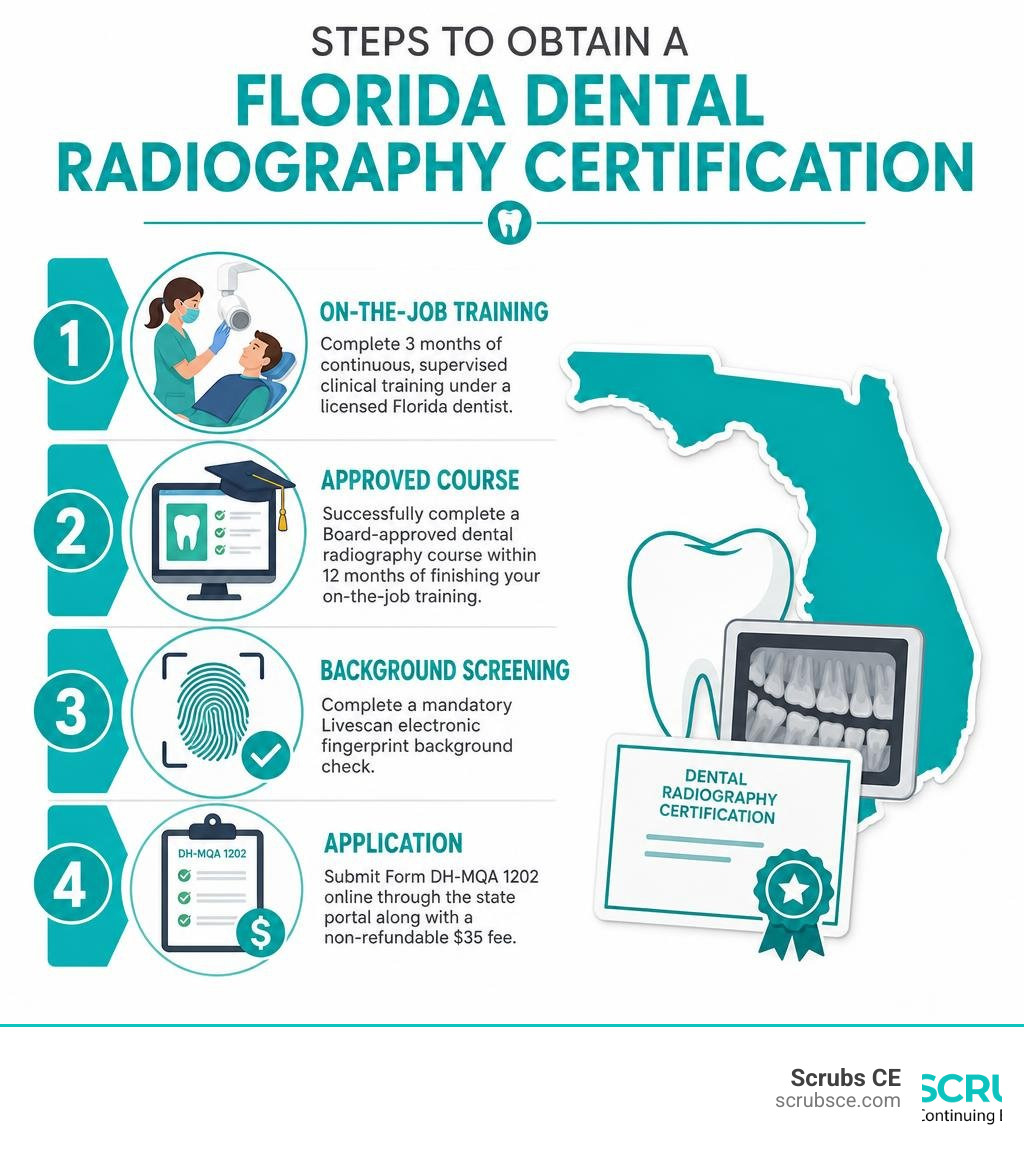
Florida Dental Radiology License terms explained:
- Florida Radiology CEUs
- Florida license radiologic technologist
- Florida Radiology License
Certification vs. Licensure: Do You Need a Florida Dental Radiology License?
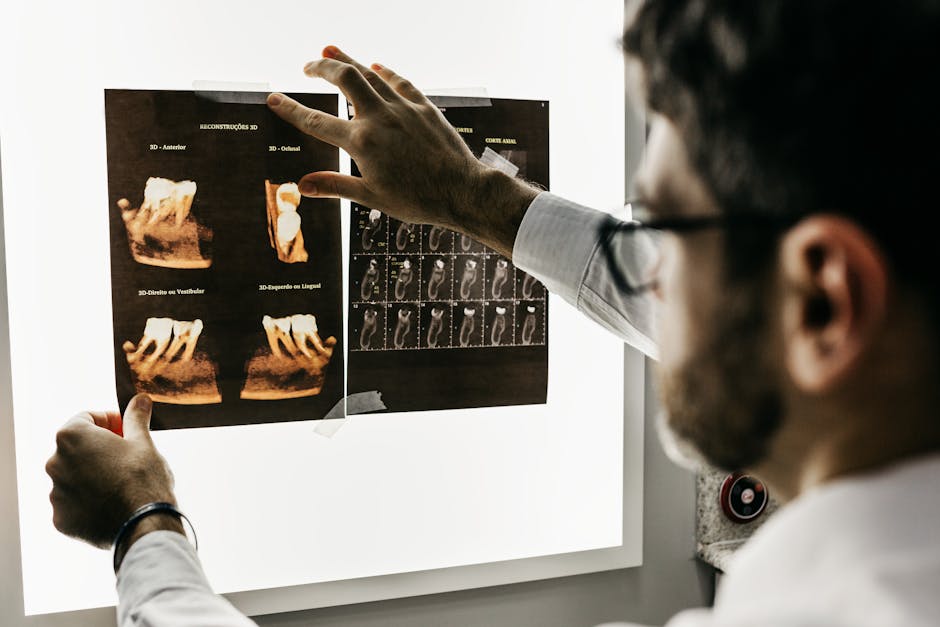
When dental professionals talk about getting a Florida Dental Radiology License, there is often a bit of terminology confusion. In the Sunshine State, the Florida Board of Dentistry does not actually issue a separate “license” to dental assistants. Instead, they grant a formal Dental Radiography Certification.
As a dental assistant, your general scope of practice is highly regulated. While you do not need a license to perform basic chairside duties, you absolutely must hold this state-approved radiography certification to position and expose radiographic film.
Once you receive your official certification number, you are legally permitted to take X-rays under the indirect supervision of a licensed dentist. This means the dentist must diagnose the patient, authorize the radiographs, and be on the premises while you perform the procedure. Without this certification, pushing that exposure button is a violation of state law.
For more on how this fits into the broader landscape of imaging in the state, you can check out our Florida Radiology License Complete Guide or view the official requirements on the Dental Radiographer – Florida Board of Dentistry page.
The Role of the Florida Board of Dentistry
The Florida Board of Dentistry is the state regulatory body responsible for protecting public health and safety. They set the educational standards, handle disciplinary actions, and establish the safety rules that all dental auxiliaries must follow.
When it comes to dental X-rays, the Board enforces strict guidelines to minimize radiation exposure to patients. These rules are codified under Florida law. Specifically, Rule 64B5-9.011 : Radiography Training for Dental Assistants outlines the exact framework for how dental assistants must be trained, supervised, and certified. We must follow these administrative rules to the letter to ensure our applications are approved without delay.
Dental Assistant vs. Certified Radiographer
In a typical Florida dental practice, you will find different levels of dental auxiliaries. A standard dental assistant can assist with suctioning, passing instruments, and mixing materials. However, they cannot legally touch the X-ray machine.
To bridge this gap, an assistant must transition into a certified dental radiographer. Becoming certified is a major career milestone. It expands your daily responsibilities, makes you far more competitive in the job market, and increases your earning potential.
If you want to transition from basic chairside assisting to a certified role, you can read our guide on How to Get a Radiology License in Florida Without the Headache to understand how simple the transition can be when you follow the correct sequence.
Key Requirements for a Florida Dental Radiology License
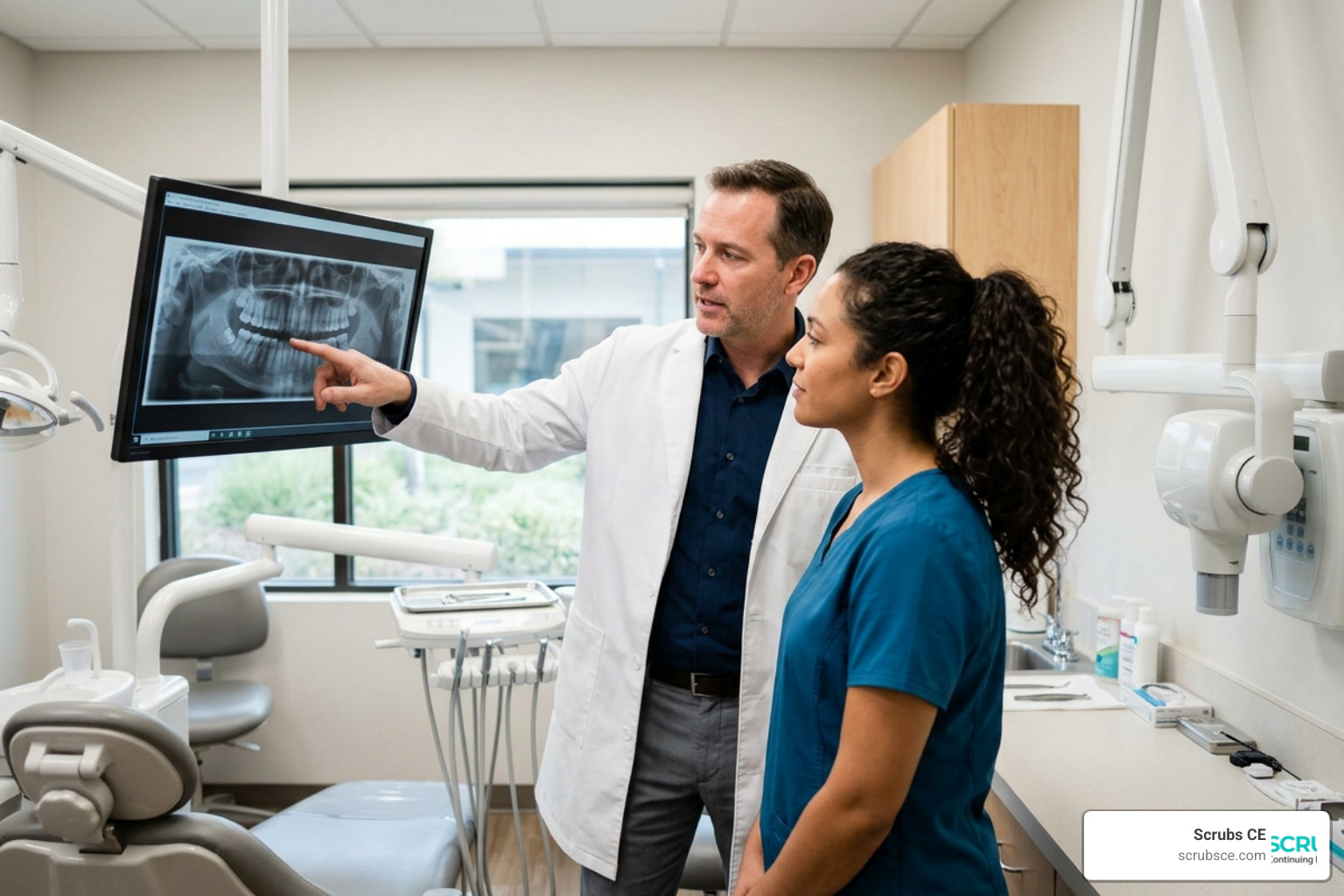
To qualify for your certification, the state of Florida requires a specific hybrid pathway. You cannot simply take an online test and start taking X-rays. The state mandates a combination of hands-on, on-the-job training (OJT) and formal educational coursework.
For those looking at other imaging pathways in the state, you might also find our resource on Everything You Need for a Florida Basic X-Ray License helpful, but for dental assistants, the process is uniquely structured around your employing dental practice.
Step 1: Complete On-the-Job Training for Your Florida Dental Radiology License
The very first step on your journey is completing at least 3 months of continuous on-the-job training. This training must be done under the direct supervision of a Florida-licensed dentist.
During this 3-month clinical period, “direct supervision” means the dentist is physically present in the treatment room, guiding your hand, teaching you how to position the sensor or film, and verifying that you are using proper radiation safety protocols. This hands-on window is where you build your clinical confidence and master real-world positioning.
Step 2: Complete a Board-Approved Radiography Course
Once you have successfully wrapped up your 3 months of on-the-job clinical training, the clock starts ticking. You must complete a Board-approved dental radiography course within 12 months of finishing your OJT. If you miss this 12-month window, your clinical training is no longer valid, and you will have to start the 3-month OJT period all over again!

When selecting a course, you have a few excellent options:
- The FDA Radiography Training Program: Offered by the Florida Dental Association, this is a highly popular hybrid program. It consists of 9 online modules that you can complete at your own pace. The clinical portion is completed right in your own office under your employing dentist’s supervision. The assistant must demonstrate the ability to perform one acceptable full-mouth series of images (including four bitewings) with a maximum of five retakes. The program costs $285 for FDA member offices and $385 for non-FDA members.
- The University of Florida Course: The UF Radiology for Dental Assistants certification course is another premier option. This program costs $499 and provides 14 CEU credit hours.
- CODA-Accredited Programs: If you graduated from a dental assisting program accredited by the Commission on Dental Accreditation (CODA), and your program’s curriculum already included comprehensive radiography training, you may be exempt from needing to take a separate post-OJT course.
The Step-by-Step Application Process and Fees
Once you have completed your 3 months of OJT and passed your Board-approved course, you are ready to submit your formal paperwork.
The official document required is Form DH-MQA 1202 (the Dental Radiography Certification Application). You can view or download the paper version here: BM – Dentistry Radiographer Certificate – Livescan Clean Copy August 2025. However, applying online is highly recommended to speed up processing times.
How to Apply for Your Florida Dental Radiology License Online
We recommend using the Florida Department of Health’s online MQA (Medical Quality Assurance) Services Portal. It is faster, more secure, and allows you to track your application status in real-time.
Here is the step-by-step submission process:
- Create an Account: Visit the MQA Services Portal and register for an applicant account.
- Fill out Form DH-MQA 1202: Complete all personal, employment, and training details.
- Dentist Verification: Your supervising dentist must sign the certification section of the application, verifying that you successfully completed the 3 months of continuous clinical OJT under their direct supervision.
- Upload Your Certificates: Upload a digital copy of your Board-approved radiography course completion certificate.
- Pay the Fee: Submit the $35.00 non-refundable application fee online via credit or debit card. (Active-duty military, veterans, and their spouses may have this fee waived or reduced through the state’s VALOR program).
By law, the Florida Board of Dentistry must review your initial application within 30 days of submission. Once your application is approved and issued, you can expect to receive your physical certification card in the mail within 10 to 14 days.
Mandatory Electronic Fingerprinting and Background Screening
As of our current year of July 2026, all applicants must comply with the background screening guidelines established by House Bill 975 (passed during the 2024 legislative session). This law made electronic fingerprinting mandatory for dental radiographer applicants.
To complete this step:
- You must locate an approved Livescan service provider in your area.
- When you go to your appointment, you must provide the Board of Dentistry’s specific ORI Number: EDOH4560Z.
- A photograph must be taken at the time of fingerprinting so your results can be properly retained in the Care Provider Clearinghouse.
- The Board typically receives these electronic results within 24 to 72 hours of processing. Your fingerprints will be retained in the Clearinghouse for a period of 5 years, subject to a $43.25 retention fee.
Disclosing Health, Disciplinary, and Criminal History
The Florida Department of Health takes background checks very seriously. If you have any history of health issues, professional disciplinary actions, or criminal offenses, you must disclose them fully on your application. Failing to disclose a past incident is considered fraud and is one of the quickest ways to have your application permanently denied.
Felony Convictions and Exclusion Timeframes
If you have a criminal history, you are not automatically disqualified from obtaining your certification, but you must meet the state’s strict statutory timeframes. Florida law outlines specific exclusion periods based on the severity of the offense:
| Felony Classification | Exclusion / Waiting Period | Key Requirements |
|---|---|---|
| 1st or 2nd Degree Felony | 15 Years | Must be 15+ years since plea, sentencing, and completion of all probation/parole. |
| 3rd Degree Felony | 10 Years | Must be 10+ years since plea, sentencing, and completion of all probation/parole. |
| Specific Drug Offenses (Section 893.13(6)(a)) | 5 Years | Must be 5+ years since plea, sentencing, and completion of all probation/parole. |
If you fall into any of these categories, you must submit a detailed, written self-explanation of the circumstances, along with official certified court records and clerk documents showing the final disposition of your cases.
Health and Disciplinary Disclosures
The application also includes questions regarding your health history and any past professional disciplinary actions. Specifically, there is a 5-year lookback period regarding treatment for substance abuse, chemical dependency, or mental health impairments that could affect your ability to practice safely.
If you answer “Yes” to any of these questions, you will need to provide a personal explanation, letters from your treating physicians, and documentation demonstrating that you are safe to perform your clinical duties.
Frequently Asked Questions about Florida Dental Radiography
Navigating state regulations can feel overwhelming. Here are some of the most common questions we hear from dental assistants across Florida.
Can a dental assistant expose X-rays without certification in Florida?
Only during their official 3-month on-the-job training period. During this clinical training window, you are legally permitted to position and expose radiographs, but only under the direct, in-room supervision of a licensed Florida dentist.
Once those 3 months are complete, you cannot expose radiographs independently under indirect supervision until your formal application is approved and your certification card is issued. Exposing X-rays without an active certification outside of the OJT window can lead to administrative fines and legal penalties for both the assistant and the employing dentist.
What are the continuing education and renewal requirements for dental radiographers?
This is one of the best parts of the Florida Dental Radiology License! It is a one-time certification.
Unlike licensed dentists, dental hygienists, or traditional radiologic technologists who must complete complex biennial continuing education hours to renew their licenses, Florida dental radiographers do not have any ongoing continuing education (CE) or renewal requirements to maintain their radiography certification. Once you have it, it remains active indefinitely as long as you maintain a clean disciplinary record.
To compare, if you were a licensed radiologic technologist certified by national bodies like the AMERICAN REGISTRY OF RADIOLOGIC TECHNOLOGISTS® (ARRT®) or the ASRT® (American Society of Radiologic Technologists), you would have to complete 24 CE credits every two years. If you want to see how those requirements differ, you can explore our resources on Florida Radiology CEU or learn about general Florida X-Ray Tech pathways.
How long does it take to receive the physical certification card?
Once you submit your online application and your Livescan fingerprints are processed, the Florida Board of Dentistry has 30 days to review your file. If everything is complete and clear, they will issue your certification number. Your physical certification card will be printed and mailed by the Department of Health, arriving at your address of record within 10 to 14 days.
Conclusion
Obtaining your Florida Dental Radiology License (your Dental Radiography Certification) is one of the smartest career moves you can make as a dental assistant. It elevates your professional status, expands your daily clinical capabilities, and makes you an invaluable asset to any dental team. By completing your 3 months of hands-on OJT, passing a Board-approved course, and completing your Livescan fingerprinting, you will be fully prepared to join the ranks of certified dental professionals in the Sunshine State.
At Scrubs CE, we are dedicated to helping healthcare and imaging professionals achieve their career goals through high-quality, convenient, and affordable professional development. If you are interested in exploring other imaging career pathways, check out our guide: Want to get a Florida Radiologic Technology License? Here are 6 Types of Radiologic Technology Certification Options to see what other opportunities await you in the medical imaging field!
Why Play Solo? Top California Nursing CEUs for Interprofessional Collaboration
Why Play Solo? Top California Nursing CEUs for Interprofessional Collaboration
Find California Nursing CEUs That Strengthen Team Communication

For nurses seeking a California nursing CEU on interdisciplinary collaboration, choose a course that gives you practical tools you can use on your next shift:
- SBAR for clear handoffs and provider calls
- CUS and the two-challenge rule for escalating safety concerns
- TeamSTEPPS, huddles, and debriefs for coordinated team care
- Implicit-bias awareness to support equitable communication and patient advocacy
These skills matter because communication breakdowns contribute to an estimated 70% of preventable adverse events. A focused 1-hour CEU can help you speak up with confidence, improve transitions of care, and work more effectively with physicians, pharmacists, therapists, and patients.
I am Zita Ewert, a continuing-education leader focused on making practical, accessible learning easier for busy healthcare professionals. This guide to california nursing ceu interdisciplinary collaboration helps you identify courses that support safer teamwork and California license-renewal goals.
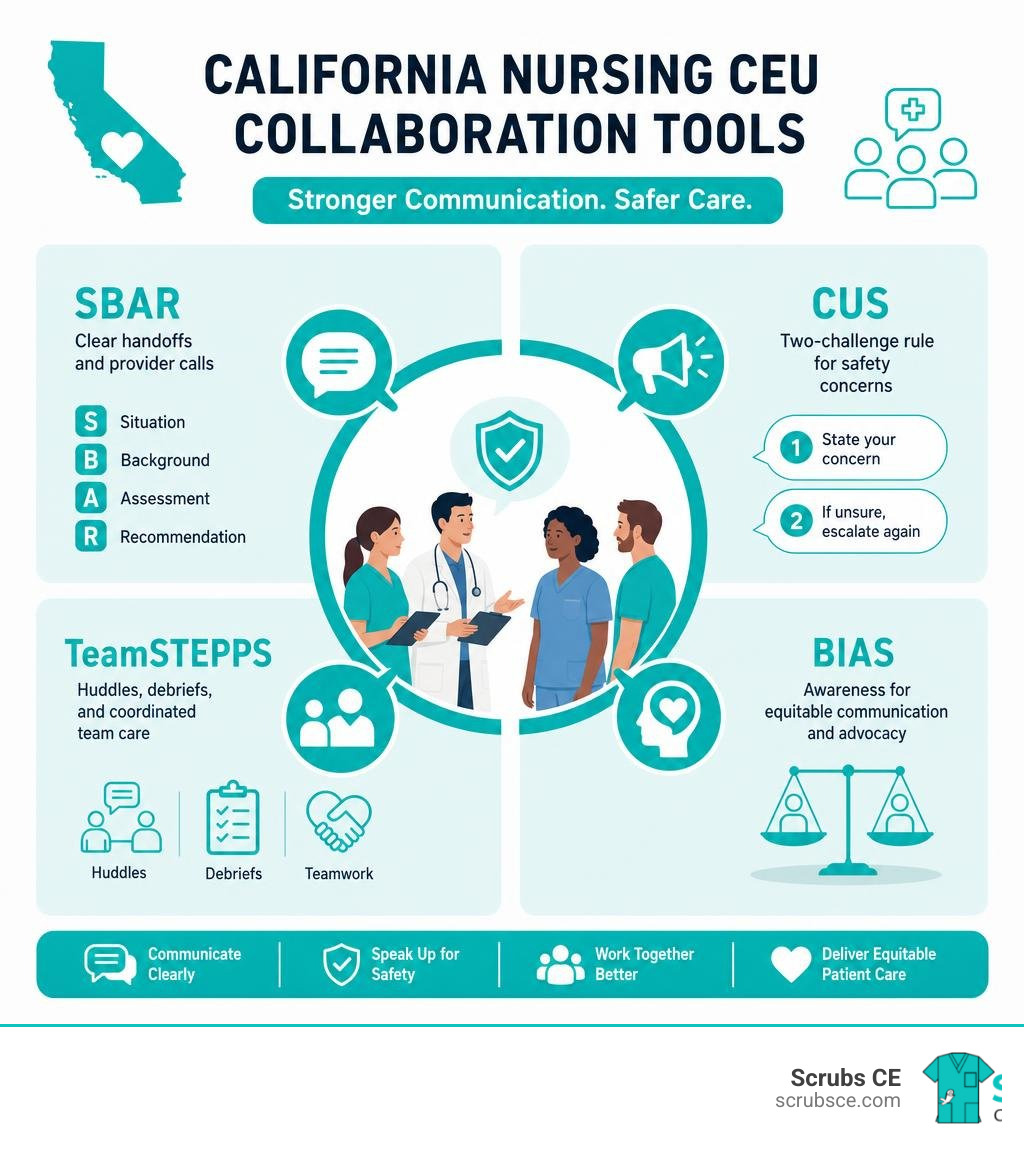
California nursing ceu interdisciplinary collaboration terms to learn:
- California Nursing CEU: Top IV Therapy Courses for License Renewal
- Best Nursing CEU California Courses for Beginners
Understanding California Nursing CEU Interdisciplinary Collaboration Mandates
Healthcare is a team sport, yet clinical training has historically taken place in professional silos. In California, regulatory bodies recognize that clinical excellence requires more than solo technical competence. The California Board of Registered Nursing (BRN) operates under Title 16 of the California Code of Regulations, establishing continuing education requirements designed to keep licensed nurses abreast of modern, evidence-based practices.
Navigating your biennial license renewal means knowing everything you need to know about completing your nursing ceu 30 hours. Beyond general contact hours, state legislation increasingly emphasizes patient safety competencies, health equity, and cross-disciplinary communication. For instance, legislative measures like Assembly Bill (AB) 1407 require direct implicit bias training for nursing graduates, highlighting how institutional attitudes and unexamined assumptions influence bedside communication.
Disparities across the care continuum underscore why these educational mandates are vital. In maternal healthcare, Black women experience nearly four times the maternal mortality rate of non-Hispanic white women during childbirth. Furthermore, one in five Black and Hispanic women reports poor treatment during pregnancy and childbirth by healthcare staff. Systemic gaps also persist beyond hospital walls: approximately 25% of Hispanic people and 14% of Black people are uninsured, compared to just 8.5% of white people. Broader societal inequities, such as women earning an average of 83.7% of the salary paid to their male counterparts across all educational levels, mirror the historical power hierarchies seen within healthcare organizations.
By completing accredited continuing education in interprofessional collaboration, California nurses gain the legal grounding and systemic awareness needed to champion health equity, bridge departmental silos, and dismantle communication barriers that compromise vulnerable populations.
Core Clinical Frameworks: SBAR, CUS, and TeamSTEPPS in Action

When seconds count, vague communication is dangerous. According to The Joint Commission, communication failures remain the leading root cause in sentinel events, contributing to approximately 70% of preventable adverse events. To eliminate ambiguities, high-reliability healthcare organizations rely on standardized communication frameworks.
The SBAR (Situation, Background, Assessment, Recommendation) framework provides a predictable, concise mechanism for relaying critical patient data during shift handoffs, rapid response calls, and physician notifications:
- Situation: State what is happening immediately (e.g., “I am calling about Mr. Davis in room 412 who is acutely short of breath.”)
- Background: Provide relevant clinical context (e.g., “He is post-op day two from a total hip arthroplasty with no prior pulmonary history.”)
- Assessment: Share your clinical findings (e.g., “His oxygen saturation dropped to 86% on room air, respiratory rate is 28, and breath sounds are diminished on the right side.”)
- Recommendation: State what action you need (e.g., “I recommend an immediate stat chest X-ray and an evaluation for a potential pulmonary embolism.”)
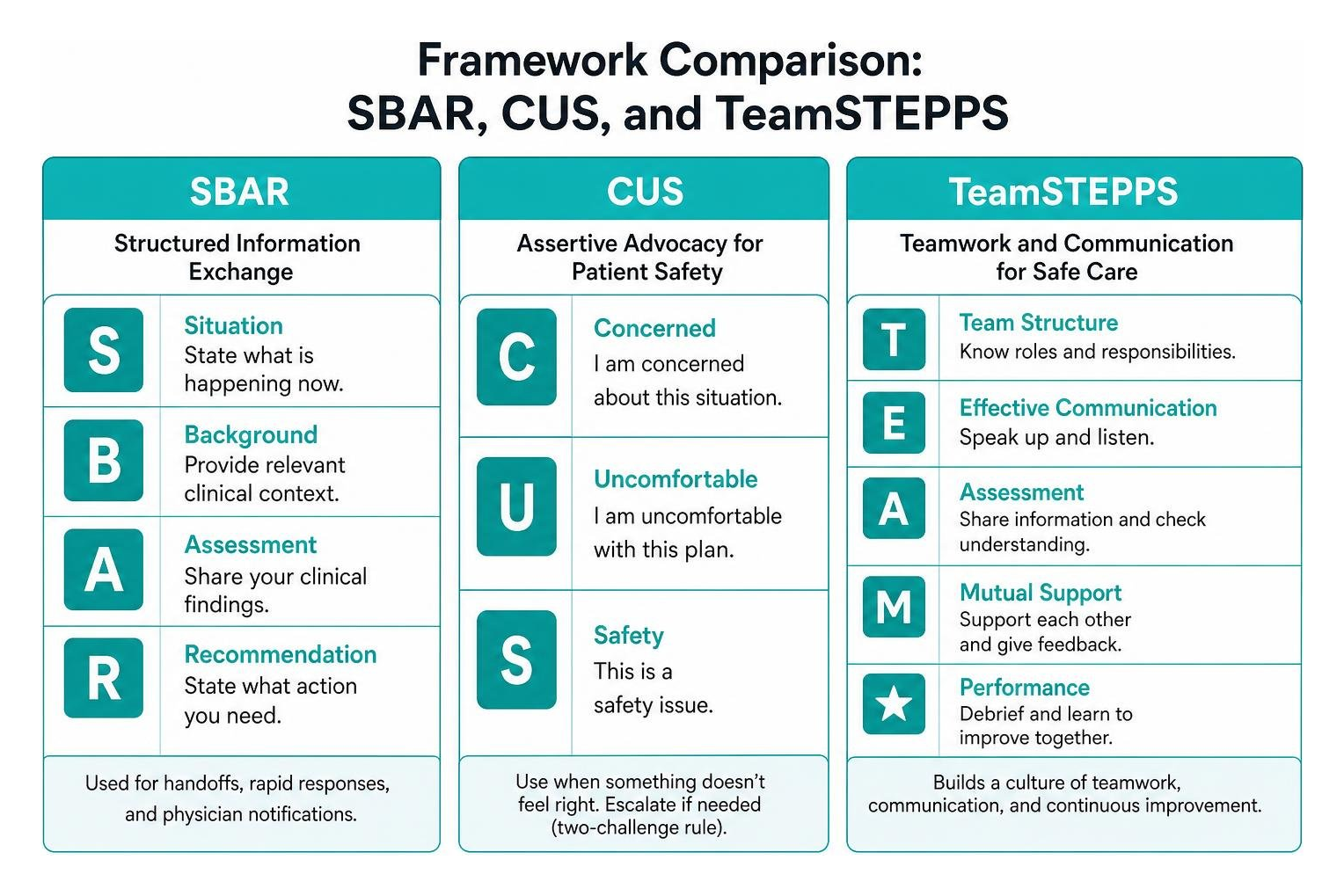
When safety concerns arise and the clinical trajectory feels unsafe, nurses can leverage assertive advocacy frameworks like the CUS model and the two-challenge rule. CUS establishes a escalating verbal safety net:
- C – I am Concerned
- U – I am Uncomfortable
- S – This is a Safety issue
Pairing CUS with the two-challenge rule empowers any team member to voice their concern twice if the initial prompt is dismissed or unacknowledged. If the response still fails to ensure safety, the clinician is mandated to escalate up the chain of command.
Broader strategies derived from TeamSTEPPS (Team Strategies and Tools to Enhance Performance and Patient Safety) transform individual communication into institutional culture. Daily brief huddles align interdisciplinary providers—including physicians, physical therapists, clinical pharmacists, and Radiology specialists—around daily goals of care, while structured post-incident debriefings turn unexpected clinical events into systemic learning opportunities.
| Communication Tool | Primary Purpose | Best Used For | Key Strength |
|---|---|---|---|
| SBAR | Standardized clinical data transfer | Shift handoffs, provider phone calls, urgent escalations | Eliminates conversational fluff and provides immediate clarity |
| CUS Model | Assertive safety escalation | Unclear orders, deteriorating patients, procedural stops | Overcomes intimidation using universally recognized safety keywords |
| TeamSTEPPS | Comprehensive team alignment | Multidisciplinary rounds, safety huddles, shift debriefs | Standardizes team-wide situational awareness and shared mental models |
Published Interprofessional healthcare collaboration research demonstrates that hospitals adopting these standardized communication protocols experience significantly lower complication rates, reduced lengths of stay, and fewer medication administration errors.
Overcoming Communication Barriers: Hierarchy, Implicit Bias, and Psychological Safety
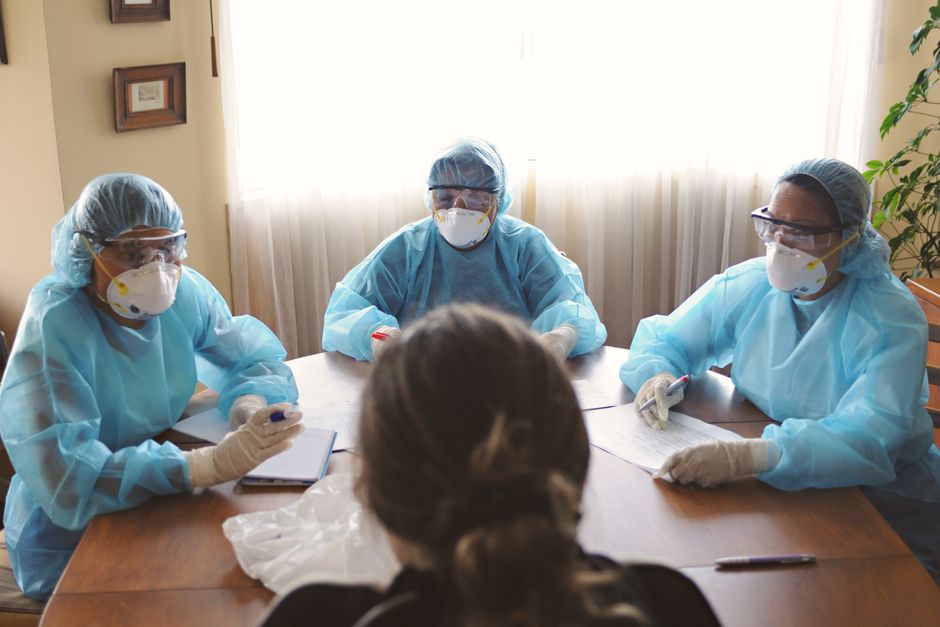
Even with robust frameworks in place, interpersonal dynamics can derail communication. Traditional medical hierarchies have historically positioned physicians at the top of decision-making pyramids, sometimes causing nurses to hesitate before questioning questionable prescriptions or voicing clinical intuition.
To dismantle these barriers, healthcare units must intentionally cultivate psychological safety—a shared belief that the clinical environment is safe for interpersonal risk-taking. In a psychologically safe unit, a novice nurse can ask a clarifying question during interdisciplinary rounds without fear of public ridicule or professional retaliation.
Nurses can cultivate psychological safety by:
- Inviting input explicitly: Asking colleagues and attending providers, “What are we missing in this care plan?”
- Normalizing fallibility: Acknowledging human limitations and modeling transparent error reporting.
- Practicing closed-loop communication: Repeating back verbal orders verbatim to confirm mutual understanding before execution.
Overcoming systemic bias is equally critical. Implicit bias affects clinical assessment, triage speed, and pain management validation, contributing directly to disparities in maternal and chronic care. When interdisciplinary teams actively examine cross-cultural communication gaps and power dynamics, they create an inclusive space where patient advocacy thrives. Nurses looking to build these baseline leadership skills can explore our guide on the best nursing ceu california courses for beginners.
Virtual Care Transitions and Reducing 30-Day Hospital Readmissions
The rapid expansion of remote monitoring, hybrid inpatient models, and telehealth has introduced new complexities to team communication. In virtual environments, clinicians lose subtle non-verbal cues, micro-expressions, and physical body language.
Effective virtual interprofessional collaboration requires:
- Deliberate verbal check-ins: Explicitly confirming role assignments during virtual multi-provider rounds.
- Structured digital documentation: Ensuring real-time electronic health record (EHR) updates that bridge inpatient teams, primary care providers, home health nurses, and physical therapists.
- Active patient and family inclusion: Utilizing video platforms that accommodate family caregivers and medical interpreters during discharge planning conferences.
Fragmented handoffs between hospital discharge and community-based care are a primary driver of preventable 30-day hospital readmissions. When nurses coordinate seamlessly across disciplines—aligning pharmacy on medication reconciliation, case management on durable medical equipment delivery, and outpatient navigators on follow-up appointments—readmission rates drop dramatically.
Equipping yourself with these modern care-coordination strategies allows you to fulfill mandatory professional milestones while optimizing patient outcomes. You can conveniently get your california rn ceus instantly without the stress through our self-paced learning portal.
Frequently Asked Questions About Interprofessional Nursing CEUs
How does a California nursing ceu interdisciplinary collaboration course fulfill BRN license renewal?
The California Board of Registered Nursing requires active RNs to complete 30 contact hours of continuing education every two-year renewal cycle. An accredited course on interdisciplinary collaboration directly meets BRN criteria by addressing core nursing competencies, leadership, patient safety systems, and evidence-based clinical communication.
What structured tools are covered in a California nursing ceu interdisciplinary collaboration module?
Comprehensive collaboration courses cover evidence-based communication models, including the SBAR framework (Situation, Background, Assessment, Recommendation), the CUS escalation protocol (Concerned, Uncomfortable, Safety), TeamSTEPPS principles, closed-loop communication, and structured debriefing techniques.
How does implicit bias training integrate into interdisciplinary team communication?
Implicit bias education helps clinicians recognize unconscious assumptions that affect clinical judgment and interprofessional interactions. Integrating bias awareness into team communication fosters psychological safety, improves active listening, encourages respectful challenge of clinical assumptions, and directly mitigates documented health disparities in maternal and minority healthcare.
Conclusion
Exceptional healthcare delivery is never an individual performance. Safe, high-reliability patient care depends on robust communication systems, mutual respect across clinical disciplines, and a shared commitment to equity. By mastering structured tools like SBAR, leaning on assertive frameworks like CUS, and fostering psychological safety within your unit, you actively safeguard your patients from preventable adverse events.
At Scrubs CE, we are dedicated to supporting your professional journey with convenient, high-quality continuing education courses designed for real-world clinical practice. Complete your mandatory hours at your own pace and earn instant certificates to keep your California license current. To review your specific renewal criteria and explore our full course library, check the complete California CE requirements today.
Seeing Through You: A Guide to Radiographic Anatomy Definitions
Seeing Through You: A Guide to Radiographic Anatomy Definitions
What Is Radiographic Anatomy?
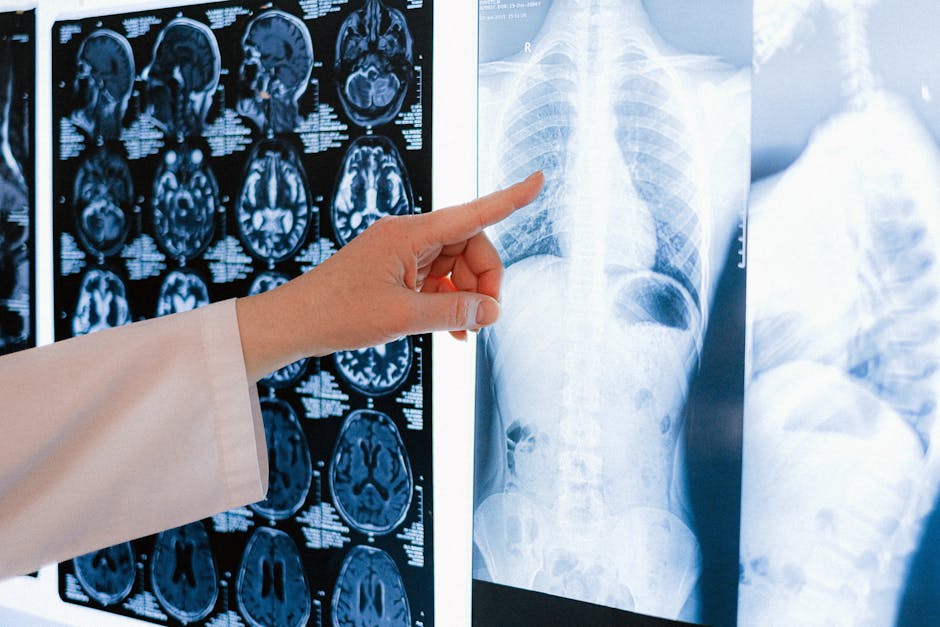
Radiographic anatomy is the study of normal body structures as they appear on medical images. It connects what clinicians know about the body with what they can see on X-ray, CT, MRI, ultrasound, and nuclear medicine studies. In plain radiography, it also means learning how three-dimensional anatomy is compressed into a two-dimensional image.
A practical radiographic anatomy definition includes more than naming bones and organs. It requires recognizing normal position, shape, size, tissue appearance, and common variations so that an abnormal finding can stand out.
For example, bone blocks more X-rays and usually looks white, while air lets more X-rays pass through and looks black. This difference in appearance helps imaging professionals identify anatomy without surgery or invasive procedures.
Understanding these patterns supports accurate positioning, safer image acquisition, and clear clinical interpretation. It is the baseline skill behind everything from checking a chest X-ray to orienting an axial CT image.
I am Zita Ewert, a continuing-education leader for imaging professionals and the driving force behind SCRUBS Continuing Education®. My work developing practical education for radiologic technologists includes helping learners build a reliable radiographic anatomy definition they can apply in everyday imaging practice.
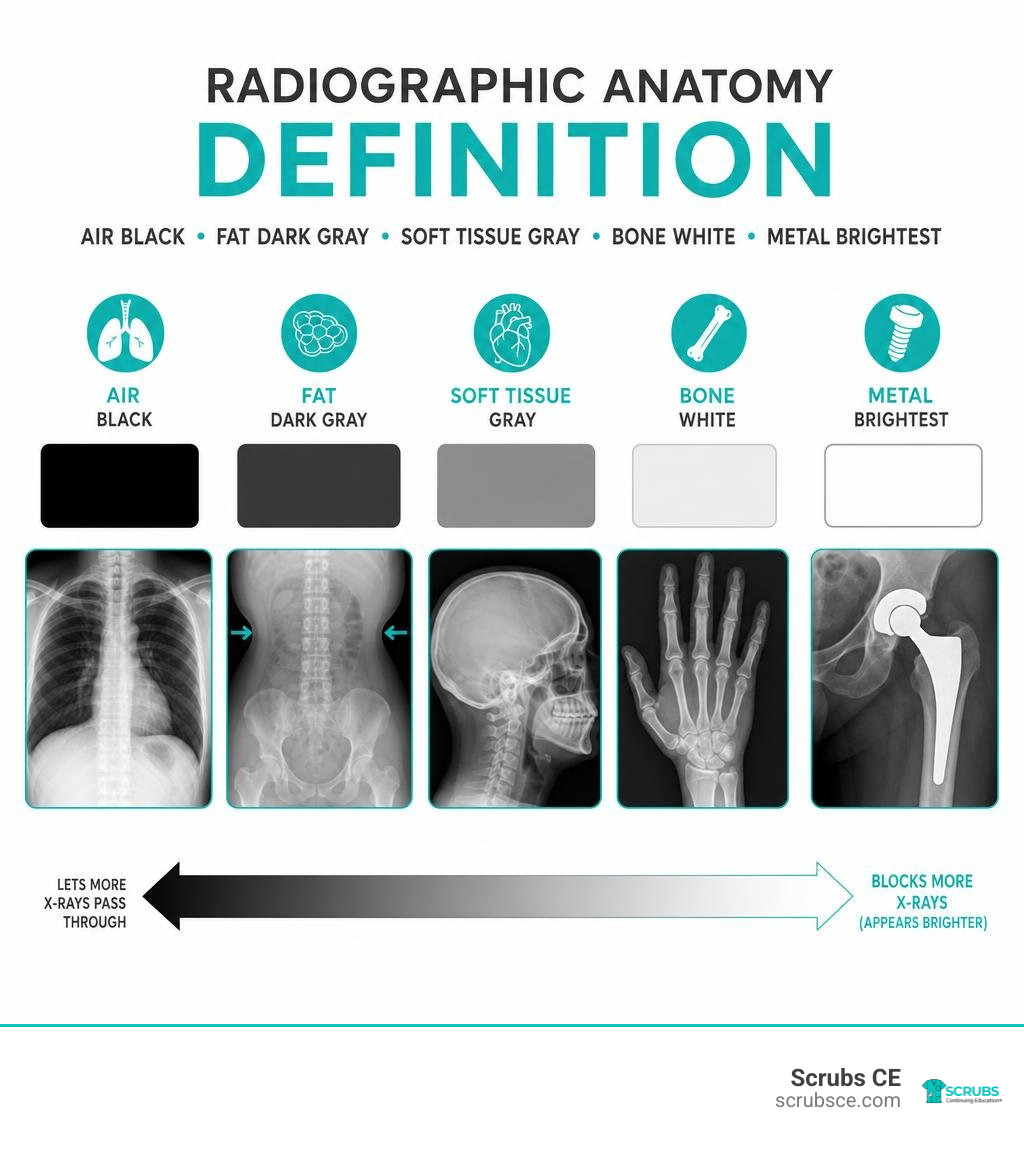
Radiographic anatomy definition terms to learn:
Radiographic Anatomy Definition: Foundations and Principles
Whenever we evaluate an imaging study, we are translating biological reality into diagnostic visual data. Standard gross anatomy teaches us where an organ sits inside a preserved cadaver, but radiographic anatomy teaches us how that same living organ presents under clinical imaging physics.
When an X-ray beam traverses a patient’s body, the resulting image is a two-dimensional summary projection of three-dimensional anatomical structures. Tissues absorb, scatter, or transmit the beam according to their atomic composition and thickness. Because every layer of tissue along the path of the beam is flattened onto a single planar surface, reading a radiograph requires spatial reconstruction skills and a firm grasp of relative tissue density.
Radiographic Anatomy Definition and Scope
Radiographic anatomy—often termed radiological anatomy or radioanatomy—is the specialized study of internal human morphology through non-invasive medical imaging modalities. Rather than dissecting layers of tissue with a scalpel, we inspect bones, visceral organs, vascular pathways, and neural bundles in their functional, living state.
As detailed in classic medical literature such as Chapter 5: Radiological anatomy, diagnostic images allow clinicians to detect deep-seated systemic disease before gross structural distortion occurs. The scope of radiographic anatomy spans from primary skeletal osteology to advanced multi-slice cross-sectional maps, serving as the bridge where theoretical morphological science meets real-world clinical medicine.
How Radiographic Anatomy Differs from Standard Anatomy
Standard gross anatomy relies on physical inspection, tactile feedback, and structural dissection. In a laboratory setting, a muscle is visibly red-brown, adipose tissue is distinctly yellow, and blood vessels can be physically separated from adjacent nerve trunks.
In contrast, radiographic anatomy relies entirely on differential radiodensity and physical energy interactions:
- Superimposition: Structures situated along the same projection axis cast overlapping shadows on planar films.
- Tissue Homogeneity: Soft-tissue structures such as the heart, liver, blood, and skeletal muscle share almost identical physical densities to water, rendering them uniform shades of gray on conventional radiographs unless separated by natural fat planes or contrast agents.
- Dynamic Living Motion: Unlike static cadaveric models, living organs constantly shift. The stomach contracts, the diaphragm elevates during exhalation, and the heart pulsates, making clinical understanding of living morphological movement essential when decoding pathological anatomy.
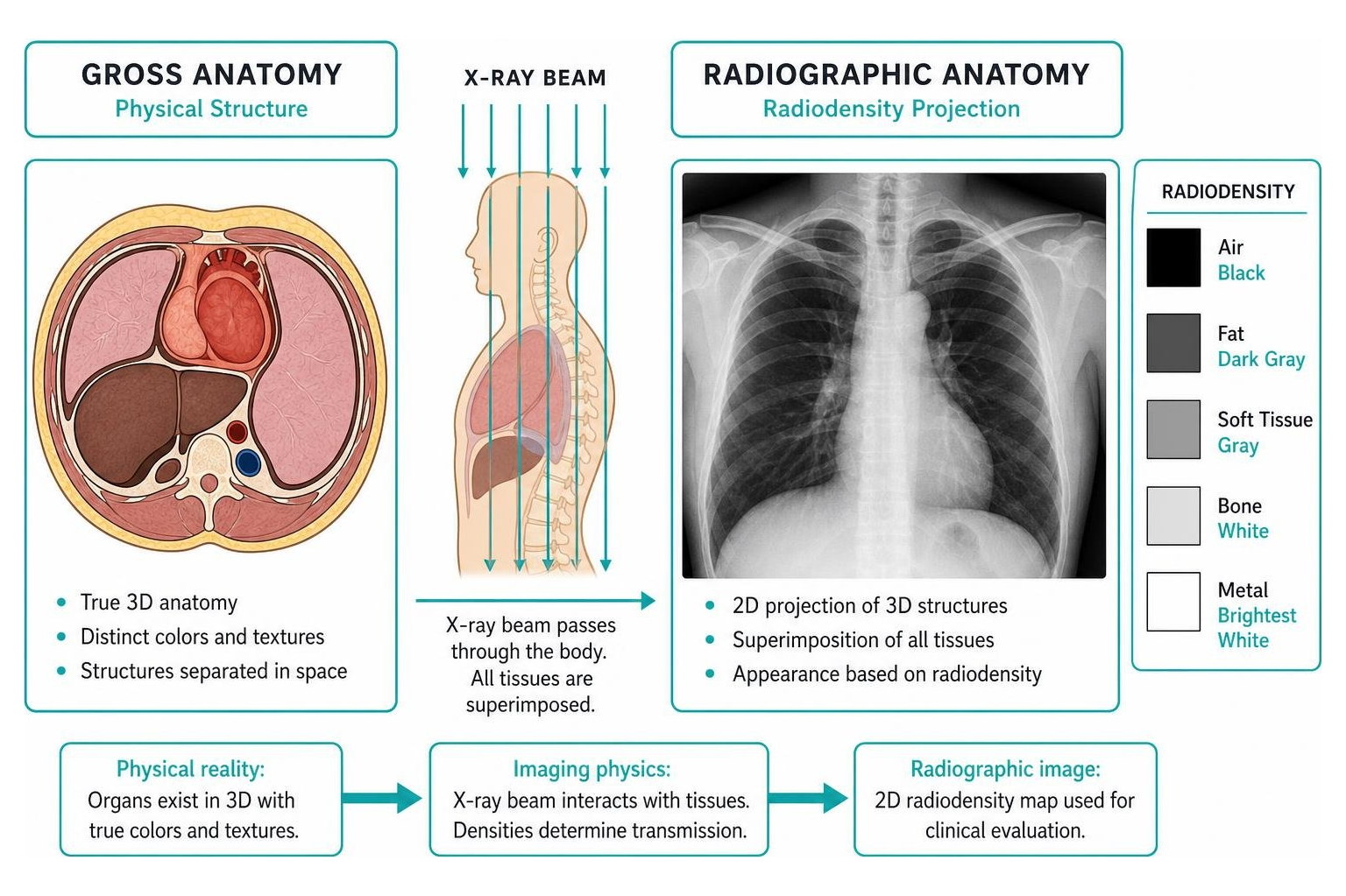
Radiology vs Radiography: Roles and Practice
While the terms are often used interchangeably outside the clinic, Radiology and Radiography represent distinct, complementary professional domains:
- Radiography is the diagnostic discipline and technical process of capturing medical images. A radiologic technologist (or radiographer) manages patient positioning, sets technical radiation exposure factors (kVp and mAs), ensures radiation safety, and captures high-quality diagnostic views. In the United States, radiographers undergo intensive 2-to-4-year degree programs and must meet stringent anatomy and physiology licensure requirements to practice.
- Radiology is the branch of medicine dedicated to interpreting diagnostic images, diagnosing disease, and performing image-guided interventional procedures. A radiologist is a specialized medical doctor (MD or DO) who completes four years of medical school followed by four to five years of dedicated residency and fellowship training.
| Professional Role | Primary Education Pathway | Core Clinical Focus | U.S. Median Salary (Recent Data) |
|---|---|---|---|
| Radiologic Technologist (Radiographer) | 2-year Associate or 4-year Bachelor’s degree | Image acquisition, patient positioning, radiation safety, ALARA compliance | $77,660 (2024) |
| Radiologist | 4-year Undergrad + 4-year Med School + 4-5-year Residency | Diagnostic image analysis, clinical reporting, image-guided interventions | $239,200 (2023) |
Both roles require mastery of foundational Radiology anatomy texts to communicate clinical findings accurately across interdisciplinary healthcare teams.
Diagnostic Imaging Modalities and Tissue Radiodensity Principles
Different diagnostic imaging modalities leverage distinct physical properties of the human body to visualize anatomy.
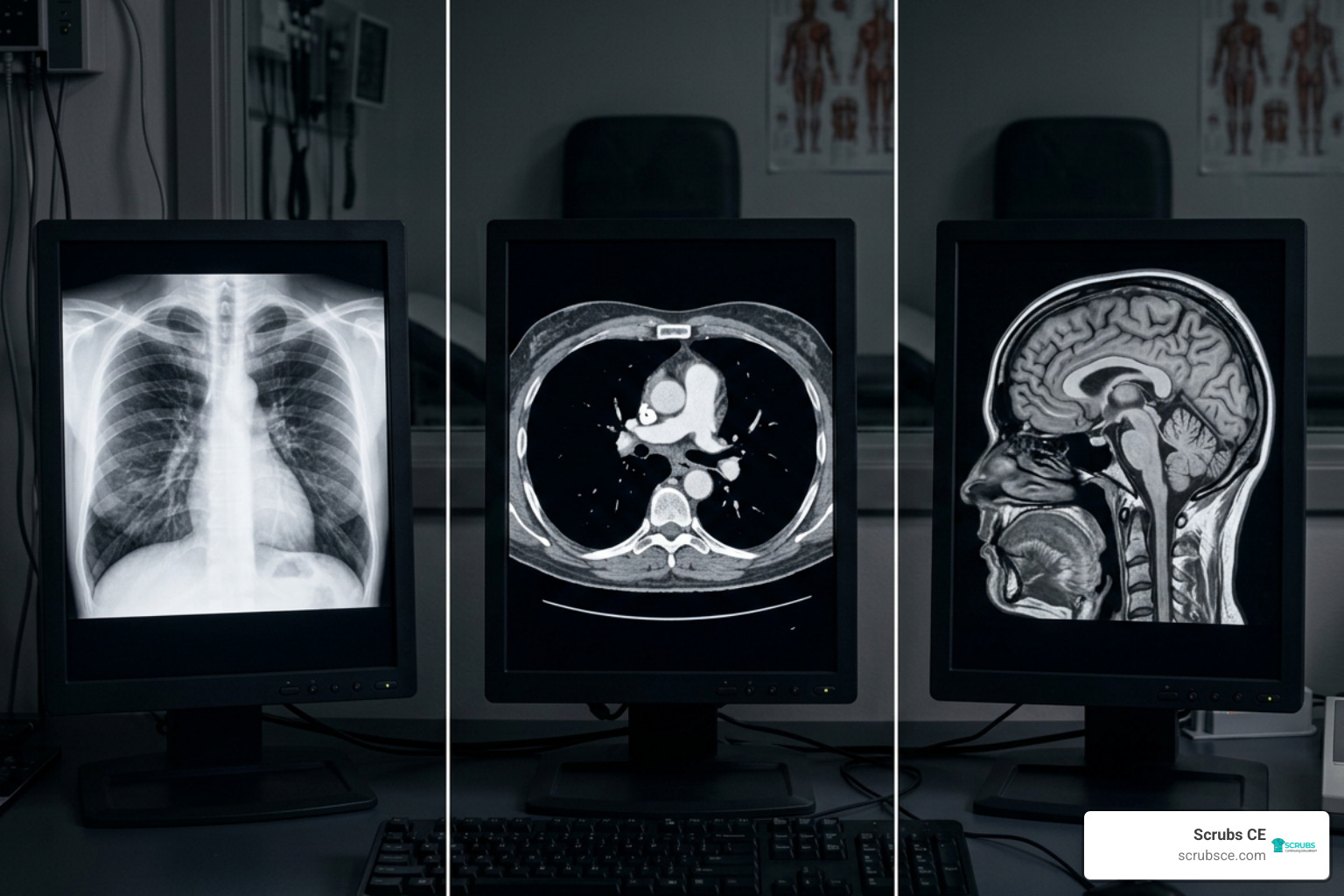
Radiographic Density: From Radiopaque to Radiolucent
On projection radiographs and fluoroscopic screens, anatomical visibility depends on how much of the primary X-ray beam is attenuated (absorbed or scattered) by the body’s tissues. We categorize radiographic appearances across five fundamental densities:
- Air / Gas (Most Radiolucent): Absorbs the fewest X-ray photons. It allows the radiation beam to pass unimpeded to the image receptor, appearing jet black (e.g., trachea, lungs, gastric air bubble).
- Fat: Absorbs slightly more radiation than air but less than water. It appears as a dark gray stripe or halo, forming critical natural borders (such as the pronator fat stripe or perirenal fat) that delineate muscles and organs.
- Water / Soft Tissue: Possesses intermediate density. Muscle, blood, solid viscera (liver, spleen, kidneys), and cartilage all attenuate similar amounts of radiation, presenting as uniform medium gray.
- Bone / Calcium (Most Radiopaque Natural Tissue): Contains high-atomic-number calcium and phosphorus, absorbing substantial radiation. Bone appears bright white on standard radiographs (e.g., cortical bone, trabecular networks).
- Metal (Enamel / Foreign Body / Contrast Media): Possesses extreme physical density and high atomic numbers, blocking virtually all primary X-ray photons. Metal appears brilliant, stark white (e.g., surgical clips, orthopedic implants, barium contrast).
| Fundamental Density | Physical Characteristics | Standard X-ray Appearance | CT Appearance (Hounsfield Units) | MRI Appearance (T1 / T2) |
|---|---|---|---|---|
| Air | Lowest physical density | Jet Black | Very Low (-1000 HU) | Signal void (Black) / Signal void (Black) |
| Fat | Hydrocarbon-rich lipid tissue | Dark Gray | Low (-120 to -90 HU) | High signal (Bright) / Intermediate-High signal |
| Soft Tissue / Water | Cellular protein / fluid | Mid Gray | Intermediate (0 to +40 HU) | Low-to-Mid signal / High signal (Water bright) |
| Dense Bone | Highly mineralized calcium matrix | Bright White | Very High (+400 to +1000+ HU) | Low signal (Black cortex) / Low signal |
| Metal / Contrast | Artificial dense material | Stark White | Extremely High (>+1000 HU) | Variable / Severe susceptibility artifact |
Cross-Sectional Modalities: CT Hounsfield Units and MRI Weighting
Computed Tomography (CT) eliminates superimposition by rotating an X-ray tube and detector array 360 degrees around the patient, generating thin axial slices (typically 1 mm to 5 mm). Tissue radiodensity on CT is quantified mathematically on the Hounsfield Unit (HU) scale, calibrated precisely between air (-1000 HU), pure water (0 HU), and dense cortical bone (+1000 to +3000 HU).
Magnetic Resonance Imaging (MRI) does not use ionizing radiation. Instead, it places the patient inside a powerful magnetic field and applies radiofrequency (RF) pulses to manipulate the spin of hydrogen protons in tissue water and fat. We distinguish normal tissues by altering the pulse timing:
- T1-Weighted Sequences: Maximize the signal from fat. Adipose tissue is bright (white), while water, cerebrospinal fluid (CSF), and simple effusions are dark (black). T1 sequences excel at depicting structural anatomy and cortical boundaries.
- T2-Weighted Sequences: Highlight fluids. Water, CSF, edema, and inflammatory exudates shine bright (white), while dense fibrotic tissue remains dark. T2 sequences are ideal for identifying pathological swelling and joint effusions.
The Expanding Role of Contrast Agents in Radiographic Anatomy Definition
When adjacent soft-tissue structures exhibit nearly identical radiodensity—such as bowel loops lying against pelvic muscle—we introduce artificial contrast agents to outline anatomical lumens and vascular networks:
- Positive Radiopaque Contrast Media: Agents containing high-atomic-number elements like barium sulfate ($Z=56$) or iodine ($Z=53$) absorb large quantities of X-ray photons, highlighting the gastrointestinal tract, renal collecting systems (intravenous urography), and arterial trees (computed tomography angiography).
- Negative Radiolucent Contrast Media: Gases such as air, carbon dioxide, or nitrogen absorb fewer photons than surrounding tissues, expanding hollow organs (e.g., during double-contrast barium enemas or CT colonography).
- Paramagnetic MRI Contrast: Gadolinium-based chelates shorten local T1 relaxation times, causing hypervascular lesions, inflamed synovial tissues, and disrupted blood-brain barriers to light up brightly on T1-weighted sequences.
Anatomical Planes, Body Habitus, and Skeletal Landmarks
Accurate radiographic positioning requires aligning external surface landmarks with internal skeletal structures and imaginary reference planes.
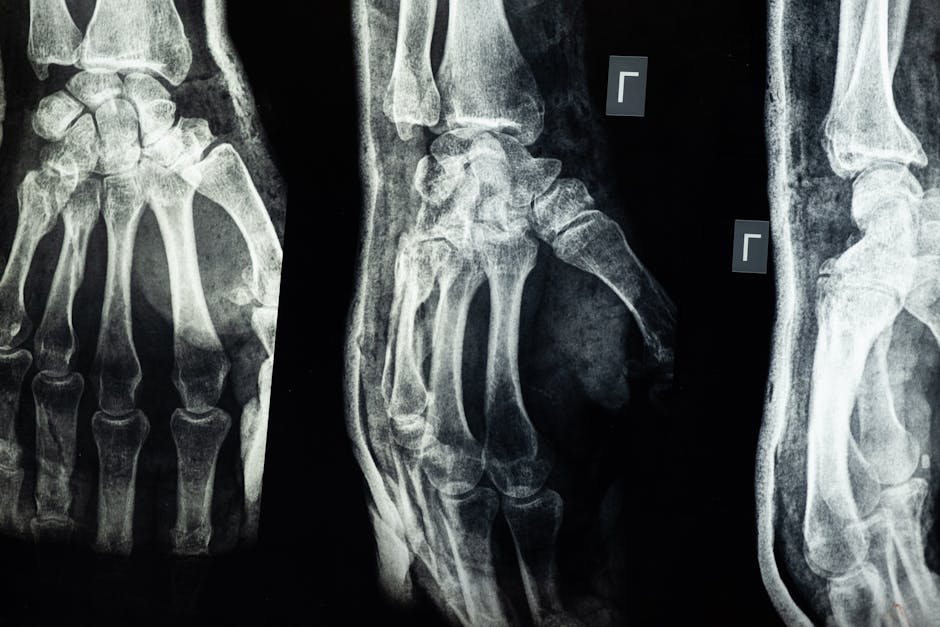
Fundamental Body Planes and Positioning Terminology
According to standard radiographic positioning terminology, the human body in the anatomical position is divided using four primary planes:
- Sagittal Plane: A vertical plane dividing the body into right and left segments. The midsagittal (median) plane divides the body into equal symmetrical halves.
- Coronal (Frontal) Plane: A vertical plane oriented at a 90-degree angle to the sagittal plane, dividing the body into anterior (front) and posterior (back) sections. The midcoronal plane divides the body into equal anterior and posterior segments.
- Horizontal (Transverse / Axial) Plane: A crosswise plane passing horizontally through the body at right angles to both sagittal and coronal planes, dividing anatomy into superior (upper) and inferior (lower) portions.
- Oblique Plane: Any plane passing through the body at an angle that is not parallel to the sagittal, coronal, or horizontal planes.
Projections describe the path of the central X-ray beam:
- Anteroposterior (AP): The beam enters the anterior surface and exits posteriorly.
- Posteroanterior (PA): The beam enters the posterior surface and exits anteriorly (the standard projection for chest radiographs to minimize cardiac magnification).
- Lateral: The beam enters one side of the body and exits the opposite side.
Body Habitus and Internal Organ Variations
A patient’s body habitus—their fundamental physical build and trunk shape—governs the size, shape, position, and movement of internal thoracic and abdominal organs, independent of their height or weight:
- Sthenic (50% of the population): The average, standard athletic build. The stomach is J-shaped, the duodenal bulb lies at the L1–L2 level, and the colon forms an evenly distributed frame around the abdominal cavity.
- Hyposthenic (35% of the population): A slender build slightly elongated compared to sthenic. Together, sthenic and hyposthenic types represent more than 85% of the general population.
- Asthenic (10% of the population): A very slender, frail build with a narrow, shallow thorax. The diaphragm sits low, the lungs are long, the heart appears vertical, and the stomach lies vertically along the midline, dipping down into the true pelvis.
- Hypersthenic (5% of the population): A broad, stocky build with a wide, deep thorax and short abdomen. The diaphragm is pushed high, the ribs lie horizontal, the stomach sits high and transverse across the upper abdomen, and the gallbladder can sit up to 8 inches higher and further lateral than in an asthenic patient.
Adjusting automatic exposure control (AEC) chambers and centering points based on habitus prevents clipped anatomy and repeat exposures.
Osteology and Skeletal Landmarks in Radiographic Evaluation
The adult human skeleton comprises 206 primary bones, divided into:
- The Axial Skeleton (80 bones): Forms the central axis, including the skull, hyoid, vertebral column, ribs, and sternum.
- The Appendicular Skeleton (126 bones): Comprises the upper and lower limbs and the pectoral (shoulder) and pelvic girdles.
Standard references like the WHO manual of diagnostic imaging emphasize identifying specific osteological zones on musculoskeletal radiographs:
- Diaphysis: The primary ossification center forming the dense, compact tubular shaft of a long bone surrounding the radiolucent medullary cavity.
- Epiphysis: The secondary ossification center occurring at the articular ends of long bones.
- Physis (Epiphyseal Growth Plate): The radiolucent cartilaginous band separating the epiphysis and metaphysis in pediatric skeletons. Ossification starts during the second embryonic month and completes around age 21 when the radiolucent plate ossifies into a faint, radiopaque epiphyseal line.
Systematic Clinical Interpretation: From Plain Films to Advanced Cross-Sectional Scans
Accurate clinical image analysis relies on structured, repeatable evaluation protocols rather than random visual scanning.
The ABCD Rule for Chest Radiograph Interpretation
The chest radiograph (CXR) is the most frequently performed imaging exam. A standard posteroanterior (PA) view should be reviewed systematically using the classic ABCD mnemonic:
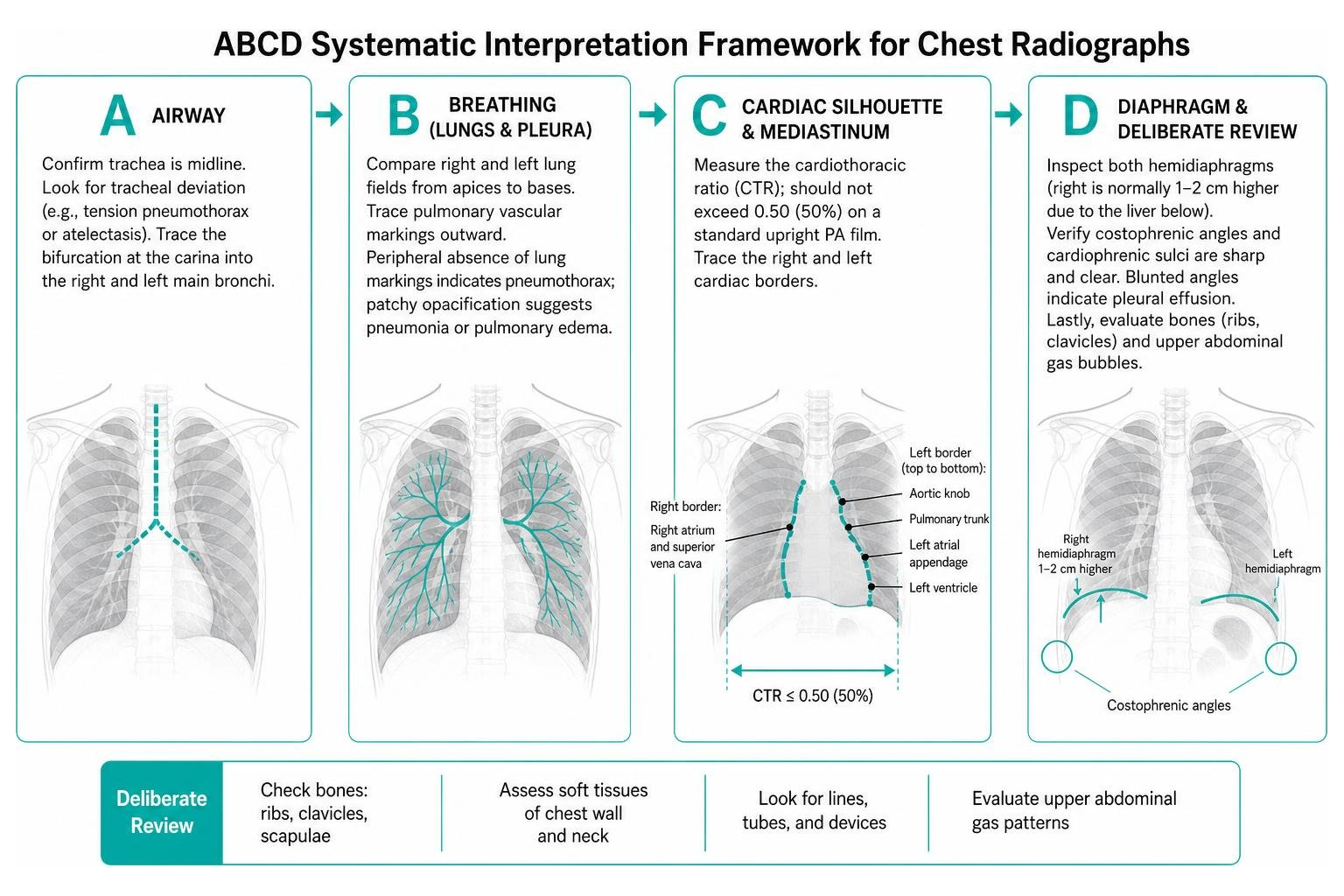
- A – Airway: Confirm that the trachea is midline. Look for tracheal deviation caused by tension pneumothorax or atelectasis, and trace the bifurcation at the carina into the right and left main bronchi.
- B – Breathing (Lungs & Pleura): Compare the right and left lung fields sequentially from apical zones to lung bases. Trace the pulmonary vascular markings outward; peripheral absence of lung markings indicates a pneumothorax, while patchy opacification signals pneumonia or pulmonary edema.
- C – Cardiac Silhouette & Mediastinum: Measure the cardiothoracic ratio (CTR), which should not exceed 0.50 (50%) on a standard upright PA film. Trace the right border (formed by the right atrium and superior vena cava) and the left border (aortic knob, pulmonary trunk, left atrial appendage, and left ventricle).
- D – Diaphragm & Deliberate Review: Inspect both hemidiaphragms (the right is normally 1–2 cm higher due to the liver below). Verify that both costophrenic angles and cardiophrenic sulci are sharp and clear. Blunted angles point to pleural effusion. Lastly, evaluate the bones (rib fractures, clavicles) and upper abdominal gas bubbles.
CT Orientation and the RALP Rule
Cross-sectional axial CT scans follow a strict viewing convention: you are looking at the slice from the patient’s feet, looking upward toward their head, with the patient lying supine.
To orient any axial CT image instantly, apply the RALP rule around the clockface:
- 9 o’clock = Right (R): The patient’s right side is displayed on the left side of your monitor.
- 12 o’clock = Anterior (A): The patient’s front (sternum, anterior abdominal wall) points toward the top of the monitor.
- 3 o’clock = Left (L): The patient’s left side is displayed on the right side of your monitor.
- 6 o’clock = Posterior (P): The patient’s back (spine, dorsal muscles) rests at the bottom of the monitor.
Regional Anatomy Breakdown: Head, Spine, Abdomen, and Extremities
- Head & Neuroimaging: On non-contrast head CT, bone appears dense white (+1000 HU), cerebrospinal fluid within the ventricles appears dark gray/black (0–10 HU), and cerebral gray matter appears slightly lighter gray (+35 to +40 HU) than white matter (+25 to +30 HU) because gray matter contains less lipid myelin.
- Spine: Lateral cervical radiographs must demonstrate the base of the skull down through the C7–T1 junction. Radiographers evaluate four continuous lordotic lines: the anterior vertebral line, posterior vertebral line, spinolaminar line, and posterior spinous process line. Any focal disruption in these smooth arcs indicates a spinal fracture or ligamentous dislocation.
- Abdomen: Normal supine abdominal radiographs show small amounts of gas within the stomach and scattered loops of colon. Freely floating crescent-shaped gas beneath the right hemidiaphragm on an upright radiograph (pneumoperitoneum) is an acute surgical emergency indicating a perforated hollow organ.
- Extremities & Joints: Musculoskeletal interpretation relies heavily on evaluating adjacent soft-tissue fat pads. On a true lateral elbow radiograph, the displacement or elevation of the anterior or posterior fat pad (the “sail sign”) reveals occult, non-displaced intra-articular fractures (such as a radial head fracture in adults or a supracondylar fracture in children) that might otherwise be invisible.
Frequently Asked Questions About Radiographic Anatomy
What is the radiological joint space?
The radiological joint space is the radiolucent (dark) interval seen between the radiopaque subchondral bone ends of opposing bones on a radiograph. In a healthy adult, this space measures between 2 mm and 5 mm in width. It is not empty air; it represents the thickness of the two opposing layers of uncalcified articular hyaline cartilage plus the synovial fluid lubricating the joint cavity. Joint space narrowing is a classic sign of osteoarthritis.
Why are orthogonal views necessary when evaluating radiographs?
Because a conventional radiograph is a two-dimensional flat representation of three-dimensional anatomy, structures along the beam path are superimposed. A single projection cannot provide depth localization. Taking at least two orthogonal projections at a 90-degree angle to each other (such as an Anteroposterior view paired with a Lateral view) enables clinicians to pinpoint foreign body locations, identify hidden fracture lines, and evaluate anatomical displacement accurately.
What are the main body habitus classifications in radiography?
The four standard classifications are:
- Sthenic (50%): Average, well-proportioned body build.
- Hyposthenic (35%): Moderately slender build.
- Asthenic (10%): Very slender, elongated trunk with low-lying pelvic organs.
- Hypersthenic (5%): Broad, stocky, wide trunk with high, transverse thoracic and abdominal organs.
Together, the sthenic and hyposthenic types account for 85% of all imaging patients.
Master Radiographic Anatomy and Advance Your Imaging Career
Mastering radiographic anatomy is an ongoing journey that sharpens your diagnostic instincts, reduces repeat exposures, and elevates patient care. Whether you are centering the central ray over an elusive landmark or reviewing cross-sectional tissue borders on an axial slice, a firm grasp of radioanatomy remains the ultimate foundation of medical imaging.
For imaging professionals looking to stay at the cutting edge of clinical practice while fulfilling mandatory continuing education requirements, SCRUBS Continuing Education® provides accessible, self-paced courses.
Advance your professional credentials, satisfy your ARRT® and state licensing requirements, and broaden your imaging expertise through our comprehensive anatomy for radiographers course series. Enjoy instant certificate generation and elevate your clinical confidence on every shift!
Ultimate Checklist for Radiology Certification Requirements
Ultimate Checklist for Radiology Certification Requirements
Why Certification in Radiology Is a Career-Defining Step

Certification in Radiology is the professional credential that proves you have the training, ethics record, and exam performance needed to work safely in medical imaging or radiation therapy. Here is a quick overview of the main pathways:
| Credential | Issued By | Who It’s For |
|---|---|---|
| Registered Technologist (R.T.) | AMERICAN REGISTRY OF RADIOLOGIC TECHNOLOGISTS® | Radiologic technologists |
| Limited Licensed R.T. (CLLRT) | State boards / accredited organizations | Entry-level imaging roles |
| Board Certification (ABR) | American Board of Radiology | Physicians (Radiologists) |
| Certified Radiology Nurse (CRN®) | Radiologic Nursing Certification Board | Registered nurses in imaging |
| European Diploma in Radiology (EDiR) | European Board of Radiology | International Radiologists |
More than 360,000 people currently hold ARRT® credentials alone — and that number keeps growing. Yet high-demand specialties like computed tomography still show vacancy rates as high as 19.4%, meaning credentialed professionals are in serious demand right now.
Whether you are just starting out, switching specialties, or trying to keep your current license active, knowing exactly what each certification requires can save you months of confusion — and money.
I’m Zita Ewert, and as the leader of SCRUBS Continuing Education®, I have spent years helping radiologic technologists navigate the requirements for certification in Radiology — from initial ARRT® exam prep to biennial continuing education renewals. This checklist is designed to give you everything you need in one place, so you can spend less time researching and more time advancing your career.
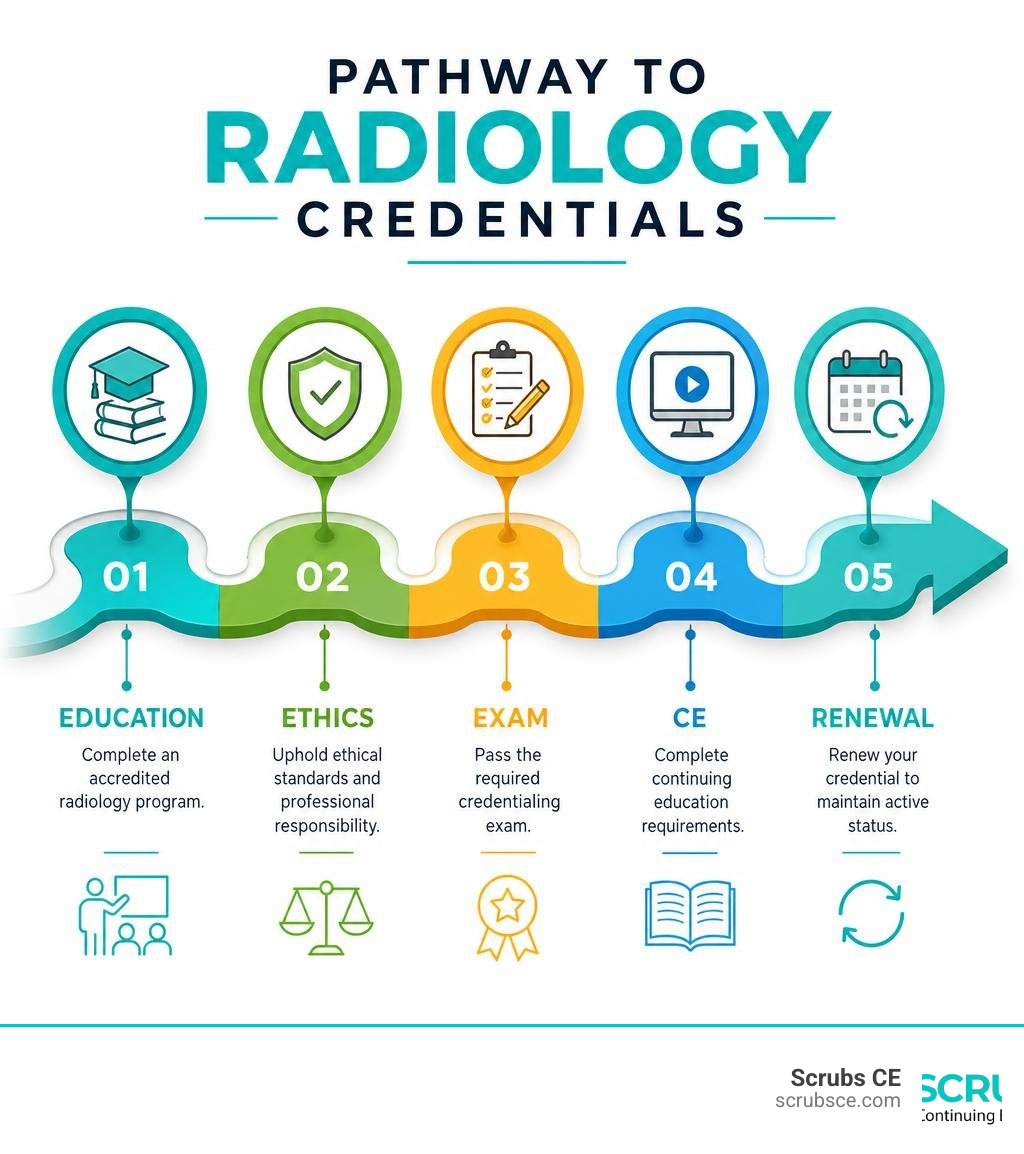
Understanding ARRT® Certification in Radiology
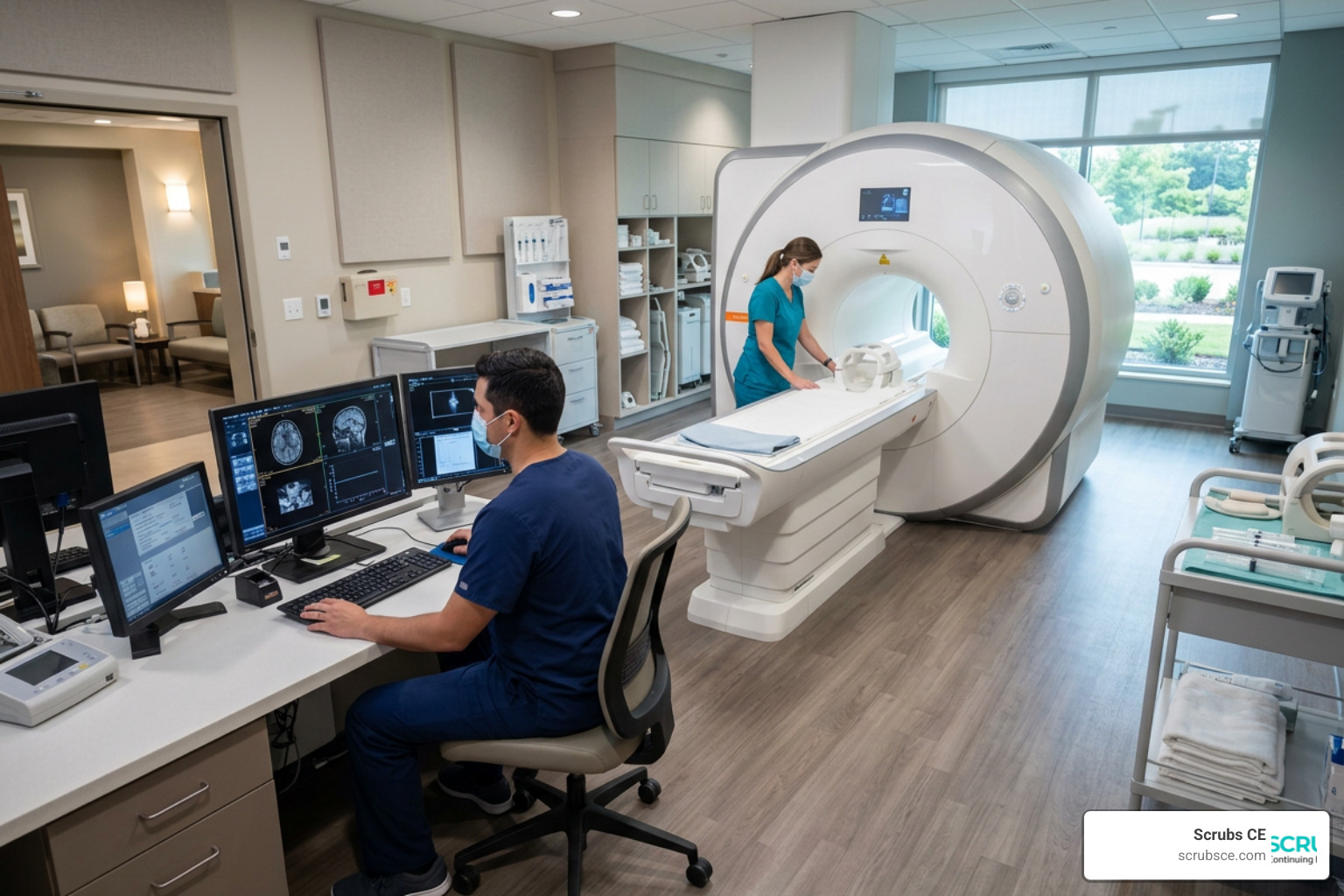
When we talk about earning a national certification in Radiology, the conversation almost always starts with the AMERICAN REGISTRY OF RADIOLOGIC TECHNOLOGISTS® (ARRT®). It is the gold standard for medical imaging professionals.
While some states do not legally mandate a national license, the vast majority of healthcare employers, state licensing agencies, and federal regulators do. Holding these credentials tells your future employers that you are deeply committed to providing exceptional patient care and maintaining high professional standards.
What is the AMERICAN REGISTRY OF RADIOLOGIC TECHNOLOGISTS® (ARRT®)?
The AMERICAN REGISTRY OF RADIOLOGIC TECHNOLOGISTS® (ARRT®) is the world’s largest credentialing organization for medical imaging and radiation therapy. With over 360,000 active registrants, the ARRT® tests and certifies technologists across 14 distinct disciplines.
Earning your ARRT® credential is not a one-time event; it is an ongoing commitment to your career. It ensures you have met the rigorous standards of education, ethical conduct, and examination necessary to perform complex imaging procedures safely. To understand the baseline requirements for technologists, you can read A Comprehensive Guide to Radiologic Technologist Certification Requirements.
The Difference Between a Certificate and a Certification in Radiology
It is incredibly common to confuse a certificate with a certification, but they mean very different things in the healthcare industry:
- Certificate: This is an academic document awarded by an educational institution (like a community college or technical school) when you complete a specific course of study or curriculum. For example, you might earn a certificate in basic X-ray machine operation.
- Certification: This is a formal credential awarded by an independent professional trade group or registry (like the ARRT®) after you prove your clinical competence by passing a comprehensive exam and meeting strict ethical and educational benchmarks.
A certificate shows you completed a class; a national certification in Radiology proves you are legally and clinically qualified to treat patients. If you want to dive deeper into this process, check out our guide on How to Get ARRT Certified Without Losing Your Mind.
Checklist of ARRT® Certification Requirements
To help you stay organized, we have mapped out the core eligibility requirements for both primary and postprimary pathways.
| Requirement | Primary Pathway | Postprimary Pathway |
|---|---|---|
| Minimum Education | Associate degree or higher from an accredited institution | Already hold an ARRT® primary credential |
| Program Completion | Complete an ARRT®-approved program in your chosen discipline | Complete 16 hours of structured education |
| Ethics Verification | Pass the ARRT® ethical review process | Maintain active, ethical ARRT® registration |
| Clinical Experience | Document all required clinical procedures and competencies | Log specific clinical procedures for the target modality |
| Examination | Pass the computer-based exam with a score of 75 or higher | Pass the specialty credential exam with a score of 75 or higher |
Core Eligibility: Education, Ethics, and Examination
To qualify for your primary ARRT® exam, you must fulfill three core components:
- Education: You must earn an associate degree (or higher) from an institution accredited by an agency recognized by the ARRT®. Your educational program must be ARRT®-approved and completed within three years of submitting your application.
- Ethics: The ARRT® enforces a strict Code of Ethics. If you have a misdemeanor, felony, or military court-martial on your record, we highly recommend submitting an ethics pre-application review before you even enroll in an imaging program. This ensures you won’t complete your schooling only to find out you are ineligible to test.
- Examination: You must pass the official registry exam for your chosen discipline.
For state-specific insights on how these rules apply in local markets, read our article on ARRT Certification Florida.
Step-by-Step Guide to Applying and Passing the ARRT® Exam
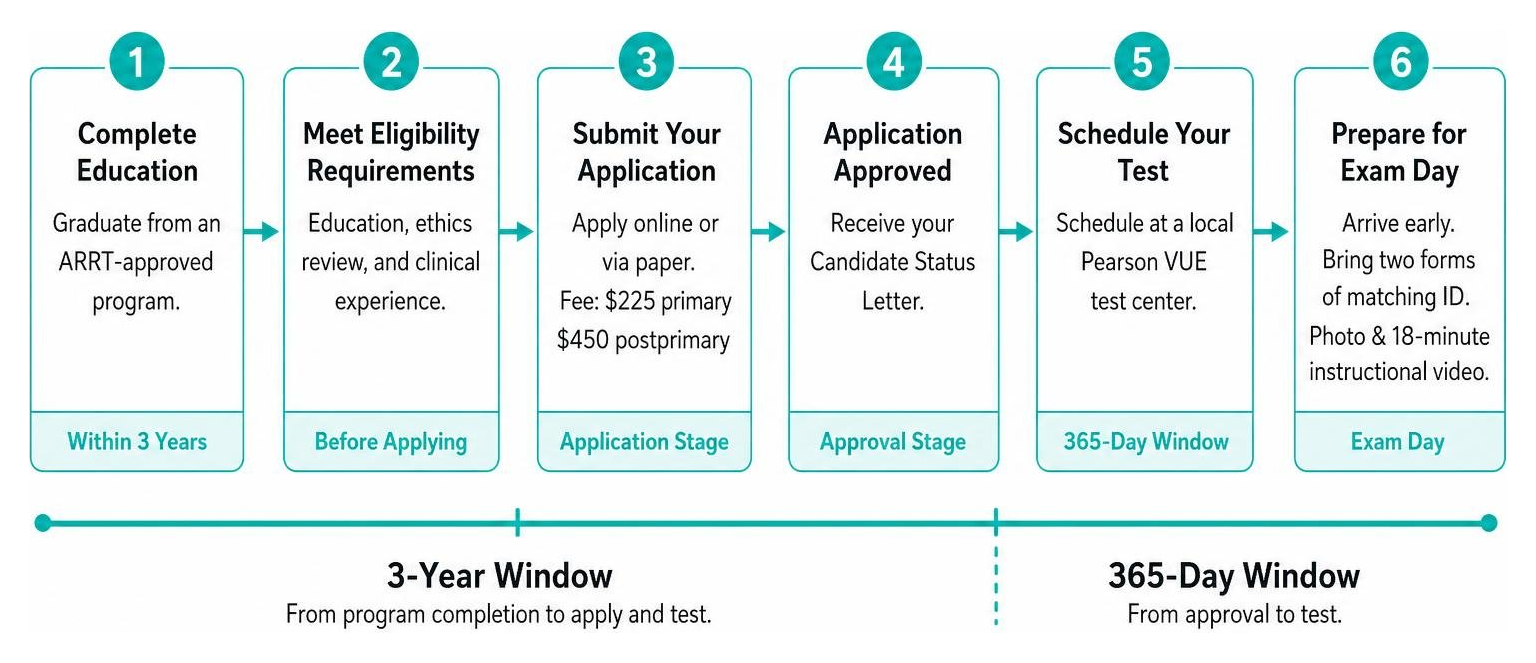
Once you complete your approved educational program, you have a three-year window to apply and take your exam. Here is how the process works:
- Submit Your Application: Complete your application online or via paper. The fee is $225 for primary pathways and $450 for postprimary pathways.
- Schedule Your Test: Once approved, you will receive a Candidate Status Letter. You have a 365-day testing window to schedule and take your exam at a local Pearson VUE test center.
- Prepare for Exam Day: Arrive early. You will need to check in, provide two forms of matching ID, take a digital photo, and watch an 18-minute instructional video.
- The Scoring System: The ARRT® exam uses a scaled scoring system ranging from 1 to 99. You must achieve a minimum score of 75 to pass.
- Attempts and Time Limits: You are allowed a maximum of three attempts to pass the exam within a three-year period. If you fail all three times, you must complete remedial education before you can apply to test again.
Continuing Education (CE) and Recertification Guidelines
Obtaining your certification in Radiology is just the beginning. To maintain your active registration status with the ARRT®, you must complete ongoing continuing professional development:
- The Biennial Requirement: Technologists must complete 24 hours of continuing education (CE) every two years (known as your biennium). These must be Category A or A+ credits approved by a Recognized Continuing Education Evaluation Mechanism (RCEEM) like the ASRT®.
- Continuing Qualifications Requirements (CQR): Every 10 years, the ARRT® requires you to complete a CQR process. This is not a pass-or-fail exam, but rather a self-assessment designed to highlight any knowledge gaps you might have developed over the decade. You will then be prescribed targeted CE courses to address those gaps.
At Scrubs CE, we specialize in providing convenient, affordable online CE courses to help you meet these exact requirements without interrupting your busy work schedule.
Advanced and Alternative Pathways
The beauty of a career in medical imaging is that you do not have to stay in one place. Once you have a foundational credential, you can “layer” additional certifications to expand your career opportunities and boost your salary.
Primary, Postprimary, and Limited Licensed Credentials
There are multiple entry points and advanced tracks in the field of Radiology:
- Primary Credentials: These are for first-time candidates and include disciplines like Radiography (general X-ray), Nuclear Medicine Technology, Radiation Therapy, and Diagnostic Medical Sonography.
- Postprimary Credentials: If you are already certified in a primary discipline, you can earn postprimary credentials in high-demand specialties like Magnetic Resonance Imaging (MRI), Computed Tomography (CT), and Mammography. This pathway requires you to complete 16 hours of structured education and log specific clinical procedures. Learn how to master these transitions with our guides: Mammography Mastery: Achieving Your ARRT Certification, Beginner’s Guide to Computed Tomography Technician Certification, and the Cardiac Interventional Radiography Certification Guide.
- Limited Licensed Radiology Tech (CLLRT): Often called a limited-scope X-ray tech, this is an excellent entry-level pathway. It allows you to perform basic diagnostic X-ray exams on specific parts of the body (like the chest, hands, or feet) under direct supervision. It requires a shorter educational program and is a fantastic stepping stone to a full R.T. credential.
American Board of Radiology (ABR) and ABPS Board Certification for Physicians
If you are a medical doctor (MD or DO) looking to practice as a Radiologist, your certification pathway goes through a completely different set of governing bodies:
- The American Board of Radiology (ABR): The ABR is a member of the American Board of Medical Specialties (ABMS). To become board-certified, residents must complete a transitional year (PGY-1), a four-year accredited residency, and pass two major exams: the computer-based Qualifying (Core) Exam (usually taken after 36 months of residency) and the Certifying Oral Exam (taken at least 12 months after residency). For official guidelines on studying and preparing, visit the American Board of Radiology Core Exam Guide and explore their overall Diagnostic Radiology Certification Requirements.
- American Board of Physician Specialties (ABPS): The Board of Certification in Radiology (BCR), a division of the ABPS, has been certifying physicians since 1986. They offer board certification to physicians who complete an accredited diagnostic Radiology residency and pass both a written and oral exam. This certification is valid for eight years. You can find more details at the Diagnostic Radiology Board Certification | ABPS page.
Other Pathways for Certification in Radiology
Depending on your specific clinical interests or geographical location, you might look into these alternative certifying bodies:
- ARDMS: The American Registry for Diagnostic Medical Sonography is the premier certifying body specifically for ultrasound professionals.
- NMTCB: The Nuclear Medicine Technology Certification Board specializes exclusively in nuclear medicine credentials.
- EDiR: The European Diploma in Radiology is a prestigious, internationally recognized qualification endorsed by the European Society of Radiology (ESR). It standardizes radiological education across borders, making it easier for international Radiologists to practice globally. Find out more at the EDiR – European Board of Radiology portal.
- Osteopathic Pathway (AOBR): Osteopathic physicians (DOs) can obtain board certification through the American Osteopathic Board of Radiology. This pathway requires participating in the four-component Osteopathic Continuous Certification (OCC) process. Learn more about their specialty offerings at the Radiology – American Osteopathic Board of Radiology page.
Certified Radiology Nurse (CRN®) Credential Requirements
Nurses play an incredibly vital role in modern medical imaging departments, particularly in interventional Radiology, CT, and MRI. The Certified Radiology Nurse (CRN®) credential, managed by the Radiologic Nursing Certification Board (RNCB), validates this unique clinical expertise.
To be eligible for the CRN® exam, a registered nurse must:
- Hold a current, unrestricted RN license.
- Have practiced a minimum of 2,000 hours in Radiology nursing within the past three years.
- Complete 30 contact hours of continuing education applicable to Radiology nursing within the 24 months prior to the exam (with at least 15 hours specifically focused on Radiology nursing).
The CRN® credential is valid for four years. For complete application instructions, fees, and exam blueprints, download the official Certified Radiology Nurse (CRN ®) Guidelines.
Frequently Asked Questions about Certification in Radiology
How many CE hours are required to maintain ARRT® certification?
To maintain active ARRT® certification and registration, you must complete 24 hours of continuing education (CE) every two years. These credits must be Category A or A+ and must be documented during your designated two-year biennium.
What is the passing score for the ARRT® exam?
The passing score on any ARRT® registry exam is a scaled score of 75. The scoring scale ranges from 1 to 99, and you are allowed a maximum of three attempts within a three-year period to pass.
Which Radiology certifications are currently in the highest demand?
Specialized postprimary modalities are experiencing unprecedented demand. Computed tomography (CT) currently has the highest vacancy rate in the industry, reaching an all-time high of 19.4%. Earning certifications in CT, MRI, and Mammography is one of the fastest ways to increase your earning potential and job security.
Conclusion

Earning and maintaining your certification in Radiology is a lifelong commitment to professional excellence, safety, and superior patient care. While the administrative steps, exam prep, and continuing education requirements can feel overwhelming, they are the building blocks of a highly rewarding, secure, and lucrative healthcare career.
Whether you are preparing for your very first ARRT® exam, cross-training into a new modality like CT or MRI, or managing your biennial CE requirements, you do not have to do it alone.
At Scrubs CE, we are dedicated to supporting your professional development. We offer high-quality, self-paced online continuing education courses with instant certificates to help you meet your state licensing and ARRT® requirements seamlessly.
Ready to fulfill your continuing education requirements and take the next step in your career? Explore our convenient, self-paced online CE courses today and keep your career moving forward!

Decoding Disease: The Ultimate Guide to Pathological Anatomy
What Is Pathological Anatomy?
The pathological anatomy definition is the medical study of disease-related structural changes in cells, tissues, and organs. Also called anatomic pathology or, historically, morbid anatomy, it helps pathologists identify what disease is present, how extensive it is, and sometimes how it may respond to treatment.
In practical terms, pathological anatomy examines samples such as biopsies, surgical specimens, cells collected by needle aspiration or screening tests, and tissues from autopsies. A pathologist combines what can be seen with the naked eye, under a microscope, and through specialized laboratory tests to turn a specimen into a useful diagnostic report.
This field is a core part of modern medicine because many important changes cannot be confirmed by symptoms, imaging, or blood tests alone. In cancer care especially, tissue findings can establish the tumor type, assess surgical margins, estimate prognosis, and identify biomarkers that may guide therapy.
I am Zita Ewert, a continuing-education leader for imaging professionals who focuses on clear, practical learning for busy healthcare teams. Understanding the pathological anatomy definition helps connect diagnostic imaging, tissue diagnosis, and the clinical decisions that follow.
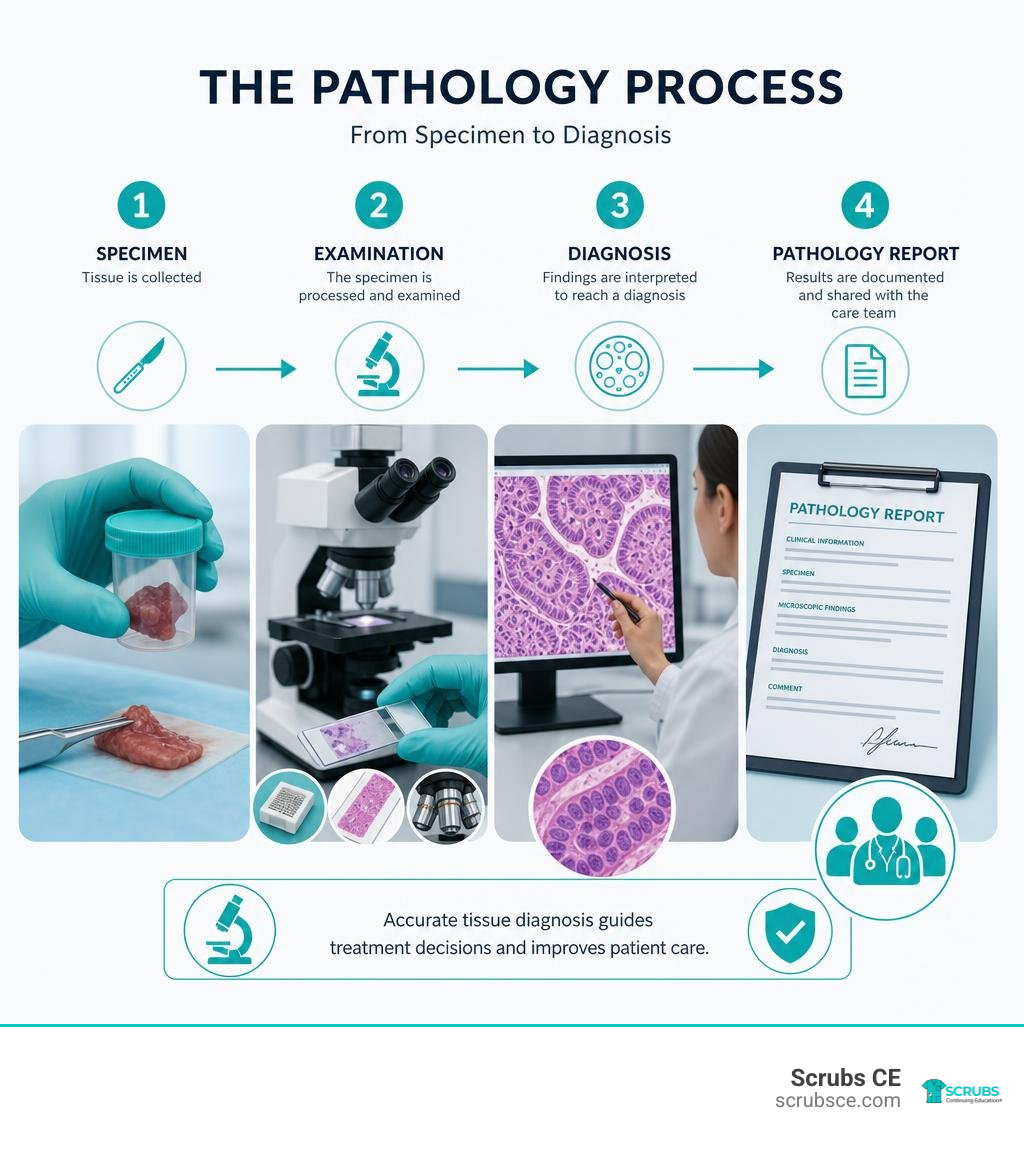
Simple guide to pathological anatomy definition:
Understanding the Pathological Anatomy Definition and Its Scope
To truly grasp the formal pathological anatomy definition, we must examine how it bridges fundamental biological science and frontline clinical care. At its root, pathology stems from the Greek word pathología, which translates to “the study of suffering.” Pathological anatomy focuses specifically on the physical, tangible footprint that suffering leaves behind within the human body.
When a disease takes hold, it alters biological structures across multiple levels—from macroscopic changes visible on an organ’s surface down to microscopic cellular architecture and molecular alterations. In our clinical workflows, we separate the study of disease into two key concepts:
- Etiology: The underlying cause or biological trigger of a disease (such as a viral infection, genetic mutation, or toxic exposure).
- Pathogenesis: The stepwise cellular, chemical, and structural mechanism through which that initial cause develops into full-blown clinical disease.
Pathological anatomy acts as the physical map of pathogenesis. By evaluating tissue architecture and cellular morphology, pathologists trace how normal anatomy transforms into diseased tissue. Whether evaluating a colorectal polyp or analyzing end-stage pulmonary fibrosis—where normal lung tissue degrades into a classic macroscopic “honeycomb” appearance—pathological anatomy provides the baseline ground truth for clinical diagnosis.
For additional reference on standard medical definitions, you can consult this dictionary entry on pathologic anatomy.

Formal Pathological Anatomy Definition vs Clinical Pathology
In modern hospital settings, diagnostic pathology is broadly divided into two major disciplines: anatomical pathology and clinical pathology. While both share the ultimate goal of accurate patient diagnosis, their daily operations, specimen types, and analytical methods differ significantly.
Anatomical pathology centers on the structural and morphological analysis of solid tissues and cellular samples. Pathologists specializing in this branch evaluate tissue biopsies, major surgical resections, fine-needle aspirates, and post-mortem autopsy tissues. They inspect specimens grossly with the naked eye, cut microscopic sections, apply specialized stains, and evaluate cellular patterns under light microscopes or digital screens.
Conversely, clinical pathology focuses primarily on the laboratory analysis of bodily fluids and biochemical markers. Clinical pathologists oversee departments such as clinical chemistry, medical microbiology, hematology, immunology, and blood banking. They analyze blood serum, urine, cerebrospinal fluid, and bone marrow aspirates using automated analyzers to measure cell counts, electrolyte levels, hormone concentrations, and microbial cultures.
| Feature | Pathological (Anatomical) Anatomy | Clinical Pathology |
|---|---|---|
| Primary Specimen Types | Solid tissue biopsies, surgical resections, cytology smears, autopsies | Blood, urine, cerebrospinal fluid, plasma, body secretions |
| Core Analytical Focus | Microscopic cell architecture, tissue morphology, immunophenotyping | Chemical concentrations, cell counts, microbial cultures, fluid dynamics |
| Key Equipment | Microtomes, light/fluorescence microscopes, tissue processors | Automated blood analyzers, centrifuges, mass spectrometers, culture incubators |
| Clinical Objective | Confirm tissue diagnosis, tumor grading, staging, and surgical margin status | Monitor metabolic function, detect systemic infections, measure biomarkers |
Together, these twin pillars ensure that patient care relies on complete laboratory insights—combining structural tissue analysis with fluid chemistry.
Historical Evolution: From Morgagni to Virchow
Pathological anatomy did not emerge fully formed; it evolved over centuries of scientific curiosity, technological breakthroughs, and shifts in medical philosophy. Before the scientific revolution, ancient medicine relied heavily on humoral theory—the belief that disease arose from an imbalance among four bodily humors (blood, phlegm, black bile, and yellow bile).
The shift toward modern anatomical investigation gained significant momentum in 1543, when Andreas Vesalius performed direct human dissections to challenge ancient anatomical misconceptions. However, the modern foundation of pathological anatomy as a systematic discipline was laid in the 18th century by Giovanni Battista Morgagni. In his landmark 1761 publication, De Sedibus et Causis Morborum per Anatomen Indagatis (“On the Seats and Causes of Diseases Investigated by Anatomy”), Morgagni systematically correlated clinical symptoms observed during a patient’s life with structural organ abnormalities discovered during post-mortem autopsies.
During the 19th century, medical centers across Europe—particularly the famous Vienna School—embraced prosection and post-mortem examination. But the ultimate paradigm shift occurred when optics and microtechnology converged.
Rudolf Virchow, widely celebrated as the father of modern cellular pathology, published Cellularpathologie in 1858. Virchow famously posited omnis cellula e cellula (“every cell arises from another cell”) and demonstrated that disease is not simply an imbalance of body fluids or organ-wide dysfunction, but rather stems from structural and functional alterations at the cellular level.
The historical transmission of these medical concepts is thoroughly detailed in this guide on Pathoanatomy Definition.
From early macroscopic cadaver prosection to Virchow’s microscopic breakthroughs, pathological anatomy transformed medicine from speculative philosophy into an exact, structural science.
Key Subspecialties and Specimen Types
As modern medicine has grown more specialized, pathological anatomy has expanded into dedicated subspecialties. Each division focuses on specific biological samples, diagnostic procedures, and clinical settings.
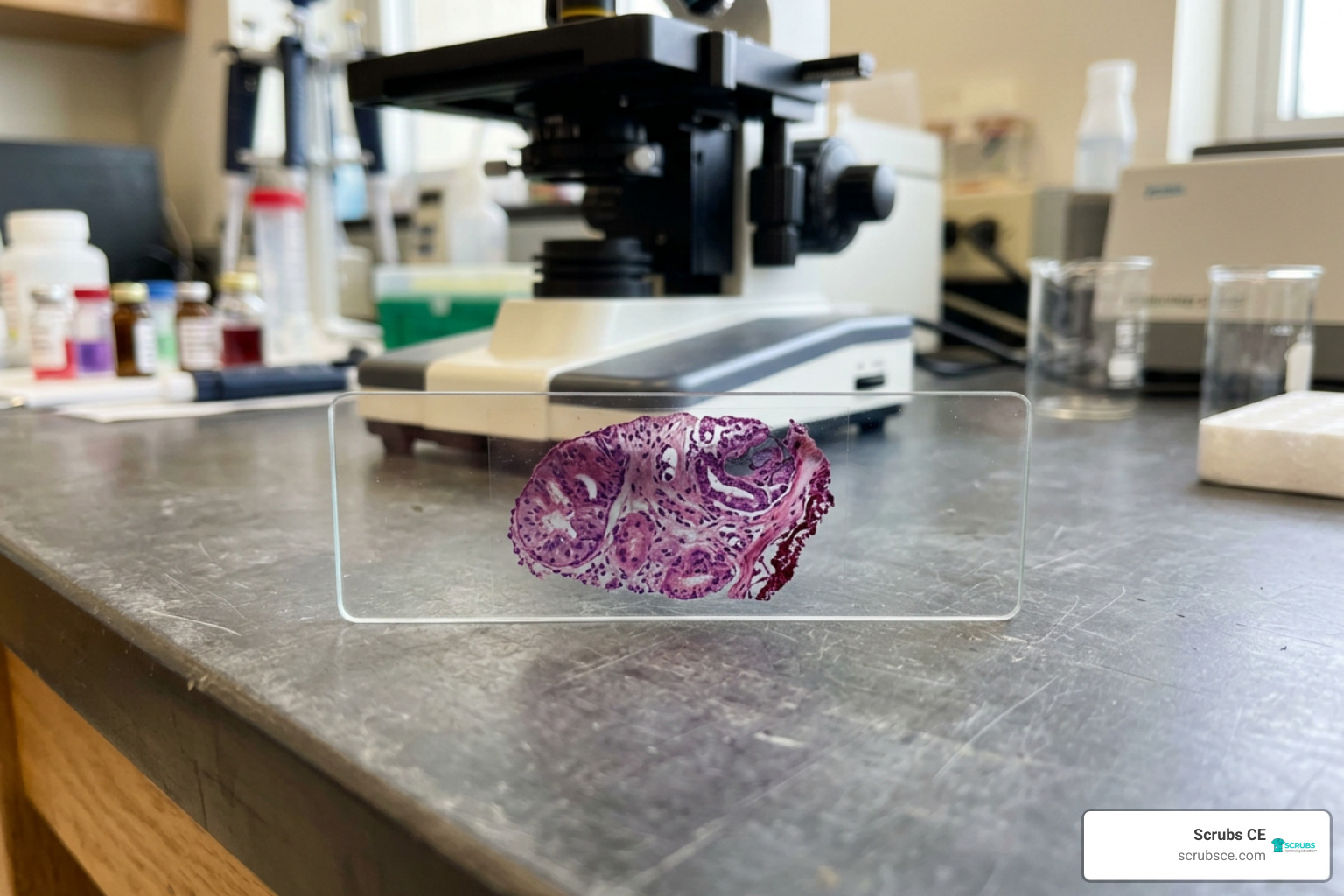
Pathological anatomy encompasses four primary subspecialties:
- Surgical Pathology: The largest subfield, involving the microscopic evaluation of tissues removed during surgical procedures (such as biopsies and organ resections) to diagnose disease and guide surgical strategy.
- Cytopathology: The study of individual cells or small clusters of cells shed naturally or scraped/aspirated from mucosal surfaces and body cavities (such as cervical Pap smears or thyroid fine-needle aspirations).
- Molecular Pathology: The examination of nucleic acids (DNA/RNA) and gene expression patterns within tissue samples to identify precise genetic mutations, oncogenic drivers, and therapeutic targets.
- Forensic Pathology: The application of pathological anatomy in legal and medicolegal settings, utilizing post-mortem autopsy techniques to determine the cause, mechanism, and manner of death.
Surgical Pathology and Biopsy Analysis
Surgical pathology represents the daily operational core of most anatomical pathology departments. Pathologists in this field evaluate biological tissue specimens collected through various clinical methods:
- Core Needle Biopsies: Small, cylindrical tissue cores extracted using specialized hollow needles, frequently used for evaluating suspicious breast, prostate, or liver lesions.
- Incisional Biopsies: Surgical sampling of a representative portion of a larger mass or lesion to establish a preliminary diagnosis before major intervention.
- Excisional Biopsies: Complete surgical removal of an entire suspicious lesion or polyp (such as a cauliflower-shaped colorectal polyp) for simultaneous diagnosis and definitive localized treatment.
- Surgical Resections: Large-scale organ resections (such as a colectomy or mastectomy) performed to remove widespread disease along with surrounding lymph nodes and healthy tissue boundaries.
During surgical pathology evaluation, gross examination is conducted first. Pathologists carefully inspect, measure, weigh, section, and ink the specimen margins. Inking tissue edges allows the pathologist to verify under the microscope whether a tumor has been excised with clear, healthy tissue margins or if tumor cells extend directly to the surgical cut edge.
In urgent scenarios, surgeons request an intraoperative frozen section consultation. The pathologist rapidly freezes fresh tissue using a cryostat microtome, cuts a section, stains it, and provides an immediate diagnosis within minutes to inform the surgeon whether margins are clear while the patient remains on the operating table.
Cytopathology and Forensic Pathology
Cytopathology offers a minimally invasive alternative to solid tissue biopsies. Rather than examining intact tissue architecture, cytopathologists evaluate individual cell morphology.
A classic example is the cervical Papanicolaou (Pap) test, introduced by George Papanicolaou in 1928, which revolutionized early screening for cervical dysplasia and carcinoma. Another common method is Fine-Needle Aspiration (FNA), where thin needles harvest cellular fluid from palpable masses in the thyroid, lymph nodes, or salivary glands. Cytotechnologists perform initial high-volume slide screening, escalating atypical or suspicious preparations to board-certified pathologists for final evaluation.
Forensic pathology applies these same diagnostic principles post-mortem. Forensic pathologists perform systematic autopsies to investigate sudden, unexpected, violent, or suspicious deaths. By carefully prosecting tissues, examining gross organ trauma, and evaluating toxicological and microscopic evidence (such as identifying gray-yellow purulent pus over the cerebral meninges in acute bacterial meningitis), forensic specialists establish legal causes of death to assist law enforcement, coroners, and public health authorities.
Core Diagnostic Techniques and Technological Advances
To transform raw biological tissue into actionable diagnostic reports, pathological anatomy relies on a sophisticated continuum of laboratory techniques. Modern laboratories combine traditional optics with advanced molecular diagnostics.

Microscopic Techniques and Standard Staining
The foundational diagnostic workhorse of pathological anatomy remains light microscopy coupled with Hematoxylin and Eosin (H&E) staining. However, before a tissue section can be viewed under a microscope, it must undergo rigorous preparation:
- Fixation: Freshly excised tissue is immersed in a preservative liquid—most commonly 10% neutral buffered formalin—to arrest autolysis, inhibit bacterial degradation, and cross-link cellular proteins.
- Processing and Paraffin Embedding: The fixed tissue is dehydrated through ascending alcohol baths, cleared in xylene, and infiltrated with molten paraffin wax. Once cooled, the tissue is encased in a solid paraffin block.
- Microtome Sectioning: A precision microtome slices the paraffin block into ultra-thin tissue sections measuring just 3 to 5 microns thick—thin enough to allow light transmission without cell overlap.
- Staining: Sections are mounted on glass slides and stained with H&E. Hematoxylin, a basic dye, binds to nucleic acids, coloring cell nuclei deep blue/purple. Eosin, an acidic dye, stains cytoplasmic proteins and extracellular collagen varying shades of pink.
For specialized diagnostic questions, pathologists utilize supplementary histochemical stains:
- Periodic Acid-Schiff (PAS): Highlights complex carbohydrates, basement membranes, and fungal cell walls.
- Ziehl-Neelsen: Detects acid-fast mycobacteria, such as Mycobacterium tuberculosis.
- Elastic Stains: Visualize disrupted vascular elastic laminae, helping confirm vasculitis (such as in granulomatous polyangiitis).
For further technical insights into tissue preparation, explore these Pathological Anatomy Techniques.
The Pathological Anatomy Definition in Diagnostic Oncology
While traditional morphology under H&E staining provides essential clues, morphologically identical tumors can behave entirely differently. Modern pathological anatomy resolves these limitations through ancillary testing—most notably Immunohistochemistry (IHC), In Situ Hybridization (ISH), and Next-Generation Sequencing (NGS).
Immunohistochemistry uses antigen-antibody specificity to tag intracellular markers with chromogenic enzymes. For example, if a metastatic tumor of unknown origin presents in a lymph node, an IHC panel testing for cytokeratins, S100, or leukocyte common antigen can immediately distinguish carcinoma from melanoma or lymphoma.
In oncology, IHC and molecular diagnostics do more than establish a diagnosis; they dictate targeted therapy:
- HER2/neu Overexpression: Identified via IHC or Fluorescence In Situ Hybridization (FISH) in invasive ductal breast carcinoma, predicting response to targeted therapies like trastuzumab.
- PD-L1 Expression: Quantified on tumor cell membranes to predict responsiveness to immune checkpoint inhibitors.
- Molecular Driver Mutations: Polymerase Chain Reaction (PCR) and NGS pinpoint specific genetic alterations (such as EGFR mutations in non-small cell lung carcinoma or BRAF V600E mutations in melanoma), allowing oncologists to prescribe tailored molecular inhibitors.
Clinical Role and Interdisciplinary Collaboration
Pathologists are frequently referred to as “the doctor’s doctor.” Although they rarely interact directly with conscious patients, their analytical findings guide virtually every major clinical decision in patient care.
Tumor Boards and Surgical Margin Evaluation
Modern oncology relies heavily on multidisciplinary collaboration. Pathologists serve as central figures on hospital tumor boards—regular consultative panels where surgeons, medical oncologists, radiation oncologists, and diagnostic imaging specialists gather to discuss complex patient cases.
During tumor board reviews, the pathologist presents tissue slides, reviews histopathological grades, clarifies staging classifications, and reports surgical margin status. If microscopic evaluation reveals tumor cells resting directly on an inked resection edge, the team knows immediate re-excision or adjuvant radiation therapy is required to prevent local recurrence.
Bridging Pathology with Diagnostic Radiology
A critical area of clinical collaboration is radiologic-pathologic correlation. Diagnostic imaging modalities—such as CT, MRI, ultrasound, and mammography—identify structural abnormalities, tissue density shifts, and space-occupying lesions deep within body cavities. However, imaging findings require structural tissue validation to confirm exact disease entities.
For radiologic technologists, radiographers, and medical imaging professionals, understanding the underlying pathological anatomy enhances clinical practice. When imaging specialists understand how pathological processes—such as calcifications, osteolytic destruction, or necrotic tumor centers—manifest anatomically, they can capture optimized diagnostic images.
Professional credentials administered by the AMERICAN REGISTRY OF RADIOLOGIC TECHNOLOGISTS® (ARRT®) emphasize the importance of understanding pathology alongside anatomical positioning. Maintaining strong continuing education standards certified through organizations like the ARRT® and the ASRT® (American Society of Radiologic Technologists) ensures that imaging teams work seamlessly with pathologists to maintain diagnostic precision.
Frequently Asked Questions About Pathological Anatomy
What is the primary difference between anatomical pathology and clinical pathology?
Anatomical pathology (or pathological anatomy) focuses on structural changes in solid tissues, organs, and cellular samples obtained via biopsy, surgery, or autopsy. Clinical pathology deals with the quantitative laboratory analysis of bodily fluids, such as blood, urine, cerebrospinal fluid, and metabolic markers.
How did Rudolf Virchow transform pathological anatomy?
In the mid-19th century, Rudolf Virchow introduced cellular pathology (Cellularpathologie). He demonstrated that disease originates within structural and functional disruptions of individual cells rather than whole-organ dysfunction or ancient fluid humors, establishing the microscopic foundation of modern diagnostic medicine.
What are the main techniques used to examine tissue samples in pathological anatomy?
The primary techniques include gross macroscopic examination, tissue fixation, paraffin embedding, microtome sectioning, standard Hematoxylin and Eosin (H&E) staining, specialized histochemical stains, Immunohistochemistry (IHC), In Situ Hybridization (ISH), and advanced molecular testing such as PCR and Next-Generation Sequencing (NGS).
Conclusion
Understanding the pathological anatomy definition reveals why this discipline remains the absolute bedrock of diagnostic medicine. By bridging macroscopic clinical observations with microscopic cellular architecture and molecular genetics, pathological anatomy allows healthcare teams to deliver definitive disease diagnoses, evaluate prognoses, and tailor targeted therapies for individual patients.
As personalized medicine, digital pathology platforms, and automated molecular diagnostics continue to evolve, the structural insights provided by pathological anatomy will remain central to patient outcomes. For healthcare professionals seeking to sharpen their anatomical knowledge and meet mandatory licensure requirements, maintaining high-quality continuing education is essential.
At Scrubs CE, we provide self-paced, affordable online continuing education designed to empower imaging professionals, radiographers, and healthcare teams. Expand your diagnostic insight today by exploring our comprehensive course on Anatomy for Radiographers!

Is MRI Tech School Hard? What to Expect on Your Journey
What Is MRI Tech School and Is It Really Hard?
When students ask if mri tech school is hard, the answer usually comes down to two specific subjects: MRI physics and cross-sectional anatomy. Unlike general X-ray imaging, which relies on ionizing radiation to produce flat, two-dimensional projection images, magnetic resonance imaging relies on complex nuclear magnetic resonance principles, strong magnetic fields, and radiofrequency pulses to build multi-planar cross-sectional views.
To master this field, you must learn MRI Training 101 basics: how hydrogen protons in human tissue align inside a powerful magnetic field, how gradient magnetic fields spatially encode signals, and how pulse sequencing parameters (like TR, TE, and flip angles) affect image contrast and resolution. Developing strong spatial reasoning is essential because you will evaluate internal anatomy across axial, sagittal, and coronal planes.
Beyond the classroom math and physics, patient safety adds serious practical responsibility. MRI suites contain constantly active high-field magnets (typically 1.5 Tesla to 3.0 Tesla or higher) that create intense magnetic force, making strict safety screening an absolute daily priority.
Physical and Technical Demands of MRI Technology
The day-to-day physical demands of an MRI technologist are continuous throughout every shift:
- Patient positioning and mobility support: Technologists frequently assist injured, elderly, or bedridden patients onto the scanner table, requiring proper body mechanics and lifting standards (often lifting or supporting up to 50 lbs).
- Physical endurance: You will be on your feet standing and walking up to 80% of your working hours.
- Ferromagnetic screening and safety: High-field magnets attract ferromagnetic materials with dangerous force. Technologists must carefully screen every patient and staff member for metallic implants, pacemakers, insulin pumps, or foreign bodies.
- Managing patient distress: Working with anxious or claustrophobic patients inside a narrow bore scanner requires high empathetic communication skills.
Primary Pathway vs. Post-Primary Pathway MRI Tech School Options
Historically, becoming an MRI tech required earning an associate degree in general Radiologic Technology first. Today, prospective students have two distinct educational avenues recognized by the AMERICAN REGISTRY OF RADIOLOGIC TECHNOLOGISTS® (ARRT®):
- ARRT® Primary Pathway (Direct Entry): Designed for students without prior Radiology credentials. These full-time programs combine general education, specialized MRI physics, cross-sectional anatomy, and clinical rotations into an Associate of Applied Science (AAS) or Associate of Science (A.S.) degree.
- ARRT® Post-Primary Pathway: Designed for healthcare professionals who already hold active registration in Radiography (X-ray), Nuclear Medicine, Radiation Therapy, or Sonography. These certificate programs focus strictly on advanced MRI coursework and clinical hours, often taking 6 to 9 months to complete.
If you are exploring local options, reviewing specialized CT and MRI Certificate Programs or post-graduate options like the Magnetic Resonance Imaging (MRI) Program | Greenville Technical College can clarify how post-primary options fit working technologists.
Types of Programs, Prerequisites, and Completion Timelines
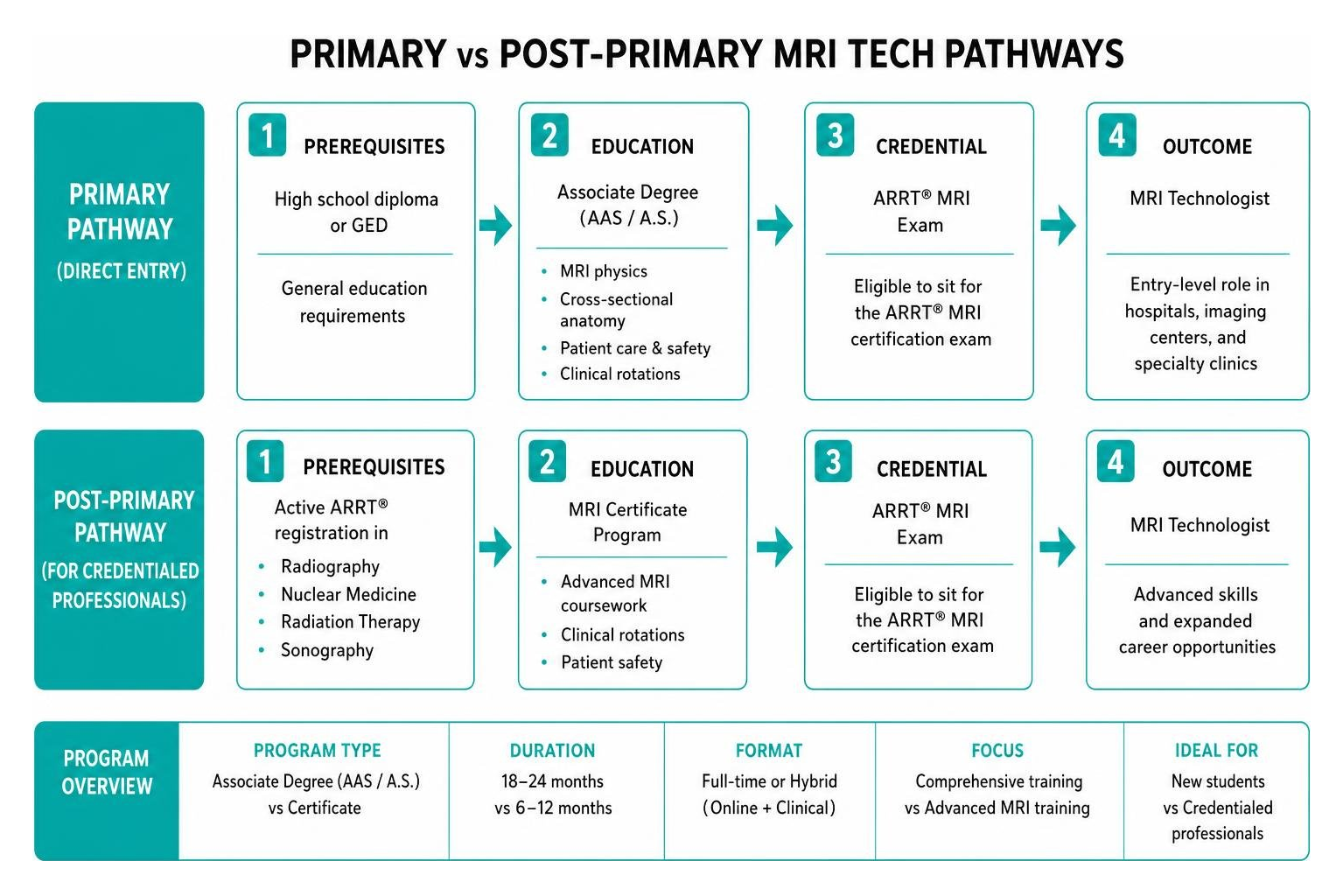
Finding the right mri tech school depends on your background, schedule, and learning style. Educational institutions offer three main program structures:
- Associate Degree Programs (AAS / A.S.): Usually take 18 to 24 months (6 quarters or 6 modules) and provide a direct entry primary pathway for beginners.
- Certificate Programs: Take 6 to 12 months, catering primarily to credentialed Radiologic Technologists.
- Hybrid Programs: Combine online didactic lectures (physics, anatomy, ethics) with local hands-on labs and arranged clinical externships.
| Program Type | Target Student | Typical Length | Average Clinical Hours | Primary Credential Goal |
|---|---|---|---|---|
| Direct-Entry Associate Degree | Beginners / Career Changers | 18 – 24 Months | 960 – 1,020 Hours | ARRT® or ARMRIT® Certification |
| Post-Primary Certificate | Registered Rad Techs | 6 – 12 Months | 495 – 900 Hours | ARRT® Post-Primary Credential |
| Accelerated Hybrid Certificate | Beginners / Career Changers | 12 – 18 Months | 1,000 Hours | ARMRIT® / ARRT® Credential |
Admissions Requirements and Prerequisites
Admissions processes can be selective due to limited clinical placement slots. To qualify, you generally need:
- A high school diploma or GED equivalent.
- Completion of core college prerequisites (Anatomy and Physiology I & II, College Algebra or Statistics, English Composition, and Communication) with a minimum GPA (often 3.0 in prerequisite subjects).
- Passing scores on allied health entrance exams, such as the Criteria Cognitive Aptitude Test (CCAT).
- Formal background checks, drug screenings, and active CPR / Basic Life Support (BLS) certification.
- Complete immunization records (Hepatitis B series, TB screening, flu shot).
- Documented job shadowing in an active MRI department (recommended or required by many programs).
For a deeper look into baseline allied health standards, read our guide on general Radiologic Technologist Requirements.
Cost Breakdown and Financial Aid for MRI Tech School
The cost of attending mri tech school varies widely depending on the institution type:
- Public Community Colleges: Often range between $3,000 and $16,000 total for in-state tuition and fees.
- Private Vocational Schools and Academies: Can range from $11,500 up to $28,000 depending on location and degree level.
Financial aid options include federal Pell Grants, Direct Subsidized and Unsubsidized Loans for accredited institutions, state grants, flexible institutional payment plans, and healthcare employer tuition reimbursement programs. Programs like the MRI Program | Gurnick Academy Of Medical Arts demonstrate how structured credit hour systems and institutional financial plans operate for full-time students.
What You Learn: MRI Tech Curriculum and Clinical Rotations
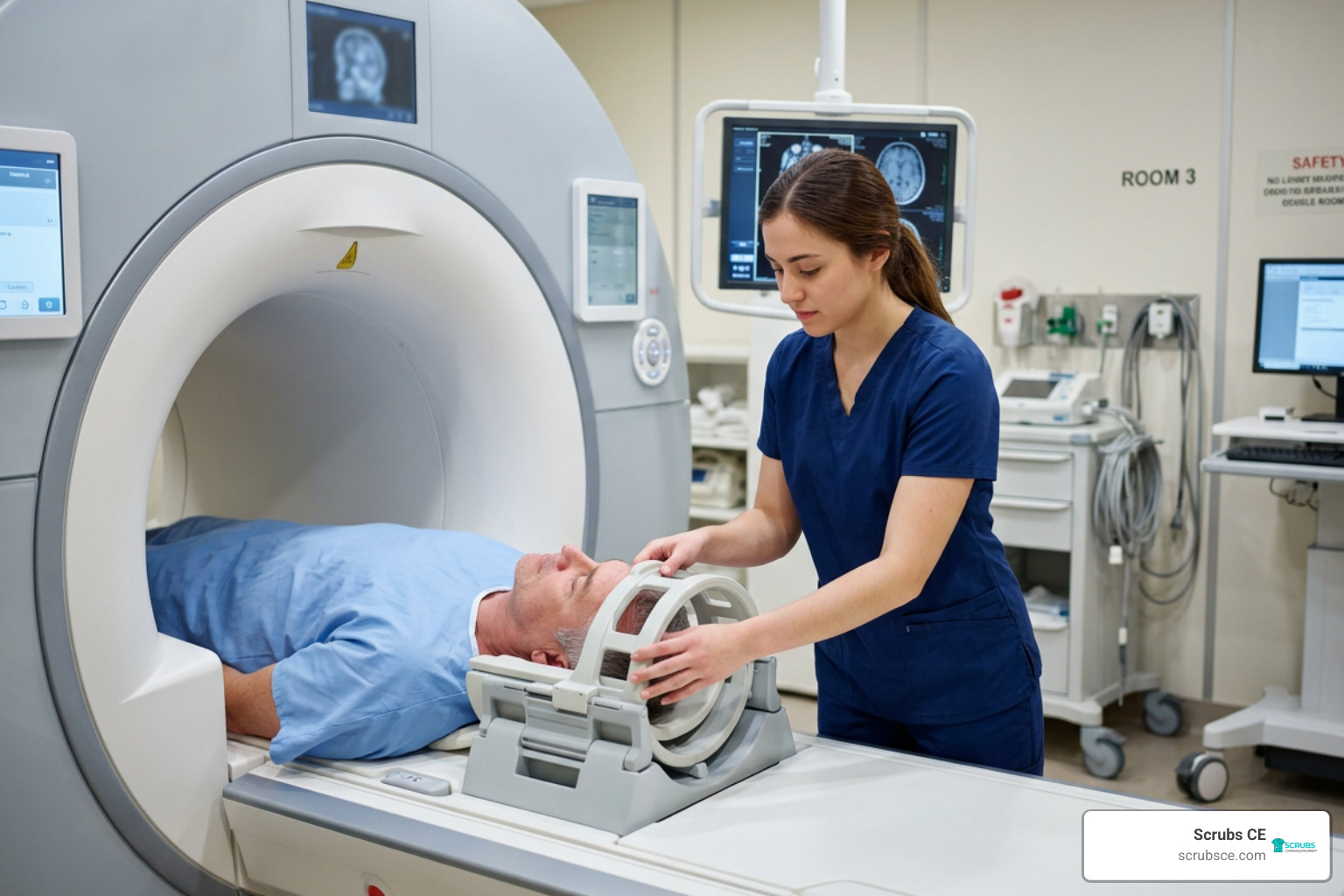
The didactic portion of mri tech school builds technical knowledge from the ground up. Core topics cover:
- MRI Physics and Instrumentation: Electromagnetic principles, radiofrequency pulses, spatial encoding, K-space filling, signal-to-noise ratios (SNR), and pulse sequence optimization.
- Cross-Sectional Anatomy: Brain, spine, musculoskeletal, abdominal, pelvic, and cardiovascular imaging across multiple planes.
- Patient Care and Safety: Contrast agent administration, venipuncture techniques, monitoring vital signs, handling claustrophobia, and implementing safety protocols outlined in our review of Essentials of MRI Safety.
Clinical Training Requirements and Rotations
Classroom theory must be applied in clinical settings under the direct supervision of registered technologists and radiologists.
- Clinical Benchmark Hours: Direct-entry degree programs generally require between 900 and 1,020 clinical hours, whereas post-primary certificates require around 495 hours.
- Virtual Simulation Software: Programs frequently integrate high-fidelity platforms (such as Corsmed MRI simulators) to help students practice parameter adjustments and pulse sequencing on virtual patients before entering live clinical suites.
- Clinical Placement Settings: Rotations are completed in high-volume hospital suites, emergency trauma centers, and outpatient diagnostic imaging centers.
Notable institutions, such as the Magnetic Resonance Imaging (MRI) Program (Minnesota) – Health Sciences Education – Mayo Clinic College of Medicine & Science and accelerated options like the 24-Month MRI Tech Program in Illinois | Aquarius Institute , prioritize intensive clinical immersion on state-of-the-art scanners (ranging from 1.5T to high-field 3.0T or 7.0T systems).
ARRT® vs. ARMRIT® Certification Pathways
Upon graduation, you must pass a national credentialing examination to practice professionally. Two primary organizations credential MRI technologists in the United States:
- AMERICAN REGISTRY OF RADIOLOGIC TECHNOLOGISTS® (ARRT®): The primary national registry recognized by nearly all hospitals and clinical employers across the nation. Candidates must pass a 200-question exam covering patient care, safety, image production, and procedures. Prepare thoroughly using our dedicated guide for MRI Registry Review.
- American Registry of Magnetic Resonance Imaging Technologists (ARMRIT®): An organization focused exclusively on magnetic resonance imaging. ARMRIT® certification is widely recognized in outpatient diagnostic centers and private imaging facilities, offering a dedicated path for direct-entry graduates.
Career Outlook, Salary, and State Licensing Requirements

Graduating from mri tech school prepares you for a solid healthcare career. According to the U.S. Bureau of Labor Statistics (May 2025 BLS data), the national median annual salary for MRI technologists is $95,480. Employment in the field is projected to grow by 6% from 2022 to 2032 (and through 2033), driven by an aging population and higher demand for advanced, non-invasive diagnostic imaging.
Pay scales vary significantly based on geographic location, clinical setting, and shift differentials:
- New York: Average annual salary of approximately $90,000, with a typical range between $72,000 and $115,000 depending on the metro area.
- California and High-Cost States: Median salaries frequently exceed $100,000 annually in major metropolitan health systems.
- Career Settings: Certified techs work in community hospitals, academic medical centers, outpatient imaging networks, mobile MRI units, or high-paying travel assignments. Explore your options in our detailed breakdowns of MRI Tech Jobs and high-paying MRI Tech Jobs Travel.
State-by-State Licensure and ARRT® Compliance
Because MRI uses strong magnetic fields and non-ionizing radio waves rather than X-rays, state licensure rules differ from general Radiography:
- State Health Department Licensing: States like Oregon, West Virginia, and New Mexico explicitly require state-issued licenses for MRI operators.
- Employer Requirements: Even in states where state government licensure is not mandated for non-ionizing imaging, almost all major hospitals and health systems require active national certification through the ARRT® or ARMRIT®.
- Continuing Education: Maintaining your credentials requires completing continuing education (CE) credits biennially. Learn more in our overview of Radiologic Technologist Certification Requirements.
How to Choose the Best MRI Tech School for Your Career
Choosing the right program determines your board pass rates, clinical comfort, and job placement options. Keep these core criteria in mind:
- Institutional and Programmatic Accreditation: Verify that the institution holds regional accreditation and programmatic approval through bodies such as the Joint Review Committee on Education in Radiologic Technology (JRCERT) or the Accrediting Bureau of Health Education Schools (ABHES).
- ARRT® and ARMRIT® Qualification: Ensure program completion directly qualifies you to sit for national credentialing examinations.
- Clinical Network and Placement: Check if the school guarantees local clinical rotations or requires you to arrange your own externship site.
- Faculty Ratios and Facilities: Look for standard lecture ratios (e.g., 1:20) and lab or clinical ratios (1:1 or 1:2) that support individualized learning.
Review examples of accredited educational frameworks, such as the MRI Technology – BatesTech – BatesTech primary pathway or the hybrid associate degree at Magnetic Resonance Imaging Training Program | CBD College , to understand program expectations.
Key Questions to Ask Admissions Officers
Before submitting an application fee, ask these direct questions during your interview:
- Is clinical site placement fully arranged and guaranteed by the school within a reasonable commuting distance?
- What are the board exam first-time pass rates for ARRT® and ARMRIT® over the past three years?
- Does the curriculum include hands-on simulation software (like Corsmed) to practice scanning parameters prior to clinicals?
- What is the total out-of-pocket cost, including tuition, lab fees, software, scrubs, and medical clearances?
Frequently Asked Questions about MRI Tech School
Can I become an MRI technologist without prior X-ray or Radiology experience?
Yes. Thanks to the ARRT® Primary Pathway and direct-entry ARMRIT®-accredited programs, career changers can enroll in direct-entry Associate of Applied Science programs without holding a prior radiography degree or X-ray license. Check out our guide on pursuing a Radiologist Technician Career for additional context on imaging pathways.
How long does it take to complete MRI tech school?
Direct-entry associate degree options take 18 to 24 months (around 6 quarters or 6 modules). Post-primary certificate programs for existing Radiologic Technologists take between 6 and 12 months.
What is the hardest part of MRI tech school?
Most students find MRI physics (understanding pulse sequences, flip angles, gradient fields, and K-space) and 3D cross-sectional anatomy to be the most challenging academic hurdles. Managing claustrophobic patients under tight clinical schedules is the primary practical challenge.
Conclusion
Succeeding in mri tech school takes hard work, consistent study habits, and hands-on dedication, but it leads directly to a rewarding career in modern diagnostic healthcare. By understanding the curriculum, clinical commitments, and certification pathways ahead of time, you can confidently take the first steps toward your career.
At Scrubs CE, we are here to support your professional journey every step of the way. From your initial training through years of clinical practice, maintaining your professional credentials requires reliable, high-quality continuing education. When you are ready to complete your required biennial credits or expand your knowledge base, explore how you can advance your imaging career with flexible MRI CE credits designed to fit your busy schedule.

Top Online and Hybrid Nuclear Medicine Technology Programs
Overview of Nuclear Medicine Online Courses and Program Types
Navigating the landscape of nuclear medicine education requires understanding the different academic pathways available. Whether you are entering the healthcare field for the first time or transitioning from general Radiology, distance learning options are designed to meet varying educational backgrounds.
When exploring options, programs generally fall into three primary categories:
- Associate Degrees (A.A.S. or A.S.): Typically offered by community colleges, these 2-year programs require around 75 credit hours. They combine foundational sciences with core nuclear medicine instruction and local clinical rotations.
- Bachelor’s Degrees (B.S.): Offered by four-year universities, these comprehensive programs provide deeper training in advanced molecular imaging, management, and research, preparing graduates for leadership roles.
- Post-Primary Certificates: Designed specifically for licensed radiologic technologists (such as X-ray or CT techs) who want to cross-train into nuclear medicine without repeating basic general education coursework.
For candidates taking their first steps, our guide on Starting Your Career: A Guide to Nuclear Medicine Technologist Courses details how these structural pathways map to long-term career success.
Post-Primary Certificates and Nuclear Medicine Online Courses
For credentialed radiologic technologists, post-primary certificate programs offer the fastest bridge into nuclear medicine. Because these students already understand patient care, medical ethics, and general imaging physics, distance programs focus purely on specialized nuclear subjects.
These accelerated pathways feature online lectures paired with structured clinical hours at regional hospitals. In many distance certificate programs, didactic instruction covers radiation safety, radiopharmacy, and nuclear instrumentation, directly aligning with the AMERICAN REGISTRY OF RADIOLOGIC TECHNOLOGISTS® (ARRT®) and Nuclear Medicine Technology Certification Board (NMTCB) post-primary exam requirements.

For professionals focusing specifically on radioisotopes, specialized options like the Nuclear Pharmacy Certificate Program provide targeted training. The Nuclear Regulatory Commission (NRC) requires 200 hours of formal classroom instruction in basic radioisotope techniques combined with 500 hours of practical handling experience to qualify as an Authorized Nuclear Pharmacist. Modern distance programs utilize self-paced learning management platforms and interactive virtual drop-in labs to evaluate hands-on competency remotely.
Continuing Education and Specialization Nuclear Medicine Online Courses
For active nuclear medicine technologists (NMTs), staying certified requires ongoing professional development. Practicing technologists must complete continuing education (CE) credits biennially to maintain state licensure and credentials with the ARRT® or NMTCB.
Online CE courses offer flexible avenues to master rapidly advancing imaging technologies. Learn more about maintaining your credentials in our comprehensive Nuclear Medicine CE Credits Guide 2026.
Core topics covered in continuing education courses include:
- SPECT/CT and PET/CT Hybrid Imaging: Advanced attenuation correction, co-registration techniques, and multi-modality protocol standardization.
- Radiotheranostics and Targeted Therapy: Emerging diagnostic-therapeutic pairings, such as Lutetium-177 treatments for prostate cancer and neuroendocrine tumors.
- Organ-Specific Scintigraphy: Specialized clinical applications including Infection and Inflammation in Nuclear Medicine Imaging and complex Nuclear Medicine Myocardial Perfusion protocols.
Top Institutions Offering Hybrid and Distance NMT Education
Finding an accredited online or hybrid NMT program requires comparing delivery formats, cohort sizes, and clinical arrangement policies. Because nuclear medicine involves handling unsealed radioactive materials, every legitimate entry-level program uses a hybrid approach—delivering lectures online while managing clinical hours locally.
| Institution / Platform | Program Format | Target Audience | Key Features & Strengths |
|---|---|---|---|
| Pitt Community College | 1-Year Accelerated Hybrid | Entry-level & Career Changers | Self-paced online lectures combined with regional hospital clinical rotations. |
| Bronx Community College (CUNY) | Online Certificate Track | Licensed X-ray / CT Techs | Designed to solve regional technologist shortages by cross-training existing radiologic workers. |
| Purdue University | Distance Certificate | Pharmacists & Pharmacy Students | Fulfills 200-hour NRC didactic requirement with live virtual drop-in lab evaluations. |
| Brighton and Sussex Medical School (BSMS) | Postgraduate MSc / PGDip / PGCert | Physicians, Physicists, & Senior Techs | GMC-approved distance learning program covering advanced clinical nuclear medicine; requires annual UK exams. |
| IAEA (DATOL & VirRAD Platforms) | Self-Paced E-Learning | Global Health Professionals | Free international training modules covering basic sciences, radiopharmacy, and 3D virtual lab simulations. |
| TU Delft | 9-Week Online MOOC | Engineers & Health Physicists | Specialized course focusing on radioisotope production, decay mechanics, and chemical separation techniques. |
Accelerated Certificates and Associate Degrees
Accelerated hybrid programs offer an efficient route to entering the workforce. Programs like the one offered by Pitt Community College deliver an intense 1-year curriculum where didactic coursework (such as nuclear physics, health physics, and radiobiology) is completed entirely online. Students secure clinical placement at pre-approved local healthcare facilities near their place of residence.
Distance learning options allow community colleges to address critical healthcare labor shortages. For instance, Bronx Community College launched an online NMT certificate program specifically tailored to help registered radiologic technologists transition into nuclear medicine without leaving their current jobs. This approach expands the technologist pool in underserved areas by forming local hospital partnerships.
When selecting an accelerated track, cohort sizes are frequently restricted—often to as few as 15 students per year—to maintain high faculty-to-student ratios and guarantee quality clinical site placements. Review our Nuclear Medicine Education Guide 2026 for an in-depth look at program selection criteria.
Advanced Postgraduate and International Programs
For clinicians, physicists, and senior technologists seeking advanced master’s-level expertise, international academic institutions offer flexible distance options.
- Postgraduate Degrees: Programs like the Nuclear Medicine MSc at BSMS provide flexible 60-credit (PGCert), 120-credit (PGDip), and 180-credit (MSc) pathways. Distance learners access live interactive seminars and recorded lectures from anywhere in the world, traveling to campus only for required annual May examinations.
- Radiation Protection Training: The International Atomic Energy Agency (IAEA) offers specialized online modules, such as their 20-hour course on Radiation Protection in Nuclear Medicine. This course addresses international safety standards, pediatric dose optimization, and safety protocols for hybrid PET/CT scanners.
- Radionuclide Production: Universities like TU Delft offer technical short courses focused on backend radiochemistry. Their 9-week online course, Radionuclide Production | TU Delft Learning for Life, covers production facility engineering, cyclotron mechanics, and chemical separation processes.
Core Curriculum, Clinical Training, and Prerequisites

Whether enrolled in a distance certificate or a hybrid associate degree, students complete a standardized core curriculum combined with intensive practical training.
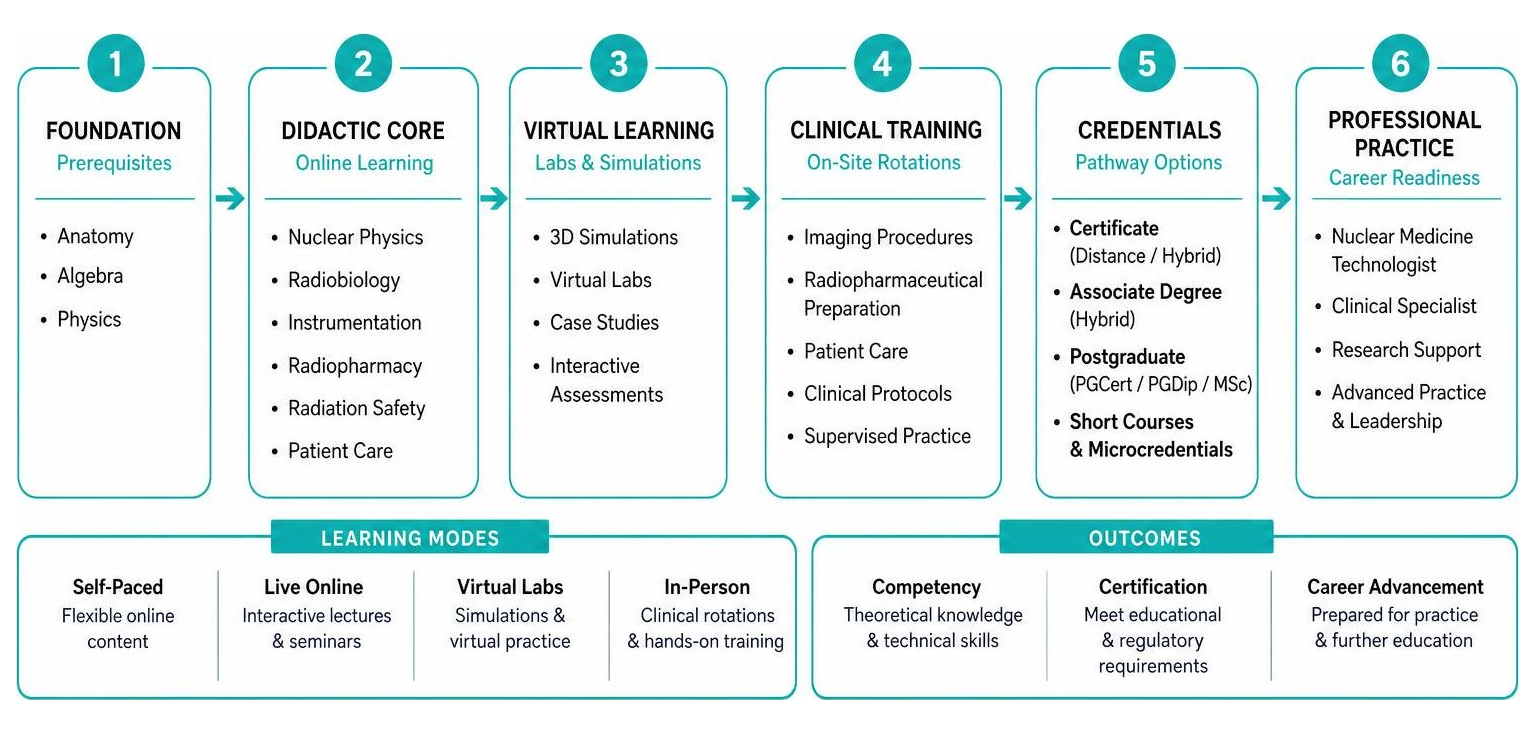
Didactic Coursework and Radiation Safety
The classroom component of nuclear medicine education establishes a foundation in both physical sciences and clinical protocols.
Key subjects in the core curriculum include:
- Nuclear Physics and Radiation Decay: Alpha, beta, and gamma emissions, decay equations, half-life calculations, and radionuclide parent-daughter equilibrium equations.
- Radiopharmacy and Radiopharmacology: Preparation, quality control, and mechanism of action for diagnostic and therapeutic radiopharmaceuticals (such as Technetium-99m and Fluorine-18).
- Instrumentation and Quality Control: Operation of gamma cameras, SPECT, PET scanners, dose calibrators, and well counters.
- Radiation Biology and Safety: Biological effects of ionizing radiation, ALARA (As Low As Reasonably Achievable) principles, personnel dosimetry, waste disposal, and decontamination procedures.
Comprehensive textbooks like Essentials of Nuclear Medicine and Molecular Imaging serve as primary resources throughout these academic modules. Furthermore, learning How to Keep Patients Safe and Calm During Nuclear Medicine Scans remains a critical clinical skill taught alongside technical physics.
To bridge classroom theory and practical lab work, open-access resources provide interactive virtual simulations. For example, the IAEA offers a Human Health Campus – Virtual Course in Radiopharmacy (VirRAD). This platform allows students to practice entering hot labs, performing generator elutions, calculating doses, and handling radioactive waste inside a risk-free 3D virtual laboratory.
Clinical Rotation Placement and Hands-on Requirements
While lectures are easily delivered over the internet, nuclear medicine cannot be learned entirely behind a screen. Clinical competency requires real-world experience injecting radiopharmaceuticals, positioning patients under gamma cameras, and operating imaging workstations under direct preceptor supervision.
Most hybrid programs manage clinical placements in one of two ways:
- School-Affiliated Networks: The institution places students inside a pre-established network of local hospital partners and outpatient diagnostic centers.
- Student-Facilitated Placement: Distance learners outside the school’s immediate region identify a local hospital willing to enter an official clinical affiliation agreement.
Be aware of geographic restrictions before enrolling. Due to varying state authorization laws and board rules, distance programs may not be authorized to establish clinical training sites in every state (for instance, certain distance programs cannot host clinical rotations in New York, New Jersey, or Maryland). Always verify that a program can support clinical placement in your home state before submitting an application.
Career Outlook, Salary Expectations, and Credentialing
Entering the field of nuclear medicine offers robust career stability and competitive financial rewards. According to national labor statistics, nuclear medicine technologists earn a national median annual wage of $101,370. In high-cost-of-living regions like California, median annual salaries reach as high as $162,380.

To practice professionally, graduates must earn national certification. The primary credentialing bodies recognized across the United States are:
- The AMERICAN REGISTRY OF RADIOLOGIC TECHNOLOGISTS® (ARRT®)
- The Nuclear Medicine Technology Certification Board (NMTCB)
In addition to national certification, over 30 states mandate official state licensure to operate radiation-emitting equipment and handle radiopharmaceuticals.
Because job availability is heavily tied to regional healthcare infrastructure, checking local job boards within driving distance is recommended before selecting a training program. Once certified, maintaining your license requires active ongoing education. Technologists can keep credentials up to date by reviewing resources on how to Stay Current Stay Certified Essential Nuclear Medicine Continuing Education.
Frequently Asked Questions About Nuclear Medicine Programs
Can nuclear medicine programs be completed 100% online?
No entry-level program leading to primary certification can be completed 100% online. While all academic lectures, physics modules, and radiopharmacy coursework can be taken online, accredited programs require hands-on, in-person clinical rotations at an approved hospital or imaging center. Only non-clinical post-graduate modules or continuing education credits for currently certified technologists can be completed entirely online.
What are the typical prerequisites for online NMT programs?
Prerequisite requirements depend on the credential level:
- For Associate/Bachelor’s Degrees: General high school diploma or equivalent, college-level Human Anatomy & Physiology (with lab), College Algebra, General Chemistry, Physics, and English Composition with a minimum cumulative GPA of 2.5 to 3.0.
- For Post-Primary Certificates: Active primary credential from the ARRT® in Radiography (R), Radiation Therapy (T), or Magnetic Resonance Imaging (MR), alongside an active CPR/BLS certification.
How much do online nuclear medicine programs cost?
Tuition rates vary significantly by institution type:
- Community Colleges: Associate degrees range from $76 to $150 per credit hour, bringing total tuition costs to approximately $6,000–$12,000.
- Public Universities: In-state tuition for bachelor’s degrees or post-primary certificates ranges between $12,000 and $25,000.
- Private Institutions: Accelerated private university certificate or degree programs cost between $600 and $1,275 per credit hour, with total tuition reaching $30,000–$50,000+.
Financial aid options include federal Direct Loans, Pell Grants, GI Bill® benefits, hospital employer tuition reimbursement programs, and professional society scholarships.
Conclusion
Choosing the right Nuclear medicine online courses or hybrid program comes down to aligning your current healthcare experience with your long-term career goals. Whether you are an experienced X-ray technologist cross-training through a post-primary certificate, a newcomer earning a hybrid associate degree, or a certified professional seeking specialized continuing education, flexible distance learning models make expanding your qualifications more attainable than ever.
As you plan your educational journey, clinical hands-on competency and maintained credentialing are the twin pillars of a successful imaging career. Once you enter the clinical field, keeping your certifications active shouldn’t be stressful or expensive. At Scrubs CE, we provide self-paced, affordable online courses with instant certificates to help imaging professionals effortlessly meet state licensure and ARRT® renewal requirements. Explore our complete course library today on our Nuclear Medicine Continuing Education page to keep your career moving forward!

What is Imaging Anatomy? Definitions and Key Examples
Why Anatomical Imaging Examples Matter for Every Imaging Professional
Anatomical imaging examples give clinicians, students, and imaging professionals a clear window into the human body — without a single incision. From a simple chest X-ray to a 3D synchrotron scan of an intact human brain, these techniques have transformed how we diagnose disease, plan surgery, and understand the body at every scale.
Here is a quick overview of the most common anatomical imaging modalities and what each one is best used for:
| Modality | How It Works | Best Used For |
|---|---|---|
| X-Ray | Ionizing radiation passes through tissue | Bone fractures, chest assessment |
| CT Scan | X-rays captured at multiple angles | Trauma, tumors, organ measurement |
| MRI | Magnetic fields + radio waves | Soft tissue, brain, spinal cord |
| Ultrasound | High-frequency sound waves | Fetal monitoring, abdominal organs |
| PET Scan | Radiotracer detects metabolic activity | Cancer staging, brain function |
Each modality shows a different “version” of the body. No single technique does everything. Knowing which tool fits which clinical question is a core skill for any imaging professional — and it starts with seeing real examples.
I’m Zita Ewert, and as the force behind SCRUBS Continuing Education®, I’ve spent years helping radiologic technologists and imaging professionals stay current on topics like anatomical imaging examples through practical, accredited coursework approved by the AMERICAN REGISTRY OF RADIOLOGIC TECHNOLOGISTS® (ARRT®). In this guide, we’ll walk through every major modality, real-world clinical cases, and the cutting-edge research reshaping what anatomical imaging can do.
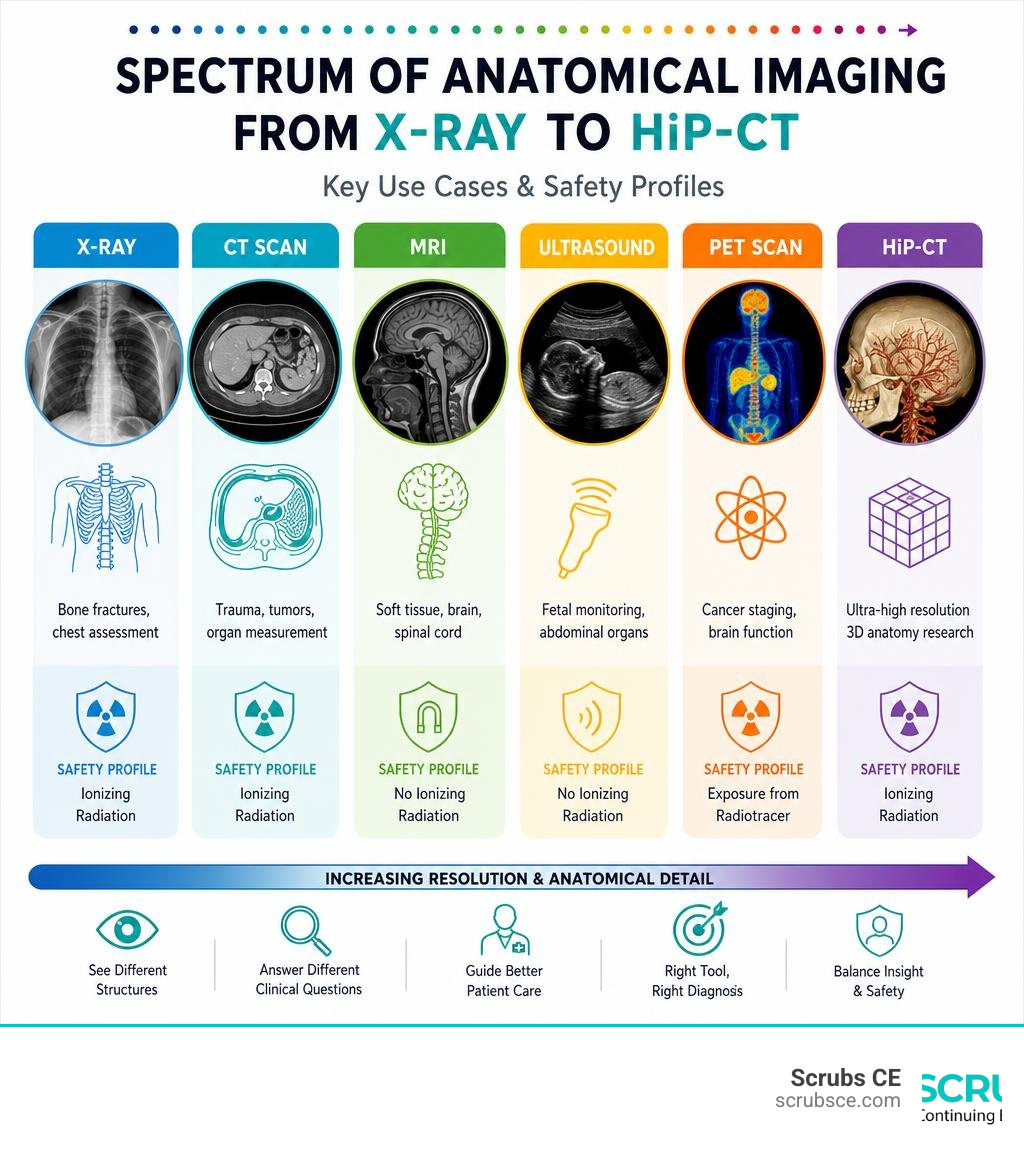
Simple anatomical imaging examples word guide:
Anatomical vs. Functional Imaging: Key Differences
When we look at medical imaging, we generally divide the technologies into two main families: anatomical imaging and functional imaging.
- Anatomical imaging focuses on the physical structures, shape, density, and spatial relationships of body tissues. It answers the question: What does it look like, and where is it? Examples include finding a bone fracture on an X-ray or mapping a brain tumor’s boundaries using a high-resolution MRI.
- Functional imaging looks at the physiological and metabolic processes happening inside those structures. It answers the question: How is it working? This includes measuring blood flow, oxygen consumption, or glucose metabolism, such as detecting highly active cancer cells with a PET scan.

In modern medicine, these two fields are no longer isolated. Hybrid systems combine both types of data into a single, comprehensive view. By merging anatomical and functional imaging, systems like PET-CT and PET-MRI allow clinicians to see exactly where a metabolic change is occurring in the physical structure of an organ. This dual perspective is incredibly valuable for oncology, cardiology, and neurology.
| Feature | Anatomical Imaging | Functional Imaging |
|---|---|---|
| Primary Focus | Physical structure, boundaries, and tissue density | Metabolic activity, blood flow, and chemical processes |
| Typical Modalities | X-Ray, CT, MRI, Ultrasound | PET, fMRI, SPECT |
| Clinical Value | Identifying structural damage, tumors, and fractures | Detecting early cellular changes and monitoring organ function |
Core Modalities and Anatomical Imaging Examples
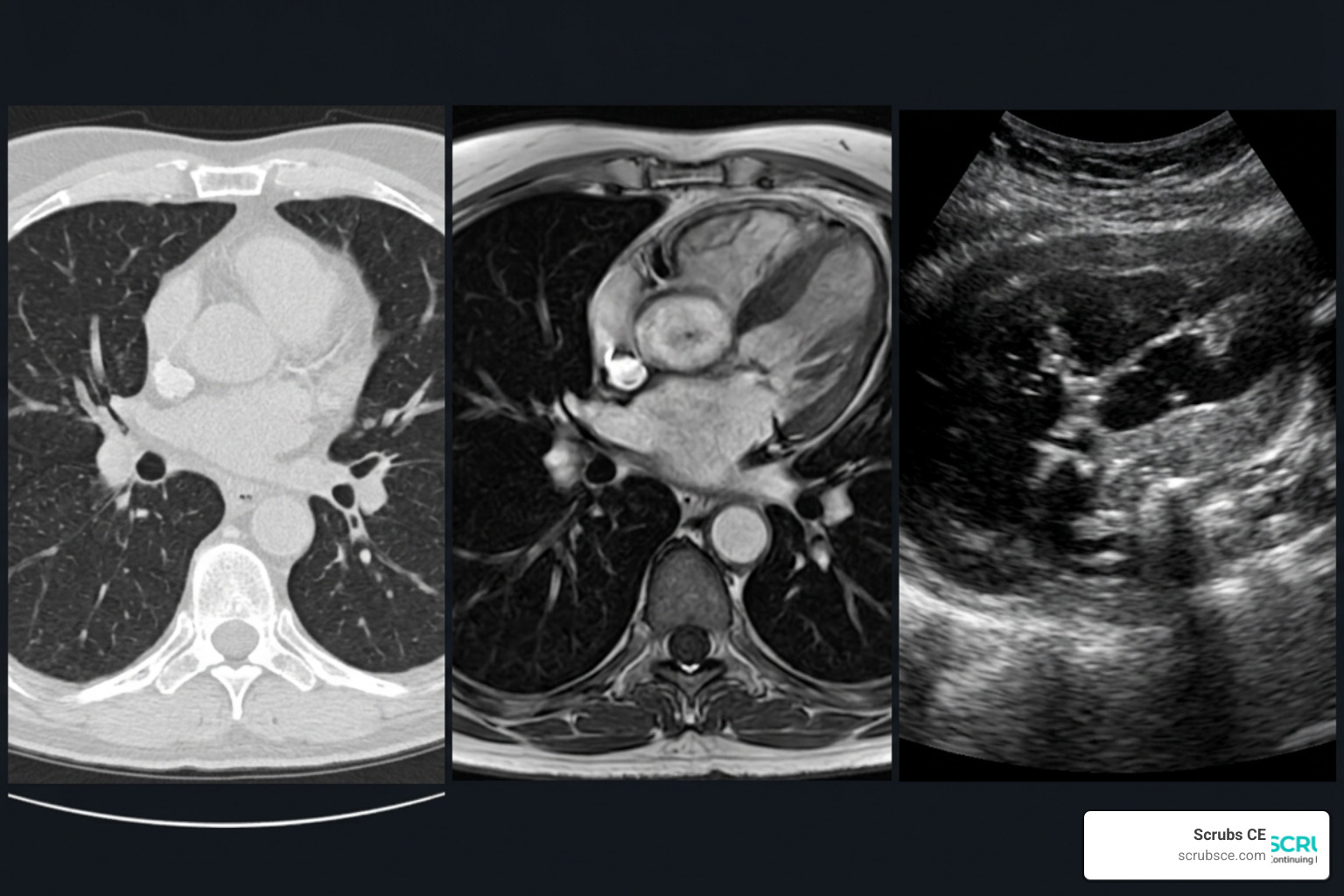
To truly understand how these systems work in clinical practice, we need to look at specific anatomical imaging examples across the core modalities. If you want to dive deeper into how these concepts apply to professional practice, our Anatomy Radiology Book Essentials Top Texts for Diagnostic Imaging guide is an excellent starting point.
X-Ray and Computed Tomography (CT)
X-rays are the oldest and most common form of medical imaging. They use high-energy electromagnetic radiation with a short wavelength to pass through the body. Dense tissues, like bone, block the radiation and appear white, while softer tissues allow the rays to pass through and appear dark.
Computed Tomography (CT) takes this concept to the next dimension. Instead of a single flat image, a CT scanner rotates 360 degrees around the patient, taking multiple X-ray measurements that a computer reconstructs into cross-sectional “slices.” Modern helical CT scans can capture these slices rapidly, which is essential in emergency trauma settings where every second counts.
- Key Clinical Applications: X-rays are perfect for assessing bone fractures, dental anatomy, and chest conditions like pneumonia. CT scans are the gold standard for trauma imaging, identifying internal bleeding, and measuring the precise size of abdominal tumors down to a millimeter.
- Safety & Cost Considerations: While X-rays are inexpensive and fast, CT scans expose patients to a dose of ionizing radiation many times higher than standard X-rays. Because of this, CT scans should not be performed repeatedly unless medically necessary. To learn more about positioning and radiation safety, check out The ABCs of X-ray Physics Anatomy and Perfect Positioning.
Magnetic Resonance Imaging (MRI) and Ultrasound
Magnetic Resonance Imaging (MRI) uses strong magnetic fields and radiofrequency waves to excite hydrogen atoms in the body’s water molecules. As these atoms return to their normal state, they emit radio signals that are captured and turned into highly detailed images.
Ultrasound, on the other hand, relies on high-frequency sound waves. A transducer sends sound waves into the body, which bounce off internal tissues. The returning echoes are converted into real-time moving images.
- Key Clinical Applications: MRI provides unmatched soft-tissue resolution, making it the preferred choice for brain, spinal cord, and joint imaging. For example, clinicians use MRI to trace the intricate paths of cranial nerves, as shown in the Anatomy of the cranial nerves and brainstem: annotated MRI | e-Anatomy module. It is also excellent for complex joints, which you can explore in detail through the Wrist on 3T MR and 3D pictures: normal anatomy | e-Anatomy reference. Ultrasound is highly valued for real-time applications, such as monitoring fetal development during pregnancy or performing bedside assessments for internal bleeding.
- Safety & Cost Considerations: Ultrasonography does not expose patients to radiation, radiopharmaceuticals, or magnetic fields, meaning there are no known medical risks. MRI is also free of ionizing radiation, but the scans can take up to 30 minutes and are incredibly noisy, which can cause patient anxiety. Additionally, patients with metallic implants (like pacemakers) may not be able to undergo an MRI due to the strong magnetic fields.
Advanced 3D and Hierarchical Organ Imaging
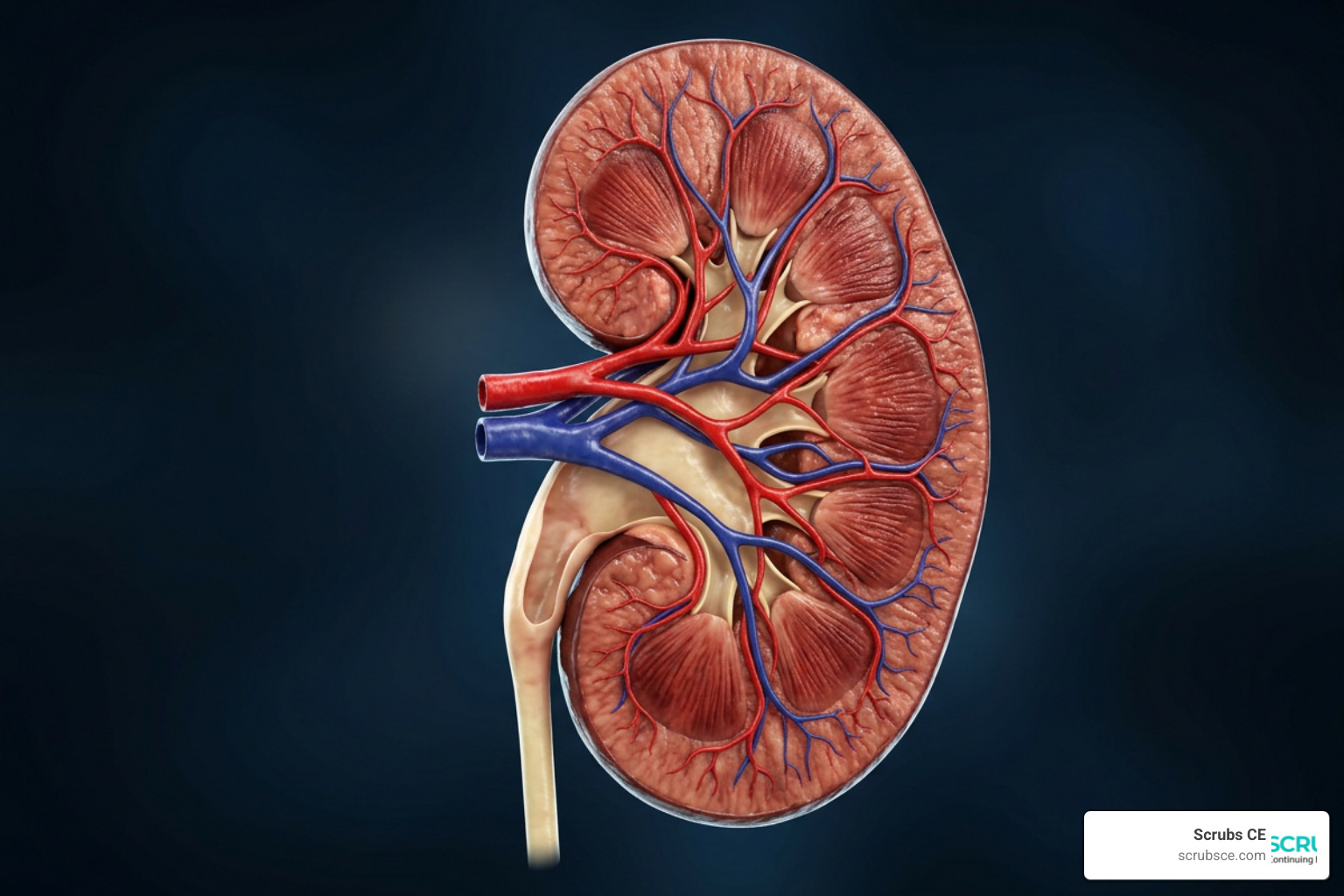
As imaging technology advances, we are moving far beyond flat 2D slices. Today, researchers can capture entire organs in three dimensions, bridging the gap between macroscopic anatomy (what we can see with the naked eye) and microscopic histology (what we see under a microscope).
Hierarchical Phase-Contrast Tomography (HiP-CT) as an Anatomical Imaging Examples Pioneer
A major breakthrough in this area is Hierarchical Phase-Contrast Tomography (HiP-CT). Developed using high-energy synchrotron radiation at the European Synchrotron Radiation Facility (ESRF), this technology utilizes the Extremely Brilliant Source (EBS), which provides a 100-fold increase in X-ray brilliance compared to older synchrotrons.
HiP-CT allows scientists to perform hierarchical imaging of intact human organs. This means they can scan a whole organ at a baseline resolution and then zoom in to cellular-level detail without physically cutting or damaging the tissue. You can read the foundational research on this technology in the paper Imaging intact human organs with local resolution of cellular structures using hierarchical phase-contrast tomography | Nature Methods.
- Unprecedented Resolution: HiP-CT can scan a whole human organ at 25 µm per voxel, zoom in to 6.5 µm, and then achieve an incredible local resolution of 1.3 to 2.5 µm per voxel.
- Scan Times: A whole brain scan at 25 µm per voxel takes about 16 hours, while an intact kidney can be scanned in approximately 3.5 hours.
- Bridging the Gap: Traditional light microscopes magnify up to 1,000x, and electron microscopes (like SEM and TEM) can magnify up to 500,000x or 10,000,000x respectively, but they require cutting the tissue into tiny, thin slices. HiP-CT provides a non-destructive way to view these structures in their native 3D environment.
Real-World Research and Veterinary Anatomical Imaging Examples
These high-resolution imaging techniques are also transforming veterinary medicine, comparative anatomy, and research ethics.
- Reducing Animal Testing: Historically, researchers had to use live animals to study anatomical development over time. Today, tools like the Göttingen Minipigs MR and CT Imaging Atlas allow scientists to study organ growth and structural changes virtually. This directly supports the “3R” principles (Replacement, Reduction, and Refinement) in scientific research.
- Marine Mammal Forensics: In veterinary pathology, post-mortem CT (PMCT) has become an invaluable tool. For example, the open-access database Cet.CT-Bank: A Postmortem Computed Tomography Imaging Data of Stranded Cetaceans from the Canary Islands | Scientific Data provides researchers with 3D anatomical data of stranded dolphins and whales, helping them investigate causes of death without immediate invasive dissection.
Emerging Trends and Quantitative Analysis in Anatomical Imaging Examples
The future of medical imaging lies in turning visual pictures into objective, quantitative data. Instead of simply looking at a scan, modern software can measure, count, and analyze anatomical structures automatically.
Synchrotron Radiation and Phase-Contrast Tomography
Conventional clinical CT scanners rely on X-ray absorption (how much radiation is blocked by tissue). Synchrotron-based phase-contrast imaging, however, measures how the X-ray wave shifts as it passes through different tissues. This provides much higher contrast in soft tissues, allowing for “virtual histology” of whole organs without the need for chemical stains or physical slicing.
AI-Assisted Interpretation and Quantitative Morphometry
Artificial Intelligence (AI) and deep learning algorithms are now used to perform automated segmentations of complex organs. For example, researchers can use these tools to map the dynamic movement of internal organs in real time, as demonstrated in Fig. 5: Label-free visualization of whole-trunk dynamics in 3D-PanoPACT. | Nature Communications.
These technologies allow for incredibly precise quantitative analysis:
- Glomerular Counting: In a kidney scan of a 94-year-old female, HiP-CT was used to estimate the total number of glomeruli (the kidney’s filtering units) at approximately 310,000. This is highly accurate and falls well within the expected physiological range.
- Volume Measurements: The mean glomerular volume was measured at 5.05 ± 0.09 × 10⁻³ mm³, which aligns closely with traditional stereological and MRI analyses.
- Pathology Assessment: AI can analyze 3D lung scans to quantify the exact volume of alveolar obstruction, septal thickening, and capillary damage in patients with severe respiratory diseases, including COVID-19.
If you are currently studying anatomy or preparing for an exam, practicing with visual resources is one of the best ways to build your spatial understanding. We recommend using resources like the Anatomy Coloring Workbook Test Only Emailed to reinforce your knowledge of these complex structures.
Frequently Asked Questions about Anatomical Imaging
What is the safest anatomical imaging modality?
Ultrasonography is widely considered the safest anatomical imaging modality because it does not use ionizing radiation, magnetic fields, or radiopharmaceuticals. There are no known medical risks associated with diagnostic ultrasound, making it the gold standard for monitoring pregnancy. MRI is also very safe because it avoids radiation, but patients must be screened for metallic implants, and the loud, enclosed environment can be challenging for some. If you are looking to learn more about basic anatomy safety and terminology, the Anatomy & Physiology for Dummies 3rd Ed CH Test Only E-mailed course is a great resource.
Why is CT preferred over MRI in emergency trauma cases?
CT is preferred in emergency settings primarily because of its speed and accessibility. A modern helical CT scan can image a patient’s entire body in less than a minute, whereas an MRI scan can take 30 minutes or longer. Additionally, CT is exceptionally good at showing acute bone fractures and fresh bleeding, which are critical to identify immediately in trauma patients.
How does HiP-CT bridge the gap between anatomy and histology?
HiP-CT bridges this gap by providing high-resolution 3D imaging across multiple scales. It allows researchers to view a whole, intact organ (macroscopic anatomy) and then zoom in to resolve individual cells (microscopic histology) down to 1.3 µm, all without physically cutting, staining, or damaging the tissue.
Conclusion
From standard diagnostic X-rays to cutting-edge 3D synchrotron scans, anatomical imaging examples show us how rapidly our ability to visualize the human body is evolving. For radiologic technologists, sonographers, and other imaging professionals, staying up-to-date on these technologies is key to delivering excellent patient care and advancing your career.
At SCRUBS Continuing Education®, we are dedicated to providing high-quality, self-paced online courses with instant certificates to help you meet your professional development and state licensing requirements. Our courses are designed to align with the standards of the AMERICAN REGISTRY OF RADIOLOGIC TECHNOLOGISTS® (ARRT®) and the ASRT®.
Ready to expand your clinical knowledge and earn your CE credits? Explore our complete Anatomy for Radiographers course catalog today!

The MRI Tech Job Outlook and Career Growth in 2026
MRI Tech Job Outlook 2024: The Quick Answer for 2026
The mri tech job outlook 2024 remains strong in 2026: U.S. Bureau of Labor Statistics projections show MRI technologist employment is expected to grow 7% from 2024 to 2034, adding about 3,100 jobs.
| MRI technologist career metric | Latest federal data |
|---|---|
| Jobs in 2024 | 44,100 |
| Projected growth, 2024-2034 | 7% |
| New jobs projected | 3,100 |
| Median annual pay, May 2024 | $88,180 |
| Average annual openings for radiologic and MRI technologists | 15,400 |
That is faster growth than the 4% projection for radiologic technologists. Demand is tied to an aging population, ongoing need for detailed diagnostic imaging, and a shift toward outpatient care. Hospitals still employ the largest share of MRI technologists, but outpatient centers and physician offices are projected to grow more quickly.
MRI is also a career with real tradeoffs. It offers solid pay, meaningful patient care, and no routine exposure to ionizing radiation during MRI scanning. But it also requires strict safety habits, careful patient screening, technical skill, and the ability to support people who may be anxious or uncomfortable during a scan.
I am Zita Ewert, a continuing-education leader for imaging professionals and the driving force behind SCRUBS Continuing Education®. My work supporting accredited education, certification maintenance, and licensure needs gives me a practical view of the mri tech job outlook 2024 and what working technologists need to keep moving forward.
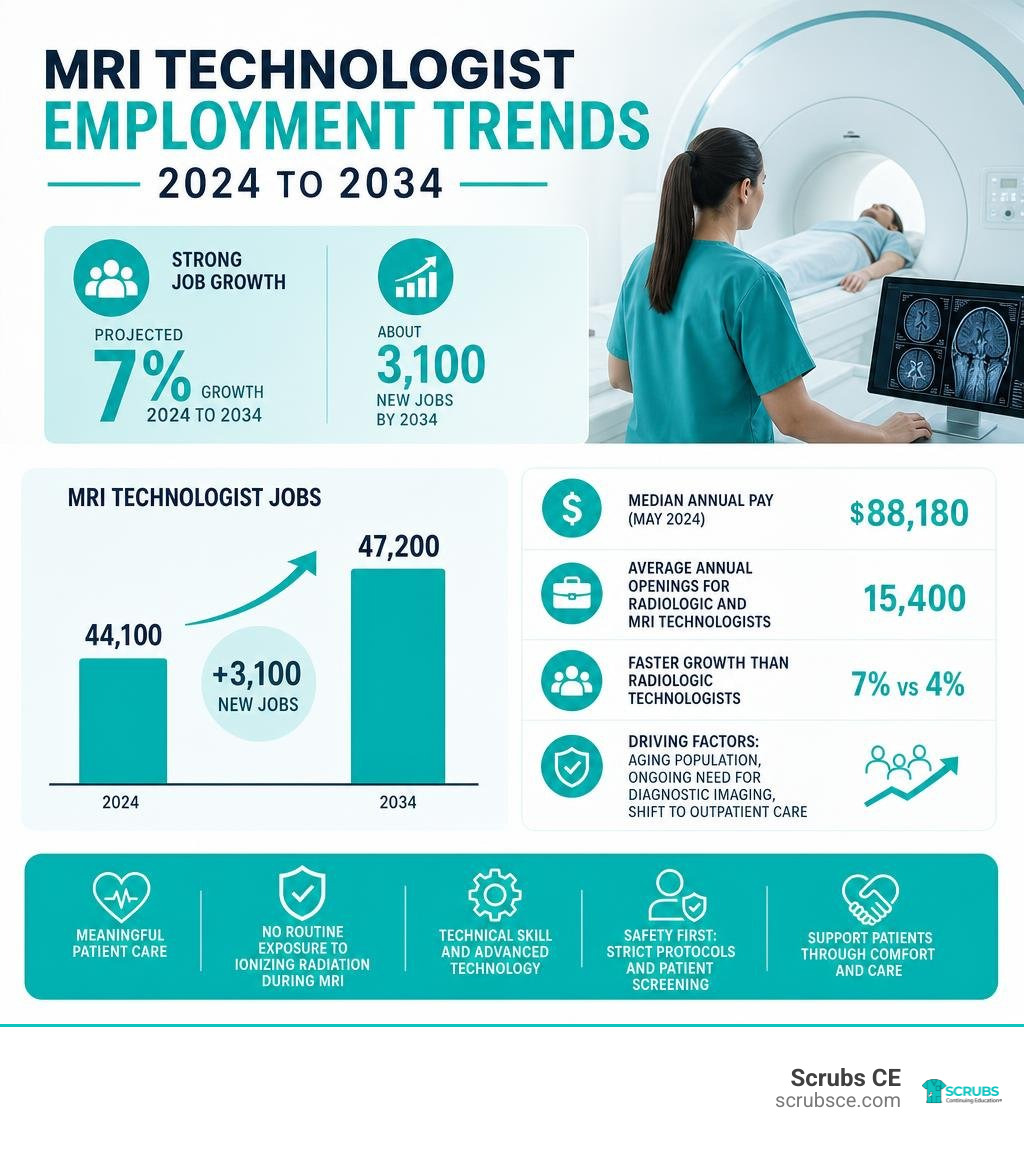
Mri tech job outlook 2024 word roundup:
Analyzing the MRI Tech Job Outlook 2024 to 2034 Projections
When we evaluate long-term career stability in medical imaging, federal employment metrics offer a crystal-clear baseline. According to data published in the U.S. Bureau of Labor Statistics MRI Tech Report, magnetic resonance imaging technologists held approximately 44,100 jobs across the nation in 2024. Over the 2024 to 2034 projection decade, employment in this specialized field is expected to expand by 7%, yielding roughly 3,100 brand-new jobs.
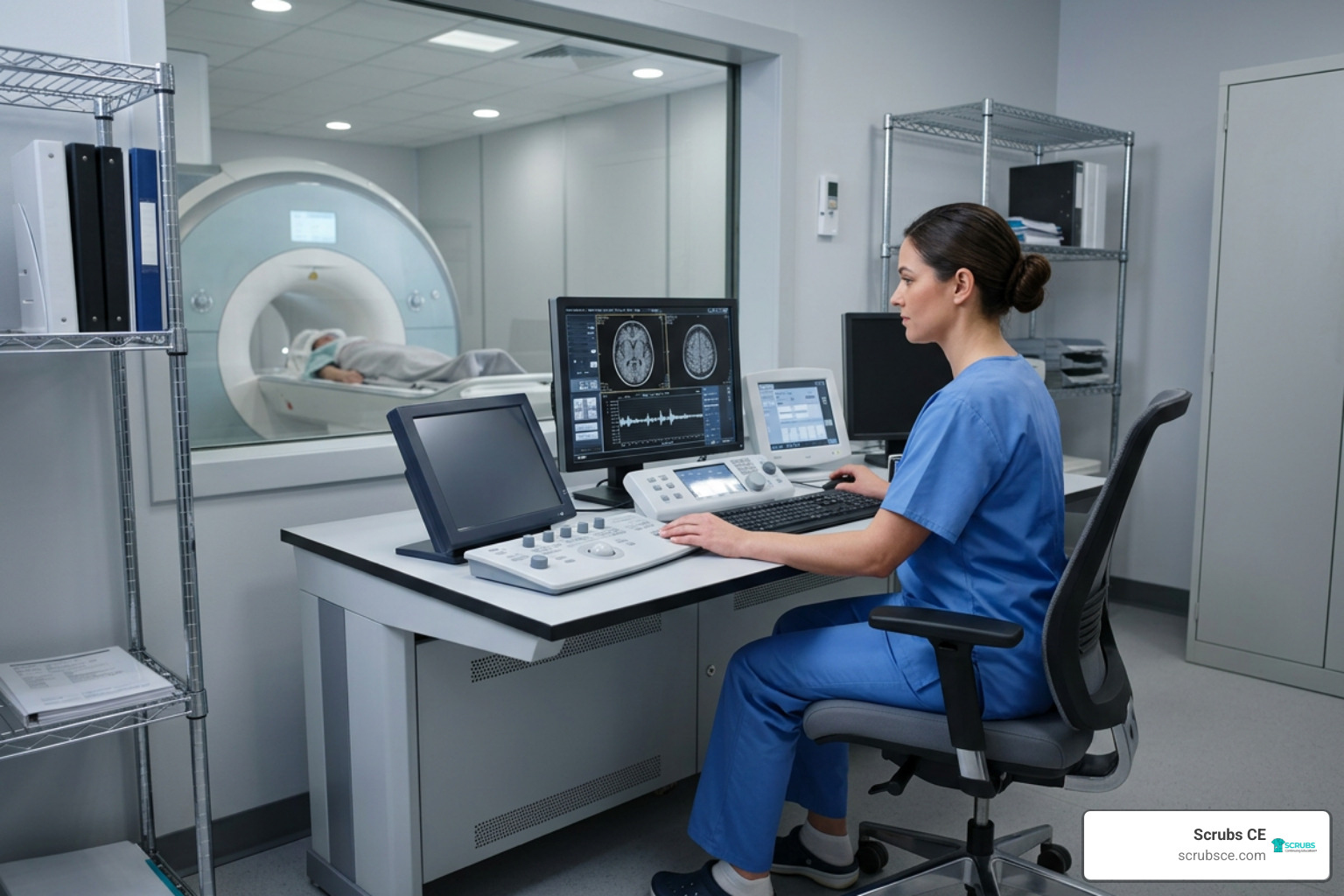
This 7% expansion rate outpaces the average growth across all U.S. occupations. When combined with routine staff turnover, retirements, and career transitions, healthcare facilities are actively seeking qualified, credentialed technologists to fill shifts. To understand what these professionals handle on a day-to-day basis, check out our comprehensive what does an mri tech do guide.
How the MRI Tech Job Outlook 2024 Compares to Radiologic Technologists
While overall medical imaging careers are expanding, specialized modalities like magnetic resonance imaging demonstrate distinct growth advantages over general radiography. The combined category for radiologic and MRI technologists is projected to grow by 5% over the decade, but breaking down the specific specialties highlights key differences.
General radiologic technologists—who primarily perform diagnostic X-rays—held about 228,000 jobs in 2024 with a projected growth rate of 4.3% (adding around 9,800 positions). In contrast, specialized MRI technologists enjoy a 7.1% growth trajectory. The higher demand for MRI technologists reflects the clinical shift toward soft-tissue evaluation and non-ionizing cross-sectional imaging.
The table below breaks down the comparative figures sourced from the official federal National Employment Matrix Projections:
| Occupation / Specialty | 2024 Baseline Jobs | Projected 2034 Jobs | 10-Year Growth Rate | Total New Openings |
|---|---|---|---|---|
| Magnetic Resonance Imaging (MRI) Techs | 44,100 | 47,200 | 7.1% | ~3,100 |
| Radiologic Technologists & Technicians | 228,000 | 237,800 | 4.3% | ~9,800 |
| Combined Medical Imaging Total | 272,100 | 285,000 | 4.7% | ~12,900 |
Factors Driving the MRI Tech Job Outlook 2024 and Future Growth
Several interconnected demographic and clinical trends continue to fuel job growth for MRI technologists:
- An Aging Population: As baby boomers age, the frequency of age-related conditions—such as stroke, neurodegenerative disorders, musculoskeletal joint degeneration, and oncology cases—increases sharply. Soft-tissue imaging is crucial for diagnosing these ailments early.
- Prevalence of Chronic Illness: Conditions like heart disease, chronic liver conditions, and joint injuries require regular diagnostic monitoring. Advanced MRI pulse sequences allow physicians to track disease progression without invasive surgery.
- Zero Ionizing Radiation Risk: Unlike computed tomography (CT) or plain film X-rays, MRI uses powerful magnetic fields and radiofrequency waves. Because it delivers zero ionizing radiation, clinicians frequently prefer MRI for pediatric patients, young adults, and patients requiring repeat imaging studies.
- Expanding Clinical Applications: Technologists are no longer just scanning brains and knees. The rapid growth of advanced subspecialties—including Cardiac MRI, Breast MRI, Multiparametric Prostate MRI, and MR-guided radiation therapy (MR-Linac)—has made high-field magnetic imaging an indispensable tool in modern medicine.
Salary Breakdown and Top Employing Work Settings
Along with strong demand, compensation for MRI technologists remains highly competitive within the allied health sector. According to May 2024 federal statistics, the median annual wage for magnetic resonance imaging technologists was $88,180 (equivalent to approximately $42.39 per hour).
Earning capacity spans a broad spectrum based on geographical location, shift differentials, credential level, and workplace environment:
- Lowest 10th Percentile: Earned less than $64,910 annually.
- 25th Percentile: Earned around $78,150 annually.
- 75th Percentile: Earned around $102,440 annually.
- Highest 10th Percentile: Earned more than $121,420 annually, with top coastal markets clearing even higher baseline rates.
Industry Pay Differences and Outpatient Growth
Where you choose to work has a massive impact on your take-home pay and overall work-life balance. While hospitals employ nearly 59% of all MRI technologists, non-hospital settings are expanding rapidly and often offer significantly higher median compensation.
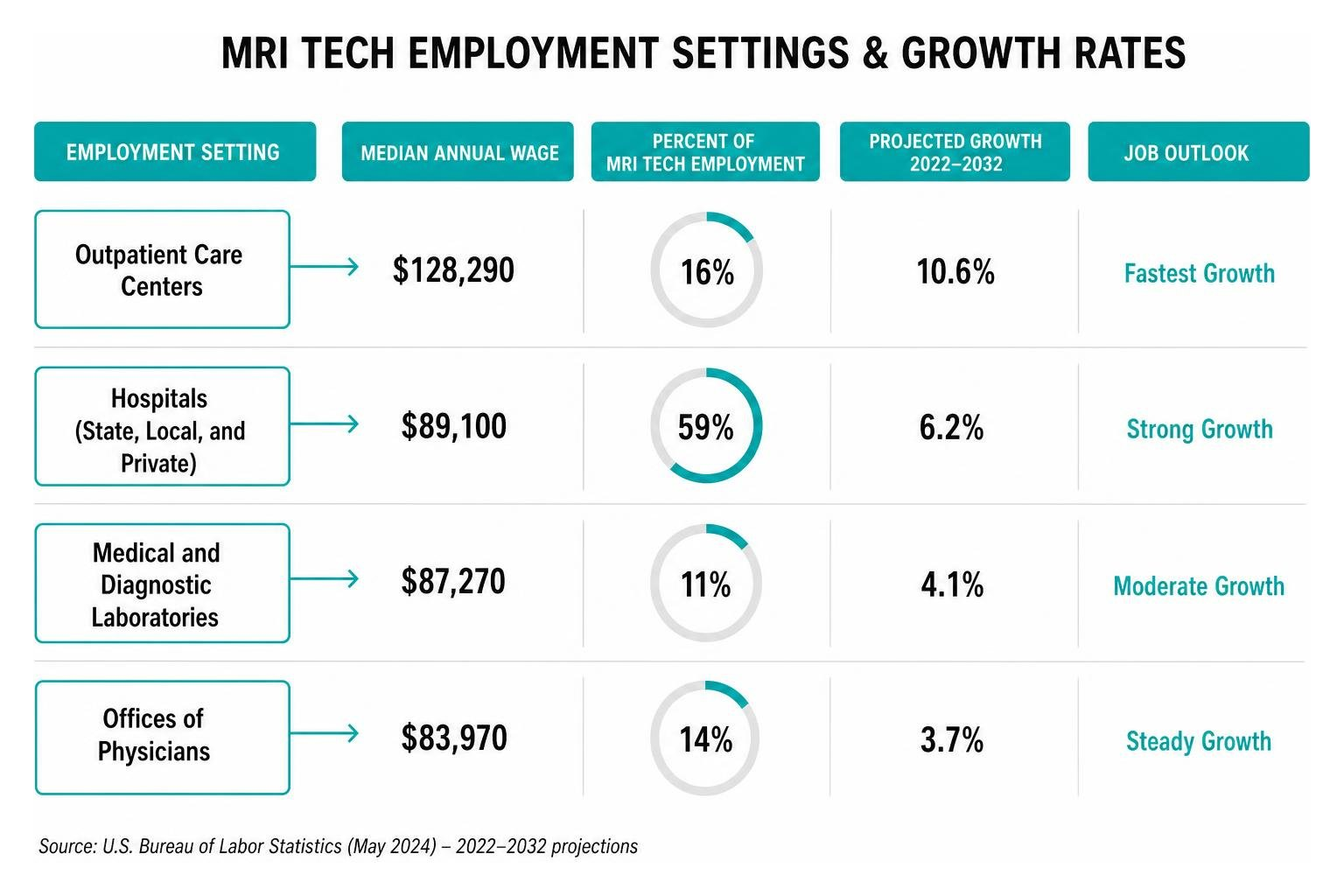
Here is how annual median wages break down across top employing healthcare settings:
- Outpatient Care Centers: $128,290 median annual wage.
- Hospitals (State, Local, and Private): $89,100 median annual wage.
- Medical and Diagnostic Laboratories: $87,270 median annual wage.
- Offices of Physicians: $83,970 median annual wage.
Federal matrix data reveals that while hospital-based MRI positions are projected to grow by a modest 1.8% between 2024 and 2034, employment in outpatient care centers is projected to surge by 30.7%. Offices of physicians are also set to expand by 19.6%. Healthcare networks are increasingly moving routine diagnostic imaging away from overcrowded emergency rooms and into localized ambulatory centers.
For technologists looking to maximize their earning potential even further, mobile contract work offers attractive financial returns. You can learn more about flexible contract arrangements in the ultimate guide to high paying travel mri tech jobs.
Educational Pathways, ARRT® Credentials, and Training
Entering the field of magnetic resonance imaging requires dedicated academic coursework, extensive clinical hours, and national credentialing. Most technologists earn an associate degree in Radiologic Technology or magnetic resonance imaging from an accredited institution (such as those approved by JRCERT).
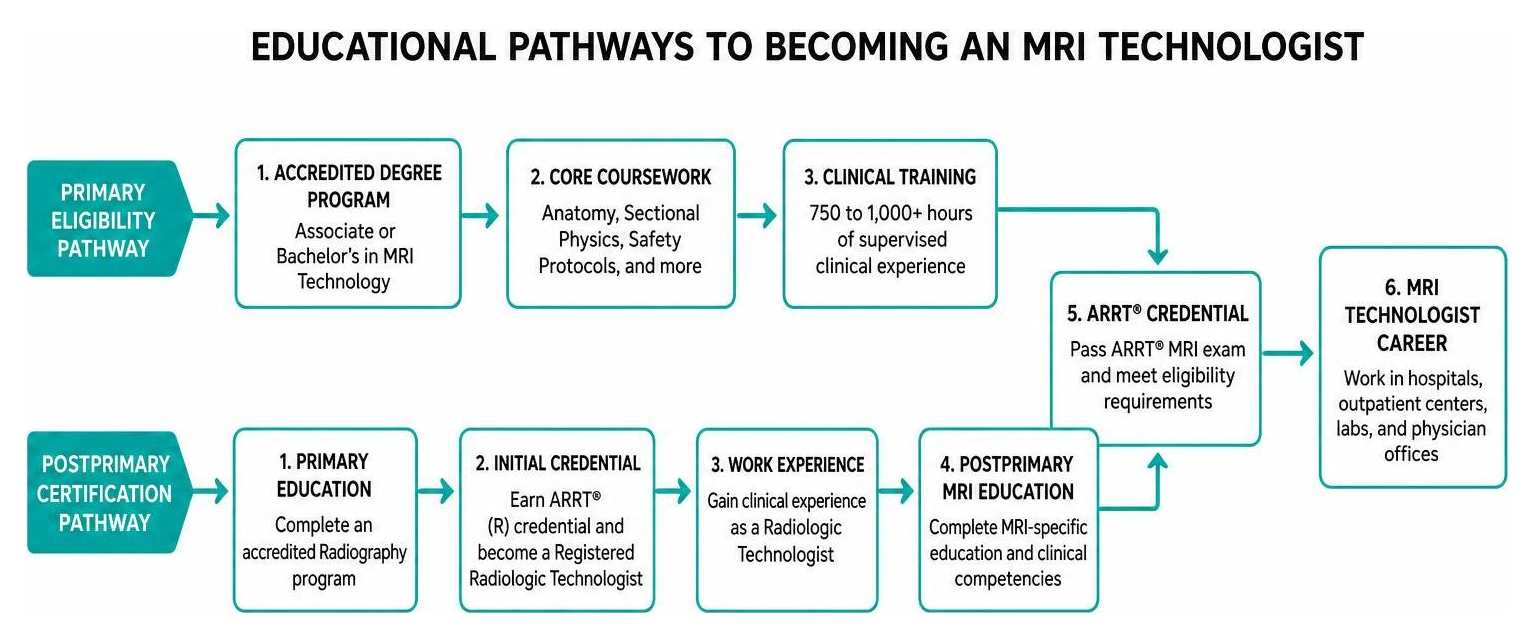
When evaluating educational routes, prospective students typically choose between two main strategies:
- Primary Eligibility Pathway: Candidates complete an accredited associate or bachelor’s degree program focused directly on MRI technology. This includes core coursework in human anatomy, sectional physics, safety protocols, and 750 to 1,000+ supervised clinical hours.
- Postprimary Certification Pathway: Candidates first graduate from a primary supporting discipline—most commonly Radiology—and earn their initial credential. After gaining clinical experience as a radiologic technologist, they complete postprimary education and clinical competencies in MRI.
To review broad imaging prerequisites, read our breakdown on a comprehensive guide to radiologic technologist certification requirements.
Postprimary Pathways and State Licensure Requirements
The vast majority of healthcare organizations require national certification through the AMERICAN REGISTRY OF RADIOLOGIC TECHNOLOGISTS® (ARRT®) or the American Registry of Magnetic Resonance Imaging Technologists (ARMRIT).
When transitioning through the ARRT® postprimary pathway, candidates certified in Radiology, Radiation Therapy, Nuclear Medicine Technology, or Sonography must log structured didactic coursework alongside mandatory clinical experience procedures (such as head, spine, musculoskeletal, and vascular scans).
Maintaining professional standards also involves adhering to guidelines established by the AMERICAN SOCIETY OF RADIOLOGIC TECHNOLOGISTS® (ASRT®). If you are preparing for your certification board exam, we recommend checking out our resource on ARRT® mri registry review how to pass on your first try.
In addition to national registry credentials, state laws vary significantly:
- Approximately 28 U.S. states require an explicit state license to operate diagnostic imaging equipment.
- While some state radiation protection divisions focus primarily on ionizing radiation (X-rays and CT), most major healthcare employers mandate active ARRT® or ARMRIT credentials regardless of local state statutes.
Career Pros, Cons, and Key Essential Skills
Like any specialized healthcare role, working as an MRI technologist presents both rewarding advantages and daily operational challenges.
Career Advantages (Pros)
- Competitive Compensation: With median annual earnings of $88,180 and top outpatient settings exceeding $128,000, MRI technologists enjoy excellent earning capacity without requiring a four-year or graduate degree.
- Zero Ionizing Radiation Exposure: MRI technology relies on strong static magnetic fields and radiofrequency pulses rather than ionizing X-rays, minimizing long-term occupational radiation exposure.
- Predictable Workflow: Scans are scheduled in discrete 30- to 60-minute blocks, providing a structured daily tempo compared to chaotic emergency room triage.
- Emerging Advancement Routes: Technologists can advance into clinical applications, research facility coordination, department administration, or protocol management.
Career Challenges (Cons)
- Claustrophobia and Patient Anxiety: Managing panicked, claustrophobic, or in-pain patients inside a narrow magnet bore demands immense patience and active de-escalation skills.
- High-Stakes Safety Responsibility: Strong magnetic fields (1.5T to 3.0T and higher) are always active. Missed metallic implants, pacemakers, or ferrous objects present severe safety risks.
- Physical Demands: Technologists spend hours on their feet, lift heavy surface coils, and physically transfer injured or immobile patients onto the scanner table.
- Rigorous Continuing Education: Maintaining active certification requires completing mandatory continuing education credits every two years. We specialize in providing self-paced, high-quality learning options through our dedicated catalog for ce for mri technologists.
Critical Skills Checklist for Successful Techs
To thrive in high-field magnetic resonance imaging environments, professionals need a blend of technical capability and emotional intelligence:
- Rigorous Screening Discipline: Meticulously reviewing patient surgical histories and implant documentation before allowing anyone into the magnet room.
- Cross-Sectional Anatomy Mastery: Identifying subtle anatomical structures across axial, sagittal, and coronal planes to optimize diagnostic image quality.
- Physics Application: Understanding how pulse sequences (T1, T2, FLAIR, DWI) and gradient parameters affect signal-to-noise ratio and image artifacts.
- Compassionate Patient Communication: Using gentle verbal cues, music, and breathing instructions to keep anxious patients completely still during long acquisitions.
- Adaptability Under Pressure: Adjusting scan parameters on the fly to compensate for involuntary patient motion or body habitus.
Frequently Asked Questions About MRI Tech Careers
What is the unemployment rate for MRI technologists?
The unemployment rate for MRI technologists sits at an exceptionally low 0.7%. This extremely low rate underscores the persistent demand for credentialed imaging professionals across both inpatient hospital networks and outpatient diagnostic centers.
How many job openings are projected each year for MRI technologists?
Federal employment models project approximately 15,400 total annual openings across the combined radiologic and MRI technologist categories through 2034. For MRI technologists specifically, around 3,100 brand-new jobs will be created over the decade, supplemented by thousands of replacement openings as veteran technologists retire or transition into administrative roles.
Can MRI technologists transition into remote or travel roles?
Yes! Experienced MRI technologists have expanding flexible career pathways:
- Travel MRI Technologists: By taking short-term contracts (typically 13 weeks) in high-demand regions, travel techs can earn weekly stipends yielding $100,000 to $150,000+ annualized.
- Remote & Hybrid Opportunities: While direct patient scanning requires hands-on operation, experienced techs increasingly move into remote protocol management, teleradiology support, quality assurance, vendor clinical applications, and imaging safety consulting.
Conclusion
The mri tech job outlook 2024 highlights a secure, lucrative, and deeply rewarding healthcare trajectory through 2034 and beyond. With 7% projected employment growth, high median salaries, expanding outpatient facilities, and continuous technological innovation, magnetic resonance imaging remains one of the strongest allied health specialties available.
At SCRUBS Continuing Education®, we are dedicated to supporting your ongoing professional journey. Whether you need to satisfy state licensing prerequisites, maintain your credential standing with the AMERICAN REGISTRY OF RADIOLOGIC TECHNOLOGISTS®, or expand your advanced clinical knowledge, our affordable, self-paced online courses provide instant certificates upon completion.
Ready to fulfill your biannual requirement or explore high-yield imaging topics? Browse our complete selection of mri ce courses today and keep your career moving forward!

How to Standardize Your Nuclear Medicine Imaging Protocols
Why Nuclear Medicine Quality Control Is the Foundation of Safe, Accurate Imaging
Nuclear medicine quality control is the systematic process of testing, calibrating, and documenting the performance of imaging and non-imaging equipment to ensure accurate diagnoses and patient safety.
Here is a quick overview of what a compliant QC program requires:
| QC Area | Who Is Responsible | Minimum Frequency |
|---|---|---|
| Intrinsic or system uniformity | Nuclear medicine technologist | Daily |
| Dose calibrator constancy | Nuclear medicine technologist | Daily |
| Spatial resolution | Nuclear medicine technologist | Monthly |
| Center of rotation (COR) | Nuclear medicine technologist | Monthly |
| Overall SPECT system performance | Nuclear medicine technologist | Semiannually |
| Annual physics survey | Qualified Medical Physicist (QMP) | Annually (within 14 months) |
| Acceptance testing | Qualified Medical Physicist (QMP) | At installation, before clinical use |
| Compliance oversight | Supervising physician | Ongoing |
A single undetected calibration drift or a tiny collimator defect can compromise a patient’s diagnosis — and put your facility’s accreditation at risk. Patient radiation doses from nuclear medicine procedures can range from 0.3 mSv to 20 mSv for a single exam, which means poorly calibrated equipment does not just produce bad images — it exposes patients to unnecessary radiation without diagnostic benefit.
The ACR’s 2024 Nuclear Medicine Quality Control Manual sets clear standards for testing frequencies, personnel responsibilities, and documentation requirements. These rules exist for one reason: to make sure the equipment you rely on actually works the way it should, every single day.
I’m Zita Ewert, and through my work leading Scrubs Continuing Education®, I’ve spent years helping nuclear medicine technologists and imaging professionals understand the regulatory standards — including nuclear medicine quality control requirements — that protect both patients and careers. In this guide, I’ll break down exactly what your facility needs to stay compliant, who is responsible for what, and how to build a QC program that holds up under an ACR Validation Site Survey.
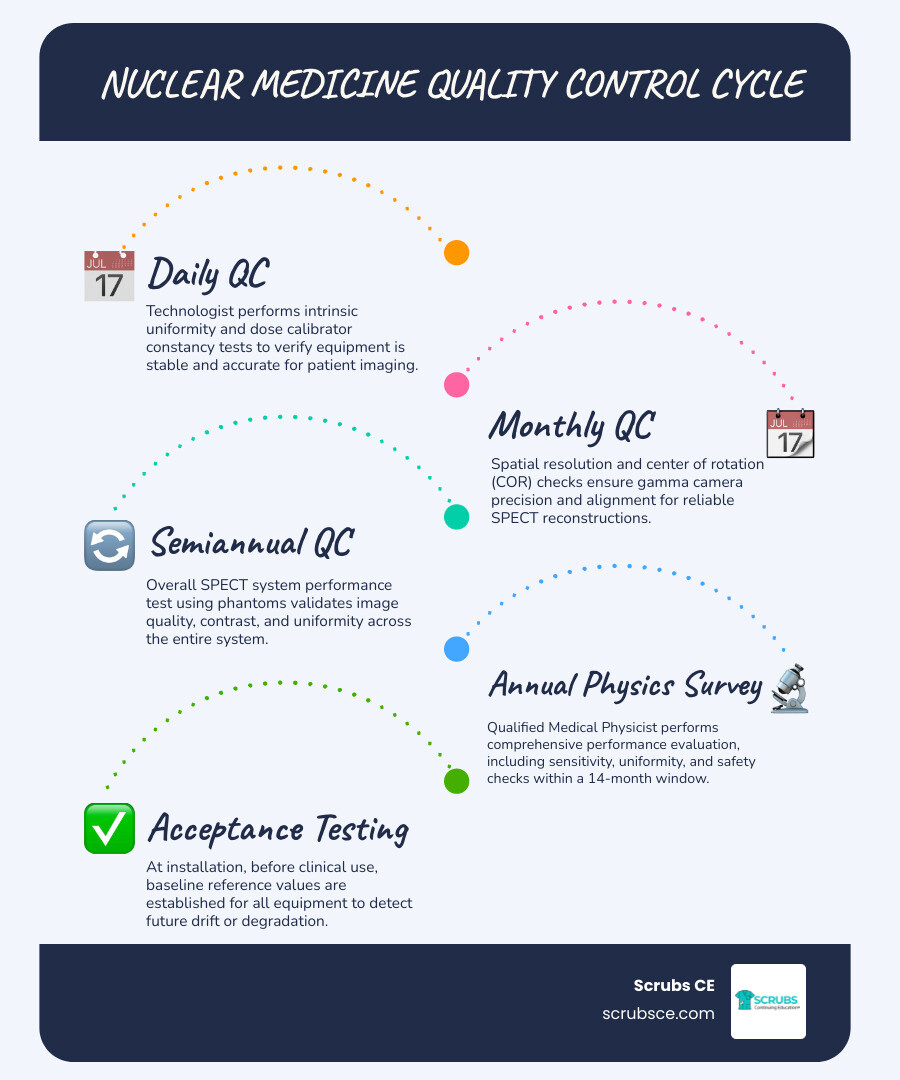
Nuclear medicine quality control vocab to learn:
- Nuclear medicine radiation safety
- Nuclear medicine technologist courses
- Nuclear medicine continuing education
The Core Components of Nuclear Medicine Quality Control
To run a high-performing imaging department in July 2026, we must look at quality control not as a series of isolated, annoying checkboxes, but as an integrated, proactive system. In clinical imaging, Quality Assurance (QA) is our proactive, process-focused shield that prevents defects before they occur. On the flip side, Quality Control (QC) is our reactive, product-focused tool used to identify and fix physical equipment issues.
A complete quality program requires a dedicated Quality Management Team (QMT), a comprehensive Quality Manual, standardized clinical workflows, and meticulous record keeping. By tracking our QC results longitudinally—such as plotting daily dose calibrator values on a graph—we can easily spot subtle, long-term performance drifts that might be completely invisible during a single day’s scan.
Establishing a Documented Quality Management System
The foundation of any accredited facility is a documented Quality Management System (QMS). According to the ACR, a successful QMS cannot rest on the shoulders of just one person. It requires a unified Quality Management Team consisting of:
- The Supervising Physician: Who holds ultimate responsibility for clinical compliance.
- The Qualified Medical Physicist (QMP): Who provides advanced technical and safety oversight.
- The QC Technologist: Who executes the day-to-day operational testing.
This team must maintain a formal Quality Manual that contains clear Standard Operating Procedures (SOPs) for every piece of equipment, emergency protocols, and corrective action workflows. For a deep dive into the official framework, you can review the Physician’s Section Technologist’s Section Medical Physicist’s Section guidelines provided directly by the ACR.
Aligning with ACR, NEMA, and EANM Standards
Local compliance is only half the battle. Our programs must align with major international and national bodies, including the National Electrical Manufacturers Association (NEMA), the American Association of Physicists in Medicine (AAPM), and the European Association of Nuclear Medicine (EANM).
To see how these standards translate globally, we can look at the International Atomic Energy Agency’s (IAEA) QUANUM (Quality Management in Nuclear Medicine) project. In international audits, the average conformance level was found to be 75%, highlighting that even established facilities have room to improve when standardizing their processes.
For clinical teams looking to refine their protocols according to European benchmarks, the EANM’s guide on QUALITY CONTROL OF NUCLEAR MEDICINE INSTRUMENTATION AND PROTOCOL STANDARDISATION offers an incredible technical reference. Keeping up with these shifting international guidelines is also a core focus of our professional training, which we detail in our Nuclear Medicine Education Guide 2026.
Acceptance Testing vs. Annual Physics Surveys
A common point of confusion for clinical teams is distinguishing between acceptance testing and routine annual physics surveys. Both are essential, but they serve entirely different purposes in the lifecycle of our imaging instruments.
Pre-Clinical Acceptance Testing and Baselines
Acceptance testing is a highly rigorous, comprehensive suite of measurements performed by a QMP immediately after equipment installation and before the system is ever used on a patient.
During this process, the physicist verifies that the system meets or exceeds the manufacturer’s technical specifications. This is also when we establish our baseline reference values. These baseline values act as our “scientific truth” for all future routine performance testing. If a detector or a crystal is ever replaced during a major repair, we must perform a new round of acceptance-level testing to establish a new baseline.
Annual Physics Surveys and the 14-Month Window
Once a system is in clinical use, it must undergo a comprehensive annual physics survey. The ACR understands that scheduling a physicist exactly on the 365-day anniversary of the last survey can be a logistical nightmare. Because of this, they allow a grace period of up to 14 months between surveys.
During this annual check, the QMP evaluates key parameters to ensure the system has not degraded. For example, system sensitivity between multiple detectors must be tested to ensure they are within 5% of each other. If you are preparing for your next inspection or looking to understand the physics behind these calculations, keeping your credentials sharp is vital. You can explore our Nuclear Medicine CE Credits Guide 2026 to find courses that cover these advanced physics concepts.
Routine Testing Frequencies for Imaging and Non-Imaging Equipment
Routine testing is our frontline defense against image degradation and dosing errors. Different instruments require different testing tempos to keep our diagnostic workflows safe and accurate.
Daily and Monthly Gamma Camera and SPECT-CT Nuclear Medicine Quality Control
For our gamma cameras, nuclear medicine quality control dictates that we perform intrinsic or system uniformity testing every single day of use. This daily flood check ensures that the detector provides a uniform image in response to a uniform flux of radiation, protecting us from interpreting a detector defect as a patient lesion. If you are operating a hybrid SPECT-CT system, a daily CT warm-up and basic functionality check must also be performed according to the manufacturer’s recommendations.
On a monthly basis, we must evaluate:
- Spatial Resolution: To ensure the system can still resolve fine anatomical details. (Weekly testing is strongly recommended for older analog cameras).
- Center of Rotation (COR): Checked monthly to maintain the mechanical and software alignment of our SPECT systems, preventing blurry or distorted tomographic reconstructions.
To understand how these daily and monthly checks directly impact advanced clinical imaging, read our breakdown in The SPECT CT Scan Explained How This Advanced Imaging Works.
Dose Calibrator and Non-Imaging Instrument Calibration
We cannot talk about safety without discussing the dose calibrator. Because these ionization chambers determine the exact amount of radioactivity we inject into our patients, their calibration must be flawless.
Our routine dose calibrator QC schedule includes:
- Constancy (Daily): Checked every morning using a long-lived reference source (like Cobalt-57 or Cesium-137) to ensure the reading is reproducible. Day-to-day readings must agree within 10%.
- Accuracy (Annually): Checked using NIST-traceable standards to ensure the calibrator reads the true activity within a 5% limit.
- Linearity (Quarterly): Checked to ensure the calibrator reads accurately across a wide range of activities (from tens of Gigabecquerels down to Megabecquerels). Linearity variations must remain within 10%.
- Background Readings (Daily): Monitored to prevent contamination errors. Any background reading increase of more than 10% must be immediately investigated.
Maintaining these tight tolerances is a key element in keeping our patients safe during their procedures. For practical tips on managing patient care alongside these technical calibrations, check out our guide on How to Keep Patients Safe and Calm During Nuclear Medicine Scans.
Defining Roles: Technologist vs. Medical Physicist Responsibilities
A successful quality program relies on a clear division of labor between the nuclear medicine technologist and the Qualified Medical Physicist. Each plays a distinct, complementary role on our multidisciplinary team.
Daily and Routine Tasks of the Nuclear Medicine Technologist
The nuclear medicine technologist is the everyday guardian of quality. Because they operate the equipment daily, they are responsible for:
- Performing daily intrinsic or system uniformity floods.
- Running daily dose calibrator constancy and background checks.
- Executing monthly COR and spatial resolution tests.
- Performing high-count flood corrections as directed by the physicist.
If you are a technologist looking to build a strong foundation in these daily responsibilities or looking to transition into this rewarding field, our resource on Starting Your Career A Guide to Nuclear Medicine Technologist Courses is an excellent starting point.
The Crucial Oversight of the Qualified Medical Physicist
While technologists handle daily operations, the Qualified Medical Physicist provides high-level scientific oversight. The QMP is responsible for:
- Conducting the comprehensive annual physics survey.
- Reviewing the technologist’s daily and monthly QC logs to spot long-term trends.
- Recommending specific repairs or corrective actions.
- Meeting with the supervising physician and QC technologist to review the program’s overall effectiveness.
The supervising physician is responsible for making sure the facility complies with the physicist’s recommendations. To stay up to date on these professional standards and fulfill your licensing requirements, you can access our targeted coursework via our Nuclear Medicine CE portal.
Troubleshooting Common Artifacts and Documenting Corrective Actions
Even the best-maintained systems will occasionally fail a QC test. Knowing how to identify artifacts and handle deviations is what separates a standard imaging department from an exceptional one.
Identifying Uniformity, Resolution, and Alignment Issues
When a daily uniformity check fails, we must look for common physical culprits:
- Photopeak Drift: Scintillation crystals are highly sensitive to temperature. If the room’s temperature changes faster than 5°C per hour, the photopeak can drift, or the crystal itself can crack, creating a sharp, cold-line artifact on our images.
- PMT Uncoupling: Photomultiplier tubes (PMTs) can occasionally uncouple from the crystal, creating an air gap that loses the light signal and shows up as a circular cold spot.
- Collimator Defects: Dropping or dinging a collimator can bend its lead septa, creating localized artifacts that destroy our system uniformity.
Catching these issues early is particularly critical in highly sensitive cardiac scans, which we discuss in our clinical review of Nuclear Medicine Myocardial Perfusion imaging.
Implementing and Recording Corrective Actions in Nuclear Medicine Quality Control
If any QC test reveals a performance deviation outside of acceptable limits, we must take immediate action:
- Stop Clinical Use: The affected instrument must be taken out of service immediately.
- Document the Issue: Record the failure in your permanent, non-erasable QC logs.
- Initiate Repairs: Contact a qualified service engineer to perform corrective maintenance.
- Re-Test Before Clinical Use: Once repaired, the QMP or a trained designee must perform follow-up testing to verify the system is safe for patients.
All service logs, physicist reports, and corrective actions must be kept on file. These records are the first things inspectors will look for during an ACR Validation Site Survey. To understand how clinical pathology and rigorous imaging protocols intersect, you can read our article on Infection and Inflammation in Nuclear Medicine Imaging.
Frequently Asked Questions about Nuclear Medicine Quality Control
What is the difference between intrinsic and extrinsic uniformity tests?
| Parameter | Intrinsic Uniformity | Extrinsic (System) Uniformity |
|---|---|---|
| Collimator | Removed (detector crystal is bare) | Attached (clinically used collimator) |
| Radioactive Source | Point source (<1 mL volume) | Flat sheet source (flood phantom) |
| Primary Isotope | Technetium-99m (Tc-99m) | Cobalt-57 (Co-57) |
| What It Tests | Crystal and PMT performance | Collimator integrity and overall system |
| Source Placement | 5 times the detector’s useful width away | Placed directly on the collimator face |
How often must dose calibrator linearity and accuracy be tested?
Dose calibrator accuracy must be tested at installation and at least annually thereafter using a NIST-traceable standard. Linearity must be tested at installation and quarterly. Linearity is typically evaluated using either the decay method (measuring a high-activity Technetium-99m source over several days down to 11 MBq) or the shield method (using calibrated lead-lined sleeves to simulate radioactive decay in a matter of minutes).
Who is ultimately responsible for quality control compliance in a facility?
While the QMP and the QC technologist perform the physical measurements, the supervising physician is ultimately responsible for ensuring compliance with all quality control standards and medical physicist recommendations. This joint accountability is central to maintaining our ACR accreditation.
To learn more about keeping your professional credentials compliant without breaking the bank, read our helpful guide on The Best Ways to Get Your Nuclear Medicine CE Credits for Free.
Conclusion
Standardizing our nuclear medicine quality control protocols is not just about passing audits; it is about guaranteeing that every scan we perform is safe, accurate, and reliable. By maintaining a rigorous QC schedule, keeping detailed records, and fostering clear communication within our Quality Management Team, we protect our patients and elevate our clinical practice.
For imaging professionals looking to stay certified and advance their careers, staying up to date on these technical standards is essential. At Scrubs CE®, we provide high-quality, self-paced online continuing education courses designed to help you meet your licensure requirements with ease.
Our courses are structured to help you maintain your credentials with the AMERICAN REGISTRY OF RADIOLOGIC TECHNOLOGISTS® (ARRT®), the ASRT®, and various state licensing boards, providing instant certificates upon completion. To learn more about our educational offerings, visit our Stay Current Stay Certified Essential Nuclear Medicine Continuing Education guide.
Ready to simplify your professional development and master the latest standards in Radiology and nuclear medicine? Check out our comprehensive, self-paced courses and earn your credits today at Scrubs CE Continuing Education.

What Are the Requirements to Be a Radiologic Technologist?
Educational and Clinical Requirements to Be a Radiologic Technologist
To step into diagnostic imaging, you must meet clear educational benchmarks. You cannot simply walk in off the street and start taking X-rays (as fun as operating the control panel might look!). According to standard workforce data, 73 percent of radiologic technologists hold an Associate’s degree as their highest level of education. While post-secondary certificates and Bachelor’s degrees exist, the Associate of Applied Science (AAS) in Radiologic Technology remains the gold standard entry point.
When selecting a program, institutional accreditation is vital. Your school must be accredited by an agency recognized by the AMERICAN REGISTRY OF RADIOLOGIC TECHNOLOGISTS® (ARRT®). The program integrates didactic learning (classroom lectures and lab work) with intensive clinical rotations in active healthcare environments.
Through classroom sessions, you will learn radiation physics, human anatomy, medical terminology, and image evaluation. During clinical rotations, you will practice patient positioning and radiation safety under direct professional oversight. If you want a deeper dive into launching this career, check out our guide on how to become a radiologist technician and launch your career.
Prerequisite Requirements to Be a Radiologic Technologist Program Applicant
Before you get accepted into a college’s radiologic technology cohort, you must demonstrate strong academic readiness. Radiography programs are highly competitive due to limited clinical spots at partner hospitals. Programs evaluate applicants using point-ranking systems or minimum academic thresholds.
Common prerequisites include:
- High School Diploma or GED: Standard secondary education completion.
- Minimum GPA Thresholds: Most programs require an overall GPA of 2.5 or higher, though competitive applicants often carry a 3.5 to 4.0 in prerequisite science courses.
- Core Science and Math Coursework: High-grade completion of Human Anatomy & Physiology (with lab), College Algebra, Introductory Physics, and Medical Terminology.
- Entrance Examinations: Many institutions require candidates to sit for the Test of Essential Academic Skills (TEAS) exam, often targeting scores of 62 or higher.
- Background Check and Health Clearance: Passing drug screens, criminal history background checks, and submitting proof of immunization records (plus CPR/BLS certification).
Essential Coursework and Hands-On Clinical Hours
Once enrolled, your calendar will fill up fast. The academic curriculum balances theory with technical execution. You will study radiation biology, radiation protection, digital image acquisition, and pathology.
Simultaneously, you will complete hands-on clinical hours. The curriculum structure reflects standards like those outlined in the ASRT® limited X-ray machine operator curriculum framework.
Clinical training follows a structured supervision transition:
- Direct Supervision: While learning a new procedure, a qualified R.T.(ARRT)® must evaluate the request, sit in the examination room with you, observe the procedure, and review your images. All repeat radiographs must be performed under direct supervision.
- Indirect Supervision: Once you demonstrate mastery and earn a formal competency sign-off for a specific procedure, you can perform it under indirect supervision. This means a qualified technologist is immediately available in an adjacent room or workspace to assist if needed.
Professional Credentials: ARRT® Certification and State Licensure
Graduating from college is a massive accomplishment, but you aren’t quite ready to hit the button on the control panel just yet. The next step in fulfilling the requirements to be a radiologic technologist involves earning national certification and securing state licenses.

National credentialing proves to employers, state boards, and patients that you have mastered the knowledge and skills necessary to practice safely. To learn more about national credentialing structures, explore our comprehensive guide to radiologic technologist certification requirements.
State Licensing and ARRT® Requirements to Be a Radiologic Technologist
The AMERICAN REGISTRY OF RADIOLOGIC TECHNOLOGISTS® operates under an established equation for excellence: Education + Ethics + Examination.
When preparing for your national board examination, keep these primary eligibility rules in mind:
- The Three-Year Window Rule: You must complete your degree and submit your examination application within three years of finishing your professional radiography program.
- The Three Attempt Limit: Candidates receive three attempts over a three-year window from the start of their exam eligibility to pass the ARRT® board examination. If you do not pass within three attempts, you must complete an entirely new accredited educational program.
Beyond national registry status, most states regulate imaging professionals. State rules vary considerably:
- Some states issue direct licenses based straight on active ARRT® credentials.
- Other states mandate state-specific applications and fee structures.
- A small minority of states do not mandate individual licensure, though major healthcare employers in those areas almost universally require active ARRT® certification anyway.
If you plan to practice in specific regions, review regional guidelines such as the Florida Radiology License Complete Guide or the California Rad Tech CEU Requirements Guide.
Ethics Preapplication and Criminal Background Checks
Technical ability is only part of the equation—moral character and ethics matter just as much. The ARRT® enforces strict ethical standards covering criminal violations, regulatory disciplinary actions, and honor code breaches.
If you have past criminal charges (misdemeanors, felonies, or alcohol/drug-related driving offenses), you do not need to wait until graduation to discover if you qualify. You can submit an Ethics Review Preapplication through the ARRT® up to 8 months prior to starting or completing your educational program. This early review gives you clarity regarding your eligibility long before you spend time and tuition money on clinical coursework.
Essential Skills, Salary, and Career Outlook for Radiologic Technologists
Radiology is an exciting blend of technology and direct human connection. Below is a breakdown of entry-level realities, skills, and compensation structures across common modalities based on workforce standards detailed in the O*NET occupational summary for radiologic technologists.
| Modality | Typical Education Timeline | Primary Duties | Median Wage Level |
|---|---|---|---|
| Radiography (X-ray) | 2 Years (Associate Degree) | Diagnostic bone & soft tissue imaging, mobile trauma X-rays | $77,660 / year ($37.34/hr) |
| Computed Tomography (CT) | Primary R.T.® + Cross-training | Cross-sectional 3D diagnostic scans, ER trauma work | Higher secondary pay differential |
| Magnetic Resonance Imaging (MRI) | Primary R.T.® + Clinical hours | High-detail magnetic field diagnostic soft tissue scans | $88,180 / year ($42.39/hr) |
Key Technical and Patient Care Skills
To excel as a radiologic technologist, you need a balance of hard technical knowledge and soft interpersonal skills:
- Radiation Safety & Protection: Applying the ALARA (As Low As Reasonably Achievable) principle. You must correctly set exposure factors, position lead shielding, and restrict radiation beam collimation borders (typically keeping borders within 1.25 inches of the interest area).
- Technical & Software Accuracy: Operating modern digital radiography equipment, handling Picture Archiving and Communication Systems (PACS), and managing electronic health records (EHR).
- Communication & Empathy: Helping injured, frightened, or confused patients feel safe while positioning them for optimal image clarity. Read more on patient interaction in our guide on medical imaging professionals.
Career Projections and Advanced Specializations
The job market for medical imaging is robust. The U.S. Bureau of Labor Statistics projects employment for radiologic and MRI technologists to grow 5 percent from 2024 to 2034, faster than the national average for all occupations. This growth yields approximately 15,400 open positions each year across the country, driven by an aging population requiring diagnostic evaluation for age-related conditions.

Once you earn your primary credential in Radiography—R.T.(R)(ARRT)®—you can expand your career into postprimary specialty areas through structured continuing education and documented clinical experience:
- Computed Tomography (CT)
- Magnetic Resonance Imaging (MRI)
- Mammography (M)
- Vascular Interventional Radiography
These postprimary pathways allow you to grow professionally without earning an entirely new college degree!
Frequently Asked Questions About Becoming a Radiologic Technologist
How long does it take to complete the requirements for a radiologic technologist?
Most individuals satisfy all requirements to be a radiologic technologist in roughly 2 years (24 months) by completing a full-time Associate of Applied Science degree program. Four-year Bachelor’s degree pathways exist as well.
Do you need a degree in Radiology specifically to earn ARRT® certification?
No! The ARRT® mandates that primary pathway candidates hold an associate degree or higher, but the degree itself does not have to be in radiologic sciences. You could hold an Associate of Arts in Business or General Studies, provided you also graduate from an ARRT®-approved radiologic technology educational program.
What is the difference between ARRT® certification and state licensing?
ARRT® certification is a national credential verifying that you have met national education, ethics, and examination standards. State licensing is legal authorization granted by an individual state government allowing you to operate radiation-emitting equipment within that specific state.
Conclusion
Meeting the requirements to be a radiologic technologist requires commitment, academic effort, and hands-on clinical practice. From finishing prerequisites and surviving anatomy exams to mastering radiation protection and passing your national ARRT® board examination, the journey takes effort—but it delivers a rewarding, in-demand career on the frontlines of modern patient care.
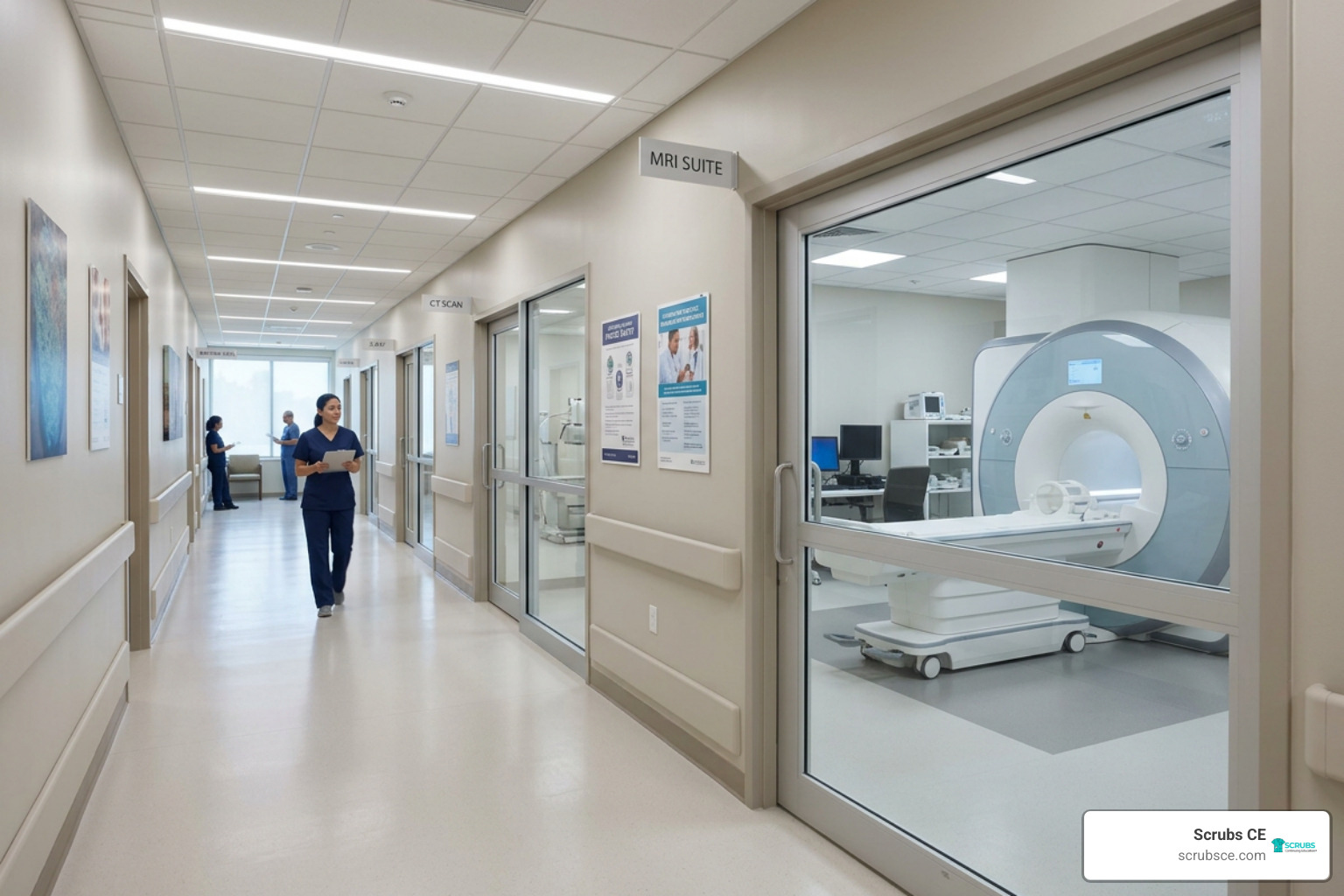
Once you enter the field and earn your credentials, maintaining your license and registry status becomes a lifelong commitment. The ARRT® and state licensing boards require technologists to complete continuing education (CE) credits during every two-year biennial cycle to keep their skills sharp.
When it comes time to satisfy your ongoing license and certification renewals, we are here to support you every step of the way. At Scrubs CE, we offer fast, affordable, and self-paced online courses designed to fit your busy shifts. You can browse our full catalog and get instant certificates by visiting our page to browse self-paced Radiology CE courses today!

MRI Technologist Job Description and Key Responsibilities
What Are MRI Tech Job Duties? A Complete Overview
Understanding MRI tech job duties is essential whether you are entering the field, hiring for your department, or maintaining your professional edge as a working technologist. The role is far more complex than simply operating a scanner — it spans patient safety screening, advanced equipment operation, contrast media administration, image quality evaluation, and detailed administrative documentation, all within a single shift.
Here is a quick snapshot of the core responsibilities:
| Duty Category | Key Tasks |
|---|---|
| Patient Care | Screen for contraindications, explain procedures, position patients, monitor comfort |
| Safety Protocols | Enforce Zone IV access, check for ferromagnetic implants, provide hearing protection |
| Equipment Operation | Adjust scan parameters (TR, TE, FOV), select coils, operate power injectors |
| Contrast Administration | Start IVs, inject gadolinium-based agents, monitor for adverse reactions |
| Image Production | Evaluate diagnostic quality, correct artifacts, transfer images to PACS |
| Administrative Tasks | Review physician orders, update electronic medical records, log procedures |
| Collaboration | Work alongside radiologists to refine protocols and confirm diagnostic quality |
According to federal occupational data, reviewing physician orders and conducting pre-scan safety screening interviews both score a perfect 100 out of 100 in task importance — meaning the most critical part of the job often happens before the scanner even turns on.
The median annual wage for MRI technologists was $88,180 in May 2024, with those working in outpatient care centers earning a median of $128,290. Employment is projected to grow 5 percent from 2024 to 2034, faster than the average for all occupations, with roughly 15,400 job openings projected each year over the decade.
I’m Zita Ewert, and as the leader of SCRUBS Continuing Education®, I’ve spent years helping imaging professionals navigate the regulatory, clinical, and career dimensions of MRI tech job duties — from ARRT® exam prep to state licensure renewal. In this guide, I’ll walk you through every major responsibility of the role so you know exactly what the job demands and how to stay sharp in it.
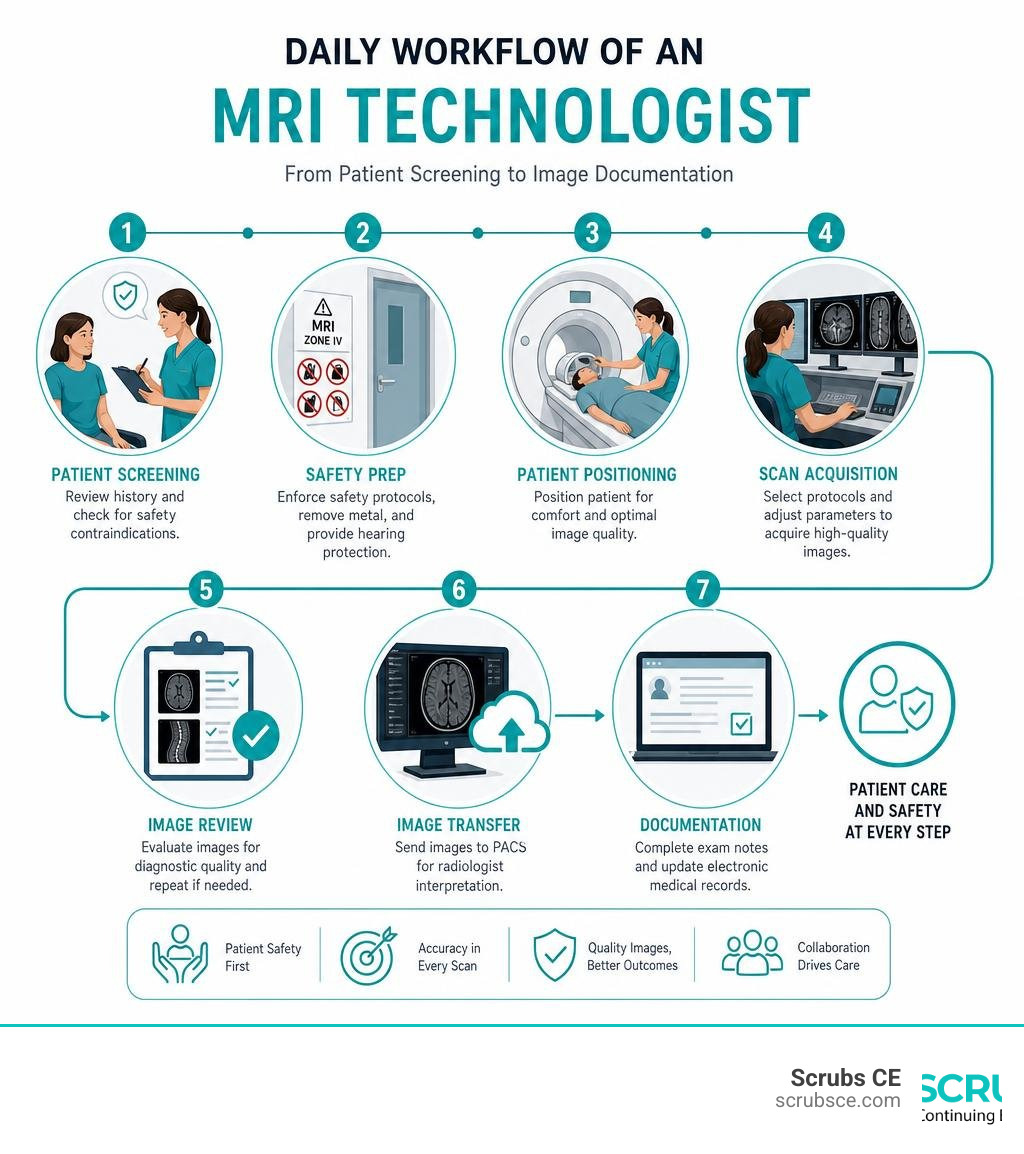
Mri tech job duties word guide:
Primary MRI Tech Job Duties and Daily Workflow
The daily routine of an MRI technologist is a highly structured, sequence of clinical and technical operations. No two days are identical, but every single patient encounter requires a meticulous, step-by-step workflow to ensure diagnostic accuracy and patient comfort.
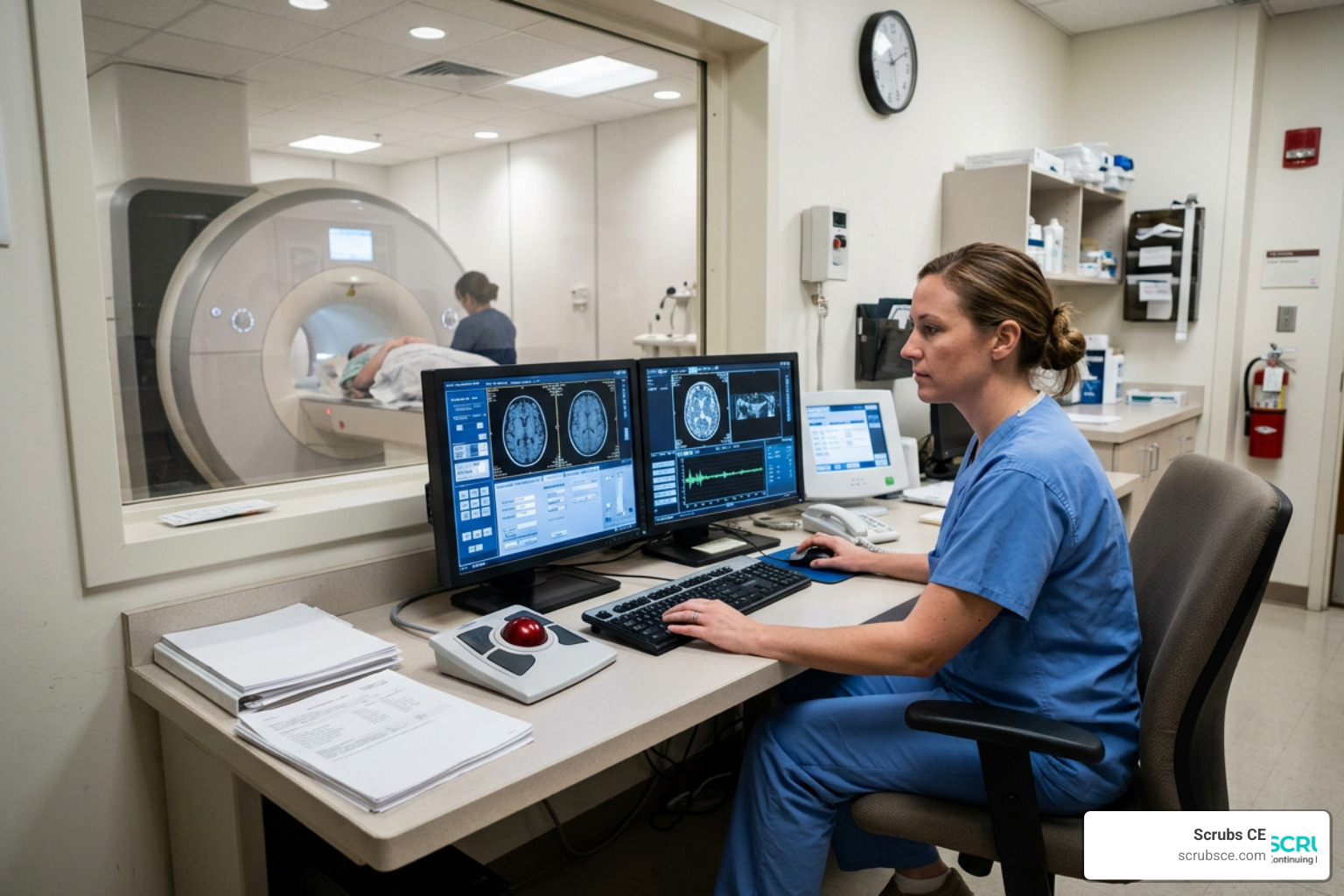
The workflow begins long before the patient lies down on the scanner table. Here is how a typical daily routine unfolds:
- Reviewing Physician Orders: The technologist’s first responsibility is to carefully evaluate the incoming physician orders. This step ensures that the requested exam matches the patient’s clinical history and symptoms. Any discrepancy requires immediate clarification with the ordering physician or the reading radiologist.
- Reviewing Patient Medical History: Understanding the patient’s background is essential. Technologists review electronic medical records (EMR) to identify pre-existing conditions, past surgeries, and potential contraindications.
- Selecting and Verifying Protocols: Based on the clinical indication, the technologist selects the appropriate scanning protocol (such as a specific sequence set for a brain scan for Multiple Sclerosis, or a dynamic abdominal sequence).
- Preparing the Patient: This involves explaining the procedure in plain, reassuring language, answering questions, and helping the patient change into MR-safe scrubs or gowns.
- Patient Positioning and Coil Selection: Proper positioning is critical for both patient comfort and image quality. The technologist must select the correct receiver coil (e.g., head, knee, shoulder, or torso coil) and position it precisely over the target anatomy. They utilize cushions, pads, and immobilization devices to help the patient remain completely still throughout the scan.
- Operating the Scanner and Evaluating Quality: Once the scan begins, the technologist monitors the acquisition from the control console, evaluating each sequence in real time to check for patient motion, artifacts, and diagnostic completeness.
To learn more about the complete clinical scope of this role, check out our What Does an MRI Tech Do? Guide. For a deeper dive into standard occupational tasks as defined by federal databases, you can also review the 29-2035.00 – Magnetic Resonance Imaging Technologists profile on O*NET OnLine.
Patient Safety, Comfort, and Magnetic Field Screening Protocols
Operating a high-field-strength magnet (typically 1.5 Tesla or 3.0 Tesla) is a massive responsibility. Because the MRI magnet is always on, safety is the absolute highest priority within the Radiology department. The screening process is where safety actually happens, and the technologist serves as the primary gatekeeper.
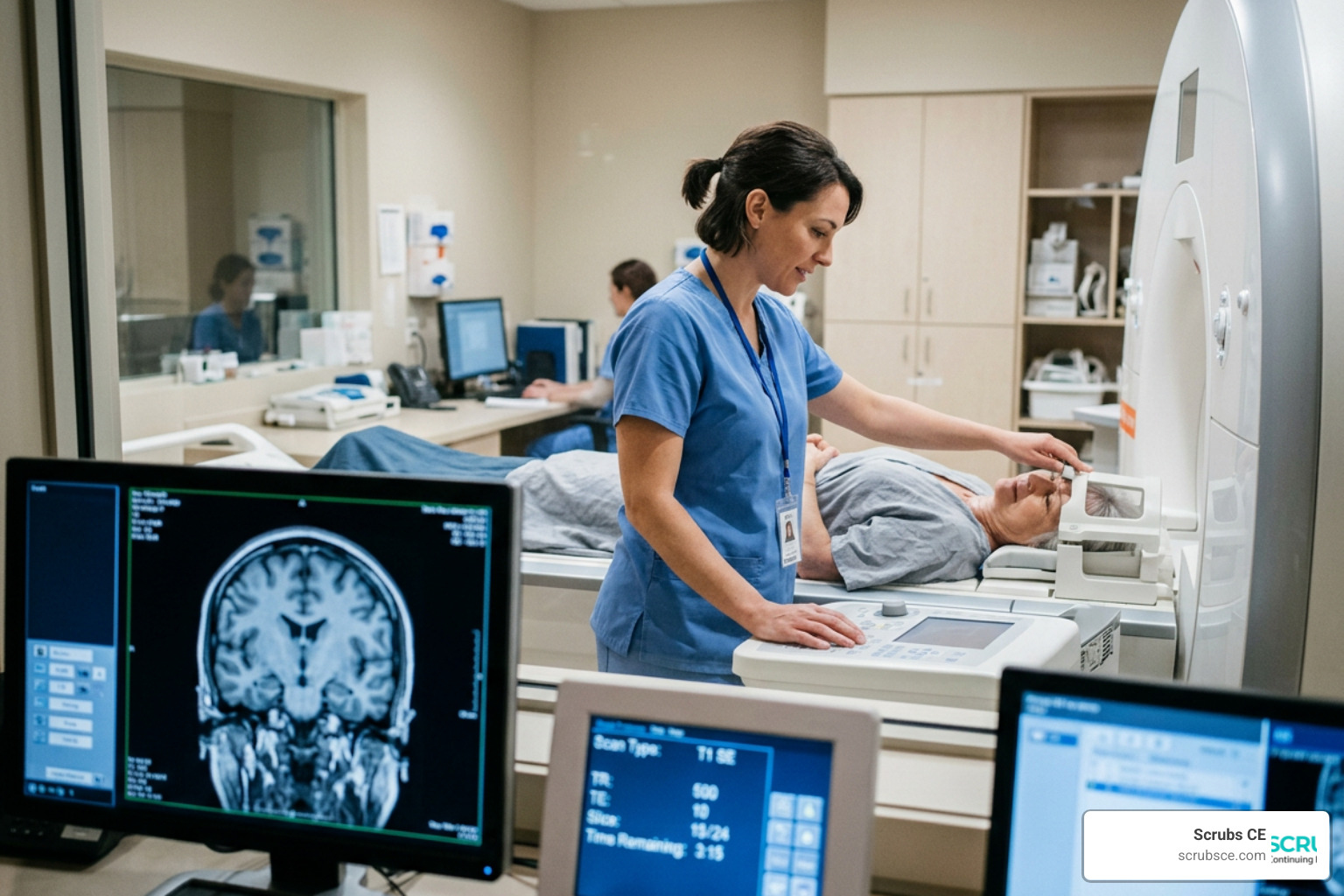
Strict Screening Protocols
Every patient, family member, and healthcare worker must undergo a rigorous screening process before entering the magnet room (designated as Zone IV). The technologist must conduct detailed screening interviews to identify:
- Ferrous (magnetic) implants, shrapnel, or foreign bodies.
- Cardiac pacemakers, implantable cardioverter-defibrillators (ICDs), and neurostimulators.
- Cochlear implants or prosthetic heart valves.
- Metallic tattoos or permanent makeup, which can contain iron oxide pigments and present a thermal burn risk.
- Pregnancy status.
If an implant is present, the technologist must research the exact make and model of the device to determine if it is MR-Safe, MR-Conditional (requiring specific scanner settings), or MR-Unsafe.
Managing Patient Comfort and Anxiety
An MRI scanner can be an intimidating environment. The bore is narrow, and the gradient coils produce loud knocking and buzzing noises that can easily exceed 100 decibels. Technologists must manage patient psychological comfort by:
- Providing appropriate hearing protection (earplugs or specialized MR-safe headphones with music).
- Addressing claustrophobia through clear communication, breathing exercises, and constant reassurance via the intercom system.
- Offering panic buttons so patients can signal for immediate assistance if they feel overwhelmed.
To master these critical safety principles and protect your patients from RF-induced heating and the projectile “missile effect,” consider studying the Essentials of MRI Safety Book Test Mailed to earn valuable continuing education credits.
Technical Skills, Equipment Operation, and Administrative Tasks
An MRI technologist is both a compassionate caregiver and a highly skilled technical specialist. Operating a computerized MRI console requires a solid foundation in imaging physics, cross-sectional anatomy, and clinical pathology.
Equipment Operation and Parameter Manipulation
Modern MRI scanners are highly customizable. Technologists do not simply push buttons; they actively manipulate scan parameters to optimize image quality. Key adjustments include:
- TR (Repetition Time) and TE (Echo Time): Controlling these timing parameters determines the contrast of the image (e.g., T1-weighted, T2-weighted, or Proton Density).
- FOV (Field of View) and Slice Thickness: Adjusting these parameters balances spatial resolution against the signal-to-noise ratio (SNR) and total scan time.
- Coil Selection: Choosing and placing the right surface or volume coils to maximize signal reception from the specific body part being imaged.
Contrast Media Administration
Many MRI exams require the use of intravenous contrast agents, such as gadolinium-based contrast media, to highlight vascular structures, tumors, or inflammation. Technologists are responsible for:
- Screening patients for renal function (reviewing eGFR and creatinine levels) to prevent complications like Nephrogenic Systemic Fibrosis (NSF).
- Establishing intravenous (IV) access.
- Loading and programming power injectors to deliver contrast at precise flow rates and volumes.
- Monitoring the patient closely during and after the injection for any signs of an adverse allergic reaction.

Administrative and Quality Control Responsibilities
Beyond direct clinical care, technologists must manage a variety of administrative and technical maintenance tasks to keep the department running smoothly:
- Quality Control (QC): Performing daily and weekly phantom scans to test scanner calibration, center frequency, and signal-to-noise ratio, logging the results to comply with regulatory standards.
- Information Systems: Entering patient data, tracking procedure codes, and managing billing charges in Radiology Information Systems (RIS), electronic medical records (EMR), and legacy platforms like AS400.
- PACS Management: Verifying, post-processing, and transferring completed diagnostic images to the Picture Archiving and Communication System (PACS) for radiologist review.
Specialized Clinical Roles and Advanced Career Paths
As the medical imaging field evolves in 2026, many MRI technologists choose to specialize in distinct clinical niches. These advanced pathways offer unique professional rewards, higher compensation, and a break from routine outpatient scanning.
| Clinical Pathway | Primary Focus | Key Specialized Duties |
|---|---|---|
| Pediatric MRI | Imaging infants, children, and adolescents | Advanced pediatric communication, specialized immobilization, coordination with pediatric anesthesia teams |
| Interventional MRI | Real-time imaging guidance during minimally invasive procedures | Maintaining a sterile field within the MRI suite, assisting with real-time biopsy guidance, monitoring patient vitals |
| Magnetic Resonance Safety Officer (MRSO) | Safety leadership, risk management, and compliance | Managing access control to Zones III and IV, developing safety policies, training non-MRI staff, evaluating implant safety |
Specialized MRI Tech Job Duties in Pediatrics and Interventional Imaging
In Pediatric MRI, the technologist’s primary challenge is securing patient cooperation without movement. This requires exceptional communication skills, child-friendly explanations, and sometimes coordinating with anesthesia or sedation teams for younger patients. Special immobilization devices and specialized pediatric coils are frequently utilized.
In Interventional MRI, technologists work directly alongside interventional radiologists. They assist with minimally invasive procedures, such as MR-guided biopsies, tumor ablations, or localized drug deliveries. The technologist must maintain a sterile field inside the magnet room, manage MR-compatible surgical tools, and execute rapid, real-time imaging sequences to guide the physician’s needle or probe.
Career Advancement and MRI Tech Job Duties as an MRSO
For experienced technologists, becoming a Magnetic Resonance Safety Officer (MRSO) represents a major career milestone. The MRSO acts as the clinical safety supervisor for the entire imaging facility.
Key responsibilities of an MRSO include:
- Designing and enforcing access control barriers between Zone III (the control room) and Zone IV (the scanner room).
- Serving as the ultimate authority on whether complex, conditional implants can be safely scanned.
- Educating and training nurses, anesthesiologists, environmental services staff, and emergency responders on magnetic field safety.
- Developing emergency evacuation and magnet quench protocols.
Education, ARRT® Certification, and Physical Demands
Becoming an MRI technologist requires structured academic training, rigorous clinical experience, and professional credentialing.
Educational Pathways and Credentialing
The standard pathway to entering the profession includes:
- Academic Degree: Completing an associate or bachelor’s degree program in radiologic technology or a dedicated MRI program.
- Clinical Experience: Completing extensive clinical rotations. Under the updated guidelines established by the AMERICAN REGISTRY OF RADIOLOGIC TECHNOLOGISTS® (ARRT®), candidates must document a minimum of 21 different procedures with at least 125 total repetitions. Crucially, the ARRT® strictly prohibits the use of remote scanning to fulfill these clinical requirements; physical, in-person presence in the scan room is mandatory.
- Certification and Licensure: Passing the registry examination to earn the R.T.(MR)(ARRT®) credential. While state licensing laws vary, most employers and hospital networks require active ARRT® certification as a condition of employment.
To explore these educational pathways and strategies for long-term clinical success, read our guide on The Ultimate Guide to Becoming an MRI Tech and Attracting Success. Detailed national employment data and educational standards can also be referenced in the Radiologic and MRI Technologists : Occupational Outlook Handbook: : U.S. Bureau of Labor Statistics.
Physical Demands of the Role
While MRI is a high-tech specialty, it is also a physically demanding job. Technologists must possess the physical stamina to handle a variety of taxing activities throughout an 8- to 12-hour shift:
- Heavy Lifting: Positioning and transferring patients who are injured, elderly, or non-ambulatory. The job description typically requires the ability to perform heavy lifting of up to 100 pounds maximum, with frequent lifting or carrying of objects weighing up to 50 pounds.
- Prolonged Standing: Technologists spend the majority of their workdays on their feet, walking between the control console and the magnet room. Investing in high-quality, supportive footwear is a must!
- Ergonomic Strain: Reaching over the wide bores of modern scanners to position coils and secure patients can place repetitive strain on the back, neck, and shoulders if proper body mechanics are not used.
Frequently Asked Questions about MRI Technologist Responsibilities
What are the most critical day-to-day responsibilities of an MRI technologist?
The most critical day-to-day responsibilities are patient safety screening, proper positioning, and real-time image quality evaluation. Because the magnetic field is always active, conducting a rigorous safety screening to exclude ferromagnetic objects is paramount to preventing catastrophic accidents. Additionally, technologists must manipulate scanner parameters to ensure the images produced are of high diagnostic quality for the reading radiologist.
Do MRI technologists administer contrast dye?
Yes. Administering gadolinium-based contrast agents intravenously is a standard duty for many MRI technologists. This involves reviewing the patient’s renal function (eGFR), establishing IV access, programming automated power injectors, and monitoring the patient for any signs of an adverse allergic reaction.
What are the physical demands of working in an MRI department?
The role requires significant physical stamina. Technologists spend most of their shifts standing and walking. They must also be capable of heavy lifting (up to 100 pounds maximum) to safely transfer and position patients, as well as lift heavy receiver coils and accessories.
Conclusion
The role of an MRI technologist is a dynamic, highly rewarding blend of advanced physics, clinical expertise, and direct patient care. From conducting life-saving safety screenings to manipulating complex scan parameters and comforting anxious patients, these professionals are vital to the modern healthcare team.
As technology advances through 2026 and beyond — with larger scanner bores, artificial intelligence integration, and complex interventional procedures — staying updated on the latest protocols and safety standards is essential.
Whether you are looking to renew your state license, maintain your ARRT® registration, or expand your clinical knowledge, we are here to support your professional development. Explore our convenient, self-paced, and affordable online courses at the CE for MRI Technologists portal on SCRUBS CE® to meet your continuing education requirements and take the next step in your imaging career.
Anatomy and Physiology for Dummies because Your Body Didn’t Come with an Owner’s Manual
Anatomy and Physiology for Dummies because Your Body Didn’t Come with an Owner’s Manual
Essentials of Human Anatomy and Physiology for Dummies

Understanding biological science doesn’t require memorizing a Latin dictionary overnight. When we break down human anatomy and physiology for dummies, we start with physical organization and basic chemical foundations. At its core, the human body is governed by the same fundamental laws of chemistry and physics that rule the rest of the universe.
Biological complexity is organized in a clear hierarchy. Chemistry forms the basis of all physiological processes: atoms combine to form molecules, which build organelles, which assemble into cells. If you want to explore the ultimate standard resource for these topics, check out Anatomy & Physiology For Dummies | dummmies .
Core Concepts in Human Anatomy and Physiology for Dummies
To master the basics, we must first separate “what it is” from “what it does”:
- Anatomy: The study of bodily structures, their shapes, and their relative positions.
- Physiology: The study of how those structures function and perform physical and chemical actions to maintain life.
Structure and function are inseparable because function always reflects underlying structure. For instance, the thin walls of lung alveoli allow gas exchange, whereas thick, muscular arterial walls withstand high blood pressure.
At the biochemical level, chemical bonds (ionic, covalent, and hydrogen bonds) dictate how molecules interact. Cells extract usable cellular energy—adenosine triphosphate (ATP)—through cellular respiration, which involves three main stages:
- Glycolysis: Breaking down glucose in the cytoplasm.
- The Krebs Cycle (Citric Acid Cycle): Processing cellular fuel inside the mitochondria.
- Oxidative Phosphorylation: Using electron transport chains to generate the majority of ATP.
This chemical energy powers the five levels of structural hierarchy:
- Cellular level: Eukaryotic cells (e.g., muscle, neuron, epithelial cells).
- Tissue level: Groups of similar cells working together (epithelial, connective, muscle, and nervous tissues).
- Organ level: Distinct structures composed of two or more tissue types (e.g., stomach, heart, brain).
- Organ system level: Teams of organs working in tandem (e.g., digestive system).
- Organism level: The human body operating as a single unit.
For a deeper dive into these foundational elements, read our article on everything you need to know about anatomy and physiology for dummies or consult the detailed academic overview in Essentials of Human Anatomy & Physiology | Pearson eLibrary .
Standard Anatomical Position, Planes, and Body Cavities
In medicine, precise communication is vital. Saying a bump is on the “upper left side of the leg” isn’t clear enough. Medical professionals use a universal reference: the standard anatomical position. In this stance, the body stands upright, facing forward, with feet flat, upper extremities hanging at the sides, and palms facing outward (supinated). Remember: “right” and “left” always refer to the patient’s right and left, not the observer’s!

To pinpoint locations, we use directional terms and anatomical planes:
- Anatomical Planes:
- Sagittal plane: Vertical cut dividing the body into right and left portions (Midsagittal divides it evenly down the middle).
- Transverse (horizontal) plane: Cut dividing the body into superior (top) and inferior (bottom) portions.
- Coronal (frontal) plane: Vertical cut dividing the body into anterior (front) and posterior (back) sections.
- Directional Terms:
- Anterior (Ventral): Toward the front.
- Posterior (Dorsal): Toward the back.
- Superior (Cranial): Toward the head.
- Inferior (Caudal): Toward the feet.
- Medial vs. Lateral: Closer to the midline vs. further to the side.
- Proximal vs. Distal: Closer to the point of attachment (limb root) vs. farther away.
Internal organs reside within protective body cavities:
- Dorsal Cavity: Contains the cranial cavity (housing the brain) and the vertebral cavity (housing the spinal cord).
- Ventral Cavity: Divided by the diaphragm into two main compartments:
- Thoracic Cavity: Houses the heart (within the mediastinum/pericardial cavity) and lungs (pleural cavities).
- Abdominopelvic Cavity: Contains the upper abdominal section (stomach, liver, intestines, spleen) and lower pelvic section (bladder, internal reproductive organs, rectum).
Mastering these spatial relationships is crucial for clinical radiographers. You can explore how positioning intersects with imaging physics in our guide on the abcs of x-ray physics anatomy and perfect positioning.
The 11 Major Organ Systems and Their Functions
The human body relies on 11 major organ systems to carry out daily physiological operations. These systems aren’t isolated departments—they share physical boundaries, send constant signals back and forth, and depend on each other for survival.
Support, Movement, and Protection Systems
- Integumentary System: Composed of the skin, hair, nails, and cutaneous glands (eccrine, apocrine, and sebaceous glands). The skin acts as a protective chemical, physical, and biological barrier. It uses keratinized dead cells as “bricks” and glycolipids as “mortar” while regulating body temperature through sweat production.
- Skeletal System: Comprising 206 bones in the adult skeleton alongside cartilage, ligaments, and joints. It provides a structural framework, protects soft organs, stores minerals (calcium and phosphorus), and produces blood cells via red bone marrow (hematopoiesis). Joints are classified structurally (fibrous, cartilaginous, synovial) and functionally (synarthroses/immovable, amphiarthroses/slightly movable, diarthroses/freely movable).
- Muscular System: Consists of skeletal muscles that attach to bones via tendons, enabling voluntary locomotion, facial expression, heat generation, and posture maintenance. (Smooth and cardiac muscles manage involuntary actions in visceral organs and the heart).
To learn more about how your structural framework operates, take a moment to read getting to know your bones why the anatomy and physiology for dummies book is a must read.
Control, Transport, and Defense Systems
- Nervous System: The body’s fast-acting electrical control network, consisting of the central nervous system (brain and spinal cord) and peripheral nervous system (nerves and sensory receptors). It detects internal and external stimuli, processes information, and triggers immediate responses via action potentials.
- Endocrine System: The slow-acting chemical messaging network. Glands (pituitary, thyroid, adrenal, pancreas, ovaries/testes) secrete hormones into the bloodstream to regulate metabolism, growth, reproduction, and fluid balance.
- Cardiovascular System: Powered by the heart, this transport network pumps blood through thousands of miles of arteries, capillaries, and veins to deliver oxygen, nutrients, and hormones while carrying away metabolic wastes like carbon dioxide.
- Lymphatic and Immune System: A network of lymphatic vessels, lymph nodes, the spleen, and the thymus. It collects excess tissue fluid, returns it to the bloodstream, filters pathogens, and orchestrates immune defenses (innate barriers and adaptive humoral/cellular immunity driven by B and T lymphocytes). Plasma cells, for instance, can secrete up to 2,000 antibody molecules per second!
| Control Mechanism | Nervous System | Endocrine System |
|---|---|---|
| Signal Type | Electrical impulses & neurotransmitters | Chemical messengers (Hormones) |
| Transport Route | Axons and synaptic clefts | Bloodstream |
| Response Speed | Milliseconds (rapid) | Seconds to days (slow) |
| Duration of Effect | Short-lived | Long-lasting |
For medical imaging professionals, interpreting these internal organ structures accurately requires precise knowledge. See our detailed guide on anatomy for radiographers for imaging insights.
Energy Exchange, Processing, and Life Continuity
- Respiratory System: Comprises the nasal cavity, pharynx, larynx (which provides an open airway, routes air and food, and enables voice production), trachea, bronchi, and lungs. It keeps blood supplied with oxygen and eliminates carbon dioxide while assisting in acid-base balance.
- Digestive System: Includes the oral cavity, esophagus, stomach, small and large intestines, liver, gallbladder, and pancreas. It breaks down food mechanically and chemically, absorbs nutrients into the bloodstream, and eliminates indigestible wastes as feces.
- Urinary System: Consists of the kidneys, ureters, urinary bladder, and urethra. It filters blood, removes nitrogenous wastes (urea, uric acid), regulates electrolyte and water balance, and maintains blood pH and pressure.
- Reproductive System: Designed for life continuity. Male testes produce sperm and testosterone; female ovaries (measuring about 2 inches or 5 cm wide) produce ova, estrogen, and progesterone. The female uterus shelters and nourishes a developing embryo/fetus during the 280-day (40-week) human gestational period, which is split into three trimesters.
To read more on these systemic interactions across human health, check out Essentials of Human Anatomy & Physiology, Global Edition .
Homeostasis, System Interactions, and Lifespan Development
Maintaining Dynamic Balance and Physiological Response
Living organisms must maintain internal stability despite changing external conditions. This dynamic state of balance is called homeostasis.
The primary mechanism for maintaining homeostasis is negative feedback:
- Stimulus: A change occurs in a variable (e.g., body temperature rises).
- Sensor/Receptor: Detects the change and sends signals to the control center.
- Control Center (e.g., Hypothalamus): Compares inputs against a set point and sends commands.
- Effector: Carries out a response that reverses (negates) the original stimulus to return the body to balance.

- Thermoregulation: When body temperature climbs, eccrine sweat glands secrete fluid (99% water, slightly acidic pH 4–6 with antimicrobial dermcidin), and cutaneous blood vessels dilate to radiate heat. When chilled, vessels constrict and skeletal muscles shiver to generate internal heat.
- Blood Glucose Balance: High blood sugar triggers pancreatic beta cells to release insulin, promoting glucose uptake into liver and muscle cells. Low blood sugar prompts alpha cells to release glucagon, breaking down stored glycogen into glucose.
- Positive Feedback: Unlike negative feedback, positive feedback amplifies a stimulus until a definitive endpoint is reached. Key examples include oxytocin release driving uterine contractions during childbirth and localized blood clotting cascades.
These systems adapt dramatically during physical activity or stress. During exercise, the nervous system signals the heart to beat faster, increasing cardiac output. Simultaneously, the respiratory system increases ventilation to handle heightened oxygen demand and clear carbon dioxide.
Biological Development from Conception Through Aging
From fertilization to old age, the body constantly develops and changes:
- Gestational Trimesters: Human pregnancy lasts approximately 280 days (40 weeks) from the first day of the last menstrual period.
- First Trimester (Weeks 1–12): Rapid organogenesis; major organ systems form.
- Second Trimester (Weeks 13–27): System elaboration, bone ossification, and fetal movement.
- Third Trimester (Weeks 28–40): Rapid weight gain, fat deposition, and lung maturation.
- Growth and Self-Repair: Human growth involves mitosis and cellular specialization. Tissues repair damaged regions via regeneration (replacing functional cells) or fibrosis (forming scar tissue).
- Aging (Senescence): Aging is a gradual, diffuse process characterized by reduced mitotic capacity, decreased tissue elasticity, diminished mitochondrial efficiency, and impaired homeostatic regulation.
Professional Applications and Diagnostic Imaging
Exam Success with Human Anatomy and Physiology for Dummies
For healthcare professionals and students, learning anatomy and physiology isn’t just an academic exercise—it’s a clinical necessity. Mastery of anatomy directly impacts your ability to perform diagnostic procedures, position patients correctly, and pass key licensing exams.
If you are preparing for certifications like the AMERICAN REGISTRY OF RADIOLOGIC TECHNOLOGISTS® (ARRT®) exam, fulfilling your ASRT® continuing education requirements, or advancing your Radiology credentials, clear study strategies are essential. Using plain-English guides, mnemonic cues, visual diagrams, and active practice questions helps transform complex Latin terms into intuitive knowledge.
To streamline your test prep and professional growth, explore these resources:
- passing the test anatomy and physiology licensure requirements made easy
- anatomy Radiology book essentials top texts for diagnostic imaging
- anatomy and physiology for dummies latest edition which version is best for you
Frequently Asked Questions About Human Anatomy and Physiology
What is the standard anatomical position and why is it important?
The standard anatomical position is an upright stance where the individual stands facing forward, feet flat on the floor, with arms resting at the sides and palms facing forward (supinated). It is important because it provides a universal, standard spatial reference point for healthcare professionals. This ensures that directional terms like “anterior,” “superior,” or “medial” mean the exact same thing regardless of how a patient is positioned during an examination or surgical procedure.
What are the primary differences between anatomy and physiology?
Anatomy focuses on the physical structure, shape, layout, and identification of body parts (what and where things are). Physiology focuses on the dynamic biological and chemical functions of those structures (how and why things work). While anatomy studies the static physical form, physiology examines operational mechanisms like nerve signal propagation, hormone action, or muscle contraction.
How does the human body maintain homeostasis during exercise?
During exercise, muscle activity generates excess thermal energy and increases oxygen intake demands. The brain’s control centers respond by stimulating eccrine sweat glands to release sweat for evaporative cooling, dilating blood vessels in the skin to shed excess heat, speeding up cardiac output to pump oxygenated blood to working muscles, and increasing respiratory rate to expire elevated carbon dioxide levels.
Conclusion
Understanding human anatomy and physiology for dummies-level concepts removes the intimidation from medical science. By breaking the body down into its structural hierarchy, standard directions, 11 organ systems, and homeostatic loops, you gain an intuitive grasp of how the human body functions in health and adapts to sickness.
At SCRUBS Continuing Education®, we specialize in helping healthcare professionals build on this foundation. We offer high-quality, self-paced online courses complete with instant certificates to help you fulfill your professional licensing requirements effortlessly.
Ready to expand your expertise and complete your continuing education hours with ease? Explore our comprehensive Anatomy & Physiology For Dummies Continuing Education Course today to take the next step in your career!
Picture Perfect: The Ultimate Guide on Steps to Become a Mammography Technician
Picture Perfect: The Ultimate Guide on Steps to Become a Mammography Technician
Why the Steps to Become a Mammography Technician Are Worth Knowing
If you’ve been researching the steps to become a mammography technician, here’s the fast answer:
- Earn a high school diploma or GED
- Complete an accredited Radiology technology program (associate degree or higher)
- Pass the AMERICAN REGISTRY OF RADIOLOGIC TECHNOLOGISTS® (ARRT®) exam in Radiography
- Enroll in a post-primary mammography training program (~6 months)
- Complete 40 hours of structured mammography education (MQSA requirement)
- Perform 25 supervised mammography exams (MQSA) plus 75 additional exams (ARRT®)
- Pass the ARRT® Mammography postprimary exam
- Obtain state licensure where required
- Maintain credentials through ongoing continuing education (CE)
Mammography is one of the most impactful specialties in medical imaging. Since 1990, it has helped reduce breast cancer deaths by nearly one-third. Behind every one of those life-saving scans is a skilled, compassionate technician — someone who combines precise imaging technique with the ability to put a nervous patient at ease.
The career pays well, too. The national average for mammography technologists is over $76,000 per year, with California averaging over $88,000 annually. And with Radiology employment projected to grow 5–6% over the next decade, demand is only increasing.
But the path to certification involves multiple steps, two different regulatory frameworks (ARRT® and MQSA), and state-specific rules that can trip people up. This guide breaks it all down clearly.
I’m Zita Ewert, and as the leader of SCRUBS Continuing Education®, I’ve spent years helping Radiology professionals navigate the exact steps to become a mammography technician — from primary certification through postprimary specialty training and ongoing CE compliance. In the sections below, I’ll walk you through everything you need to know, step by step.
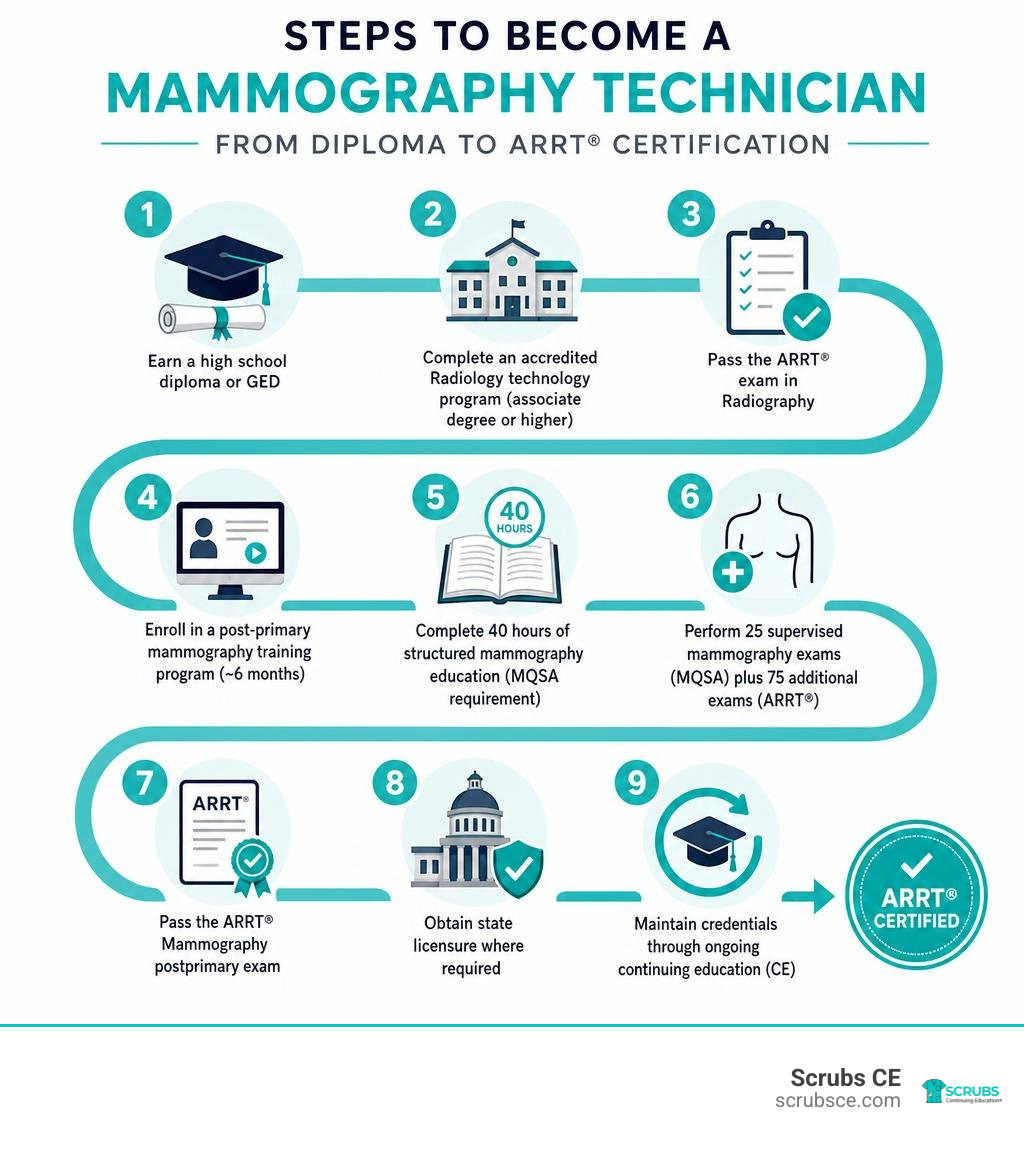
Steps to become a mammography technician word guide:
- Radiologic Technologist Requirements
- MQSA Mammography Technologist Requirements
- How to Get ARRT Certification
Understanding the Role: What Does a Mammography Technologist Do?
A mammography technologist is a specialized Radiologic Technologist who uses low-dose X-ray equipment—specifically modern 2D digital units and 3D digital breast tomosynthesis systems—to produce accurate diagnostic images of breast tissue.
When we evaluate the day-to-day responsibilities of a mammographer, the role spans far beyond adjusting mechanical settings on an X-ray unit. Technologists interact directly with patients who may feel vulnerable or anxious. Primary job responsibilities include:
- Reviewing patient medical histories and documenting clinical symptoms or surgical scars using radiopaque markers.
- Explaining procedures, detailing the necessity of tissue compression, and offering emotional reassurance.
- Properly positioning tissue and applying calibrated mechanical compression to ensure optimal image quality.
- Operating advanced 2D and 3D imaging equipment while maintaining low radiation exposure.
- Performing daily quality control (QC) testing on imaging systems in accordance with federal guidelines.
- Collaborating with board-certified radiologists to evaluate image clarity or perform interventional biopsy procedures.
Essential Skills for Breast Imaging Specialists
Technical aptitude is only half of the equation in breast imaging. To excel, a mammography technologist must master both clinical mechanics and human connection:
- Patient Dignity and Communication: Mammograms are deeply personal procedures. Candidates must demonstrate high empathy, explaining compression steps thoroughly before applying equipment pressure.
- Anatomical Positioning Expertise: Capturing clear diagnostic images requires understanding subtle variations in breast tissue and body habitus. Precise positioning eliminates motion artifacts and avoids missing deep tissue near the chest wall.
- Tissue Compression Mechanics: Tissue compression reduces image blur, minimizes scatter radiation, and lowers the required X-ray dose. Finding the balance between necessary compression and patient comfort demands tactile skill.
- Radiation Safety and QA Standards: Technologists must rigorously follow radiation safety protocols, wearing protective equipment and maintaining quality control logs to comply with strict standards set by the Food and Drug Administration (FDA).
Screening vs. Diagnostic Mammography
Understanding the distinction between screening and diagnostic mammography is fundamental to the daily routine of a breast imaging specialist.

- Screening Mammography: Conducted for asymptomatic patients as part of routine preventative healthcare. These exams typically consist of standard views (Craniocaudal [CC] and Mediolateral Oblique [MLO]) intended to identify hidden lesions before symptoms appear.
- Diagnostic Mammography: Performed when a screening scan displays an abnormality, or when a patient presents with clinical symptoms such as a palpable lump, skin dimpling, or focal pain. Diagnostic workups involve specialized spot compression, magnification views, 3D tomosynthesis, and real-time review with an interpreting physician.
Key Steps to Become a Mammography Technician
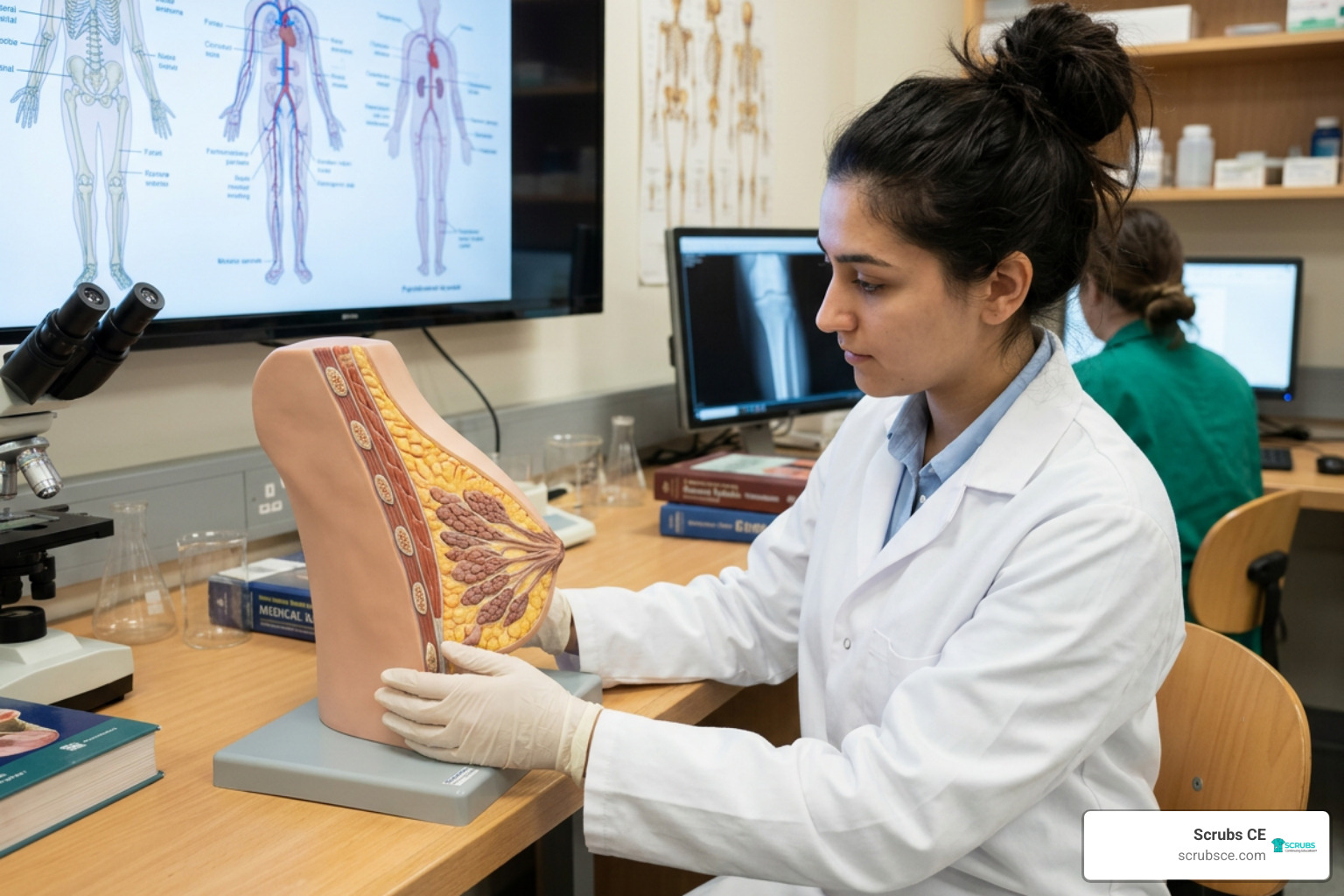
Entering this specialized field requires following a clear sequence of educational and clinical milestones. You cannot enter a mammography specialty program straight out of high school without first establishing a foundational credential in general Radiography.
Core Prerequisites and Steps to Become a Mammography Technician
The foundational prerequisite for any mammography technician is becoming a credentialed Radiologic Technologist. Here is how that journey unfolds:
- Earn an Associate or Bachelor’s Degree: Complete an accredited educational program in Radiologic Technology. These 2-year to 4-year degree programs teach radiation physics, human anatomy, patient care, positioning, and image production.
- Obtain Primary ARRT® Registration: Graduates must sit for and pass the national certification exam administered by the AMERICAN REGISTRY OF RADIOLOGIC TECHNOLOGISTS® (ARRT®) in Radiography. Achieving the R.T.(R)(ARRT®) credential establishes your primary eligibility.
- Enroll in a Specialized Training Pathway: Once certified in general Radiography, professionals transition into specialized mammography education through college certificate programs, hospital-sponsored fellowships, or comprehensive online didactic modules paired with clinical training. For a complete overview of this educational stage, check out our Mammography Technologist Training Complete Guide.
Specialized training programs generally take between 2 to 6 months to complete, depending on whether you study full-time or complete clinical requirements alongside a current job.
Navigating the ARRT® Postprimary Pathway
To earn the official R.T.(M)(ARRT®) credential, candidates must fulfill requirements established under the ARRT® postprimary eligibility pathway. The postprimary pathway verifies that a credentialed radiographer has acquired specialized knowledge in breast imaging.
The pathway requires completing two distinct educational elements:
- Structured Education: Candidates must complete a minimum of 16 structured education credit hours covering all major sections of the ARRT® Mammography Content Specifications (Patient Care, Image Production, and Procedures).
- Core Curriculum Mastery: Coursework must mirror national standards outlined in the ASRT® Mammography Curriculum Framework, covering breast anatomy, pathology, quality control, and specialized equipment physics.
To learn more about preparing for this examination and organizing your study materials, explore our guide on Mammography Mastery: Achieving Your ARRT Certification.
Supervised Clinical Experience and Exam Requirements
Beyond classroom lectures, candidates must prove hands-on clinical competence before applying for the board examination. The AMERICAN REGISTRY OF RADIOLOGIC TECHNOLOGISTS® sets precise clinical procedure minimums that must be performed under direct supervision and logged through the candidate’s online portal:
- 75 Patient Examinations: Candidates must perform a minimum of 75 routine mammographic examinations (including patient preparation, medical history documentation, positioning, and exposure).
- Quality Control Procedures: Perform 10 phantom image evaluations and perform mechanical quality assurance evaluations, such as compression force checks.
- Physician Case Reviews: Review at least 10 mammographic cases directly alongside an MQSA-qualified interpreting physician (radiologist).
- Elective/Interventional Procedures: Participate in, assist with, or observe at least 5 interventional breast procedures (such as stereotactic biopsies, needle localizations, or breast ultrasound).
Once these clinical requirements and structured hours are logged and verified, you are eligible to schedule your postprimary certification exam at a Pearson VUE testing center.
Regulatory Compliance: MQSA Standards vs. ARRT® Certification
A common point of confusion for prospective technologists is the difference between federal MQSA (Mammography Quality Standards Act) compliance and ARRT® board certification. While they share similar training topics, they serve distinct regulatory purposes.
Under federal law enforced by the FDA, a technologist must meet MQSA initial qualification standards before performing mammograms independently on patients. ARRT® certification, on the other hand, is a recognized national professional credential that demonstrates advanced board mastery and is mandated by most hospital employers.
| Requirement Domain | Federal MQSA Baseline Standard | ARRT® Postprimary Certification |
|---|---|---|
| Primary Requirement | Active State Radiography License or R.T.(R)(ARRT®) | Active primary credential in Radiography: R.T.(R)(ARRT®) |
| Initial Education | 40 hours of specialized mammography training | 16 hours of documented structured education |
| Supervised Exams | Minimum 25 supervised patient exams | 75 additional patient exams (100 total combined) |
| Modality Training | 8 hours minimum per specific modality (e.g., 3D Tomosynthesis) | Integrated into Content Specifications and Task Inventory |
| Ongoing Clinical Volume | Perform 200 mammograms every 24 months | Maintain good standing and satisfy biennium rules |
| Continuing Education | 15 mammography-specific CE credits every 3 years | 24 CE credits every 2-year biennium (covering primary + postprimary) |
For a deeper dive into maintaining federal compliance, read our full guide: Stay Compliant: A Guide to MQSA Technologist Requirements.
State-Specific Steps to Become a Mammography Technician in California
State licensing boards can add specific rules that modify the typical training sequence. A prominent example is California, governed by the California Department of Public Health (CDPH) Radiologic Health Branch.
In most states, a radiographer completes 40 hours of education and immediately begins performing 25 supervised mammograms at their clinic. In California, however, the process follows a strict regulatory sequence:
- Complete 40 Hours of Didactic Training: Complete an approved 40-hour classroom course in mammography.
- Pass the California State Mammography Exam: Before touch-testing or imaging any live patients, California candidates must apply for and pass the state mammography permit examination administered by the CDPH.
- Complete Supervised Clinical Hours: Only after passing the California state examination are candidates legally permitted to perform their 25 supervised patient scans and fulfill remaining ARRT® clinical logs.
Technologists in California can review state licensing rules through the official Guide to Becoming a Mammography Tech.
Career Outlook, Salary Expectations, and Maintaining Credentials
Choosing a career in breast imaging provides financial stability, strong demand, and clear advancement opportunities.
Career Outlook and Salary Benchmarks
According to the U.S. Bureau of Labor Statistics, employment for Radiologic Technologists is projected to grow 5% to 6% over the next decade, adding over 16,000 new job openings nationwide. Specialized roles like mammography are even more resilient against workforce fluctuations because specialized technical training and soft skills cannot be easily automated.
- National Average Salary: Mammography technologists earn a nationwide average income exceeding $76,000 per year (approximately $36 per hour), with overall radiologic tech median wages reported at $78,980.
- California Earnings: In California, higher cost-of-living adjustments and state licensing standards push average earnings to over $88,052 per year (approximately $43 per hour).
- Work Environments: More than half of all mammography technicians work in acute care hospital settings, with the remainder employed in outpatient diagnostic imaging centers, mobile screening units, and specialized breast health clinics.
If you are exploring convenient educational pathways to prepare for these roles, view our resources on Mammography Education Online.
Ongoing CE and Recertification Standards
Earning your credential is a major milestone, but maintaining active status requires adhering to regular continuing education cycles set by both federal regulators and the AMERICAN REGISTRY OF RADIOLOGIC TECHNOLOGISTS®.
To keep credentials active, technologists must satisfy two separate CE clocks:
- ARRT® Biennium Rule: Every two years (biennium), registered technologists must complete 24 ARRT®-approved continuing education credits.
- MQSA 3-Year Standard: To remain qualified to perform mammography under federal law, technologists must complete at least 15 mammography-specific CE credits every 36 months.
- MQSA Clinical Volume: Technologists must continuously perform at least 200 mammograms every 24 months.
Pro tip: You can satisfy both requirements simultaneously by selecting mammography-specific continuing education courses that carry approved ARRT® Category A credit. To browse structured courses tailored to these exact requirements, check out our guide on ARRT Mammography CE Requirements and review Career Insights for Mammography Technologists.
Frequently Asked Questions About Becoming a Mammography Technician
How long does it take to complete a mammography training program?
If you are already a registered Radiologic Technologist R.T.(R)(ARRT®), completing specialized mammography education typically takes 2 to 6 months. Full-time certificate programs last approximately one academic semester, while part-time or employer-sponsored fellowships allow candidates to finish structured education and clinical logs over a 6-month period. If starting from scratch without a radiography degree, the total pathway takes approximately 2.5 to 3 years.
Can you perform mammograms without ARRT® certification?
Legally, federal MQSA guidelines allow a state-licensed radiographer to perform mammograms once they complete 40 initial education hours, 8 hours of modality training, and 25 supervised patient exams. However, the vast majority of hospitals and outpatient imaging networks explicitly require the postprimary R.T.(M)(ARRT®) credential for employment and clinical privileges.
What continuing education is required to stay compliant?
To maintain federal MQSA compliance, you must earn 15 mammography-specific CE credits every 3 years and perform 200 clinical exams every 2 years. To maintain ARRT® registration, you must complete 24 CE credits every 2 years (which can include your 15 MQSA credits).
Conclusion
Navigating the steps to become a mammography technician requires dedication, from earning your primary Radiography degree to mastering tissue compression, positioning mechanics, and federal compliance rules. But the professional reward is immense: a well-paying, highly respected career on the front lines of breast cancer early detection.
By completing your accredited primary radiography education, fulfilling your 40-hour MQSA training, logging your supervised clinical exams, and passing the postprimary certification exam administered by the AMERICAN REGISTRY OF RADIOLOGIC TECHNOLOGISTS®, you set yourself up for long-term career success.
At SCRUBS Continuing Education®, we are dedicated to supporting radiologic professionals at every step of their career journey with self-paced, affordable online CE courses designed to meet ARRT® and MQSA compliance standards seamlessly. Ready to complete your continuing education requirements? Explore Radiology CE Courses with Scrubs CE today!

The Ultimate Guide to Physical Therapy Continuing Education
How the Florida Automated CE Tracking System Works
Mandatory Topics for Physical Therapy CE Renewal
When it comes to maintaining your physical therapy license in Florida, not all hours are created equal. The Florida Board of Physical Therapy mandates that licensed physical therapists complete a total of 24 continuing education hours during each two-year renewal cycle (biennium). However, simply taking 24 hours of general clinical training will leave you non-compliant if you fail to fulfill specific core subject mandates.
Your 24 physical therapy CE hours must include specific core topics:
- Prevention of Medical Errors: At least 2 contact hours must focus on medical error prevention. This training covers root-cause analysis, medication safety, communication breakdown, patient identification protocols, and risk management strategies tailored specifically to physical therapy settings and outpatient rehabilitation environments.
- Florida Laws and Rules: At least 1 contact hour must cover current Florida legislative governing rules and administrative codes, including Chapter 486 of the Florida Statutes and Rule Chapter 64B17 of the Florida Administrative Code. This keeps practitioners updated on direct access laws, clinical supervision rules for physical therapist assistants, scope of practice boundaries, and ethical responsibilities.
- General Clinical Education / Electives: The remaining 21 hours can be selected from board-approved clinical subjects, patient care management, orthopedic and neurological rehabilitation techniques, risk management, evidence-based practices, and professional ethics.
These administrative requirements stem directly from official state administrative codes, such as Rule 64B9-5, F.A.C., which governs continuing education guidelines across Florida healthcare boards and ensures clinicians maintain contemporary expertise.
Exemptions and First-Time Renewal Rules
If you are a newly licensed physical therapist in Florida, your specific renewal requirements depend on when your initial license was issued within the current biennium cycle:
- Licensed in the first year of the biennium: You must complete the full 24-hour requirement, including the mandatory courses (2 hours of Medical Errors and 1 hour of Florida Laws and Rules), prior to your first renewal deadline.
- Licensed in the second year of the biennium: You are exempt from the general 21 hours of clinical CE, but you must still complete the mandatory 2-hour Medical Errors course and the 1-hour Florida Laws and Rules course before your initial license renewal.
Practitioners who hold active military status, clinicians deployed overseas during the renewal period, or practitioners experiencing severe personal hardship or emergency circumstances may apply directly to the Florida Board of Physical Therapy for special exemption consideration prior to license expiration.
Gone are the days when you could wait until an audit letter arrived in the mail to organize your paper certificates. The Florida Department of Health, Division of Medical Quality Assurance, uses an electronic tracking system to monitor compliance in real time across all regulated healthcare professions.
When you log in to renew your license on the state portal, the system runs an automated background audit on your electronic profile to confirm that all required coursework has been verified.
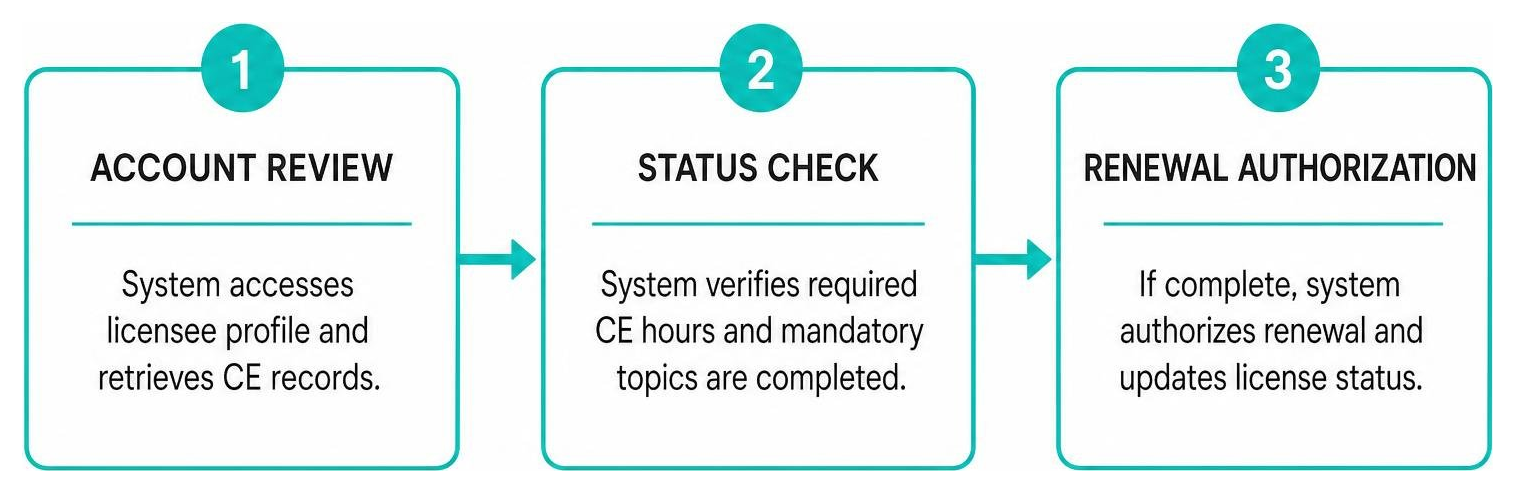
Complete vs Incomplete CE Records at Renewal
The outcome of your electronic tracking review dictates how smooth your license renewal process will be:
- Complete CE Records: If your account profile shows that all 24 required hours (including the mandatory 2 hours of medical errors and 1 hour of Florida laws and rules) have been reported, the system flags you as “Renewal Ready.” You can immediately proceed through payment processing and receive your renewed active license without interruption.
- Incomplete CE Records: If any required subject area or hour count is missing, the renewal system stops you automatically. You will be prompted to enter your remaining continuing education hours and submit valid verification before you can complete your license renewal. Failing to resolve incomplete records before the license expiration date will result in an inactive or delinquent license status, preventing you from legally practicing until compliance is re-established.
Choosing Between Free and Paid CE Tracking Accounts

To interact with Florida’s electronic tracking system, physical therapists must set up an online user profile. Healthcare providers often wonder whether they need to pay for an upgraded subscription or if the standard free option is enough to maintain state compliance.
Free Basic Account Features
The state of Florida fully funds a free Basic Account for every licensed physical therapist and physical therapist assistant. This free account gives you all the essential tools required by law to monitor your status and stay fully compliant without incurring extra costs. Features include:
- Official Course Record Access: Viewing your official course history recorded automatically by approved continuing education providers.
- Course Search Directory: Searching for state board-accepted courses that fulfill specific Florida subject requirements, such as medical error prevention and state laws.
- Instant Provider Reporting Alerts: Receiving automatic system notifications whenever an educational provider logs completed contact hours on your behalf.
- Manual Self-Reporting Portal: Utilizing self-reporting tools to manually submit certificates of completion for missing CE credits or non-automated coursework.
Paid Professional Account Features
While the free Basic Account satisfies all state legal obligations for physical therapy license renewal, the tracking system platform offers an optional paid Professional Account for clinicians who desire extra convenience and administrative features. Features include:
- A dynamic compliance transcript that calculates your exact remaining requirements in real time across all mandatory subject categories.
- Automated deadline notifications, license expiration alerts, and customized renewal reminders delivered via email or mobile alerts.
- Multi-license tracking capabilities for physical therapists holding licenses in multiple states or maintaining credentials across secondary healthcare disciplines.
For the vast majority of Florida physical therapists, the free Basic Account provides everything needed to verify compliance, upload missing certificates, and clear the automated state audit effortlessly.
How to Verify and Self-Report Completed Courses
To avoid surprise holds during license renewal, you should periodically audit your tracking profile throughout the two-year renewal cycle. Education providers generally submit completed credits automatically, but technical errors, missing license details, or non-provider courses may occasionally require you to report credits yourself.
| Reporting Type | Who Submits | Required Documentation | Processing Time |
|---|---|---|---|
| Automatic Provider Reporting | Continuing Education Course Provider | None (Provider handles data transmission) | 1 to 7 business days |
| Manual Self-Reporting | Physical Therapist / Licensee | Certificate of Completion (PDF/JPG), Course Outline | Immediate upon submission |
Auditing Your CE Tracking Course History
We recommend logging into your tracking portal at least 60 to 90 days prior to your license expiration date to conduct a thorough review of your recorded hours. Taking proactive action gives you ample time to address missing credits or resolve reporting discrepancies without risking renewal delays.
- Access Your Dashboard: Log in and navigate to your main course history dashboard within the electronic tracking portal.
- Review Category Totals: Compare listed courses against the mandatory Florida requirements (24 total contact hours, 2 hours of medical errors prevention, and 1 hour of Florida laws and rules).
- Verify Board Approval: Ensure that each completed course lists active board approval or appropriate state physical therapy board accreditation.
- Confirm Contact Hours: Verify that total contact hours accurately match the physical or digital certificates issued by your educational course provider.
Self-Reporting Missing Physical Therapy CE Credits
If you completed an approved course but do not see it listed in your electronic course history, you can manually self-report it by following a straightforward process:
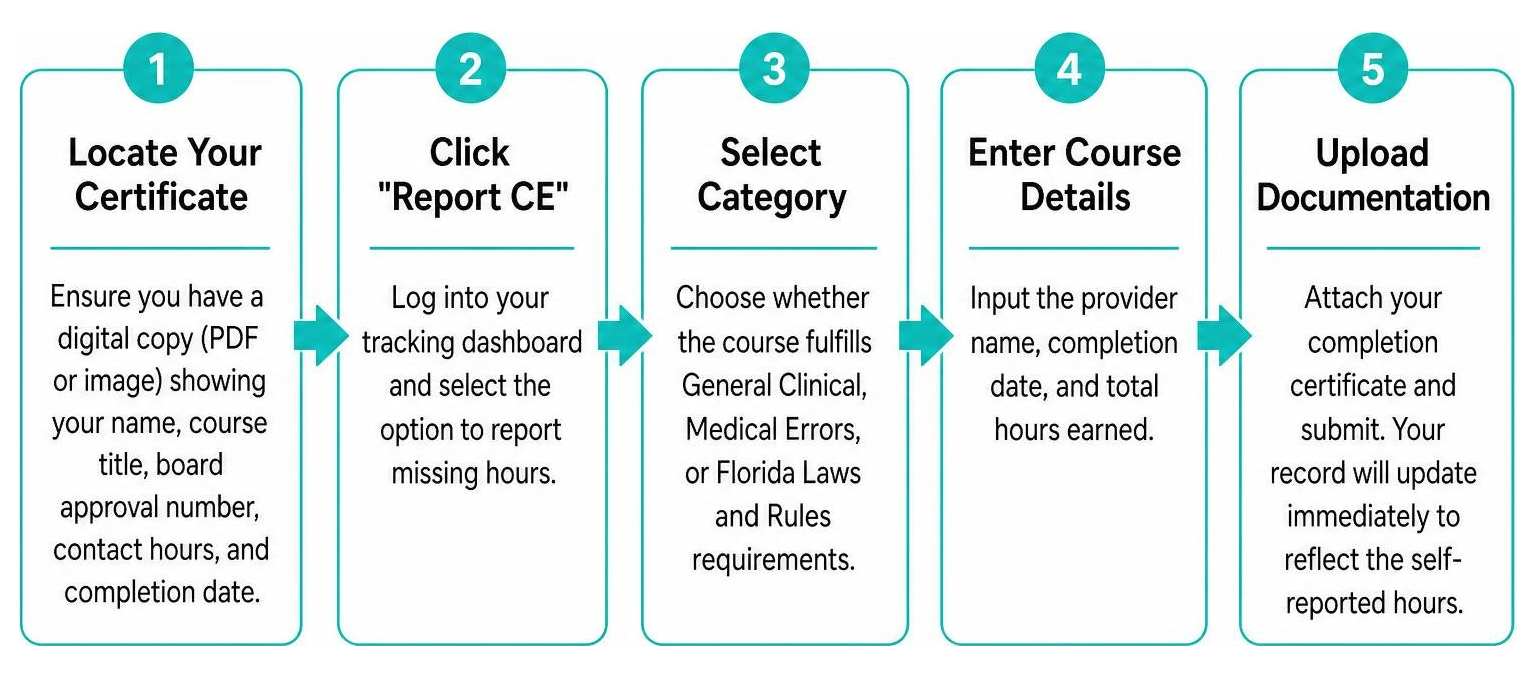
- Locate Your Certificate: Ensure you have a legible digital copy (PDF or image file) showing your full name, course title, board approval number, contact hours awarded, provider name, and completion date.
- Click “Report CE”: Log into your tracking dashboard and select the option to report missing continuing education hours.
- Select Subject Category: Choose whether the course fulfills General Clinical, Medical Errors, or Florida Laws and Rules requirements.
- Enter Course Details: Input the provider name, completion date, board approval number, and total hours earned as listed on your certificate.
- Upload Documentation: Attach your completion certificate file and submit. Your electronic profile will update immediately to reflect the self-reported hours, clearing your record for upcoming license renewal.
Frequently Asked Questions About Physical Therapy CE
Where can I find Rule 64B9-5, F.A.C. governing continuing education?
You can review the full legal provisions, state board rules, and administrative mandates governing state healthcare continuing education requirements directly on the official Florida Administrative Code portal at Florida Administrative Code Rule 64B9-5.
What happens if my CE records are incomplete at renewal?
If your tracking profile lacks the required 24 hours or mandatory topic credits when you attempt to renew, the state system will delay your license processing. You will receive an automated system prompt instructing you to enter your missing physical therapy CE hours and upload verification documents before you are permitted to pay licensure fees and finalize your license renewal.
Is a free basic tracking account sufficient for license renewal?
Yes. The free Basic Account provides every feature necessary to maintain full compliance with Florida Department of Health mandates and successfully clear the automated audit. You do not need to purchase or upgrade to a paid account subscription to complete your license renewal or report missing credits.
Conclusion
Staying on top of your physical therapy CE requirements doesn’t have to be overwhelming, confusing, or stressful. By completing your mandatory 24 hours—including your required medical errors and Florida laws topics—and checking your electronic tracking account well before the license expiration date, you ensure a seamless, uninterrupted renewal experience.
At Scrubs CE, we specialize in high-quality, flexible online continuing education designed to make career advancement and license maintenance completely hassle-free. If you or your colleagues across multidisciplinary healthcare practices ever need specialized Radiology units or allied health modules, explore our full library of Radiology CE Courses to expand your clinical skill set and meet state compliance with total confidence!
Getting to Know Your Bones: Why the Anatomy and Physiology for Dummies Book is a Must-Read
Why the Anatomy and Physiology for Dummies Book Belongs on Every Healthcare Professional’s Shelf

The anatomy and physiology for dummies book is one of the most accessible and highly rated introductory guides to human biology available today. If you’re looking for a quick answer on what it is and who it’s for, here it is:
Quick Overview: Anatomy & Physiology For Dummies (3rd Edition)
| Feature | Details |
|---|---|
| Authors | Erin Odya & Maggie A. Norris |
| Pages | 384 |
| Published | March 20, 2017 |
| Rating | 4.6/5 stars (6,201+ global reviews) |
| Best for | Pre-nursing students, healthcare professionals, casual learners |
| Amazon Rank | #4 in Physiology, #12 in Anatomy |
| Price (paperback) | $27.99 |
Whether you’re cramming for a prerequisite course, refreshing clinical knowledge, or simply curious about what’s happening inside your own body, this book breaks down a genuinely difficult subject into plain, readable English.
The human body runs on 11 major organ systems, 206 bones, and dozens of organs working together in a breathtaking — and often baffling — level of complexity. Most people hit a wall fast when they encounter Latin terminology and dense textbooks. This guide was built specifically to lower that wall.
I’m Zita Ewert, and as the leader behind SCRUBS Continuing Education®, I’ve spent years helping healthcare professionals — from imaging technologists to allied health practitioners — find the right foundational resources to support their careers. Understanding how the anatomy and physiology for dummies book fits into a broader continuing education strategy is something I’ve helped thousands of professionals navigate. Let’s break down exactly what’s inside and whether it’s the right fit for you.
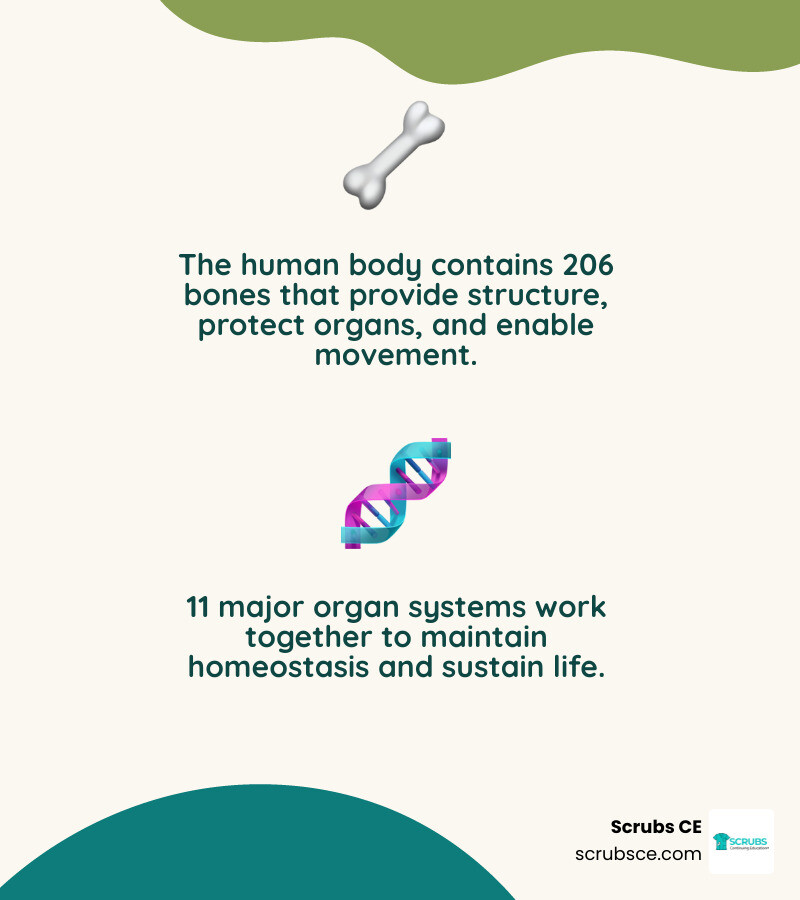
Quick look at anatomy and physiology for dummies book:
What is the Anatomy and Physiology for Dummies Book?
At its core, the anatomy and physiology for dummies book (specifically the 3rd Revised Edition) is a comprehensive, plain-English roadmap to the human body. Written by Erin Odya, an experienced anatomy and physiology teacher at Carmel High School, and science writer Maggie Norris, this guide bypasses dry academic jargon in favor of a conversational, highly engaging narrative.
We often see students enter nursing, physical therapy, or diagnostic imaging programs with immense anxiety. Anatomy and physiology (A&P) is widely considered one of the most challenging prerequisite hurdles. This book acts as a strategic “bridge,” helping pre-nursing students, aspiring fitness professionals, and casual learners build a conceptual foundation before they get buried under the weight of traditional, multi-semester college textbooks.
With a stellar 4.6 out of 5-star rating from over 6,201 global customer reviews on Amazon, the book has earned its place as a trusted study companion. Readers frequently praise its ability to make human biology feel less like a chore and more like an unfolding mystery. Some readers even note that it is engaging enough to serve as “fun bedtime reading” for laypeople. While it doesn’t replace a primary college textbook, it is highly recommended as a supplementary study guide or pre-course primer.
If you are looking to understand the core philosophies behind this learning method, you can explore everything you need to know about anatomy and physiology for dummies to see how these simplified guides change the game for beginners. You can also view the official publisher details directly on the Anatomy & Physiology For Dummies, 3rd Edition | Wiley product page.
Key Systems and Topics Covered in the Guide
The book does not shy away from the sheer scale of human biology. It systematically guides you through the body’s 5 anatomical levels of organization:
- Cellular level (organelles and metabolic pathways)
- Tissue level (epithelial, connective, muscle, and nervous tissues)
- Organ level (how tissues form functional units)
- Organ system level (the 11 major systems working in harmony)
- Organism level (the complete, living human being)
Across its 384 pages, the book covers all 11 major anatomical systems and 206 bones, focusing on how these structures maintain homeostasis—the body’s delicate balancing act to keep internal conditions stable (like thermoregulation and fluid balance).
The authors do an exceptional job of combining structure (anatomy) with function (physiology). For instance:
- The Skeletal and Muscular Systems: You won’t just memorize the 206 bones; you’ll learn how muscle tissue interacts with the skeleton via the sliding filament theory to create movement.
- The Cardiovascular System: The book takes you through the cardiac cycle, blood vessels, and the mechanics of blood pressure. It even debunks common myths, like whether deoxygenated blood is actually blue (spoiler: it is always red, though veins look blue through the skin!).
- The Respiratory System: Respiration is broken down into three distinct, manageable processes: pulmonary ventilation (breathing), gas exchange in the alveoli, and cellular respiration.
To get a closer look at the chapter structure and system breakdowns, you can check out the official book page on Anatomy & Physiology For Dummies | dummies.
Simplifying Complex Terminology with the Anatomy and Physiology for Dummies Book
Let’s face it: science and medicine are heavily permeated with Latin and Greek roots. Trying to memorize terms like “sternocleidomastoid” or “gluteus maximus” without context is a recipe for a headache.
The anatomy and physiology for dummies book solves this by teaching you how to decode medical terminology. Once you learn basic prefixes, suffixes, and roots, you can easily deduce the meaning of complex anatomical structures.
Additionally, the book establishes a firm grasp of foundational concepts, such as:
- Standard Anatomical Position: The universal reference point where the body is standing upright, eyes forward, upper extremities at the sides, and palms turned outward. This ensures that terms like “right” and “left” always refer to the patient’s perspective, not the observer’s.
- Body Planes: Dividing the body into sections using sagittal (left/right) and transverse (top/bottom) planes.
- Directional Terms: Using precise words like anterior, posterior, superior, and inferior to prevent clinical communication errors.
For professionals entering technical fields, mastering this foundational language is the first step toward advanced coursework. For example, our guide on anatomy for radiographers highlights how crucial these directional terms and skeletal landmarks are when positioning patients for diagnostic imaging.
Core Features of the Anatomy and Physiology for Dummies Book
What makes this book stand out from a generic biology text is its suite of student-friendly learning features:
- 16 Full-Color Central Plates: Visual learners heavily praise this central insert. It features beautifully detailed, multi-colored illustrations of the body’s major organ systems, bridging the gap between plain-text descriptions and spatial reality.
- The “Part of Tens”: A classic “Dummies” feature, this section simplifies complex chemistry concepts (like ionic and covalent chemical bonds) and shares fun, memorable physiological facts.
- Quick Reference Cheat Sheets: These provide rapid access to anatomical regions, standard positions, and terminology shortcuts.
- Pathophysiology Integration: The book frequently connects healthy anatomy to real-world sickness and disease, helping you understand why these systems matter in clinical practice.
If you prefer a physical book to highlight and study on the go, you can find the paperback edition at Anatomy & Physiology For Dummies by Erin Odya | 9781119345237 | Paperback.
Comparing the Editions: Which Version is Best for You?
Depending on your learning style, the standard book might not be your only option. The “For Dummies” ecosystem includes a workbook and an “All-in-One” edition to suit different educational needs.
| Edition | Page Count | Key Focus | Best For |
|---|---|---|---|
| Standard 3rd Edition (2017) | 384 pages | Conceptual explanations, plain-English definitions, color diagrams. | Beginners, pre-course reading, quick reference. |
| Workbook with Online Practice (2018) | ~320 pages | Active recall, hundreds of practice exercises, labeling diagrams, and quiz tools. | Students wanting to test their knowledge and study for exams. |
| All-in-One Edition (2023) | 496 pages | Combines core textbook content with interactive online chapter quizzes. | Comprehensive self-study, reducing test anxiety, complete preparation. |
If you are a highly hands-on learner, pairing the standard book with the workbook is a fantastic strategy. The workbook utilizes active recall—forcing you to write out bone names and label muscle groups—which is the absolute key to long-term memory retention.
For those who want everything in one place, the All-in-One edition offers a robust digital companion. You can learn more about this comprehensive version on the Anatomy & Physiology All-in-One For Dummies (+ Chapter Quizzes Online) | Wiley-p-9781394153671) product page, or read our in-depth comparison guide at anatomy and physiology for dummies latest edition which version is best for you.
How A&P Knowledge Benefits Healthcare Professionals
In the medical field, a strong grasp of A&P is not just an academic milestone—it is the foundation of patient safety and diagnostic accuracy. Whether you are a nurse administering medication or an imaging technologist capturing a chest X-ray, every clinical decision you make traces back to anatomy and physiology.

For professionals in diagnostic imaging and Radiology, this knowledge is exceptionally critical. Technologists must understand skeletal landmarks, joint articulations, and internal organ placements to obtain high-quality diagnostic images. When preparing for licensure exams, such as those administered by the AMERICAN REGISTRY OF RADIOLOGIC TECHNOLOGISTS® (ARRT®), having a rock-solid anatomical foundation is non-negotiable.
Using accessible resources like the anatomy and physiology for dummies book as an initial review can make a profound difference when transitioning to advanced imaging texts. To help you navigate this path, we have compiled the ultimate list of resources in our guide on anatomy Radiology book essentials top texts for diagnostic imaging.
If you are currently preparing for professional exams, we also highly recommend reading passing the test anatomy and physiology licensure requirements made easy for practical study tips and regulatory insights.
Frequently Asked Questions about Anatomy and Physiology
Is the Anatomy & Physiology For Dummies book suitable for college courses?
Yes, but with a caveat. It is highly recommended as a supplementary study guide, pre-course primer, or review tool. However, it should not replace your primary college-level textbook. While it excels at explaining complex concepts in plain English, it intentionally trades highly technical details (such as specific muscle insertions or advanced cellular biochemistry pathways) for conceptual clarity.
What is the difference between anatomy and physiology?
Simply put, anatomy is the study of the body’s physical structures (the “what” and “where”), while physiology is the study of how those structures function and work together to keep you alive (the “how” and “why”). Studying them together is essential because structure and function are always deeply interrelated.
How many bones and systems are in the human body?
The adult human body has 206 bones and is organized into 11 major anatomical systems:
- Integumentary (skin, hair, nails)
- Skeletal (bones and joints)
- Muscular (muscles and movement)
- Nervous (brain, spinal cord, nerves)
- Endocrine (hormones and glands)
- Cardiovascular (heart and blood vessels)
- Lymphatic/Immune (filtration and defense)
- Respiratory (lungs and air passages)
- Digestive (stomach, intestines, and digestion)
- Urinary (kidneys and waste removal)
- Reproductive (male and female reproductive organs)
Conclusion
Mastering the human body doesn’t have to feel like learning an alien language. The anatomy and physiology for dummies book is an invaluable, stress-free resource that turns a notoriously difficult subject into an approachable, fascinating journey. By breaking down Latin roots, utilizing full-color diagrams, and focusing on the core principles of homeostasis, this book prepares you to succeed in both the classroom and clinical practice.
As healthcare professionals, our education never truly stops. Keeping our foundational knowledge sharp is key to delivering excellent patient care and meeting licensing requirements.
When you are ready to take your professional development to the next level, we invite you to explore our convenient, self-paced, and highly affordable online continuing education courses at Scrubs CE. Visit our course page to Explore Anatomy & Physiology Continuing Education Courses and earn your instant certificates today!

Stay Compliant: A Guide to MQSA Technologist Requirements
What Are MQSA Technologist Requirements? A Quick-Start Guide
MQSA technologist requirements set the federal standard every radiologic technologist must meet to legally perform mammography in the United States. Here is a fast summary:
| Requirement | What You Need |
|---|---|
| Licensure | ARRT® certification or state radiography license |
| Initial Training | 40 hours of mammography-specific education |
| Supervised Exams | 25 mammograms under direct supervision |
| Modality Training | 8 hours before using any new mammographic modality (e.g., digital) |
| Continuing Experience | 200 mammograms every 24 months |
| Continuing Education | 15 Category 1 CEUs in mammography every 36 months |
| ARRT® (M) Required? | No — federal MQSA does not require it, though many employers do |
Congress enacted the Mammography Quality Standards Act (MQSA) on October 27, 1992, giving the FDA authority to set minimum quality standards for every mammography facility in the country. The goal was straightforward: protect patients by ensuring that every technologist, physician, and physicist involved in breast imaging meets a consistent, verified level of competency. Today, the FDA’s Center for Devices and Radiological Health (CDRH) oversees the program — and with the updated 2023 MQSA Final Rule taking effect on September 10, 2024, staying current matters more than ever.
For busy radiologic technologists, keeping track of training hours, supervised exams, CE deadlines, and inspection documents can feel like a second job. This guide breaks it all down clearly.
I’m Zita Ewert, and as the leader of Scrubs Continuing Education®, I’ve spent years helping radiologic technologists navigate MQSA technologist requirements through high-quality, accredited CE courses built specifically for imaging professionals. I’ll walk you through everything you need to stay compliant and confident in your practice.
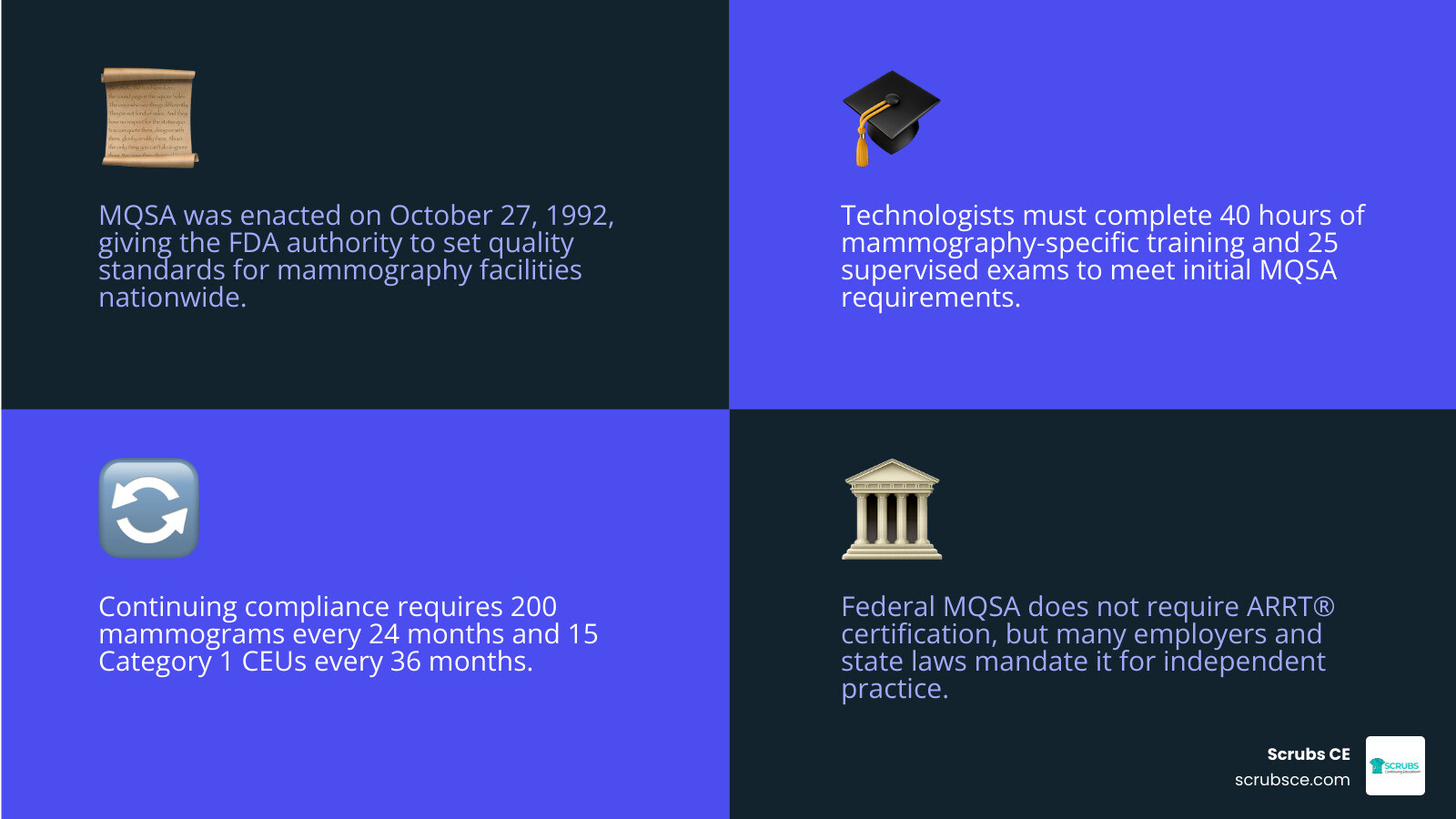
Mqsa technologist requirements terms you need:
- Radiologic Technologist Requirements
- How to Get ARRT Certification
- How to Become a Radiologist Technician
Initial MQSA Technologist Requirements and Training Pathways
To begin a career in breast imaging, we must first establish a solid foundation that meets both federal and state-level guidelines. The pathway to independent practice is highly structured. Under the federal framework, a technologist cannot simply transition from general diagnostic Radiology to mammography without completing specific initial education and clinical milestones.
For those looking to transition, cracking the code on MQSA requirements is the first step toward understanding how your general radiography background translates into this specialized field. According to the FDA MQSA Final Rule, any technologist performing mammography must hold a valid general state license or be certified by an approved national registry. In the United States, this registry is typically the AMERICAN REGISTRY OF RADIOLOGIC TECHNOLOGISTS® (ARRT®).
Core Clinical and Education Standards
The core educational foundation consists of two primary requirements that must be completed before you can perform mammograms independently:
- 40 Hours of Mammography-Specific Training: This classroom or online education must cover critical topics such as breast anatomy and physiology, positioning and compression techniques, quality assurance and quality control (QA/QC) procedures, and the specific imaging challenges associated with patients who have breast implants.
- 25 Supervised Mammograms: You must perform at least 25 mammographic examinations under the direct supervision of a qualified mammography technologist or a board-certified radiologist.
If you want a step-by-step breakdown of how to map out this process, our mammography technologist training complete guide walks through these core standards in detail. These initial clinical requirements ensure you have hands-on experience with patient positioning and the physical application of breast compression before working solo.
Next Steps After Initial Training to Meet MQSA Technologist Requirements
Once you complete your 40-hour course and your 25 supervised exams, you are legally qualified under federal law to perform mammography independently. However, the work does not stop there. You must compile and maintain meticulous records of your training.
During your facility’s annual FDA inspection, you will need to produce your 40-hour training certificate and a signed log proving you completed your 25 supervised exams. It is highly recommended to record the date, facility name, and the signature of your supervising technologist for every single one of those initial 25 exams.
Additionally, we must think about how these initial training hours fit into your broader continuing education goals. Our mammography CEUs complete guide provides excellent strategies for leveraging your initial training credits to satisfy your ongoing professional development requirements.
Maintaining Compliance: Continuing Education and Experience
Once you are qualified and practicing, the FDA requires you to maintain your skills through continuous experience and ongoing education. If you fall behind on either of these parameters, you will temporarily lose your qualification to perform mammography independently.
To help you stay on track, we have created a resource on registry to reality making your mammography credits work for MQSA, which outlines how to keep your CE records organized. These maintenance standards are outlined in detail in the Federal Register, Volume 88 Issue 47 (Friday, March 10, 2023).
Tracking the 24-Month and 36-Month Compliance Windows
Maintaining your mqsa technologist requirements relies on tracking two distinct rolling windows:
- Continuing Experience (24-Month Window): You must perform at least 200 mammographic examinations over a rolling 24-month period. This is typically verified by your facility’s manager using software logs that track the examinations tied to your unique technologist ID.
- Continuing Education (36-Month Window): You must earn at least 15 Category 1 CEUs in mammography within a rolling 36-month period. At least 6 of these credits must be directly related to each specific mammographic modality you use in your daily practice.
Because these windows are calculated based on your facility’s annual inspection date rather than a fixed calendar year, you should always ask your supervisor for the date of the next scheduled inspection. To learn more about managing these credits, check out our mammography CE_credits guide 2025.
Modality-Specific Training and Digital Mammography
Under MQSA rules, a “modality” refers to the specific technology used to produce the mammographic image. Common modalities include screen-film (analog) mammography, full-field digital mammography (FFDM), and digital breast tomosynthesis (DBT, or 3D mammography).
Before you can perform mammograms independently using any new modality, you must complete 8 hours of modality-specific training. For example, if you have only ever performed 2D digital mammography and your facility introduces a 3D tomosynthesis unit, you must complete an 8-hour course on tomosynthesis before scanning patients on the new machine. To understand how these modality-specific hours align with your regular registry requirements, refer to our guide on ARRT mammography CE requirements.
ARRT® Certification vs. MQSA Technologist Requirements
A common point of confusion in our industry is the difference between federal MQSA requirements and registry credentials.
The FDA does not legally require you to hold the ARRT® Advanced Registry in Mammography—commonly known as the “M” credential—to practice mammography. Under federal law, as long as you are a state-licensed or certified general radiographer and meet the initial 40-hour training, 25 supervised exams, and continuing experience/CE standards, you can perform mammography independently.
However, many employers and state licensing boards do require the ARRT® (M) credential as a condition of employment. To transition from basic MQSA compliance to earning your advanced registry, you must complete the ARRT® post-primary pathway, which requires documenting 75 clinical examinations. Our guide on mammography mastery achieving your ARRT certification explains this transition in detail.
State-Specific Variations and California CRT Rules
While the FDA sets the national baseline, states have the authority to implement regulations that are more stringent than federal MQSA guidelines. California is a prime example. The California Radiologic Health Branch requires technologists to hold a California Mammography Certificate (CRT-M) and pass a state-approved mammography exam.
Here is a quick comparison of how federal and registry standards compare:
| Feature | MQSA Federal Standard | ARRT® (M) Registry Standard |
|---|---|---|
| Supervised Exams | 25 exams | 75 exams (clinical portfolio) |
| Continuing Education | 15 CEUs in mammography every 36 months | 24 CEUs every 2 years (general biennium) |
| Continuing Experience | 200 exams every 24 months | No specific ongoing clinical exam count |
| Exam Required? | No | Yes (ARRT® Mammography Examination) |
Preparing for Inspections and Record Keeping
Preparing for an annual FDA inspection is all about organization. If an inspector walks into your facility and you cannot produce your documentation, your clinic could face non-compliance citations.
Under the updated 2023 MQSA Final Rule (which went into effect on September 10, 2024), facilities are legally required to provide technologists with copies of their clinical and educational records upon request. This makes it much easier to maintain your professional portfolio when transitioning to a new job. Furthermore, facilities must now retain the qualification records of former employees for at least 24 months after they leave.
The updated rule also introduced standardized breast density reporting. When preparing reports, we must ensure that patient lay summaries and medical reports categorize breast density into one of four specific categories (A, B, C, or D) to maintain compliance. If you need to quickly earn credits to meet your upcoming inspection deadline, you can explore our accredited mammography CE courses to find self-paced, online options that provide instant certificates.
Frequently Asked Questions about Mammography Standards
Is ARRT® certification in mammography required under MQSA?
No. Under federal MQSA regulations, you do not need the advanced ARRT® (M) credential to perform mammography independently. You only need a general radiography license or registry certification, alongside your 40 hours of initial training and 25 supervised exams. However, individual states and employers frequently require the “M” credential for employment.
How do the 24-month and 36-month compliance periods work?
These are rolling timelines calculated backward from the date of your facility’s annual MQSA inspection. The inspector will look at the 24 months prior to the inspection date to verify you have performed at least 200 mammograms, and they will look at the 36 months prior to verify you have earned 15 Category 1 CEUs in mammography.
What documentation must be provided during an MQSA inspection?
You must provide your active state license or board certification, your initial 40-hour mammography training certificate, documentation of your 25 supervised exams, certificates for your 15 CEUs earned over the last 36 months (including modality-specific hours), and a facility log proving you performed 200 exams in the last 24 months.
Conclusion
Navigating mqsa technologist requirements is essential for protecting patient safety and maintaining your professional standing. By staying diligent with your clinical logs, tracking your rolling 24-month and 36-month windows, and completing your modality-specific training, you can approach every annual FDA inspection with absolute confidence.
At Scrubs CE®, we are committed to supporting your professional development. We offer convenient, affordable, and self-paced online continuing education courses designed to help you meet your state, registry, and MQSA requirements easily. Ready to complete your mammography credits? Advance your career with Radiology courses at Scrubs CE® today and get instant certificates to secure your compliance.
Top State-Approved Massage Therapy Continuing Education Programs
Top State-Approved Massage Therapy Continuing Education Programs
What Is Massage Therapy CE and What Do Most States Require?

If you’re looking for massage therapy CE courses, here’s a quick breakdown of what most states require:
| Requirement | Washington State | Texas (TDLR) |
|---|---|---|
| Total hours per renewal | 24 hours (every 2 years) | 12 hours per renewal |
| Hands-on / in-person hours | 8 hours minimum | No specific hands-on minimum |
| Ethics / laws | 4 hours minimum | Included in general CE |
| Health equity | 2 hours minimum | Not specified |
| CPR / First Aid | Up to 4 hours credit | Up to 6 hours credit |
| Online courses accepted | Yes, for non-hands-on topics | Yes, for theory/ethics only |
| State pre-approval of courses | No | No |
Keeping your massage therapy license active means staying on top of continuing education (CE) requirements — and those requirements vary by state. Whether you’re in Washington or Texas, the rules around acceptable hours, course types, and reporting can get complicated fast. This guide breaks it all down clearly so you know exactly what counts, what doesn’t, and how to stay compliant without wasting time or money.
I’m Zita Ewert, and my background is in navigating complex regulatory CE requirements across healthcare professions — the same skills that apply directly to understanding massage therapy CE compliance. I’ll walk you through everything you need to know to make smart, qualifying course choices.
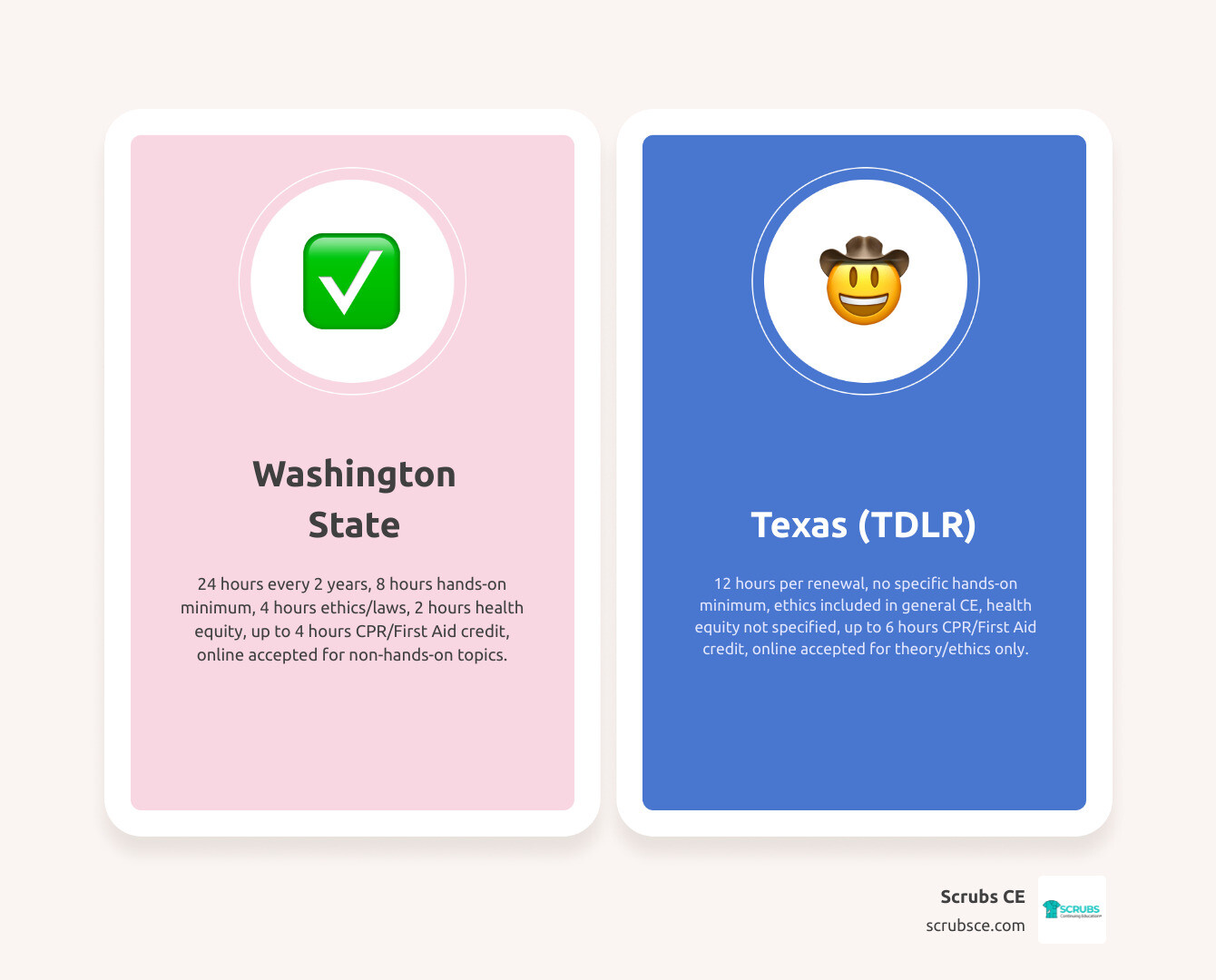
Massage therapy CE terms to learn:
Understanding Washington State Massage Therapy CE Requirements
If you practice in Washington State, maintaining your license requires completing 24 hours of continuing education every two years. The state places a strong emphasis on maintaining practical, real-world skills, which is why they mandate that a minimum of 8 of those 24 hours must be completed in-person and directly supervised.
These hands-on hours are designed for active, supervised application of massage techniques, meaning virtual courses or online webinars absolutely cannot fulfill this specific requirement. For the remaining 16 hours, you can utilize online courses, provided they cover approved academic or professional development topics. To review the complete legal framework, you can visit the Washington Department of Health CE Guidelines.
Mandatory Categories for Washington Massage Therapy CE
Washington does not let you choose just any 24 hours of coursework; we must make sure we hit specific mandatory categories to stay compliant:
- Ethics, Communication, and State Law: You must complete a minimum of 4 hours in professional ethics, communication, roles, or Washington State massage laws. Interestingly, you can fulfill up to 2 of these hours by attending official Washington Board of Massage meetings in person. The board allows a maximum of 1 hour of CE credit per meeting attended.
- Health Equity: Under WAC 246-12-830, starting in the first full CE reporting cycle after January 1, 2024, all licensed massage therapists must complete a minimum of 2 hours of health equity training per reporting period. Since we are in July 2026, this rule is now fully active for all renewing therapists.
- CPR Certification: You must maintain a valid American Heart Association (AHA) CPR certification or equivalent. You can claim up to 4 hours of CE credit for maintaining this certification during your renewal cycle.
Health Equity and CPR Rules in Washington
The health equity requirement is designed to help us recognize and reduce health disparities in our communities. When looking for approved courses, you can check the Department of Health’s health equity portal. If you find a course that is not explicitly listed there, you can still take it as long as it meets the strict requirements of WAC 246-12-830.
When it comes to CPR and First Aid, there is an important distinction to keep in mind. While online CPR training is perfectly acceptable to count for up to 4 hours of CE for your renewal maintenance, your very first CPR certification for initial licensure must have been completed in person.
Life happens, and sometimes we fall behind. If you cannot complete your hours on time due to an emergency, you can request an extension. However, do not wait until the last minute! The department requires at least three weeks to process extension requests, and they are only granted for genuine emergency situations.
Navigating Texas Massage Therapy CE and TDLR Regulations

For our friends practicing in the Lone Star State, the rules are managed by the Texas Department of Licensing and Regulation. Texas massage therapists must complete at least 12 hours of TDLR-approved or recognized continuing education to renew their license.
The TDLR accepts a broad range of curriculum topics, including:
- Anatomy, physiology, and kinesiology
- Business practices and professional ethics
- Massage therapy theory and techniques
Acceptable vs. Unacceptable Texas Massage Therapy CE Courses
While Texas offers a lot of flexibility, they also draw very clear lines around what is acceptable.
For online and correspondence courses, TDLR has a strict rule: these courses are acceptable only if the subject matter does not cover hands-on massage therapy techniques or the manipulation of soft tissue. Online learning is perfect for theory, anatomy, business, and ethics, but hands-on techniques must be learned in a live, physical setting.
Let’s look at what else is allowed and what is strictly off-limits:
- Energy Work and Bodywork: Classes in energy work or bodywork are acceptable, but they must not make false or misleading health claims (such as claiming to cure diseases).
- Exercise and Movement: Classes like yoga, martial arts, or general fitness only count toward your CE if they are specifically designed and marketed as self-care for the massage therapist.
- First Aid and CPR: These courses are acceptable, but they cannot exceed 6 hours total per renewal period. Ensure your instructor is certified by the AHA, Red Cross, or National Safety Council.
- Strictly Unacceptable: TDLR will not accept audited college courses, independent study, experience-based learning, or courses in unrelated medical fields (such as chiropractic adjustments). Modalities like ear candling are also explicitly rejected because they do not fall under the legal scope of providing a massage.
TDLR Audits and Reporting Procedures
One of the most common worries is getting audited. In Texas, TDLR uses a post-renewal audit system. This means your license renewal won’t be held up if you are selected for an audit; the audit happens after you have successfully renewed.
If you are selected for a random audit, you will receive an email notification with a specific due date. You will need to log into your online TDLR account and upload your CE certificates or official transcripts. We highly recommend keeping digital copies of all your certificates throughout your licensing term so you are always prepared. Do not proactively mail or email certificates to the board unless you are officially audited!
How to Choose Qualifying Courses and Become an Approved Provider
Choosing the right massage therapy CE courses requires a bit of detective work. Because state boards (including Washington) do not pre-approve or certify individual CE courses or providers, the responsibility falls on us to verify that a course is legitimate before enrolling.
Before paying for a course, critically review the learning objectives, verify that the content directly supports your massage therapy business or clinical practice, and check the instructor’s credentials. Look for courses recognized by national bodies like the NCBTMB (National Certification Board for Therapeutic Massage & Bodywork).
Instructor Qualifications and Pre-Approval Rules
If you are an experienced therapist looking to step into teaching, you might wonder how to become an approved CE provider.
In Washington State, the process is surprisingly straightforward because the Board of Massage does not pre-approve instructors or curriculum. To teach massage CE in Washington, the only formal requirement is that you must have at least three years of practical experience in the subject matter you are teaching.
In Texas, however, providers must register directly with TDLR or be recognized by a national organization like the NCBTMB to offer qualifying credits to Texas licensees.
Frequently Asked Questions about Massage Therapy CE
Can I complete my hands-on CE hours virtually?
No. In states like Washington that mandate hands-on CE, these hours must be completed in person with direct, physical supervision and feedback from an instructor. Virtual courses, even live webinars, do not satisfy this requirement.
What happens if I am audited after renewing my license?
In Texas, a TDLR audit occurs post-renewal. If you are selected, you will receive an email with instructions and a deadline to upload your CE certificates to your online portal. Your renewal is not delayed, but failing to provide proof of your hours by the deadline can lead to disciplinary action.
Can online First Aid and CPR courses count toward my CE hours?
Yes, but with limits. In Washington, online CPR maintenance counts for up to 4 hours of CE. In Texas, First Aid and CPR courses are accepted up to a maximum of 6 hours per renewal period, provided the instructor is certified by an approved organization like the AHA or Red Cross.
Conclusion
Staying compliant with your massage therapy CE requirements doesn’t have to be a headache. By understanding your state’s specific rules—whether it’s Washington’s 24-hour biennial requirement with its mandatory health equity hours, or Texas’s 12-hour TDLR standard—you can confidently plan your professional development. Always keep your certificates organized, verify your instructors’ qualifications, and complete your hours well ahead of your renewal date.
If you are looking to expand your professional horizons or are dually licensed in other healthcare fields, we are here to help. At Scrubs CE, we specialize in high-quality, self-paced online courses designed to help busy professionals meet their licensure requirements with ease.
For those in the imaging sciences, we invite you to Explore Radiology CE Courses to find convenient, affordable options that meet the standards of the AMERICAN REGISTRY OF RADIOLOGIC TECHNOLOGISTS® (ARRT®) and the ASRT®. Let us help you take the next step in your professional journey today!
Ultimate Checklist for Radiology Course Options
Ultimate Checklist for Radiology Course Options
Why Radiology Courses Matter for Your Career in 2026

Radiology Courses range from fully accredited Associate degree programs to short online certifications — and knowing which path fits your goals can save you serious time and money.
Here’s a quick look at the main options:
| Course Type | Best For | Duration | Example |
|---|---|---|---|
| Associate Degree Program | Entry-level radiographers | 21 months | JRCERT-accredited college |
| Online CT Certification | Working RT seeking advancement | 14 weeks | ARRT®-approved CT program |
| Specialty Online Courses | Skill-building or CEUs | 1–6 months | Anatomy, MRI, AI in Healthcare |
| Health Policy Research Course | Residents and advanced professionals | 4 weeks | Free virtual program |
| Continuing Education (CE) | License renewal | Varies | ASRT® Category A credits |
Whether you’re just starting out, switching specialties, or simply keeping your ARRT® credentials current, there’s a structured path for you. The challenge most imaging professionals face isn’t finding a course — it’s finding the right one without wasting time or overspending.
This guide cuts through the noise. We’ve mapped out the most relevant Radiology course options available in 2026, from foundational programs to advanced AI in healthcare training, so you can make a confident, informed decision.
I’m Zita Ewert, and I lead Scrubs Continuing Education®, where we’ve spent years designing affordable, accredited Radiology Courses and CE programs built specifically for busy imaging professionals. My focus has always been on making sure technologists can meet their ARRT® requirements without the hassle — and this guide reflects that same commitment.
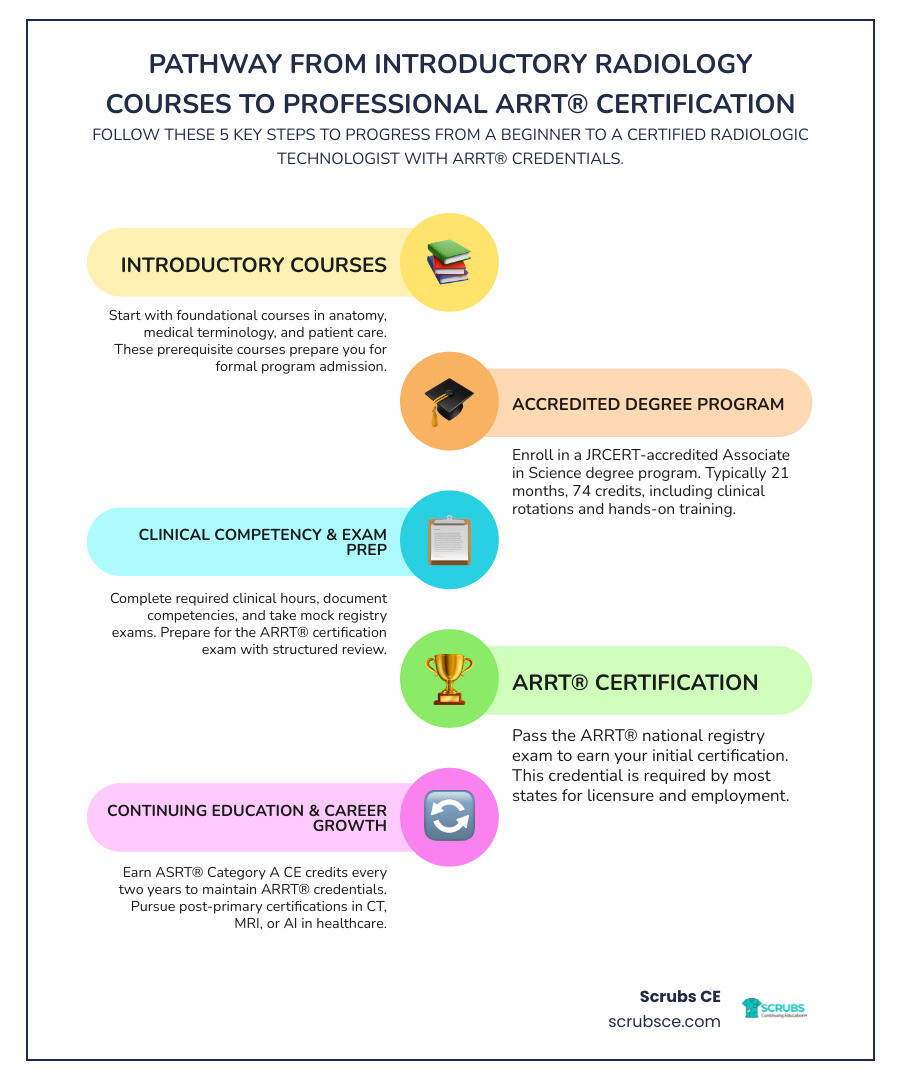
Choosing the Right Radiology Courses for Your Career Path
Selecting the right Radiology Courses requires a clear understanding of where you currently stand in your professional journey and where you want to go. The path of an aspiring student who needs to earn their initial credentials looks entirely different from that of an established technologist seeking to add a post-primary modality or complete their mandatory biennial continuing education.
Before committing your time and hard-earned money to any educational path, it is vital to map your goals. Are you looking to enter the healthcare field for the first time, or are you looking to expand your current clinical scope?
By matching your current educational level with your long-term career aspirations, you can avoid redundant coursework and streamline your clinical training. Let’s break down the two primary educational paths: formal degree programs and individual online specializations.
Formal Radiologic Technology Degree Programs
If your goal is to become a fully credentialed radiologic technologist, you must complete a formal, accredited educational program rather than a collection of standalone courses. These comprehensive academic tracks are structured to prepare you for entry-level practice and make you eligible to sit for the AMERICAN REGISTRY OF RADIOLOGIC TECHNOLOGISTS® (ARRT®) primary certification exam.
A standard, formal Radiologic Technology program is typically structured as an Associate in Science (A.S.) degree. These programs generally span a 21-month timeline. They are highly structured, competency-based pathways that demand a significant commitment. For example, a typical accredited program requires the completion of around 26 distinct courses, translating to a minimum of 74 academic credits.
To ensure your education meets the rigorous standards of the imaging industry, you should look for programs accredited by the Joint Review Committee on Education in Radiologic Technology (JRCERT). This accreditation is the gold standard in the field and is highly valued by employers.
Admissions into these formal programs are selective and highly competitive. Programs prioritize candidates who have already completed core prerequisite courses with a grade of “B” or better. Common prerequisites include:
- Anatomy & Physiology (often requiring a lab component)
- College Algebra or higher-level mathematics
- English Composition
- Introductory Psychology or Sociology
Once admitted, you cannot simply take these concentration courses in any order; they are strictly sequential. Alongside classroom lectures, you will undergo extensive clinical rotations at local healthcare facilities. This hands-on clinical training is where you will apply classroom theories to real patients under the direct supervision of licensed technologists.
If you are looking for flexibility before diving into clinical rotations, exploring options in Online Radiology Education can help you complete foundational coursework and prepare for the rigorous schedule ahead.
Individual Online Radiology Courses and Specializations
For professionals who already hold an associate degree, or for individuals in related fields who want to build specific skills, individual online courses and specializations offer an exceptionally flexible alternative. These programs allow you to learn on your own schedule without the multi-year commitment of a formal college degree.
Today, some of the world’s most prestigious universities offer self-paced online courses covering foundational and advanced concepts in medical imaging. These courses are excellent for professional development, academic preparation, or earning structured education credits.
Let’s look at some of the most popular and highly rated online options available in 2026:
- Anatomy Specialization (University of Michigan): Holding an impressive 4.8 out of 5 stars from over 4,000 reviews, this comprehensive program is perfect for mastering the structural foundations of the human body before entering clinical training.
- Medical Terminology Specialization (Rice University): With a 4.9 out of 5-star rating from 1,000 reviews, this course is widely considered the gold standard for learning the language of medicine, helping students decode complex diagnostic reports.
- Visualizing the Living Body: Diagnostic Imaging (Yale University): Rated 4.8 out of 5 stars based on 391 reviews, this course bridges the gap between anatomy and clinical imaging, showing how different modalities visualize internal structures.
- Fundamental Neuroscience for Neuroimaging (Johns Hopkins University): This course boasts a 4.7 out of 5-star rating from 2.3k reviews and is designed for intermediate learners who want to understand the intersection of brain physiology and advanced neuroimaging modalities.
These individual courses are highly valuable for self-paced professional development. However, if you are a practicing technologist, you must ensure that the online courses you select align with your specific licensing requirements. To find courses that offer verified continuing education credits, check out our Online CE Courses Complete Guide.
Key Skills and Modalities Covered in Modern Training
Medical imaging is a rapidly evolving field. Modern training programs must equip you with a diverse set of technical, clinical, and analytical skills. From understanding the physics of radiation to utilizing advanced artificial intelligence algorithms, today’s radiologic technologists do far more than just “push a button.”
Diagnostic Imaging and Cross-Sectional Anatomy
At the core of all Radiology Courses is the study of primary diagnostic modalities and the cross-sectional anatomy required to interpret them. As an imaging professional, you must master several distinct modalities, each with its own physical principles and clinical applications:
- X-Ray (Radiography): The foundational modality of medical imaging. Training covers radiation physics, patient positioning, and image receptor technology.
- Computed Tomography (CT): This modality uses rotating X-ray tubes to capture detailed cross-sectional slices of the body. Advanced CT courses focus on data acquisition, reconstruction algorithms, and the management of contrast media.
- Magnetic Resonance Imaging (MRI): MRI utilizes powerful magnetic fields and radiofrequency pulses rather than ionizing radiation. Training focuses on nuclear magnetic resonance physics, pulse sequences, and tissue contrast.
- Diagnostic Medical Sonography (Ultrasound): This modality relies on high-frequency sound waves to image soft tissues in real time, requiring excellent hand-eye coordination and an intimate knowledge of fluid dynamics.
To transition from basic radiography to advanced modalities like CT, technologists often enroll in structured post-primary programs. A structured CT program fully prepares students by covering the official CT Content Specifications. These comprehensive programs typically include online video modules, practice exams, and mock registries, while coordinating clinical training at local healthcare sites. Completing an approved structured program can also reward you with valuable ASRT® Category A CE credits to help satisfy your educational requirements.
Mastering these modalities requires a deep integration of anatomy, physiology, and pathology. You must learn to recognize normal cross-sectional structures of the head, neck, spine, chest, abdomen, and extremities, while simultaneously identifying common artifacts and pathological changes. If you are looking to earn credits while mastering these concepts, explore our dedicated options for Radiography CE Credits.
Advanced Modalities and AI in Healthcare
As we progress through 2026, the integration of artificial intelligence (AI) and machine learning is reshaping the landscape of diagnostic Radiology. Modern imaging professionals must understand how these digital tools assist in clinical decision-making.
Top-tier institutions now offer specialized training at the intersection of computer science and medicine. For instance, Stanford University’s AI in Healthcare Specialization (rated 4.7 out of 5 stars by 2.6k reviewers) introduces students to predictive modeling, computer vision, and model evaluation in clinical settings. These courses teach professionals how machine learning algorithms can analyze thousands of medical images to highlight potential anomalies, such as microfractures or early-stage nodules, for radiologist review.
Beyond clinical practice, there is a growing demand for education in health policy and big data analytics. The Healthcare Delivery & Policy Research Course – Harvey L. Neiman Health Policy InstituteHarvey L. Neiman Health Policy Institute is a fantastic, free virtual course designed to introduce residents and imaging professionals to these critical concepts.
Sponsored by the Neiman Institute and the ACR’s AIRP, this program features nine on-demand sessions and one live virtual session. It covers essential topics like:
- Translating clinical evidence into health policy
- Measuring the economic value of imaging using cost-and-outcome models
- Evaluating AI policy and ensuring the development of trustworthy, equitable AI systems in healthcare
- Utilizing big data and predictive analytics to resolve modern Radiology workforce challenges
By combining traditional clinical skills with advanced training in AI and health policy, you can position yourself at the absolute forefront of the modern healthcare industry.
Certification, Continuing Education, and ARRT® Requirements
In the medical imaging profession, obtaining your initial education is only the first step. To legally practice and advance your career, you must navigate a structured landscape of professional credentials, state licenses, and ongoing continuing education requirements.
| Feature | Structured Education Programs | Continuing Education (CE) Courses |
|---|---|---|
| Primary Purpose | Qualifying to sit for a new ARRT® registry exam | Maintaining an active license and registry credential |
| Target Audience | Students or RTs cross-training into a new modality | Certified, practicing radiologic technologists |
| Duration | 14 weeks to 21 months | Self-paced (usually completed in hours or days) |
| Clinical Component | Required (documented clinical competencies) | Not required |
| Outcome | Eligibility for ARRT® board exams | Category A or A+ CE credits for biennial renewal |
Preparing for the AMERICAN REGISTRY OF RADIOLOGIC TECHNOLOGISTS® Exam
To earn the right to place credentials after your name, you must pass the registry exam administered by the AMERICAN REGISTRY OF RADIOLOGIC TECHNOLOGISTS®. Whether you are pursuing a primary pathway (like Radiography) or a post-primary pathway (like CT or MRI), the ARRT® enforces strict eligibility requirements.
For post-primary credentials, the ARRT® requires candidates to document both structured education and clinical experience.
For example, if you are preparing for the CT registry, your coursework must directly align with the official ARRT® CT Content Specifications. This includes mastering topics such as system components, image display, image quality, CT artifacts, radiation protection, dose reduction, and contrast administration.
On the clinical side, you must perform and document a specific list of clinical procedures on real patients. Before you can begin these clinical rotations, you must secure a personal dosimetry badge to monitor your occupational radiation exposure.
To build your confidence and test-taking endurance, it is highly recommended to utilize realistic mock registry exams. These simulated tests help you identify weak areas in your knowledge base—such as cross-sectional vascular anatomy or physics calculations—before you sit for the actual high-stakes exam.
Continuing Education and Radiology Courses for Professionals
Once you pass your registry exam and become a certified technologist, your educational journey does not end. To maintain your active registry status with the ARRT® and comply with state licensing boards, you must complete ongoing continuing education.
The ARRT® requires registered technologists to earn 24 Category A or A+ continuing education credits every two years (known as your biennium). These credits must be approved by a Recognized Continuing Education Evaluation Mechanism (RCEEM), such as the American Society of Radiologic Technologists (ASRT®).
Staying compliant does not have to be stressful or expensive. At Scrubs CE, we specialize in providing high-quality, self-paced Radiology CE Courses designed to fit seamlessly into your busy schedule. We offer a comprehensive suite of options, including:
- Complete Guides: If you want to understand the ins and outs of your renewal cycle, read our Radiology CE Courses Complete Guide or explore our ARRT® Continuing Education Online resources.
- Specialty Tracking: To ensure you meet the exact standards set by your professional association, check out our ASRT® CE Requirements Complete Guide.
- Affordable Options: We believe professional development should be accessible. If you are looking to earn your credits on a budget, we recommend exploring our Radiology CE catalog.
By choosing accredited, self-paced online courses, you can easily complete your required credits on your own schedule, receive an instant certificate of completion, and keep your focus where it belongs: providing exceptional care to your patients.
Frequently Asked Questions about Radiology Training
How long does it take to complete a formal radiologic technology program?
A formal, JRCERT-accredited radiologic technology program typically takes 21 months of continuous, full-time study to complete. This competency-based curriculum is designed to lead to an Associate in Science (A.S.) degree.
Over this period, students must successfully complete approximately 26 courses (minimum of 74 credits) and log hundreds of clinical hours at local healthcare affiliates to master the essential hands-on skills required of an entry-level radiographer.
What is the difference between structured education and continuing education?
While both involve learning, they serve entirely different regulatory purposes under ARRT® guidelines:
- Structured Education is a formal requirement designed for technologists who want to earn a new credential in an additional modality (such as moving from Radiography to CT). It must meet specific content specifications and is a prerequisite to sit for a registry exam.
- Continuing Education (CE) is the ongoing training required of already certified professionals to maintain their active licenses. Technologists must earn 24 Category A or A+ CE credits every two years. To learn more about these requirements, see our ASRT® CE Requirements Complete Guide.
Can I take Radiology Courses online while working?
Yes! Many foundational courses, specialty certifications, and continuing education credits can be completed entirely online through self-paced, hybrid formats.
However, if you are pursuing a primary degree or a post-primary registry credential, you will still need to complete a physical clinical training component. Many structured post-primary programs solve this by combining online didactic modules with clinical coordination at local imaging affiliates, allowing you to complete your clinical hours near your home while continuing to work. For those looking to manage their active credentials on a busy schedule, our Radiology Tech CE Credits Complete Guide offers practical tips for balancing work and study.
Conclusion
Navigating the wide array of Radiology Courses available in 2026 can feel overwhelming, but mapping out your career goals makes the decision-making process incredibly straightforward. Whether you are aiming to enroll in a formal 21-month Associate degree program, cross-train into advanced modalities like CT or MRI, or explore the cutting edge of AI in healthcare, choosing the right educational pathway is the ultimate key to your professional growth.
For practicing radiologic technologists, maintaining your credentials should never feel like a chore. At Scrubs CE, we are fully committed to supporting your professional journey by offering highly convenient, affordable, and fully accredited continuing education courses.
With our self-paced online formats and instant CE certificates, meeting your ARRT® and state licensure requirements has never been easier. Ready to take the next step in your professional development? Explore our full library of Radiology Courses today and keep your career moving forward!
How to Keep Patients Safe and Calm During Nuclear Medicine Scans
How to Keep Patients Safe and Calm During Nuclear Medicine Scans
Why Nuclear Medicine Radiation Safety Matters
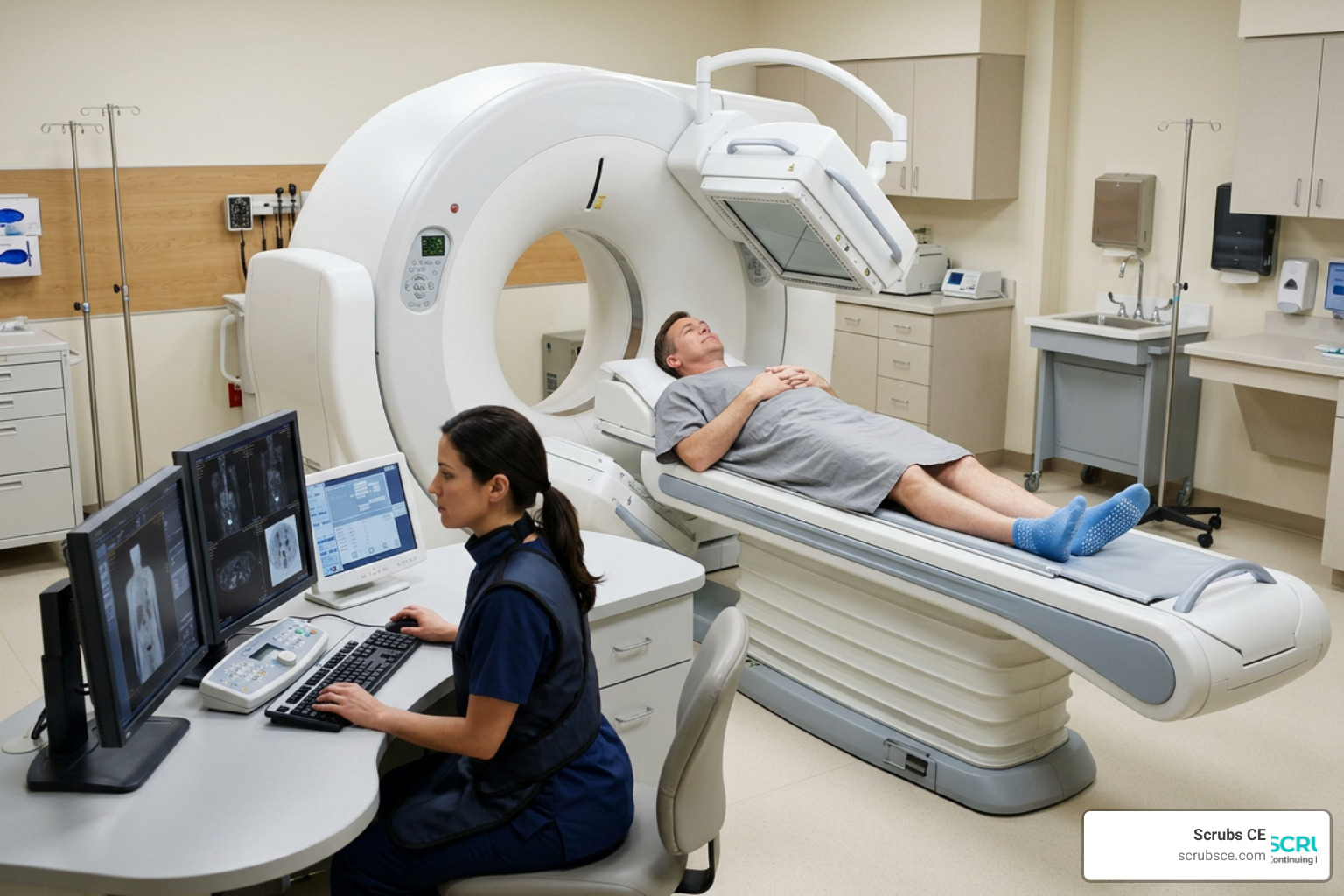
Nuclear medicine radiation safety is the vital shield that protects patients and healthcare workers while they use invisible, life-saving radioactive tools.
If you are looking for a quick reference on key safety guidelines, here is what you need to know:
| Safety Category | Key Guideline / Limit |
|---|---|
| Core Principle | ALARA (Keep doses As Low As Reasonably Achievable) |
| Occupational Worker Dose Limit | 5 rem (50 mSv) per year |
| Pregnant Worker Dose Limit | 0.5 rem (5 mSv) over the entire pregnancy |
| Patient Release Limit | Allowed if the dose rate is under 7 mrem/hr at 1 meter |
| Minor Spill Threshold | Under 100 mCi for Technetium-99m; under 1 mCi for Iodine-131 |
Every year, more than 20 million Americans benefit from nuclear medicine. These procedures use tiny amounts of radioactive drugs—called radiopharmaceuticals—to find and treat serious diseases. While diagnostic scans help us see how organs function, therapeutic doses actively target and destroy cancer cells.
To keep patients calm and safe, you must balance clinical precision with deep empathy.
I am Zita Ewert, founder of Scrubs CE, where I specialize in creating easy-to-understand continuing education courses on Nuclear medicine radiation safety for busy imaging professionals. Over the years, I have helped thousands of technologists satisfy their licensing requirements for the AMERICAN REGISTRY OF RADIOLOGIC TECHNOLOGISTS® (ARRT®).
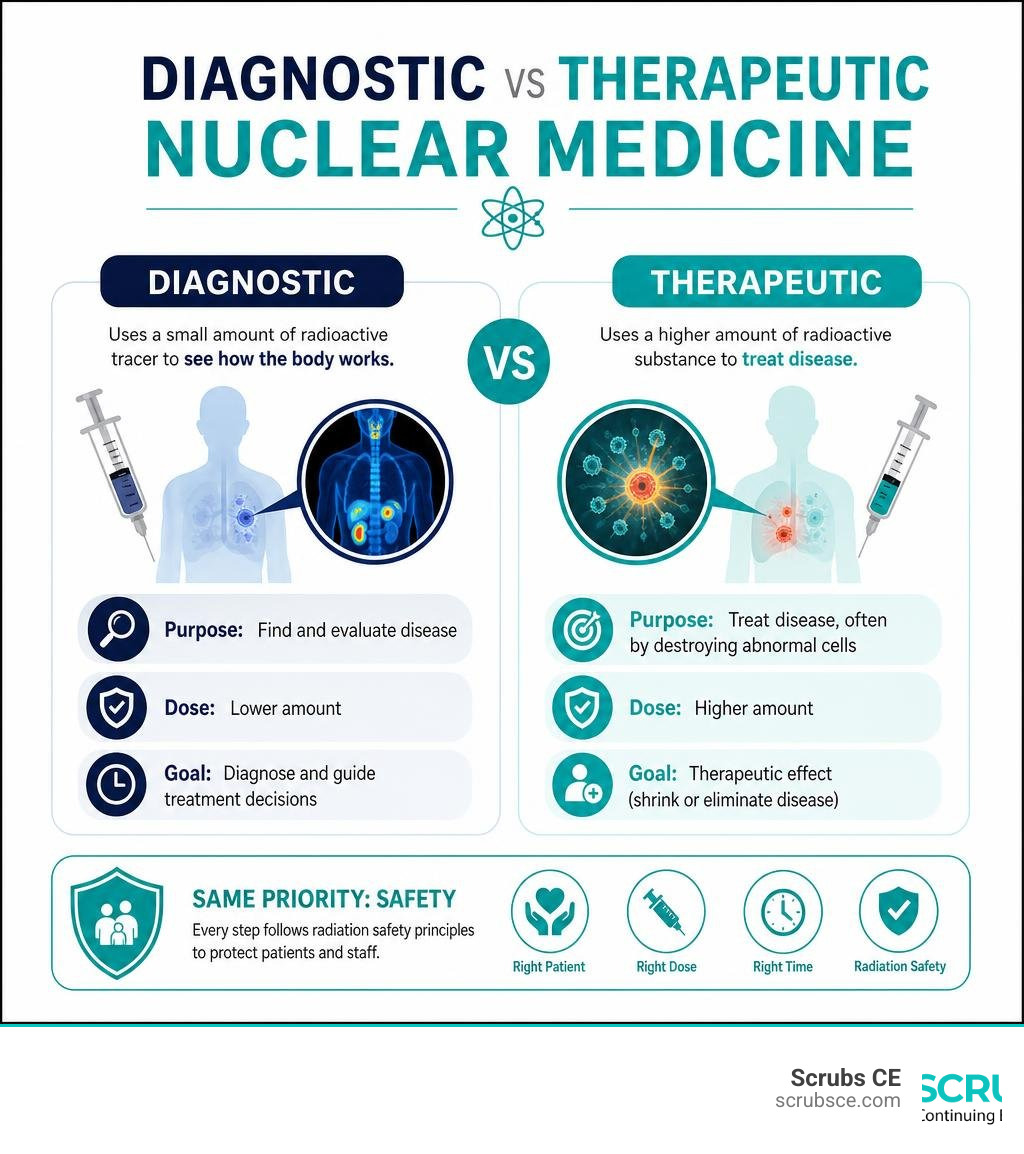
Quick Nuclear medicine radiation safety definitions:
- Nuclear medicine continuing education
- Nuclear medicine technology continuing education
- Nuclear medicine technologist courses
Core Principles of Nuclear Medicine Radiation Safety
To build a strong safety culture, we must master the core principles of radiation protection. These principles keep our teams safe and reassure nervous patients that their care is managed with extreme precision.
The three pillars of radiation protection are:
- Justification: Every exposure must show a net benefit. We must ensure the medical value of the scan or therapy outweighs the small risk of radiation exposure.
- Optimization: This is where we apply the ALARA (As Low As Reasonably Achievable) principle. We use the smallest amount of a radiopharmaceutical needed to get clear, diagnostic-quality images.
- Dose Limitation: We apply strict legal dose limits to occupational workers and the general public. (Note: These limits do not apply to medical exposures for the patients themselves, as their dosages are tailored to their specific clinical needs.)
When we handle unsealed radioactive materials in our daily workflows, we rely on the TDS principle (Time, Distance, and Shielding) to minimize external exposure:
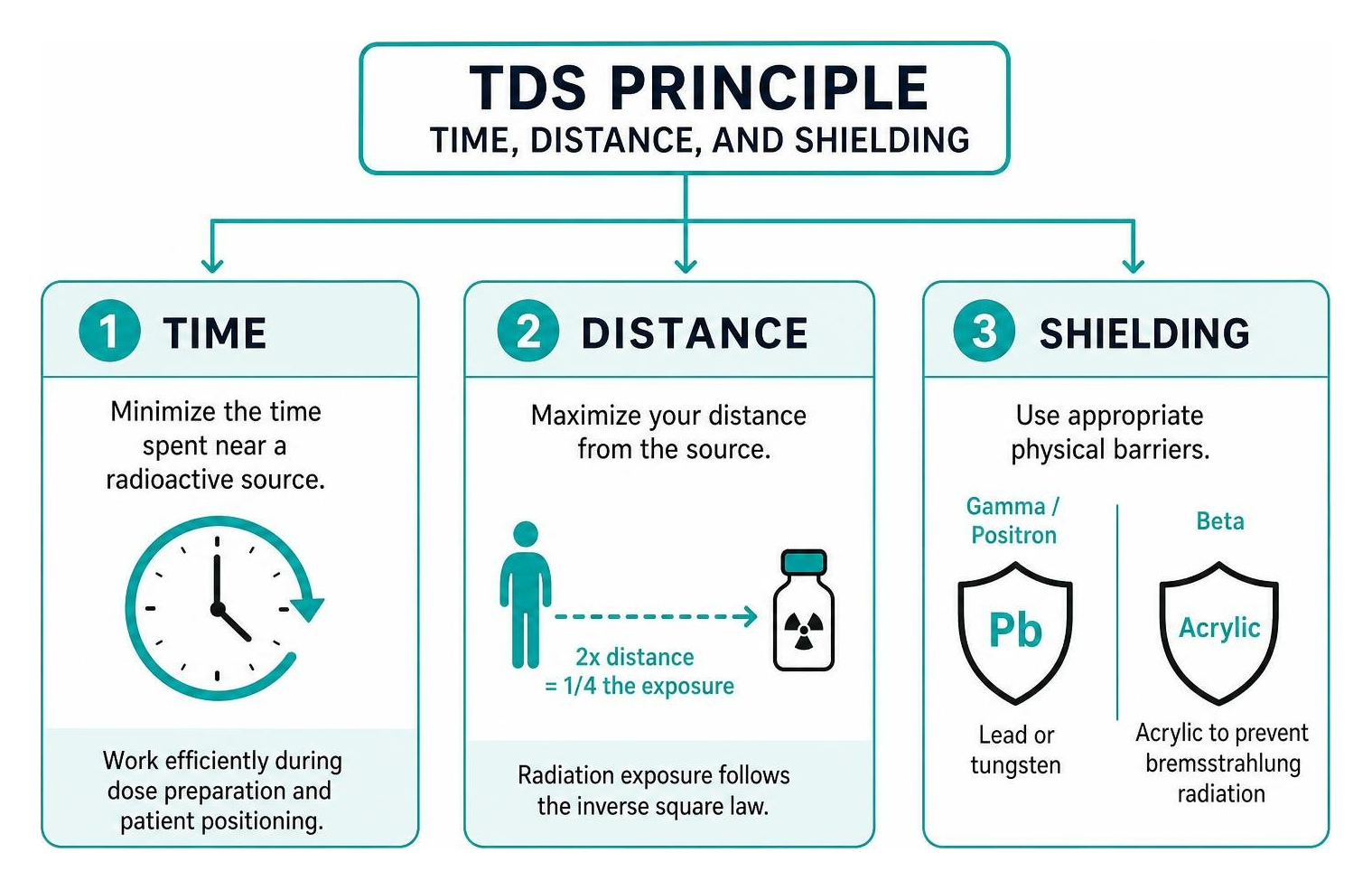
- Time: Minimize the time spent near a radioactive source. Work efficiently during dose preparation and patient positioning.
- Distance: Maximize your distance from the source. Since radiation exposure follows the inverse square law, doubling your distance from a patient or vial reduces your exposure to one-fourth of the original level.
- Shielding: Use appropriate physical barriers. Lead or tungsten shields are essential when handling gamma and positron emitters, while acrylic is preferred for beta emitters to prevent bremsstrahlung radiation.
For a deeper dive into clinical safety management, you can read the Nuclear Medicine Safety – StatPearls – NCBI Bookshelf reference.
Understanding Radiation Biology and Physics
To explain radiation safety to others, we must understand how ionizing radiation interacts with human tissue. Radiation effects are split into two main categories:
- Deterministic Effects: These are predictable, threshold-dependent physical responses. If a dose exceeds a certain limit, tissue damage occurs (such as skin reddening or hair loss). In diagnostic nuclear medicine, we rarely see these effects because our diagnostic doses are kept far below these thresholds.
- Stochastic Effects: These are probabilistic effects with no established threshold. The most notable stochastic effect is radiation-induced cancer. While the probability of a stochastic effect increases with a higher dose, the severity does not.
To stay conservative, radiation safety programs use the Linear No-Threshold (LNT) hypothesis. This model assumes that any exposure to ionizing radiation, no matter how small, carries some risk of biological damage. While some researchers debate if low-dose radiation (under 100 mSv) is truly harmful, the LNT model remains our gold standard for daily safety protocols.
We must also match our safety precautions to the specific emissions of the isotopes we use:
- Alpha Particles (e.g., Radium-223): These heavy particles have high linear energy transfer (LET) but a very short range (micrometers in tissue). They pose no external exposure hazard because they cannot penetrate the skin. However, they are highly destructive if swallowed or inhaled. Strict fluid-handling precautions are vital.
- Beta Particles (e.g., Lutetium-177, Yttrium-90): These particles travel a few millimeters to centimeters in tissue. They present a localized hazard to skin and eyes. We shield them with low-density materials like acrylic to avoid generating secondary X-rays.
- Gamma Photons (e.g., Technetium-99m, Iodine-131): These highly penetrating electromagnetic waves can escape the patient’s body entirely. They travel long distances and require dense lead or tungsten shielding to protect staff and nearby patients.
To master these concepts and earn your required CEUs, check out our course on Stay Safe Stay Certified Mastering Radiation Protection CEUs.
Implementing Nuclear Medicine Radiation Safety in Daily Practice
Putting safety principles into action requires specialized equipment and strict quality control. In the hot lab, unshielded materials must never be handled directly. We use tungsten or lead syringe shields, vial shields, and remote handling tools like forceps to keep our fingers safe from high extremity doses.
To track our personal exposure, we wear personal dosimetry badges (such as thermoluminescent dosimeters or optically stimulated luminescence badges) on our collars. We also wear ring badges on our dominant hands to monitor extremity exposure during dose preparation.
Our daily quality control routine relies heavily on the dose calibrator. Under federal guidelines, dose calibrators must maintain an accuracy of ±10% to ensure patients receive the exact prescribed amount of radioactivity.
Furthermore, the administered dosage must not deviate from the prescribed dosage by more than 20% without authorization from an Authorized User (AU). If a dosage falls outside this range, it may trigger a reportable medical event.
If you practice in the Golden State, make sure you stay compliant with local regulations by reviewing our guide on California Radiation Safety.
Regulatory Standards and Personnel Roles
Nuclear medicine is highly regulated to protect workers, patients, and the public. In the United States, the Nuclear Regulatory Commission (NRC) sets the legal standards under Title 10 of the Code of Federal Regulations (specifically 10 CFR Part 35).
Globally, organizations like the International Commission on Radiological Protection (ICRP) and the International Atomic Energy Agency (IAEA) establish international benchmarks. They publish detailed safety guides, which you can explore on the Human Health Campus – Radiation protection of workers and the public in nuclear medicine platform.
Key Personnel: AU, RSO, and RSC
Maintaining a safe department requires a clear chain of responsibility:
- Authorized User (AU): This is a physician who has met strict training requirements (such as 700 hours of specialized training for diagnostic pathways or 80 hours of classroom work for therapeutic pathways). The AU is legally responsible for prescribing and directing the administration of radiopharmaceuticals. They must sign a written directive for any therapeutic administration, or for any diagnostic dose of Sodium Iodide Iodine-131 exceeding 30 microcuries (μCi).
- Radiation Safety Officer (RSO): The RSO manages the daily operations of our radiation protection program. They ensure regulatory compliance, investigate overexposures, perform routine area surveys, and coordinate emergency responses to spills or accidents.
- Radiation Safety Committee (RSC): Required at larger medical centers, the RSC includes the RSO, an AU, a representative from nursing, and a representative from management. The committee meets regularly to review safety programs, audit exposure records, and establish local policies.
Established Dose Limits for Workers and the Public
To ensure safety, we must adhere strictly to established annual dose limits. The table below outlines these regulatory thresholds:
| Exposed Group | Annual Effective Dose Limit | Equivalent Dose Limit to Lens of Eye | Equivalent Dose Limit to Skin/Extremities |
|---|---|---|---|
| Occupational Workers | 5 rem (50 mSv) | 15 rem (150 mSv) | 50 rem (500 mSv) |
| Pregnant Workers (Fetal Limit) | 0.5 rem (5 mSv) for entire gestation | N/A | N/A |
| General Public | 0.1 rem (1 mSv) | N/A | N/A |
For pregnant workers, declaring a pregnancy is voluntary. Once declared in writing, the lower limit of 0.5 rem (5 mSv) applies to the fetus to protect it during sensitive stages of development.
Clinical Protocols: Spills, Waste, and Patient Release
Working with unsealed liquid radionuclides means we must be prepared for accidental contamination and manage our waste streams responsibly.
Managing Major vs. Minor Radioactive Spills
If a spill occurs, we must act quickly. Spills are classified as major or minor based on the radionuclide involved and its activity level:
- Technetium-99m (Tc-99m) and Thallium-201 (Tl-201): The major spill threshold is 100 mCi.
- Indium-111 (In-111) and Gallium-67 (Ga-67): The major spill threshold is 10 mCi.
- Iodine-131 (I-131): Because of its volatility and long half-life, the major spill threshold is just 1 mCi.
For a minor spill, the local staff can clean it up:
- Confine: Cover the spill with absorbent paper to prevent it from spreading.
- Clear: Warn others and clear the immediate area.
- Clean: Clean the spill using protective gloves and disposable materials, working from the outside of the spill inward.
- Survey: Use a Geiger-Mueller survey meter to check the area and personnel for remaining contamination.
- Report: Document the incident and notify the RSO.
For a major spill, we must escalate the response immediately:
- Clear: Evacuate the room and close the door to prevent access.
- Shield: If possible, place a lead shield over the spill, but do not attempt to clean it up yourself.
- Notify: Contact the RSO immediately.
- Decontaminate: Remove contaminated clothing and wash affected skin with mild soap and lukewarm water (never scrub harshly, as this can break the skin barrier).
Patient Release Criteria and Post-Therapy Guidelines
After receiving therapeutic radiopharmaceuticals, patients temporarily emit radiation. Under NRC regulations, we can release a patient if the total dose to any individual coming into contact with them is unlikely to exceed 5 mSv (0.5 rem).
To simplify this, the NRC allows patient release without complex calculations if:
- The administered activity of Iodine-131 is less than 33 mCi, or
- The measured dose rate is under 7 mrem/hr (0.07 mSv/hr) at 1 meter.
When a patient is released, we must provide them with clear, written instructions on how to minimize exposure to family members and the public. These instructions include:
- Sleeping in a separate bed.
- Using a dedicated bathroom and flushing twice.
- Avoiding close contact with children and pregnant women.
We must also warn patients about travel security. Highly sensitive radiation monitors at airports and federal buildings can detect residual radiation for weeks or months.
Here is how long common isotopes may remain detectable:
- Fluorine-18 (F-18): Typically undetectable after 1 day.
- Technetium-99m (Tc-99m): Typically undetectable after 3 to 4 days.
- Thallium-201 (Tl-201): Can remain detectable for up to 30 days.
- Lutetium-177 (Lu-177): Can remain detectable for up to 2 months.
- Iodine-131 (I-131): Can remain detectable for up to 3 months.
We always recommend providing patients with a signed travel letter explaining their treatment to prevent unnecessary delays at security checkpoints.
Patient-Centered Care and Communication Strategies
The word “radiation” can cause immediate anxiety for patients. As technologists, our job is to demystify the procedure and help them feel safe.

When talking to patients, we should use clear, reassuring language:
- Avoid jargon: Instead of saying “we are injecting an open-source radionuclide,” say “we are administering a small amount of a radioactive tracer that acts like a temporary highlighter for your cells.”
- Put risks in perspective: Explain that the radiation dose from a diagnostic scan is similar to what they naturally absorb from the environment over a few months.
- Highlight the benefits: Emphasize that nuclear medicine shows how their body is functioning in real-time, helping their doctor make accurate treatment decisions without the need for invasive procedures.
For example, when performing a cardiac study, explaining the process clearly can significantly lower a patient’s heart rate and anxiety. You can read more about these clinical applications in our guide on Nuclear Medicine Myocardial Perfusion.
Vulnerable Populations and Nuclear Medicine Radiation Safety
We must take extra precautions when imaging children, pregnant patients, or breastfeeding mothers:
- Pediatric Patients: Children are more sensitive to radiation and have a longer lifetime to develop potential stochastic effects. We always use weight-based dosing guidelines (such as the North American Consensus Guidelines) to minimize their exposure while maintaining diagnostic quality.
- Pregnancy: We must screen all female patients of childbearing age for pregnancy. If a pregnant patient requires a scan, we must carefully justify the procedure. If it is medically necessary, the clinical team will optimize the dose and scan parameters to minimize fetal exposure.
- Breastfeeding Mothers: Many radiopharmaceuticals can pass into breast milk. We must coordinate with the patient to plan temporary breastfeeding interruption times:
- Tc-99m-pertechnetate: Interrupt breastfeeding for 12 hours.
- In-111-octreotide: Interrupt breastfeeding for 60 hours (2.5 days).
- I-131-sodium iodide: Requires complete cessation of breastfeeding for that child, as the isotope can damage the infant’s thyroid gland.
For more information on handling diverse imaging cases, see our article on Infection and Inflammation in Nuclear Medicine Imaging.
Bridging the Information Gap for Outside Healthcare Professionals
A common challenge in hospitals is the communication gap between nuclear medicine specialists and non-specialist healthcare professionals (HCPs). If a patient who was recently treated with a therapeutic isotope (such as Lutetium-177) visits an outside clinic or emergency department, it can cause unnecessary panic among staff.
To prevent this, we recommend a dual-alert communication system:
- EMR Flag: An automatic alert in the Electronic Medical Record that triggers upon radiopharmaceutical administration and expires after 7 days.
- Physical Wristband: A waterproof, color-coded wristband worn by the patient. The wristband should list the radionuclide, the administration date, and a QR code linking directly to safety instructions for outside HCPs.
This simple system ensures that nurses and physicians outside our department know they can safely provide routine care (like taking blood pressure or conducting a brief consultation) by maintaining a reasonable distance and wearing standard personal protective equipment (PPE).
Frequently Asked Questions about Nuclear Medicine Safety
How does nuclear medicine radiation compare to natural background radiation?
The typical American absorbs about 6 mSv of radiation annually. Roughly 50% comes from natural background sources (like radon gas, cosmic rays, and naturally occurring radioactive materials in our bodies), while about 40% comes from medical radiation.
A standard diagnostic nuclear medicine scan (such as a bone scan or a hepatobiliary scan) typically delivers a dose of 3 to 6 mSv, which is comparable to a few years of natural background exposure.
What constitutes a reportable medical event in nuclear medicine?
Under NRC regulations, a reportable medical event occurs when a radiopharmaceutical administration is given to the wrong patient, is the wrong drug, uses the wrong route of administration, or the administered dosage deviates by more than 20% from the prescribed dosage, AND results in:
- A total effective dose equivalent (TEDE) exceeding 5 rem (50 mSv), or
- A single-organ committed dose equivalent exceeding 50 rem (500 mSv).
If a medical event occurs, we must notify the NRC by phone within 1 day, submit a written report within 15 days, and notify the referring physician and the patient within 24 hours.
Why do patients need a travel letter after radiopharmaceutical therapy?
Highly sensitive radiation portal monitors at border crossings, airports, and federal buildings can detect even trace amounts of radiation.
Because therapeutic isotopes like Iodine-131 can remain detectable for up to 3 months, a signed letter from an Authorized User prevents security delays by verifying that the radiation source is medical and safe.
Conclusion
Creating a strong safety culture in nuclear medicine is a team effort. By combining strict technical standards with clear, empathetic communication, we can protect our staff, comply with regulatory bodies, and help our patients feel safe and calm during their procedures.
If you are an imaging professional looking to stay certified and expand your clinical knowledge, we are here to help. At Scrubs CE, we offer convenient, self-paced, and affordable online continuing education courses.
Our high-quality courses provide instant certificates to help you meet your state licensing and AMERICAN REGISTRY OF RADIOLOGIC TECHNOLOGISTS® (ARRT®) requirements.
Ready to earn your next CE credits? Explore our complete catalog of Nuclear Medicine CE courses today!
Passing the Test: Anatomy and Physiology Licensure Requirements Made Easy
Passing the Test: Anatomy and Physiology Licensure Requirements Made Easy
Why Anatomy and Physiology Licensure Requirements Don’t Have to Be Overwhelming

Understanding anatomy and physiology for dummies licensure requirements is simpler than most healthcare students expect — once you know exactly what each profession demands.
Here is a quick snapshot of what most healthcare programs require:
| Profession | Core A&P Requirement | Lab Required? | Key Exam |
|---|---|---|---|
| Registered Nurse (BSN) | A&P I and A&P II | Yes | NCLEX-RN |
| Radiologic Technologist | A&P coursework | Yes | ARRT® exam + state license |
| Physical Therapist (DPT) | Separate A&P I and II | Yes | NPTE |
| Physician (MD/DO) | Preclinical A&P | Yes | USMLE |
| Allied Health (general) | A&P I and/or II | Usually yes | Varies by credential |
A few things are true across almost every healthcare path:
- Formal coursework counts. Self-study alone almost never satisfies licensure prerequisites.
- Labs are non-negotiable for most clinical programs.
- Credit recency matters. Many programs reject A&P credits older than 7 to 10 years.
- Grades matter too. Competitive programs typically require a B or higher in both semesters.
If you have ever cracked open a textbook and immediately felt overwhelmed by terms like glomerular filtration rate or sartorius, you are in good company. Anatomy and physiology has a reputation for being one of the hardest gatekeepers in healthcare education — and for good reason. The volume of material is enormous, the terminology is dense, and the stakes are high. Your ability to demonstrate this knowledge is directly tied to your legal right to practice.
But here is the good news: the requirements themselves are not mysterious. Once you understand what each licensing body actually asks for, you can build a clear, manageable plan.
I’m Zita Ewert, and as the driving force behind Scrubs CE, I have spent years helping imaging professionals and allied health workers navigate the exact intersection of anatomy and physiology for dummies licensure requirements and real-world credential maintenance. I will walk you through what you actually need to know — no jargon, no guesswork.
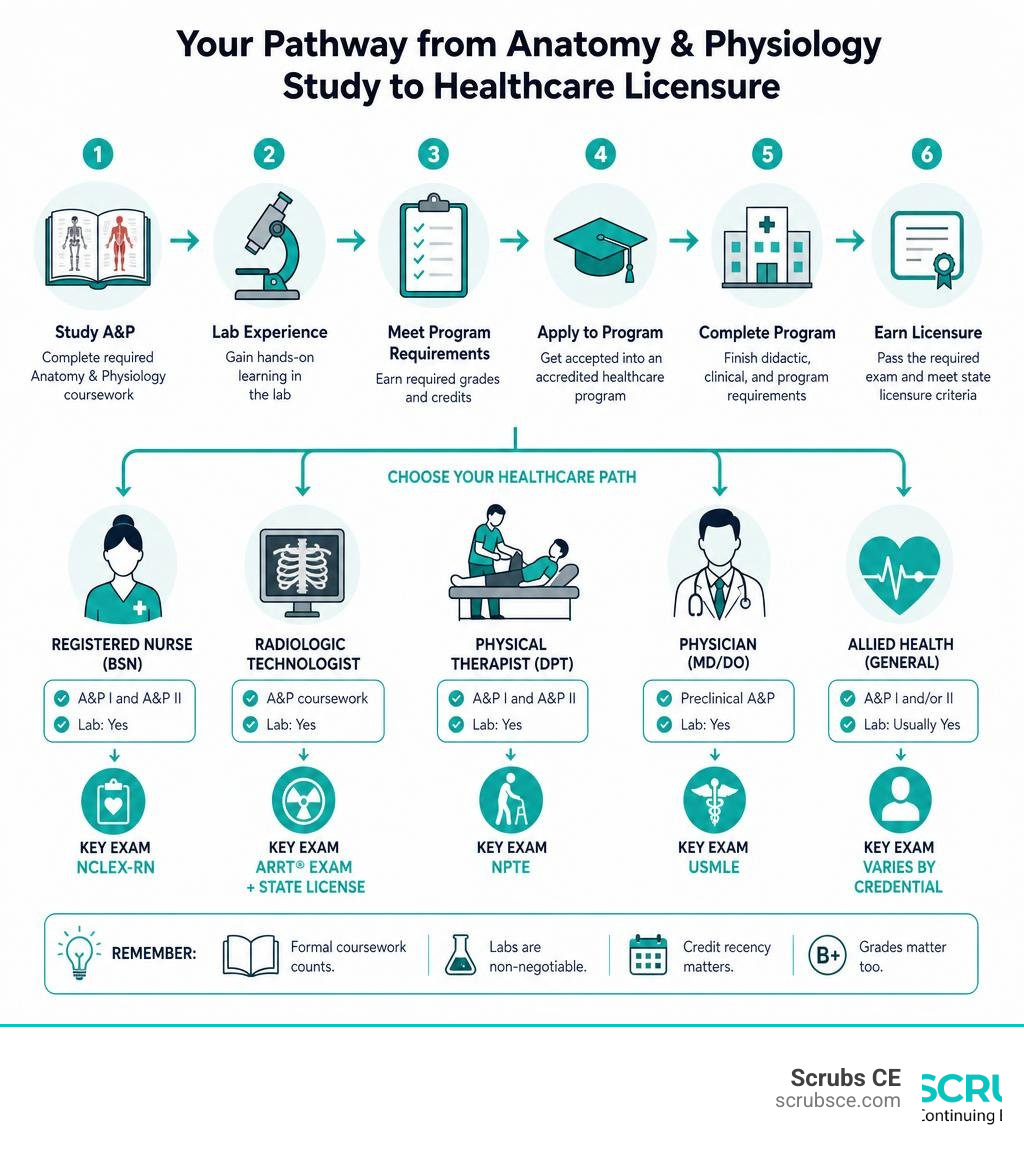
Anatomy and physiology for dummies licensure requirements terms at a glance:
Demystifying Anatomy and Physiology for Dummies Licensure Requirements
To demystify these regulations, we must first look at how licensing boards view the human body. They do not see anatomy and physiology (A&P) as a dry academic hurdle. Instead, they view it as the scientific baseline for patient safety. Whether you are administering medication, taking a radiograph, or manipulating a joint, you are actively interacting with a complex biological machine containing roughly 37 trillion cells, 206 bones, and 11 distinct organ systems.
Academic prerequisites are strictly standardized across the United States. Licensing boards and professional accrediting bodies, such as the Commission on Collegiate Nursing Education (CCNE), set specific parameters for what constitutes acceptable foundational education. To gain a complete overview of what these core concepts entail, you can explore our guide on Everything You Need to Know About Anatomy and Physiology for Dummies.
In most cases, the standard requirement is a two-semester sequence: Human Anatomy and Physiology I and II. These courses must cover the six levels of body organization (chemical, cellular, tissue, organ, organ system, and organismal) and explain how the body maintains homeostasis—the dynamic balance that keeps us alive.
Pre-Licensure BSN and Nursing Program Standards
For aspiring Registered Nurses, the academic journey is highly structured. In a pre-licensure Bachelor of Science in Nursing (BSN) program, A&P is the gatekeeper sequence. You cannot advance to clinical courses like pharmacology, pathophysiology, or medical-surgical nursing without first proving you understand normal human structure and function.
For example, a typical pre-licensure BSN degree, such as the program offered at Grand Canyon University (GCU), requires 123 total credits. Of those, 84 credits are dedicated directly to the major. Before students can even touch those major credits, they must complete Human Anatomy and Physiology I and II, complete with their corresponding laboratory components.
These standards exist because nursing licensure exams, specifically the NCLEX-RN, test clinical judgment. You cannot recognize abnormal physiological changes in a patient if you do not understand normal baseline functions. The proof of this rigorous approach is in the results: GCU’s NCLEX first-time pass rate for its Phoenix, Arizona campus in 2024 was an impressive 97.17%.
Radiologic Technologist and Radiology Certification Requirements
For those entering the field of medical imaging, the requirements are regulated by the AMERICAN REGISTRY OF RADIOLOGIC TECHNOLOGISTS® (ARRT®). To earn ARRT® certification and registration, candidates must complete an accredited educational program that includes comprehensive instruction in anatomy and physiology.
Because Radiologic Technologists must precisely position patients and shield sensitive tissues from ionizing radiation, their grasp of structural anatomy must be exceptional. You cannot safely perform diagnostic imaging without knowing exactly where internal structures lie in relation to external landmarks.
To help you navigate this specific path, we have created A Comprehensive Guide to Radiologic Technologist Certification Requirements, which outlines how these academic requirements transition into professional credentials. Earning your national ARRT® credential is only half the battle; more than 75% of U.S. states also have specific state licensing laws that govern your legal authority to practice Radiology.
Academic Pathways vs. Self-Study for Licensure
Many students wonder if they can bypass the classroom, study on their own, and simply test out of their science prerequisites. While self-study is an incredible tool for exam preparation, it has strict legal limitations when it comes to professional licensure.
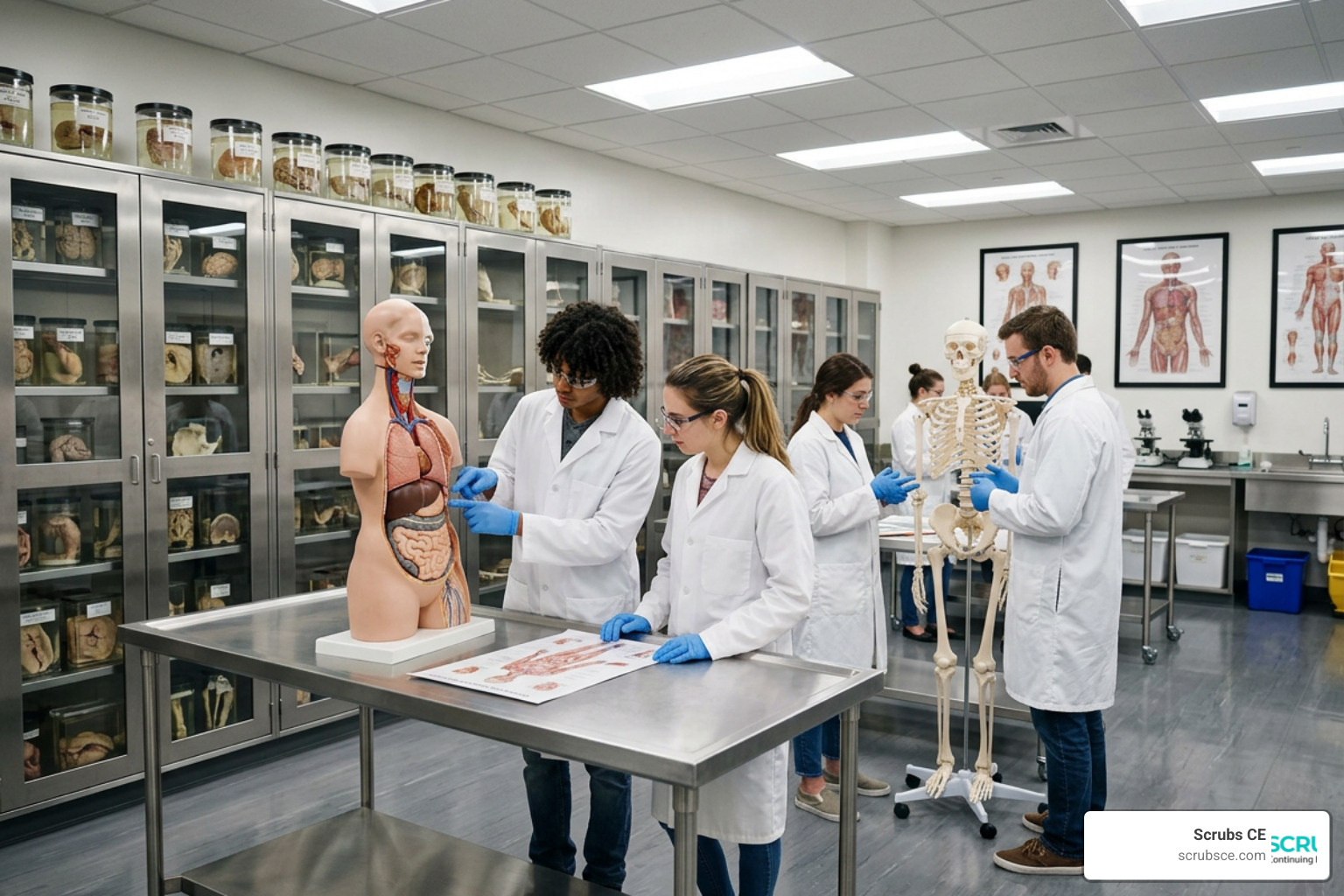
Clinical programs require academic transcripts from accredited institutions. They want to see that you have completed formal, structured coursework. The reason is simple: clinical safety requires hands-on validation. You cannot learn how to palpate a muscle group, locate a vein, or position a patient purely by reading a book on your couch.
Can Self-Study Satisfy Anatomy and Physiology for Dummies Licensure Requirements?
The short answer is no. While self-studying with books like Anatomy & Physiology All-in-One For Dummies is an excellent way to build confidence and ace your exams, self-study credentials alone do not satisfy professional licensure requirements.
Some institutions allow students to take the College-Level Examination Program (CLEP) or other equivalency exams to earn general education credits. However, highly competitive clinical programs—especially nursing, physical therapy, and Radiology—rarely accept CLEP credits for core lab sciences. They specifically require graded, multi-credit courses completed at an accredited college or university. For a detailed breakdown of how these courses are structured and evaluated, check out this guide on Anatomy and physiology courses: Careers & Certification ❓ .
Departmental Restrictions and Course Recency
If you are planning to apply to a specialized graduate program, such as a Doctor of Physical Therapy (DPT) program, the rules become even stricter. DPT admissions, which are processed through the Physical Therapist Centralized Application Service (PTCAS), have highly specific departmental restrictions.
Many DPT programs will not accept combined A&P courses. Instead, they require separate, dedicated semesters of Human Anatomy and Human Physiology, often insisting that these courses be taken within a biology, neuroscience, or integrated physiology department rather than a kinesiology or physical education department.
Furthermore, the “shelf-life” of your science credits is a major factor. Because medical science evolves and memory fades, most clinical programs enforce a strict 7-to-10-year recency rule. If you took A&P ten years ago, you will likely have to retake the entire sequence to qualify for admission or licensure.
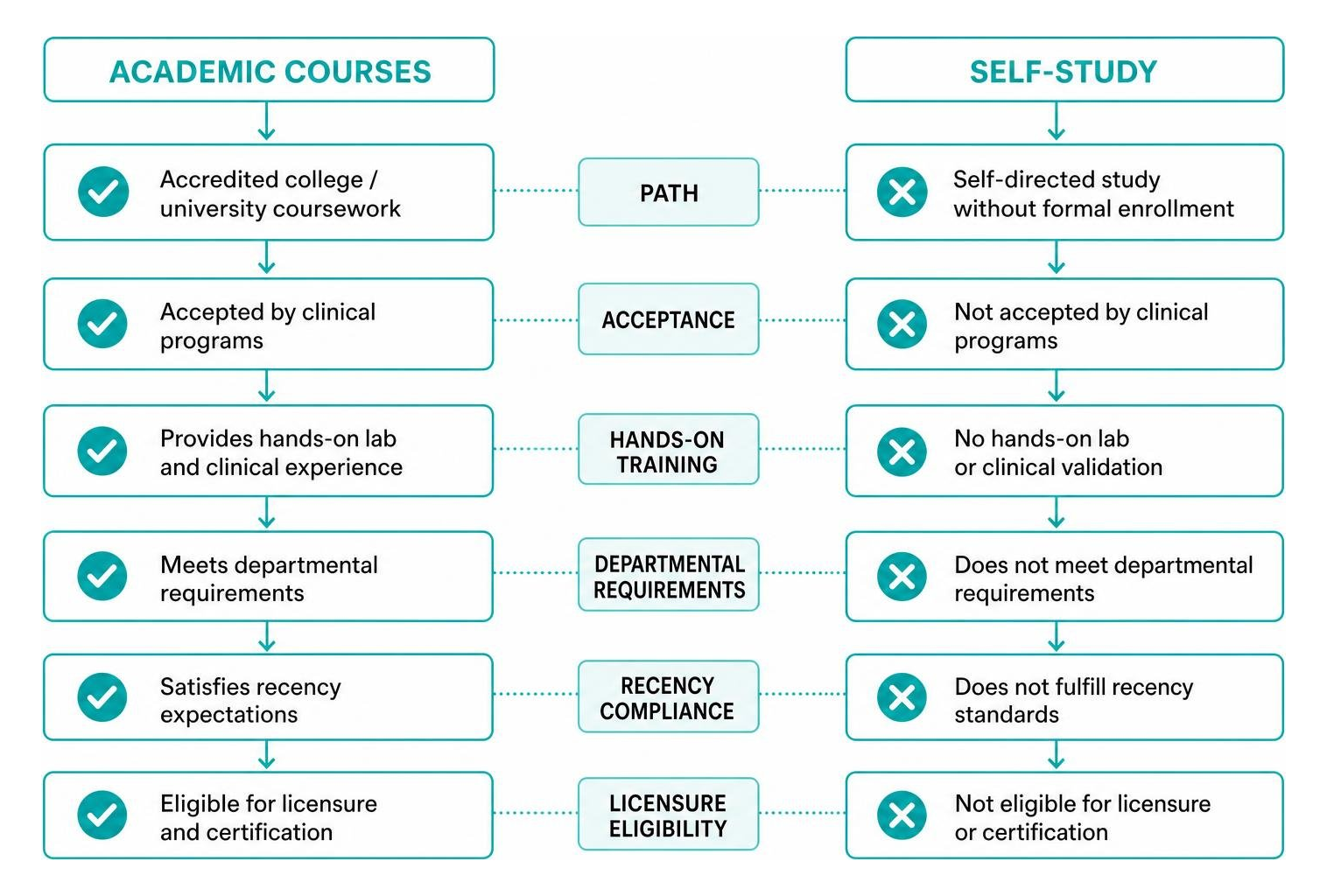
Anatomy and Physiology on Professional Licensing Exams
Once you complete your coursework, you face the ultimate challenge: demonstrating your knowledge on your professional licensing exam. Whether you are sitting for the NCLEX-RN or the ARRT® registry, A&P forms the foundation of the entire test.
These exams do not simply ask you to label a diagram of the skeletal system. Instead, they present clinical scenarios that require applied physiological reasoning. For example, a question might ask how a change in normal renal physiology causes the specific symptoms of congestive heart failure. To answer correctly, you must understand how the urinary and cardiovascular systems interact to regulate blood pressure and fluid balance.
Core Topics Tested on the NCLEX-RN and ARRT® Exams
On these high-stakes exams, certain topics are prioritized because they directly impact patient safety.
- Fluid, Electrolyte, and Acid-Base Balance: This is heavily tested on the NCLEX-RN. You must understand how the kidneys filter approximately 180 liters of plasma daily to maintain homeostasis.
- Pharmacology and System Interactions: You must know how drugs affect the autonomic nervous system to predict side effects on the heart, lungs, and digestive tract.
- Cardiovascular Dynamics: The heart beats roughly 100,000 times per day, pumping 2,000 gallons of blood through 60,000 miles of vessels. Exams expect you to understand the electrical conduction system and blood flow pathways.
- Skeletal and Radiographic Anatomy: Essential for Radiology candidates, who must identify bones, joints, and organs on diagnostic images.
To streamline your preparation, you can utilize our comprehensive Anatomy and Physiology Study Material Guide 2026 July 🗨️ , which offers targeted study structures for these exact exam topics.
Study Strategies to Master Anatomy and Physiology for Dummies Licensure Requirements
To pass these exams on your first attempt, you must abandon passive study habits like highlighting and re-reading. Cognitive science shows that active recall—forcing your brain to retrieve information from memory—improves long-term retention by up to 50 percent compared to passive reading.
We recommend using spaced repetition flashcard systems (like Anki) to manage the massive volume of Latin terms and anatomical structures. Additionally, try the “protege effect”: teach a complex system, like the sliding filament theory of muscle contraction, to an empty room or a study partner. If you can explain it simply, you truly understand it.
To choose the best study companion for your specific learning style, take a look at our review of Anatomy and Physiology for Dummies Latest Edition Which Version Is Best for You.
Maintaining Competency: Continuing Education Requirements
Earning your initial license is a monumental achievement, but your professional journey does not end there. To keep your license active, you must prove that you are maintaining your clinical competency through Continuing Education (CE).
Different professions have different renewal cycles and credit requirements:
| Profession | CE Cycle | Credit Requirements | Key Focus Areas |
|---|---|---|---|
| Registered Nurse (RN) | Every 2 years | 20 to 30 contact hours | Clinical practice, pharmacology, patient safety |
| Radiologic Technologist | Every 2 years (Biennial) | 24 Category A or A+ credits | Radiation safety, patient care, advanced A&P |
| Physical Therapist (PT) | Every 2 years | 30 contact hours / CCUs | Orthopedics, neurology, rehabilitation |
Continuing Education for Radiologic Technologists
For Radiologic Technologists, the AMERICAN REGISTRY OF RADIOLOGIC TECHNOLOGISTS® (ARRT®) mandates that professionals earn 24 Category A or A+ continuing education credits every two years. These credits must be approved by a Recognized Continuing Education Evaluation Mechanism (RCEEM), such as the ASRT® (AMERICAN SOCIETY OF RADIOLOGIC TECHNOLOGISTS®).
As imaging technology becomes more sophisticated, advanced knowledge of cross-sectional anatomy and pathology is essential. To help imaging professionals meet these rigorous standards, we offer specialized courses like Anatomy for Radiographers, which are designed to satisfy your biennial CE requirements while directly improving your clinical imaging skills.
Continuing Education for Nursing and Allied Health
Nurses and other allied health professionals also face mandatory CE requirements that vary significantly by state. For instance, state nursing boards in Delaware, Georgia, Minnesota, and Utah have highly specific criteria regarding which out-of-state CE providers they will accept.
When choosing continuing education courses, always ensure your provider is fully accredited and approved by your state board. To find the highest-quality reference texts and study materials to support your ongoing professional development, you can consult our list of Anatomy Radiology Book Essentials Top Texts for Diagnostic Imaging.
Frequently Asked Questions about Anatomy and Physiology Licensure
Do online anatomy and physiology courses with virtual labs satisfy nursing licensure requirements?
It depends entirely on your target nursing program and state board. While many nursing schools accept online lectures, some highly competitive clinical programs strictly reject fully online lab credits, requiring physical “wet lab” or cadaver experiences. Always obtain written confirmation from your target program’s admissions office before enrolling in an online science course.
How long do anatomy and physiology credits remain valid for healthcare program admission?
In most cases, science prerequisite credits remain valid for 7 to 10 years. Because medical knowledge and clinical practices evolve, licensing boards and academic institutions want to ensure your foundational scientific knowledge is fresh and accurate before you begin clinical rotations.
What is the difference between national certification and state licensing for radiologic technologists?
National certification (such as that provided by the AMERICAN REGISTRY OF RADIOLOGIC TECHNOLOGISTS® or ARRT®) is a voluntary credential that proves you have met national standards of education and testing. State licensing, on the other hand, is a legal requirement mandated by individual state governments. You must often hold both to legally practice Radiology in your state.
Conclusion
Mastering anatomy and physiology for dummies licensure requirements does not have to be an overwhelming process. By understanding the academic standards of your chosen field, utilizing active study strategies, and keeping your credentials active through structured continuing education, you can successfully navigate every stage of your healthcare career.
At Scrubs CE, we are dedicated to supporting your professional development. We provide convenient, affordable, and fully accredited online continuing education courses designed to help you meet your licensure requirements on your own schedule.
If you are ready to fulfill your CE requirements with a high-quality, self-paced course that offers instant certification, explore our Practice Anatomy and Physiology for Dummies 3rd Ed Course today and take the next step in advancing your healthcare career!
Cracking the Code: MQSA Requirements for Mammographers Explained
Cracking the Code: MQSA Requirements for Mammographers Explained
What Are the MQSA Mammography Technologist Requirements?

mqsa mammography technologist requirements set the federal standards every mammographer must meet to legally perform mammograms in the United States. Here’s a quick summary:
| Requirement | Details |
|---|---|
| Initial Training | 40 hours didactic + 25 supervised exams |
| State License | General radiography license required |
| Continuing Education | 15 Category 1 CEUs every 36 months |
| Continuing Experience | 200 mammography exams every 24 months |
| Digital/3D Modality Training | 8 additional hours per new modality |
| Annual Inspections | Documentation must be ready at all times |
These rules come from the Mammography Quality Standards Act (MQSA), signed into law in 1992 and enforced by the FDA. The law was created to protect patients by ensuring every mammography facility — and every technologist working in one — meets consistent, measurable quality standards.
Before MQSA, training and quality varied widely from facility to facility. Today, any technologist who doesn’t meet these requirements is prohibited from independently performing mammograms, regardless of their general radiography experience.
The 2023 Final Rule (effective September 10, 2024) updated several key requirements — making it more important than ever to stay current.
I’m Zita Ewert, and as the leader of SCRUBS Continuing Education®, I’ve spent years helping radiologic technologists navigate mqsa mammography technologist requirements through accredited, accessible continuing education. In this guide, I’ll break down exactly what you need to know to stay compliant — without the regulatory jargon.
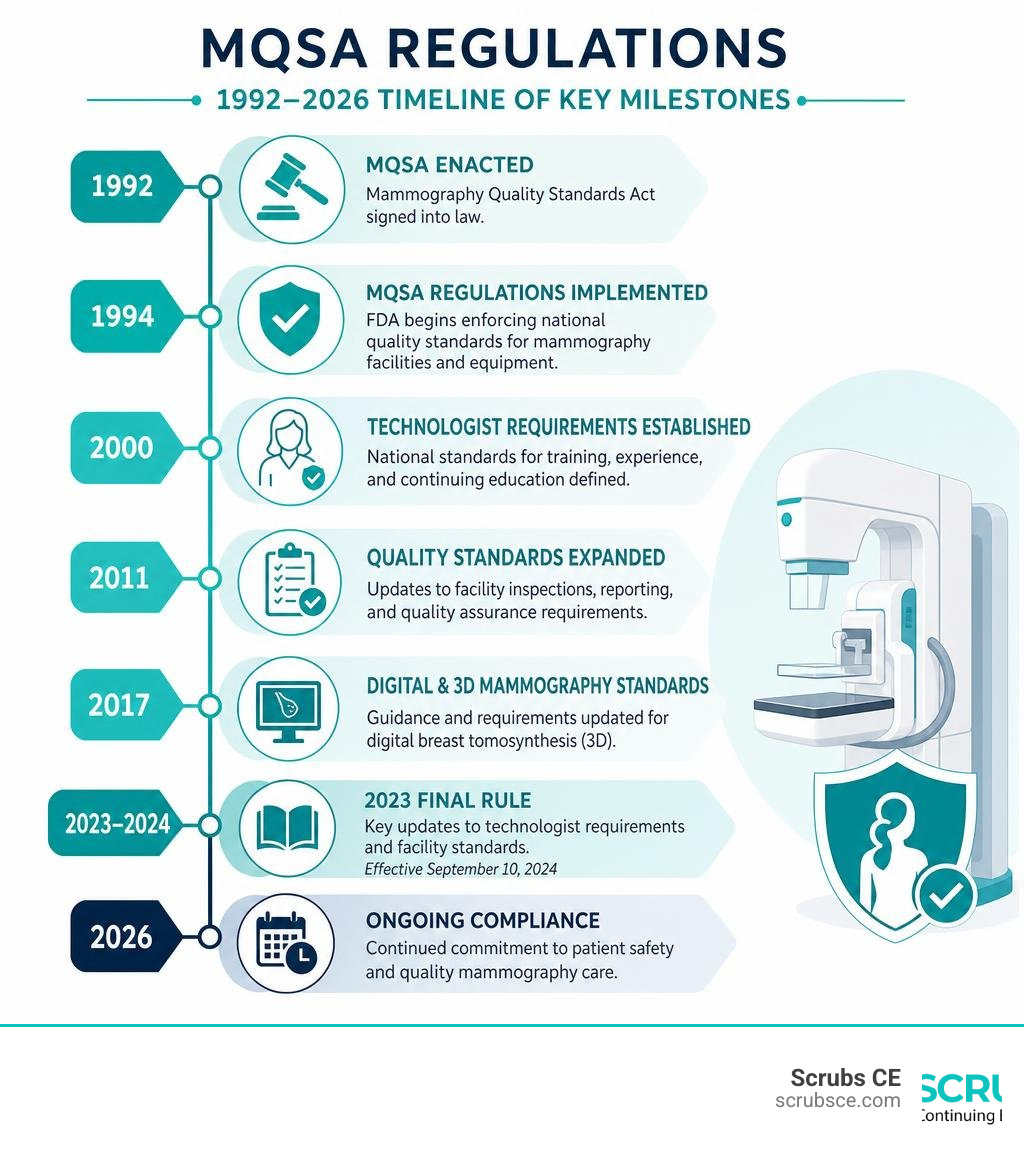
Key mqsa mammography technologist requirements vocabulary:
- how to become radiologist technician
- how to get a arrt certification
- radiologic technologist requirements
Initial MQSA Mammography Technologist Requirements for Independent Practice
To legally step up to a mammography machine and perform an exam without someone hovering over your shoulder, you must fulfill specific initial criteria. These federal regulations ensure that every technologist has a rock-solid foundation in both the science and the art of breast imaging.
First and foremost, you must hold a valid state license to perform general radiography, or be certified by an approved national body. The most common pathway is certification through the AMERICAN REGISTRY OF RADIOLOGIC TECHNOLOGISTS® (ARRT®). This ensures you already understand the fundamentals of radiation safety, patient care, and basic imaging physics before you specialize.
But general radiography is just the entry ticket. To transition into mammography, you must complete specialized clinical supervision. During this phase, you are not permitted to work independently. A qualified mammography technologist must guide your hands, observe your patient interactions, and sign off on your technique.
Core Didactic and Clinical Training Requirements
The heart of your initial qualification lies in a mandatory 40-hour didactic training program. This isn’t just 40 hours of watching videos; it must cover highly specific topics mandated by the FDA:
- Breast Anatomy and Physiology: Understanding the complex tissue structures you will be imaging.
- Positioning and Compression: Learning how to properly position the breast to maximize tissue visualization while managing patient comfort.
- Quality Assurance and Quality Control (QA/QC): Mastering the daily, weekly, and monthly tests required to keep the equipment running safely.
- Imaging Patients with Breast Implants: Special techniques, such as Eklund views, to ensure implant integrity while capturing necessary breast tissue.
In addition to this classroom or online study, you must complete at least 25 supervised mammography examinations. These clinical exams must be performed under the direct supervision of an MQSA-qualified technologist. They are your opportunity to put theory into practice, mastering the physical adjustments needed for different body types and physical limitations.
Modality-Specific Training for Digital and 3D Mammography
As technology has evolved, so have the training requirements. If you plan to work with digital mammography or digital breast tomosynthesis (commonly known as 3D mammography), you must complete an additional 8 hours of modality-specific training for each technology.
For example, if you transition from traditional 2D digital mammography to a 3D tomosynthesis system, you cannot operate that 3D machine independently until you have logged those 8 hours. This training covers the unique physics of tomosynthesis, reconstruction algorithms, and specific positioning adjustments. Utilizing online education is an incredibly efficient way to knock out these 8-hour blocks on your own schedule without taking time away from your clinical shifts.
Maintaining Compliance: Continuing Education and Experience
Obtaining your initial qualification is a major milestone, but MQSA compliance is not a “one-and-done” achievement. The FDA requires active technologists to maintain their skills and knowledge through ongoing practice and education. This is tracked using rolling cycles, meaning your compliance is constantly evaluated based on what you have done over the preceding 24 to 36 months.
Failing to keep up with these rolling requirements can instantly halt your ability to practice. That is why quality assurance and proactive tracking are essential habits for every professional mammographer.
Meeting the Triennial MQSA Mammography Technologist Requirements for CE
To satisfy the mqsa mammography technologist requirements for continuing education, you must earn at least 15 Category 1 CEUs (Continuing Education Units) every 36 months. This 36-month period is a rolling window, not a fixed calendar block.
These credits must be directly related to mammography. If you are certified by the AMERICAN REGISTRY OF RADIOLOGIC TECHNOLOGISTS®, you should also ensure that these credits align with your ARRT® biennial requirements to avoid double the work.
Furthermore, if you operate multiple modalities (such as both 2D digital and 3D tomosynthesis), you must ensure your CE portfolio includes at least 6 credits directly related to each modality you use. Managing these overlapping timelines can feel like a juggling act, but choosing the right CE provider makes it simple to stay organized.
Biennial Continuing Experience and Exam Quotas
Education is only half the battle; you also have to keep your clinical skills sharp. The FDA enforces a continuing experience requirement of at least 200 mammography examinations within a rolling 24-month period.
This clinical volume ensures that you maintain your eye for detail and your physical dexterity in positioning. Most facilities track these numbers automatically through their Radiology Information Systems (RIS). However, if you work PRN or split your time between multiple facilities, it is your responsibility to collect signed logs from each site to prove you have hit the 200-exam threshold. For strategies on aligning your credits with these clinical demands, check out More info about making credits work for MQSA.
Requalification Pathways and Inspection Readiness
What happens if life gets in the way and you fall out of compliance? Whether due to an extended medical leave, a career break, or simply an oversight in tracking your rolling dates, falling out of active status means you can no longer legally perform mammograms independently.
Operating without active MQSA status puts both you and your facility in a state of non-compliance, which can lead to severe penalties during annual inspections. Fortunately, the FDA provides a clear roadmap to help you safely reenter the field.
Reestablishing Compliance After Falling Out of Active Status
If you fail to meet the 200-exam requirement in a 24-month period, you must bring your clinical numbers back up under direct supervision. The requalification pathway requires you to perform 25 supervised exams. Once those 25 supervised exams are completed and documented, you enter a 6-month window during which you must complete the remaining balance of your 200 exams (175 unsupervised exams) to fully restore your active status.
If your non-compliance is due to a CE deficiency, you must make up the missing credits to meet the 15-credit requirement before you can resume independent imaging. Understanding how to efficiently earn these credits is key to minimizing your downtime.
Documentation Checklist for Annual MQSA Inspections
Every mammography facility undergoes an annual FDA inspection to verify that all equipment, procedures, and personnel meet federal standards. During these inspections, the inspector will audit the files of every practicing technologist.
To ensure you are inspection-ready, your facility must have immediate access to a comprehensive paper or digital trail.
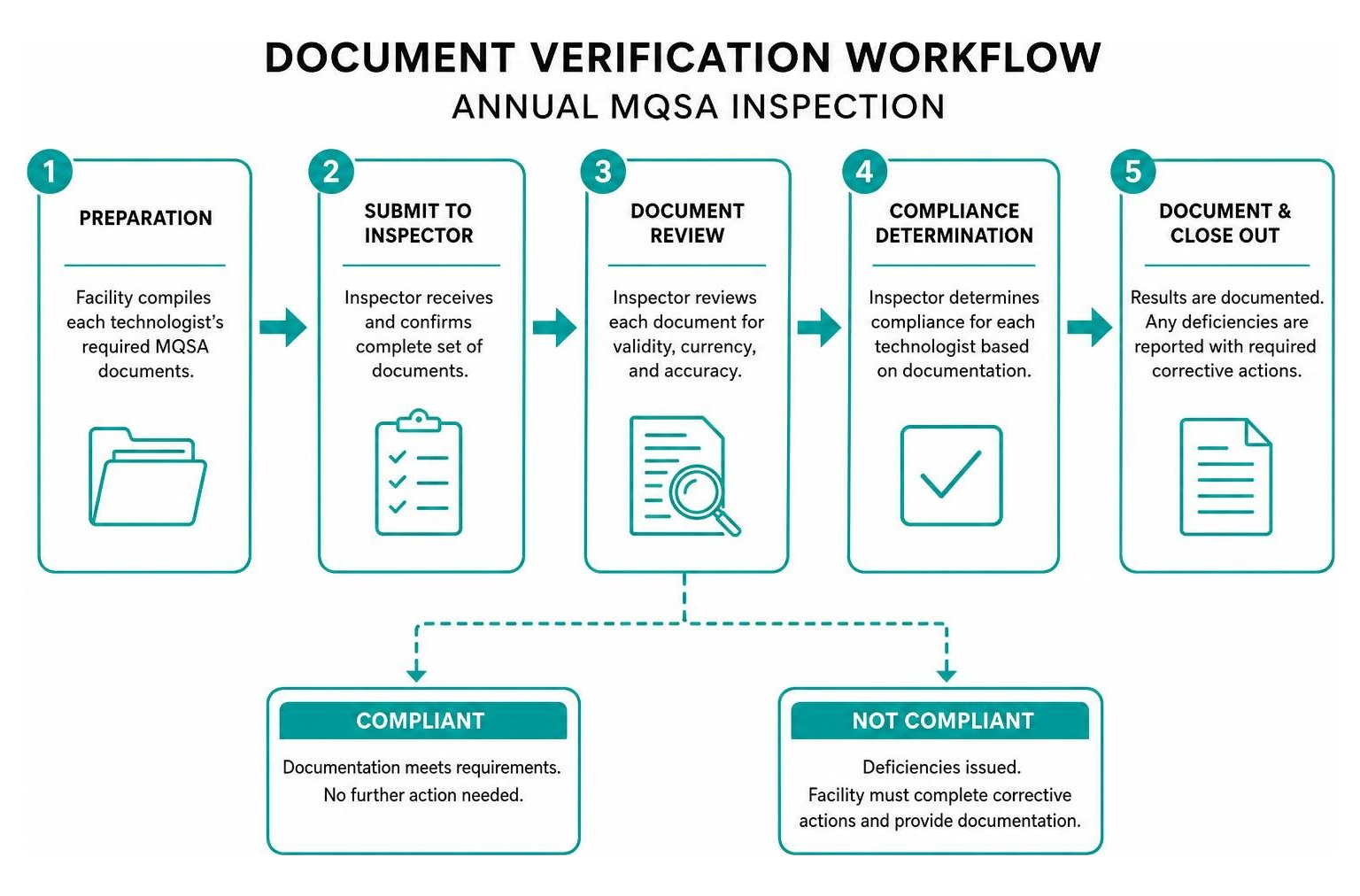
Use this checklist to ensure your records are complete:
- Current State Licensure: Active general radiography license or state-specific mammography permit.
- Board Certification: Active registration with the AMERICAN REGISTRY OF RADIOLOGIC TECHNOLOGISTS® or other approved national body.
- Initial Training Records: Proof of your 40-hour didactic training and certificate of your first 25 supervised exams.
- Modality Certificates: Documentation of your 8 hours of training for digital, 3D, or other specialized modalities.
- CE Certificates: Certificates of completion for your 15 Category 1 CEUs covering the active 36-month rolling window.
- 200-Exam Log: A signed, verified report showing you have completed at least 200 clinical exams in the past 24 months.
Navigating State Regulations, ARRT® Certification, and the 2023 Final Rule
While MQSA sets the baseline federal standards, it is important to remember that federal law is the floor, not the ceiling. Many states and accrediting bodies enforce stricter requirements than the FDA. Navigating this web of federal, state, and institutional rules can be confusing, but keeping a few key distinctions in mind will help you stay compliant wherever you practice.
Do You Need the ARRT® (M) Credential to Practice?
Technically, the FDA’s federal MQSA guidelines do not explicitly require you to hold the advanced ARRT® (M) post-primary credential to perform mammograms; they only require general radiography certification and the completion of the 40-hour/25-exam training. However, in the real world, the answer is almost always yes.
Most state licensing boards, facility accreditation bodies (like the American College of Radiology), and employers require you to obtain your ARRT® (M) credential within a certain timeframe of hire (often 12 to 24 months). To achieve this, you must complete the post-primary pathway, which includes logging 75 clinical exams across various categories and passing the rigorous AMERICAN REGISTRY OF RADIOLOGIC TECHNOLOGISTS® registry exam.
How the 2023 Final Rule Impacts MQSA Mammography Technologist Requirements
The FDA issued a major update to the MQSA regulations with the 2023 Final Rule, which officially took effect on September 10, 2024. Among various clinical changes, this rule introduced strict guidelines regarding record retention for personnel.
Under the updated rules, facilities are now federally required to retain employee qualification and training records for at least 24 months after the employee leaves the facility. This ensures that if an audit occurs after you change jobs, your historic compliance can still be verified. It also mandates that facilities provide former employees with copies of these records upon request, making it easier for you to transfer your credentials to a new employer. For the complete legal text, you can read the Scientific research on the 2023 MQSA Final Rule.
State-Specific Variations and Facility Compliance Roles
States often implement their own regulatory bodies that layer additional rules on top of federal ones. For instance, the California Department of Public Health, Radiologic Health Branch (CDPH-RHB) requires California technologists to hold a specific California Certified Radiologic Technologist (CRT) certificate in mammography.
Additionally, the 2023 Final Rule standardized breast density reporting across the nation. All patient lay summaries must now include specific, easy-to-understand explanations of whether their tissue is “dense” or “not dense” and how that impacts cancer detection. Technologists play a critical role in educating patients about these dense breast notifications during their exams. To learn more about how federal oversight works, see the Scientific research on the FDA MQSA Program.
| Requirement | Federal MQSA Standard | California State Standard (CDPH-RHB) |
|---|---|---|
| Licensure | General Radiography + MQSA training | CRT License + Mammography Permit (CRT(M)) |
| Continuing Education | 15 credits per 36 months | 10 mammography-specific credits per 24-month renewal |
| Breast Density | Standardized national reporting language | Standardized national reporting language |
Frequently Asked Questions about MQSA Compliance
FAQ 1: Can I count my MQSA CE credits toward my ARRT® biennium requirements?
Yes! Because the ARRT® requires 24 Category A or A+ CEUs every two years, you can absolutely use your 15 MQSA-compliant mammography credits to satisfy part of your ARRT® biennium. Just ensure that the courses you take are approved for Category A credit by a Recognized Continuing Education Evaluation Mechanism (RCEEM) like the ASRT®. This double-dipping is a smart, time-saving way to maintain both credentials simultaneously.
FAQ 2: How long must a facility retain my qualification records after I leave?
As established by the 2023 Final Rule, facilities must retain your qualification and training records for a minimum of 24 months after your employment ends. This rule was designed to protect both the facility during retrospective audits and you, the technologist, by ensuring your professional records aren’t lost when you transition to a new role.
FAQ 3: Does routine processor maintenance require a Mammography Equipment Evaluation (MEE)?
No. Routine, minor maintenance—such as changing filters or cleaning rollers—does not require a full Mammography Equipment Evaluation (MEE) by a medical physicist. However, major component replacements (like changing the X-ray tube, detector, or software upgrades) are considered “MEE triggers” and require a physicist to test the system before patients can be imaged on it.
Conclusion
Staying compliant with mqsa mammography technologist requirements is essential to protecting your career and providing high-quality care to your patients. While managing rolling cycles, clinical exam counts, and CE certificates can feel overwhelming, we are here to make the educational piece as smooth as possible.
At Scrubs CE, we offer convenient, affordable online continuing education courses designed specifically for busy medical imaging professionals. Our high-quality, self-paced courses come with instant certificates, helping you meet your licensure and MQSA requirements without the stress. Ready to complete your mammography credits? Explore our catalog and find More info about Radiology CE courses to keep your career moving forward.
Don’t Break the Law: Finding Approved Ohio Pharmacy Jurisprudence CE
Don’t Break the Law: Finding Approved Ohio Pharmacy Jurisprudence CE
Why Getting Your Ohio State Board of Pharmacy Approved Law CE Right Matters

Finding Ohio State Board of Pharmacy approved law CE is not just a formality — it is a hard requirement that can make or break your license renewal.
Here is a quick answer to what you need to know:
| Who | Total CE Required | Law CE Required | Renewal Deadline |
|---|---|---|---|
| Pharmacist | 30 hours (3.0 CEUs) | 2 hours (0.2 CEUs) | September 15, odd years |
| Registered Pharmacy Technician | 10 hours (1.0 CEU) | 2 hours (0.2 CEUs) | March 31, even years |
| Certified Pharmacy Technician (PTCB/ExCPT) | 20 hours | 1 hour | September 30, even years |
Approved law CE sources include:
- ACPE-accredited programs carrying the ’03’ designator
- Programs from an Ohio Board-approved in-state jurisprudence provider
- Programs presented directly by the Ohio State Board of Pharmacy (including their free online quiz)
CME and CLE credits are explicitly not accepted — no exceptions.
Missing even two hours of law CE puts your license at risk during a board audit. And not all law-sounding courses actually qualify. The wrong course code, an expired program, or an unapproved provider can leave you non-compliant even if you put in the time.
I’m Zita Ewert, and my work leading Scrubs CE has given me deep experience navigating state-specific Ohio State Board of Pharmacy approved law CE requirements and the regulatory frameworks behind them. Let me walk you through exactly what qualifies, where to find it, and how to stay fully compliant before your next renewal deadline.
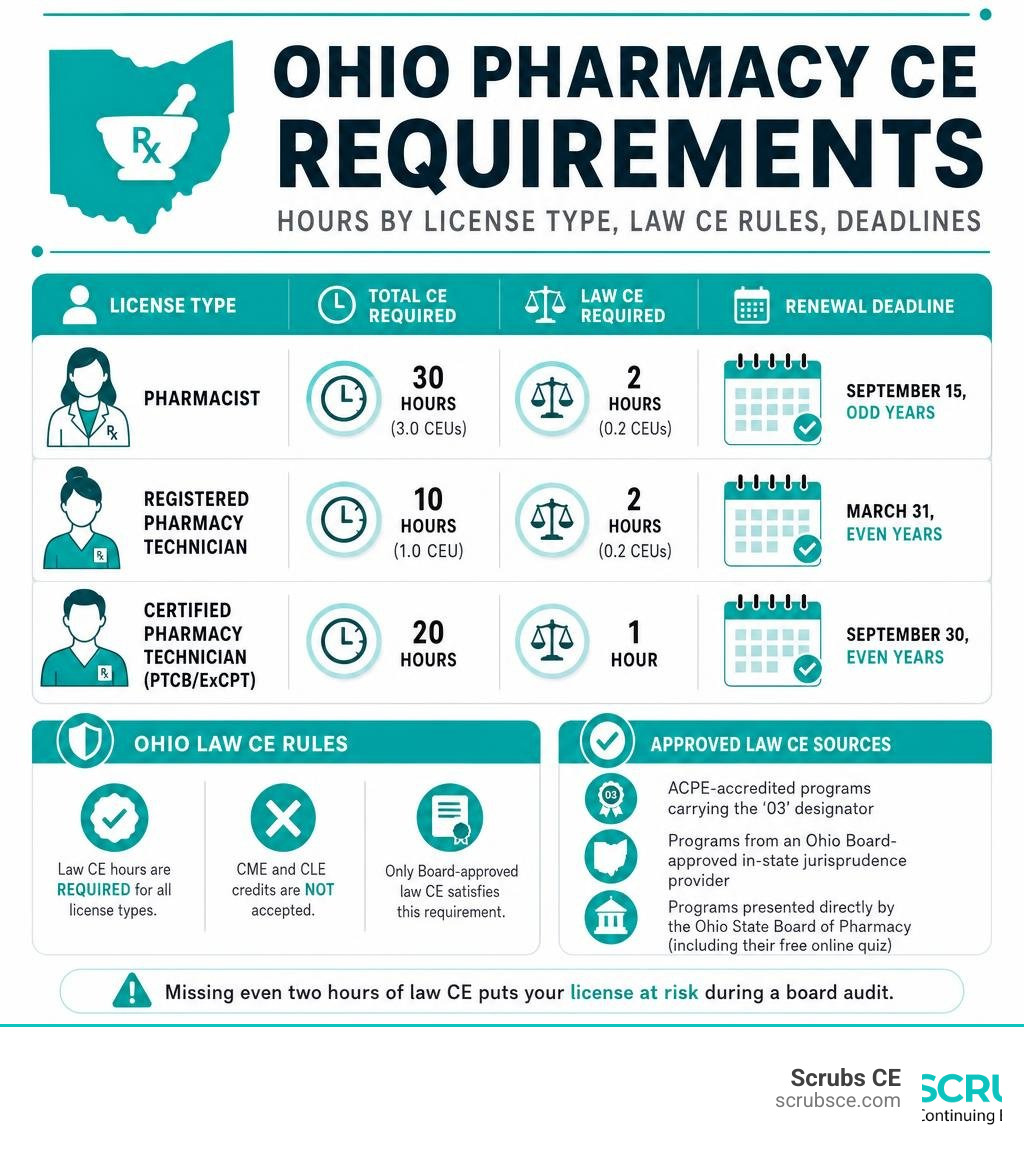
Ohio Board of Pharmacy CE Requirements for Pharmacists and Technicians
Maintaining your credentials in Ohio means keeping a close eye on the calendar and the specific composition of your continuing education hours. The Ohio State Board of Pharmacy has established distinct pathways for pharmacists, registered pharmacy technicians, and certified pharmacy technicians. Understanding where you fit is the first step toward a successful renewal.
Let us break down the exact numbers and rules for each group:
Pharmacists
If you are a licensed pharmacist in Ohio, you must complete a minimum of 30 contact hours (which is equivalent to 3.0 Continuing Education Units, or CEUs) of approved continuing education every two years. This biennial cycle runs to your deadline on September 15th of odd-numbered years.
Within those 30 hours, you cannot just take any general pharmacy courses. The Board mandates that you complete:
- At least 2 contact hours (0.2 CEUs) of pharmacy jurisprudence (law) CE.
- At least 2 contact hours (0.2 CEUs) of patient safety or medication errors CE.
Even if you hold a highly respected board-approved pharmacy practice-specific specialty certification (such as from the Board of Pharmacy Specialties [BPS] or the Specialty Pharmacy Certification Board [SPCB]), you are not off the hook. While your specialty certification can satisfy your 26 hours of general CE, you are still strictly required to complete the 2 hours of jurisprudence and 2 hours of patient safety per renewal cycle.
Registered Pharmacy Technicians
Registered pharmacy technicians in Ohio are required to complete 10 contact hours (1.0 CEU) of continuing education every two-year cycle. Their renewal deadline is March 31st of even-numbered years (meaning the most recent renewal occurred in March 2026).
Out of these 10 hours, registered technicians must complete:
- At least 2 contact hours (0.2 CEUs) of pharmacy jurisprudence (law) CE.
- At least 2 contact hours (0.2 CEUs) of patient safety or medication errors CE.
To help registered technicians meet these requirements, Ohio law allows an interesting alternative: up to one-third of the continuing education requirements (approximately 3.3 hours) may be met by volunteering with an approved in-state provider of volunteer healthcare services under Ohio Revised Code (ORC) 4745.04.
Certified Pharmacy Technicians
Certified pharmacy technicians (those maintaining national certification through PTCB or ExCPT) have a different structure. To maintain their active registration with the state, they must complete 20 hours of CE every two years, with their renewal deadline falling on September 30th of even-numbered years (with the next deadline coming up rapidly on September 30, 2026).
Their subject-specific breakdown requires:
- At least 1 contact hour of pharmacy jurisprudence (law) CE.
- At least 1 contact hour of patient or medication safety CE.
Carry-over Rules: No Rollovers Allowed
A common trap that busy pharmacy professionals fall into is assuming that “extra” hours completed during a hectic renewal cycle will roll over to the next. Let us make this very clear: Ohio has strict rules regarding the carry-over of CE credits. Any CEUs obtained that exceed the required amount at the time of renewal may not be transferred or applied to future renewal cycles. This applies to general hours, patient safety, and especially your law CE. Every two years, your law CE balance resets to zero.
For a comprehensive overview of how state-level hour requirements work across the country, check out our A-Z Guide to CE Hours Requirements to keep your professional development on track.
To help you visualize these differences at a glance, we have compiled the legal requirements under Chapter 4729:1-5 – Ohio Administrative Code | Ohio Laws into this comparison table:
| License Type | Total Biennial Hours | Mandatory Law CE | Mandatory Patient Safety CE | Next Renewal Deadline (As of July 2026) |
|---|---|---|---|---|
| Pharmacist | 30 hours (3.0 CEUs) | 2 hours (0.2 CEUs) | 2 hours (0.2 CEUs) | September 15, 2027 |
| Registered Tech | 10 hours (1.0 CEU) | 2 hours (0.2 CEUs) | 2 hours (0.2 CEUs) | March 31, 2028 |
| Certified Tech | 20 hours | 1 hour | 1 hour | September 30, 2026 |
What Qualifies as Ohio State Board of Pharmacy Approved Law CE?
Now that you know how many hours you need, the next logical question is: What actually counts as approved pharmacy jurisprudence CE?
Under Ohio Administrative Code (OAC) 4729:1-5-01, the Board is very specific about what qualifies. You cannot simply read a blog post about a new drug law or attend an unaccredited hospital staff meeting and call it jurisprudence CE.
To satisfy the Board’s strict standards, your law CE must come from one of three recognized pathways:
- ACPE-Accredited Providers: Courses offered by providers accredited by the Accreditation Council for Pharmacy Education (ACPE) that carry the correct law-specific designator.
- In-State Approved Providers: Jurisprudence programs designed and presented by Board-approved in-state CE providers.
- Direct Board Programs: Continuing education programs developed and presented directly by the Ohio State Board of Pharmacy.
To ensure you do not waste time on unapproved courses, let us dive into the mechanics of how these programs are categorized and validated.

Understanding ACPE ’03’ vs. Ohio State Board of Pharmacy Approved Law CE
If you are sourcing your continuing education online, you will most likely rely on ACPE-accredited courses. ACPE uses a standardized numbering convention to help licensees identify the subject matter of a course.
Every ACPE course number ends with a letter and a two-digit topic designator. For example, a course number might look like 0123-0000-26-001-H03-P. The critical part of this string is the ’03’ designation just before the format letter.
- ’03’ Designator: This represents Pharmacy Law/Jurisprudence. If your certificate does not have an ACPE number ending in ’03’, the Ohio Board will not count it toward your mandatory law requirement, even if the course title contains the word “legal” or “regulation.”
- ’05’ Designator: As a side note, your mandatory safety hours must carry the ’05’ designator, which represents Patient Safety/Medication Errors.
In-state provider programs, on the other hand, do not always carry ACPE numbers. Instead, they are evaluated directly by the Ohio State Board of Pharmacy under Rule 4729:1-5-02 – Ohio Administrative Code | Ohio Laws . These programs are assigned a unique board-designated identification number. When you complete an in-state approved law program, your physical or digital certificate must feature this board-issued ID number and the signature of the program director to be considered valid.
To learn more about selecting the right national and state-level courses, read our guide on Accredited CE Courses The Smart Way To Stay Certified to avoid common accreditation pitfalls.
Course Validity and Expiration for Ohio State Board of Pharmacy Approved Law CE
If you are utilizing an in-state provider’s program rather than a national ACPE ’03’ course, you must pay attention to the program’s approval date.
Under OAC 4729-6-02, an approved in-state pharmacy jurisprudence program is subject to a strict shelf life. These programs cannot be utilized for more than two years from the date they were originally approved by the State Board of Pharmacy.
Laws change rapidly. A jurisprudence course developed in 2023 may contain outdated information regarding controlled substances, compounding, or telehealth by the time 2026 rolls around. Always verify the approval date on the provider’s promotional materials or certificate before purchasing. If the course is older than two years, it has expired, and the Board will reject it during an audit.
For tips on tracking expiration dates and keeping your credentials active, check out our Earn CE Credits Complete Guide.
Accessing the Free Board of Pharmacy Jurisprudence Quiz
One of the most convenient and cost-effective ways to fulfill your law CE requirement is by taking advantage of the free, online jurisprudence quiz offered directly by the Ohio State Board of Pharmacy.
The Board designs this quiz annually to highlight recent legislative updates, common practice errors, and changes to the Ohio Administrative Code. It is open to both pharmacists and pharmacy technicians.

Here are the essential rules and steps for successfully completing the Board’s free quiz:
- Where to Access: You can find the quiz by visiting the Ohio Board of Pharmacy CE Portal.
- Passing Score: You must score at least 75% to pass and receive credit.
- Limited Attempts: You are only allowed two attempts to pass the quiz. If you fail both times, you will have to find an alternative ACPE-accredited ’03’ course or an approved in-state provider to get your hours.
- Pro-Tip: We highly recommend printing out the quiz questions or saving them as a PDF before submitting your answers online. This allows you to research the relevant Ohio pharmacy laws carefully and avoids a rushed second attempt.
- Manual Certificate Tracking: This is the most critical rule of the free Board quiz: it does not automatically sync with the NABP CPE Monitor. Because it is an in-house state tool rather than an ACPE-accredited program, the Board will not upload the credits for you. When you pass, you must immediately print, download, and safely store your certificate of completion. You will need to manually present this certificate if you are selected for an audit.
Rules for In-State Providers of Pharmacy Jurisprudence CE
Not just anyone can set up shop in Ohio and start selling pharmacy law CE. The Board maintains a highly regulated system for in-state organizations that wish to become approved providers of pharmacy jurisprudence under Rule Details (specifically OAC 4729-6-02).
To protect the integrity of the education being delivered, the Board enforces the following strict criteria:
- Program Director: The program must be led by a designated program director who is a licensed Ohio pharmacist in good standing. This ensures that the individual steering the course content has real-world, state-specific practice experience.
- Minimum Duration: Programs must be no less than 0.1 CEU (1 contact hour) in length. The Board does not allow “micro-learning” segments or short 15-minute updates to be aggregated into jurisprudence credit; it must be a cohesive, hour-long educational block.
- Accuracy and Bias: The content must contain objective, accurate, and completely unbiased information regarding Ohio pharmacy laws and federal drug regulations.
- Record Retention: In-state providers are legally required to maintain all participant completion records for a minimum of 5 years from the date of the program.
If an in-state provider submits a jurisprudence program to the Board for approval and is denied, they have a chance to correct the issues. However, if their second attempt also fails to meet Board standards, they are barred from submitting any program on that same topic for a full year.
Provider Documentation for Ohio State Board of Pharmacy Approved Law CE
Once a class or online session is completed, the approved in-state provider must handle the administrative reporting. They are required to submit the official participant list and program notice to the Ohio State Board of Pharmacy within 60 days of the program’s completion.
As a participant, you must receive a physical or digital certificate that includes:
- The provider’s name and board-approved status.
- The program director’s signature.
- The date the program was held or completed.
- The unique, board-designated identification number.
If you are looking for general online learning platforms that handle certificates seamlessly, read our Online CE Courses Complete Guide to learn how modern e-learning portals keep your records organized.
Exemptions, Audits, and Consequences of Non-Compliance
What happens if you miss the deadline, or if your completed law CE is deemed unapproved? The consequences can be severe, ranging from hefty fines to the suspension of your license.
To ensure compliance, the Ohio State Board of Pharmacy regularly conducts random audits of pharmacists and pharmacy technicians. If your name is drawn, you will receive an official audit notification.
The Audit Process: 30 Days to Comply
If you are audited, you have exactly 30 days from the date of the request to submit documented proof of all your continuing education hours.
- For ACPE courses, this is usually verified electronically via your NABP e-Profile (CPE Monitor).
- For non-ACPE courses (such as the Board’s free online quiz or in-state provider programs), you must upload or mail physical copies of your certificates of completion.
If you fail to provide sufficient proof of your 2 hours of law CE or 2 hours of patient safety CE within that 30-day window, your renewal will be blocked, your license may be suspended, and you could face disciplinary action for making a false statement on your renewal application.
To prepare yourself for the audit process and understand how state boards verify your hours, read our comprehensive guide on State Approved CE Everything You Need To Know For Your License Renewal.
Exemptions and Special Provisions
Fortunately, the Board does recognize that certain life events and professional circumstances warrant exemptions or extensions:
- Newly Licensed Pharmacists: If you are a newly licensed pharmacist who gained licensure by examination or reciprocity, you are completely exempt from CE requirements for your very first renewal cycle.
- Out-of-State Practitioners: If you hold an active Ohio pharmacist license but live and practice in another state, you may qualify for an out-of-state exemption. To bypass Ohio’s specific CE requirements, you must prove that you maintain an active license in your home state, have met that state’s CE requirements, and have not practiced pharmacy in Ohio for the past two years.
- Military Personnel and Veterans: Active-duty military members and their spouses are granted special extensions. Under Ohio law, they receive an extension on their CE reporting period equal to the number of months they spent on active duty. Furthermore, veterans can submit relevant military training documentation to the Board for CE consideration, provided they submit it at least 60 days prior to the reporting deadline.
Frequently Asked Questions about Ohio Pharmacy Law CE
Can I carry over extra law CE hours to the next renewal cycle?
No. The Ohio State Board of Pharmacy does not allow any continuing education hours to be carried over or transferred to a future renewal cycle. If you complete 4 hours of law CE in a single cycle, those extra 2 hours cannot be applied to your next biennial renewal. You must earn fresh law CE hours during each specific 24-month reporting period.
If you are looking for budget-friendly ways to get exactly the hours you need without overpaying for excess credits, explore our options for Affordable CE Credits.
Are CME or CLE credits accepted for Ohio pharmacy law CE?
No. Continuing Medical Education (CME) credits designed for physicians and Continuing Legal Education (CLE) credits designed for attorneys are strictly rejected by the Board. Even if a CLE course covers medical malpractice or federal drug laws, it does not carry ACPE accreditation or Ohio Board of Pharmacy approval, making it invalid for your pharmacy license renewal.
To learn more about finding the right courses that fit your specific license, check out our Affordable CE Courses Guide 2026.
How long must I keep my pharmacy law CE certificates?
You must keep physical or digital copies of all certificates and documented evidence from non-ACPE accredited providers (such as the Board’s free quiz or in-state programs) for at least one year following the year in which the CE was used for renewal. Because audits can occur months after your renewal is submitted, keeping a digital folder of your certificates is highly recommended.
If you need a fast, reliable way to earn your mandatory hours and receive an immediate download for your records, read our guide on how to get an Instant CE Certificate.
Conclusion
Fulfilling your Ohio State Board of Pharmacy approved law CE does not have to be a stressful scramble at the last minute. By understanding the specific requirements for your license type, verifying the ACPE ’03’ designator, and keeping careful track of your certificates, you can protect your license and focus on what matters most: providing excellent care to your patients.
At Scrubs CE, we are dedicated to supporting healthcare professionals through high-quality, convenient, and affordable e-learning for professional development. Whether you are balancing retail shifts, hospital rounds, or specialized clinical work, our self-paced online courses are designed to help you meet your state mandates quickly and confidently. Explore our Continuing Education Credits Online Guide to find the perfect courses for your career advancement.
Looking for Radiology CE?
If your practice or facility also involves medical imaging, or if you are dual-licensed, we’ve got you covered. We offer a robust selection of specialized Radiology CE courses. Our educational materials are fully aligned with industry standards, helping you easily maintain your credentials with the AMERICAN REGISTRY OF RADIOLOGIC TECHNOLOGISTS® (ARRT®) and the American Society of Radiologic Technologists (ASRT®). Keep your professional development seamless across all disciplines with our trusted, self-paced learning modules!
ARRT MRI Registry Review: How to Pass on Your First Try
ARRT MRI Registry Review: How to Pass on Your First Try
What You Need to Know About the ARRT® MRI Registry Review
An ARRT® MRI registry review is the structured preparation process that helps Radiology technologists pass the American Registry of Radiologic Technologists® certification exam in Magnetic Resonance Imaging. Here is a quick snapshot of what the exam looks like and what it takes to qualify:
ARRT® MRI Exam at a Glance:
| Factor | Details |
|---|---|
| Total questions | 230 (200 scored + 30 unscored pilot) |
| Largest exam section | Image Production (106 scored questions, 53%) |
| Clinical experience required | 125 repetitions across at least 21 procedures |
| Structured education required | 16 hours aligned to ARRT® content specifications |
| Current content specifications | Effective February 1, 2025 |
| Eligibility pathways | Primary (students/graduates) or Postprimary (existing R.T.s) |
Passing the ARRT® MRI exam is genuinely challenging. The exam covers everything from MRI physics and pulse sequences to patient safety and clinical procedures. And most candidates are preparing while juggling full-time jobs, clinical rotations, and everything else life throws at them.
The good news? A focused, organized review strategy makes a real difference. This guide walks you through exactly what is on the exam, how to qualify, and how to study efficiently.
I am Zita Ewert, a leader in continuing education for imaging professionals and the driving force behind SCRUBS Continuing Education®, where I have helped thousands of Radiology technologists navigate complex credentialing requirements — including ARRT® MRI registry review preparation. In the sections below, I will break down everything you need to know to pass on your first attempt.
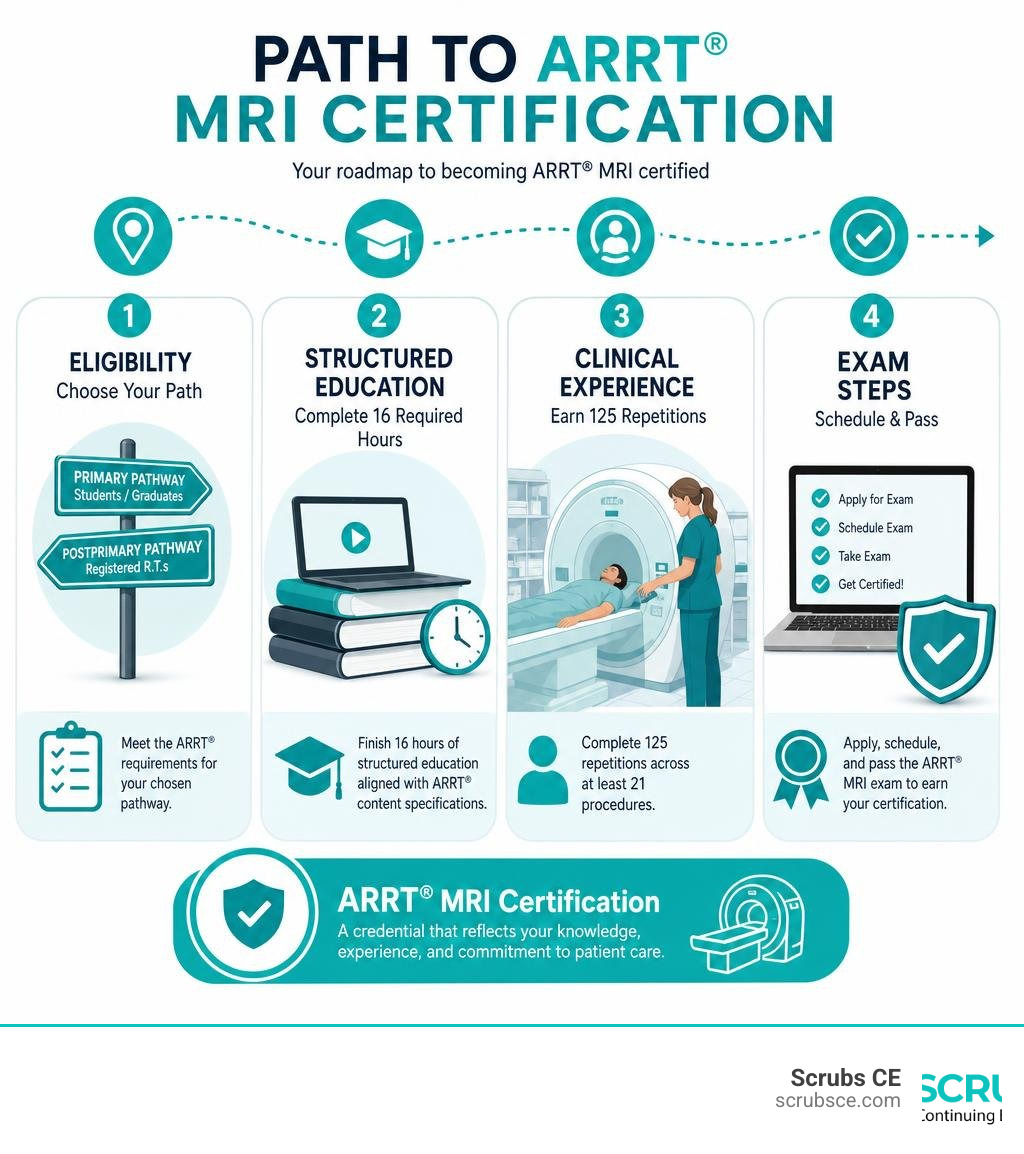
Mastering the ARRT MRI Registry Review: Exam Blueprint and Eligibility

To pass the registry, we have to know exactly what we are up against. The AMERICAN REGISTRY OF RADIOLOGIC TECHNOLOGISTS® updates its exam guidelines regularly to ensure they reflect modern clinical practice. The current standards are defined in the Magnetic Resonance Imaging Content Specifications 2025.
Understanding these updates is critical because studying outdated material is one of the easiest ways to set yourself up for frustration. If you want a solid starting point for your overall certification journey, check out our guide on How to Get ARRT Certified Without Losing Your Mind.
Core Content Categories and Question Breakdown
The ARRT® MRI registry exam consists of 230 total questions. Out of these, 200 are scored questions that determine your final grade, and 30 are unscored pilot questions used to test future exam items.
The exam is divided into four major content categories. Here is how those 200 scored questions are distributed:
- Image Production (106 questions — 53%): This is the heavy hitter of the exam. It covers the physical principles of image formation (39 questions), sequence parameters and options (36 questions), and data acquisition, processing, and storage (31 questions).
- Procedures (57 questions — 28.5%): This section tests your clinical knowledge across neurological imaging, body imaging, and musculoskeletal (MSK) procedures.
- Safety (21 questions — 10.5%): Covers screening, electromagnetic fields, patient safety, and equipment environment.
- Patient Care (16 questions — 8%): Focuses on patient interactions, contrast media administration, infection control, and basic monitoring.
Because Image Production accounts for more than half of the exam, your arrt mri registry review must place a massive emphasis on MRI physics and parameter manipulation.
Key Differences Between the 2020 and 2025 ARRT® MRI Content Specifications
The transition from the 2020 guidelines to the February 1, 2025 specifications introduced several key updates that you must incorporate into your study plan. The ARRT® bases these changes on a national practice analysis survey of over 4,000 practicing MRI technologists to keep the exam job-related.
Key changes to focus on include:
- Nyquist Theorem: This mathematical principle has been officially added to the Data Manipulation and processing section under Image Production.
- Wrap-Around Artifacts: Expanded guidelines under the Safety and Aliasing sections to emphasize how wrap-around works and how to prevent it.
- Musculoskeletal Soft Tissue: The Procedures section now features a heavier emphasis on soft tissue musculoskeletal procedures (such as evaluating tumors or infections).
- Clinical Communication: New additions covering patient “time-outs” and the communication of critical findings to radiologists.
- Pilot Questions: The number of unscored pilot questions increased from 20 to 30, though the scored questions remain at 200.
To see the exact clinical tasks expected of an entry-level technologist under these guidelines, you can review the official Magnetic Resonance Imaging Task Inventory 2025, which lists 122 specific job responsibilities.
Primary vs. Postprimary Pathways for ARRT® Certification
There are two distinct pathways to earn your ARRT® MRI credential, depending on where you are in your career:
- Primary Eligibility Pathway: This is for students or recent graduates of an educational program in MRI accredited by an agency recognized by the ARRT®. Candidates must complete an associate degree (or higher) and demonstrate competence in 16 mandatory procedures and 12 of 33 elective procedures.
- Postprimary Eligibility Pathway: This is designed for technologists who already hold an ARRT® credential in a supporting category (such as Radiography, Nuclear Medicine, Sonography, or Radiation Therapy).
Interestingly, individuals holding credentials from the NMTCB (Nuclear Medicine) or ARDMS (Sonography) can also pursue ARRT® MRI credentials through this pathway by submitting an online account access form, even if they are not currently ARRT® Registered Technologists.
For the postprimary pathway, you must document 16 hours of structured education and complete clinical experience requirements consisting of at least 125 repetitions across 21 different procedures. If you are starting from square one, we recommend reading MRI Training 101: Learn MRI Basics to build a solid foundation.
Structured Study Strategies for Your ARRT MRI Registry Review
Cognitive learning research shows that the human brain does not recall complex technical information through linear memorization. Instead, it processes data by breaking it down into hierarchical categories and subcategories.
To study effectively:
- Avoid Passive Reading: Simply highlighting a textbook or watching long video modules is highly inefficient.
- Use Active Recall: Test yourself constantly. Read a section on spatial encoding, then immediately take a quiz on that specific topic.
- Categorize Your Thoughts: Group your study sessions into the four main ARRT® categories. Master one domain before moving to the next.
- Simulate the Exam: Take fully timed mock exams to build your testing endurance. Sitting through a 230-question exam requires physical and mental stamina.
Core Physics, Pulse Sequences, and Parameter Optimization
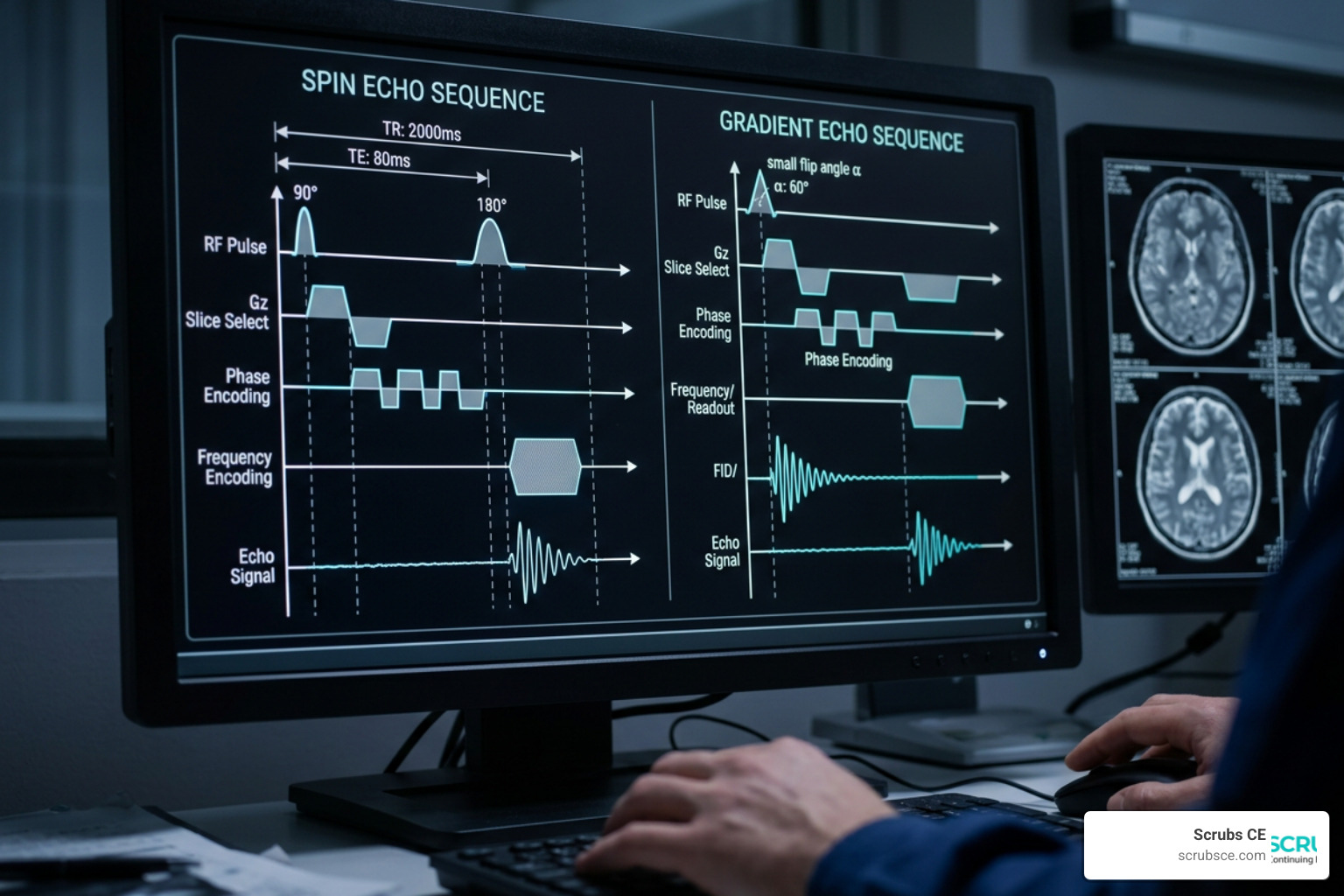
MRI physics is notorious for making even seasoned Radiology technologists sweat. However, mastering the fundamentals — like the Larmor equation ($f0 = \gamma B0$), the net magnetization vector (NMV), precession, and resonance — is entirely doable with the right resources.
A great textbook to guide you through these concepts is MRI in Practice 5th Ed Test Only E Mailed, which breaks down complex quantum mechanics into highly visual, easy-to-digest explanations.
Essential Pulse Sequences and Clinical Applications
To ace the Image Production section, you must understand the primary pulse sequences, how they work, and when they are used clinically:
- Spin Echo (SE): Uses a 90-degree excitation pulse followed by a 180-degree refocusing pulse. It is the gold standard for image quality and is highly resistant to magnetic field inhomogeneities.
- Fast Spin Echo (FSE): Uses a train of 180-degree refocusing pulses (echo train length) to fill multiple lines of K-space in a single TR, drastically reducing scan times.
- Inversion Recovery (IR): Starts with a 180-degree inversion pulse to flip the NMV into the negative z-axis, allowing tissues to recover before applying the 90-degree excitation pulse.
- STIR (Short TI Inversion Recovery): Uses a short inversion time (TI) to null the signal from fat. It is incredibly useful in musculoskeletal imaging to highlight bone marrow edema.
- FLAIR (Fluid Attenuated Inversion Recovery): Uses a long inversion time to null the signal from free fluid (CSF). It is essential in brain imaging to detect MS plaques or subtle lesions near the ventricles.
- Gradient Echo (GE): Uses a variable flip angle (typically less than 90 degrees) and gradient reversal (instead of a 180-degree RF pulse) to refocus the spins. This allows for incredibly short TRs and rapid imaging, making it ideal for MR angiography (MRA) and dynamic contrast studies.
- Echo Planar Imaging (EPI): The fastest sequence available, filling all of K-space in a single TR. It is highly sensitive to susceptibility artifacts but is the foundation for advanced techniques like Diffusion-Weighted Imaging (DWI) and functional MRI (fMRI).
How Imaging Parameters Affect Image Quality
As an MRI technologist, you are constantly balancing a trade-off between signal-to-noise ratio (SNR), spatial resolution, and scan time.

The table below summarizes how adjusting key parameters impacts your final image:
| Parameter Adjustment | SNR | Spatial Resolution | Scan Time |
|---|---|---|---|
| Increase TR (Repetition Time) | Increases | No effect | Increases |
| Increase TE (Echo Time) | Decreases | No effect | No effect |
| Increase Slice Thickness | Increases | Decreases | No effect |
| Increase Matrix Size (e.g., 256 to 512) | Decreases | Increases | Increases |
| Increase FOV (Field of View) | Increases | Decreases | No effect |
| Increase NEX/NSA (Number of Averages) | Increases | No effect | Increases |
| Increase Bandwidth (Receiver) | Decreases | No effect | Decreases |
Understanding these relationships is crucial because the registry will ask scenario-based questions, such as: “If you want to double your SNR, what is the impact on your scan time if you adjust NEX?” (Hint: Doubling SNR requires quadrupling your NEX, which quadruples your scan time!).
Recommended Study Materials and Practice Exams for Your ARRT MRI Registry Review
To satisfy the ARRT® Structured Education requirement, postprimary candidates must complete at least 16 hours of structured education. We offer a variety of approved courses that allow you to earn Category A CE credits while simultaneously preparing for your registry.
Check out our CE for MRI Technologists page to find flexible, self-paced learning modules designed to help you succeed.
MRI Safety, Artifacts, and Clinical Procedures
Patient safety is the most critical aspect of an MRI technologist’s daily job. The registry heavily tests your understanding of the American College of Radiology (ACR) safety guidelines, screening protocols, and emergency management.
For a deep dive into safety concepts, we highly recommend reviewing the Essentials of MRI Safety Test Only Emailed course.
Identifying and Compensating for Common MRI Artifacts
Artifacts can ruin diagnostic image quality. You must know how to identify them and how to fix them on the fly:
- Aliasing (Wrap-Around): Occurs when anatomy outside the selected FOV is mapped into the image.
- Compensation: Increase the FOV, or use phase oversampling (often called “No Phase Wrap”).
- Gibbs / Truncation Artifact: Appears as parallel lines or “ringing” at high-contrast interfaces (like the skull/brain boundary or CSF/spinal cord boundary). It is caused by undersampling high spatial frequencies in K-space.
- Compensation: Increase the phase matrix size.
- Chemical Shift: Appears as a dark or bright band at fat-water interfaces along the frequency-encoding axis, caused by the slight difference in precessional frequency between fat and water protons.
- Compensation: Increase the receiver bandwidth or use fat suppression.
- Magnetic Susceptibility: Causes severe distortion and signal loss around metallic implants.
- Compensation: Use Spin Echo or Fast Spin Echo sequences instead of Gradient Echo, use a high receiver bandwidth, and keep the echo spacing as short as possible.
- Partial Voluming: Occurs when multiple tissue types are included in a single voxel, leading to an averaged signal.
- Compensation: Decrease the slice thickness.
- Flow/Motion Artifacts: Present as ghosting or smearing, always along the phase-encoding axis.
- Compensation: Use spatial presaturation bands (sat bands), gradient flow compensation (rescaling), or physiological gating (respiratory or cardiac).
Anatomical Structures and Imaging Protocols
The Procedures section of the exam tests your clinical positioning and protocol knowledge across three main areas:
- Neurological: Brain, spine, pituitary, and internal auditory canals (IACs). You must understand slice angulation (e.g., aligning sagittal brain slices parallel to the interhemispheric fissure) and coil selection (multi-channel head coils).
- Body: Abdomen (liver, MRCP, kidneys) and pelvis. These protocols rely heavily on motion-compensation techniques, breath-holds, and spatial fat suppression to clearly visualize soft tissues. To master body imaging, check out our Fundamentals of Body MRI 2nd Ed E Book Test.
- MSK: Joints (knee, shoulder, hip, wrist) and long bones. MSK imaging utilizes small FOVs, high-resolution matrices, and specialized surface coils to capture fine ligamentous and cartilaginous details.
Mandatory and Elective Clinical Competency Requirements
For the postprimary pathway, candidates must document a minimum of 125 repetitions across at least 21 different procedures.
- Repetition Limits: You must document each chosen procedure between 3 and 6 times.
- In-Person Requirement: The ARRT® explicitly bans remote scanning or remote procedures for clinical competency. You must be physically present at the magnet console for every procedure you document.
- Quality Control (QC): Daily QC procedures — such as equipment inspection, monitoring cryogen levels, and documenting room temperature and humidity — are mandatory clinical competencies.
Frequently Asked Questions About the ARRT® MRI Exam
How many questions are on the ARRT® MRI registry exam?
The exam features 230 total questions. This includes 200 scored questions that determine your final grade and 30 unscored pilot questions. You will not know which questions are pilot questions, so treat every question as if it counts!
What is the passing score for the ARRT® MRI exam?
To pass, you must achieve a scaled score of 75. A scaled score is not a straight percentage (e.g., getting 75% of the questions correct). Instead, the ARRT® uses a statistical process to account for slight differences in difficulty between different versions of the exam.
Can I use remote scanning to fulfill my clinical experience requirements?
No. The ARRT® has a strict remote scanning ban for both clinical competency and clinical experience requirements. Candidates must be physically present at the facility and directly involved in the setup, positioning, and scanning of the patient.
Conclusion
Preparing for your ARRT® MRI registry review can feel overwhelming, but breaking the material down into structured categories is the key to passing on your first try. Focus on mastering MRI physics, understanding how parameters interact, and ensuring you are fully compliant with the latest 2025 content specifications.
At SCRUBS Continuing Education®, we are committed to supporting your professional development. Whether you need to fulfill your 16-hour structured education requirement or earn Category A CE credits to maintain your current credentials, we offer convenient, self-paced online courses to help you succeed.
Explore our complete catalog of Radiology Courses today and take the next step in advancing your career!
Learn on Your Own Schedule with These Radiology Tech CE Courses
Why Radiologic Technologists Are Turning to Self-Paced CEUs

Finding Radiology ceu self paced options is one of the most practical decisions a busy radiologic technologist can make. Between long shifts, rotating schedules, and family commitments, sitting through a live webinar at a fixed time just isn’t realistic for most imaging professionals.
With a premier provider like Scrubs Continuing Education®, you gain access to over 1,200 Category A/A+ credits that are fully accepted by the ARRT®, making it easier than ever to find courses that match your specific modality and budget.
The stakes are real. The AMERICAN REGISTRY OF RADIOLOGIC TECHNOLOGISTS® (ARRT®) requires most R.T.s to complete 24 CE credits every two years to maintain certification. Miss the deadline — which falls on the last day of your birth month — and your credential is at risk.
Self-paced online courses solve this problem directly. You study when it works for you, test when you’re ready, and get your certificate instantly. No waiting. No scheduling conflicts.
I’m Zita Ewert, the leader behind Scrubs Continuing Education®, where I’ve spent years helping imaging professionals find Radiology ceu self paced solutions that are affordable, ARRT®-accepted, and easy to complete around a demanding work schedule. In this guide, I’ll walk you through the best options available so you can meet your biennial requirements without the stress.
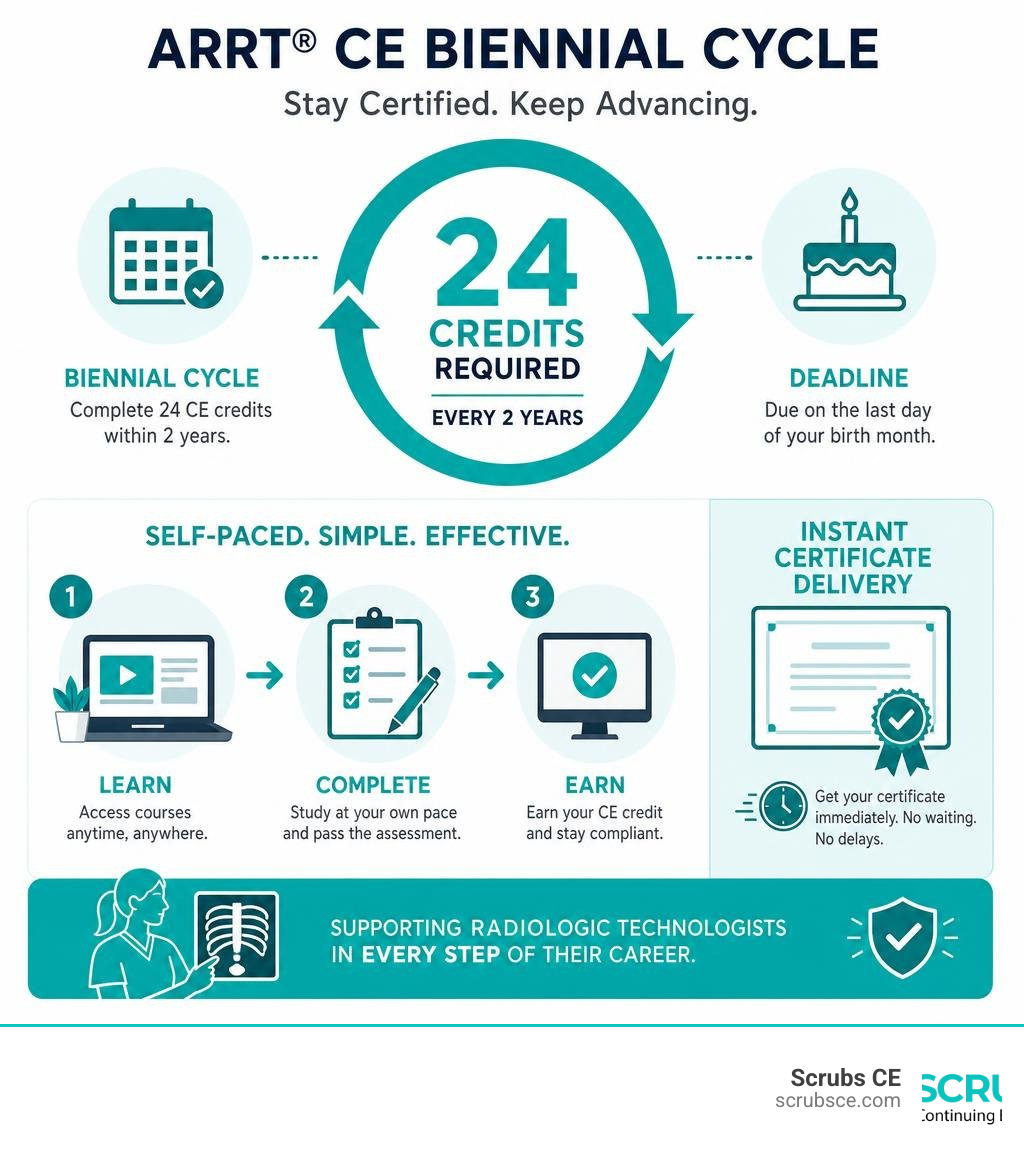
Why Choose a Radiology CEU Self Paced Program?
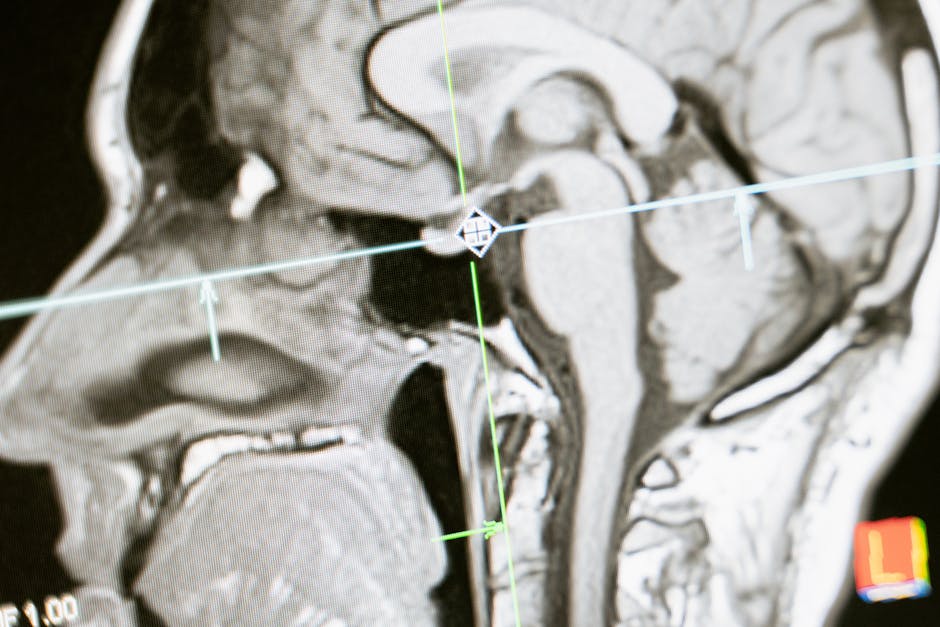
As we navigate the demands of modern healthcare in July 2026, the traditional methods of earning continuing education credits—such as traveling to weekend seminars or sitting through rigid, scheduled webcasts—are increasingly taking a backseat. Today’s radiologic technologists require educational solutions that adapt to their lives, not the other way around. Choosing a Radiology CEU self paced program provides the ultimate freedom to balance a demanding career with personal growth.
With self-paced courses, you are in complete control of your learning environment. Whether you prefer to study in short 15-minute bursts during your lunch break or dedicate a quiet Sunday morning to completing a major module, the choice is entirely yours. This model eliminates the pressure of keeping up with a live presenter or worrying about missing a scheduled session due to an unexpected patient emergency or an overtime shift.
To help you visualize the differences, let us look at how self-paced Online CEU Credits stack up against traditional live webinars:
| Feature | Self-Paced CEU Courses | Live Webinars / Seminars |
|---|---|---|
| Schedule Flexibility | 100% customizable; study 24/7/365 | Fixed dates and specific times |
| Pacing | Read, review, and test at your own speed | Fast-paced; no option to pause or rewind |
| Location | Anywhere with an internet connection (or offline via PDF) | Requires stable internet or physical travel |
| Testing | Open-book, untimed, with instant grading | Often timed, sometimes requires immediate post-tests |
| Cost | Highly economical; bundled options available | Generally more expensive due to live hosting overhead |
Flexibility and Convenience of Radiology CEU Self Paced Learning
The primary reason imaging professionals prefer self-paced education is, without a doubt, convenience. Our lives do not fit neatly into a 9-to-5 box. Technologists working night shifts, on-call rotations, or weekend duties cannot easily attend live events.
When you choose to Unlock Your Potential with Flexible Online Courses, you gain the ability to learn on your own terms. You can download course materials as PDFs to read offline, use your smartphone to review modules between patient scans, and complete your tests whenever you feel most sharp and focused. This stress-free approach not only makes it easier to pass your exams but also improves your retention of critical clinical knowledge, making you a safer and more effective technologist.
Cost Savings with Radiology CEU Self Paced Bundles
Let’s talk about the financial side of professional development. Earning 24 credits individually can quickly become expensive if you purchase single courses one by one. Fortunately, self-paced learning platforms make it incredibly easy to save money through bundled packages or unlimited credit options.
By utilizing a comprehensive Earn CE Credits Complete Guide, you can find cost-effective packages tailored specifically to your modality. Many providers offer unlimited access models or multi-course bundles that bring the cost per credit hour down to just a couple of dollars. For example, instead of paying $20 to $30 for a single 2-credit course, you can purchase a comprehensive anatomy or mammography bundle that satisfies your entire 24-credit requirement for a fraction of the price. This budget-friendly approach ensures you keep your hard-earned money in your pocket while fully satisfying your professional mandates.
Meeting ARRT® and State Licensing Requirements

While convenience and cost are major benefits, the absolute most important factor when choosing any continuing education course is compliance. If a course is not accepted by the AMERICAN REGISTRY OF RADIOLOGIC TECHNOLOGISTS® (ARRT®) or your specific state licensing board, it is of no use to you.
The AMERICAN REGISTRY OF RADIOLOGIC TECHNOLOGISTS® (ARRT®) sets strict guidelines for what qualifies as acceptable continuing education. To be accepted, an activity must be approved by a Recognized Continuing Education Evaluation Mechanism (RCEEM), such as the ASRT® or AHRA®. These approved activities are classified as Category A or Category A+ credits. When you review our Radiology CE Courses Complete Guide, you will find that all reputable self-paced courses clearly state their RCEEM approval status and credit classification, ensuring you never waste time on unapproved materials.
For official updates and detailed policy documents, you can always consult the ARRT® Continuing Education Requirements directly to verify current standards.
Biennial CE Requirements for ARRT® Certification
To maintain your registered status with the AMERICAN REGISTRY OF RADIOLOGIC TECHNOLOGISTS® (ARRT®), you must complete and report your continuing education activities every two years. This two-year period is known as your biennium.
Here is what you need to keep in mind regarding your biennium:
- The Timeline: Your biennium is linked directly to your birth month. It begins on the first day of your birth month and ends two years later on the last day of the month prior to your birth month.
- The Credit Target: Most Registered Technologists (R.T.s) must complete exactly 24 Category A or A+ credits within this window.
- The Reporting Deadline: You must report your completed CE activities during your annual renewal process, which must be completed by the last day of your birth month.
- The Golden Rule: You cannot repeat the exact same CE course for credit within the same biennium.
By utilizing structured Online Radiology Education, you can track your credits systematically and ensure you hit your 24-credit target well before your birth month deadline arrives, avoiding last-minute panic.
State-Specific Mandates for California, Florida, and Texas
In addition to national ARRT® certification, most radiologic technologists must maintain one or more state licenses. State licensing boards often have their own unique mandates that go beyond the general ARRT® requirements.
- California: The California Department of Public Health (CDPH) Radiologic Health Branch has specific requirements, particularly for technologists who hold a Fluoroscopy Permit. To renew a California fluoroscopy permit, you must earn a specific number of credits dedicated to radiation safety for fluoroscopy.
- Florida: Florida-licensed technologists must ensure their credits are reported to CE Broker, the state’s official tracking system. Many top-tier CE providers automatically submit your completed credits to the Florida Department of Health on the first of every month, saving you the hassle of manual data entry.
- Texas: The Texas Medical Board requires medical radiologic technologists to complete specific hours in formal training, with strict guidelines on how many credits can be self-directed versus instructor-led, though approved self-paced Category A courses are widely accepted.
Before purchasing a CE Course Online, always double-check that the provider’s certificates are recognized by your specific state board to ensure seamless license renewal.
Popular Modalities and Topics in Self-Paced Radiology CE
One of the greatest advantages of modern self-paced learning is the sheer variety of educational topics available. No matter what imaging modality you specialize in—or if you are looking to cross-train into a new field—there are self-paced courses designed to meet your specific clinical needs.
By exploring The Best Radiology Education Online for Modern Professionals, you can find highly relevant, engaging content that actually applies to your daily clinical practice, rather than dry, generic lectures.
Computed Tomography (CT) and Magnetic Resonance Imaging (MRI)
For technologists working in advanced modalities like CT and MRI, staying up-to-date on safety protocols and technological advancements is critical. Self-paced courses in these areas often cover crucial topics such as:
- Contrast Administration: Safe injection practices, identifying and managing allergic reactions to iodinated or gadolinium-based contrast agents, and guidelines for pediatric or pregnant patients.
- MRI Safety: Managing the powerful magnetic fields, understanding the latest ACR safety zones, and preventing projectile incidents or thermal burns.
- CT Protocols: Optimizing scan parameters to minimize patient dose while maintaining high image resolution across different anatomical regions.
Whether you are already certified or looking to transition into these modalities, reading our guide on From X-Rays to Zoom Calls: Navigating Online Radiology Education will help you find the right structured education pathways to achieve your goals.
Mammography and Fluoroscopy Radiation Safety
Specialized fields like mammography and fluoroscopy require highly focused, compliant education to ensure patient safety and clinical accuracy.
- Mammography: To satisfy MQSA requirements, mammographers must complete specific continuing education credits dedicated to breast imaging. Self-paced courses cover essential topics like digital breast tomosynthesis (DBT), systematic mammogram analysis using the Tabár method, ultrasound correlation, and mastering BI-RADS classifications for accurate lesion characterization.
- Fluoroscopy Radiation Safety: Minimizing radiation exposure is a primary responsibility for any technologist operating fluoroscopic equipment. Self-paced courses provide deep dives into dose reduction techniques, the physics of digital fluoroscopy, pediatric-specific safety measures, and proper use of protective shielding.
To ensure your chosen courses align perfectly with national standards, you can cross-reference your selections with the official ASRT® Continuing Education Guidelines.
Frequently Asked Questions About Self-Paced Radiology CEUs
To help you make the most informed decision for your professional development, we have compiled answers to some of the most common questions technologists ask about self-paced continuing education. For a broader look at online learning logistics, check out our Online CE Courses Complete Guide.
How do I get my certificate after completing a self-paced course?
The process is incredibly fast and simple. Once you purchase a course, you will receive access to the reading materials (usually as a downloadable PDF) and the online post-test. You can read through the material at your own pace.
When you are ready, you log into your student portal to complete the test. Because the testing is self-paced, there are no timers, and you can refer back to the course materials as you answer the questions. Upon submitting your answers, the system grades your test instantly. As long as you pass with the required score (typically 75% or 80%), your certificate of completion is generated immediately as a PDF, which you can view, download, and print right away.
Can I use self-paced courses for my ARRT® CQR requirements?
Yes, you can! The Continuing Qualifications Requirements (CQR) is a process that R.T.s must complete every 10 years. After you complete your professional profile and take your structured self-assessment, the AMERICAN REGISTRY OF RADIOLOGIC TECHNOLOGISTS® (ARRT®) will provide you with a personalized CQR tool that outlines your specific credit distribution needs.
Many high-quality self-paced courses feature detailed CQR distribution tables. This allows you to easily match the content of a self-paced course to the exact subtopics prescribed in your CQR results, making it simple to fulfill your requirements on your own schedule.
Are self-paced Category A credits accepted by all state boards?
Generally, yes. Because these courses are approved by RCEEMs like the ASRT®, they carry official Category A or A+ designation. Virtually all state licensing boards that require continuing education for radiologic technologists accept these credits. However, as mentioned earlier, certain states have specific topic-focused mandates (like radiation safety or fluoroscopy). As long as the self-paced course topic matches your state’s specific mandate and carries Category A approval, it will be accepted for your state license renewal.
Conclusion
Maintaining your professional credentials does not have to be a source of stress or financial strain. By choosing a Radiology CEU self paced learning model, you take control of your professional development, fitting your education seamlessly into your busy lifestyle.
At Scrubs CE, we are dedicated to providing you with high-quality, affordable, and fully compliant continuing education. Our courses offer instant testing, immediate certificate generation, and the peace of mind that comes with knowing your credits are fully accepted by the AMERICAN REGISTRY OF RADIOLOGIC TECHNOLOGISTS® (ARRT®) and state boards nationwide.
Ready to check off your biennial requirements? Explore our complete catalog of self-paced courses and take the first step toward stress-free compliance today!
- Find Your Next Course: Browse our extensive selection of All Courses to find the perfect match for your modality.
- Get Started Today: Fulfill your CE requirements with ease by visiting our primary continuing education portal at Scrubs CE Radiology Courses.
A – Z Guide to CE Hours Requirements
What CE Hours Really Mean for Your License (And Your Career)

CE hours — or continuing education hours — are the required units of professional learning you must complete to renew your license or certification. Here’s a quick overview of what’s typically required across common professions:
| Profession | CE Hours Required | Renewal Cycle |
|---|---|---|
| Registered Nurse (Pennsylvania) | 30 hours | Every 2 years |
| LPN / RN (Illinois) | 20 hours | Every 2 years |
| APRN (Illinois) | 80 hours | Every 2 years |
| CFP Professional | 30 hours (2 ethics) | Every 2 years |
| Alabama Insurance Licensee | 24 hours | Every 2 years |
| Nebraska Professional Engineer | 30 hours | Every 2 years |
| Architect (NCARB model) | 12 HSW hours | Annually |
| Texas Architect | 12 CEPH | Annually |
| LEED Green Associate | 15 hours | Every 2 years |
| LEED AP with Specialty | 30 hours | Every 2 years |
| EMS (Texas EMT-P) | 144 hours | Every 4 years |
No matter your profession, the core idea is the same: complete a set number of approved learning hours within a specific period, or risk losing your license.
This guide walks you through everything — from how many hours you need, to what counts, to how audits work, and what happens if you fall short.
Whether you’re a nurse juggling 12-hour shifts, an engineer tracking biennial deadlines, or a radiologic technologist managing ARRT® requirements, the rules can feel overwhelming. But once you understand the system, staying compliant is very manageable.
I’m Zita Ewert, and I’ve spent years helping imaging professionals navigate CE hours requirements as the leader behind SCRUBS Continuing Education® — an accredited provider of over 1,500 categories of CE courses approved by major bodies including the AMERICAN REGISTRY OF RADIOLOGIC TECHNOLOGISTS®. In that time, I’ve seen where professionals get stuck, and this guide is built to help you avoid those pitfalls.
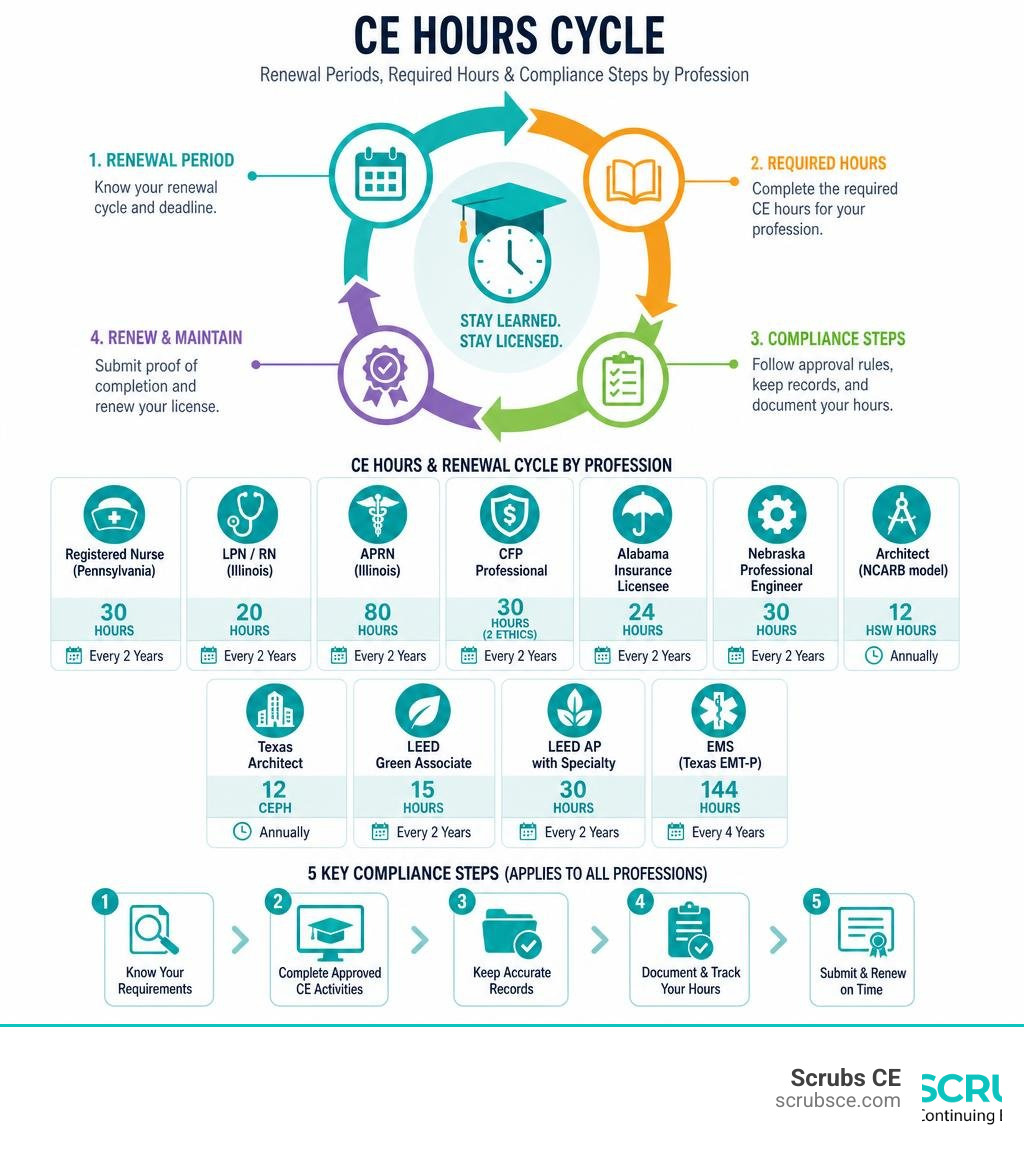
What Are CE Hours and Why Do They Matter?
For anyone holding a professional license, ce hours are not just a box to check. They are a fundamental part of maintaining your professional standing. But what exactly are they, and why do regulatory boards care so much about them?
At its core, a continuing education hour represents a measured unit of time spent in structured learning. In most fields, one CE hour is equivalent to 50 to 60 minutes of active instruction. These requirements exist to ensure that as industries evolve, the professionals working within them keep pace.
The Purpose of Professional Continuing Education
The primary purpose of continuing education is to protect public health, safety, and welfare. When you first earn your license, you prove you have the baseline knowledge required to practice safely. However, technology, laws, and best practices change rapidly.
Continuing education serves several critical functions:
- Skill Enhancement: It introduces you to new techniques, tools, and methodologies.
- Industry Standards: It aligns your daily work with current legal, ethical, and professional standards.
- Evidence-Based Practice: In fields like medicine and nursing, it ensures your patient care is guided by the latest scientific research.
To understand how these hours fit into your overall renewal process, it helps to review the core CE Credit Requirements that govern your specific field.
Who Regulates Continuing Education Requirements?
Continuing education is governed by a network of state licensing boards, national certifying agencies, and professional associations.
For example, if you are a nurse, your state Board of Nursing dictates exactly how many hours you need and which topics are mandatory. If you are an architect, state licensing boards often adopt guidelines established by national bodies like the National Council of Architectural Registration Boards (NCARB).
Because regulations vary wildly from state to state, it is vital to obtain your education from approved sources. Understanding how state boards establish these rules will help you avoid taking courses that do not count. For a deep dive into how state-level approvals work, check out our comprehensive guide on State Approved CE Everything You Need to Know for Your License Renewal.
Typical CE Requirements Across Key Professions
Because every industry has its own unique risks and regulatory standards, ce hours requirements are highly diverse. Let’s look closely at how different professions structure their continuing education cycles.
Healthcare and Nursing Standards

In healthcare, keeping your knowledge current is quite literally a matter of life and death. Consequently, healthcare professionals face some of the most rigorous CE mandates.
In Pennsylvania, Registered Nurses (RNs) must complete 30 hours of board-approved continuing education every two years to maintain their licenses. According to the PENNSYLVANIA STATE BOARD OF NURSING P.O. BOX 2649 HARRISBURG, PA 17105-2649 guidelines, these hours must be relevant to patient care or professional nursing, focusing on physical, social, biological, or behavioral sciences.
Meanwhile, under the Illinois Administrative Code Title 68 – PROFESSIONS AND OCCUPATIONS Part 1300 – NURSE PRACTICE ACT Subpart A – GENERAL PROVISIONS Section 1300.130 – Continuing Education , Illinois nurses have distinct tracks:
- Licensed Practical Nurses (LPNs) & Registered Nurses (RNs): Must complete 20 hours of approved CE per two-year renewal cycle.
- Advanced Practice Registered Nurses (APRNs): Must complete 80 hours of CE per two-year cycle. Of these 80 hours, at least 50 must be in specialty topics, including 20 hours of pharmacotherapeutics and 10 hours of opioid prescribing or substance abuse education.
For those working in specialized fields like Radiology, the continuing education pathway is governed by national credentialing organizations. If you hold credentials through the AMERICAN REGISTRY OF RADIOLOGIC TECHNOLOGISTS® (ARRT®), you must meet specific biennial CE requirements to maintain your active status. These courses must align with the professional standards recognized by the ASRT® and other leading imaging organizations. To learn more about how to navigate these technical requirements, read our Earn CE Credits Complete Guide.
Architecture and Engineering Guidelines
Architects and engineers are responsible for the physical safety of our built environment. Their CE requirements reflect this immense responsibility, focusing heavily on Health, Safety, and Welfare (HSW) subjects.
The National Council of Architectural Registration Boards (NCARB) recommends a national model standard of 12 HSW CE hours annually. According to the Continuing Education guidelines published by NCARB, these hours must be earned through structured educational activities that spend at least 75% of their content on HSW topics.
State boards often build upon these model guidelines. For instance, the Texas Board of Architectural Examiners requires 12 Continuing Education Program Hours (CEPH) annually. As detailed in the Continuing Education FAQ – Texas Board of Architectural Examiners , Texas architects must dedicate at least one of those hours to barrier-free design (accessibility) and another to sustainable or energy-efficient design.
For engineers, the requirements are equally structured. In Nebraska, professional engineers must complete 30 actual hours of engineering-related continuing education every two years, as outlined by the Continuing Education (CE) | State of Nebraska Board of Engineers and Architects . These hours must focus on technical or professional body-of-knowledge topics, with at least one hour dedicated to professional ethics.
Financial Planning and Insurance Regulations
If you manage people’s money or protect their assets, you are also bound by strict continuing education rules.
For Certified Financial Planner (CFP) professionals, the CFP Board mandates 30 hours of continuing education every two years. According to the Continuing Education Requirements | CFP Board , this total must include 28 hours of general CE covering the CFP Board’s Principal Knowledge Topics, alongside a mandatory 2-hour, pre-approved CFP Board Ethics course.
In the insurance sector, state departments regulate compliance. In Alabama, non-exempt insurance licensees must complete 24 hours of continuing education per biennial reporting period. These hours can be completed through classroom instruction, seminars, online courses, or self-study, provided they are offered by state-approved providers.
Acceptable Formats and Activities for Earning Credits
Gone are the days when earning ce hours meant spending your entire weekend sitting on a folding chair in a stuffy hotel conference room. Today, licensing boards recognize that learning happens in many different ways.

Online vs. Live Learning Formats
Most professions divide acceptable continuing education into structured study and self-directed learning.
- Structured Study: This includes live webinars, interactive online courses, and traditional classroom seminars. These formats have clear learning objectives, direct instruction, and often a formal assessment (like a quiz or exam) to verify completion.
- Self-Directed Learning: Some boards allow a limited number of hours to be earned through self-guided reading of professional journals, volunteering for industry committees, or publishing research.
Online, self-paced courses have become the gold standard for busy professionals. They offer the flexibility to study whenever your schedule allows. To explore how online learning can simplify your renewal process, take a look at our Continuing Education Credits Online Guide and learn how to maximize your time using Online CEU Credits.
How to Calculate and Track Your CE Hours
Understanding how your time translates into official credits is crucial. In most fields, continuing education is calculated using “contact hours.”
- 1 Contact Hour: Typically equals 50 to 60 minutes of continuous instruction.
- Academic Coursework: If you take a class at an accredited college or university, those credits convert to CE hours at a generous rate. For Pennsylvania nurses, 1 academic semester unit equals 15 CE hours, while 1 quarter unit equals 10 CE hours. For Illinois nurses, 1 academic semester hour also yields 15 contact hours.
To make sure the courses you choose will actually be accepted by your board, consult our guide on Accredited CE Courses The Smart Way to Stay Certified.
Managing Compliance, Carryovers, and Audits
With so many different rules to keep track of, managing your compliance requires a systematic approach.
Across the e-learning industry, modern tracking platforms support over 350 unique professions, reporting more than 90 million course completions from over 6,500 participating education providers. These systems make it much easier to track multiple licenses in one centralized place, but you must still understand your specific state’s rules regarding carryovers and audits.
Can You Carry Over Excess Credits?
If you get ambitious and earn more than your required ce hours during a renewal cycle, can you carry those extra hours over to the next period? The answer is: it depends entirely on your profession and your state.
Here is how different boards handle carryover credits:
- Nebraska Professional Engineers: Allowed to carry over up to 15 excess hours (half of their biennial requirement) into the next renewal period.
- Texas Architects: Allowed to carry over up to 12 excess structured hours for one year only.
- CFP Professionals: Historically, carryovers were not allowed. However, for renewal cycles beginning in or after Q1 2027, CFP professionals will be permitted to roll over up to 10 excess general CE hours to the next two-year cycle.
- Alabama Insurance Licensees: No carryover credits have been permitted since a regulatory change took effect in 2013.
- Nurses (Illinois & Pennsylvania): Generally, nurses cannot carry over excess hours. All required CE must be earned within the active 24-month renewal window.
Preparing for a Continuing Education Audit
Most licensing boards do not require you to submit your physical certificates of completion when you renew your license. Instead, you certify under penalty of perjury that you have completed the required hours, and the board verifies this through random audits.
If you are selected for an audit, you must provide clear, organized proof of your compliance.
Consequences of Failing to Meet Required CE Hours
Failing to complete your required ce hours before your license expiration date can have severe professional consequences. If you submit a renewal application without the necessary credits, your license may be suspended, placed on inactive status, or allowed to expire.
Practicing with an expired or inactive license is illegal and can lead to:
- Stiff financial penalties and late fees.
- Disciplinary action from your state board, which becomes a permanent part of your public professional record.
- Loss of employment, as most employers require active licensure as a condition of work.
If you find yourself short on hours as your deadline approaches, you must act quickly. To find out how to secure valid, accredited credentials rapidly, read our guide on How to Get Instant Certification Online Without Spending a Dime.
Frequently Asked Questions about CE Requirements
Are there CE exemptions for newly licensed professionals?
Yes, many licensing boards offer exemptions or reduced requirements for professionals during their very first renewal cycle.
- Nebraska Professional Engineers: Exempt from continuing education requirements for their first renewal period.
- Illinois Nurses: Exempt from CE requirements for their first license renewal after passing their initial board exams.
- Alabama Insurance Licensees: Exempt from the 24-hour CE requirement if they have been licensed for less than 12 months at the time of their first renewal.
How long should I retain my CE certificates and documentation?
You should always keep your physical or digital certificates of completion on file long after your renewal cycle ends. Audit windows vary by profession:
- Texas Architects: Must retain records for 5 years.
- Pennsylvania Nurses: Must keep certificates for at least 5 years.
- Nebraska Engineers: Must retain records for 4 years.
- CFP Professionals: Must keep documentation for at least 4 years.
- NCARB Guidelines: Recommend that architects maintain their CE records for 6 years.
Do advanced life support courses count toward nursing CE hours?
Yes, in many states, advanced life support certifications can be used to satisfy a portion of your nursing CE requirements. Under Pennsylvania Board of Nursing rules, courses like Advanced Cardiovascular Life Support (ACLS), Pediatric Advanced Life Support (PALS), and Advanced Trauma Life Support (ATLS) are accepted. However, they can only be claimed once per two-year renewal cycle, and basic life support (BLS) courses generally do not qualify.
Conclusion
Continuing education is more than a regulatory hurdle; it is a commitment to lifelong learning and professional excellence. By staying on top of your ce hours, you protect your license, enhance your clinical or technical skills, and ensure that you are providing the highest quality of service to your patients, clients, or the public.
At Scrubs CE, we make staying compliant simple, affordable, and stress-free. We offer convenient, self-paced online courses designed specifically to help healthcare and imaging professionals meet their licensure requirements without disrupting their busy lives. Once you complete your course, you will receive an Instant CE Certificate to keep your records audit-ready.
Ready to complete your continuing education requirements the smart way? Visit the Scrubs CE Homepage today to explore our extensive library of accredited, state-approved courses!
Everything You Need to Know About Completing Your Nursing CEU 30 Hours
What Are Nursing CEU 30 Hours and Do You Need Them?

Completing nursing CEU 30 hours is a license renewal requirement for registered nurses (RNs) and licensed practical nurses (LPNs) in at least 10 U.S. states — and if you’re in one of them, you need to finish those hours every two years to keep your license active.
Here’s a quick answer if that’s all you need:
States that require 30 CE hours every 2 years for nursing license renewal:
- California
- Georgia
- Hawaii
- Louisiana
- Nevada
- New Jersey
- New Mexico
- South Carolina
- Utah
- Wyoming
Key facts to know:
- Renewal cycle: Every 2 years (biennial)
- Hours required: 30 contact hours
- Mandatory topics: Vary by state — most have none, but California requires a one-time 1-hour implicit bias course for new licensees
- Format: Online, self-paced options are widely available and accepted
- Testing: Many accredited packages require no test — just complete the coursework and receive your certificate
If your state is on that list, you’re in the right place. The rest of this guide walks through exactly how to meet your requirement — by state, by course type, and by provider format — so you can get it done without the stress.
I’m Zita Ewert, and through my work leading continuing education programs for healthcare professionals, I’ve spent years helping practitioners navigate CE requirements — including the nursing CEU 30 hours renewal process — with accredited, accessible courses. Let’s break down everything you need to know.
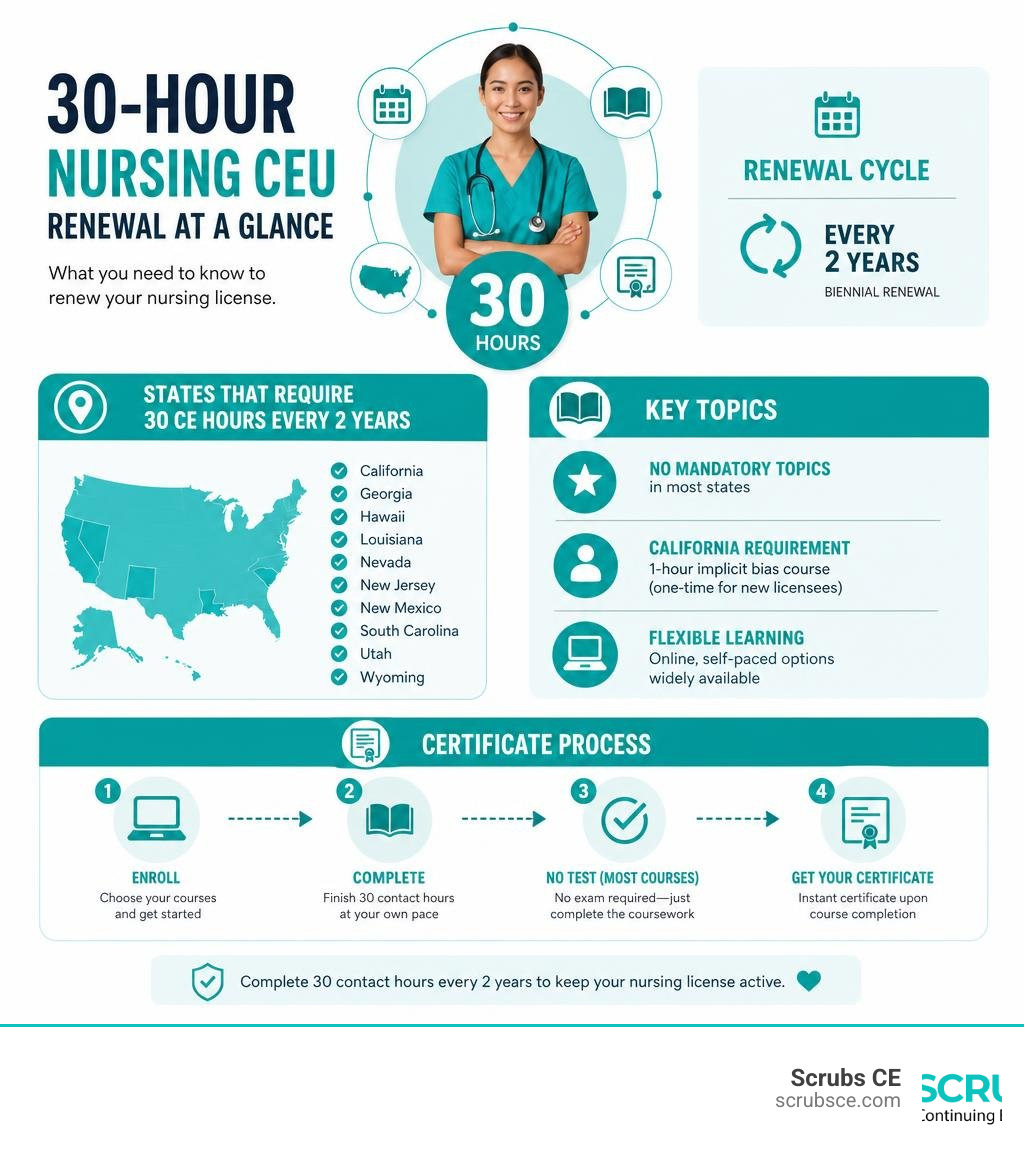
Important nursing ceu 30 hours terms:
State-Specific Requirements for Nursing CEU 30 Hours
Continuing education is regulated at the state level, which means your Board of Nursing holds the ultimate keys to your license renewal. While the magical number of 30 contact hours is a shared requirement across several states, how those hours are structured and reported can differ significantly.
To help you visualize these differences, here is a quick breakdown of how key states handle their biennial renewal cycles:
| State | Hours Required | Specific Mandatory Coursework | Reporting Method |
|---|---|---|---|
| California | 30 hours | 1-hour Implicit Bias (First renewal only) | Self-reporting (Keep records for 4 years) |
| Georgia | 30 hours | None (Any Board-approved general hours) | CE Broker (Direct reporting) |
| South Carolina | 30 hours | None (Or active certification/practice hours) | CE Broker (Direct reporting) |
| Florida | 30 hours (APRN) | Prescribing, Laws & Rules, Domestic Violence, etc. | CE Broker (Direct reporting) |
If you are looking to understand the broader landscape of maintaining your professional credentials across the country, check out our Earn CE Credits Complete Guide for an in-depth look at national accreditation standards.
To make sure you never miss a step in your biennial cycle, we have mapped out the typical path from earning your credits to submitting them to your state board:
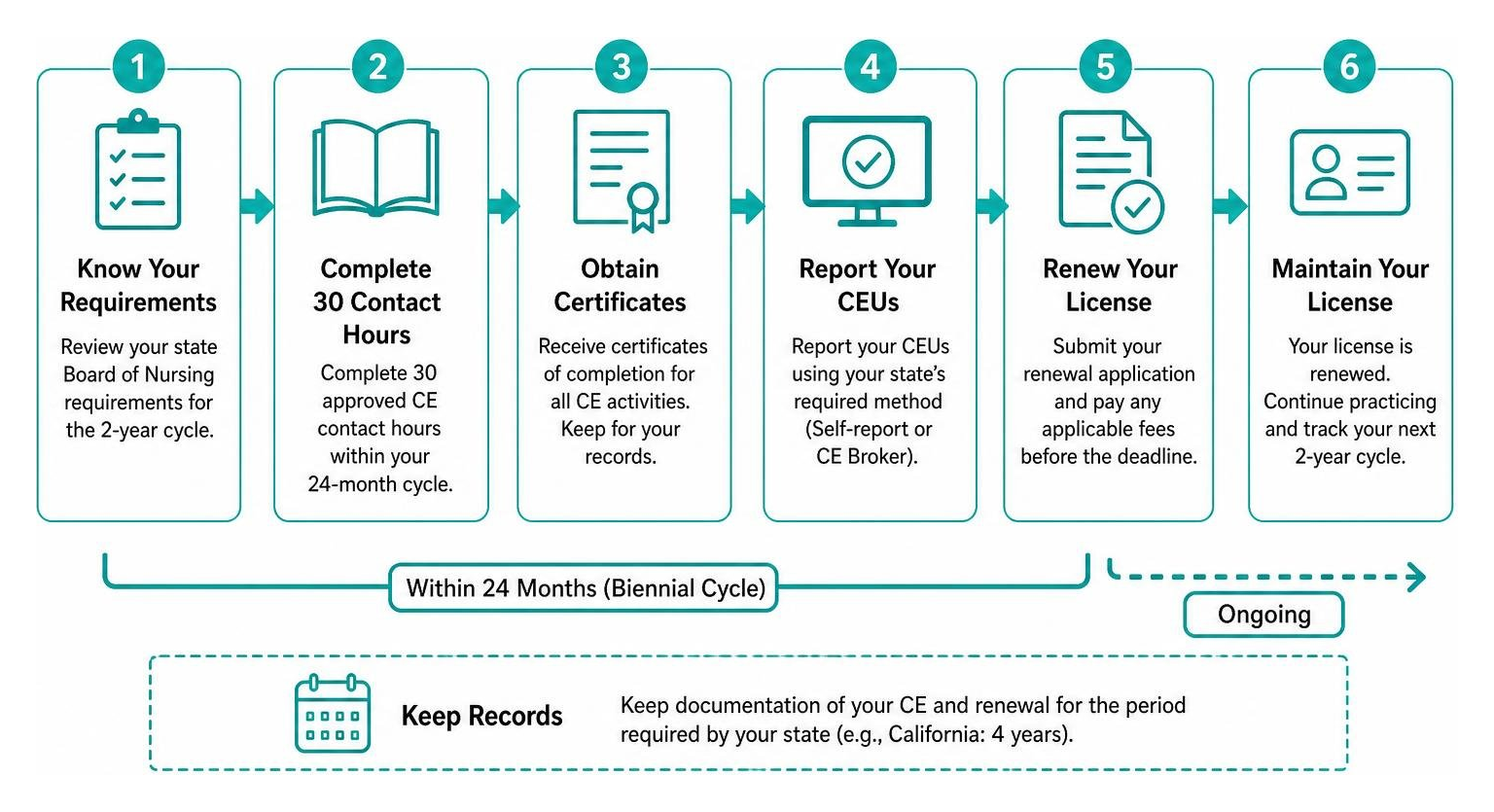
Meeting Your California Nursing CEU 30 Hours Requirement
For California Registered Nurses (RNs) and Licensed Vocational Nurses (LVNs), completing your nursing ceu 30 hours is a strict legal requirement under Title 16 of the California Code of Regulations. The California Board of Registered Nursing (BRN) mandates that these 30 contact hours must be completed within your 24-month education cycle.
If you are renewing for the very first time after passing your NCLEX, you are actually exempt from the CE requirement for that initial renewal. However, for every subsequent renewal, you must hit that 30-hour mark.
There is one critical update you must keep in mind: under Assembly Bill 1407 (which took effect recently), all California RNs within their first two years of licensure—or those renewing for the first time after the bill’s implementation—must complete a mandatory 1-hour implicit bias course.
When planning your courses, the California BRN accepts academic college courses as well. The conversion formula is simple:
- 1 quarter unit = 10 contact hours
- 1 semester unit = 15 contact hours
To make sure you do not get caught in a stressful last-minute scramble, you can read our guide on how to Get Your California RN CEUs Instantly Without the Stress. If you are new to the process, we also have a curated list of the Best Nursing CEU California Courses for Beginners to help you build the perfect package.
Fulfilling Georgia and South Carolina Nursing CEU 30 Hours
In Georgia and South Carolina, the requirements for your nursing ceu 30 hours are highly streamlined but strictly monitored through CE Broker.
For Georgia RNs, the 30-hour requirement must be completed by January 31 of even-numbered years. Georgia does not mandate specific course topics, meaning you have the freedom to choose any ANCC-accredited courses that align with your clinical practice.
South Carolina also requires 30 contact hours every two years for both RNs and LPNs. South Carolina is incredibly friendly for online learners, as many approved packages offer “no-test” options where you can review the material, submit a quick course evaluation, and instantly receive your certificate.
If you are an LPN looking for engaging, clinically relevant courses that won’t bore you to tears, take a look at our guide to LPN CE Courses That Won’t Put You to Sleep.
What Is Included in a 30-Hour CEU Bundle?
When you purchase a pre-bundled nursing ceu 30 hours package, you are usually getting a curated collection of courses designed to satisfy both general clinical interest and specific state mandates. Choosing a bundle is almost always more cost-effective than buying individual courses one by one.

A standard 30-hour bundle typically contains a mix of the following:
- Pharmacology Hours: Many bundles include up to 16 hours of advanced pharmacology, which is essential for Advanced Practice Registered Nurses (APRNs) or nurse practitioners who need to maintain prescriptive authority.
- Patient Safety and Infection Control: Courses focusing on preventing medical errors, understanding the chain of infection, and implementing standard precautions.
- Special Populations: Modules covering geriatric care, pediatric care, and LGBTQ+ healthcare terminology.
To ensure that your completed hours are legally accepted by your state board, always verify that your provider adheres to the ANCC Accreditation Standards. For a deeper dive into how online courses are structured, read our Online CE Courses Complete Guide.
Core Clinical and Safety Topics
A well-rounded nursing ceu 30 hours bundle doesn’t just check a regulatory box—it actually helps you improve your daily clinical practice. Here are some of the core topics you will find in high-quality bundles:
- Cognitive and Mental Health: In-depth modules on Alzheimer’s disease, dementia management, and screening for suicide risk in older adults.
- Social and Cultural Competency: Training on implicit bias, cultural awareness, and providing inclusive care for LGBTQ+ patients across their lifespan.
- Public Health and Safety: Crucial courses on identifying domestic violence, recognizing the signs of human trafficking, and understanding substance use disorders.
- Specialized and Multidisciplinary Fields: Some healthcare systems use multidisciplinary education where nursing courses overlap with other medical specialties. For example, if your clinical role involves diagnostic imaging or oncology, you may encounter courses designed to align with disciplines like Radiology. While organizations like the AMERICAN REGISTRY OF RADIOLOGIC TECHNOLOGISTS® (ARRT®) or the ASRT® govern imaging professionals, nurses can often take cross-disciplinary clinical courses as long as they carry ANCC approval.
How Online 30-Hour CE Packages Work: Testing, Certificates, and Reporting
The beauty of modern continuing education is that it is entirely digital, self-paced, and highly convenient. You no longer have to spend your precious days off sitting in a stuffy hotel conference room listening to an outdated lecture.
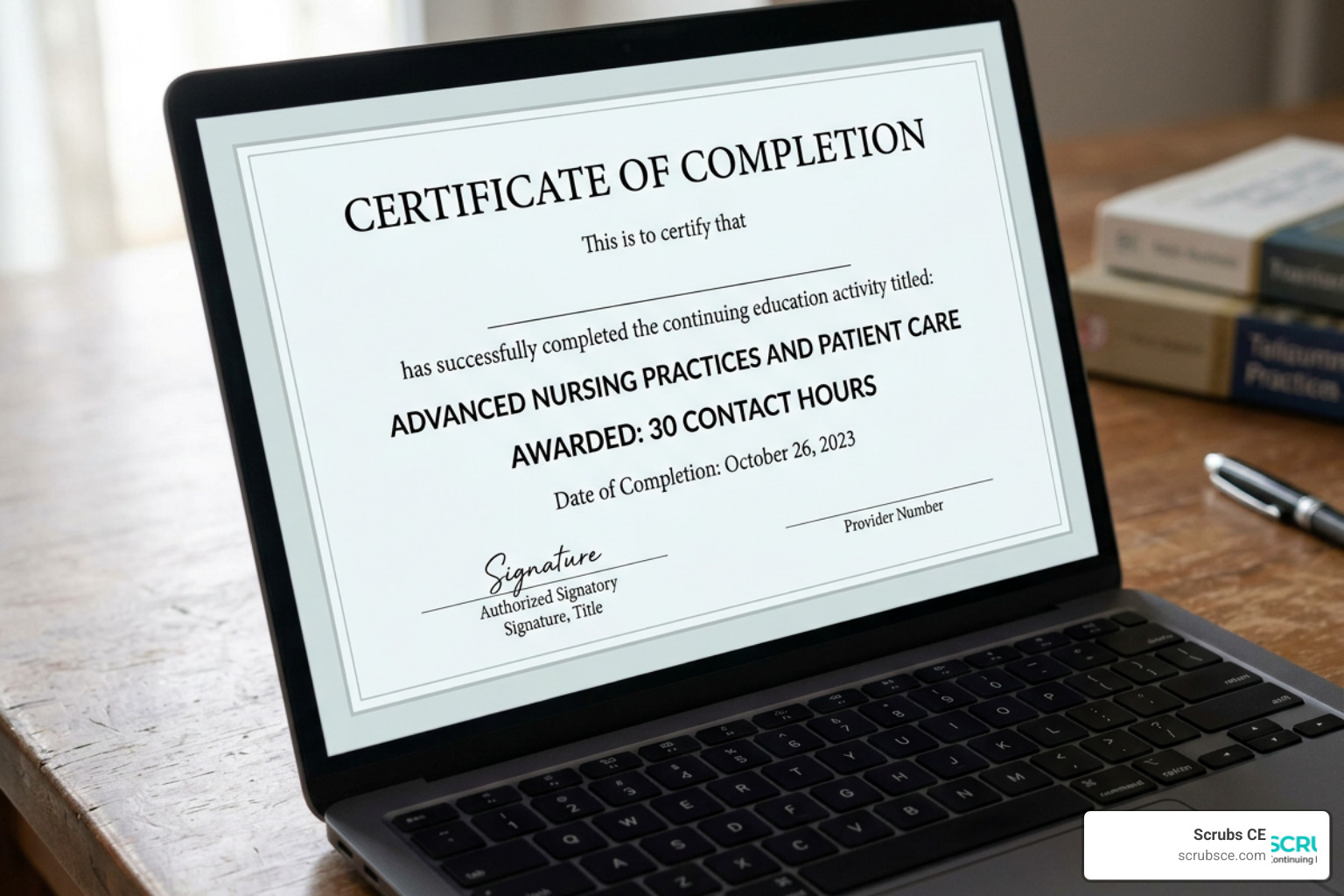
Here is how the typical online 30-hour package works from start to finish:
- Select and Enroll: You purchase a state-specific or general 30-hour bundle.
- Study at Your Own Pace: Access the material 24/7 on your smartphone, tablet, or laptop. You can start a course on your lunch break and finish it at home.
- The “No-Test” Option: Many modern CE platforms offer test-free packages. Instead of taking a stressful multiple-choice exam at the end, you simply read the comprehensive evidence-based material and complete a quick course evaluation or attestation statement confirming you studied the content.
- Instant Certificate Generation: The moment you finish a course, your certificate of completion is generated instantly as a PDF. You can download it, print it, or save it to the cloud.
- Automatic CE Broker Reporting: If you practice in a state that uses CE Broker (like Georgia, South Carolina, or Florida), top-tier CE providers will automatically report your completed hours to the system within 24 hours of completion. This means you do not have to manually type in course numbers and upload PDFs to your state board’s portal.
Frequently Asked Questions About 30-Hour Nursing CEUs
Do I have to take a test to complete my 30-hour CEU package?
In many cases, no! Many modern continuing education providers offer “test-free” courses. Instead of a high-stakes exam, you are required to read through the educational material and complete a brief course evaluation. Once you attest that you have completed the reading, your certificate is issued immediately. However, always check your specific state board rules, as a few states or specific specialty certifications may still require a post-test.
What happens if I am audited by my state Board of Nursing?
If you are selected for a random compliance audit, you will be required to show physical or digital proof of your completed CEUs. Most state boards—including the California BRN—require you to retain your certificates of completion for at least four years from the date of renewal. Using an online CE provider that stores your certificates in a secure, cloud-based profile 24/7 is the easiest way to protect yourself during an audit.
Are there any mandatory courses not included in standard 30-hour bundles?
Sometimes. While standard 30-hour bundles are designed to cover almost all general requirements, highly specific or one-time mandates (such as California’s 1-hour implicit bias requirement for new licensees, or the federal 8-hour DEA MATE Act training for practitioners with prescriptive authority) may need to be added to your package. Always read the course list of your selected bundle carefully to ensure it aligns with your specific license level and renewal year.
Conclusion
Completing your nursing ceu 30 hours does not have to be a stressful or exhausting chore. By choosing a comprehensive, self-paced, and fully accredited online package, you can easily fit your professional development around your busy clinical shifts.
At Scrubs CE, we are dedicated to helping healthcare professionals meet their licensing requirements with high-quality, engaging, and affordable courses. Our platform offers instant certificates, mobile-friendly access, and hassle-free learning designed for modern nurses.
Ready to get started on your renewal? Visit our dedicated California CE Requirements page to find the perfect package for your career today!
Military to Medical: Your Roadmap to Becoming a CT Technologist
From Service to Scanner: What Every Veteran Should Know About the CT Tech Veteran Transition
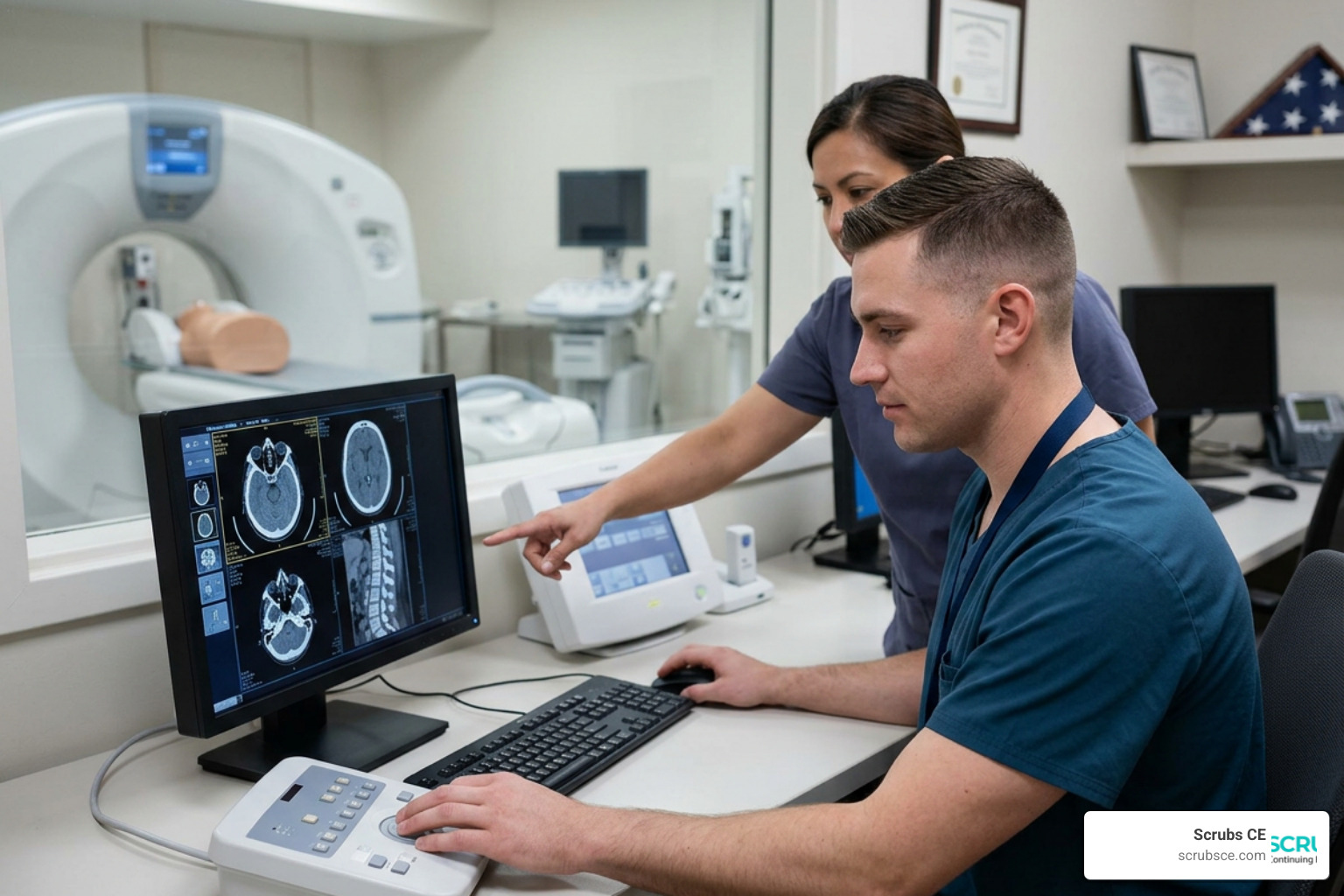
If you’re exploring a CT tech veteran transition, here’s the short answer on how it works:
How Veterans Become CT Technologists:
- Earn a primary credential in Radiography, Nuclear Medicine Technology, or Radiation Therapy (via an accredited program)
- Pass the AMERICAN REGISTRY OF RADIOLOGIC TECHNOLOGISTS® (ARRT®) primary exam
- Complete structured education requirements for CT (minimum 16 hours)
- Log the required supervised clinical experience hours in CT
- Pass the ARRT® postprimary CT exam to earn your R.T.(CT) credential
- Apply for state licensure where required
- Use military funding options — GI Bill, SkillBridge, or Navy COOL — to offset costs
Military service builds exactly the kind of person hospitals want running a CT scanner. You already know how to follow strict protocols without cutting corners. You’ve operated complex equipment under pressure. You’ve stayed calm when the stakes were high.
Those aren’t soft skills. In computed tomography, they’re job requirements.
CT volumes sit at the center of emergency, trauma, and oncology workflows. Facilities need technologists who can perform precise, high-stakes imaging day in and day out — and veterans are built for that environment.
The transition does require a structured certification path through the ARRT®. It takes planning. But with the right roadmap, it’s very achievable — often within two to three years of starting your primary credential program.
I’m Zita Ewert, leader of SCRUBS Continuing Education® and a longtime advocate for imaging professionals navigating the CT tech veteran transition through accessible, accredited CE courses. In this guide, I’ll walk you through every step — from military skills that transfer directly, to ARRT® pathways, funding options, salary expectations, and how to land your first CT role.
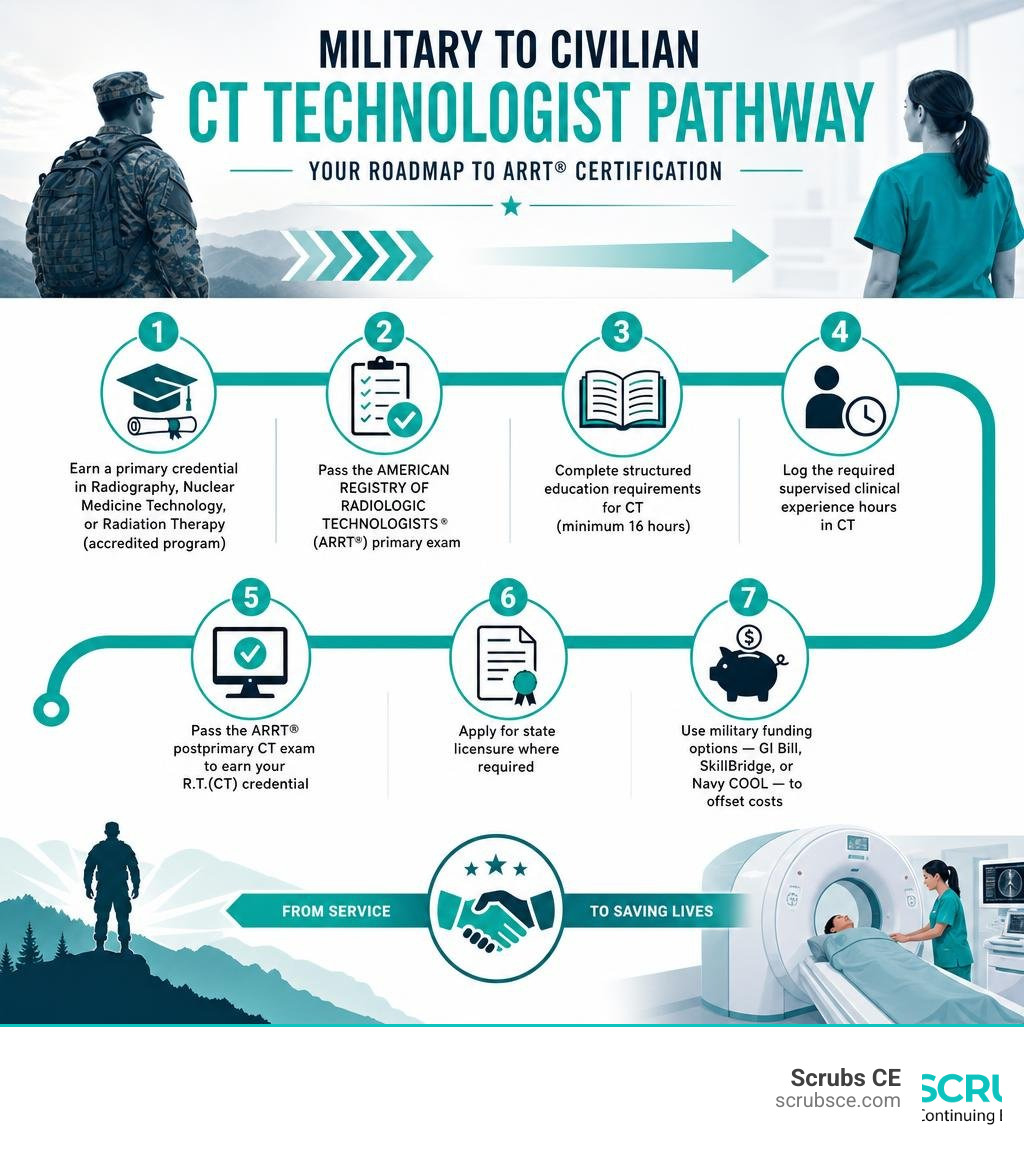
Ct tech veteran transition terms at a glance:
Why Veterans Excel in Computed Tomography Roles
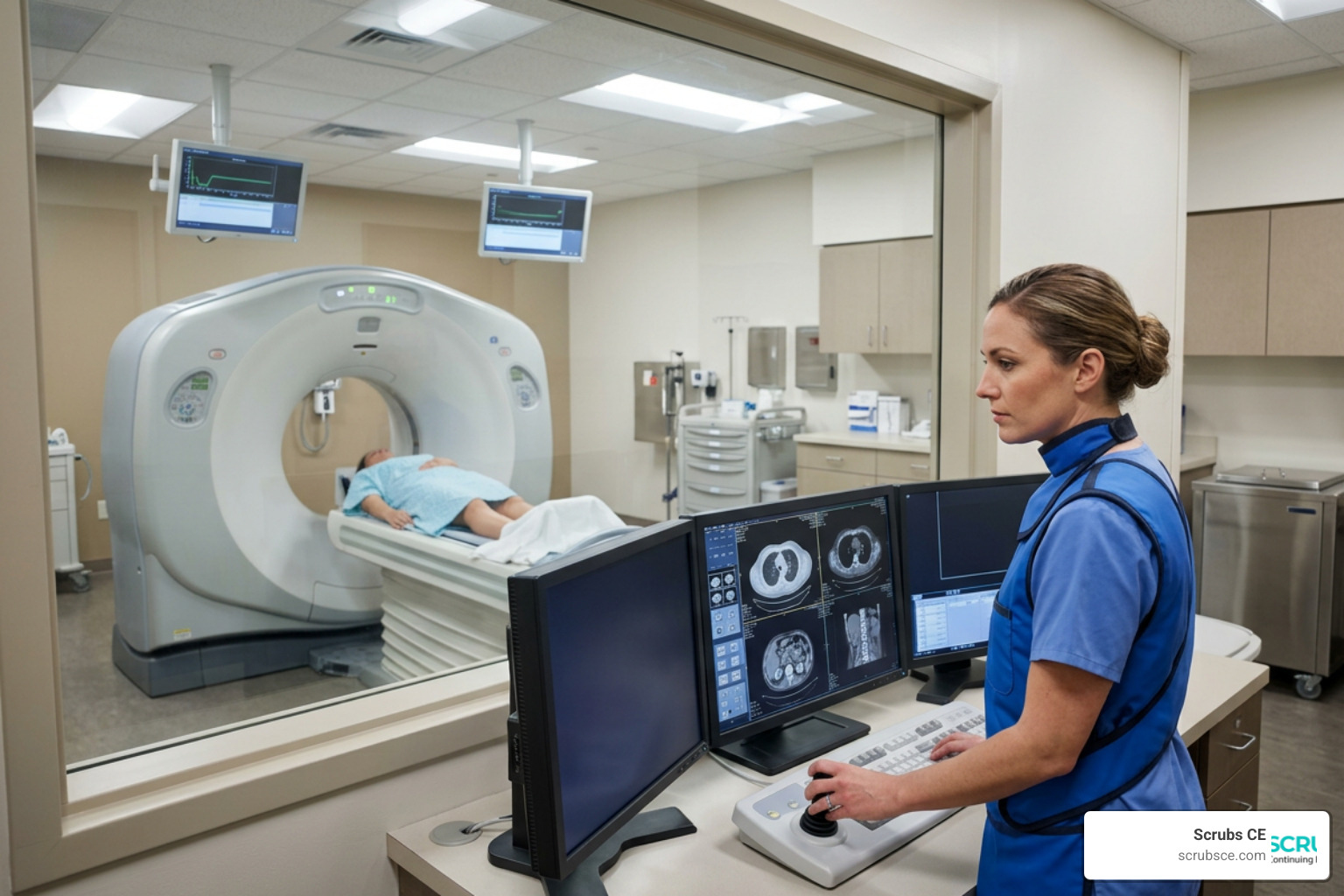
Transitioning from military life to a civilian career can feel like trying to decipher a foreign language. However, the field of diagnostic imaging—specifically Computed Tomography (CT)—shares a striking amount of DNA with military operations. Veterans excel as CT technologists because their military background has already trained them in the core competencies required on the hospital floor: technical expertise, strict protocol adherence, performance under high pressure, and seamless teamwork.
Military Discipline and Protocol Adherence
In the military, standard operating procedures (SOPs) are not friendly suggestions; they are the baseline for safety and mission success. The exact same rule applies in a CT suite.
When you are operating a multi-slice CT scanner, you are managing ionizing radiation and high-pressure intravenous contrast injectors. There is no room for “freestyling.” A successful ct tech veteran transition relies heavily on this ingrained respect for protocols.
Whether it is running daily quality control (QC) calibration checks on the scanner, maintaining High-Level Disinfection (HLD) procedures for sterile imaging environments, or adhering to ALARA (As Low As Reasonably Achievable) radiation safety principles, veterans naturally respect the rules. This discipline ensures patient safety and maintains the high-level diagnostic quality that radiologists depend on.
Technical Aptitude and High-Pressure Performance
Modern CT scanners are highly complex, computerized machines that require a strong technical aptitude to operate. Military veterans—whether they served in aviation electronics, communications, or mechanical roles—are already comfortable troubleshooting sophisticated technical systems.
Furthermore, CT is the diagnostic workhorse of the emergency department. When a trauma patient arrives after a severe accident, the CT technologist must act with speed, precision, and absolute calm.
Veterans are uniquely equipped to handle this level of adrenaline. Having trained to perform under pressure, a veteran technologist can manage a chaotic trauma bay, coordinate with emergency physicians, and execute rapid scan protocols without letting panic compromise image quality. This ability to think critically while the clock is ticking makes veterans incredibly valuable assets in high-volume, 24/7 hospital imaging departments.
Comparing CT to Other Imaging Modalities for Veterans
When planning your post-military career, it helps to see how different imaging specialties stack up. While general radiography (X-ray) is the typical starting point, many veterans quickly look to specialize in advanced modalities like CT, MRI, or mammography.
Here is a comparative look at how these modalities compare as of July 2026:
| Modality | Average Training Length | Job Demand / Outlook | Work-Life Balance | Key Characteristics |
|---|---|---|---|---|
| General Radiography (X-Ray) | 18–24 Months (Primary) | High / Stable | Moderate (Shift work common) | The foundational modality; highly physical with high patient volume. |
| Computed Tomography (CT) | 3–6 Months (Post-Primary) | Exceptionally High | Varied (24/7 ER coverage needed) | Fast-paced, trauma-heavy, highly technical, and critical to hospital workflows. |
| Magnetic Resonance Imaging (MRI) | 12–18 Months (Primary or Post-Primary) | High (5% growth projected) | Great (Many outpatient settings) | Slow-paced, highly analytical, complex physics, strict magnetic safety. |
| Mammography | 1–3 Months (Post-Primary) | High / Specialized | Excellent (Primarily daytime hours) | Highly regulated under MQSA; focused on patient interaction and screening. |
CT vs. MRI and Mammography
For veterans, choosing between CT and MRI often comes down to personal pacing preferences. MRI technologists earn a solid living—with a national median salary of $88,180 per year (BLS, May 2024)—but the training takes longer (often 12–18 months) and the environment is slower, with individual scans taking 30 to 45 minutes.
CT, on the other hand, is fast. Scans are completed in minutes, meaning you will see a much higher volume of patients. This makes CT an exciting environment for veterans who prefer a dynamic, fast-moving shift.
Additionally, CT is often the most accessible post-primary pathway for registered radiographers. Because CT scanners are embedded in almost every hospital emergency department, finding opportunities to cross-train on the job is highly common.
If you are looking to maintain multiple credentials to maximize your marketability, exploring CT MRI CE courses can help you bridge the gap between both modalities, keeping your skills sharp across the board.
The Strategic CT Tech Veteran Transition Roadmap

Successfully navigating a ct tech veteran transition requires a clear, step-by-step strategy. You cannot simply walk into a civilian hospital and start scanning patients based on your military background alone. You need to follow a structured educational and clinical pathway to earn your credentials.
Navigating the CT Tech Veteran Transition via ARRT® Pathways
To work as a civilian CT technologist, you must earn certification and registration through the AMERICAN REGISTRY OF RADIOLOGIC TECHNOLOGISTS® (ARRT®). The most common route is the postprimary eligibility pathway.
Here is how the process works step-by-step:
- Earn a Supporting Primary Credential: You must first be certified and registered with the ARRT® in a primary discipline, such as Radiography, Nuclear Medicine Technology, or Radiation Therapy. (Nuclear Medicine credentials may also be held through the NMTCB).
- Complete Structured Education: The ARRT® requires a minimum of 16 hours of structured education that directly maps to the CT registry exam content specifications. This coursework must cover patient care, safety, image production, and anatomy.
- Document Clinical Experience: You must perform and document a specific list of clinical competencies under the direct supervision of a credentialed technologist. This includes performing a variety of CT scans (head, spine, chest, abdomen, etc.) and quality control procedures.
- Apply and Pass the Exam: Once your education and clinical hours are logged and verified, you will apply to take the ARRT® Computed Tomography registry exam. Passing this exam grants you the R.T.(CT) credential.
For a deeper dive into this certification process, check out our Beginners Guide to Computed Tomography Technician Certification. Additionally, keeping an eye on CT Technologist Requirements will ensure you are meeting all state-specific licensing rules, which can vary across the country.
Utilizing Military Funding and Transition Programs
The civilian transition can be expensive, but as a veteran, you have powerful funding tools at your disposal:
- DoD SkillBridge: This program allows transitioning service members to participate in civilian job training, apprenticeships, or internships during their last 180 days of service. You can use SkillBridge to gain valuable clinical experience in a civilian Radiology department while still receiving your military pay and benefits.
- The GI Bill: You can use your Post-9/11 GI Bill benefits to pay for tuition and fees at accredited radiologic technology schools, as well as licensing exam fees.
- Navy COOL and Army IgnitED: These credentialing programs can fund the cost of classroom training, study materials, and exam vouchers while you are still on active duty.
- State Veteran Resources: Organizations like the Georgia Veterans Education Career Transition Resource (VECTR) Center assist veterans by evaluating prior military transcripts for college credit, helping you fast-track your journey through civilian technical colleges.
Salary, Job Market, and VA Career Opportunities
One of the most reassuring aspects of the ct tech veteran transition is the strength of the job market. Diagnostic imaging departments nationwide are facing persistent staffing shortages, meaning qualified CT technologists are in high demand.
The starting salary for newly certified technologists typically ranges from $55,000 to $70,000, depending on the region. However, experienced technologists—especially those working in high-cost-of-living states like California—can earn upwards of $114,000 annually. For those willing to take on temporary travel assignments, travel CT technologists can command impressive weekly rates ranging from $2,500 to $4,000.
Advancing Within the VA Healthcare System
For many veterans, the transition to civilian life does not mean leaving the military community behind entirely. The Veterans Health Administration (VHA) is the largest integrated healthcare system in the United States, and it actively recruits veteran technologists.
Working within the VA offers excellent federal benefits, competitive salaries, and a profound sense of purpose as you continue to serve your fellow brothers and sisters in arms. Career progression within the VA is highly structured, offering clear pathways to supervisory and leadership roles.
Consider the career of Chris L. , who climbed the ranks to become the Chief Technologist of the Radiology Department at the James A. Haley VA Medical Center. Throughout his career, he leveraged advanced imaging protocols—such as implementing dual-energy CT protocols to eliminate non-diagnostic pulmonary embolism studies and introducing helical brain imaging to reduce patient radiation dose—to dramatically improve care for veterans.
His journey shows that a transition into CT is not just a job; it is a platform where you can lead, innovate, and make a lasting impact on veteran healthcare.
Overcoming Transition Challenges and Translating Military Experience
While the opportunities are vast, transitioning from the military to civilian healthcare does come with hurdles. Understanding these challenges ahead of time allows you to build a strategy to overcome them.
Translating Military Jargon for Civilian Healthcare Employers
One of the biggest obstacles veterans face is explaining their military achievements in a way that civilian hiring managers understand. A civilian hospital recruiter likely does not know what a “68W,” “4N0X1,” or “Navy Hospital Corpsman” actually does on a daily basis.
To write an effective resume, you must translate military jargon into civilian healthcare terms. Focus on quantifying your achievements using the STAR (Situation, Task, Action, Result) method.
For example, instead of writing: “Served as NCOIC of a mobile medical unit,” translate it to: “Managed daily operations and quality control for a mobile diagnostic team, supervising 8 personnel and ensuring 100% compliance with strict safety protocols.”
If you are transitioning from a technical, non-medical military role, highlight your adaptability and systems management. Much like a Navy communications specialist transitions to civilian network engineering—a journey highlighted in the story of Leaving a Navy tech role for a life on the road with Smart CT was a shore thing —your experience operating complex, high-stakes military hardware translates directly to managing a multi-million dollar CT scanner.
Overcoming Cultural and Financial Hurdles in Your CT Tech Veteran Transition
Adapting to civilian healthcare culture can also be a shock. The direct, hierarchical communication style of the military must often be softened in a civilian hospital setting, where collaborative, patient-centered communication is the standard.
Additionally, the cost of continuing education and registry preparation can add up. That is where we can help.
At SCRUBS CE®, we specialize in providing affordable, self-paced continuing education courses that help you meet your professional development requirements without breaking the bank. For example, our Product Computed Tomography for Radiologic Technologists course is an excellent resource for building a rock-solid foundation in CT physics, cross-sectional anatomy, and clinical protocols.
To keep your career moving forward, you can also explore our Computed Tomography CE Complete Guide or browse our list of the Best CE for CT Technologists to find the perfect fit for your schedule and budget.
Frequently Asked Questions about CT Tech Veteran Transitions
Can I use my military medical experience to bypass ARRT® certification?
Generally, no. While some military medical training programs have agreements that allow you to sit for the ARRT® primary radiography exam, you cannot bypass the certification process entirely. Civilian hospitals and state licensing boards almost universally require active ARRT® certification and registration. You must complete the structured education and clinical competency requirements to earn your civilian credentials.
How long does the transition to a CT technologist role take?
If you already hold a primary credential in radiography, completing your CT structured education and logging your clinical competencies can take anywhere from 3 to 6 months. If you are starting from scratch without a prior medical background, you will first need to complete an accredited 2-year associate degree program in radiologic technology before specializing in CT.
Are there CT technologist jobs that require a security clearance?
Yes. While less common than in cybersecurity or defense contracting, there are specialized healthcare roles within military treatment facilities (MTFs), federal intelligence agencies, and mobile defense support units that require an active security clearance. Maintaining your clearance during your transition can give you a major competitive advantage for these high-paying federal positions.
Conclusion
The journey from military service to a civilian healthcare career is a path paved with opportunity. By embarking on a ct tech veteran transition, you are choosing a profession that rewards your discipline, utilizes your technical aptitude, and allows you to continue serving your community in a deeply meaningful way.
As you take these next steps, education is a lifelong journey. Once you earn your credentials, you will need to complete 24 continuing education credits every two years to maintain your ARRT® registration.
At SCRUBS CE®, we are proud to support our nation’s veterans by offering convenient, self-paced online courses with instant certificate delivery. When you are ready to expand your knowledge or fulfill your CE requirements, we invite you to explore our Category Computed Tomography Certification courses.
Thank you for your service, and we look forward to helping you build a thriving civilian career in Computed Tomography!
CT and MRI Certificate Programs Near Me: Your Ticket to a High-Tech Career
Why CT and MRI Certificate Programs Are Worth Finding Near You
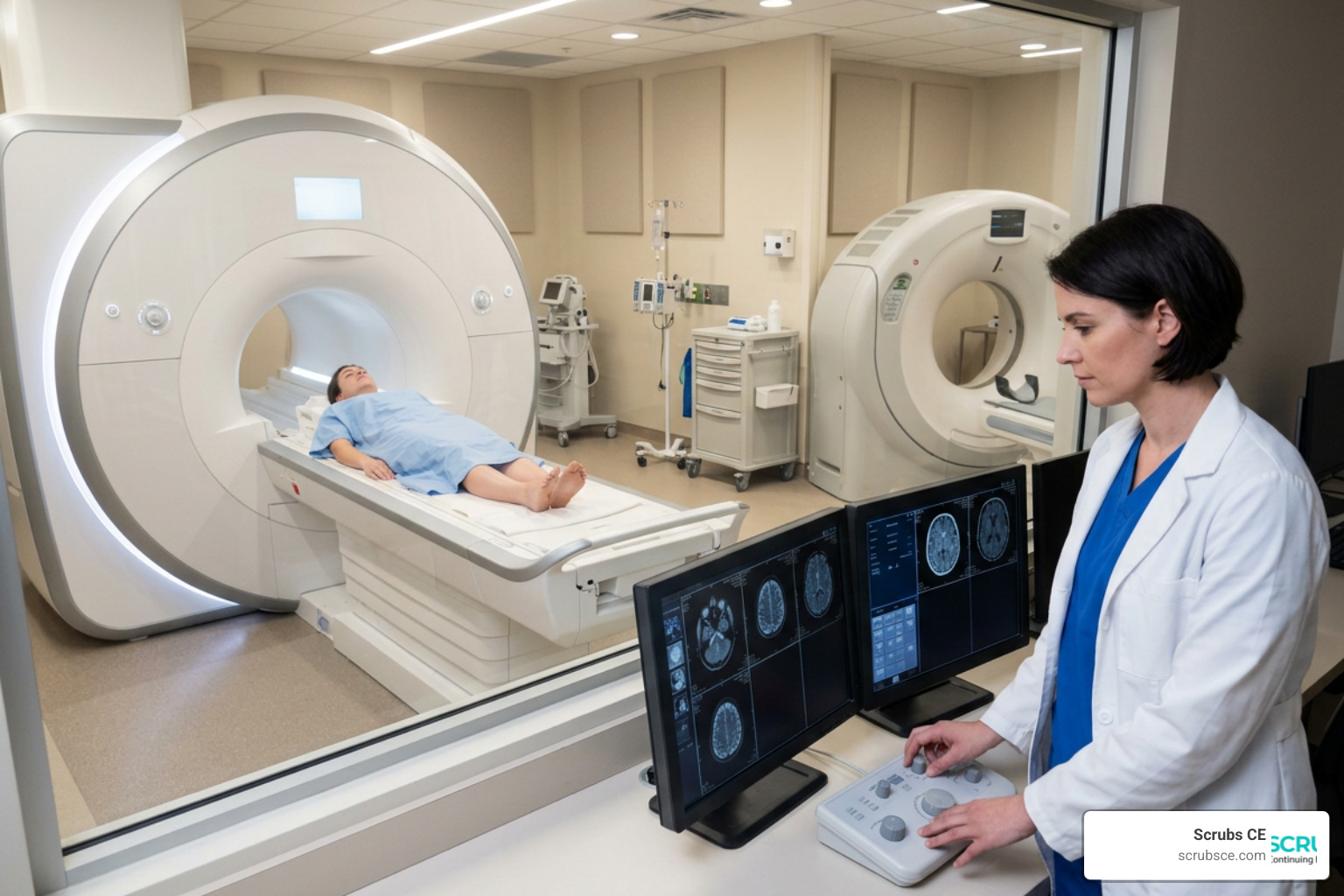
If you’re searching for CT and MRI certificate programs near me, here’s a quick snapshot of what to expect:
| What You Want to Know | Quick Answer |
|---|---|
| Who can apply? | Radiologic technologists, nuclear medicine techs, ultrasound techs, or radiation therapists with ARRT®, ARMRIT, NMTCB, or ARDMS credentials |
| How long do programs take? | 6 months (single modality) to 12–18 months (combined CT/MRI) |
| Online or in-person? | Didactic coursework is usually online; clinical rotations are completed near your location |
| What does it cost? | Roughly $8,000–$17,000 depending on the institution |
| What credential do you earn? | Eligibility to sit for ARRT® advanced-level CT and/or MRI exams |
| Is there job demand? | Yes — the 2025 ASRT® Staffing Survey reports a 17.4% national MRI vacancy rate |
The imaging job market is growing fast, and hospitals can’t fill seats quickly enough. The national median annual wage for MRI technologists hit $88,180 as of May 2024, according to BLS data. Adding CT or MRI credentials to your resume is one of the most direct paths to higher pay and more job options in Radiology.
Whether you’re a working radiographer looking to specialize or an experienced tech ready to add a second modality, a certificate program lets you get there without starting over with a new degree.
I’m Zita Ewert, and as the leader behind SCRUBS Continuing Education®, I’ve spent years helping imaging professionals navigate the credentialing landscape — including the structured education requirements tied to CT and MRI certificate programs near me. I’ll walk you through everything you need to know to choose the right program and move your career forward.
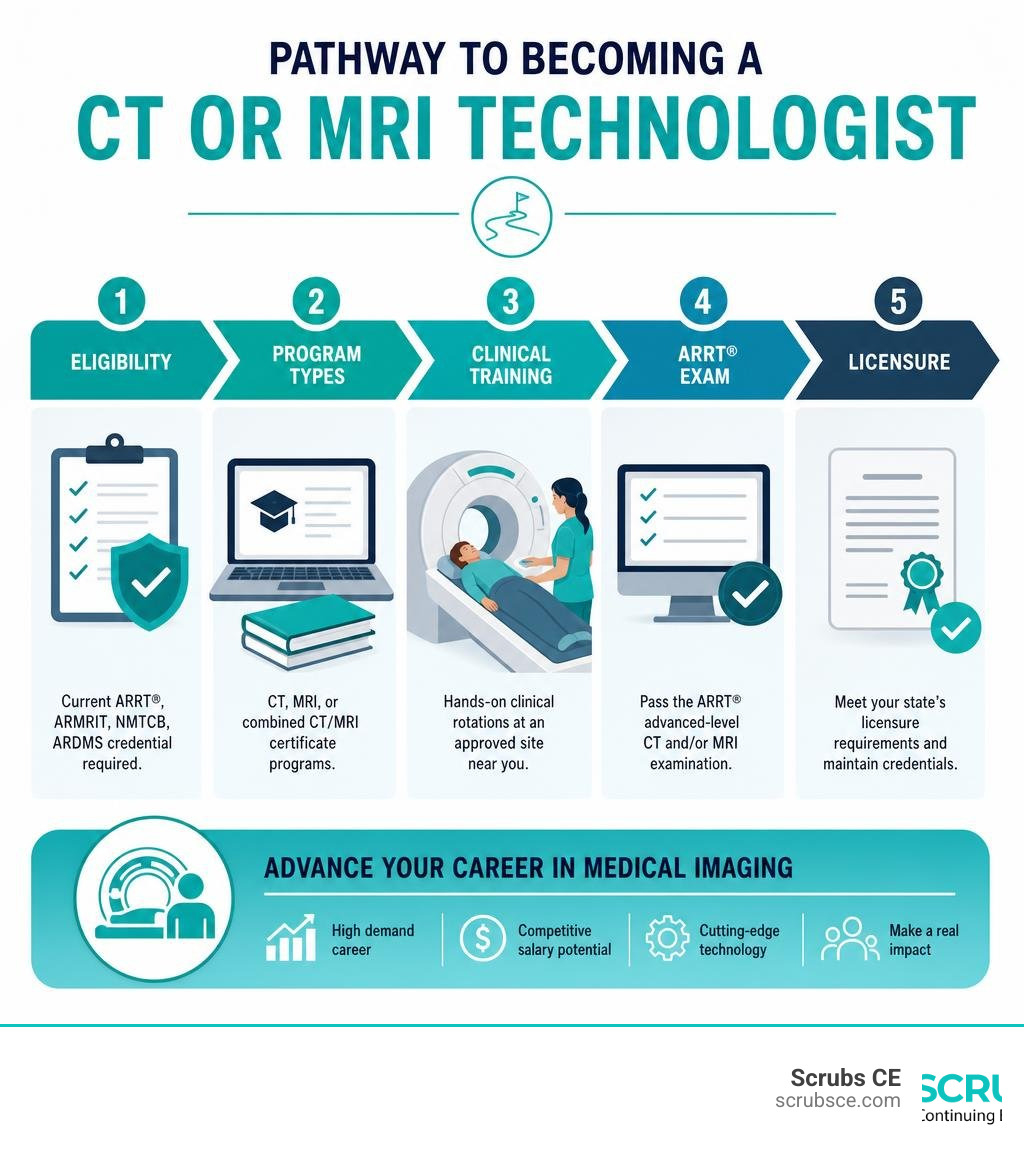
Ct and mri certificate programs near me terms at a glance:
Understanding CT and MRI Certificate Programs Near Me

When you begin searching for ct and mri certificate programs near me, the first thing you’ll notice is that these programs are designed specifically for working professionals. They aren’t entry-level college degrees that teach you how to be a healthcare worker from scratch. Instead, they are targeted, pathways meant to take your existing knowledge of anatomy, patient care, and physics and apply it to advanced cross-sectional imaging.
These certificate programs come in three main flavors:
- CT-Only Certificates: Focus entirely on Computed Tomography physics, instrumentation, radiation safety, dose reduction, and clinical protocols.
- MRI-Only Certificates: Focus on Magnetic Resonance Imaging physics, magnet safety (very different from radiation safety!), pulse sequences, and coil selection.
- Combined CT/MRI Certificates: Dual-modality programs that cover both specialties back-to-back or concurrently.
Choosing the right format depends entirely on your personal career goals and how much time you can commit to clinical training.
Choosing Combined vs. Single-Modality CT and MRI Certificate Programs Near Me
Is it better to study one modality or tackle both at the same time? Let’s break it down.
If you choose a single-modality certificate, you can often finish in as little as 6 months. This is perfect if your current employer has an immediate opening in MRI or CT and you need to get certified quickly to fill that slot.
However, dual-modality programs offer unparalleled career flexibility. Outpatient imaging centers love hiring “hybrid” technologists who can jump from the CT control room to the MRI suite depending on the daily schedule. If you want to maximize your marketability, a combined program is incredibly efficient.
For example, the Concurrent Certificates in Computed Tomography (CT) and Magnetic Resonance Imaging (MRI) program at California State University, Northridge (CSUN) allows students to complete both certificates in just one year. This is a massive time-saver compared to taking them as separate programs over 18 to 24 months.
If you are trying to decide which direction to take, we recommend checking out our guides on MRI Training 101 Learn MRI Basics and Category Computed Tomography Certification to see which technology aligns best with your interests.
Program Formats, Duration, and Cost Expectations
Most modern CT and MRI certificate programs utilize a hybrid format. This means your didactic lectures, physics homework, and anatomy quizzes are delivered 100% online, allowing you to study late at night or during your lunch breaks. However, you cannot learn how to position a patient or run a multi-million dollar scanner from a laptop. The clinical rotation portion of the program must be completed in-person at an approved hospital or imaging clinic.
Here is what you can typically expect in terms of timeline and cost:
- Single-Modality (CT or MRI): Typically lasts 1 to 2 semesters (6 to 9 months). Tuition ranges from $4,000 to $10,000. For example, Nashville – Certificate in Magnetic Resonance Imaging – South College offers an intensive, 6-month full-time hybrid program.
- Combined Dual-Modality: Typically lasts 12 months (4 quarters). Tuition and fees often range from $11,000 to $17,000. The combined certificate at Computed Tomography (CT) & Magnetic Resonance Imaging (MRI), Cert | Loma Linda University is a great example of a structured, 12-month program.
If you don’t want to enroll in a formal, expensive university program just to get your classroom hours, you can also fulfill your ARRT® structured education requirements using self-paced Online MRI Courses or targeted CT MRI CE packages.
Admission Requirements and Clinical Training Compliance
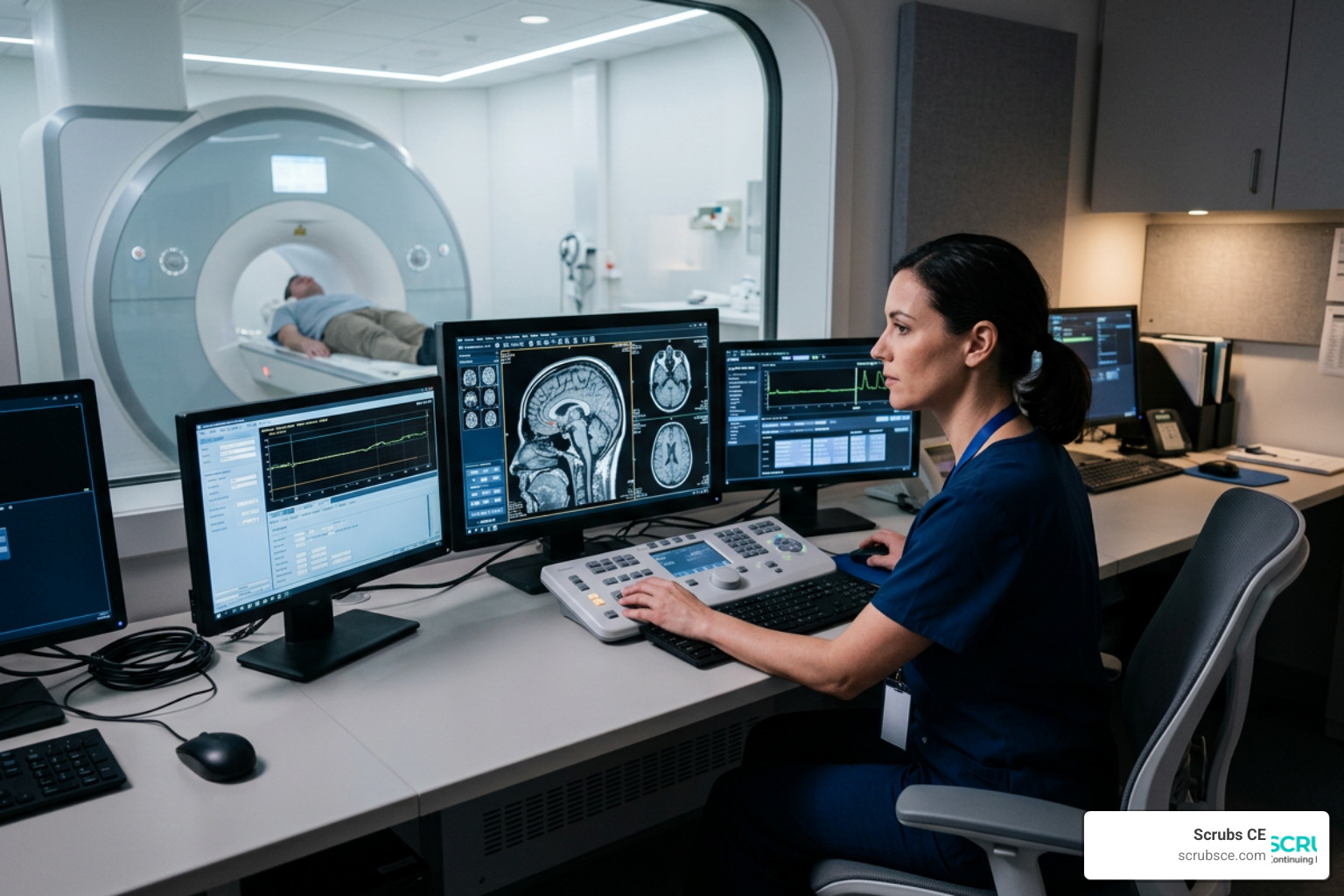
Before you hit “apply” on any of the ct and mri certificate programs near me, you need to make sure you meet the basic gatekeeper requirements. Because these are advanced certificates, schools are highly selective about who they let in.
Prerequisites and Academic Requirements for CT and MRI Certificate Programs Near Me
To get accepted into an advanced imaging certificate program, you must almost always show proof of a primary credential. The AMERICAN REGISTRY OF RADIOLOGIC TECHNOLOGISTS® (ARRT®) requires you to hold a primary-tier certification before you can pursue post-primary certification in CT.
Eligible primary credentials usually include:
- Radiography (R.T.(R))
- Nuclear Medicine Technology (R.T.(N) or NMTCB)
- Radiation Therapy (R.T.(T))
- Diagnostic Medical Sonography (R.T.(S) or ARDMS)
In addition to your primary certification, most programs require:
- An Associate Degree or higher from an accredited institution.
- A minimum cumulative GPA of 2.50 in your prior radiography coursework.
- Prerequisite courses, such as College Algebra, completed within the past 5 years with a grade of “C” or higher.
- A current CPR certification from the American Heart Association (Basic Life Support for Healthcare Providers).
For a deeper dive into these initial steps, check out our Beginners Guide to Computed Tomography Technician Certification and our breakdown of CT Technologist Requirements.
Clinical Training, Placements, and Background Compliance
The academic work is only half the battle. To graduate and earn your eligibility to sit for the national board exams, you must complete a set number of hands-on clinical hours.
The clinical time commitment is significant:
- CT Programs: Usually require around 355 hours of clinical education.
- MRI Programs: Often require between 355 and 495 hours. For instance, the Magnetic Resonance Imaging (MRI) Program | Greenville Technical College requires 495 clinical contact hours, which equates to about 15 to 18 hours per week over two semesters.
One of the biggest hurdles for online students is securing a clinical site. Some colleges have a built-in network of local hospital affiliates and will place you automatically. Other programs require you to find your own clinical site and establish an affiliation agreement before they will officially admit you.
Before you can step foot in a clinical department, you must also pass rigorous compliance checks. Hospitals have strict safety protocols, meaning you will need to submit:
- A criminal background check and a 10-panel drug screening.
- Proof of immunizations (Tetanus, Measles/Mumps/Rubella, Varicella, Hepatitis B, and annual flu shots).
- A negative Tuberculosis (TB) test.
- Some facilities may also require a physical examination form signed by your physician.
Certification Pathways and State Licensing Requirements
Once you complete your certificate program, the ultimate goal is to obtain your national credentials and state license so you can actually practice.
Earning Credentials Through the AMERICAN REGISTRY OF RADIOLOGIC TECHNOLOGISTS® (ARRT®)
To earn your letters as a Registered Technologist in CT or MRI, you must navigate the post-primary pathway established by the AMERICAN REGISTRY OF RADIOLOGIC TECHNOLOGISTS® (ARRT®).
This process requires two main components:
- Structured Education: You must complete at least 16 hours of structured education that covers the specific content outline of the ARRT® exam.
- Clinical Experience: You must perform and document a long list of clinical competencies (scans, safety procedures, and quality control checks) signed off by a certified supervisor.
If you are looking for a highly efficient way to knock out these structured education hours without spending thousands on tuition, we offer a Computed Tomography CE Complete Guide and a curated list of the Best CE for CT Technologists to help you satisfy the requirements.
State Licensing Boards and Regional Recognition
Having your national ARRT® credential is great, but your state’s medical board has the final say on whether you can work.
State laws vary wildly:
- Texas: The Texas Medical Board (TMB) requires all CT and MRI technologists to register. This process requires a formal application, a $135 fee, and a fingerprint-based criminal background check. Texas accepts both ARRT® and ARMRIT (American Registry of Magnetic Resonance Imaging Technologists) certifications.
- Ohio and Other States: Some states do not have separate state licensing for MRI because it does not use ionizing radiation, but they strictly regulate CT. Always check the professional licensure disclosures of your chosen program, such as the Magnetic Resonance Imaging Certificate | Kent State – Online Degrees & Programs | Kent State University disclosure page, to make sure the curriculum aligns with your local state board rules.
Here is a quick comparison of the two main national credentialing bodies for MRI:
| Feature | ARRT® (Post-Primary Pathway) | ARMRIT (Direct Entry) |
|---|---|---|
| Prior Credential Required? | Yes (Radiography, Sonography, etc.) | No (Can enter directly from high school/college) |
| Exam Focus | Comprehensive (Physics, Safety, Anatomy, Procedures) | MRI-Specific Physics and Clinical Practice |
| Clinical Hours Required | Varies by competency completion | Minimum 1,000 hours of clinical training |
| State Recognition | Universally accepted across all states | Accepted in many states (including Texas), but check local rules |
Career Outcomes, Salaries, and Job Market Outlook
If you are wondering if the time, effort, and money required for these programs are worth it, the short answer is a resounding yes. The demand for advanced imaging professionals has never been higher.
Salary Ranges and Regional Demand
According to the May 2024 Bureau of Labor Statistics data, the national median annual wage for MRI technologists is $88,180. If you decide to take travel assignments, that number can climb significantly, with travel MRI positions routinely paying between $2,000 and $3,500 per week.
Regional demand is heavily driven by population shifts. For example, Texas gained over 470,000 residents in 2024 alone. This rapid population growth, combined with an aging Baby Boomer demographic, has created an urgent need for diagnostic imaging.
Here is what average annual salaries look like across major Texas metro areas:
- Dallas-Fort Worth: $75,000 – $90,000
- Houston: $72,000 – $88,000
- Austin: $70,000 – $85,000
- San Antonio: $68,000 – $82,000
Because Texas has no state income tax, your actual take-home pay in these cities is often higher than what you would keep from a slightly larger salary in high-tax states like California or New York. For more tips on maximizing your earning potential, read The Ultimate Guide to Becoming an MRI Tech and Attracting Success and our article on MRI Tech in 2025 Bigger Bores and Better Brains.
Comparing Certificate Programs to Associate Degrees
If you don’t already have an associate degree in radiologic technology, you might wonder if you should go back to school for a full 2-year degree or try to find a direct-entry certificate program.
For those who already hold an ARRT® credential in Radiography, a certificate program is almost always the better choice. It is faster (6 to 12 months vs. 2 years), significantly cheaper, and focuses purely on the clinical skills you need for your new modality.
However, if you are a career changer with no medical background, a direct-entry Associate Degree in Radiologic Technology or an ARMRIT-accredited MRI certificate is your only path forward. To understand what a typical day looks like on the job, check out our What Does an MRI Tech Do Guide and read up on the Category MRI Training Requirements.
Frequently Asked Questions about CT and MRI Certificate Programs
How long does it take to complete a CT or MRI certificate program?
A single-modality certificate (just CT or just MRI) typically takes 6 to 9 months of full-time study. Combined dual-modality programs generally take 12 to 18 months because you have to split your clinical hours between both scanner types.
Can I complete a CT or MRI certificate program entirely online?
You can complete 100% of the classroom lectures, physics modules, and academic exams online. However, you must complete your clinical training hours in-person at a hospital or imaging center. There is no such thing as a fully online clinical rotation!
Do I need prior Radiology experience to enroll in an MRI certificate program?
For ARRT® post-primary programs, yes—you must already hold a primary credential in a supporting discipline like Radiography or Sonography. However, if you attend an ARMRIT-approved program, you can enter directly without prior X-ray or imaging experience, though you will need to complete a much longer clinical rotation (usually 1,000+ hours).
Conclusion
Finding the right ct and mri certificate programs near me is the ultimate launchpad to a high-paying, stable, and intellectually stimulating career in medical imaging. By upgrading your skills, you make yourself an indispensable asset to hospital trauma units, busy outpatient clinics, and rapid-response mobile imaging teams.
Once you are enrolled or working in the field, we are here to support your professional development. At Scrubs CE, we offer convenient, highly affordable, and fully online continuing education courses designed to help you easily meet your biennial ARRT® requirements and state licensing mandates.
Ready to take your career to the next level? Explore our self-paced courses today:
- Explore MRI CE Courses
- CE for MRI Technologists
The Complete Guide to NYS Counselor Continuing Education
What Every New York LMHC Needs to Know About Counselor CE

New York counselor CE requirements can feel overwhelming — especially when you’re already managing a full caseload. Here’s a quick summary so you can get the essentials at a glance:
NYS LMHC Continuing Education at a Glance:
| Requirement | Details |
|---|---|
| Total hours per period | 36 hours every 3 years |
| Self-study limit | No more than 12 hours per 36-month period |
| Professional boundaries | 3 hours required every 3 years (registration periods starting April 1, 2023) |
| Child abuse training | One-time minimum of 2 hours (plus updated training required) |
| Approved provider | Must be NYSED-approved |
| Record retention | Keep certificates for 6 years |
At least 24 of your 36 hours must come from live or interactive formats — not self-study. All courses must be approved by the New York State Education Department (NYSED).
If you hold a License as a Mental Health Counselor (LMHC) in New York, staying on top of these requirements isn’t optional. Missing the mark before your triennial registration renewal can put your ability to practice at risk. The rules have also evolved — new mandates around professional boundaries and updated child abuse training have added layers of complexity since 2023.
The good news? Once you understand the structure, compliance is very manageable — especially with the right CE provider.
I’m Zita Ewert, and my work in continuing education has given me a deep understanding of state-specific licensing requirements, including New York counselor CE standards for mental health professionals. I’ll walk you through everything you need to know to stay compliant, confident, and current.
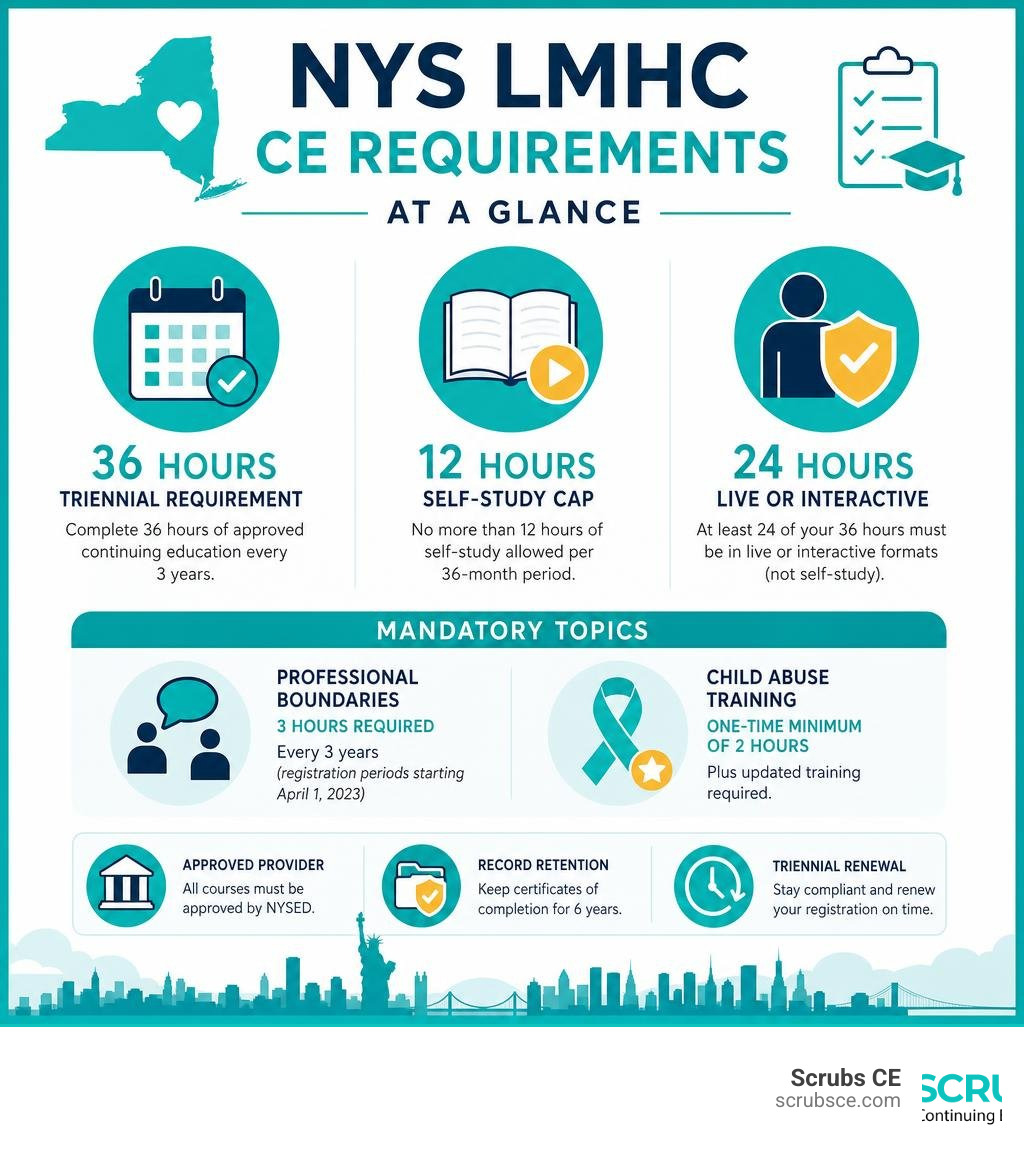
Core Requirements for New York Counselor CE
To maintain your active registration as a Licensed Mental Health Counselor (LMHC) in New York State, you must complete 36 hours of approved continuing education during each three-year (triennial) registration period.
In New York, a “contact hour” is defined as a minimum of 50 minutes of active instruction. This means if you take a course that is advertised as 3 hours, it must represent at least 150 minutes of instructional time.
The “Phase-In” and Pro-Rated Requirements
What happens if your registration period is shorter than the standard 36 months? This sometimes occurs if your registration is adjusted or if you are reactivating a license. In these cases, the State Education Department pro-rates your requirement. You are generally required to complete 1 hour of CE for each month you are registered. For example, if you have a 30-month registration period, you must complete 30 CE hours.
Format Comparison: How Your Hours Must Be Split
NYSED is very specific about how you can earn your 36 hours. You cannot simply complete 36 hours of self-paced reading online. The state divides courses into live formats and self-study formats.
| CE Format | Description | Maximum Hours Allowed |
|---|---|---|
| Live In-Person / Live Online | Real-time, interactive learning where you can communicate with the instructor (e.g., live Zoom webinars, in-person workshops). | No limit (You can complete all 36 hours here). |
| Self-Study | Self-paced, non-interactive learning (e.g., pre-recorded video courses, reading articles, home study). | Maximum 12 hours per 36-month period. |
All continuing education must be taken from NYSED-approved providers. Taking courses from an unapproved provider means those hours will not count toward your renewal, leaving you scrambling at the last minute.
Understanding the 12-Hour Self-Study Limit for New York Counselor CE
The self-study limitation is one of the most common tripwires for New York counselors. NYSED regulations state that no more than 12 hours of continuing education in any 36-month period may consist of self-study activities.
To stay on the right side of this rule, you must understand what qualifies as “live” versus “self-study”:
- Live Webinars and Interactive Online Learning: If you attend an online training that occurs in real-time, where you can ask the presenter questions and interact with other participants, this counts as a live format. There is no cap on these hours.
- Pre-recorded Webinars and Home Study: If you buy a course, read a PDF, or watch a video that was recorded months ago on your own schedule, this is self-study. You can only count up to 12 hours of this format per registration cycle.
When planning your new york counselor ce calendar, we recommend knocking out your live hours first so you don’t accidentally exceed the 12-hour self-study limit.
Mandatory Topics in New York Counselor CE
While you have plenty of freedom to choose clinical topics that interest you, New York mandates specific training areas that every LMHC must complete.
- Appropriate Professional Boundaries (3 Hours): Every three years, you must complete at least 3 hours of coursework dedicated to professional boundaries.
- Child Abuse Identification and Reporting (One-Time / Updated): A one-time minimum of 2 hours is required for initial licensure, but updated training mandates have recently gone into effect for all practicing clinicians.
- Ethics and Clinical Practice: While not a standalone hour-specific mandate like boundaries, your chosen CE courses must contribute to the professional practice of mental health counseling and align with ethical standards.
Mandatory Coursework: Boundaries and Child Abuse Training

Let’s dive deeper into the two most critical mandatory training requirements in New York.
The 3-Hour Professional Boundaries Mandate
Beginning with registration periods that started on or after April 1, 2023, the New York State Board of Regents mandated that all mental health counselors complete a 3-credit continuing education course on maintaining professional boundaries every three years.
This course must cover:
- The legal, ethical, and clinical standards that necessitate strict boundaries.
- The difference between minor “boundary crossings” (which may sometimes be clinically appropriate) and “boundary violations” (which are unethical and harmful).
- High-risk clinical scenarios, including the use of social media, digital communication, and managing multiple relationships.
- The legal and professional consequences of boundary violations under New York State law.
Updated Child Abuse Identification and Reporting Training
Historically, New York required a one-time, 2-hour course in child abuse identification and reporting. However, the state implemented a major update to this curriculum.
The April 1, 2025 Deadline: Every healthcare professional in New York who previously completed mandated reporter training was required to complete an updated curriculum by April 1, 2025. Because we are currently in July 2026, this deadline has already passed.
If you have not yet completed this updated training, you must do so immediately to remain compliant. The updated curriculum is designed to modernize how professionals protect children and includes:
- Adverse Childhood Experiences (ACEs) and Trauma: Understanding the long-term health and psychological impacts of developmental trauma.
- Implicit Bias: Recognizing how racial, economic, and cultural biases affect who gets reported to child protective services.
- Virtual Child Abuse Identification: Learning how to spot signs of abuse, neglect, or maltreatment when conducting telehealth sessions or interacting with children in a virtual environment.
Verifying Approved Providers and Course Formats
To ensure your hard work actually counts toward your license renewal, you must verify that your course provider is officially recognized by the New York State Education Department (NYSED).
How to Check for NYSED Approval
Do not assume that because a provider has national approvals (like NBCC or ASWB) they are automatically accepted in New York. NYSED maintains its own strict approval system. Approved providers are issued a specific MHC provider code (for example, MHC-XXXX).
Before purchasing any course, check the provider’s website for their NYSED approval statement. You can also search the official database directly:
- Use the NYS Mental Health Counseling: Continuing Education – Department Approved Providers directory to verify a provider’s status.
Evaluating Course Formats
If you want to take specialized clinical training, always check how the hours are classified. For example:
- If you are looking to specialize in couples therapy, you might consider an intensive program like the Four Day Externship in Emotionally Focused Couples Therapy – NYCEFT – New York Center For Emotionally Focused Therapy . This program offers 24 CE credits and, because it features live, interactive training, counts fully toward your live hour requirements.
- If you want to refine your individual therapy skills, a targeted workshop like the Deepen Your EFIT Practice: Consultation & Guided Practice Workshop – NYCEFT – New York Center For Emotionally Focused Therapy provides 4 live CE credits.
- For trauma-focused clinicians, comprehensive programs such as the EMDR: Eye Movement Desensitization and Reprocessing live online course provide up to 50 NYSED-approved contact hours. Because it is live and interactive, it easily fulfills your live training needs.
Always ensure the provider explicitly states that the specific course is approved for NYS LMHCs, not just social workers or psychologists.
Compliance, Recordkeeping, and Special Licensing Circumstances

Completing your courses is only half the battle; you must also prove you did them if the state comes calling.
The 6-Year Record Retention Rule
In New York, you do not submit your CE certificates to the state when you renew your registration. Instead, you sign an attestation on your renewal form stating that you have met the requirements.
However, NYSED conducts random audits. If you are audited, you must produce official certificates of completion. New York law requires you to retain all CE certificates for at least 6 years from the date of completion. We recommend keeping digital backups in a secure cloud folder so they are easy to retrieve.
Reactivating an Inactive License
If you let your registration lapse or placed your license on inactive status, you cannot simply jump back into practice. To reactivate your New York registration, you must prove you have kept up with your education:
- You must complete a prorated number of CE hours for the period your license was inactive (up to a maximum requirement) before the state will issue an active registration.
- Once reactivated, your new triennial cycle begins, and you must complete the standard 36 hours during that new period.
Scam Alert: Protecting Yourself from Licensing Fraud
The Office of the Professions has issued warnings regarding sophisticated “vishing” (voice phishing) and email scams targeting licensed healthcare professionals in New York.
- The Scam: Scammers call or email clinicians pretending to be employees of the NYSED Board of Mental Health Counseling. They may claim that your license is under investigation, suspended, or that you owe immediate fees for CE non-compliance.
- What to Do: NYSED will never demand immediate payment over the phone or ask for sensitive personal information via unsecure channels. If you receive a suspicious communication, hang up and contact the Office of the Professions directly to verify. You should also report these fraudulent attempts to the Federal Trade Commission (FTC).
Frequently Asked Questions about NYS LMHC Renewal
Can I carry over excess CE hours to my next registration period?
No. New York regulations are very clear on this: excess CE hours cannot be carried over to a subsequent registration period. If you complete 45 hours of CE during your current three-year cycle, those extra 9 hours cannot be applied to your next renewal. Every three years, your CE clock resets to zero.
Additionally, remember the distinction between licensure and registration. Your LMHC license is granted for life (unless suspended or revoked), but your registration (the permission to actively practice and use the title) must be renewed every three years.
Note on the First Registration Exemption: If you are a newly licensed LMHC in New York, you are exempt from the continuing education requirement during your very first triennial registration period. Your CE obligations begin at the start of your second registration period.
What happens if I cannot complete my CE hours on time?
If you cannot complete your 36 hours before your registration expires, you must not practice. Practicing without an active registration is a class E felony in New York. However, you have options:
- Conditional Registration: If you have met most of your requirements but fell slightly short due to unforeseen circumstances, you can apply for a Conditional Registration. This allows you a limited, non-renewable window (usually not exceeding one year) to make up the missing hours while continuing to practice. You must pay an additional fee and complete the remaining hours within the agreed timeframe.
- Hardship Adjustment: In cases of extreme personal hardship (such as severe illness, active military duty, or caring for a disabled family member), you can apply for a temporary adjustment or waiver of the requirements.
- Contact the Board: For any compliance struggles or to request an adjustment, email the board administration directly at mhpbd@nysed.gov.
How do out-of-state or inactive licensees meet New York continuing education requirements?
If you live out of state but maintain your New York LMHC license, you must still meet the 36-hour NYS requirement if you want to keep your registration active.
If you choose to let your New York registration go inactive because you are practicing in another state:
- You are exempt from NYS CE requirements while your registration is inactive.
- When you decide to return to active practice in New York, you must complete the required prorated reactivation hours (typically 1 hour for each month inactive, capped at 36 hours) before you can legally practice in the state again.
Conclusion
Navigating New York counselor CE requirements doesn’t have to be a source of professional stress. By keeping the 36-hour triennial requirement in mind, limiting your self-study to 12 hours, and completing your mandatory boundaries and child abuse updates, you can easily maintain compliance.
At Scrubs CE, we provide convenient, affordable online continuing education courses designed specifically for busy healthcare professionals. Our e-learning platform offers high-quality, self-paced courses with instant certificates, helping you meet your professional development goals without disrupting your clinical practice.
Ready to simplify your next renewal cycle? Explore our course options at Scrubs CE today!

The Ultimate Guide to What an MRI Tech Does
What Does an MRI Tech Do? Here’s the Short Answer
What does an MRI tech do is one of the most common questions from people exploring healthcare careers — and for good reason. It’s a role that blends advanced technology with hands-on patient care.
Here’s a quick overview:
| Core Responsibility | What It Involves |
|---|---|
| Operate MRI scanners | Use magnetic fields and radio waves to create detailed images of internal organs and tissues |
| Prepare patients | Review medical history, explain the procedure, and screen for safety contraindications |
| Position patients | Place patients correctly based on the body part being imaged |
| Administer contrast agents | Inject IV gadolinium when ordered to enhance image clarity |
| Monitor safety and comfort | Watch for patient distress and manage noise, anxiety, and claustrophobia |
| Inspect image quality | Review scans in real time and repeat sequences if needed |
| Document and collaborate | Record findings and work with radiologists and physicians to support diagnosis |
MRI technologists are essential members of the diagnostic healthcare team. Their work helps detect conditions ranging from brain tumors and spinal injuries to Alzheimer’s disease — often before symptoms become severe. According to the U.S. Bureau of Labor Statistics, the median annual wage for MRI technologists was $88,180 in May 2024, with employment projected to grow 5% through 2034.
I’m Zita Ewert, and as the leader of SCRUBS Continuing Education®, I’ve spent years helping imaging professionals — including MRI techs — understand what does an MRI tech do at every stage of their career, from initial certification through advanced CE requirements. This guide pulls together everything you need to know, whether you’re entering the field or maintaining your credentials.
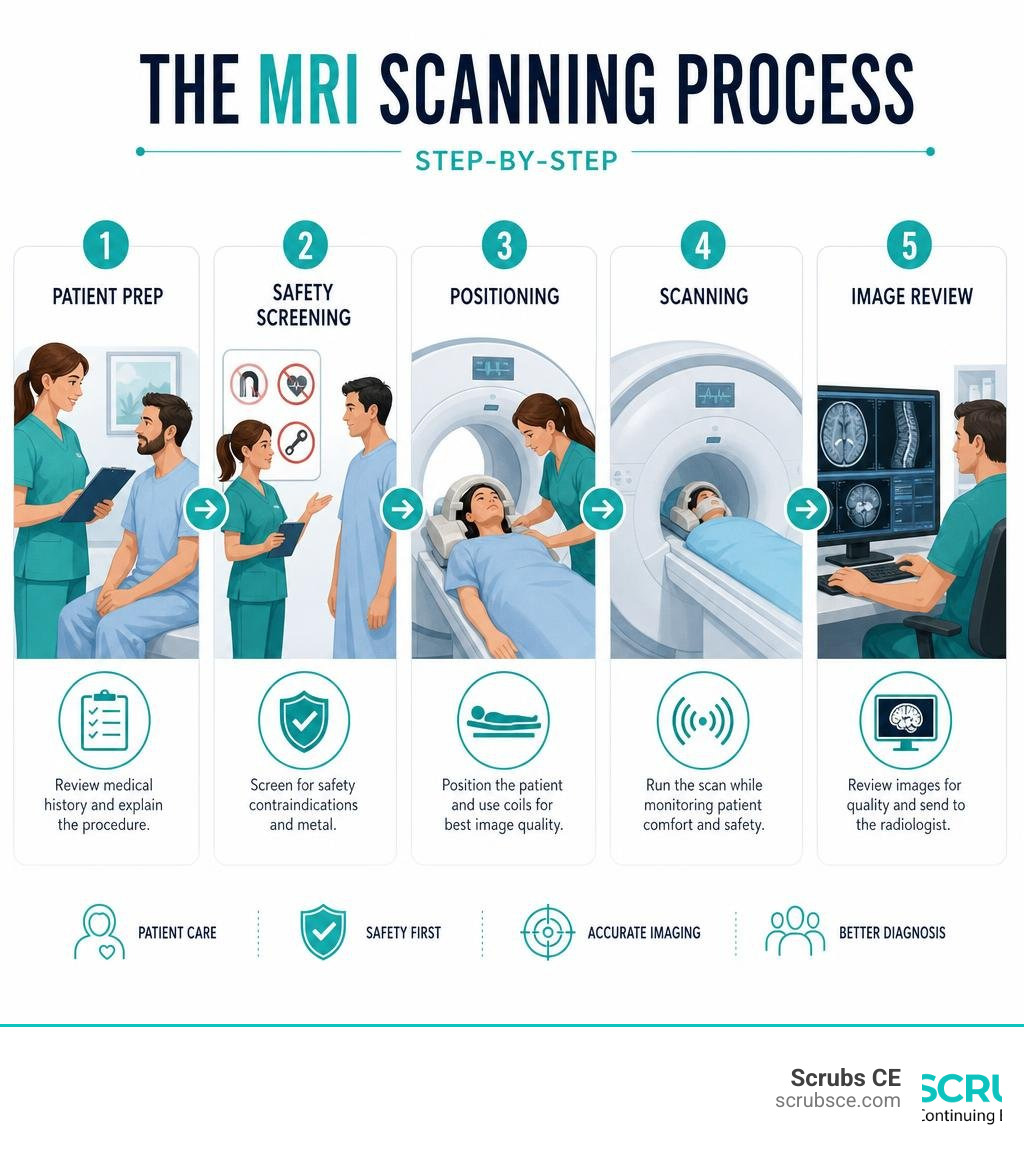
What Does an MRI Tech Do? Roles and Daily Responsibilities
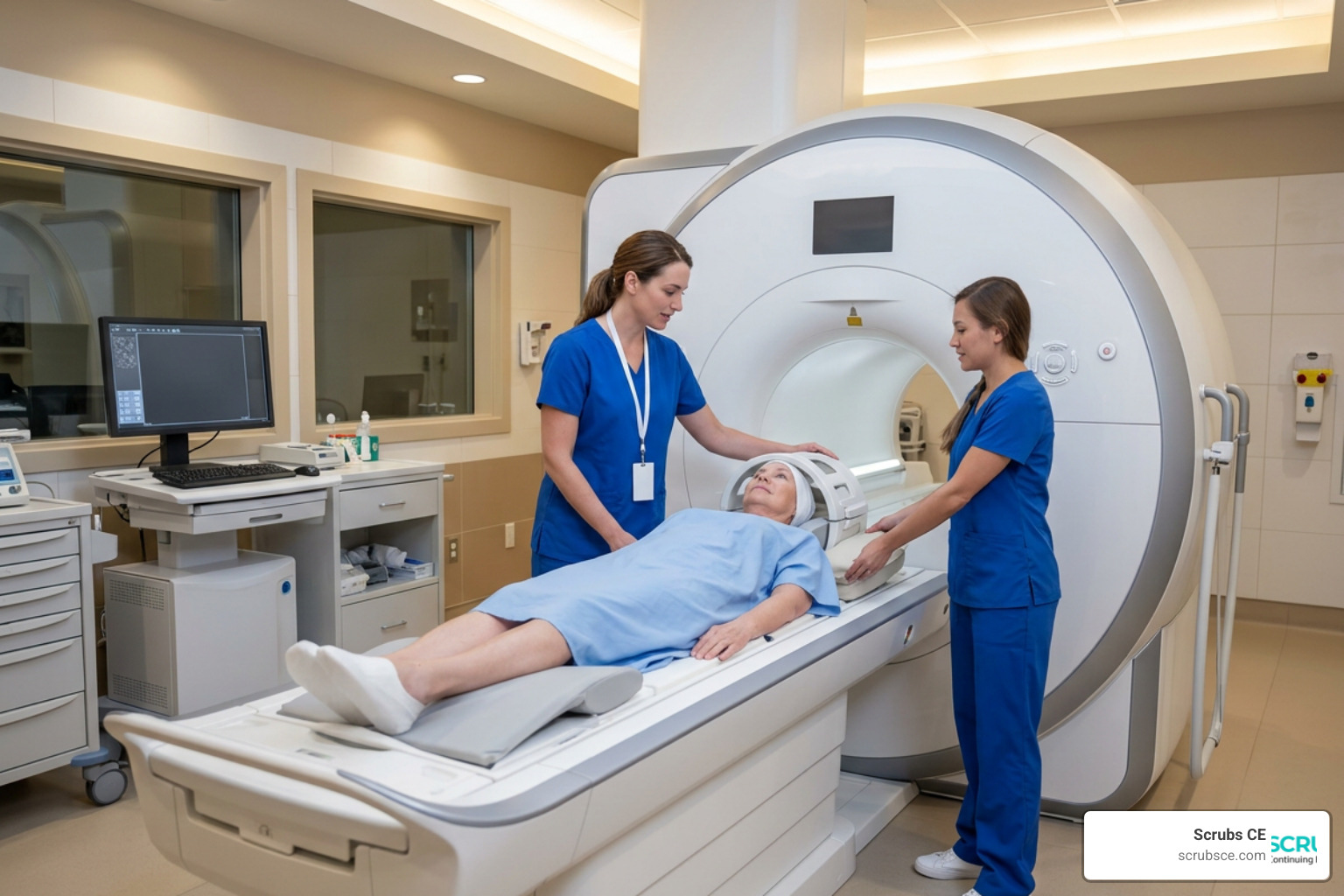
At its core, the role of a Magnetic Resonance Imaging (MRI) technologist is to capture high-resolution, cross-sectional images of the human body. Unlike traditional X-rays or CT scans, which rely on ionizing radiation, MRI technology utilizes powerful magnetic fields and radiofrequency waves to excite hydrogen atoms in the body’s tissues.
As these atoms return to their normal state, they emit signals that the scanner’s computer translates into exceptionally detailed 3D visuals. To explore the highly standardized task lists and formal occupational parameters of this career, you can review the detailed O*NET OnLine MRI Technologists Profile.
The daily responsibilities of an MRI tech extend far beyond simply pressing a button on a computer console. Technologists must possess a deep, practical understanding of human anatomy and pathology. They need to know exactly how a healthy brain, spine, knee, or liver should look on screen so they can recognize abnormalities in real time.
If a patient moves or an image appears blurry, the technologist must immediately troubleshoot the issue, adjusting scanner parameters or repeating sequences to ensure the final images are of diagnostic quality for the reading radiologist.
A Day in the Life: What Does an MRI Tech Do on a Typical Shift?
A typical shift for an MRI technologist is , highly structured, and deeply collaborative. While the exact workflow can vary depending on whether you work in a bustling trauma hospital or a quiet outpatient imaging center, most days follow a similar rhythm:
- Morning Quality Control (QC): Before the first patient arrives, the technologist must calibrate the MRI equipment. This involves running daily “phantom scans” (scanning a standardized object filled with water and organic compounds) to verify the scanner’s magnetic field homogeneity, signal-to-noise ratio, and spatial resolution.
- Reviewing Physician Orders: Every scan must match a precise medical order. Technologists review these orders to determine the correct protocol (e.g., a brain scan with or without contrast, or a specific musculoskeletal joint protocol).
- Safety Screening and Medical History: This is perhaps the most critical step of the day. The technologist conducts a thorough screening interview with each patient, documenting medical history, checking for internal metallic implants, and assessing kidney function if contrast is required.
- Patient Positioning and Coil Placement: The tech guides the patient into the scanner room and helps them lie down on the table. They place specialized receiver coils (which act as antennae to collect the radio signals) over the specific anatomical area being imaged, such as the head, shoulder, or pelvis.
- Running the Scan: From the operator’s console outside the magnet room, the technologist programs the computer and initiates the imaging sequences. They monitor the progress closely, watching the images construct in real time on their monitors.
- Contrast Media Administration: If the protocol calls for contrast, the tech will start an intravenous (IV) line and administer a gadolinium-based contrast agent, often using a synchronized power injector to time the contrast flow perfectly with the scan sequences.
- Image Quality Inspection and Documentation: Once the scan is complete, the tech inspects the images for clarity, archives them to the PACS (Picture Archiving and Communication System), and documents the procedural notes for the radiologist.
As technology evolves, the daily workflow continues to shift. To see how recent innovations like artificial intelligence and wider scanner bores are changing the day-to-day experience of technologists, check out our insights on the MRI Tech in 2025: Bigger Bores and Better Brains.
Patient Safety and Comfort: What Does an MRI Tech Do to Ensure a Smooth Scan?
Because MRI scanners use incredibly strong magnets (typically 1.5 Tesla to 3.0 Tesla or higher), safety is the absolute highest priority. The magnetic field is always on, even when the machine is not actively scanning.
Technologists are the gatekeepers of the MRI suite, which is divided into strict safety zones. Zone IV is the actual magnet room, and the tech must ensure that no ferromagnetic materials (such as oxygen tanks, hairpins, keys, or certain jewelry) ever enter this space. If a heavy metal object gets too close, the “missile effect” can occur, pulling the object toward the scanner with lethal force.
Beyond physical safety, technologists must actively manage patient comfort and anxiety. MRI machines are notoriously loud; the rapid switching of gradient coils creates knocking and buzzing noises that can exceed 100 decibels. Technologists mitigate this by providing patients with earplugs or specialized, MRI-safe headphones playing music.
Claustrophobia is another major hurdle. Sliding into a narrow, brightly lit tube for 30 to 60 minutes can be incredibly stressful for many patients. A great MRI tech uses excellent communication and empathy to ease these fears. They explain exactly what the patient will hear and feel, maintain constant voice contact via an intercom system, and provide a “squeeze bulb” panic button that the patient can press to immediately stop the scan if they feel overwhelmed. Technologists also monitor the patient’s vital signs and physical comfort throughout the entire procedure.
How to Become an MRI Technologist: Education, Training, and Certification
Becoming an MRI technologist is a highly rewarding career path that requires a deliberate blend of academic study, clinical practice, and professional credentialing. If you are trying to map out your journey into this field, you can find a comprehensive roadmap in The Ultimate Guide to Becoming an MRI Tech and Attracting Success.
Educational Pathways and Clinical Training
There are two primary educational pathways to enter this profession:
- The Radiography-First Path (Post-Primary): Many technologists begin by earning an associate or bachelor’s degree in radiologic technology. After completing their program and passing their primary radiography registry, they gain clinical experience and complete specialized, post-primary MRI training to cross-train into magnetic resonance imaging.
- The Direct MRI Path (Primary): Alternatively, students can enroll directly in an Associate of Applied Science or Bachelor of Science program in MRI technology. These direct programs combine general education requirements with dedicated MRI physics, anatomy, and clinical coursework.
Regardless of the pathway, clinical rotations are a cornerstone of your education. Students typically spend hundreds of hours (often around 400 hours) in hospital and clinic settings under direct supervision. During these rotations, you will learn the practical application of MRI physics—such as how Repetition Time (TR) and Echo Time (TE) parameters affect T1 and T2 image contrast—and how to recognize and correct common image artifacts.
For those looking to dive deeper into these foundational concepts, we recommend exploring MRI Training 101: Learn MRI Basics as well as our detailed breakdown of MRI Training Requirements. To see an example of a highly structured, hospital-based training curriculum, you can also review the Mayo Clinic MRI Career Overview.
ARRT® and ARMRIT Certification Requirements
To practice legally and secure employment in most healthcare facilities, technologists must obtain professional certification. The two primary credentialing bodies in the United States are:
- The AMERICAN REGISTRY OF RADIOLOGIC TECHNOLOGISTS® (ARRT®): This is the most widely recognized credentialing organization. To earn the ARRT® (MR) credential, candidates must meet strict educational requirements, document a specific set of clinical competencies, and pass a comprehensive registry examination covering patient care, safety, physical principles, and sequence parameters.
- The American Registry of Magnetic Resonance Imaging Technologists (ARMRIT®): This registry specializes exclusively in MRI technology and is an excellent pathway for those who have graduated from ARMRIT®-approved MRI programs.
Once certified, the learning doesn’t stop. To maintain active registration and ensure they remain at the forefront of patient safety and imaging technology, technologists must complete mandatory continuing education (CE) credits. For example, the ARRT® requires 24 CE credits every two years.
At Scrubs CE, we specialize in providing convenient, self-paced, and affordable MRI CE Courses designed to help you easily meet these requirements and advance your career.
MRI Technologist vs. Radiologic Technologist: Key Differences
While both roles operate within the broader field of Radiology, it is common for patients and prospective students to confuse MRI technologists with radiologic technologists (often called X-ray techs). Understanding the operational and technological differences is key to choosing the right career path.
| Feature | Radiologic Technologist (R.T.) | MRI Technologist (R.T.(MR) or ARMRIT) |
|---|---|---|
| Primary Technology | Ionizing radiation (X-rays) | Strong magnetic fields and radiofrequency waves |
| Primary Exams | Bone fractures, chest X-rays, mammography, fluoroscopy | Soft tissue imaging, brain, spine, joints, cardiac, and abdominal organs |
| Image Dimension | Primarily 2D flat projection images | High-resolution 3D and multi-planar cross-sectional images |
| Radiation Risk | Requires lead shielding and active radiation monitoring | Zero ionizing radiation risk; high risk of magnetic attraction/thermal issues |
| Exam Duration | Very fast (usually 5 to 15 minutes) | Moderate to long (usually 30 to 90 minutes) |
| Contrast Media | Barium or iodinated contrast (oral or IV) | Gadolinium-based contrast agents (IV) |
The key difference lies in the underlying physics. Radiologic technologists use X-rays to capture structural images, which requires them to wear radiation monitoring badges and utilize lead shielding to minimize exposure. MRI technologists, on the other hand, manage the unique safety challenges of a powerful magnetic field.
Because MRI scans take much longer and require the patient to remain perfectly still inside a small space, MRI techs generally spend more individual, face-to-face time with each patient compared to X-ray techs. For a broader look at the medical imaging landscape, you can read the official BLS Occupational Outlook Handbook.
Job Outlook, Salary, and Work Environments for MRI Techs
The job market for MRI technologists is exceptionally strong. As the older population grows and the prevalence of chronic diseases rises, the demand for sophisticated, non-invasive diagnostic procedures continues to climb.
Salary and Job Growth Projections
According to the U.S. Bureau of Labor Statistics, the median annual wage for MRI technologists was $88,180 in May 2024. The lowest 10% of earners made less than $63,000, while highly experienced technologists or those working in specialized outpatient care centers earned upwards of $110,000 to $128,000 annually.
Overall employment in this sector is projected to grow faster than the average for all occupations over the next decade, resulting in thousands of new job openings each year.
Work Environments and Schedules
MRI technologists have the flexibility to work in a variety of healthcare settings:
- Hospitals (approx. 59% of jobs): Hospital-based technologists often work in environments, handling emergency room traumas, inpatient scans, and scheduled outpatient procedures. Because hospitals operate 24/7, these roles may require evening, overnight, weekend, or on-call shifts.
- Outpatient Imaging Centers: These facilities typically offer more predictable, daytime schedules. The patient volume is often high, but the cases are generally more routine (such as elective orthopedic or neurological scans).
- Specialty Clinics and Oncology Centers: Working in specialized environments, such as cancer care, allows technologists to focus on highly detailed, protocol-driven imaging. In these settings, techs may also assist with clinical trials and advanced research projects. To learn more about what this looks like in practice, explore the Moffitt Cancer Center Career Compass.
Frequently Asked Questions About MRI Technologists
How long does it take to become an MRI technologist?
The timeline depends on your chosen educational path. If you are already a registered radiologic technologist, you can often complete a specialized MRI certificate program in about 12 months. If you are starting from scratch, earning an associate degree in MRI technology typically takes 2 to 4 years, which includes your academic coursework and required clinical training hours.
What are the physical and emotional demands of being an MRI tech?
Physically, MRI technologists spend long periods on their feet, walking between the control console and the magnet room. They must also be able to physically assist, lift, and position patients who may have limited mobility.
Emotionally, the job requires a high degree of patience and empathy. You will frequently work with patients who are in pain, highly anxious, claustrophobic, or seriously ill. Managing these high-stress situations while maintaining a calm, reassuring demeanor can be emotionally demanding but deeply rewarding.
Can you become an MRI technologist without a prior degree?
No, you cannot become an ARRT® certified MRI technologist without an associate degree (or higher) from an accredited institution. The AMERICAN REGISTRY OF RADIOLOGIC TECHNOLOGISTS® (ARRT®) requires all candidates to hold at least an associate degree to sit for their registry exams. However, this degree does not necessarily have to be in radiologic science; you can complete an associate degree in another field and then complete an approved MRI educational program.
Conclusion
Understanding what does an MRI tech do reveals a dynamic, intellectually stimulating career that sits at the perfect intersection of advanced technology and compassionate patient care. From running morning quality control scans to comforting an anxious patient through a complex 3D brain scan, MRI technologists are vital to modern medicine.
At Scrubs CE, we are dedicated to supporting your professional development. We provide high-quality, self-paced online continuing education courses with instant certificates to help you meet your licensure requirements and advance your career with ease.
Whether you are looking to expand your clinical knowledge with the industry-standard MRI in Practice 5th Ed. course or need to complete your biennial registry credits, explore our complete catalog of Scrubs CE MRI CE Courses today to keep your career moving forward!