
Why Online MRI Education Matters for Your Career

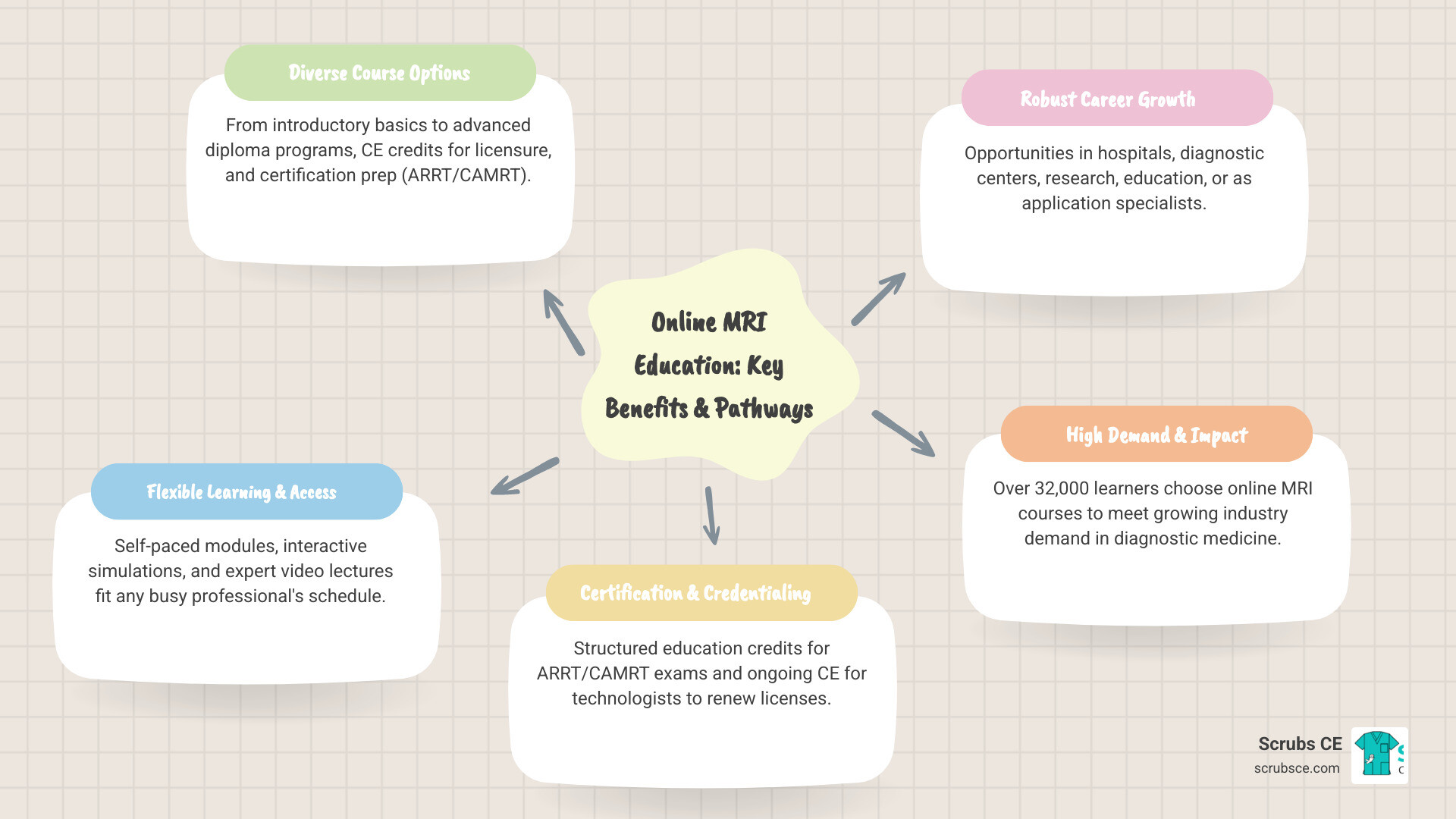
Online MRI courses provide flexible, accredited training for healthcare professionals seeking to enter the magnetic resonance imaging field or advance their existing careers. Whether you need continuing education credits, certification preparation, or foundational knowledge, online learning offers a convenient path forward.
Quick Answer: Types of Online MRI Courses Available
- Introductory Courses – Basic MRI physics and principles (8-10 hours)
- Continuing Education (CE) – Specialized topics for license renewal (1-16 credits)
- Certification Preparation – Structured programs for ARRT/CAMRT exams (12-16 credits)
- Full Diploma Programs – Comprehensive 1-2 year hybrid programs
- MRI Safety Training – Required courses for all MRI personnel (1-3 credits)
The demand for skilled MRI technologists continues to grow as magnetic resonance imaging becomes increasingly important in diagnostic medicine. Over 32,000 learners have enrolled in popular online MRI fundamentals courses, demonstrating the widespread need for accessible education in this field.
For busy healthcare professionals, finding time for professional development presents a constant challenge. Traditional in-person classes often conflict with demanding work schedules and family commitments. Online MRI courses solve this problem by offering self-paced learning, evening access, and bite-sized modules that fit into your life.
As one radiologist shared about their online learning experience: “This is perfect for me as a busy radiologist in private practice. I can do quick reviews and relearn things I have forgotten.”
The shift to online education has made MRI training more accessible than ever. Programs now incorporate interactive simulations, scrollable DICOM cases, and expert-led video lectures that rival traditional classroom instruction. Many courses satisfy the same accreditation requirements as in-person training, including ARRT structured education credits and professional certification preparation.
Navigating the Landscape of Online MRI Courses
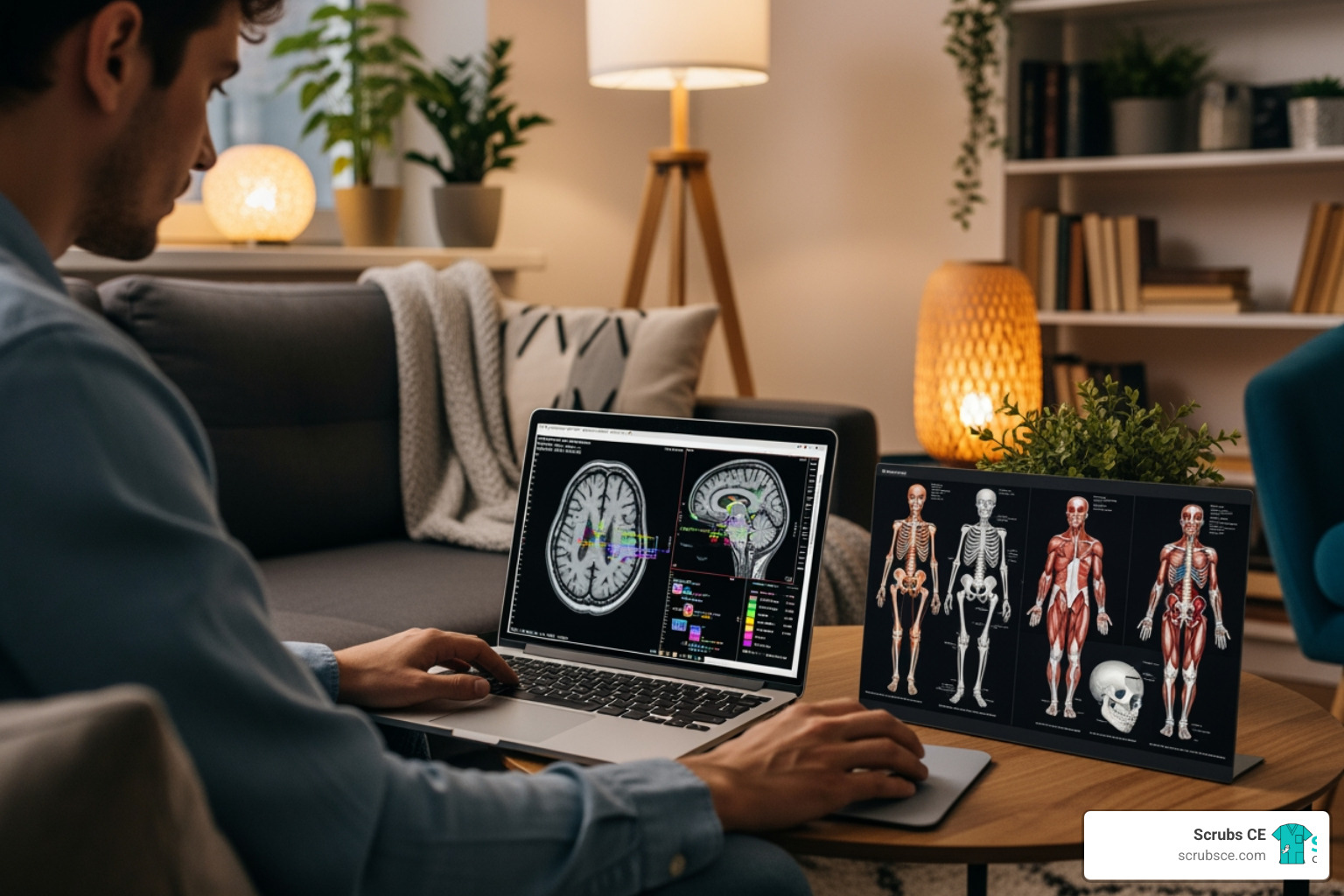
Life as a healthcare professional is incredibly demanding, isn’t it? Between shifts, patient care, and a million other responsibilities, finding time for your own growth can feel impossible. That’s precisely why the flexibility and accessibility of online MRI courses are so revolutionary! Imagine diving into complex MRI physics during your lunch break, or exploring advanced protocols from the comfort of your couch after a long day. Online learning truly empowers you to set your own pace, fitting vital education seamlessly into your already busy schedule. This self-paced approach is a true game-changer for working professionals, allowing you to advance your career without sacrificing your current commitments.
Foundational and Introductory Courses
Are you just starting to explore the incredible world of Magnetic Resonance Imaging, or perhaps considering an exciting career change? Then foundational and introductory online MRI courses are your perfect first step! These courses are specially designed to explain MRI, covering the essential MRI physics and basic principles that make this powerful imaging modality possible.
You’ll learn how the magic happens – from the magnetic resonance phenomenon itself, to how signals are generated, and finally, the intricate process of forming those detailed images we rely on. Think of it as building your MRI vocabulary, brick by brick. These courses are absolutely ideal for new students, career changers, or anyone who needs to grasp the fundamental concepts before diving into more specialized training. Understanding these basics isn’t just academic; it’s crucial for truly interpreting MRI scans and optimizing examinations in real-world clinical practice.
To truly grasp the essence of MRI, we must understand What is Involved in MRI Training?. It’s so much more than just pushing buttons; it’s about deeply understanding the science behind every single image.
Continuing Education (CE) for Technologists
For our seasoned technologists, the learning journey truly never ends! Continuing Education (CE) isn’t just a “nice-to-have” perk; it’s often a crucial requirement for licensure renewal and an absolute must for staying current in this incredibly field. This is where online MRI courses really shine, offering a wonderfully convenient way to earn those essential CE credits. You can dive into specialized topics and master advanced techniques without missing a beat in your busy work schedule.
Many professional organizations, like the American Society of Radiologic Technologists (ASRT), emphasize the importance of structured education. They often require specific credit types, such as Category A CE credits, to ensure you’re getting high-quality, relevant content. The great news is that many online options are specifically designed to meet these rigorous standards.
Here at Scrubs CE, we are incredibly passionate about making your professional development journey as smooth and rewarding as possible. We offer high-quality, self-paced courses designed to help you easily meet your licensure requirements and confidently advance your career. For us, it’s crystal clear Why MRI Programs for Continuing Education are Important. We truly believe that accessible, affordable education is the cornerstone of professional growth. That’s why our comprehensive catalog of MRI CE Courses is thoughtfully designed with your needs and schedule in mind.
Advanced Diploma and Certification Preparation
Ready to make a significant leap forward in your MRI career? That’s fantastic! Advanced diploma programs and specialized certification preparation courses are your clear next step. These programs typically offer a much more in-depth curriculum, carefully crafted to meet the rigorous structured education requirements set by prestigious bodies like the American Registry of Radiologic Technologists (ARRT) and the Canadian Association of Medical Radiation Technologists (CAMRT).
Many top-tier programs, understanding the need for both robust theory and hands-on expertise, often adopt a hybrid model. This means you get the best of both worlds: the convenience of online MRI courses for theoretical learning, blended with essential in-person practical sessions to hone your skills. These comprehensive programs ensure you gain both the deep theoretical knowledge and the crucial practical skills necessary to truly excel and lead in the field.
They are designed to equip you for success, preparing you to sit for and pass those vital certification exams from organizations like the American Registry of Radiologic Technologists (ARRT) and the Canadian Association of Medical Radiation Technologists (CAMRT). At Scrubs CE, we understand the importance of preparing for these career-defining certifications. Our specialized MRI CE for ARMRIT / ARRT courses are specifically designed to help you accumulate the necessary structured education credits and build your knowledge base, putting you on the right track for certification success.
Core Curriculum and Learning Methodologies
The way we learn has changed so much, hasn’t it? The best modern online MRI courses really shine with their smart and engaging teaching methods. Forget dry textbooks; today’s platforms turn complex medical ideas into easy-to-understand, fun content. You’ll find yourself diving into interactive modules, enjoying clear video lectures, and working through fascinating case studies.
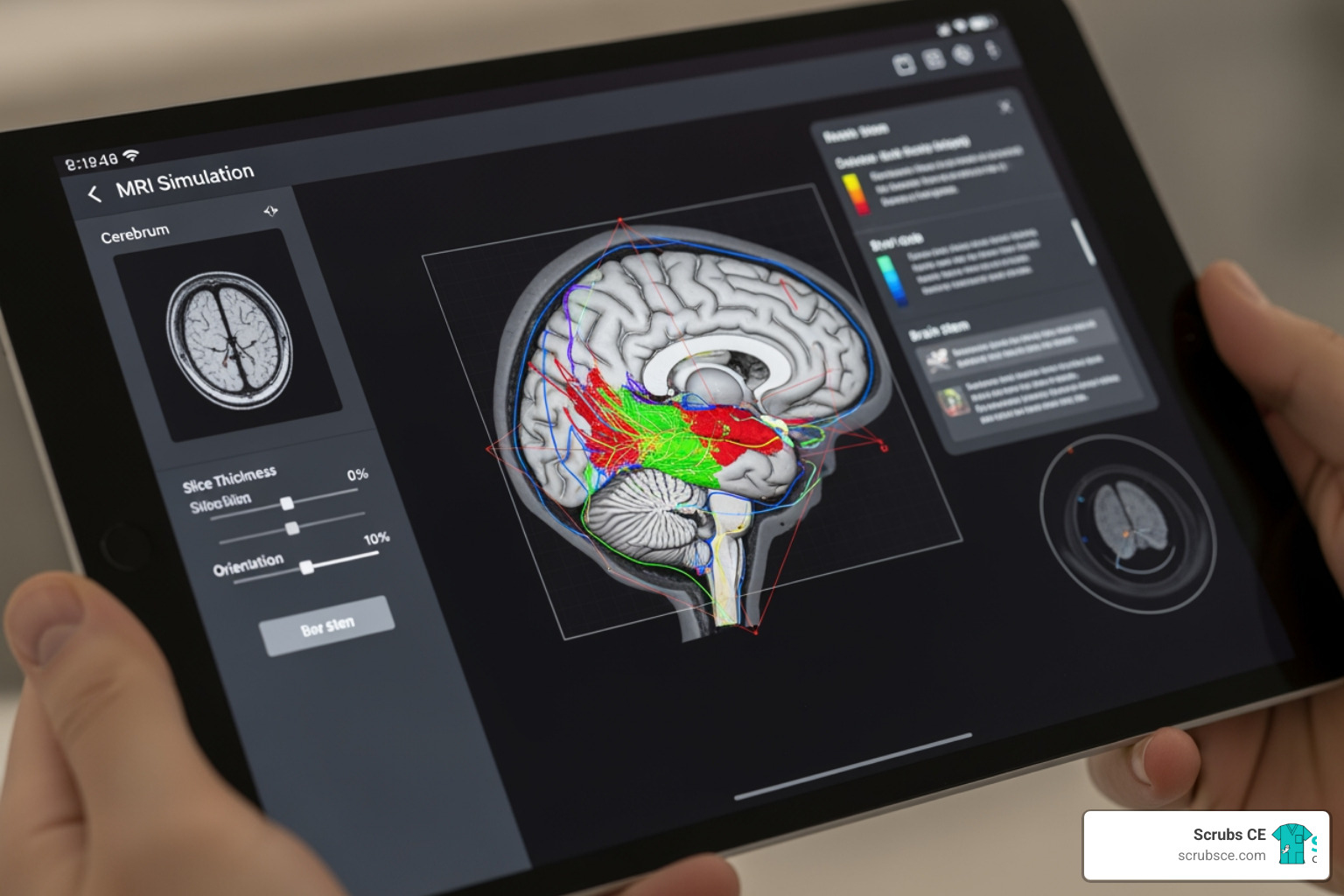
Many courses even let you explore thousands of scrollable DICOM images, just like a real pro, so you can practice interpreting scans. Virtual simulations and quick quizzes are often built right in to check your understanding and get you ready for real-world tasks. And for that big test? Practice exams are there to help you nail it. It’s all designed to make learning effective and enjoyable.
Key Learning Outcomes
When you finish these online MRI courses, you won’t just have facts; you’ll have valuable skills you can use right away. You’ll become a whiz at image interpretation, learning to spot the differences between normal body parts and anything that looks a bit off. Plus, you’ll master protocol optimization, which means you’ll know how to adjust MRI procedures for each patient’s unique needs and what the doctors are looking for.
A solid grasp of cross-sectional anatomy and pathophysiology is woven into everything you learn. This is super important for understanding what you’re seeing on the scan and why it matters. This complete approach means you’re not just memorizing; you’re truly understanding the science behind the images.
Ready to dive deeper into these vital areas? We highly recommend checking out our resources like Radiology Courses: Fundamentals of Body MRI 2nd ed. and Radiology Courses: MRI in Practice 5th ed.. They offer fantastic, in-depth looks at how MRI principles work in real life.
The Critical Role of MRI Safety Training
MRI machines are incredibly powerful tools, but with great power comes a big responsibility – and a huge need for strict safety rules. We can’t stress enough how important MRI safety training is. It keeps both patients and the medical team safe. That’s why online MRI courses dedicate a lot of time to this crucial topic.
You’ll learn all about careful patient screening procedures and how to set up and respect MRI safety zones in the imaging room. We cover the safe use of contrast agents, understanding the dangerous projectile effect if metal objects get too close, and how to prevent RF-related burns, which can be a serious issue. These specialized courses follow the latest guidelines to give you top-notch training.
We truly believe in the importance of this knowledge. That’s why we’ve created helpful resources like MRI Safety: Things You Should Know and offer essential training like the Essentials of MRI Safety Book Test Mailed. Keeping the MRI environment safe is our top priority, and proper training is your best defense.
From Education to Employment: Certification and Career Paths
Starting on online MRI courses isn’t just about learning new things; it’s a smart step toward a brighter future in your career. Many folks start these courses with one big goal in mind: getting that all-important professional certification. And guess what? That certification is like a master key, open uping a world of exciting jobs in medical imaging. Once you’ve got it, you’ll be ready to shine as an MRI technologist, a highly valued pro in healthcare.
Preparing for Certification with Online MRI Courses
Online learning platforms are your best friends when it comes to getting ready for those big certification exams. They offer special credits called structured education credits, which you need to qualify for exams from groups like the ARRT and CAMRT. Think of these courses as your personal study guides, custom to help you succeed.
For example, many programs give you not only the CE credits you need but also mock exams and practice tests to get you comfortable with the exam style. This means you can study at your own pace and then test your knowledge, just like the real thing! Many diploma programs specifically design their lessons to get you ready for both the Canadian Association of Medical Radiation Technologists (CAMRT) and ARRT certification tests.
And it’s not just about getting certified the first time! Keeping your certification active is super important. That’s where the CQR process comes in – the ARRT’s Continuing Qualification Requirements. Online courses are a fantastic way to meet these ongoing needs, ensuring your skills stay sharp and your certification remains current. Here at Scrubs CE, we even offer specialized options like our MRI CE for ARMRIT / ARRT to help you stay on top of your game.
Career Opportunities After Completion
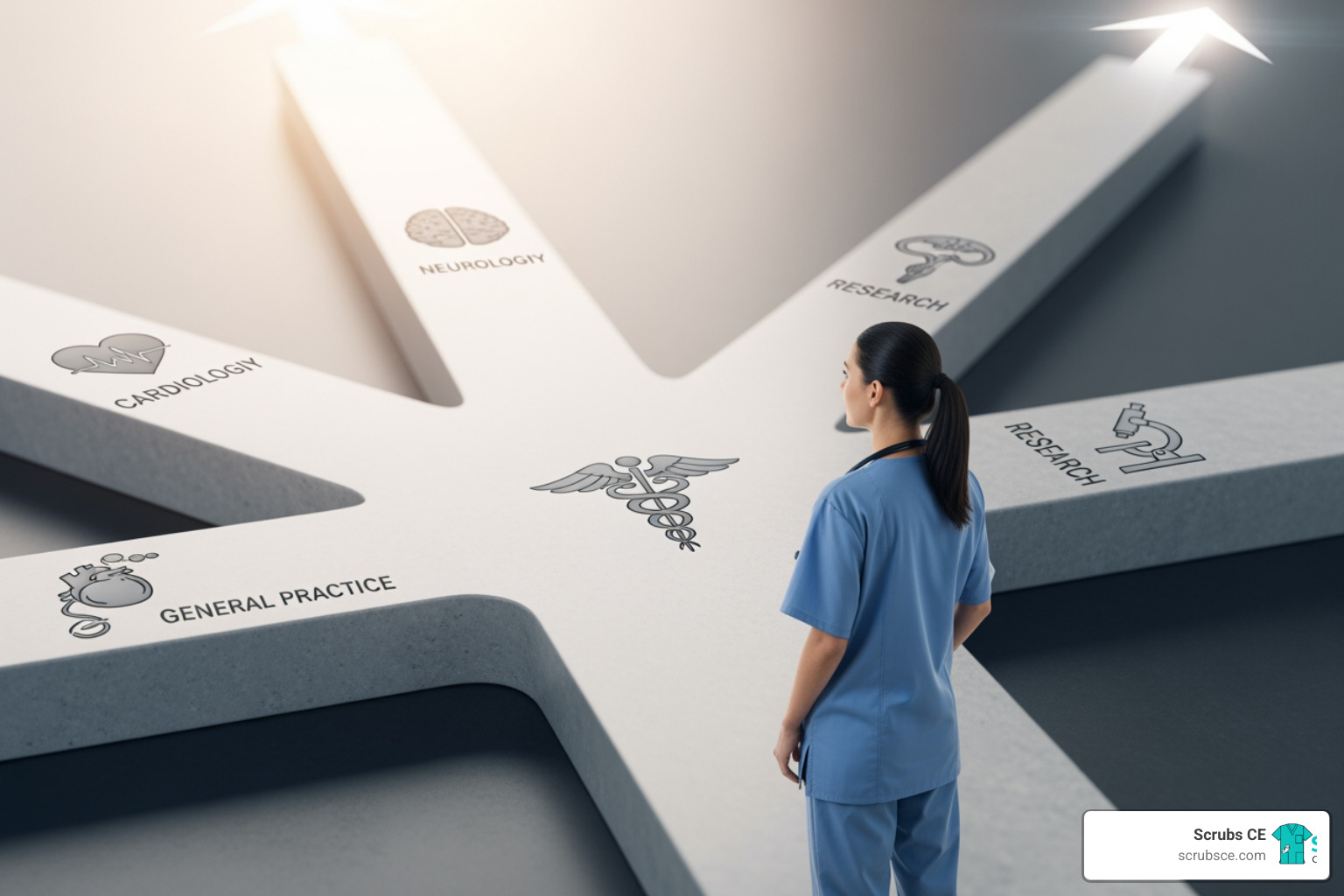
Once you’ve wrapped up your online MRI courses and earned your certification, a world of career paths opens up for you. The most common and rewarding path is becoming an MRI technologist. In this role, you’ll be the person operating those amazing MRI machines in places like hospitals, diagnostic imaging centers, or even specialized health facilities. You’ll get to talk with patients, make them feel comfortable, and work closely with other healthcare pros to capture those vital diagnostic images. It’s a job where you truly make a difference every day!
But wait, there’s more! Your expertise isn’t limited to just scanning patients. You could find yourself working in research facilities, helping to find new and better ways to use MRI. Or, if you love to share your knowledge, the education sector might be calling your name, training the next generation of MRI specialists. Some even become application specialists or work in sales for companies that make MRI equipment, using their deep understanding of the technology to help others. The demand for skilled MRI professionals is always growing, so your online education is truly a fantastic springboard for a fulfilling and impactful career.
Getting Started: Requirements and Costs
Starting on the exciting journey of online MRI courses is a fantastic step for your career! To ensure a smooth start, it’s super helpful to understand what you’ll need both academically and technologically, as well as the financial investment involved. Think of it as preparing your toolkit and budget before starting a big project – a little planning goes a long way!
Typical Admission and Technical Requirements
Just like any great adventure, getting started with online MRI courses has a few checkpoints. What you’ll need depends a lot on where you’re headed. If you’re looking at foundational or continuing education (CE) courses, the requirements are often pretty straightforward. You might just need to show you have some basic healthcare knowledge or an existing professional credential in a related field, like radiography or sonography. It’s all about building on what you already know!
However, if you’re aiming for a more in-depth path, like an advanced diploma or a graduate certificate, the prerequisites become a bit more robust. These programs are designed to truly lift your expertise, so they usually require existing credentials, such as a diploma or degree in a related health discipline. For instance, some programs are specifically custom for technologists already working in areas like radiography, sonography, or nuclear medicine, ensuring everyone in the class shares a strong clinical background. Some even look for a solid academic history from your previous education, and might include assessments to gauge your readiness. And for our international friends, demonstrating English language proficiency through tests like TOEFL or IELTS is a common requirement to make sure you can fully engage with the course material.
Beyond your academic background, having the right tech setup is key to making your online learning experience enjoyable and effective. Imagine trying to view a detailed MRI scan with a slow internet connection – not ideal, right? That’s why you’ll typically need a modern computer (often a Windows-based PC is recommended for compatibility with specialized software), a reliable high-speed internet connection that can handle video lectures and large files, and a webcam and microphone for interactive sessions. You might also need specific software, from up-to-date web browsers to PDF readers, and sometimes even specialized platforms for virtual MRI simulations. Getting these technical ducks in a row beforehand means you can dive straight into learning without any pesky tech problems!
Understanding the Costs of Online MRI Courses
When it comes to the cost of online MRI courses, it’s a bit like ordering from a menu – there’s a range of options! A single CE credit might just be a small fee, while a full diploma program could be a more significant investment. It’s important to look at the whole picture, not just the sticker price.
The main chunk of the cost is usually tuition fees, which cover the instruction and access to the learning platform. For quick CE courses, this could be a very modest amount. For longer, more comprehensive programs, tuition can range from a few thousand dollars per year for domestic students to much higher for international students, reflecting the extensive curriculum and support provided. Sometimes, course materials and textbooks are included, but other times you’ll need to budget for these separately.
For programs that include hands-on elements, even if they’re virtual, there might be lab fees for integrated simulations or in-person sessions. Pursuing certification is a separate step, so you’ll also encounter certification exam fees paid directly to organizations like ARRT or CAMRT. Don’t forget the little extras – colleges often have ancillary fees for student services or technology, even for online learners. And for programs with a clinical placement component, you’ll need to factor in costs for preplacement non-academic requirements, like police checks, vaccinations, or mask fit testing. Lastly, while some software is provided, highly specialized applications might require you to purchase software licenses.
For those considering more extensive, longer-term programs, it’s always a good idea to explore options for financial aid. Many institutions offer resources to help students manage the investment in their education, so don’t hesitate to reach out to the program’s admissions or financial aid office for guidance.
To help you get a clearer sense of what to expect, here’s a quick overview of typical inclusions for different types of online MRI courses:
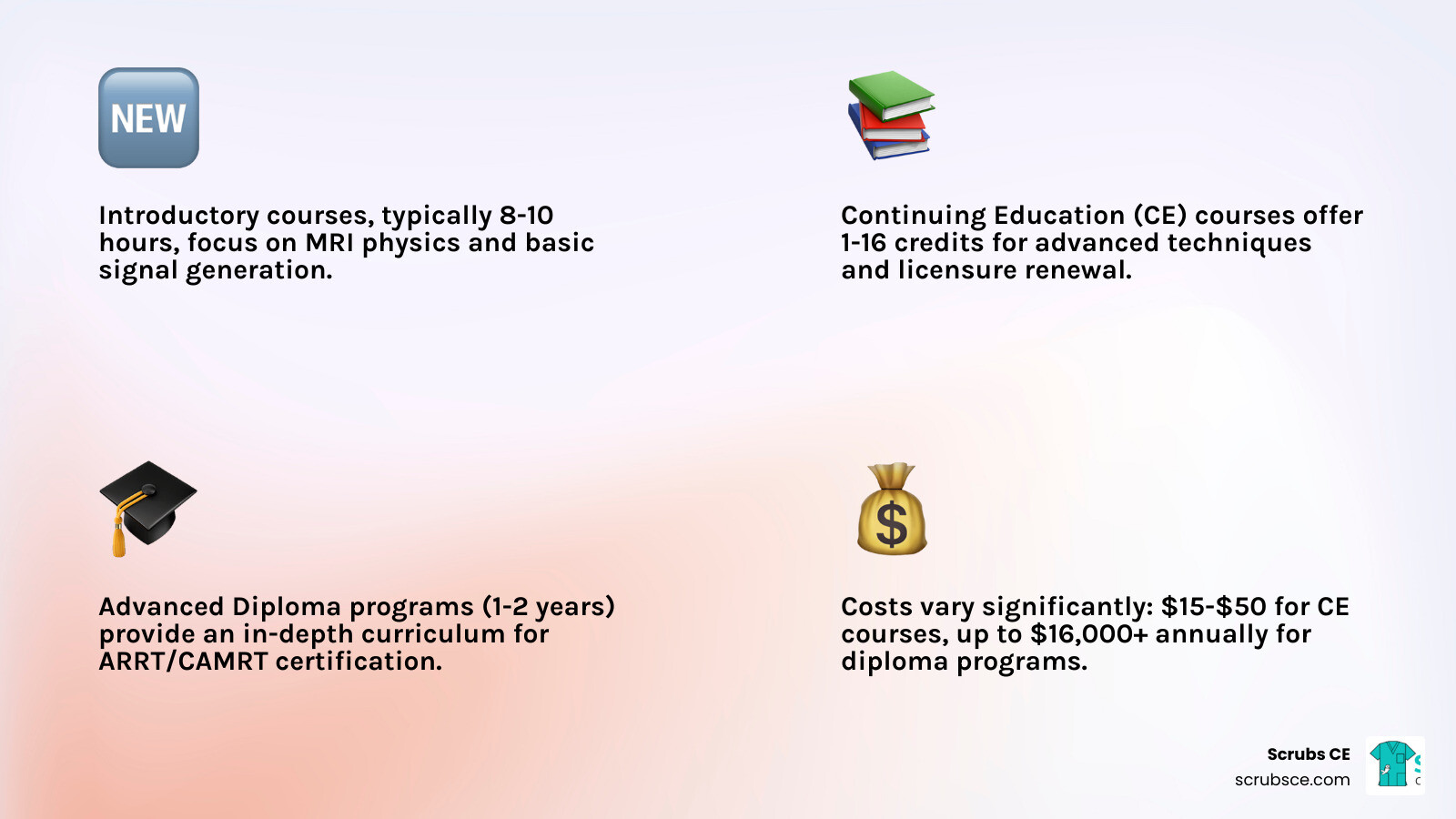
Understanding these requirements and costs upfront helps you plan effectively and ensures your path to advancing your MRI career is as smooth and successful as possible!
Recent Comments