
Why Cultural Competency CE is Essential for Today’s Healthcare Professionals

Cultural competency CE helps healthcare professionals provide better care to diverse patient populations through accredited continuing education courses. Here’s what you need to know:
Where to Find Cultural Competency CE:
- Think Cultural Health – Free courses with up to 9 CME/CE credits for physicians, PAs, and NPs
- SAMHSA – Free behavioral health courses (4-5.5 contact hours)
- Professional associations – Many offer role-specific training
- State boards – Some mandate specific hours (e.g., BC pharmacy professionals need 3 hours annually)
Typical Costs:
- Free options available through government resources
- $12-$20 per credit hour for commercial courses
- Some employers cover CE costs
Common Credit Hours:
- Overview courses: 1-2 credits
- Comprehensive programs: 4-9 credits
- Specialized topics: 0.5-2 credits each
The United States is becoming more diverse every year. Within 50 years, nearly half of the nation’s population will be from cultures other than White/non-Hispanic. This shift means healthcare professionals interact daily with patients whose cultural beliefs, languages, and health practices differ from their own.
Cultural and language differences can lead to misunderstandings, poor treatment adherence, and negative health outcomes. A young Hispanic doctor might overhear staff making disparaging remarks about patients who speak limited English. An oral health provider might encounter beliefs that tooth loss is inevitable or that dental care during pregnancy harms the fetus. These cultural disconnects create real barriers to quality care.
Cultural competency CE courses address these challenges head-on. They teach healthcare professionals how to understand and respond to patients’ unique cultural identities, communicate across language barriers, recognize implicit biases, and provide care that respects diverse values and beliefs. The training covers essential topics like working with interpreters, reducing stereotypes, understanding how culture influences health behaviors, and implementing the National CLAS Standards.
For busy healthcare professionals, finding time for continuing education is already difficult. But cultural competency training isn’t just another box to check—it’s a practical skill set that improves daily patient interactions, reduces medical errors, and helps close persistent health disparities. Many states now require these credits for licensure, and accredited programs range from free government offerings to affordable commercial courses.
I’m Zita Ewert, and through my work at SCRUBS Continuing Education, I’ve seen how cultural competency CE transforms the way imaging professionals and other healthcare workers connect with their diverse patient populations. My focus has always been on making essential training accessible, practical, and directly applicable to real-world clinical situations.
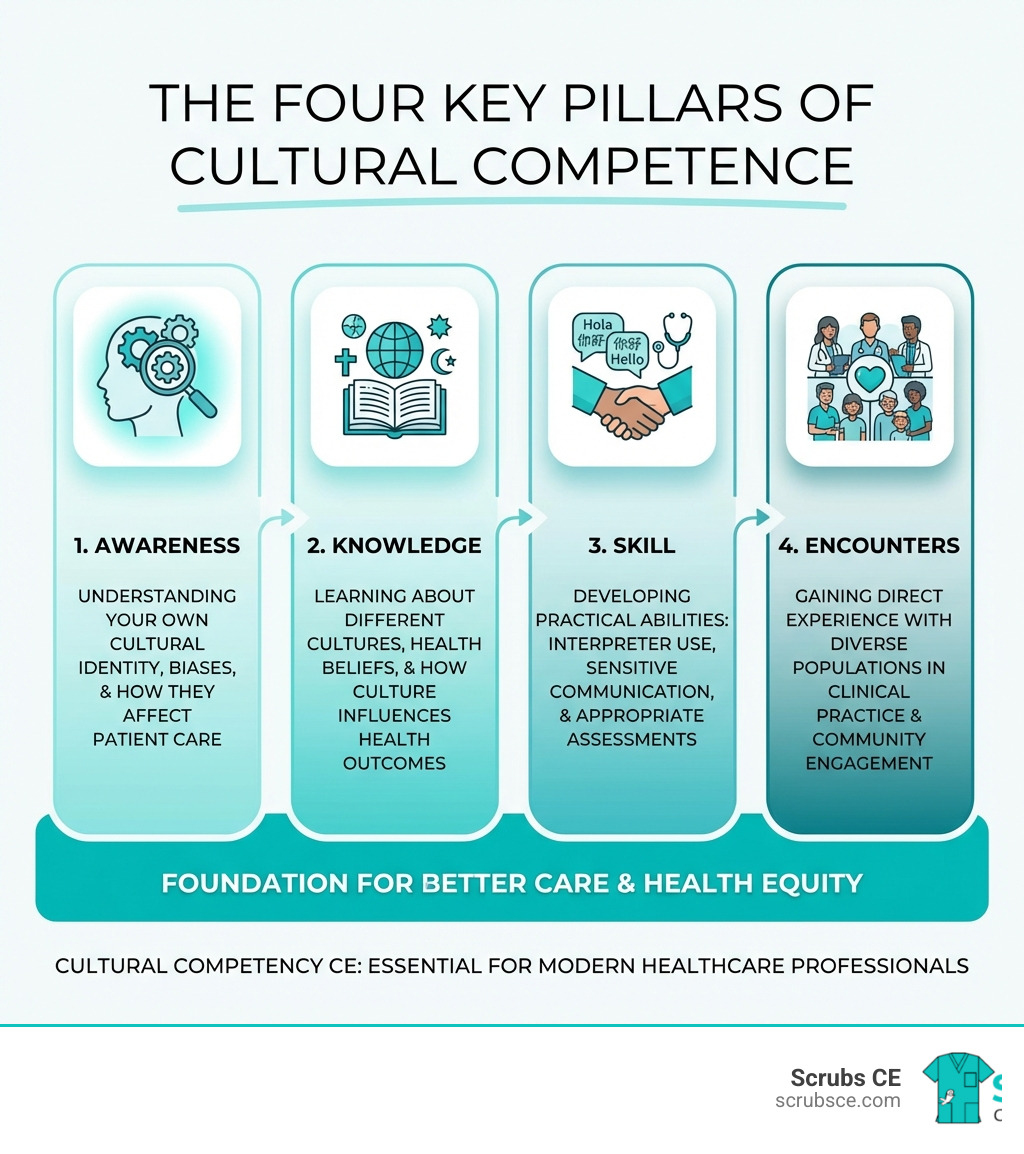
Basic cultural competency CE vocab:
Why Cultural Competence is Non-Negotiable in Modern Healthcare
In today’s diverse society, cultural competence isn’t just a buzzword; it’s a fundamental requirement for delivering effective and equitable healthcare. The integrated pattern of human behavior, including thoughts, communications, actions, customs, traditions, beliefs, values, and institutions, defines culture. Each of us is shaped by our culture, and these cultural lenses filter our experiences and perceptions, influencing how we define health problems and what we believe to be effective solutions.
When healthcare professionals lack cultural competence, it can lead to significant barriers in care. For instance, cultural beliefs about tooth loss being normal or that primary dentition doesn’t matter can prevent individuals from seeking timely oral health care. Similarly, a patient’s belief that dental care during pregnancy could harm the fetus might lead them to avoid necessary treatment. These misunderstandings are not just minor inconveniences; they contribute directly to health disparities, where minority and Indigenous populations often bear a greater burden of disease.
Poor cultural competency can result in patient dissatisfaction, non-utilization of services, and even a lack of compliance with treatment plans. Effective communication, which varies significantly across cultures in terms of style, personal space, touch, and gestures, is paramount. When cultural and language differences are not adequately addressed, they can negatively influence clinical situations, impacting everything from diagnosis to treatment adherence. This is why culturally and linguistically appropriate services (CLAS) are increasingly recognized as a vital strategy for improving the quality of care for all patients.
The Benefits for Patients and Providers
The advantages of embracing cultural competence extend far beyond simply “being polite.” For patients, it translates into improved safety, higher quality of care, and a more positive healthcare experience. When we, as healthcare providers, are culturally competent, we can better understand and respond to the unique experiences, values, and beliefs of our patients. This leads to more patient-centered care, regardless of their cultural or linguistic background.
For example, understanding how social determinants of health—factors like socioeconomic status, education, neighborhood, and physical environment—disproportionately affect certain cultural groups allows us to provide more holistic and effective care. By integrating cultural competence, we contribute to health equity, working towards a system where everyone has a fair and just opportunity to be as healthy as possible.
For healthcare professionals, cultural competency training improves our knowledge, skills, and attitudes. It equips us with the tools to assess and meet the sociocultural needs of patients, improve patient-provider communication, and foster greater patient trust. This, in turn, can lead to better treatment adherence and overall improved health outcomes. It also helps us recognize and address our own implicit biases, leading to more objective and equitable care delivery. A therapeutic, safe, and positive patient experience is built on the foundation of effective communication with patients and their families, something cultural competence directly improves.
Challenges and Barriers in Practice
While the benefits are clear, implementing cultural competency training and practice is not without its challenges. One of the most significant problems is addressing implicit bias—the unconscious attitudes or stereotypes that affect our understanding, actions, and decisions. These biases, often stemming from our own cultural upbringing and societal influences, can contribute to health disparities, affect professional attitudes and interactions with patients, and ultimately reduce patient trust and adherence.
Stereotyping, a direct consequence of unaddressed bias, is another barrier. Assuming a patient’s beliefs or behaviors based on their cultural group can lead to misdiagnosis, inappropriate treatment, and a breakdown in the patient-provider relationship. We must remember that diversity exists even within one cultural group, and individual experiences can vary widely.
Beyond individual biases, systemic barriers within healthcare organizations can also impede cultural competence. These might include a lack of diverse staff, insufficient language services, or policies that don’t account for cultural differences. There can also be a lack of dedicated training or time constraints for busy healthcare professionals to engage in comprehensive cultural competency CE. Some studies even suggest that while cultural competency interventions can improve practitioner knowledge and attitudes, there’s a scarcity of evidence for long-term effects on treatment outcomes, highlighting methodological weaknesses in research and the need for more robust evaluation methods. This doesn’t diminish the importance of the training but emphasizes the ongoing need for improved implementation and measurement.
Core Components of High-Quality Cultural Competency CE
High-quality cultural competency CE goes beyond surface-level understanding. It digs into the foundational principles that shape our interactions and equips us with practical skills for diverse patient populations. A key guiding framework for this training is the National CLAS Standards, developed by the U.S. Department of Health & Human Services Office of Minority Health. These standards provide a blueprint for healthcare organizations to deliver culturally and linguistically appropriate services.
Effective training also critically examines implicit bias—the unconscious mental shortcuts that can lead to unfair treatment. Courses like ‘Unconscious Bias in Medicine’ from Stanford University School of Medicine help professionals recognize and mitigate these biases.
Health literacy is another crucial component. This involves ensuring that patients can obtain, process, and understand basic health information and services needed to make appropriate health decisions. Training in health literacy, plain language, and effective communication is essential. Tools like Askme3® encourage patients to ask three key questions about their health, while the I Speak Card helps individuals with limited English proficiency (LEP) identify their language needs, facilitating access to interpretation services.
Patient communication is at the heart of culturally competent care. This includes learning how to effectively work with interpreters, understanding different communication styles, and eliciting a patient’s “explanatory model”—their personal understanding of their illness, its causes, and expected outcomes.

From Competence to Humility and Anti-Racism
While cultural competence focuses on acquiring specific knowledge and skills, cultural humility and anti-racism represent deeper, ongoing commitments to lifelong learning and self-reflection. Cultural humility encourages us to continuously engage in self-critique about our own cultural identity, biases, and how they impact our professional practice. It also involves acknowledging power imbalances inherent in the healthcare system and striving to develop respectful, mutually beneficial partnerships with patients.
Anti-racism, on the other hand, demands that we actively identify and challenge systemic racism within healthcare institutions and practices. This includes understanding the historical context of racial inequities and working towards systemic change to dismantle discriminatory structures. For example, in British Columbia, all pharmacy professionals are mandated to complete a minimum of 3 hours of learning per year related to Indigenous Cultural Safety, Cultural Humility, and Anti-racism. This reflects a recognition of the specific historical and ongoing injustices faced by Indigenous populations and the need for targeted education to address these issues.
The integration of cultural humility and anti-racism with cultural competency education means moving beyond simply “knowing about” other cultures to actively engaging in self-reflection, challenging power dynamics, and advocating for equitable care for all.
Key Topics Covered in a Comprehensive Cultural Competency CE Course
A comprehensive cultural competency CE course typically covers a wide array of topics designed to equip healthcare professionals with a holistic understanding and practical skills. Some of the key areas include:
- Unconscious Bias and Implicit Bias: Understanding how these biases affect perception, diagnosis, and treatment decisions, and strategies for mitigation.
- Social Determinants of Health: Exploring how factors like economic stability, education, neighborhood, and healthcare access influence health outcomes for diverse populations.
- LGBTQ+ Health Needs: Addressing specific health disparities and unique healthcare considerations for Lesbian, Gay, Bisexual, Transgender, and Queer+ individuals.
- Communication Strategies: Techniques for culturally sensitive communication, active listening, using plain language, and working effectively with interpreters for patients with limited English proficiency.
- Cultural Impact on Specific Health Areas:
- Pain Management: Recognizing how cultural beliefs influence pain perception and expression, and equitable pain assessment and treatment.
- Women’s Health: Understanding cultural perspectives in childbearing, women’s health beliefs, and practices.
- Mental Health: Providing sensitive and effective mental health services to people of diverse cultural backgrounds, including engaging, assessing, and treating clients from diverse backgrounds.
- Oral Health: Identifying cultural beliefs that impact oral health behaviors, access to care, and treatment adherence.
- Geriatrics and End-of-Life Care: Addressing cultural considerations in care for seniors and end-of-life planning.
- Substance Use Disorder: Understanding cultural factors that influence substance use patterns and recovery processes.
- Disability and Medical Education: Ensuring inclusive and equitable care for individuals with disabilities.
- Immigrant/Migrant Health: Addressing the unique health needs and challenges faced by immigrant and migrant populations.
- Racial and Ethnic Disparities: Examining the root causes and impacts of health disparities across various racial and ethnic groups.
These topics are often explored through case studies, interactive modules, and practical exercises, ensuring that the learning is directly applicable to real-world clinical scenarios.
Finding the Right Cultural Competency CE for Your Profession
Finding the right cultural competency CE doesn’t have to be a daunting task. We understand that healthcare professionals are busy, which is why many high-quality options are available as online courses, offering self-paced learning to fit your schedule. These courses typically offer CE or CME credits necessary to maintain your licensure and advance your career.
The costs associated with cultural competency CE can vary. Many excellent resources are available for free, particularly from government agencies. For example, Think Cultural Health offers free e-learning programs, including ‘A Physician’s Practical Guide to Culturally Competent Care,’ accredited for up to 9 AMA PRA Category 1 Credit(s)™ for physicians. Similarly, the Office of Minority Health (OMH) offers free, accredited e-learning programs for behavioral health professionals. Other commercial providers might charge between $12-$20 per credit hour, but many employers cover these costs, recognizing the value of this training.
It’s also important to be aware of state licensure requirements. Some states, like Nevada, specifically mandate cultural competency education for nurses. California’s Assembly Bill 1195 also addresses Cultural and Linguistic Competency. In British Columbia, pharmacy professionals must complete 3 hours of learning annually on Indigenous Cultural Safety, Cultural Humility, and Anti-racism, which counts towards their overall CE requirements. Always check with your state board or professional licensing body to understand your specific obligations.

Custom Training for Different Healthcare Roles
Cultural competence is universally important, but its application often requires a nuanced approach custom to specific healthcare professions.
- Physicians: Programs like A Physician’s Practical Guide to Culturally Competent Care are specifically designed to equip doctors with the knowledge and skills to provide patient-centered care and effectively work with interpreters.
- Nurses: Nurses, regardless of specialty, need to assess patient cultural beliefs and practices to provide appropriate care. Courses often focus on communication, implicit bias, and specific cultural considerations related to areas like pain management, women’s health, and LGBTQ+ health.
- Behavioral Health Professionals: For counselors, psychologists, psychiatrists, and social workers, programs such as ‘Improving Cultural Competency for Behavioral Health Professionals’ are crucial. These courses emphasize the connection between culture and behavioral health, the impact of cultural identity on client-provider interactions, and strategies for engaging, assessing, and treating clients from diverse backgrounds. The Substance Abuse and Mental Health Services Administration (SAMHSA) also provides valuable publications.
- Oral Health Providers: Dentists and dental hygienists benefit from specialized training that addresses how cultural beliefs influence oral health behaviors, access to care, and perceptions of treatment. The Cultural Competency Program for Oral Health Providers is an excellent resource for this group.
- Radiology Professionals: For those in Radiology, cultural competency means understanding how cultural norms might affect patient comfort during imaging procedures, communicating clearly about radiation safety, and ensuring that instructions are understood, especially for patients with language barriers or specific cultural modesty requirements. It’s about creating a welcoming and safe environment where every patient feels respected and understood during what can often be an intimidating experience.
Where to Find Your Next Cultural Competency CE Course
There’s a wealth of resources available for cultural competency CE. We recommend starting with these reputable sources:
- Government & Professional Resources:
- Think Cultural Health: A leading hub from the U.S. Department of Health & Human Services, offering free e-learning programs and information on the National CLAS Standards.
- The Office of Minority Health (HHS): Provides resources and programs aimed at improving health outcomes for minority populations.
- Centers for Disease Control and Prevention (CDC): Offers training in health literacy, plain language, and culture and communication.
- Health Resources and Services Administration (HRSA): Supports cultural competence initiatives, particularly for underserved populations.
- Substance Abuse and Mental Health Services Administration (SAMHSA): Offers publications and e-learning for mental health professionals.
- AMA-Assn.org: Their “Prioritizing Equity” video series illuminates how determinants of health impact marginalized communities.
For Radiology professionals seeking specialized cultural competency CE, we encourage you to explore our custom courses. Start exploring our CE courses for Radiology professionals.
Frequently Asked Questions about Cultural Competency Education
We often hear similar questions from healthcare professionals about cultural competency education. Let’s address some of the most common ones.
Are cultural competency CEs required for my license?
The requirement for cultural competency CE varies significantly by profession and state. While not universally mandated, a growing number of states and professional boards are incorporating these requirements into licensure renewal.
For example:
- In British Columbia, all pharmacy professionals must complete a minimum of 3 hours of learning per year related to Indigenous Cultural Safety, Cultural Humility, and Anti-racism, which counts towards their existing 15-hour annual CE requirement.
- The Nevada State Board of Nursing requires cultural competency education.
- California Assembly Bill 1195 specifically addresses Cultural and Linguistic Competency, impacting various healthcare providers in the state.
It’s crucial to check with your specific state licensing board and professional organization to understand the exact requirements for your profession. Even if not explicitly mandated, many healthcare systems and employers are increasingly requiring or strongly encouraging this training due to its proven benefits in patient care and equity.
What’s the difference between cultural competence and cultural humility?
While often used interchangeably, cultural competence and cultural humility represent distinct but complementary approaches to cross-cultural care.
-
Cultural Competence refers to the ability to understand and interact effectively with people from cultures and backgrounds different from one’s own. It involves acquiring specific knowledge about different cultural groups, developing skills for cross-cultural communication, and having an awareness of one’s own cultural biases. At an institutional level, it’s about an organization’s capacity to communicate and work effectively in cross-cultural situations. It implies achieving a certain level of proficiency or mastery.
-
Cultural Humility, on the other hand, is a lifelong process of self-reflection and self-critique. It emphasizes recognizing and addressing power imbalances in the patient-provider relationship, a commitment to learning from patients, and an openness to continuous growth. It acknowledges that no one can ever be fully “competent” in all cultures, as cultures are dynamic and diverse. Instead, it focuses on a humble, respectful, and reciprocal approach to understanding each patient as an individual expert in their own culture. It’s about being aware of one’s own limitations and biases, and actively partnering with patients to provide care that respects their unique experiences.
Cultural competence might be seen as the “what” (the knowledge and skills), while cultural humility is the “how” (the mindset and ongoing process) of delivering culturally responsive care. Both are vital for comprehensive and equitable healthcare.
How many CE credits can I earn from a typical cultural competency course?
The number of CE credits you can earn from cultural competency CE courses varies widely depending on the program’s depth, length, and format.
- Overview Courses: Many introductory or overview courses on cultural competence typically offer around 1-2 Interprofessional Continuing Education (IPCE) credits. Other specialized topics might be 0.5 to 1.5 contact hours each.
- Comprehensive Programs: More extensive programs, such as ‘A Physician’s Practical Guide to Culturally Competent Care’ from Think Cultural Health, can offer a significant number of credits, up to 9 AMA PRA Category 1 Credit(s)™ for physicians, or 9 contact hours for nurse practitioners.
- Behavioral Health Specific: The ‘Improving Cultural Competency for Behavioral Health Professionals’ program is approved for 4 – 5.5 contact hours for various behavioral health professionals.
- State-Mandated Hours: Some state-specific requirements might specify a minimum number of hours, such as the 3 hours per year for BC pharmacy professionals.
Always check the course description for specific credit designations and ensure they are recognized by your licensing board or professional association. Many providers, like Scrubs CE, clearly state the number of credits and accreditations for each course.
Conclusion: Integrating Cultural Competence into Your Daily Practice
As we’ve explored, cultural competency CE is not merely a checkbox on a licensure renewal form; it’s a dynamic and essential aspect of modern healthcare. The increasing diversity of our patient populations demands that we move beyond a one-size-fits-all approach to care, embracing strategies that honor individual experiences, beliefs, and languages. By investing in cultural competency training, we empower ourselves to build trust, improve communication, reduce health disparities, and ultimately deliver higher quality, more equitable care.
This journey is an ongoing one, a commitment to lifelong learning and continuous improvement. It requires us to regularly reflect on our own biases, adapt our practices, and seek out new knowledge. The practical application of these skills in your daily practice—whether you’re a physician, nurse, behavioral health professional, or a Radiology professional—will transform patient interactions and contribute to a healthcare system that truly serves everyone.
We encourage you to take the next step in your professional development. Explore the wealth of resources available, from free government programs to specialized courses offered by accredited providers. For those in Radiology, our custom Scrubs CE courses are designed to provide the specific insights and skills you need to excel in a diverse clinical environment.
Start integrating cultural competence into your daily practice today. Your patients, and your profession, will thank you for it.
Recent Comments