
The Best Radiology Education Online for Modern Professionals
Why Radiology Education Online Is the Smartest Move for Busy Imaging Professionals
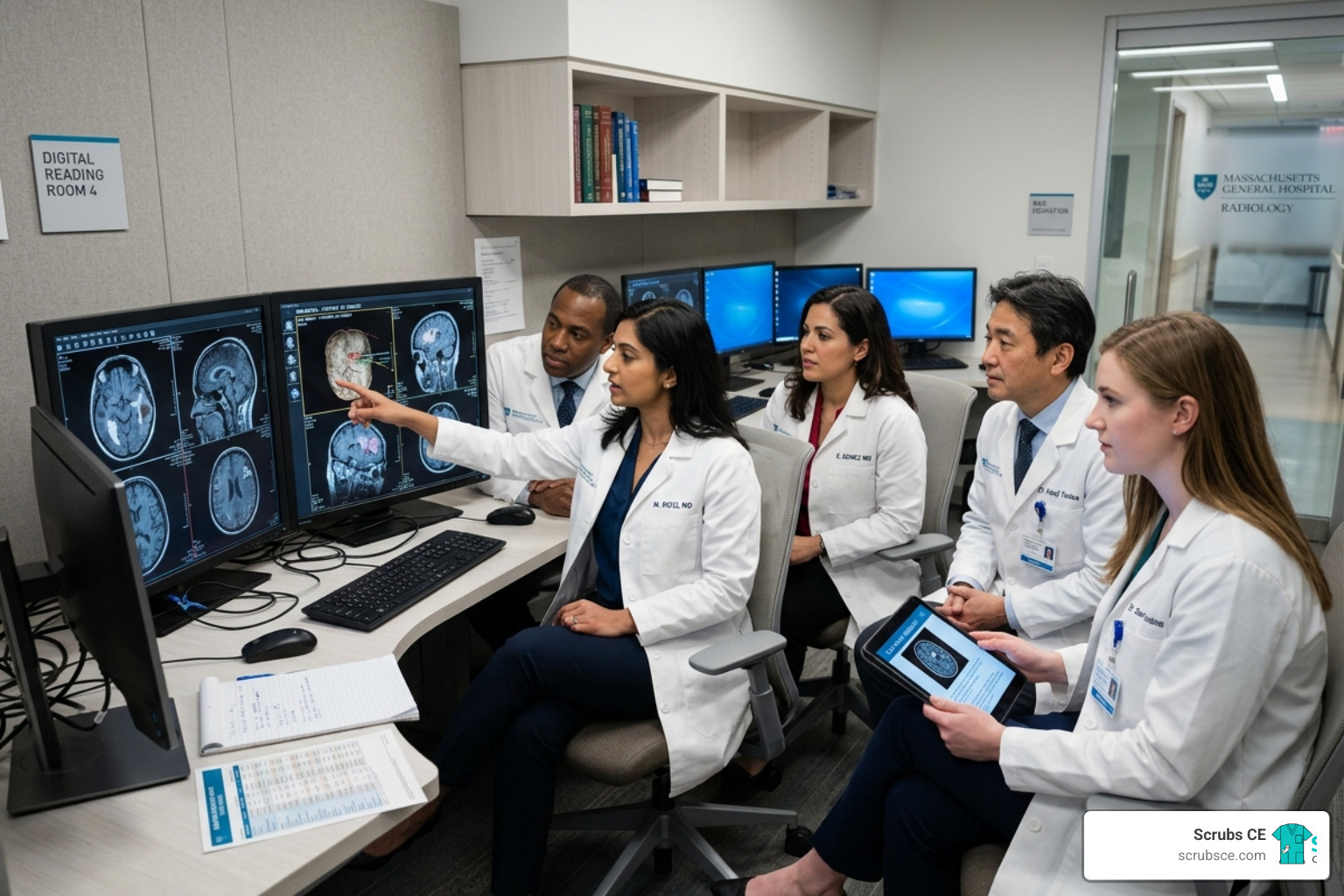
Radiology education online gives healthcare professionals a flexible, accredited way to build skills, earn continuing education credits, and meet licensure requirements — without stepping away from work.
The demand for flexible, high-quality radiology learning has never been higher. Whether you need ARRT exam prep, subspecialty case reviews, or structured credits, there are more options available today than ever before — at a wide range of price points, including free resources.
I’m Zita Ewert, and as the leader behind SCRUBS Continuing Education®, I’ve spent years helping imaging professionals navigate radiology education online to meet accreditation requirements efficiently and affordably. In this guide, I’ll walk you through the best formats and features so you can find exactly what fits your schedule and career goals.
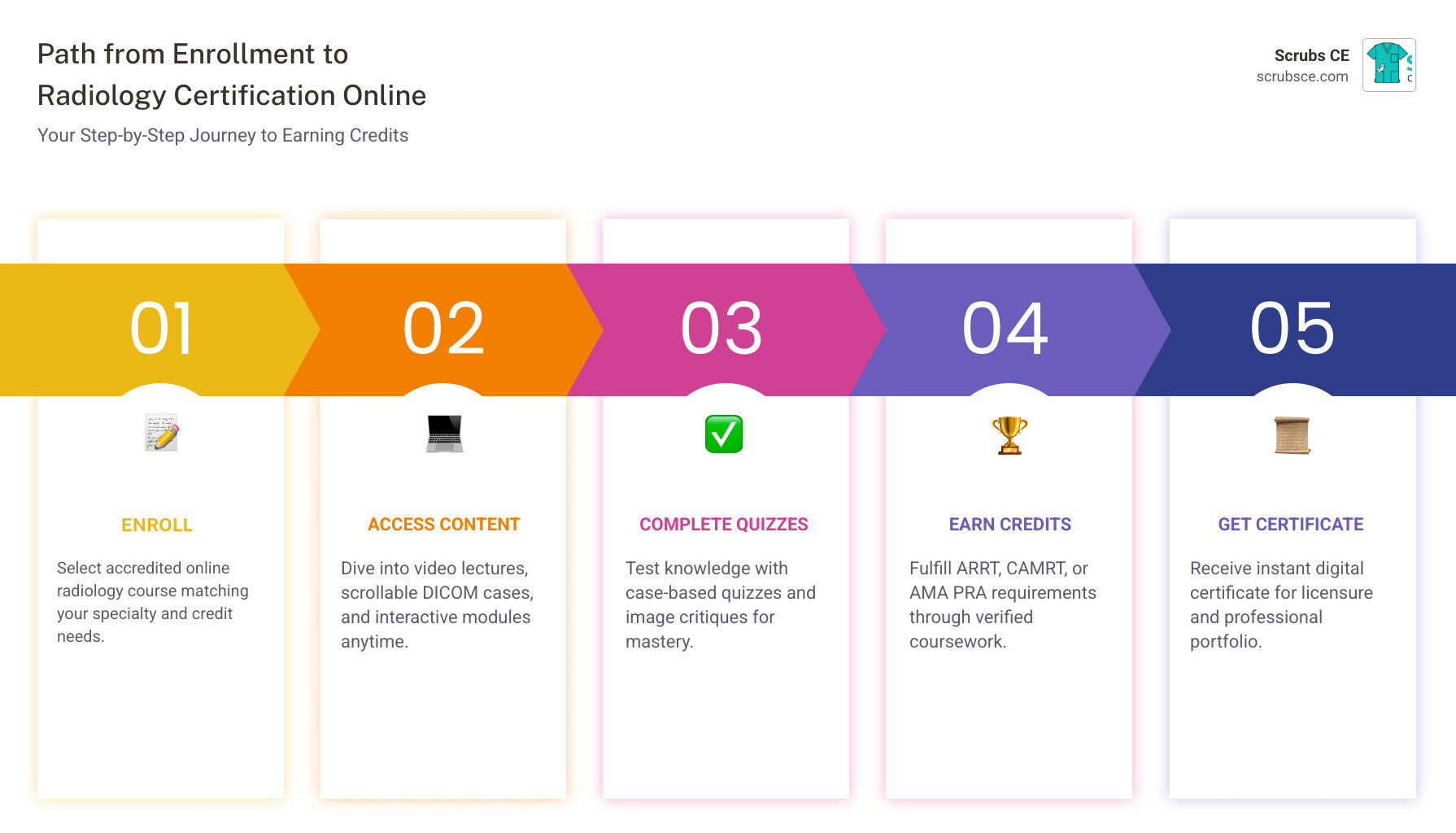
Radiology education online terminology:
Core Formats of Radiology Education Online
When we dive into Radiology education online, we quickly realize that “one size” definitely does not fit all. The beauty of digital learning is that it can be tailored to your specific needs, whether you have five minutes between patients or an entire weekend to dedicate to study.
Case-Based Learning and Scrollable DICOM
One of the most developments in Online Radiology Education is the use of interactive DICOM viewers. Unlike static images in a textbook, these allow us to scroll through “stacks” of images just like we would at a clinical workstation. Advanced digital platforms have perfected this, offering thousands of high-yield cases. This “see one, do one” approach helps bridge the gap between theory and real-world practice.
Video Lectures and Short Modules
For those of us who are visual and auditory learners, video lectures are a godsend. These can range from bite-sized “Noon Conference” style snippets to deep-dive “Mastery Series.” The trend is moving toward “micro-learning”—short modules that focus on a single pathology or technique, making it easier to fit education into a busy shift.
Full-Length Courses and Structured Terms
On the other end of the spectrum, we have structured, full-length courses. Some professional associations offer courses that run over multi-week academic terms. These are fantastic if you thrive on a schedule and want the benefit of instructor mentorship. You aren’t just watching a video; you are completing assignments, participating in quizzes, and sitting for a final exam.
Interactive Quizzes and Mentorship
To ensure we’ve actually absorbed the material, many Online CE Courses Complete Guide providers include interactive quizzes. Some platforms even offer dedicated mentor support. For instance, in some term-based programs, a mentor is available via email to help clarify complex concepts or assist with assignment preparation. It’s like having a radiology expert in your pocket!

Specialized Radiology Education Online for Technologists
Technologists have a unique set of educational needs. We aren’t just looking for “interesting cases”—we need to master the technical aspects of image production while ensuring patient safety.
- ARRT Exam Preparation: For those just starting out or seeking a limited x-ray certificate, specialized online programs provide targeted preparation for the ARRT Limited Scope of Practice in Radiography Examinations. These courses focus on the core knowledge of x-ray physics, equipment operation, and image production.
- Clinical Competency and Safety: Continuing education for technologists often centers on ARRT Continuing Education Online requirements. This includes vital training in radiation safety—learning how to produce diagnostic-quality radiographs with the absolute minimum radiation exposure to the patient and staff.
- The “Human” Element: Quality tech education also emphasizes patient compassion and professionalism. We are taught to treat every patient like a family member, ensuring we are as skilled in communication as we are in positioning.
- Image Critique: A key skill for any tech is the ability to critique their own work. Online modules often provide “good vs. bad” image comparisons to help us produce predictable, high-quality results every time.
Advanced Radiology Education Online for Subspecialists
If you are a radiologist or a senior trainee, you might be looking for something more granular. Subspecialty education has exploded online, allowing us to gain “fellowship-level” knowledge from our own living rooms.
- Neuroradiology and MSK: These are two of the most popular subspecialties found in Radiology CE Courses Complete Guide. You can find everything from “Acute CT Brain” tutorials to advanced “Musculoskeletal MRI Atlas” reviews.
- Fellowship Certificates: Some platforms now offer specialized fellowship certificates. These are intensive, multi-week online programs that simulate on-the-job training. They are designed to help you build confidence in specific areas, like breast imaging or cardiac MRI, potentially increasing your earning potential without requiring you to take time off for a traditional fellowship.
- Emergency Radiology: This is a high-stakes area where online education shines. Courses often cover everything from “Brain Bleeds” to “Small but Important Fractures,” providing the quick-fire knowledge needed in a busy ER environment.
Choosing Your Online Radiology Education Provider
With so many options, how do we choose? It often comes down to the “Three As”: Accreditation, Accessibility, and Assets (the library of content).
Comprehensive Case Libraries
If your goal is to see as many pathologies as possible, look for providers with massive libraries. Top-tier educational repositories include hundreds of hours of content and thousands of cases. Many organizations trust these vast repositories for expert case reviews.
Meeting Regional Requirements
Depending on where you practice, you may need specific credits.
- National Standards: Professionals often look to national associations for technologist-specific credits or radiologist-specific learning. Many of these offer prior learning recognition, which is a huge plus if you’ve recently graduated from an accredited program.
- International: If you need AMA PRA Category 1 Credits™, ensure the platform is accredited by the ACCME. Most Radiology CE Courses from top-tier providers meet these standards.
Peer-Reviewed Content
In medicine, accuracy is everything. We should always check if the content is peer-reviewed. High-quality platforms use an editorial board to ensure that every lecture and case is evidence-based and free from commercial bias.
Virtual Conferences
Can’t travel to a big annual meeting? Virtual conferences have become incredibly sophisticated. They offer live streams, interactive cases, and massive credit values—sometimes over 60 credits for a single event!
Essential Features of Quality Online Radiology Education
When we evaluate a platform, we look for these “must-have” features:
- Instructor Assistance: Can you ask a question if you get stuck?
- 24/7 Access: Can you study at 3 AM if that’s your only free time? (Most quality courses offer several months of 24/7 access).
- Instant CE Certificate: There’s nothing more frustrating than waiting weeks for a piece of paper. We prefer platforms that let us download our certificates the moment we pass the quiz.
- Mobile Accessibility: Being able to review a “Case of the Day” on your phone during a lunch break is a game-changer.
- Expert Faculty: Are the instructors world-renowned experts or just reading from a slide? Look for names you recognize from major journals and textbooks.
Specialized Topics and Modality Training
Modern radiology is more than just “taking pictures.” It’s a complex intersection of physics, safety, and clinical expertise.
CT and MRI Physics
Physics can be a dry topic, but it’s essential for optimizing image quality. Online courses now use animated illustrations to explain things like Hounsfield units, iterative reconstruction, and dual-energy CT. Comprehensive CT physics courses are a popular choice for those preparing for board exams.
MRI Safety
Safety is paramount in the magnet room. We now have access to tiered safety training:
- Level 1 MR Personnel: For staff who work near the magnet.
- Level 2 MR Personnel: For those who are in the room and need to manage SAR levels and RF-related burns.
- Contrast Media: Guidelines like the ACR Manual on Contrast Media are often integrated into online modules to teach us about Gadolinium-based contrast agents (GBCAs) and how to manage adverse events.
Pediatric and Breast Imaging
These specialized areas require a gentle touch and specific protocols.
- Pediatrics: Courses often focus on “Image Gently” principles, ensuring we use the lowest possible dose for our smallest patients.
- Breast Imaging: With the rise of digital breast tomosynthesis (DBT), many Radiology Courses now focus on interpreting synthetic 2D images and implementing new screening protocols.
Navigating Accreditation and Professional Credits
Let’s talk about the “boring but important” part: credits. To keep our licenses, we have to play the credit game, but online education makes this much easier.
Understanding Credit Values
- AMA PRA Category 1 Credits™: These are the gold standard for physicians in the US and are recognized internationally (including in Europe via mutual recognition).
- Radiologic Technologist Continuing Education Credits: Techs usually need a specific number of credits every two years to maintain professional registration.
- State Licensure: Every state has different rules. We highly recommend checking the ASRT State Licensure Guide to make sure your chosen course counts for your specific region.
Prior Learning and Integrity
If you have recently completed a program, you might be eligible for “prior learning recognition,” which can save you time and money on certain certifications. However, keep in mind that academic integrity is strictly enforced. Most online platforms have rules against sharing answers or “gaming” the system. We always suggest reading the exam guidelines carefully—some courses only allow a limited number of attempts!
To get the most out of your journey, check out our Earn CE Credits Complete Guide.
Free Resources and Global Accessibility
We believe that high-quality medical education should be accessible to everyone, regardless of their budget or location.
The Power of Open Access
There is a wealth of free Radiology education online if you know where to look.
- Educational Portals: Various sites curate high-quality, free radiology resources, including anatomy atlases and textbooks.
- YouTube: Many universities host their resident lecture series for free.
- Anatomy Atlases: Online atlases are fantastic for quick refreshes on complex structures.
Supporting Low-Income Regions
One of the most inspiring things about the modern radiology community is the commitment to global health. Leading educational platforms provide free access to all their courses and annual conferences to healthcare professionals in low and middle-income regions. This ensures that a doctor in a remote area has the same access to expert knowledge as someone in a major metropolitan hospital.
Fun and Gamified Learning
Who says learning can’t be fun? Some platforms have introduced gamified elements like tracking obstructions or survival-style interpretation challenges. These are great ways to sharpen your skills without it feeling like a chore. For more tips on finding the right fit, see Radiology CE Made Easy.
Frequently Asked Questions about Radiology Learning
How long does it take to complete an online Radiology course?
It varies! A short module on a specific pathology might take 30 to 60 minutes. A comprehensive subspecialty course usually lasts several hours. If you are taking a full-length academic course, expect a multi-week commitment with regular assignments.
Are online Radiology credits accepted for state licensure?
In most cases, yes—as long as they are properly accredited. For US technologists, ensure the course is ARRT-recognized or ASRT-approved. For physicians, look for AMA PRA Category 1 Credits™. Always double-check your specific state’s requirements before purchasing.
Can I access high-quality Radiology cases for free?
Absolutely. Various educational sites and university teaching files offer thousands of cases for free. While they might not always provide a certificate of completion for free, they are invaluable for self-directed study.
Conclusion
The landscape of Radiology education online is vast, exciting, and constantly evolving. From quick case reviews to mentored marathons, there is a format that fits every professional’s life. By embracing these digital tools, we aren’t just checking a box for licensure; we are committing to lifelong learning and better patient care.
At Scrubs CE, we are dedicated to making this journey as smooth as possible. We offer high-quality, self-paced courses that give you the flexibility you need with the instant results you want. Whether you are a technologist looking for your next 24 credits or a radiologist wanting to dive into a new subspecialty, the future of your career is just a click away.
Unlock Your Potential with Flexible Online Courses and Start your journey with accredited Radiology CE Courses today. Let’s keep learning, keep scrolling, and keep improving—together.