Why Flexible Online Courses Are Changing Healthcare Education
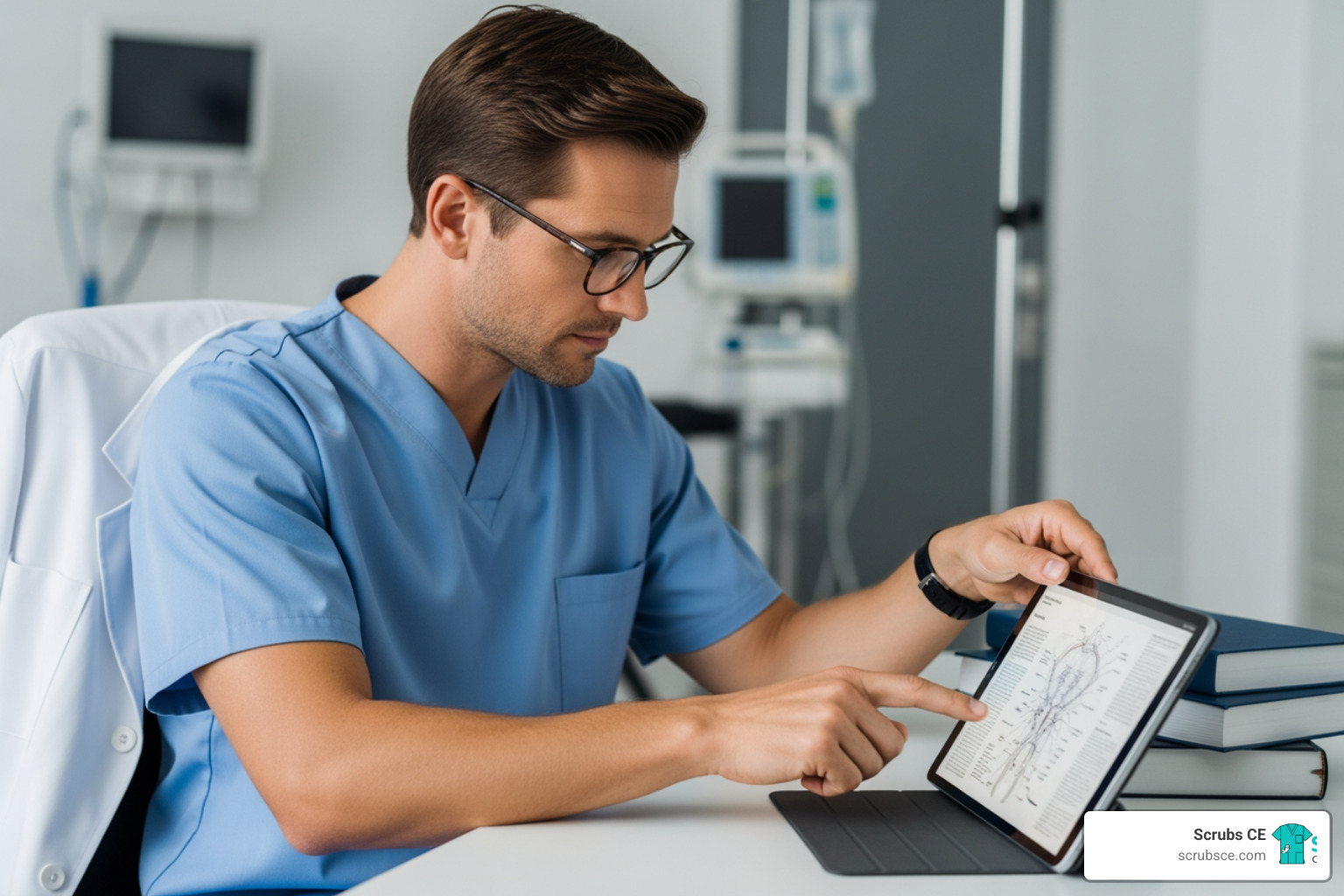
Flexible online courses give you the power to learn on your schedule and at your pace, without sacrificing your career or personal life. Here’s what makes them different:
- Self-paced learning – Study when it fits your schedule.
- Asynchronous delivery – No mandatory login times or fixed class schedules.
- On-demand access – Review materials as many times as you need.
- Multiple formats – Choose from video, interactive, or text-based content.
- Real credentials – Earn certificates and credits recognized by licensing boards.
For busy healthcare professionals like radiologic technologists, finding time for continuing education can feel impossible. Between patient care, shift rotations, and family commitments, attending scheduled classes is often not an option.
That’s where flexible online courses change everything. Unlike traditional online courses that may require you to log in at specific times, truly flexible courses let you learn whenever it works for you—be it early in the morning, during a lunch break, or late at night. You can pause a lecture, rewatch complex topics, and complete assignments on your own timeline.
The market for these courses is vast, with options ranging from 1-2 hours per week to more intensive programs. Costs vary, with standalone courses for certificate upgrades typically running from $50-$300, while professional certificates can range from $500-$1,500.
I’m Zita Ewert, and I’ve spent my career making continuing education accessible for imaging professionals through SCRUBS Continuing Education. Flexible online courses have allowed thousands of radiologic technologists to maintain their credentials and advance their careers, all without disrupting their work or family life.
Quick look at Flexible online courses:
What Makes an Online Course Truly “Flexible”?
When we talk about flexible online courses, we’re referring to a learning model designed around your needs, rather than a rigid institutional schedule. True flexibility means putting you in control of when, where, and how you engage with your education.

At its core, flexibility in online learning is characterized by:
- Self-paced learning: You progress through course material at your own speed, accelerating or slowing down to fit your schedule in the Radiology department.
- Asynchronous delivery: Learning activities are available on-demand. Lectures are pre-recorded and materials are accessible 24/7, eliminating mandatory login times.
- On-demand access to materials: All course content is available whenever it suits you, allowing for repeated review of complex topics to ensure mastery.
- No mandatory login times: You fit learning around your life, not the other way around. This is a game-changer for professionals with unpredictable schedules.
- Choice of learning format: Courses often offer diverse content like video lectures, interactive simulations, and articles to cater to different learning preferences.
This approach empowers individuals to pursue their educational and career goals without having to put their lives on hold.
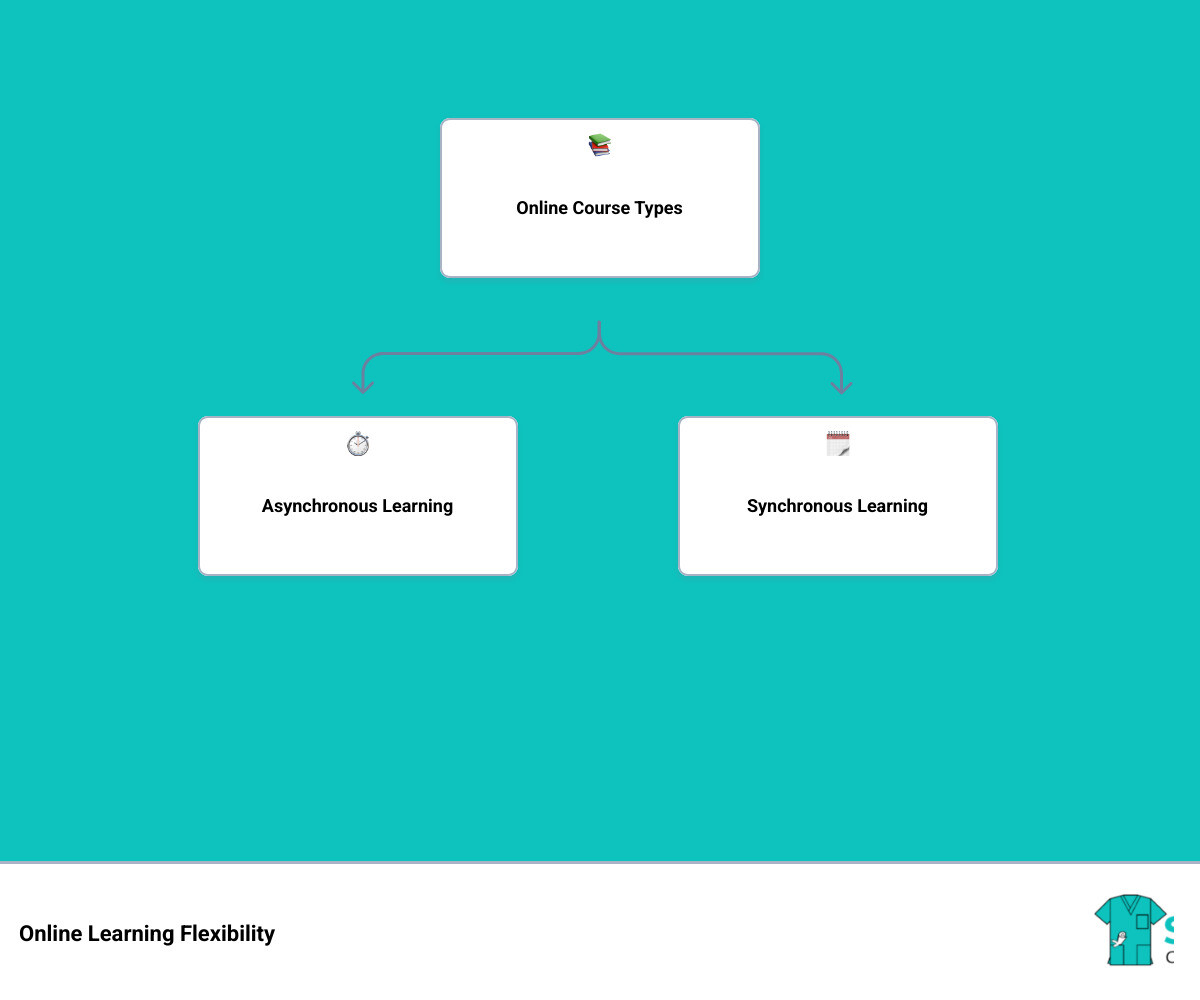
Synchronous vs. Asynchronous Learning
Understanding the difference between synchronous and asynchronous learning is key to grasping the full spectrum of flexibility.
- Synchronous Learning: This model mimics a traditional classroom, requiring participants to be online at the same time for live lectures or discussions. While it offers real-time interaction, it demands a fixed schedule, which is challenging for many healthcare professionals.
- Asynchronous Learning: This is the hallmark of true flexibility. Content is delivered on-demand, allowing you to access lectures and assignments at your convenience. This model is ideal for independent study, enabling you to learn at your own pace. While it requires self-discipline, it offers unparalleled freedom.
Many flexible online courses blend elements of both, offering core asynchronous content with optional synchronous sessions for Q&A.
The Role of Technology in Flexible Education
Technology is the foundation of flexible online education, making it all possible.
- Learning Management Systems (LMS): Platforms like Canvas or Moodle act as virtual classrooms, hosting content, facilitating discussions, and tracking progress on any device.
- Digital Credentials: Digital badges and micro-credentials are now common. These verifiable, shareable records of specific skills can be easily added to professional profiles.
- Mobile Learning: The ability to learn on the go is crucial. Many platforms are optimized for mobile devices, allowing you to study during commutes or breaks.
- Interactive Modules: Technology enables rich learning experiences like simulations, virtual labs, and interactive quizzes that make learning more engaging and effective.
- Technical support for online students: Reliable technical support is paramount. Reputable providers offer resources and assistance to help you steer platforms and troubleshoot problems.
- Innovative learning spaces: This refers to pedagogical approaches enabled by technology, such as adaptive learning paths and personalized content delivery, which make online education more responsive to individual needs.
The Major Benefits of Choosing Flexible Online Courses
Choosing flexible online courses offers a wealth of advantages that extend beyond mere convenience, impacting career progression, personal well-being, and the quality of the learning experience.

Here are some of the most significant benefits:
- Balance personal life: Integrate education with family commitments, hobbies, and downtime to maintain a healthy work-life balance.
- Learn while you work: Continue working full-time while advancing your skills, meaning no lost income and immediate application of new knowledge.
- Reduce stress: The self-paced nature of flexible courses reduces the pressure of rigid deadlines, allowing you to learn when you’re most alert.
- Accessible education: Geography and physical limitations are no longer barriers. Flexible courses make education accessible from “anytime, from anywhere.”
- Personalized learning path: Tailor your learning experience by spending more time on challenging topics and revisiting material as needed.
- Cost savings on commuting: Eliminating travel to a physical campus saves money on gas, public transport, and parking.
Advance Your Career on Your Terms
Flexible online courses are an invaluable tool for career advancement, especially in dynamic fields like healthcare and Radiology.
- Upskilling for promotions: Acquire specialized skills to become eligible for promotions and increased responsibilities without interrupting your work.
- Shifting to a new career within healthcare: Gain the necessary qualifications for a career shift, often building on your existing healthcare knowledge.
- Gaining in-demand skills: The healthcare sector is always seeking professionals with up-to-date skills. Flexible programs are quick to adapt, offering training in areas like AI in medical imaging or advanced data analytics. These are the Job ready skills you can put to work immediately.
- Building your resume: Credentials from reputable institutions add significant weight to your resume, demonstrating a commitment to lifelong learning.
- Professional Resilience: Some courses focus on soft skills like professional resilience, equipping you with more than just technical abilities to thrive at work.
Cater to Your Unique Learning Style
Flexible online courses excel at accommodating diverse learning styles by offering a customizable experience.
- Visual learners: Benefit from video lectures, infographics, and interactive diagrams.
- Auditory learners: Thrive with recorded lectures and podcasts, which can be listened to on the go.
- Kinesthetic learners: Engage with interactive exercises, virtual labs, and case studies.
- Self-directed study: The freedom to control your pace fosters a greater sense of ownership over your learning journey.
- Pausing and re-watching lectures: Replay challenging explanations multiple times to ensure thorough understanding, which is especially useful for complex medical concepts in Radiology.
- Working at your own speed: Whether you’re a quick study or prefer to take your time, flexible courses adapt to you, reducing anxiety and promoting deeper learning.
Exploring the Different Types of Flexible Learning
The world of flexible online courses is vast, offering options for every goal, time commitment, and budget. Many providers offer a mix of part-time programs, standalone courses, and micro-credentials. Major universities also list a wide range of options, from professional education to free courses.
Let’s break down the most common types:
- Part-time programs: Designed for individuals balancing other commitments, these programs allow you to take fewer courses per term.
- Full-time programs: These programs involve a heavier course load but are still flexible in terms of when you study.
- Standalone courses: Perfect for targeted learning, these individual courses focus on a specific subject or skill.
- Micro-credentials: These are smaller, focused certifications that validate a specific skill and are often “stackable,” meaning you can combine several to build a larger qualification.
- Professional certificates: These programs bundle multiple courses to provide deeper expertise in a particular area.
- Free online courses: Many platforms offer free access to course content, often with an option to pay for a verified certificate.
- Industry training: Customized training solutions developed for specific industries or organizations.
Standalone Courses and Micro-credentials
Standalone courses and micro-credentials provide quick, targeted pathways to new skills.
- Single-subject focus: These courses allow for deep dives into specific topics. For healthcare professionals, this could mean a course on advanced cardiac imaging protocols or patient safety in mammography.
- Rapid skill acquisition: Designed to be completed in weeks, not years, they enable you to quickly gain relevant skills.
- Stackable digital badges: Micro-credentials often come as digital badges that verify your achievement. This modular approach allows you to customize your education.
- Continuing professional development: For many regulated professions like Radiology, these courses are vital for meeting continuing education requirements. Standalone courses for certificate upgrades typically range from $50-$300, making them an affordable way to stay current.
Professional Certificates and Continuing Education Programs
When your goals extend beyond a single skill, professional certificates offer a more comprehensive pathway.
- Bundled courses for deep expertise: Certificate programs combine several related courses to provide a thorough understanding of a specialized field. These programs are designed to equip you with a robust skillset for a particular role.
- Industry-recognized credentials: These certificates often carry significant weight in the job market, signaling a certified level of competence to employers.
- Part-time online continuing education: Many universities and professional organizations offer part-time options, allowing you to earn a valuable credential without disrupting your career. We, at Scrubs CE, understand this need, providing high-quality, self-paced courses with instant certificates to help professionals meet licensure requirements.
- Graduate-level certificates: Some institutions offer graduate-level certificates that can even count towards a Master’s degree, providing a flexible stepping stone towards higher education. You can explore a wide range of Online Courses and their full Courses | Harvard University catalog to see the depth of offerings.
Part-Time vs. Full-Time Flexible Online Courses
The choice between part-time and full-time study depends on your current life circumstances.
- Course load comparison: Full-time programs require a heavier weekly time commitment (e.g., 15-20 hours), while part-time options might only demand a few hours per week for a single course.
- Time commitment per week: The beauty of flexible learning is that you can often choose your pace, with offerings ranging from 1–2 hours to 8–10 hours a week.
- Earning a credential course-by-course: Many institutions allow students to register for courses individually and build towards a full credential, providing ultimate flexibility in managing financial and time commitments.
- Balancing intensive study with other commitments: For most working professionals, especially in demanding fields like Radiology, part-time study is the more realistic and sustainable option.
How to Find and Finance Your Ideal Course
Navigating the vast landscape of flexible online courses can feel overwhelming, but with a clear strategy, you can find the perfect fit for your goals and budget.
Here’s a general comparison to help you start:
| Course Type | Typical Cost | Duration | Outcome |
|---|---|---|---|
| Standalone Course | $50 – $300 (certificate upgrade) | Weeks to a few months (e.g., 2-8 weeks, 1-5 hrs/week) | Certificate of Completion, CE Credits |
| Micro-credential | $166 (per credit) – $1,500+ | Weeks to a few months (e.g., 4-12 weeks) | Digital Badge, Specialized Skill Validation |
| Professional Certificate | $500 – $1,500+ | Several months to a year | Industry-Recognized Certificate |
Accreditation and provider reputation are critical. Always check if the course is accredited by a recognized body, especially for continuing education in healthcare. For instance, some courses are certified for professional credits. Course reviews also offer valuable insights into the quality and learner experience.
Choosing the Right Flexible Online Course for Your Goals
Finding the “right” course involves a systematic approach:
- Identify learning objectives: What specific skill do you want to acquire? For a Radiology professional, this might mean specializing in a new modality like MRI or CT.
- Assess your availability: Be realistic about how much time you can dedicate each week. Some courses demand “15-20 hours a week,” while others are as light as “1-2 hours a week.” Some course catalogs allow you to filter by time commitment.
- Research course content: Dive into the syllabus. Does it cover the topics you need at the right level for your current knowledge?
- Check for prerequisites: Some advanced courses might require prior knowledge or specific certifications.
- Review time commitment: Consider the total duration—whether it’s a short two-week course or a six-week program—to plan your educational journey.
Understanding the Costs and Finding Free Options
Flexible online courses offer a wide range of pricing structures.
- Free audit options: Many platforms allow you to access course materials for free. You typically won’t receive a graded certificate unless you pay for an “upgrade.” This is a fantastic way to sample a course before committing financially.
- Certificate upgrade costs ($50-$300): If you want official recognition for a course, you can usually pay a fee for a verified certificate. Standalone courses often fall into this range.
- Professional program pricing ($500-$1,500+): More comprehensive programs, such as those offering bundled courses for a professional certificate, naturally come with a higher price tag. Some advanced programs for senior leadership can run even higher.
- Free courses for personal enrichment: Beyond audit options, some providers offer entirely free, accredited courses. For example, Ontario Health’s e-learning site provides free, self-directed online courses for primary care providers. These are excellent resources for exploring new interests or refreshing basic knowledge without any financial commitment.
From Learning to Earning: Career Support and Job Market Readiness
The ultimate goal of many flexible online courses is to improve career prospects. Recognizing this, many providers integrate robust career support and focus on developing skills directly applicable to the job market.
- Career services: Many online programs offer access to career counselors who help you define your professional path and leverage your new skills.
- Personalized coaching: Some programs provide one-on-one guidance to help you steer career transitions, prepare for interviews, or strategize your job search.
- Mock interviews: Practicing interview skills in a low-stakes environment can significantly boost confidence and provide valuable feedback.
- Resume-building tools: Online programs often provide tools, templates, and expert advice to help you optimize your resume for specific job applications.
- Networking opportunities: Many programs foster vibrant communities through discussion forums and group projects, allowing you to connect with peers and industry professionals.
- Applying new skills directly to your job: One of the most powerful aspects of flexible learning is the ability to immediately apply what you learn. For a Radiology technologist, a new course on advanced imaging techniques can be put into practice the very next day.
- In-demand skills: Many flexible programs are designed to address current industry needs. Courses in data privacy, business data science, or cybersecurity reflect crucial skills across many sectors, including healthcare administration and medical imaging data management.
Conclusion
In today’s world, where professional demands are high and personal lives are busy, flexible online courses are not just a convenience—they are a necessity. They empower you to take control of your professional development, allowing you to upskill, reskill, and advance your career without compromising your work-life balance.
From the self-paced nature of asynchronous learning to the diverse range of micro-credentials and professional certificates, these programs are designed to fit your unique learning style and schedule. They leverage cutting-edge technology to deliver engaging content, ensure accessibility, and provide the essential support needed for success. Whether you’re looking to acquire job-ready skills, earn continuing education credits, or simply explore a new interest, there’s a flexible online option waiting for you.
For healthcare professionals, particularly those in Radiology, this model is revolutionary. It means you can stay at the forefront of your field, master new techniques, and meet licensure requirements, all while continuing to provide critical patient care.
Don’t let rigid schedules dictate your professional growth. Accept the freedom and opportunity that flexible online courses offer. It’s time to invest in yourself and open up your full potential. Start your journey today and find how convenient and rewarding lifelong learning can be.
Recent Comments