
MRI Tech in 2025: Bigger Bores and Better Brains
The State of New MRI Technology in 2026
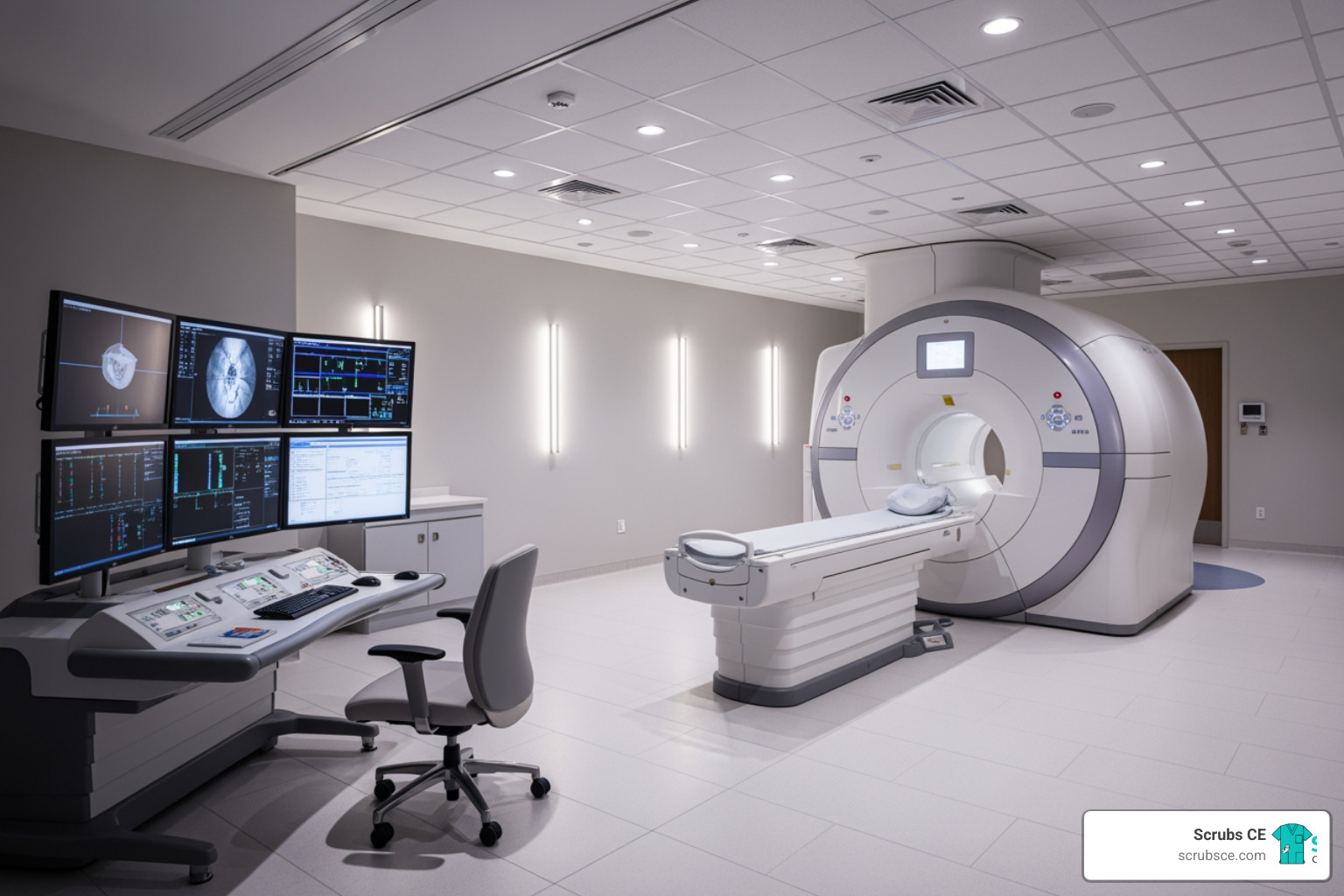
New MRI technology is advancing faster than ever — reshaping how radiologic technologists work, how patients experience scans, and how clinicians diagnose disease.
Here is a quick overview of the biggest breakthroughs happening right now:
| Technology | What It Does | Key Benefit |
|---|---|---|
| AI Deep Resolve | Reduces noise, speeds up scans | Up to 70% faster brain scans |
| Helium-free MRI (0.55T/1.5T) | Operates with just 0.7L of helium | Lower cost, flexible siting |
| Connectome 2.0 | Maps brain fibers at near single-micron precision | Noninvasive microscopic brain imaging |
| 7T MRI + MR Fingerprinting | Whole-brain quantitative maps at 360-micron resolution | Earlier detection of brain disease |
| Low-field + Xenon gas MRI | Visualizes lung airways without radiation | Better COPD and respiratory diagnostics |
| New contrast agents (Gadopiclenol) | High relaxivity at half the gadolinium dose | Safer, sharper contrast imaging |
With roughly 40 million MRI scans performed every year in the United States alone, even small improvements in speed, comfort, and precision have an enormous impact — on patients, on workflows, and on you as an imaging professional.
This is an exciting time to work in Radiology. But it also means there is a lot to keep up with.
I’m Zita Ewert, and as the leader behind SCRUBS Continuing Education® — a trusted CE provider built specifically for imaging professionals — I stay closely connected to the evolving landscape of new MRI technology so our courses reflect what actually matters in practice. In this roundup, I’ll walk you through the most important MRI advances of 2026, so you can stay informed, stay certified, and deliver the best possible patient care.
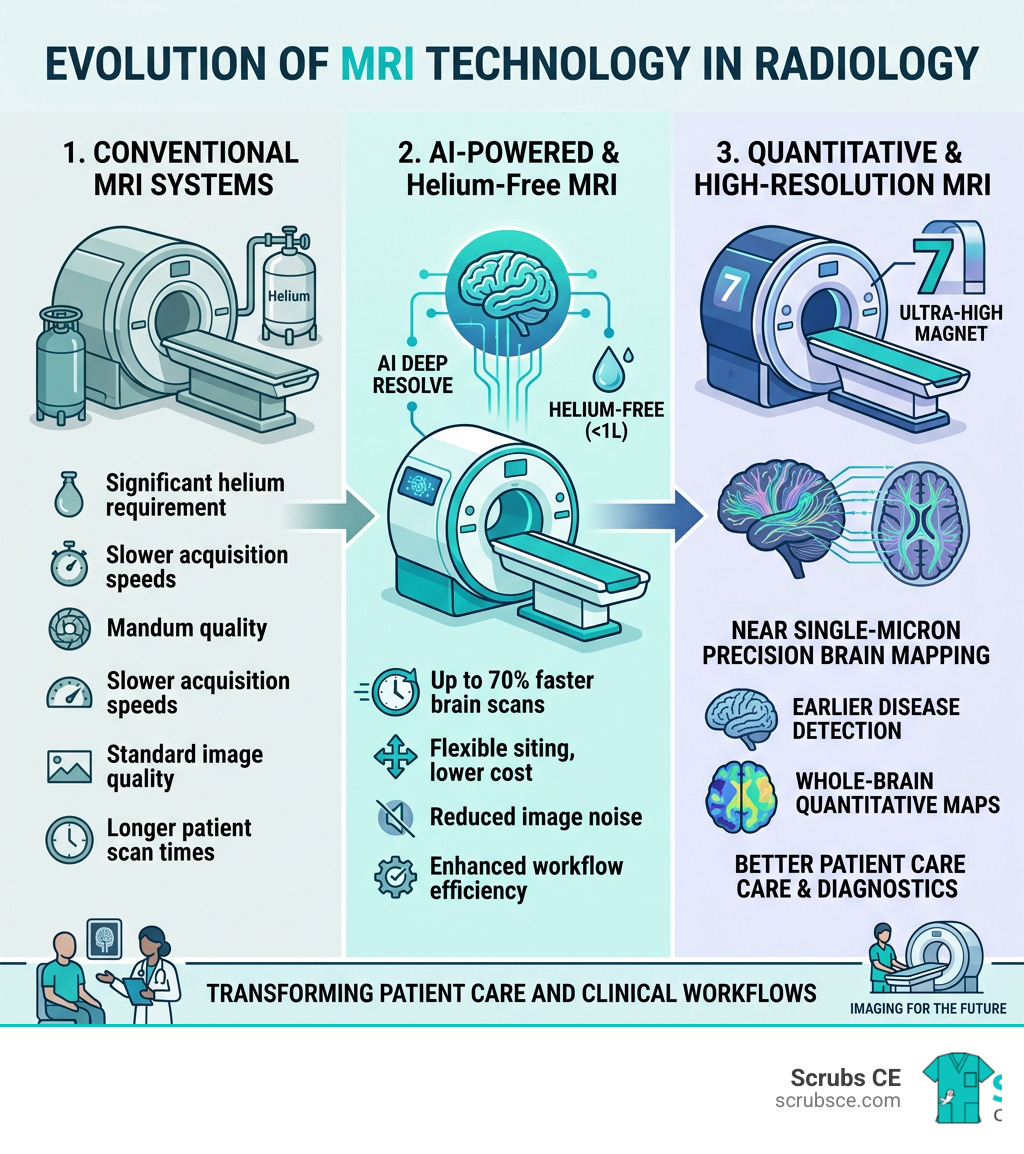
New MRI technology word guide:
AI-Driven Efficiency and the Rise of New MRI Technology
If you’ve been in the scan room lately, you know that the “clunk-clunk-clunk” of the gradients hasn’t changed much, but what’s happening behind the scenes in the computer room certainly has. Artificial Intelligence (AI) is no longer a futuristic concept; it is the current engine driving New MRI technology toward unprecedented efficiency.
The star of the show right now is Deep Resolve, an AI-powered image reconstruction technology. By using deep learning algorithms, this system can take “noisy” raw data and turn it into crystal-clear images. Think of it like a high-end noise-canceling headphone, but for your pixels.
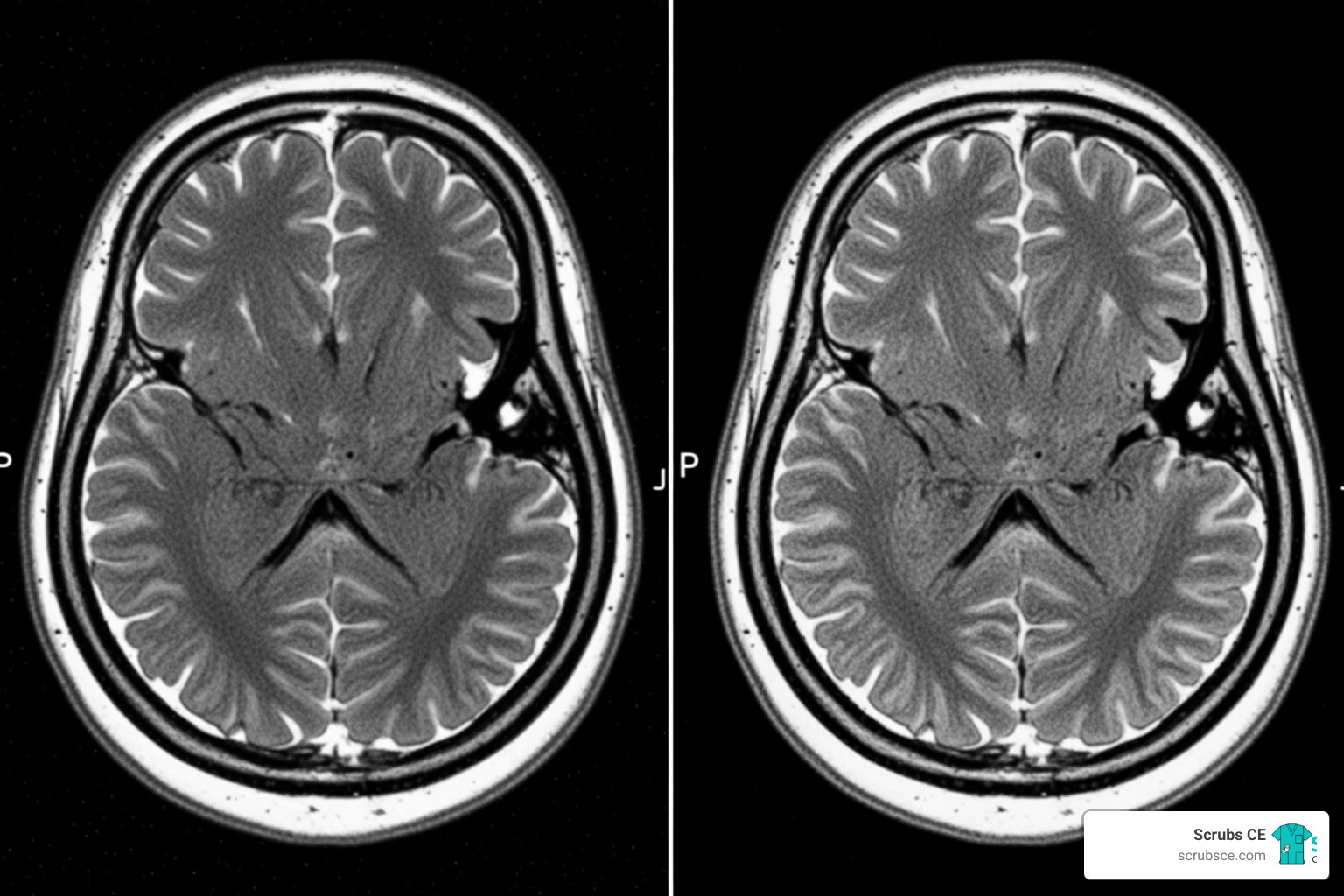
The impact on scan times is staggering. On average, Deep Resolve shortens exams by 7 to 10 minutes. For complex brain scans, we are seeing time reductions of up to 70%. For a technologist, this means fewer “Can you hold still for just five more minutes?” requests. For the patient, it means getting out of that tube much faster.
This speed isn’t just about convenience; it’s a game-changer for pediatric Radiology. At facilities like Penn State Health, this New MRI technology is being used to drastically reduce anesthesia time for children. When a scan that used to take 45 minutes now takes 15, many children can complete the exam with simple coaching instead of heavy sedation.
If you’re curious about how these roles are changing, you might want to check out what is involved in MRI training to see how AI is being integrated into modern workflows.
Deep Learning in Clinical Practice
We aren’t just speculating about these benefits; we have the data to prove they work in the real world. Take NHS Fife, for example. Since adopting Deep Resolve technology, they have seen a total transformation in their diagnostic capacity.
In just the first six months of implementation, NHS Fife was able to perform 1,900 extra appointments. By reducing the average scan time from 30 minutes to less than 24 minutes (a 20% improvement), they slashed their patient waiting lists from six weeks down to just three or four weeks. This is a massive win for public health, proving that AI can help healthcare systems do more with the same amount of equipment.
Improving Patient Outcomes in Radiology
Beyond the numbers, New MRI technology is improving the actual quality of care. Higher signal-to-noise ratios mean that radiologists can see smaller lesions with greater clinical confidence. Furthermore, motion-robust imaging sequences powered by AI allow us to get diagnostic-quality images even from patients who are in pain or have difficulty staying still.
When we reduce the need for repeat scans, we reduce patient frustration and staff burnout. It’s a rare “win-win-win” for the patient, the technologist, and the hospital’s bottom line.
Breaking the Helium Habit: Sustainable Low-Field Scanners
For decades, the “Gold Standard” in MRI was “the higher the Tesla, the better.” But 2026 is the year of the low-field revolution. We are seeing a move toward 0.55T systems that challenge everything we thought we knew about image quality.
One of the biggest headaches in our industry is liquid helium. Traditional scanners require over 1,000 liters of the stuff, and if a magnet quenches, it’s an expensive, logistical nightmare. Enter DryCool technology. Systems like the MAGNETOM Free.XL use a sealed-for-life magnet that requires only 0.7 liters of liquid helium.
This isn’t just about being eco-friendly (though it does use 30% less energy annually). It’s about accessibility. Because these scanners don’t need a quench pipe, they can be installed in locations where a traditional MRI simply couldn’t go — like intensive care units, outpatient clinics, or even older buildings with structural limitations.
| Feature | Traditional 1.5T/3T MRI | New Helium-Free 0.55T/1.5T |
|---|---|---|
| Helium Requirement | >1,000 Liters | 0.7 Liters (Sealed) |
| Bore Size | 60cm – 70cm | Up to 100cm (XL Bore) |
| Infrastructure | Requires Quench Pipe | No Quench Pipe Needed |
| Energy Use | High | ~30% Lower |
| Siting | Restricted to Ground Floors | Flexible (Higher floors/ICUs) |
Expanding Access with New MRI Technology at 0.55T
The MAGNETOM Free.XL also introduces the world’s first 100cm XL bore. If you’ve ever tried to scan a claustrophobic patient or someone with a larger body habitus, you know that every centimeter counts. This extra space isn’t just for comfort; it opens the door for interventional Radiology, allowing physicians to perform procedures under real-time MRI guidance with room to move.
Interestingly, this New MRI technology is also making waves in the veterinary world. The FDA clearance for energy-efficient MRI has paved the way for systems like the MAGNETOM Flow.Ace to be used in animal hospitals. Its smaller footprint and lower operating costs make high-end imaging feasible for our four-legged friends without the massive infrastructure of a human hospital.
Cost-Effective Community Solutions
By removing the need for complex helium infrastructure and quench pipes, New MRI technology is becoming much more cost-effective. We are seeing these units pop up in local health centers and community clinics. This brings life-saving diagnostics closer to the people who need them, reducing the need for patients to travel long distances to major metropolitan imaging centers.
Mapping the Connectome: Ultra-High-Field Advancements
While low-field MRI is making scans more accessible, ultra-high-field MRI is taking us deeper into the human mystery than ever before. If low-field is the “workhorse,” then 7T is the “electron microscope” of the MRI world.
The Connectome 2.0 scanner is the pinnacle of this advancement. Supported by the NIH BRAIN Initiative, this system allows us to see the brain’s wiring at nearly single-micron precision. To put that in perspective, we can now noninvasively image microscopic nerve structures in living humans that were previously only visible in a lab under a microscope after a person had passed away.
Quantitative Mapping and New MRI Technology
Another breakthrough is MR Fingerprinting. Traditionally, MRI gives us “weighted” images (T1, T2, etc.) that are qualitative — they look brighter or darker based on the tissue. MR Fingerprinting changes the game by providing quantitative maps. It measures the actual physical properties of the tissue.
By adapting this for 7T scanners, researchers have achieved a 360-micron isotropic resolution. This is six times smaller than a conventional 1mm voxel. This level of detail is essential for the early detection of neurodegenerative diseases like Parkinson’s or Alzheimer’s, where changes often start in tiny structures like the substantia nigra.
For those interested in the physics behind these high-field jumps, our online MRI courses cover the transition from standard to ultra-high-field imaging in detail.
Precision Neuroscience and the BRAIN Initiative
The NIH BRAIN Initiative is driving much of this work. The goal is to create a complete “wiring diagram” of the human brain. This isn’t just for textbooks; it has real-world applications for personalized medicine.
By understanding an individual’s unique brain circuitry, doctors can tailor noninvasive brain stimulation treatments for depression or epilepsy with pinpoint accuracy. You can read more about the scientific research on brain connectivity to see how these microscopic “maps” are changing the future of psychiatry.
Specialized Imaging: From Lungs to High-Relaxivity Contrast
One of the final frontiers for MRI has always been the lungs. Because the lungs are full of air (and air doesn’t have many protons), traditional MRI has struggled to produce clear images. New MRI technology is fixing that with hyperpolarized xenon gas.
By having a patient inhale a small amount of this specially prepared gas, we can make the “invisible” spaces in the lungs visible. This allows for the diagnosis of COPD, asthma, and cystic fibrosis without the ionizing radiation of a CT scan. This research, fueled by the EPSRC Prosperity Partnerships and the University of Sheffield, is a major leap forward for respiratory health.
Advancements in Contrast Agents
We also have to talk about what’s in the syringe. For years, there have been concerns about gadolinium retention in the brain and body. New MRI technology has answered these concerns with a new class of “high-relaxivity” contrast agents, specifically Gadopiclenol (marketed as Elucirem or Vueway).
These agents have a unique “q=2” hydration structure, which basically means they are twice as effective at shortening T1 relaxation times as traditional agents. The result? We can use 50% of the normal dose of gadolinium while still getting sharper, more contrast-heavy images. This is a massive safety improvement, especially for pediatric patients or those who need frequent surveillance scans (like MS patients).
If you are handling these agents daily, staying updated on essentials of MRI safety is more important than ever.
Respiratory Innovation in Radiology
The combination of low-field MRI and xenon gas is particularly exciting because it makes lung imaging safer for children. Since there is no radiation involved, we can perform repeated scans to monitor the progression of diseases like cystic fibrosis without worrying about cumulative dose. This is the kind of innovation that reminds us why we entered the field of Radiology in the first place.
Frequently Asked Questions about New MRI Technology
How does AI reduce MRI scan times?
AI, specifically deep learning algorithms like Deep Resolve, works by identifying and removing “noise” from the raw data. This allows the scanner to collect less data during the actual acquisition phase (which is the part that takes time) and “reconstruct” the missing pieces with incredible accuracy. It’s like being able to read a whole sentence even if half the letters are missing because you know the patterns of the language.
What are the benefits of helium-free MRI systems?
Helium-free (or “low-helium”) systems like those using DryCool technology are safer, more sustainable, and much easier to install. Because they don’t require 1,000+ liters of helium or a quench pipe to vent gas in an emergency, they can be placed in clinics, ICUs, or upper floors of buildings. They also eliminate the risk of helium supply shortages affecting patient care.
How is Connectome 2.0 different from standard brain imaging?
Standard MRI scanners are great for seeing the “gross anatomy” of the brain — things like tumors or large strokes. Connectome 2.0 is designed to see the “microstructure.” It maps individual nerve fibers and cellular architecture at nearly single-micron precision. This allows scientists to see how the brain is “wired” together, which is crucial for understanding complex disorders like autism, schizophrenia, and dementia.
Conclusion
As we look toward the end of 2026 and beyond, it’s clear that New MRI technology is making our field faster, safer, and more precise. Whether it’s AI cutting scan times in half, helium-free magnets opening up new locations for imaging, or ultra-high-field scanners mapping the very fibers of our thoughts, the progress is breathtaking.
For those of us working in the trenches of Radiology, these changes mean we must stay committed to lifelong learning. At Scrubs CE, we are dedicated to helping you navigate these transitions. Our goal is to provide you with the most current, high-quality continuing education so you can meet your licensure requirements with ease and continue to excel in your career.
Stay curious, stay certified, and keep pushing the boundaries of what’s possible in medical imaging.
Ready to earn your credits? Check out our latest CE for MRI technologists and get your instant certificate today!