
Start Your Diagnostic Radiography Career with the Right Degree Program
Choose a Diagnostic Radiography Course That Leads to Practice
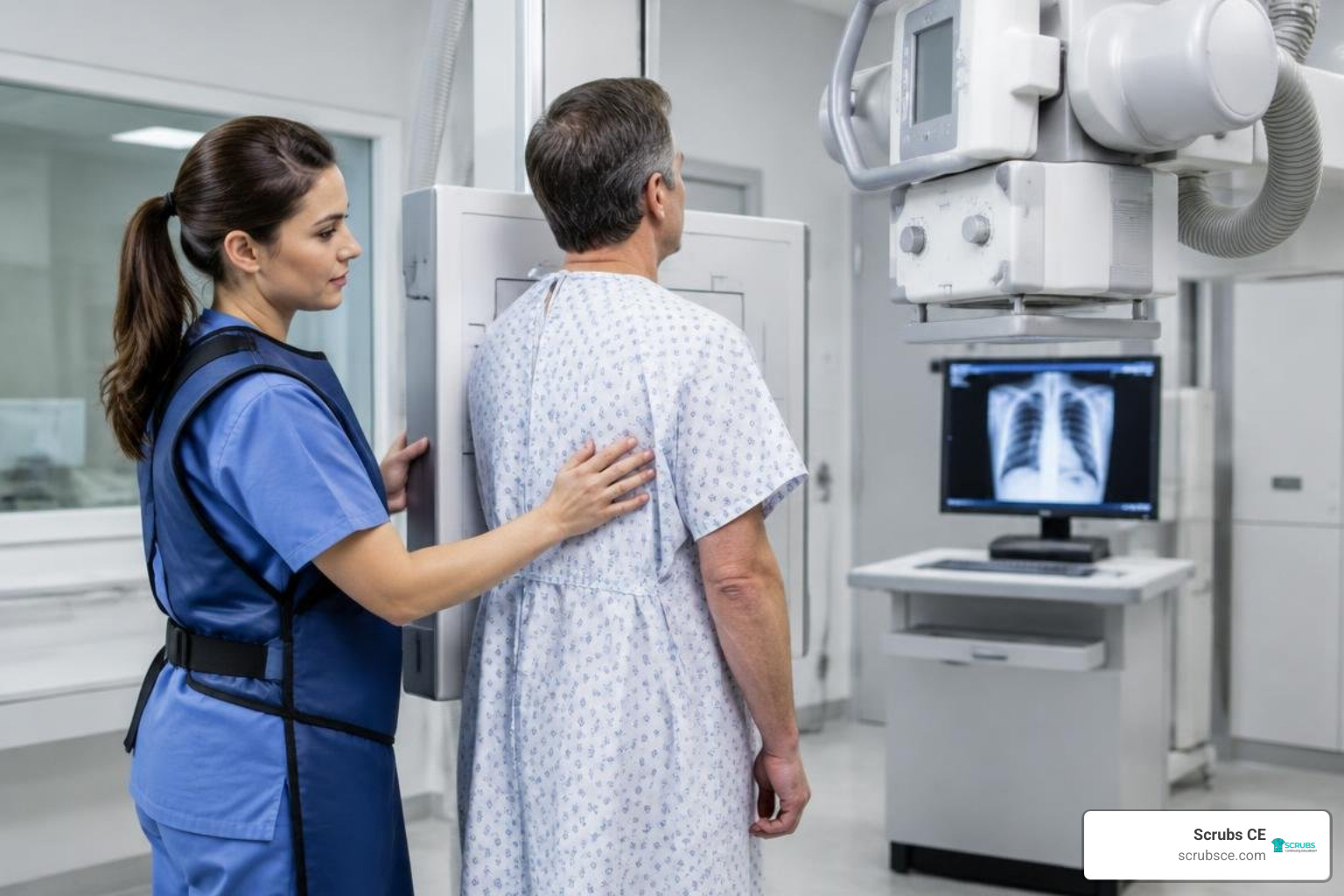
A diagnostic radiography course is the usual route into a career creating medical images that help clinicians diagnose injuries and disease. Choose a three-year, full-time degree that is approved for professional practice, includes supervised clinical placements, and teaches both patient care and imaging safety.
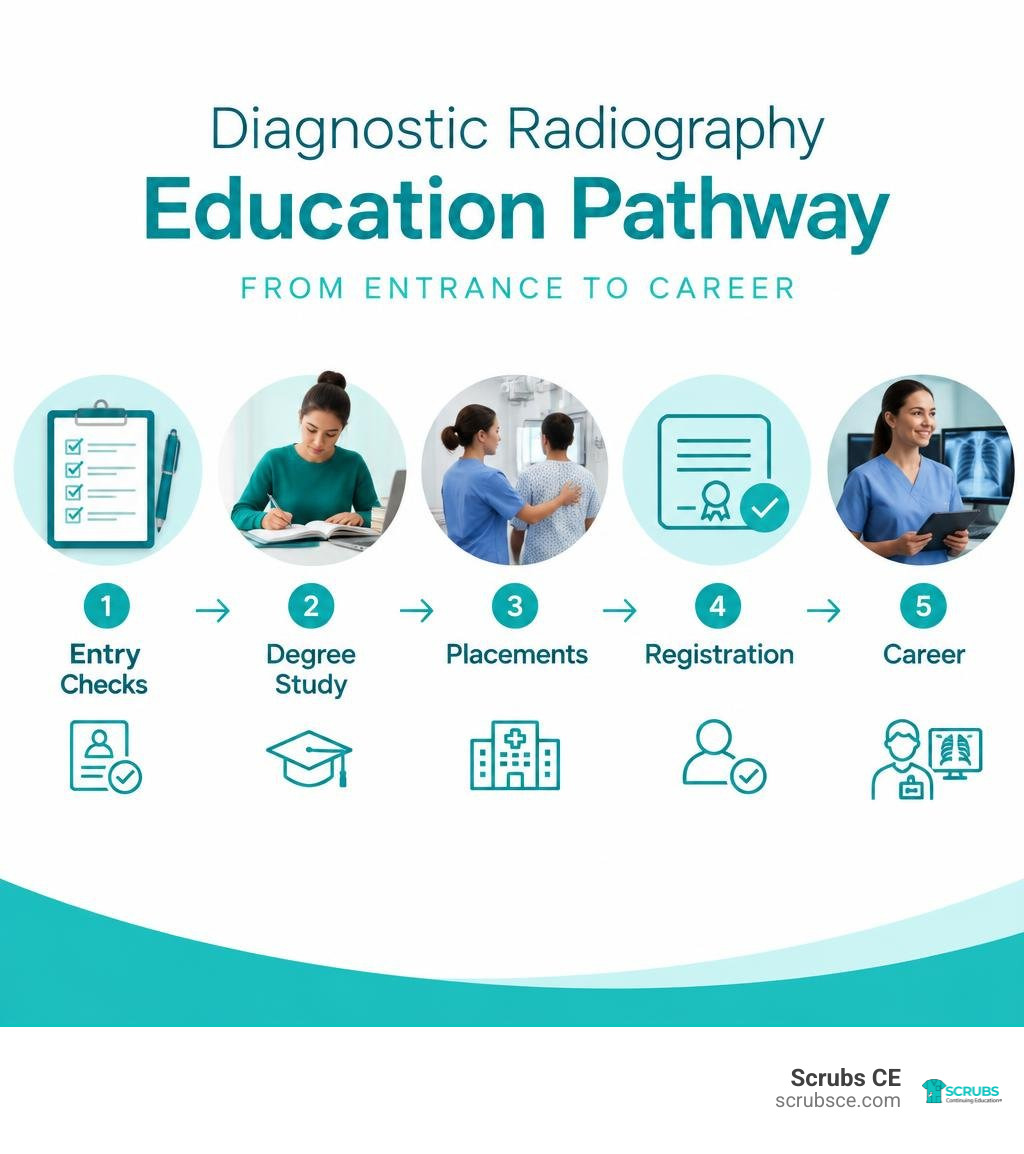
Before you apply, check these essentials:
- Confirm the course meets Health and Care Professions Council standards for registration eligibility.
- Check its UCAS entry requirements, including science subjects and English-language criteria.
- Look for training in X-ray, CT, MRI, fluoroscopy, ultrasound, and nuclear medicine.
- If your qualifications do not meet direct-entry requirements, explore an international foundation route.
- For UK study lasting more than six months, plan early for the relevant Student visa.
Diagnostic radiographers do far more than operate equipment. They position patients safely, use radiation responsibly, produce high-quality images, and communicate calmly with people who may be in pain or worried. A strong degree combines classroom science, simulated practice, and clinical experience so graduates can apply for registration and begin work in hospital or private imaging settings.
I am Zita Ewert, a continuing-education leader for imaging professionals and the driving force behind SCRUBS Continuing Education®. My work supporting Radiology professionals with accessible, accredited learning gives me a practical view of how a diagnostic radiography course starts a career built on safe practice and lifelong development.
Diagnostic radiography course definitions:
What to Expect from a Diagnostic Radiography Course
Entering a diagnostic radiography program means stepping into an environment where human empathy meets cutting-edge physical science. Most standard undergraduate pathways, such as the BSc Diagnostic Radiography 2026 curriculum frameworks, operate across three full academic years comprising 360 credits. From day one, you study anatomy, physiology, pathology, radiation physics, and equipment operation.
The academic structure typically splits time equally: roughly 50% in university lectures, seminars, and simulation suites, and 50% embedded in clinical hospital placements. You will learn the physics behind ionizing radiation, the biological impacts of radiation dose, and how to apply the ALARA principle (As Low As Reasonably Achievable) to ensure patient safety.
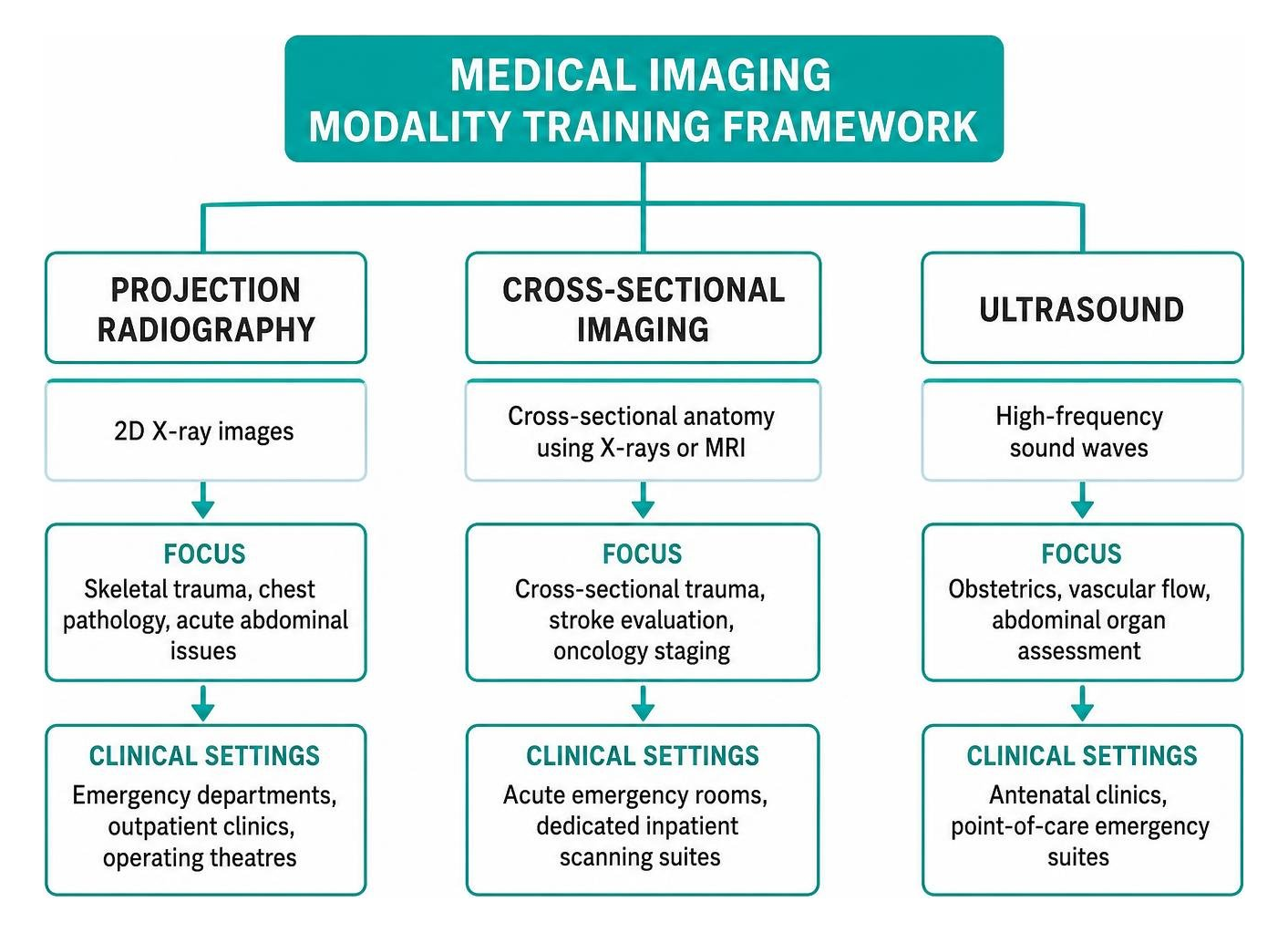
| Imaging Modality | Energy/Technology Used | Primary Diagnostic Purpose | Clinical Setting / Area |
|---|---|---|---|
| Conventional X-Ray | Ionizing Radiation | Skeletal trauma, chest pathology, acute abdominal issues | Emergency departments, outpatient clinics, operating theatres |
| Computed Tomography (CT) | Rotating X-Ray & Detectors | Cross-sectional trauma, stroke evaluation, oncology staging | Acute emergency rooms, dedicated inpatient scanning suites |
| Magnetic Resonance Imaging (MRI) | Magnetic Fields & Radio Waves | Soft tissue injury, neurological mapping, musculoskeletal tears | Specialist outpatient centers, hospital imaging departments |
| Diagnostic Ultrasound | High-Frequency Sound Waves | Obstetrics, vascular flow, abdominal organ assessment | Antenatal clinics, point-of-care emergency suites |
| Fluoroscopy | Real-Time X-Ray Video | Gastrointestinal tract studies, interventional guidance | Operating rooms, dedicated barium/interventional suites |
| Nuclear Medicine | Radiopharmaceuticals | Metabolic activity, bone metastases, functional imaging | Dedicated nuclear medicine and PET-CT departments |
Core Medical Imaging Modalities and Clinical Skills
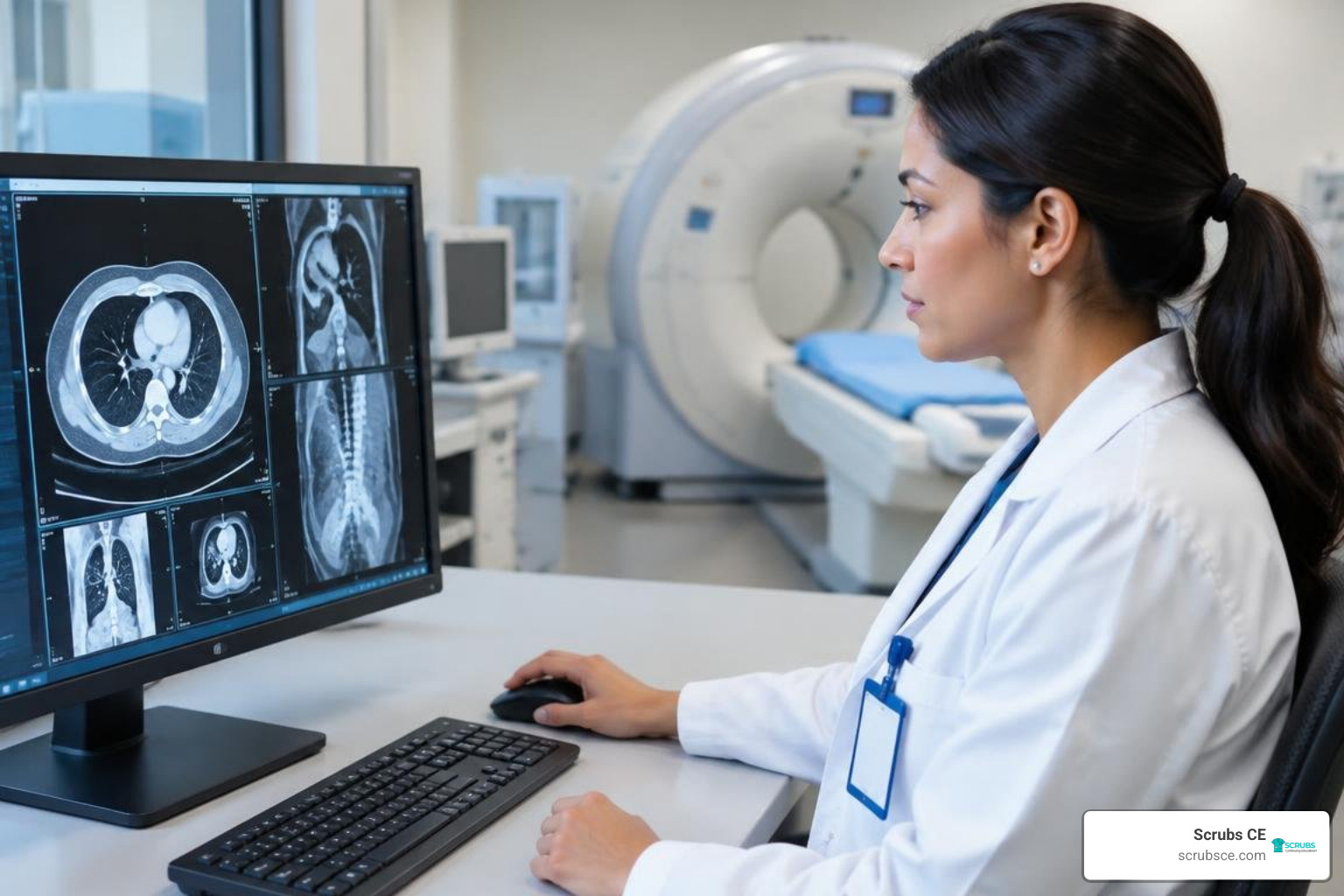
Throughout your training, you master multiple diagnostic modalities. You start with projection radiography (plain film X-rays), mastering precise patient positioning and beam collimation. As you advance into cross-sectional imaging, mastering systematic radiographic image analysis becomes crucial for identifying artifacts, technical errors, and anatomical abnormalities.
You also gain exposure to fluoroscopy—often assisting in surgical procedures using mobile C-arms—along with non-ionizing modalities like magnetic resonance imaging and medical ultrasound. Nuclear medicine rounds out your education by showing how radioactive tracers provide functional insights into metabolic processes.
Clinical Placement Structure and Simulation Training
Real-world capability comes from hands-on clinical placement. Top university programs require upwards of 1,200 to 1,260 clinical placement hours over the course of the degree. You rotate through emergency trauma centers, intensive care units, pediatric wards, and orthopedic theaters.
Modern universities complement hospital rotations with state-of-the-art simulation facilities. You will utilize virtual reality (VR) suites to practice complex patient positioning and beam angles without exposing anyone to actual radiation. Simulation allows you to make mistakes, refine your technique, and build confidence before stepping onto a busy hospital floor.
Academic Entry Requirements and International Pathways

Securing a place in an accredited diagnostic radiography degree requires a solid foundation in scientific subjects and strong interpersonal capabilities demonstrated during the selection process.
Direct Entry Criteria and UCAS Application Codes
For direct undergraduate entry into a standard three-year bachelor’s degree, universities typically require between 112 and 128 UCAS tariff points. This usually equates to A-level grades of ABB to BBC (or equivalent BTEC National Extended Diplomas at DMM–DDM level), with at least one core science such as Biology, Physics, or Chemistry.
Applications are processed through the UK central admissions service using specific UCAS application codes. The universal UCAS code for standard three-year diagnostic radiography degrees across major institutions is B821. When preparing for upcoming cycles—including the September 2026 intake for the 2026/27 academic year or planning ahead for 2027/28—carefully evaluate your options by using our checklist for Radiology course options.
Selecting a Diagnostic Radiography Course with a Foundation Year
If you do not hold direct science A-levels or fall short of the standard entry tariff points, several institutions provide four-year extended programs. These incorporate an initial foundation year designed to build baseline competence in biology, physics, and academic study skills.
For instance, programs such as the BSc (Honours) Diagnostic Radiography with Foundation Year Full-time 2027 | Sheffield Hallam University offer pathways under separate UCAS codes (such as BB14), often accepting around 72 UCAS points. Successfully passing the foundation year allows seamless progression into year one of the accredited degree.
International Qualifications and UK Student Visa Guidance
Institutions like City St George’s, University of London welcome international candidates from across the globe, evaluating regional qualifications including the International Baccalaureate (typically requiring 28–30 points with Higher Level Science), US Advanced Placement exams, and European secondary diplomas.
Because a full degree spans three to four years, overseas students must apply for a standard UK Student Visa. Key requirements include:
- Receiving a formal Confirmation of Acceptance for Studies (CAS) from an approved sponsor university.
- Proving English language proficiency (typically an IELTS Academic score of 7.0 overall with no individual sub-score below 6.5).
- Demonstrating sufficient financial funds to cover tuition and living expenses.
- Completing required health screenings and police/criminal record checks before beginning hospital placements.
If an international student’s secondary qualification is not directly recognized for undergraduate entry, universities provide dedicated International Foundation Programmes in Life and Health Sciences as a bridging mechanism.
Funding, Accreditation, and Professional Practice
Understanding regulatory standards and financial investment is essential before entering training.
Meeting Professional Radiography Standards
To practice legally as a Diagnostic Radiographer in the UK, you must hold a qualification approved by the Health and Care Professions Council (HCPC) and endorsed by the Society and College of Radiographers (SCoR). Graduating from an accredited course provides direct eligibility to register with the HCPC.
For those looking toward global mobility or US practice environments, understanding how international credentials align with the AMERICAN REGISTRY OF RADIOLOGIC TECHNOLOGISTS® (ARRT®) and the ASRT® is vital. You can review standard credential benchmarks through our guide on Radiology certification requirements.
Tuition Fees and NHS Learning Support Grants
Tuition fees vary based on residential status. For UK home students, full-time undergraduate tuition is typically capped around £9,250 to £9,790 per year. For international students, annual fees generally range from £19,200 to £32,000 depending on the institution.
Fortunately, UK home students accepted onto an approved pre-registration radiography course can access the NHS Learning Support Fund (LSF). This financial support package includes:
- A non-repayable Training Grant of £5,000 per academic year.
- A Specialist Subject Payment of £1,000 per year, due to radiography being designated a shortage profession.
- Regional travel and dual-accommodation expense reimbursements incurred during clinical placement rotations.
- Exceptional hardship funds and parental support allowances for eligible students.
Career Pathways and Post-Qualification Advancement
Graduating with an accredited radiography degree offers exceptional career security, with national graduate outcome surveys consistently reporting over 92% to 95% of graduates entering professional employment within 15 months.
Navigating Your Diagnostic Radiography Course into Clinical Practice
Upon obtaining HCPC registration, newly qualified radiographers in the UK typically begin working within NHS Trusts at Agenda for Change Band 5. In these roles, you consolidate your foundational skills across general X-ray, mobile imaging in intensive care units, and emergency trauma suites.
Beyond NHS hospitals, employment opportunities exist within private healthcare facilities, specialized orthopedic clinics, research institutes, and dedicated community diagnostic centers (CDCs).
Continuing Professional Development and Specialisation
Diagnostic radiography offers versatile career progression. After gaining initial clinical experience, practitioners often advance to Band 6 and Band 7 roles by specializing in advanced modalities or post-primary pathways:
- Cross-Sectional Imaging: Specializing as dedicated CT or MRI senior radiographers.
- Medical Ultrasound (Sonography): Completing postgraduate diplomas to perform independent obstetric, vascular, and abdominal scanning.
- Advanced Clinical Practice & Image Interpretation: Working as a Reporting Radiographer, autonomously interpreting and writing formal diagnostic medical reports for skeletal and chest examinations.
- Interventional Radiology: Operating complex equipment alongside interventional radiologists during minimally invasive vascular procedures.
- Academic & Research Roles: Pursuing Master of Science (MSc) and PhD programs to drive clinical research, artificial intelligence integration, and student mentorship.
Continuing professional development (CPD) is a mandatory lifelong requirement for maintaining professional registration. Staying current with emerging imaging technologies, radiation safety protocols, and cross-sectional anatomy is made seamless through dedicated online Radiology education.
Frequently Asked Questions About Diagnostic Radiography Training
How long does it take to complete a diagnostic radiography degree?
A standard full-time undergraduate diagnostic radiography degree takes three years in England and Wales, and four years in Scotland (or four years across the UK if enrolled in a program that includes an integrated foundation year). Students complete 360 academic credits combined with at least 1,200 hours of direct clinical placement.
What UCAS tariff points and science subjects are required?
Most UK programs ask for between 112 and 128 UCAS tariff points (equivalent to ABB–BBC at A-level). Applicants must hold at least one science subject, such as Biology, Human Biology, Physics, or Chemistry, alongside GCSE passes (Grade 4/C or above) in English Language, Mathematics, and Science.
Can international students apply for UK radiography degree programmes?
Yes. International students with equivalent secondary school diplomas or international foundation qualifications can apply directly via UCAS. International applicants must demonstrate English language proficiency (typically an IELTS score of 7.0), meet student visa requirements, and complete background checks for clinical placement eligibility.
Conclusion
Enrolling in a diagnostic radiography course is your gateway to a dynamic, technology-driven career at the very core of modern healthcare. By balancing academic rigor, practical simulation, and extensive patient-facing hospital rotations, these accredited programs ensure you graduate with the clinical competence and confidence needed to make a real difference in patient outcomes.
As your medical imaging journey unfolds—from undergraduate study through advanced clinical specialisation—we at Scrubs CE are dedicated to supporting your professional development with high-quality, self-paced learning. Ready to expand your diagnostic imaging knowledge? Explore continuing education Radiology courses to stay at the leading edge of healthcare practice.