
Find Correctional Healthcare CE That Meets Clinical and Credential Requirements
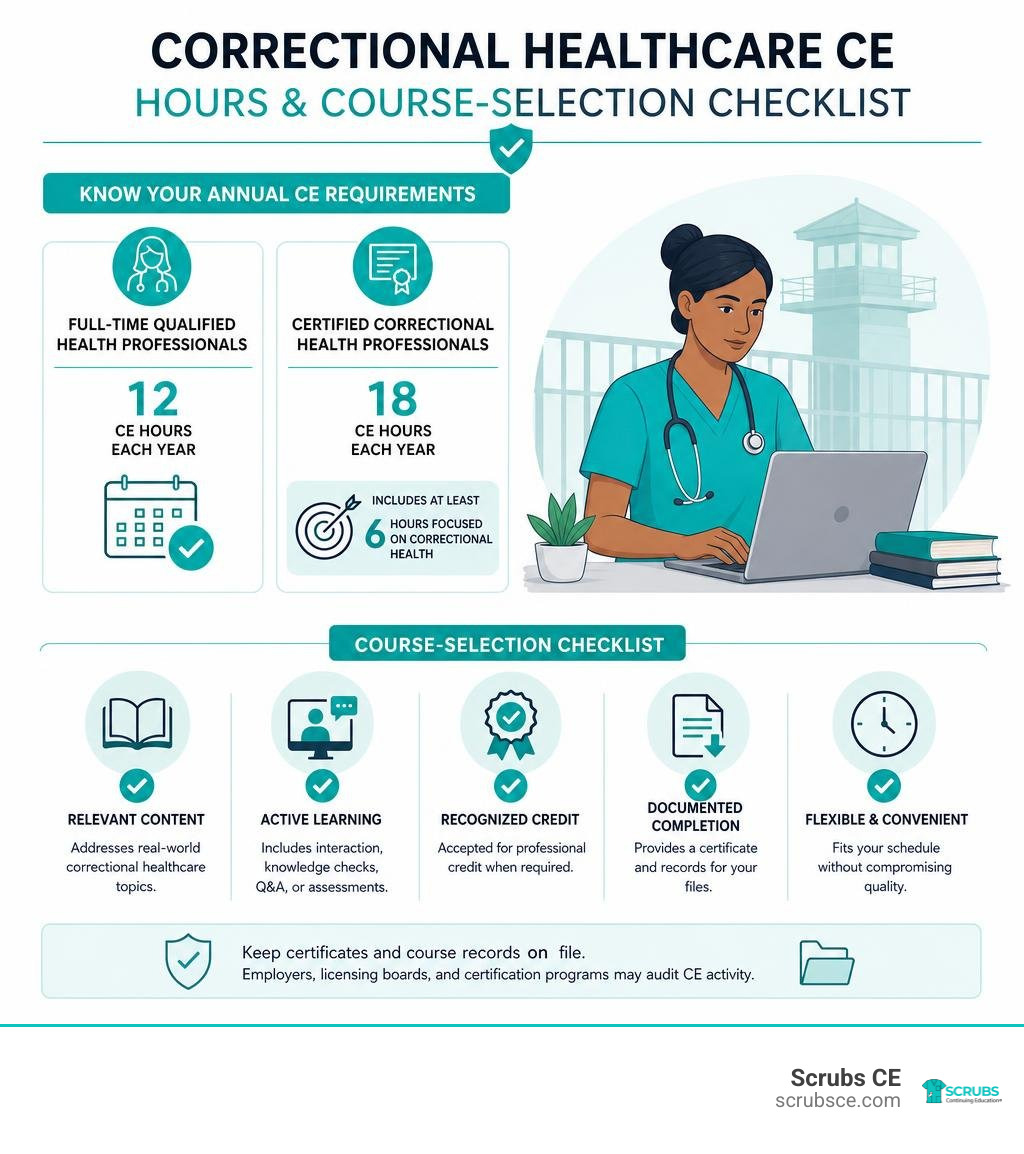
The best correctional healthcare CE courses are relevant to the clinician’s role, recognized for professional credit when needed, and designed with active participation. For full-time qualified health professionals working under NCCHC standards, plan for 12 hours of continuing education each year. If you hold a Certified Correctional Health Professional credential, you need 18 CE hours annually, including at least 6 hours focused on correctional health.
Look for training that covers the daily realities of custody-based care, such as:
- Infectious disease screening and treatment, including TB, HIV, viral hepatitis, and STIs
- Behavioral health, suicide prevention, substance use, and traumatic brain injury
- Intake assessments, chronic-condition management, and emergency response
- CPR from an approved provider, which may count toward annual CE requirements
- Interactive online modules, live discussion, or skills verification rather than passive slides alone
For busy clinicians, online learning can be a practical fit, but it should document completion and include meaningful engagement, such as knowledge checks, Q&A, or assessments. Keep certificates and course records on file because employers, licensing boards, and certification programs may audit CE activity.
I am Zita Ewert, a continuing-education leader who develops accessible online and home-study learning for imaging professionals. My work in correctional healthcare CE is grounded in helping busy clinical professionals find clear, practical education that supports compliance and safer patient care.
Correctional healthcare CE terms explained:
Core Standards and Mandatory Hours for Correctional Healthcare CE
Delivering comprehensive clinical care inside secure facilities presents distinct legal, ethical, and clinical challenges. In custody-based environments, continuing education is not merely a formality for license renewal; it serves as a critical operational safeguard. Navigating the intersection of custody policies, heightened patient vulnerability, and specialized epidemiological patterns requires targeted, continuous training.
NCCHC 12-Hour Annual Requirement for Clinical Staff
Under the governance of the National Commission on Correctional Health Care (NCCHC)—specifically standard J-C-03—all full-time qualified health care professionals working in correctional environments must obtain at least 12 hours of continuing education per year. This requirement applies across the clinical spectrum, encompassing correctional physicians, registered nurses, nurse practitioners, physician assistants, and mental health providers.
Meeting this benchmark ensures that staff maintain clinical competencies tailored to secure environments. The standard mandates that educational offerings reflect the unique population needs of jails and prisons. Educational records must be thoroughly documented, showing course titles, accredited providers, dates of completion, and earned credit hours.
| Clinical Role | Minimum Annual CE Hours | Correctional-Specific Focus | Compliant Delivery Formats |
|---|---|---|---|
| Correctional Physicians (MD/DO) | 12 Hours | Strongly recommended (mandatory 6 hrs for CCHP) | Accredited CME, blended interactive modules, grand rounds |
| Correctional Registered Nurses (RN/LPN) | 12 Hours | Recommended nursing protocols in custody | Interactive online modules, clinical seminars, live workshops |
| Mental Health Providers (LCSW, LPC, PsyD) | 12 Hours | Focus on custody-specific behavioral health | Accredited behavioral modules, case reviews, live Q&A sessions |
| Specialty Certified Staff (CCHP Credentials) | 18 Hours | Mandatory minimum 6 hours correctional-specific | Accredited coursework, national conferences, verified training |
CPR Certification and Delivery Formats in Correctional Healthcare CE
Emergency preparedness remains central to custodial healthcare. Attendance at an approved CPR training course counts directly toward the 12-hour annual continuing education requirement. To remain compliant, staff with direct patient contact must maintain active, verifiable CPR credentials.
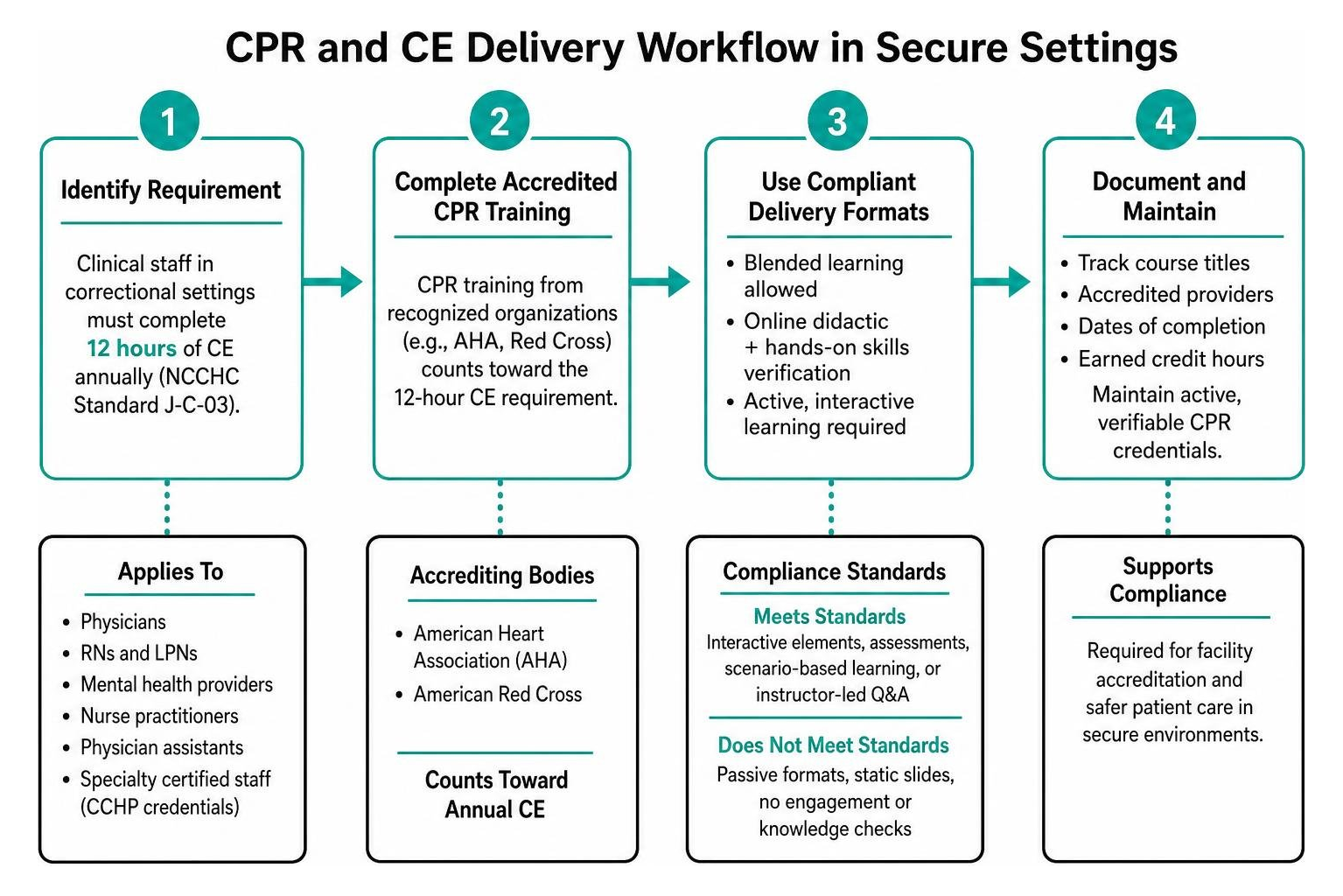
Accrediting bodies accept CPR courses from recognized organizations, such as the American Heart Association (AHA) and the American Red Cross. While blended learning formats featuring online didactic instruction are permissible, hands-on skills verification remains essential for full emergency preparedness.
When completing standard digital training, passive learning formats fall short of compliance expectations. Static PowerPoint decks lacking engagement metrics or knowledge checks do not meet NCCHC standards. Digital courses must include interactive elements—such as embedded assessments, scenario-based knowledge checks, or instructor-led Q&A—to satisfy facility accreditation auditors.
Maintaining CCHP Credentials and Specialty Recertifications
Professional accreditation through the Certified Correctional Health Professional (CCHP) program validates specialized knowledge in correctional environments. As of 2026, maintaining this credential requires structured tracking of annual continuing education credits.
Annual 18-Hour Renewal Rules and Specialty Alignment
All CCHP credential holders must complete 18 hours of continuing education annually. Of these 18 hours, a minimum of 6 hours must focus directly on correctional healthcare topics, such as custodial suicide prevention, intake triage, and correctional medical jurisprudence.
For practitioners holding advanced or specialty credentials, the renewal structure aligns automatically:
- CCHP-RN (Registered Nurse): Focuses on custody-specific nursing assessments, triage protocols, and medication administration workflows.
- CCHP-MH (Mental Health): Focuses on clinical management of acute psychiatric crises, psychotropic monitoring, and behavioral intervention in secure housing.
- CCHP-CP (Clinical Provider): Designed for physicians, PAs, and advanced practice nurses managing complex chronic and acute medical cases behind bars.
- CCHP-A (Advanced): Requires ongoing annual CE alongside a dedicated advanced professional project or published contribution to the field completed every three years.
Recertifying a specialty credential automatically renews and aligns the general CCHP certification cycle. While paper completion certificates are not submitted during standard online application processing, practitioners must retain complete documentation in their records, as the CCHP Board of Trustees conducts random annual compliance audits. Review the detailed Recertification guidelines from the National Commission on Correctional Health Care to confirm current specialty criteria.
Submission Deadlines, Fees, and Administrative Compliance
Managing recertification timelines prevents credential lapses and administrative penalties. Certification renewals operate on quarterly deadlines: March 31, June 30, September 30, and December 31.

The standard online renewal fee is $100. Submitting via physical mail or fax adds a $15 manual processing fee. Submissions completed past the quarterly expiration date incur an additional $25 late fee. If unexpected clinical obligations interfere with course completion, practitioners may submit a formal written extension request at least 30 days prior to the expiration date. A lapsed certification can be reinstated within one year before a full re-examination becomes necessary.
High-Yield Clinical Topics and Course Selection for Correctional Settings
Selecting relevant continuing education modules ensures regulatory compliance while directly improving day-to-day patient outcomes in secure environments.
Priority Infectious Disease and Chronic Care Modules in Correctional Healthcare CE
Correctional facilities experience higher transmission rates of communicable diseases compared to community baselines. Incorporating CDC guidelines into staff training curriculum ensures alignment with modern epidemiological standards:
- Tuberculosis Screening & Latent Infection: Implementing early intake symptom checklists, targeted tuberculin skin testing (TST) or interferon-gamma release assays (IGRAs), and modern short-course treatment regimens for latent tuberculosis infection.
- HIV Management & Prevention: Protocols for continuous antiretroviral therapy (ART) adherence, pre-exposure prophylaxis (PrEP) navigation, and confidentiality safeguards in custody settings.
- Viral Hepatitis (HCV/HBV): Routine screening at intake, opt-out diagnostic testing, liver disease staging, and direct-acting antiviral (DAA) treatment workflows.
- Sexually Transmitted Infections (STIs): Universal screening protocols for syphilis, gonorrhea, and chlamydia during intake processing.
- Ectoparasite Management: Rapid identification, isolation procedures, and treatment protocols for lice and scabies outbreaks in intake dormitories.
Addressing Behavioral Health and Traumatic Brain Injury
A significant proportion of incarcerated individuals present with co-occurring psychiatric and substance use disorders. High-yield education modules focus on practical intake interventions:
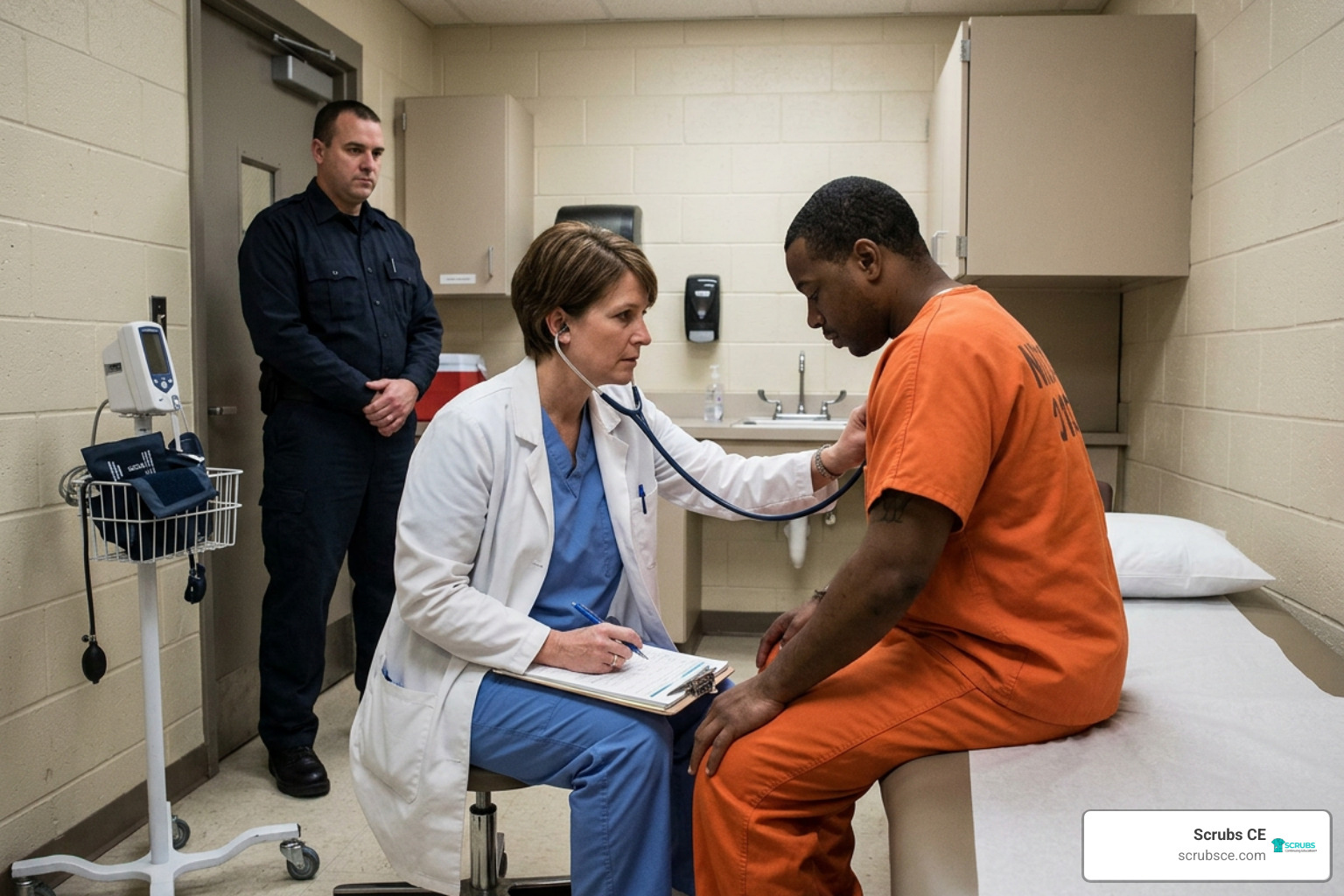
- Traumatic Brain Injury (TBI) Screening: Identifying past head trauma that may contribute to cognitive deficits, behavioral volatility, or treatment non-compliance.
- Suicide Prevention & Crisis De-escalation: Recognizing environmental and psychological triggers, conducting suicide risk assessments, and managing observation housing protocols.
- Substance Use Disorders (SUD) & MOUD: Managing acute alcohol and opioid withdrawal via standardized scoring tools (CIWA/COWS) and administering medications for opioid use disorder (MOUD).
- Intake Health Assessments: Developing standardized physical assessments within the mandated intake window to catch undiagnosed chronic conditions early.
Implementation Strategies for Correctional Health Administrators
Facility administrators often face staffing shortages, rotating shift patterns, and strict security regulations regarding internet access. Implementing sustainable professional development requires flexible educational architecture:
- Deploy Interactive Learning Management Systems (LMS): Use verified e-learning platforms that track completion timestamps, quiz scores, and user engagement metrics automatically.
- Utilize Shift-Based Modular Learning: Break down mandatory 12-hour curricula into micro-learning segments (15–30 minutes) that nurses and providers can complete during scheduled administrative windows.
- Incorporate Blended Skills Verification: Pair digital didactic modules covering CPR or clinical protocols with brief, on-site practical assessments conducted by clinical supervisors.
- Embed CE Into Continuous Quality Improvement (CQI): Align monthly CE assignments with facility CQI findings to directly address audit deficiencies or clinical trend alerts.
Frequently Asked Questions About Correctional Healthcare Continuing Education
Does CPR training count toward annual correctional CE requirements?
Yes. Attending an approved CPR training course counts directly toward the 12-hour annual continuing education requirement outlined in NCCHC standard J-C-03. The course must be delivered through an accredited organization, such as the American Heart Association or the American Red Cross, and include hands-on practical skills demonstration for staff with direct patient contact.
How many correctional-specific CE hours are needed for CCHP renewal?
Maintaining standard CCHP certification requires 18 hours of continuing education annually, with at least 6 hours dedicated specifically to correctional healthcare topics. The remaining 12 hours may cover general clinical medicine, pharmacology, or specialty topics relevant to your professional scope of practice.
Can PowerPoint presentations satisfy NCCHC training standards?
Static PowerPoint presentations alone generally do not satisfy NCCHC continuing education standards unless they are integrated into an interactive learning format. To ensure compliance, computer-based training must incorporate interactive knowledge checks, documented pre- and post-tests, or live instructor-led discussion and Q&A sessions.
Conclusion
Mastering clinical workflows in correctional facilities requires focused education that directly addresses the health complexities of justice-involved individuals. Meeting mandatory 12-hour NCCHC standards and 18-hour CCHP recertification rules ensures operational compliance and reinforces high clinical care standards across all secure facilities.
We support medical professionals across diverse technical specialties with accessible, accredited continuing education. If you are looking to expand your diagnostic capabilities or complete mandatory credits for imaging credentials, explore our convenient online Radiology CE courses to support your ongoing professional development.
Disclaimer: Continuing education requirements may vary based on facility accreditation status, individual state licensing board mandates, and specific credentialing agencies. Always verify your specific state regulations and professional board guidelines to ensure complete educational compliance.