
Education Needed to Be a Radiologist: The 13-Year Path

In the United States, the education needed to be a radiologist typically takes 13 years after high school: four years for a bachelor’s degree, four years of medical school to earn an MD or DO, one clinical training year, and four years in a diagnostic Radiology residency. A subspecialty fellowship may add one or two more years. Radiologists also need a medical license; many pursue board certification.
I’m Zita Ewert, and I lead continuing education for imaging professionals at Scrubs CE. My work with training and credential requirements helps me explain the education needed to be a radiologist while keeping the physician path distinct from technologist training.
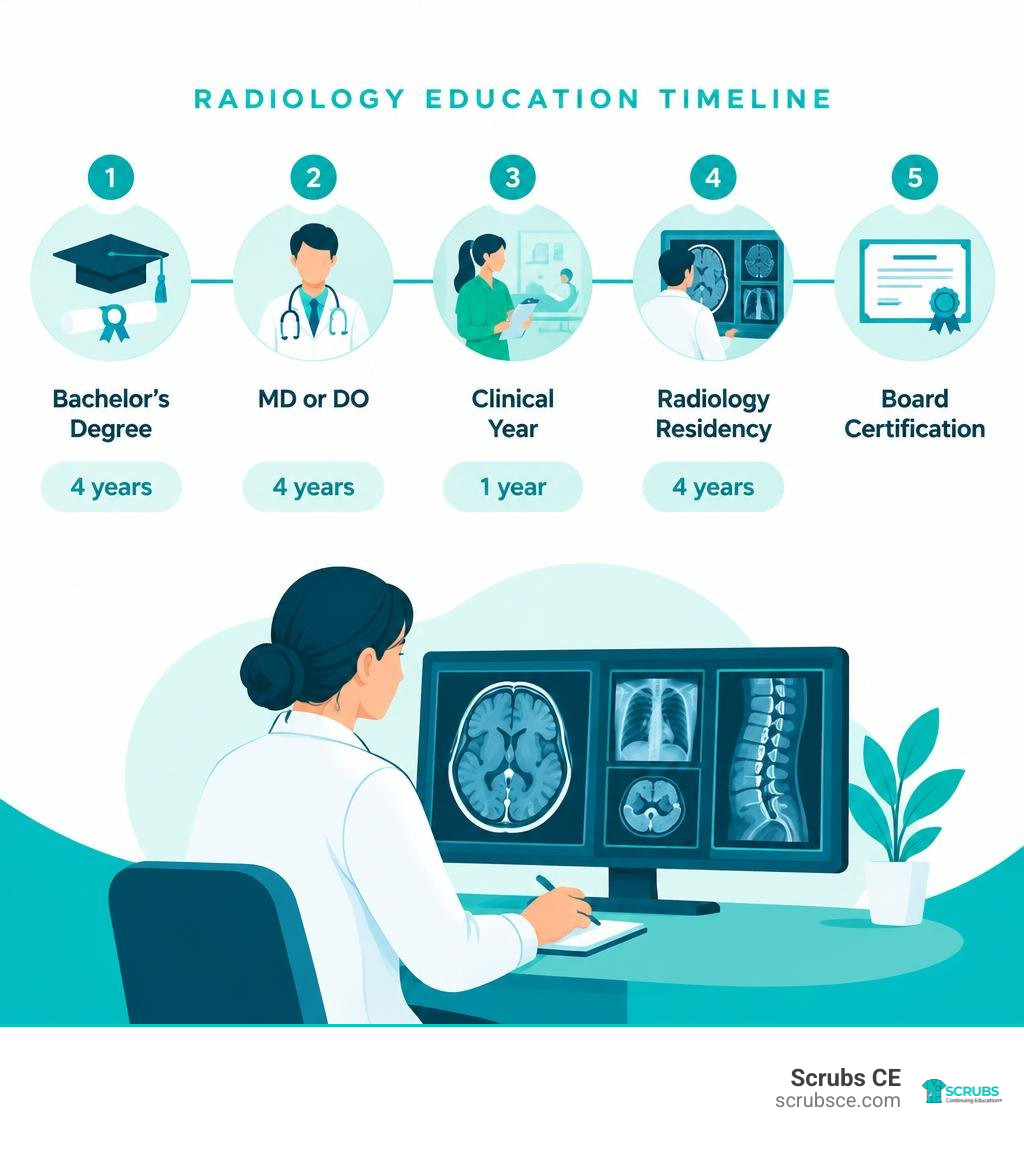
Simple guide to education needed to be a radiologist:
Undergraduate and Medical School Foundations
The path toward becoming a physician specializing in Radiology starts during undergraduate studies. Medical schools do not mandate a specific major, but prospective medical students must complete foundational pre-medical coursework. Common majors include biology, biochemistry, chemistry, and physics, though humanities majors who complete all science prerequisites are equally eligible for admission.
Undergraduate students must maintain strong grade point averages and prepare for the Medical College Admission Test (MCAT). Gaining early clinical exposure through hospital volunteering, physician shadowing, or medical research laboratories strengthens medical school applications.
| Educational Stage | Key Focus Areas | Typical Duration | Major Requirements & Milestones |
|---|---|---|---|
| Undergraduate Pre-Med | Biology, General Chemistry, Organic Chemistry, Physics, Biochemistry | 4 Years | Bachelor’s Degree, Competitive GPA, MCAT Examination |
| Medical School (Years 1–2) | Gross Anatomy, Physiology, Pathology, Pharmacology, Medical Physics | 2 Years | Pre-clinical coursework, USMLE Step 1 / COMLEX Level 1 |
| Medical School (Years 3–4) | Core Clinical Clerkships (Internal Medicine, Surgery, Pediatrics, Electives) | 2 Years | Clinical rotations, Radiology electives, USMLE Step 2 CK, Match application |
Medical School Degree Requirements and the Education Needed to Be a Radiologist
Prospective radiologists must earn a doctoral degree in medicine by graduating from an accredited medical school. In the United States, candidates can pursue either an allopathic Doctor of Medicine (MD) or an osteopathic Doctor of Osteopathic Medicine (DO) degree. Both medical degrees require four rigorous years of post-baccalaureate medical education:
- Pre-Clinical Phase (Years 1 and 2): Classroom and laboratory instruction covering human anatomy, organ systems, histology, microbiology, medical ethics, and pharmacology.
- Clinical Clerkship Phase (Years 3 and 4): Direct patient care rotations in core specialties such as internal medicine, general surgery, pediatrics, psychiatry, obstetrics and gynecology, and family medicine.
Medical students interested in diagnostic fields often supplement their core studies through online Radiology education resources and formal fourth-year clinical imaging electives before applying to residency programs via the National Resident Matching Program (NRMP).
Core Stages of Education Needed to Be a Radiologist: The ACGME Residency Pathway
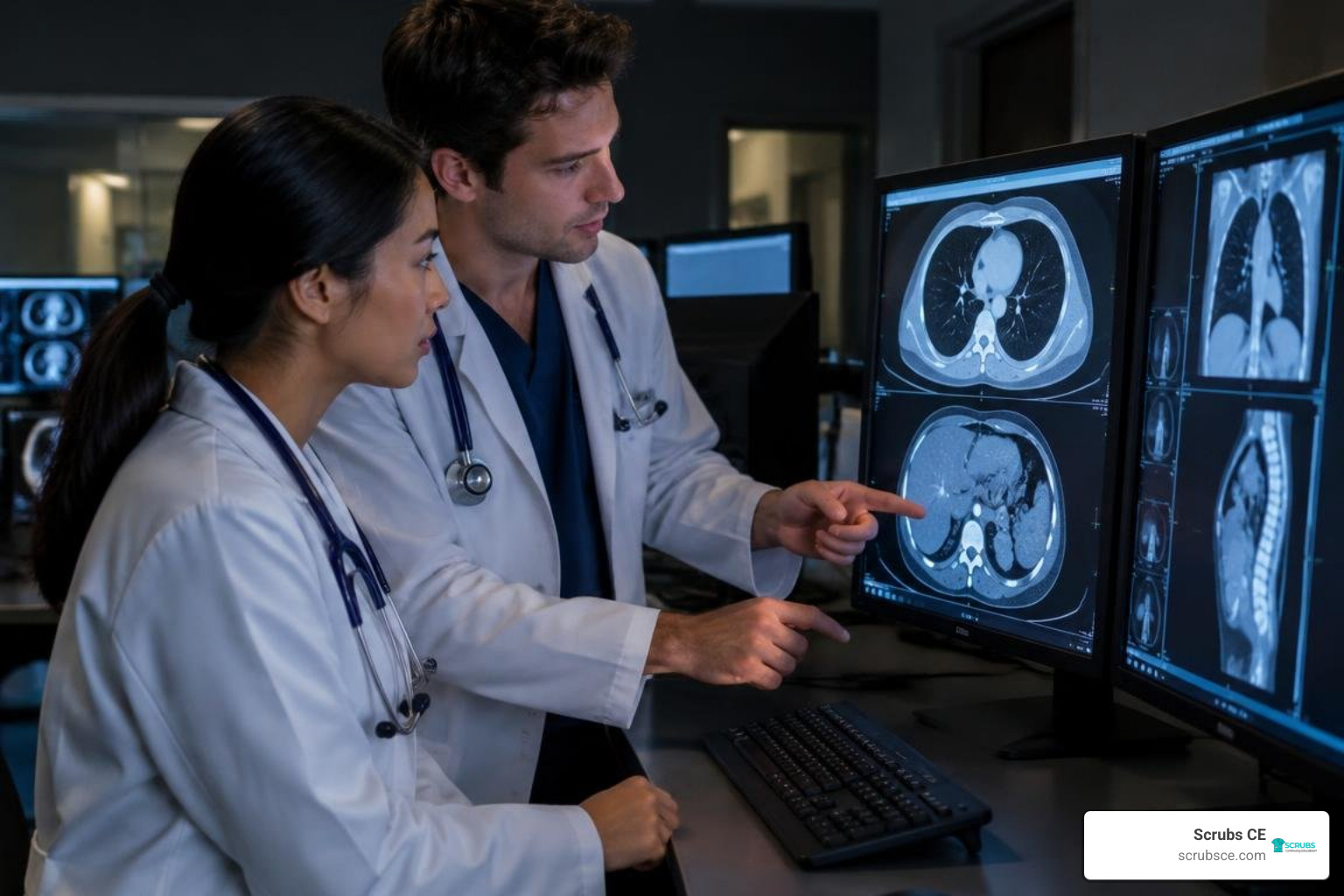
Residency is the core phase of physician training where medical school graduates develop the clinical competencies required for independent diagnostic practice. The Accreditation Council for Graduate Medical Education (ACGME) establishes strict training standards across accredited institutions.
Residency training follows one of two primary structural formats:
- Advanced Format (48 Months): Trainees complete an initial preliminary or transitional clinical year (PGY-1) in direct patient care (such as internal medicine, surgery, or transitional internship), followed by 48 months (PGY-2 through PGY-5) of dedicated diagnostic Radiology training.
- Categorical/Integrated Format (60 Months): Trainees match directly into a single sponsoring institution that integrates the 12-month foundational clinical skills year directly with the 48-month diagnostic Radiology curriculum.
All ACGME-accredited programs operate under the ACGME Program Requirements for Graduate Medical Education in Diagnostic Radiology including FAQs .
Clinical Rotations, Case Volumes, and Core Curricula
During the four dedicated years of diagnostic training, residents rotate systematically through all subspecialty domains within medical imaging. ACGME standards require each resident to interpret a minimum of 7,000 radiological examinations per year.
Traversing this curriculum involves hands-on interpretation, procedural training, and multidisciplinary clinical conferences across ten core practice categories:
- Computed Tomography (CT) & Magnetic Resonance Imaging (MRI): Advanced multiplanar cross-sectional imaging for acute trauma, oncologic staging, and systemic disease.
- Chest & Cardiac Radiology: Plain radiography, high-resolution chest CT, and cardiac MRI evaluations.
- Abdominal & Pelvic Imaging: Gastrointestinal and genitourinary fluoroscopy, ultrasound, and cross-sectional diagnostic studies.
- Musculoskeletal Radiology: Trauma radiography, sports medicine MRI, and joint injections.
- Neuroradiology: Brain, spine, head, and neck neuroimaging.
- Pediatric Radiology: Specialized low-dose radiation imaging protocols for neonatal and pediatric populations.
- Breast Imaging: Screening and diagnostic mammography, breast ultrasound, and image-guided biopsy techniques.
- Nuclear Medicine & Molecular Imaging: PET/CT, scintigraphy, and therapeutic radiopharmaceutical administration.
- Vascular & Interventional Radiology: Image-guided vascular access, catheterizations, and percutaneous drainage procedures.
- Medical Physics and Radiation Safety: ALARA (As Low As Reasonably Achievable) principles, radiation biology, and imaging equipment physics.
Residents seeking advanced conceptual mastery often consult structured resources from our Radiology courses to reinforce imaging protocols and regulatory baselines.
Residency Accreditation Standards and Education Needed to Be a Radiologist
Residency programs must maintain a clinical learning environment that balances rigorous training with resident well-being. ACGME regulations mandate:
- Continuous faculty supervision tailored to the resident’s level of training.
- Work hour limitations (maximum 80 hours per week, averaged over four weeks, with mandatory rest periods).
- Access to clean, private, and secure lactation facilities, rest stations, and healthy food options during overnight call duties.
- Robust fatigue mitigation strategies to protect patient safety.
For international training institutions, standards are governed under the ACGME-International Advance Specialty-Specific Program Requirements for Graduate Medical Education in Radiology , ensuring that global training programs mirror the depth and clinical rigor of United States standards.
Program Director Qualifications and Faculty Responsibilities
Residency leadership plays a critical role in program quality. The ACGME outlines strict criteria for residency leadership within the Common Program Requirements .
Program Directors must possess:
- Current primary specialty certification in diagnostic Radiology from the American Board of Radiology (ABR) or the American Osteopathic Board of Radiology (AOBR).
- An unrestricted medical license.
- At least three years of documented educational or administrative experience in graduate medical education.
- Dedicated non-clinical support time (at least 20% full-time equivalent) to administer the curriculum, evaluate trainees via Clinical Competency Committees, and ensure compliance with accreditation standards.
Core teaching faculty must cover each primary subspecialty domain, dedicating at least 50% of their professional effort to their specific imaging discipline while actively engaging in academic scholarship.
Subspecialty Fellowships and Advanced Clinical Training

Following residency completion, the majority of radiologists complete a one- to two-year post-residency fellowship to gain specialized expertise in a specific organ system or modality.
Common subspecialty fellowship tracks include:
- Neuroradiology: Advanced imaging of brain disorders, stroke interventions, and spinal pathology.
- Musculoskeletal (MSK) Radiology: Complex joint imaging, sports injury assessments, and orthopedic oncologic imaging.
- Abdominal Imaging: Advanced hepatobiliary, gastrointestinal, and genitourinary cross-sectional imaging.
- Breast Imaging: Advanced diagnostic mammography, breast MRI, and stereotactic intervention.
- Pediatric Radiology: Congenital anomalies, pediatric oncology, and low-dose emergency pediatric imaging.
- Interventional Radiology (IR): Trainees completing dedicated vascular pathways manage complex vascular catheterizations, oncologic embolizations, and angioplasties under the ACGME Program Requirements for Graduate Medical Education in Interventional Radiology including FAQs .
Practicing physicians and fellows maintain their knowledge throughout these rotations by completing Radiology CE courses that cover emerging imaging technologies and updated clinical protocols.
Board Certification, Medical Licensure, and Continuing Education
To practice independently in hospitals and outpatient imaging centers, radiologists must obtain an unrestricted state medical license and pursue professional board certification.
The primary credentialing pathway in the United States is administered through the American Board of Radiology under the Get Certified in Diagnostic Radiology (DR) – American Board of Radiology framework.
The examination pathway includes:
- The Qualifying (Core) Examination: A computer-based examination taken after 36 months of diagnostic Radiology residency (typically at the end of the PGY-4 year). It tests medical physics, anatomy, pathophysiology, and image interpretation across all subspecialties.
- The Certifying Examination: Administered approximately 12 to 15 months after residency graduation, evaluating clinical readiness and subspecialty knowledge. Starting after 2027, the ABR transitions to an interactive, case-based oral examination format.

Candidates have six calendar years from residency completion to achieve board certification. Once certified, radiologists maintain their credentials through the ABR’s Continuing Certification process, which requires state medical licensure, lifelong learning, and ongoing assessment. For details on tracking these credits, consult our Radiology CME ultimate guide.
Physician Radiologists vs. Technologists and Imaging Assistants
A common point of confusion is the distinction between a physician radiologist and a radiologic technologist or assistant. While they work together in clinical imaging departments, their educational requirements and scopes of practice differ substantially.
- Radiologists: Licensed medical doctors (MD or DO) who interpret medical images, formulate definitive diagnostic reports, make patient care recommendations, and perform complex invasive interventional procedures.
- Radiologic Technologists: Healthcare professionals who operate imaging machinery (X-ray, CT, MRI, ultrasound), position patients, and acquire high-quality diagnostic scans. Technologists earn primary credentials through the AMERICAN REGISTRY OF RADIOLOGIC TECHNOLOGISTS® (ARRT®).
- Registered Radiologist Assistants (R.R.A.®): Advanced-practice certified technologists who have completed an ARRT®-recognized master’s degree program to perform advanced patient assessments and imaging procedures under radiologist supervision.
| Metric / Requirement | Physician Radiologist | Registered Radiologist Assistant (R.R.A.®) | Radiologic Technologist (R.T.®) |
|---|---|---|---|
| Minimum Degree Required | Doctor of Medicine (MD) or Osteopathic Medicine (DO) | Master’s Degree | Associate Degree |
| Total Post-Secondary Education | 13–15 Years | 6–7 Years (Bachelor’s + Master’s) | 2–4 Years |
| Primary Credentialing Body | American Board of Radiology (ABR) | AMERICAN REGISTRY OF RADIOLOGIC TECHNOLOGISTS® (ARRT®) | ARRT® |
| Clinical Scope | Diagnostic interpretation, biopsy, surgery, prescriptive authority | Advanced imaging procedures, fluoroscopy, patient prep | Machine operation, image acquisition, patient positioning |
| Continuing Education Track | Physician CME (AMA PRA Category 1™) | Biennial ARRT® CE / CQR credits | Biennial ARRT® CE credits |
Technologists interested in advancing their credentials or maintaining state certifications can review our radiologic technologist CE complete guide and find multi-credit combinations through Radiology CE course combos.
Frequently Asked Questions About Becoming a Radiologist
How many total years does it take to complete the education needed to be a radiologist?
Completing the educational requirements to become a radiologist takes 13 to 15 years after high school. This includes 4 years of undergraduate study, 4 years of medical school, 1 year of general clinical internship, 4 years of dedicated diagnostic Radiology residency, and an optional 1- to 2-year subspecialty fellowship.
What degree is required to practice as a radiologist?
To practice as a radiologist, you must hold a doctoral medical degree: either a Doctor of Medicine (MD) or a Doctor of Osteopathic Medicine (DO). An associate, bachelor’s, or master’s degree in radiologic technology qualifies individuals to work as technologists or imaging assistants, not as diagnosing physician radiologists.
Can a radiologic technologist transition directly into a radiologist role?
No. A radiologic technologist cannot transition directly into a physician radiologist role through on-the-job experience or technologist CE courses alone. To become a radiologist, a technologist must complete a four-year bachelor’s degree, satisfy all pre-medical prerequisites, take the MCAT, graduate from a four-year accredited medical school (MD or DO), and complete an ACGME-accredited residency program.
Conclusion: Navigating Your Radiology Career Pathway
The journey to becoming a physician radiologist demands over a decade of structured academic study, competitive clinical examinations, and intensive diagnostic residency training. From mastering undergraduate organic chemistry to interpreting thousands of multiplanar CT and MRI scans during an ACGME-accredited residency, every stage builds the clinical acumen needed to guide medical decisions.
Whether you are mapping out your educational roadmap toward medical school or seeking convenient ways to fulfill professional development requirements, lifelong education is central to medical imaging. Explore the wide selection of accredited self-paced Radiology courses available through Scrubs CE to stay current with the latest imaging protocols, clinical safety standards, and credentialing guidelines.