
Healthcare Burnout CE: Start With Skills and Support

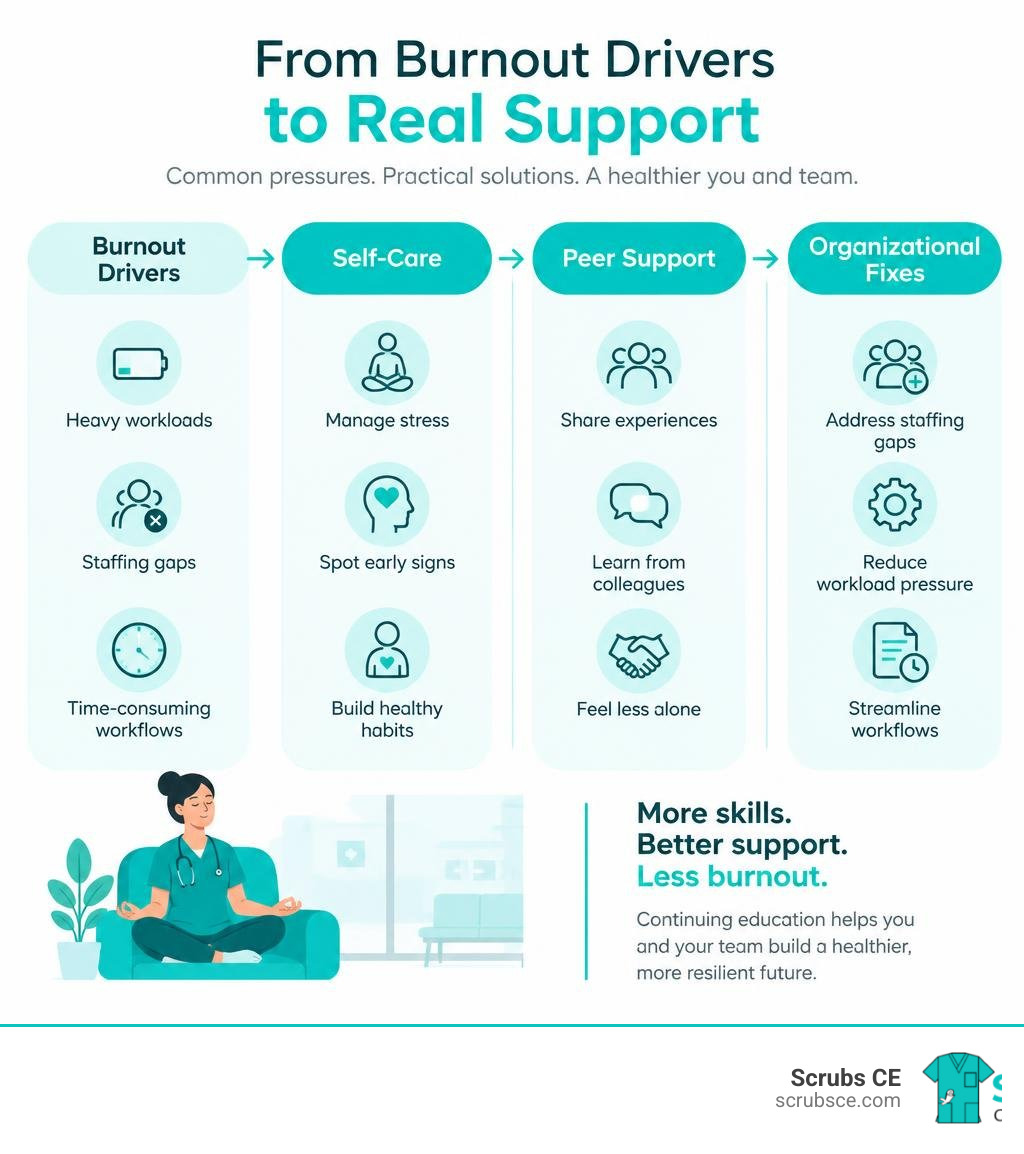
To combat burnout, look for continuing education that helps you spot early signs of exhaustion, manage stress, and build peer support. Put those skills to work during your shift, but don’t treat self-care as the whole solution. Leaders also need to address heavy workloads, staffing gaps, and time-consuming workflows.
Burnout can affect worker well-being, patient care, and staff retention. A useful CE course should help you identify what you can change yourself and what your team or organization must change together.
I’m Zita Ewert, and I lead Scrubs CE’s continuing education work for imaging professionals. My experience making CE practical and accessible shapes this guide to healthcare burnout CE, starting with the factors that put workers at risk and the support that helps them stay well.
Must-know healthcare burnout CE terms:
The Scope and Impact of Burnout Across Clinical Settings
Burnout among healthcare professionals is an underrecognized threat to safe, high-quality care. It is not simply a state of feeling tired after a long shift; it is an occupational syndrome characterized by emotional exhaustion, depersonalization, and a reduced sense of personal accomplishment.
When clinicians suffer from chronic stress, the ripples extend throughout the entire healthcare ecosystem. In public health, burnout is recognized as one of seven trends shaping the future of the field. Landmark findings from the de Beaumont Foundation and ASTHO public health workforce surveys highlight widespread mental health strains and elevated turnover intentions that vary significantly across clinical specialties and geographic regions.
When clinical staff experience severe depletion, cognitive bandwidth shrinks. Attention to detail slips, diagnostic reasoning slows, and empathy gives way to emotional detachment. As a result, medical error rates climb, patient satisfaction scores plummet, and infection rates rise. Organizations face crippling turnover costs, recruitment hurdles, and compromised institutional reputations.
| Impact Dimension | Individual Clinician Impact | Healthcare Organization Impact |
|---|---|---|
| Well-Being & Health | Chronic insomnia, anxiety, cardiovascular stress, depression | Widespread absenteeism, low morale, toxic workplace culture |
| Clinical Performance | Impaired clinical judgment, reduced empathy, diagnostic fatigue | Increased medical errors, safety violations, lower care quality |
| Financial & Operational | Career dissatisfaction, early retirement, career departure | High recruitment costs, lost productivity, temporary staffing fees |
High-Risk Specialties: From SUD Clinicians to Direct Service Providers
While burnout touches every corner of modern medicine, certain clinical populations face unique operational strains. Clinicians treating Veterans with substance use disorders (SUD) report exceptionally high levels of stress, emotional exhaustion, and diminished job satisfaction. These clinicians navigate complex barriers, including severe staffing shortages, secondary trauma exposure from recurring patient crises, intense administrative documentation burdens, and the persistent social stigma surrounding addiction care.
Direct service providers and community health workers encounter similar challenges. Operating on the frontlines with limited resources, these professionals often battle compassion fatigue while managing complex caseloads. To maintain clinical licenses and meet mandatory credentialing requirements, providers are increasingly turning to high-quality state-approved CE for license renewal that directly addresses secondary traumatic stress and occupational burnout.
The Business Case for Investing in Workforce Well-Being
Addressing provider distress is both an ethical responsibility and a financial imperative. When healthcare leaders advocate for workforce wellness, the return on investment (ROI) is substantial. Replacing a single specialized physician or clinician can cost an institution hundreds of thousands of dollars in recruitment, onboarding, and lost clinical revenue.
Investing in structured professional development in healthcare targets the root drivers of turnover. By funding accredited training, providing workflow relief, and fostering psychological safety, healthcare systems preserve institutional knowledge, enhance operational efficiency, and protect patient safety outcomes.
Evidence-Based Frameworks and the Science of Connection
True resilience is not built in isolation. Modern occupational science emphasizes the power of interpersonal neurobiology—the reality that human nervous systems co-regulate through shared connection, empathy, and supportive communication.

Sustainable burnout mitigation requires a dual-pronged approach: personal skill-building grounded in emotional intelligence combined with comprehensive workplace design, such as the CDC/NIOSH Total Worker Health® framework. Integrating emotional wellness frameworks into clinical workflows equips teams to recognize collective stress triggers and support one another during high-acuity shifts.
Emotional Intelligence Training: Cutting Burnout by Up to 31%
Emotional intelligence (EI)—the capacity to recognize, understand, and regulate emotions in ourselves and our interactions—is one of the most effective shields against clinical exhaustion. Research demonstrates that targeted emotional intelligence training can reduce healthcare burnout by up to 31%.
By cultivating EI competencies, healthcare professionals learn to:
- Recognize early physiological warning signs of chronic stress before exhaustion leads to depersonalization.
- Modulate internal stress responses during clinical emergencies and demanding patient encounters.
- Maintain healthy emotional boundaries that prevent compassion fatigue while preserving genuine therapeutic empathy.
- Communicate assertively and constructively with interprofessional colleagues to resolve clinical friction.
Participating in accredited burnout-focused coursework allows clinicians to translate these behavioral competencies into everyday clinical habits.
Systems-Level Interventions and Organizational Wellness
Individual coping strategies cannot fix systemic operational flaws. Sustainable well-being requires healthcare systems to evaluate their operational structures and eliminate administrative friction.
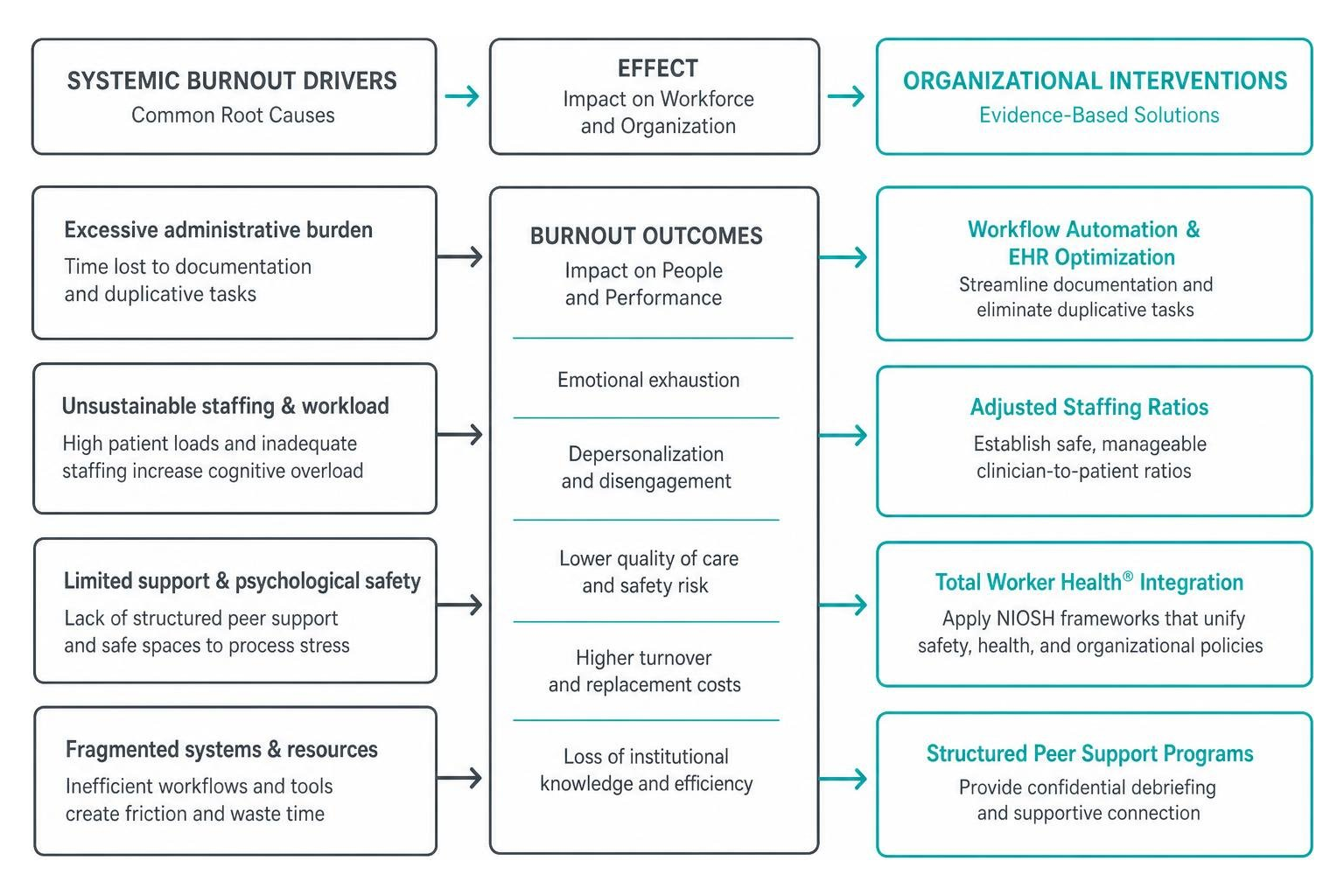
Evidence-based organizational strategies include:
- Workflow Automation & EHR Optimization: Streamlining documentation templates and eliminating duplicative order entries to give clinicians hours back in their day.
- Adjusted Staffing Ratios: Establishing safe, manageable clinician-to-patient staffing models that allow for adequate rest and lower cognitive overload.
- Total Worker Health® Integration: Applying NIOSH-developed frameworks that unify occupational safety with health promotion and organizational policies.
- Structured Peer Support Programs: Creating formalized, confidential debriefing circles where staff can process challenging clinical events without fear of judgment.
Choosing the Right Healthcare Burnout CE Programs
As healthcare credentialing bodies recognize the impact of clinician well-being on patient outcomes, educational options have expanded rapidly. When selecting coursework, professionals should look for accredited, evidence-based programs that deliver practical value.
High-impact online education for healthcare professionals offers flexible, interprofessional learning opportunities that fit demanding shift schedules.
Core Curricula in Healthcare Burnout CE Courses
Comprehensive burnout education goes far beyond generic advice on sleep and diet. Rigorous continuing education curricula should equip clinicians with practical tools for navigating daily workplace stress.
Key topics to look for include:
- The Neurobiology of Stress and Burnout: Understanding hypothalamic-pituitary-adrenal (HPA) axis dysregulation and autonomic nervous system responses to chronic clinical pressure.
- Compassion Fatigue vs. Burnout: Differentiating between empathetic exhaustion and systemic workplace dissatisfaction, with tailored recovery paths for each.
- Crisis Resource Navigation: Identifying and accessing institutional Employee Assistance Programs (EAPs), mental health hotlines, and peer support networks.
- Boundary Setting and Assertive Communication: Concrete scripts and methods for negotiating workloads, delegating tasks, and protecting off-duty rest.
Clinicians can explore these core topics while fulfilling mandatory professional requirements through flexible online CE course options.
Flexible Learning Formats for Healthcare Burnout CE
Between erratic shift patterns, on-call duties, and personal commitments, finding time for professional education can feel overwhelming. Healthcare workers need learning platforms that reduce scheduling friction rather than adding to it.

Modern e-learning platforms allow clinicians to study on their own schedules through self-paced modules and mobile-friendly portals. Choosing accessible options from an affordable CE courses guide for 2026 allows clinicians to satisfy requirements efficiently and affordably.
Integrating Daily Resilience and Self-Care into Clinical Practice
Resilience is not an inherent personality trait; it is a clinical practice strengthened through regular, intentional habits. Incorporating micro-practices into standard workflows helps preserve mental focus and emotional balance during challenging shifts.
Effective daily resilience strategies include:
- Mindful Micro-Breaks: Taking 60-second breathing resets between patient consults to down-regulate sympathetic nervous system activation.
- Shift-Transition Rituals: Establishing a deliberate mental boundary between clinical duties and home life (such as handwashing while consciously releasing the day’s cases).
- Cognitive Reframing: Shifting focus from uncontrollable systemic bottlenecks toward immediate, positive patient interactions.
- Physical Decompression: Prioritizing hydration, balanced nutrition, and brief movement breaks during long clinical shifts.
For an overview of how to plan and maintain your professional certifications, consult our comprehensive continuing education credits online guide.
Building Peer Support and Team-Based Debriefing
Clinical isolation amplifies stress. When teams cultivate psychological safety, colleagues feel empowered to discuss challenging outcomes openly. Implementing brief, 5-minute post-shift huddles allows teams to debrief difficult clinical encounters, acknowledge shared efforts, and ensure no single provider carries secondary trauma alone.
Frequently Asked Questions About Burnout and Continuing Education
How does emotional intelligence training reduce clinician burnout?
Emotional intelligence (EI) training strengthens self-awareness, emotional regulation, and communication skills. By learning to identify personal stress triggers early, clinicians can manage stress responses before reaching emotional exhaustion. Research indicates that structured EI training can reduce healthcare burnout rates by up to 31%.
Can healthcare burnout courses satisfy mandatory state license renewals?
Yes. Many state licensing boards, credentialing registries, and professional societies accept well-being, ethics, and burnout mitigation courses toward mandatory continuing education requirements. Always review your board’s specific guidelines using a verified state CE credit requirements directory to confirm course accreditation.
What organizational factors most strongly drive healthcare worker exhaustion?
While individual coping strategies are helpful, systemic issues are the primary drivers of clinical burnout. The leading contributors include excessive administrative documentation, electronic health record (EHR) inefficiencies, chronic understaffing, lack of professional autonomy, and unsupportive leadership cultures.
Conclusion: Sustaining the Healer Through Evidence-Based Education
Healthcare professionals dedicate their careers to caring for others, but sustaining that care requires protecting their own well-being. Burnout is neither a personal failure nor an inevitable cost of clinical practice—it is an occupational challenge that responds to evidence-based interventions, supportive connection, and meaningful systemic improvements.
At Scrubs CE, we provide accessible, high-quality professional development that supports your career and personal well-being. When you need to fulfill your professional requirements, explore our comprehensive selection of radiologic technologist continuing education credits and specialized Radiology continuing education courses. Our self-paced courses feature instant certificate generation, helping you stay compliant with the AMERICAN REGISTRY OF RADIOLOGIC TECHNOLOGISTS® (ARRT®) and the ASRT® so you can focus on what matters most: delivering safe, compassionate care while maintaining your own well-being.