

MRI Tech Job Outlook 2024: The Quick Answer for 2026
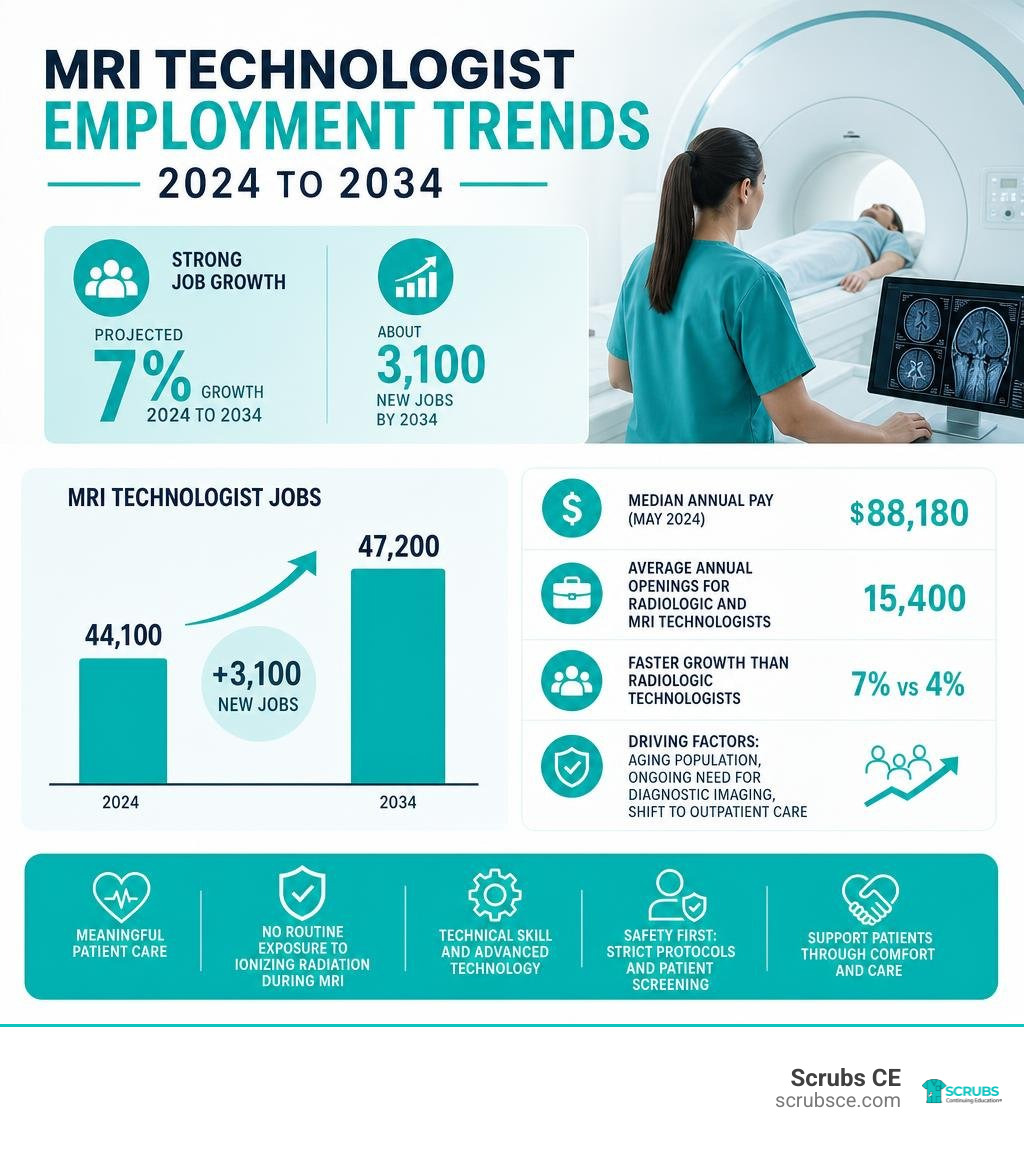
The mri tech job outlook 2024 remains strong in 2026: U.S. Bureau of Labor Statistics projections show MRI technologist employment is expected to grow 7% from 2024 to 2034, adding about 3,100 jobs.
| MRI technologist career metric | Latest federal data |
|---|---|
| Jobs in 2024 | 44,100 |
| Projected growth, 2024-2034 | 7% |
| New jobs projected | 3,100 |
| Median annual pay, May 2024 | $88,180 |
| Average annual openings for radiologic and MRI technologists | 15,400 |
That is faster growth than the 4% projection for radiologic technologists. Demand is tied to an aging population, ongoing need for detailed diagnostic imaging, and a shift toward outpatient care. Hospitals still employ the largest share of MRI technologists, but outpatient centers and physician offices are projected to grow more quickly.
MRI is also a career with real tradeoffs. It offers solid pay, meaningful patient care, and no routine exposure to ionizing radiation during MRI scanning. But it also requires strict safety habits, careful patient screening, technical skill, and the ability to support people who may be anxious or uncomfortable during a scan.
I am Zita Ewert, a continuing-education leader for imaging professionals and the driving force behind SCRUBS Continuing Education®. My work supporting accredited education, certification maintenance, and licensure needs gives me a practical view of the mri tech job outlook 2024 and what working technologists need to keep moving forward.
Mri tech job outlook 2024 word roundup:
Analyzing the MRI Tech Job Outlook 2024 to 2034 Projections
When we evaluate long-term career stability in medical imaging, federal employment metrics offer a crystal-clear baseline. According to data published in the U.S. Bureau of Labor Statistics MRI Tech Report, magnetic resonance imaging technologists held approximately 44,100 jobs across the nation in 2024. Over the 2024 to 2034 projection decade, employment in this specialized field is expected to expand by 7%, yielding roughly 3,100 brand-new jobs.
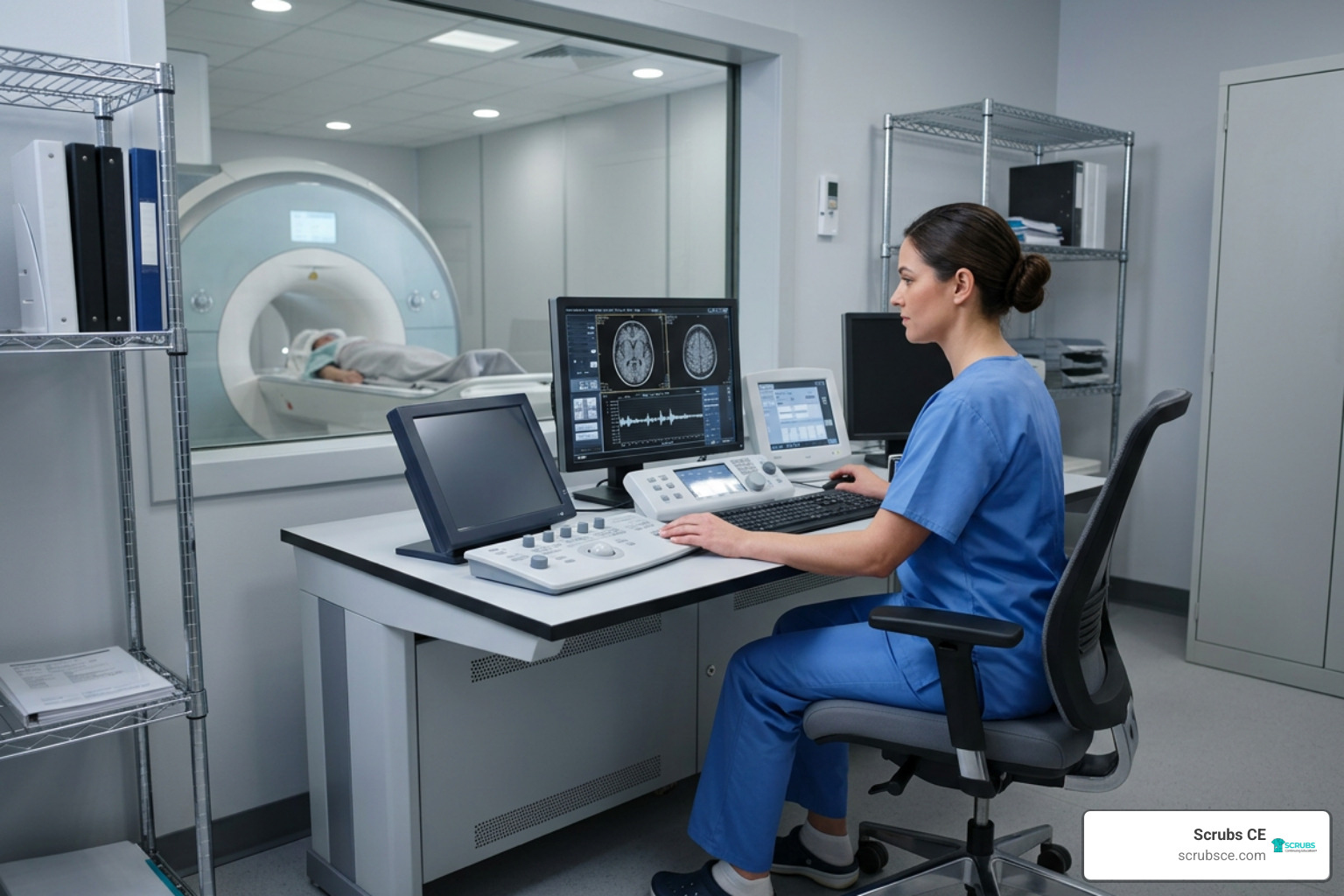
This 7% expansion rate outpaces the average growth across all U.S. occupations. When combined with routine staff turnover, retirements, and career transitions, healthcare facilities are actively seeking qualified, credentialed technologists to fill shifts. To understand what these professionals handle on a day-to-day basis, check out our comprehensive what does an mri tech do guide.
How the MRI Tech Job Outlook 2024 Compares to Radiologic Technologists
While overall medical imaging careers are expanding, specialized modalities like magnetic resonance imaging demonstrate distinct growth advantages over general radiography. The combined category for radiologic and MRI technologists is projected to grow by 5% over the decade, but breaking down the specific specialties highlights key differences.
General radiologic technologists—who primarily perform diagnostic X-rays—held about 228,000 jobs in 2024 with a projected growth rate of 4.3% (adding around 9,800 positions). In contrast, specialized MRI technologists enjoy a 7.1% growth trajectory. The higher demand for MRI technologists reflects the clinical shift toward soft-tissue evaluation and non-ionizing cross-sectional imaging.
The table below breaks down the comparative figures sourced from the official federal National Employment Matrix Projections:
| Occupation / Specialty | 2024 Baseline Jobs | Projected 2034 Jobs | 10-Year Growth Rate | Total New Openings |
|---|---|---|---|---|
| Magnetic Resonance Imaging (MRI) Techs | 44,100 | 47,200 | 7.1% | ~3,100 |
| Radiologic Technologists & Technicians | 228,000 | 237,800 | 4.3% | ~9,800 |
| Combined Medical Imaging Total | 272,100 | 285,000 | 4.7% | ~12,900 |
Factors Driving the MRI Tech Job Outlook 2024 and Future Growth
Several interconnected demographic and clinical trends continue to fuel job growth for MRI technologists:
- An Aging Population: As baby boomers age, the frequency of age-related conditions—such as stroke, neurodegenerative disorders, musculoskeletal joint degeneration, and oncology cases—increases sharply. Soft-tissue imaging is crucial for diagnosing these ailments early.
- Prevalence of Chronic Illness: Conditions like heart disease, chronic liver conditions, and joint injuries require regular diagnostic monitoring. Advanced MRI pulse sequences allow physicians to track disease progression without invasive surgery.
- Zero Ionizing Radiation Risk: Unlike computed tomography (CT) or plain film X-rays, MRI uses powerful magnetic fields and radiofrequency waves. Because it delivers zero ionizing radiation, clinicians frequently prefer MRI for pediatric patients, young adults, and patients requiring repeat imaging studies.
- Expanding Clinical Applications: Technologists are no longer just scanning brains and knees. The rapid growth of advanced subspecialties—including Cardiac MRI, Breast MRI, Multiparametric Prostate MRI, and MR-guided radiation therapy (MR-Linac)—has made high-field magnetic imaging an indispensable tool in modern medicine.
Salary Breakdown and Top Employing Work Settings
Along with strong demand, compensation for MRI technologists remains highly competitive within the allied health sector. According to May 2024 federal statistics, the median annual wage for magnetic resonance imaging technologists was $88,180 (equivalent to approximately $42.39 per hour).
Earning capacity spans a broad spectrum based on geographical location, shift differentials, credential level, and workplace environment:
- Lowest 10th Percentile: Earned less than $64,910 annually.
- 25th Percentile: Earned around $78,150 annually.
- 75th Percentile: Earned around $102,440 annually.
- Highest 10th Percentile: Earned more than $121,420 annually, with top coastal markets clearing even higher baseline rates.
Industry Pay Differences and Outpatient Growth
Where you choose to work has a massive impact on your take-home pay and overall work-life balance. While hospitals employ nearly 59% of all MRI technologists, non-hospital settings are expanding rapidly and often offer significantly higher median compensation.
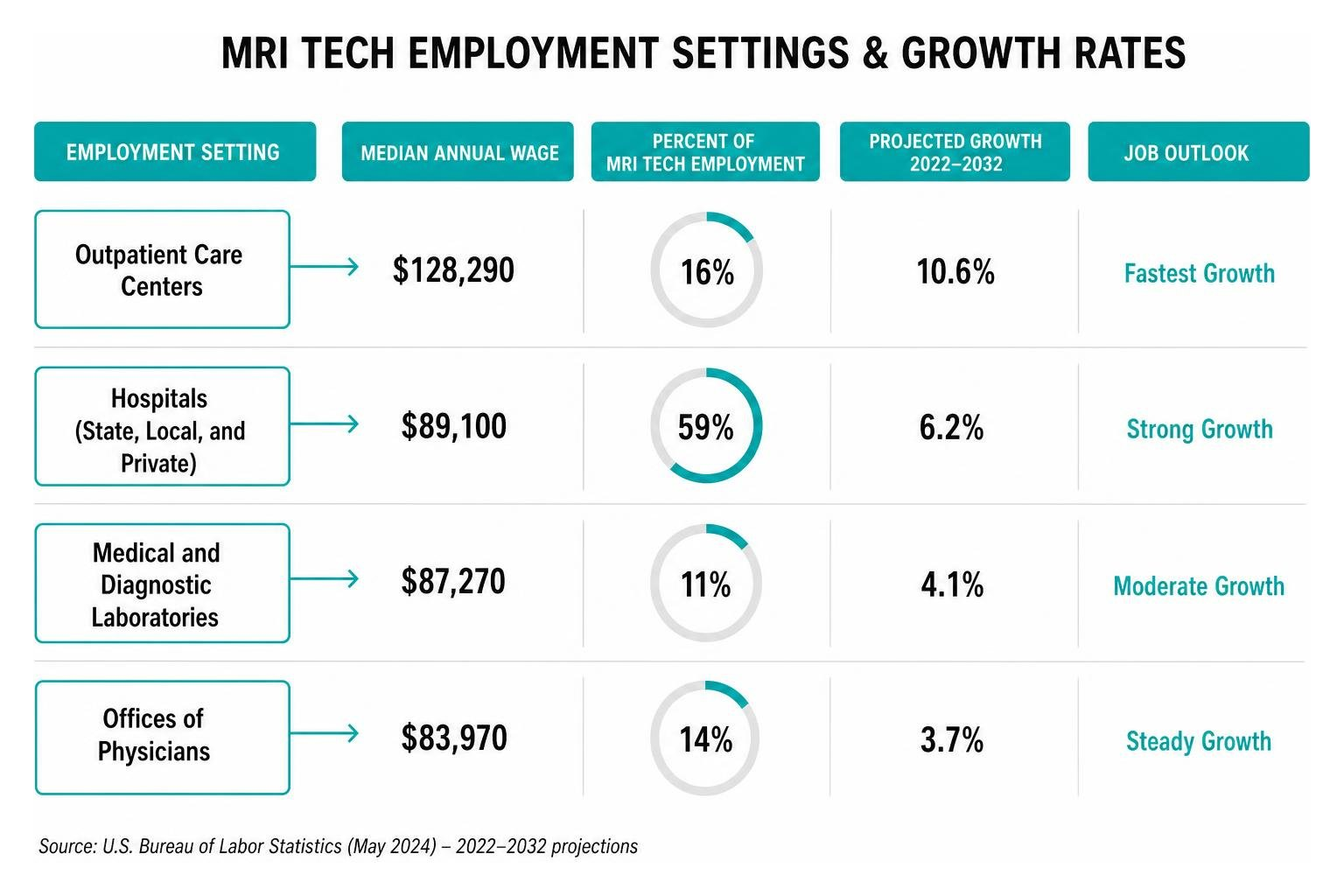
Here is how annual median wages break down across top employing healthcare settings:
- Outpatient Care Centers: $128,290 median annual wage.
- Hospitals (State, Local, and Private): $89,100 median annual wage.
- Medical and Diagnostic Laboratories: $87,270 median annual wage.
- Offices of Physicians: $83,970 median annual wage.
Federal matrix data reveals that while hospital-based MRI positions are projected to grow by a modest 1.8% between 2024 and 2034, employment in outpatient care centers is projected to surge by 30.7%. Offices of physicians are also set to expand by 19.6%. Healthcare networks are increasingly moving routine diagnostic imaging away from overcrowded emergency rooms and into localized ambulatory centers.
For technologists looking to maximize their earning potential even further, mobile contract work offers attractive financial returns. You can learn more about flexible contract arrangements in the ultimate guide to high paying travel mri tech jobs.
Educational Pathways, ARRT® Credentials, and Training
Entering the field of magnetic resonance imaging requires dedicated academic coursework, extensive clinical hours, and national credentialing. Most technologists earn an associate degree in Radiologic Technology or magnetic resonance imaging from an accredited institution (such as those approved by JRCERT).
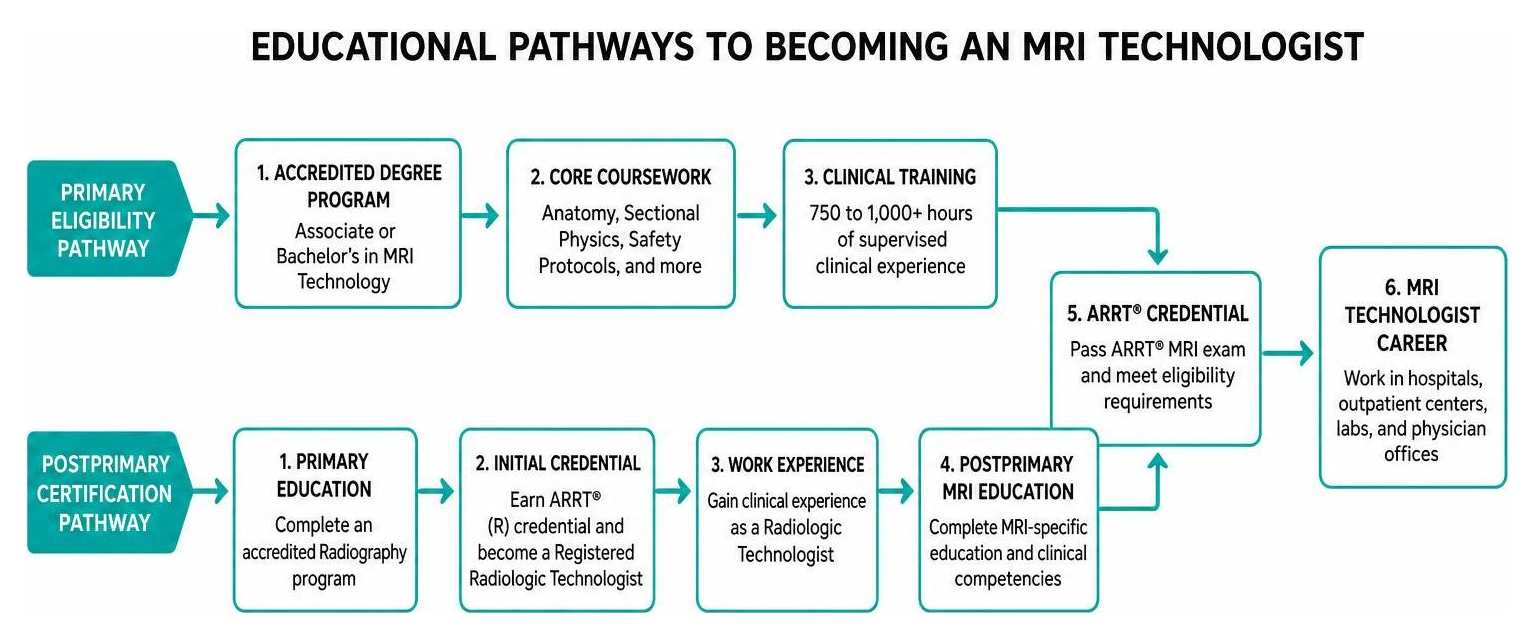
When evaluating educational routes, prospective students typically choose between two main strategies:
- Primary Eligibility Pathway: Candidates complete an accredited associate or bachelor’s degree program focused directly on MRI technology. This includes core coursework in human anatomy, sectional physics, safety protocols, and 750 to 1,000+ supervised clinical hours.
- Postprimary Certification Pathway: Candidates first graduate from a primary supporting discipline—most commonly Radiology—and earn their initial credential. After gaining clinical experience as a radiologic technologist, they complete postprimary education and clinical competencies in MRI.
To review broad imaging prerequisites, read our breakdown on a comprehensive guide to radiologic technologist certification requirements.
Postprimary Pathways and State Licensure Requirements
The vast majority of healthcare organizations require national certification through the AMERICAN REGISTRY OF RADIOLOGIC TECHNOLOGISTS® (ARRT®) or the American Registry of Magnetic Resonance Imaging Technologists (ARMRIT).
When transitioning through the ARRT® postprimary pathway, candidates certified in Radiology, Radiation Therapy, Nuclear Medicine Technology, or Sonography must log structured didactic coursework alongside mandatory clinical experience procedures (such as head, spine, musculoskeletal, and vascular scans).
Maintaining professional standards also involves adhering to guidelines established by the AMERICAN SOCIETY OF RADIOLOGIC TECHNOLOGISTS® (ASRT®). If you are preparing for your certification board exam, we recommend checking out our resource on ARRT® mri registry review how to pass on your first try.
In addition to national registry credentials, state laws vary significantly:
- Approximately 28 U.S. states require an explicit state license to operate diagnostic imaging equipment.
- While some state radiation protection divisions focus primarily on ionizing radiation (X-rays and CT), most major healthcare employers mandate active ARRT® or ARMRIT credentials regardless of local state statutes.
Career Pros, Cons, and Key Essential Skills
Like any specialized healthcare role, working as an MRI technologist presents both rewarding advantages and daily operational challenges.
Career Advantages (Pros)
- Competitive Compensation: With median annual earnings of $88,180 and top outpatient settings exceeding $128,000, MRI technologists enjoy excellent earning capacity without requiring a four-year or graduate degree.
- Zero Ionizing Radiation Exposure: MRI technology relies on strong static magnetic fields and radiofrequency pulses rather than ionizing X-rays, minimizing long-term occupational radiation exposure.
- Predictable Workflow: Scans are scheduled in discrete 30- to 60-minute blocks, providing a structured daily tempo compared to chaotic emergency room triage.
- Emerging Advancement Routes: Technologists can advance into clinical applications, research facility coordination, department administration, or protocol management.
Career Challenges (Cons)
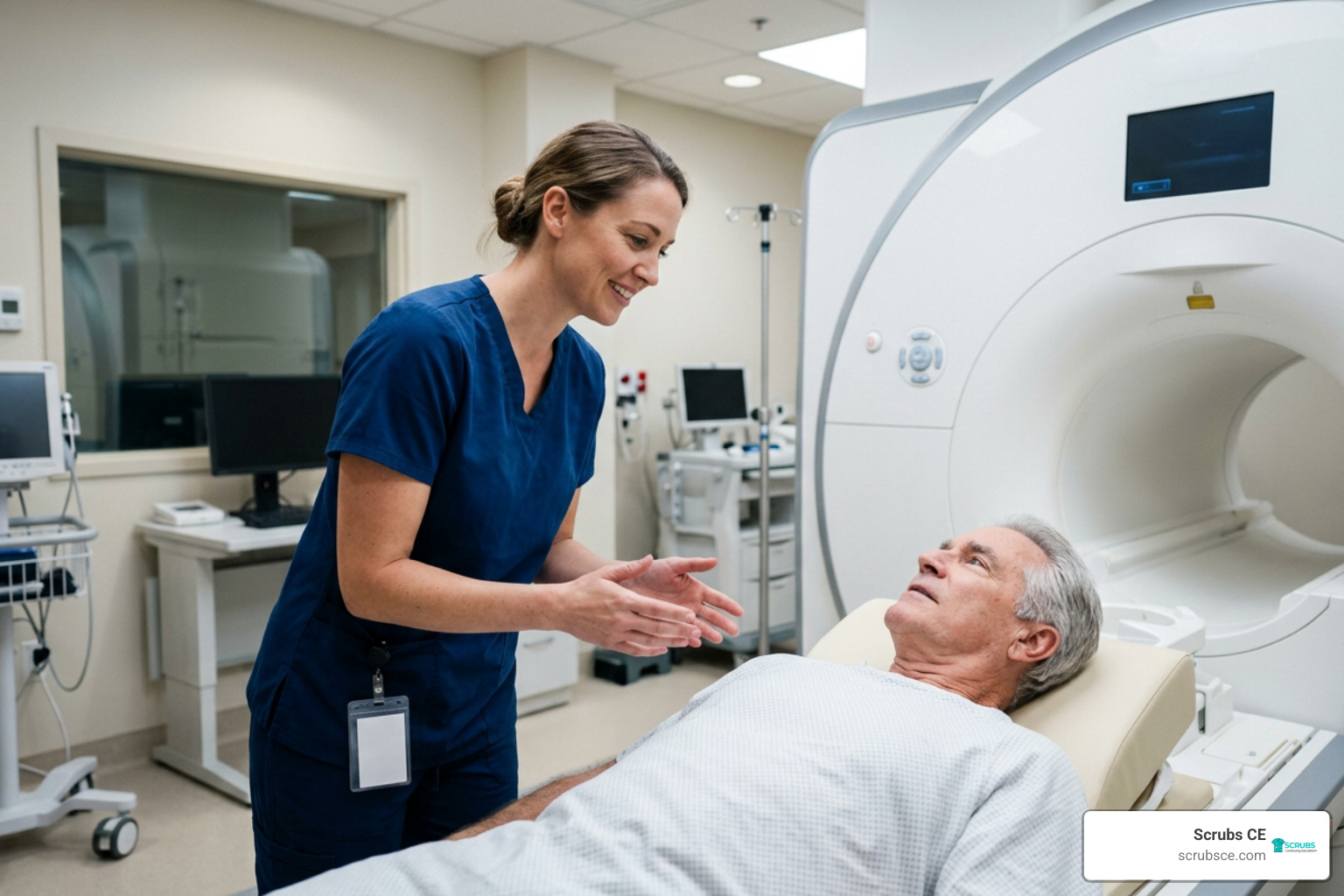
- Claustrophobia and Patient Anxiety: Managing panicked, claustrophobic, or in-pain patients inside a narrow magnet bore demands immense patience and active de-escalation skills.
- High-Stakes Safety Responsibility: Strong magnetic fields (1.5T to 3.0T and higher) are always active. Missed metallic implants, pacemakers, or ferrous objects present severe safety risks.
- Physical Demands: Technologists spend hours on their feet, lift heavy surface coils, and physically transfer injured or immobile patients onto the scanner table.
- Rigorous Continuing Education: Maintaining active certification requires completing mandatory continuing education credits every two years. We specialize in providing self-paced, high-quality learning options through our dedicated catalog for ce for mri technologists.
Critical Skills Checklist for Successful Techs
To thrive in high-field magnetic resonance imaging environments, professionals need a blend of technical capability and emotional intelligence:
- Rigorous Screening Discipline: Meticulously reviewing patient surgical histories and implant documentation before allowing anyone into the magnet room.
- Cross-Sectional Anatomy Mastery: Identifying subtle anatomical structures across axial, sagittal, and coronal planes to optimize diagnostic image quality.
- Physics Application: Understanding how pulse sequences (T1, T2, FLAIR, DWI) and gradient parameters affect signal-to-noise ratio and image artifacts.
- Compassionate Patient Communication: Using gentle verbal cues, music, and breathing instructions to keep anxious patients completely still during long acquisitions.
- Adaptability Under Pressure: Adjusting scan parameters on the fly to compensate for involuntary patient motion or body habitus.
Frequently Asked Questions About MRI Tech Careers
What is the unemployment rate for MRI technologists?
The unemployment rate for MRI technologists sits at an exceptionally low 0.7%. This extremely low rate underscores the persistent demand for credentialed imaging professionals across both inpatient hospital networks and outpatient diagnostic centers.
How many job openings are projected each year for MRI technologists?
Federal employment models project approximately 15,400 total annual openings across the combined radiologic and MRI technologist categories through 2034. For MRI technologists specifically, around 3,100 brand-new jobs will be created over the decade, supplemented by thousands of replacement openings as veteran technologists retire or transition into administrative roles.
Can MRI technologists transition into remote or travel roles?
Yes! Experienced MRI technologists have expanding flexible career pathways:
- Travel MRI Technologists: By taking short-term contracts (typically 13 weeks) in high-demand regions, travel techs can earn weekly stipends yielding $100,000 to $150,000+ annualized.
- Remote & Hybrid Opportunities: While direct patient scanning requires hands-on operation, experienced techs increasingly move into remote protocol management, teleradiology support, quality assurance, vendor clinical applications, and imaging safety consulting.
Conclusion
The mri tech job outlook 2024 highlights a secure, lucrative, and deeply rewarding healthcare trajectory through 2034 and beyond. With 7% projected employment growth, high median salaries, expanding outpatient facilities, and continuous technological innovation, magnetic resonance imaging remains one of the strongest allied health specialties available.
At SCRUBS Continuing Education®, we are dedicated to supporting your ongoing professional journey. Whether you need to satisfy state licensing prerequisites, maintain your credential standing with the AMERICAN REGISTRY OF RADIOLOGIC TECHNOLOGISTS®, or expand your advanced clinical knowledge, our affordable, self-paced online courses provide instant certificates upon completion.
Ready to fulfill your biannual requirement or explore high-yield imaging topics? Browse our complete selection of mri ce courses today and keep your career moving forward!