
Picture Perfect: The Ultimate Guide on Steps to Become a Mammography Technician
Why the Steps to Become a Mammography Technician Are Worth Knowing
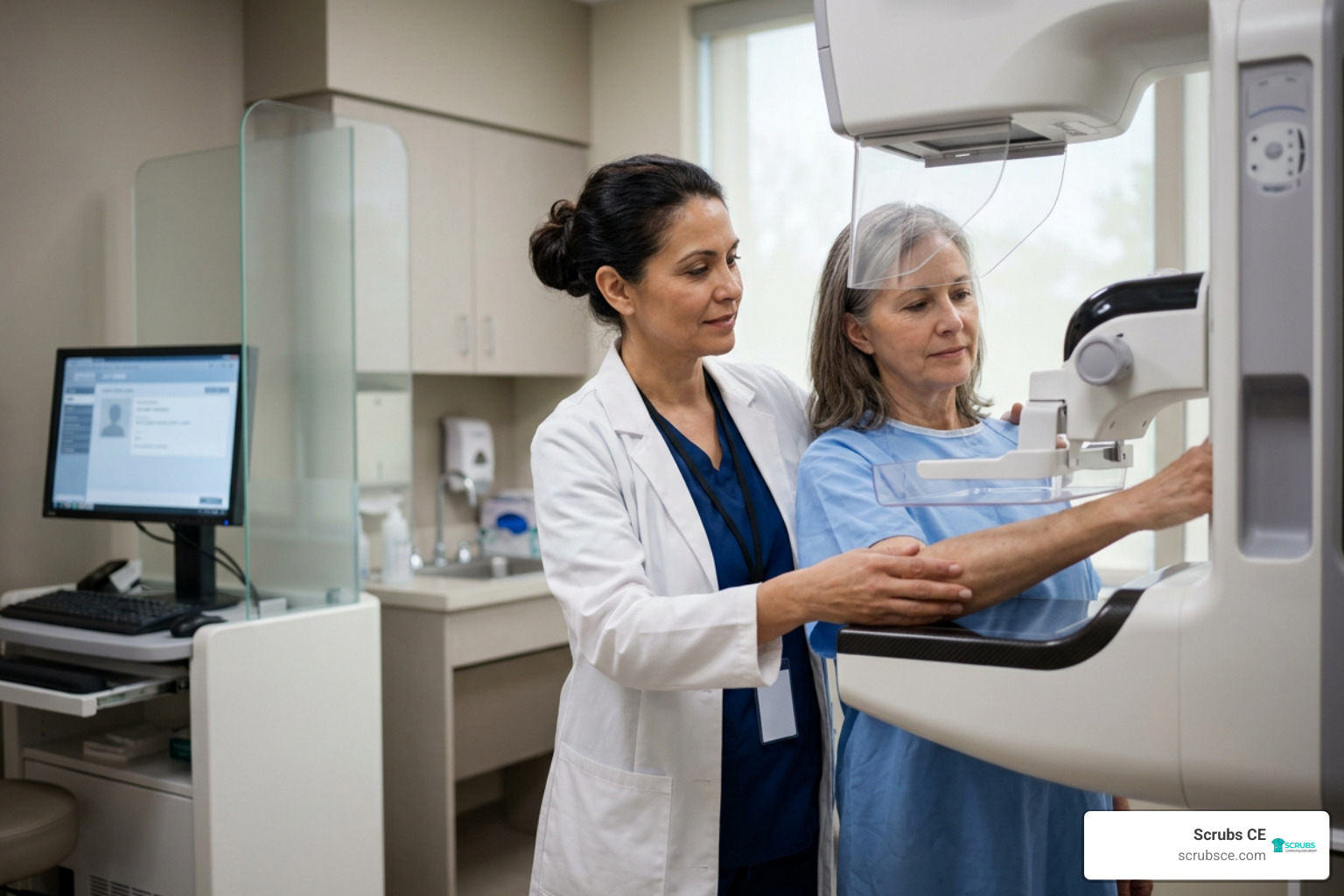
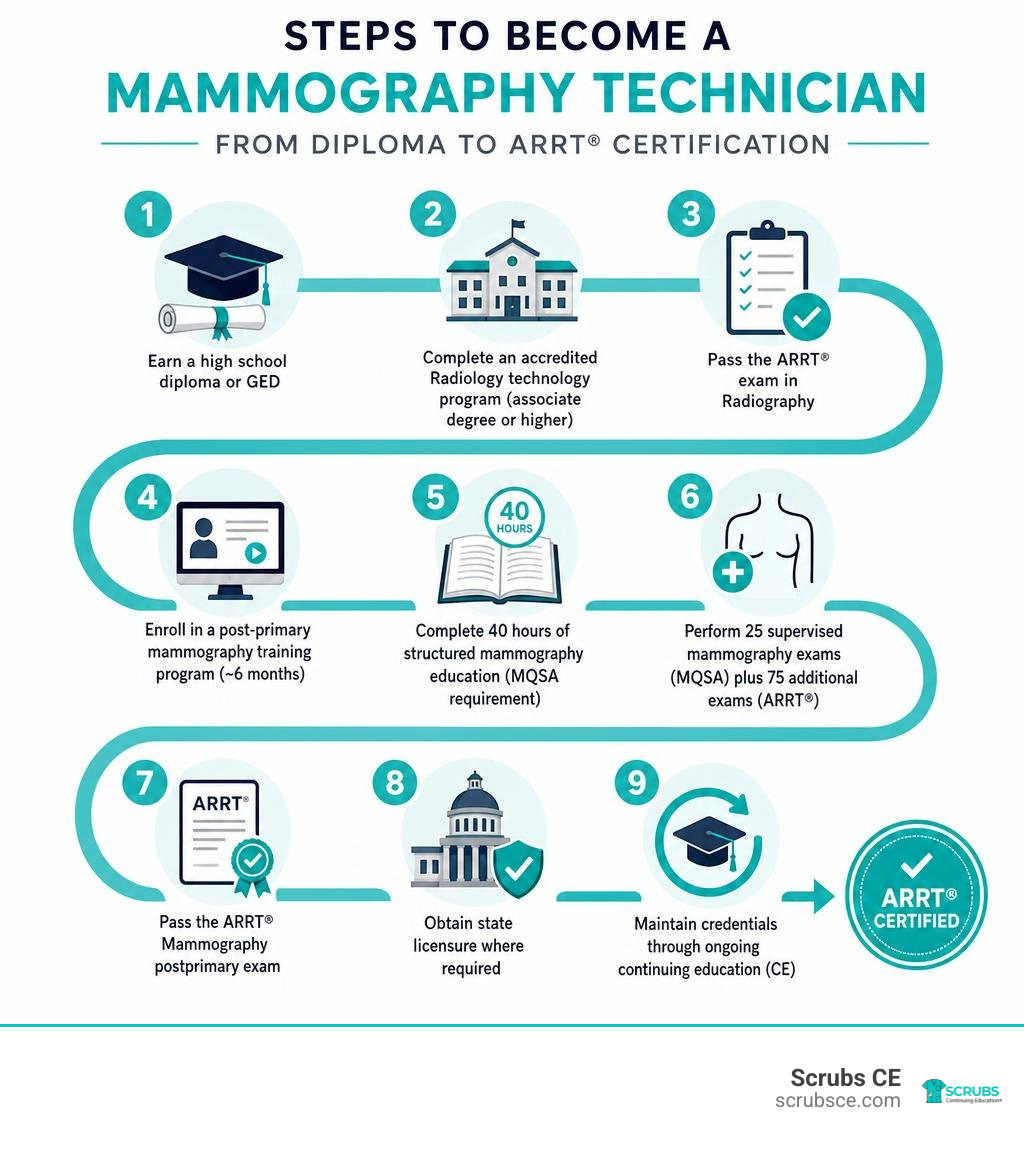
If you’ve been researching the steps to become a mammography technician, here’s the fast answer:
- Earn a high school diploma or GED
- Complete an accredited Radiology technology program (associate degree or higher)
- Pass the AMERICAN REGISTRY OF RADIOLOGIC TECHNOLOGISTS® (ARRT®) exam in Radiography
- Enroll in a post-primary mammography training program (~6 months)
- Complete 40 hours of structured mammography education (MQSA requirement)
- Perform 25 supervised mammography exams (MQSA) plus 75 additional exams (ARRT®)
- Pass the ARRT® Mammography postprimary exam
- Obtain state licensure where required
- Maintain credentials through ongoing continuing education (CE)
Mammography is one of the most impactful specialties in medical imaging. Since 1990, it has helped reduce breast cancer deaths by nearly one-third. Behind every one of those life-saving scans is a skilled, compassionate technician — someone who combines precise imaging technique with the ability to put a nervous patient at ease.
The career pays well, too. The national average for mammography technologists is over $76,000 per year, with California averaging over $88,000 annually. And with Radiology employment projected to grow 5–6% over the next decade, demand is only increasing.
But the path to certification involves multiple steps, two different regulatory frameworks (ARRT® and MQSA), and state-specific rules that can trip people up. This guide breaks it all down clearly.
I’m Zita Ewert, and as the leader of SCRUBS Continuing Education®, I’ve spent years helping Radiology professionals navigate the exact steps to become a mammography technician — from primary certification through postprimary specialty training and ongoing CE compliance. In the sections below, I’ll walk you through everything you need to know, step by step.
Steps to become a mammography technician word guide:
- Radiologic Technologist Requirements
- MQSA Mammography Technologist Requirements
- How to Get ARRT Certification
Understanding the Role: What Does a Mammography Technologist Do?
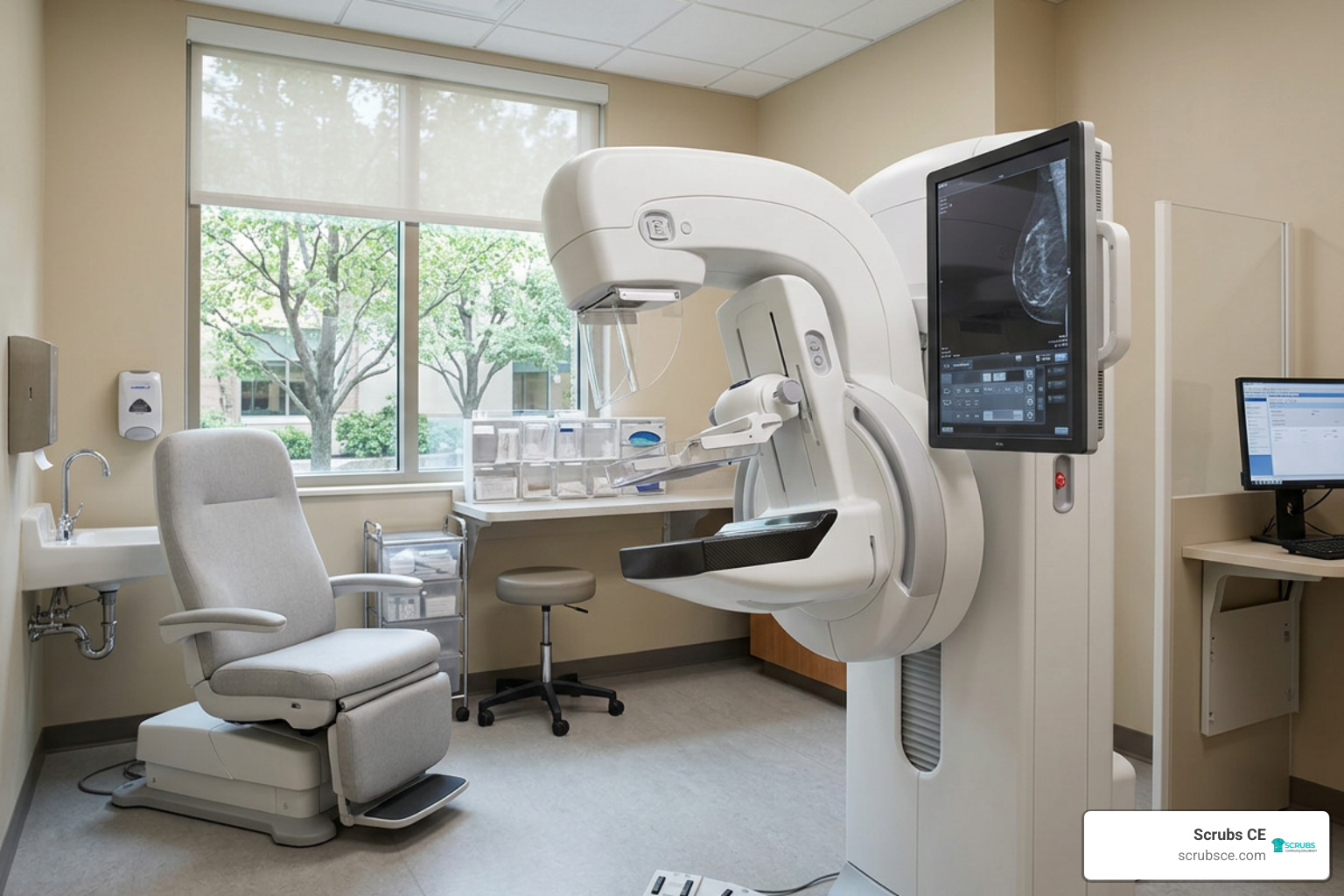
A mammography technologist is a specialized Radiologic Technologist who uses low-dose X-ray equipment—specifically modern 2D digital units and 3D digital breast tomosynthesis systems—to produce accurate diagnostic images of breast tissue.
When we evaluate the day-to-day responsibilities of a mammographer, the role spans far beyond adjusting mechanical settings on an X-ray unit. Technologists interact directly with patients who may feel vulnerable or anxious. Primary job responsibilities include:
- Reviewing patient medical histories and documenting clinical symptoms or surgical scars using radiopaque markers.
- Explaining procedures, detailing the necessity of tissue compression, and offering emotional reassurance.
- Properly positioning tissue and applying calibrated mechanical compression to ensure optimal image quality.
- Operating advanced 2D and 3D imaging equipment while maintaining low radiation exposure.
- Performing daily quality control (QC) testing on imaging systems in accordance with federal guidelines.
- Collaborating with board-certified radiologists to evaluate image clarity or perform interventional biopsy procedures.
Essential Skills for Breast Imaging Specialists
Technical aptitude is only half of the equation in breast imaging. To excel, a mammography technologist must master both clinical mechanics and human connection:
- Patient Dignity and Communication: Mammograms are deeply personal procedures. Candidates must demonstrate high empathy, explaining compression steps thoroughly before applying equipment pressure.
- Anatomical Positioning Expertise: Capturing clear diagnostic images requires understanding subtle variations in breast tissue and body habitus. Precise positioning eliminates motion artifacts and avoids missing deep tissue near the chest wall.
- Tissue Compression Mechanics: Tissue compression reduces image blur, minimizes scatter radiation, and lowers the required X-ray dose. Finding the balance between necessary compression and patient comfort demands tactile skill.
- Radiation Safety and QA Standards: Technologists must rigorously follow radiation safety protocols, wearing protective equipment and maintaining quality control logs to comply with strict standards set by the Food and Drug Administration (FDA).
Screening vs. Diagnostic Mammography
Understanding the distinction between screening and diagnostic mammography is fundamental to the daily routine of a breast imaging specialist.

- Screening Mammography: Conducted for asymptomatic patients as part of routine preventative healthcare. These exams typically consist of standard views (Craniocaudal [CC] and Mediolateral Oblique [MLO]) intended to identify hidden lesions before symptoms appear.
- Diagnostic Mammography: Performed when a screening scan displays an abnormality, or when a patient presents with clinical symptoms such as a palpable lump, skin dimpling, or focal pain. Diagnostic workups involve specialized spot compression, magnification views, 3D tomosynthesis, and real-time review with an interpreting physician.
Key Steps to Become a Mammography Technician
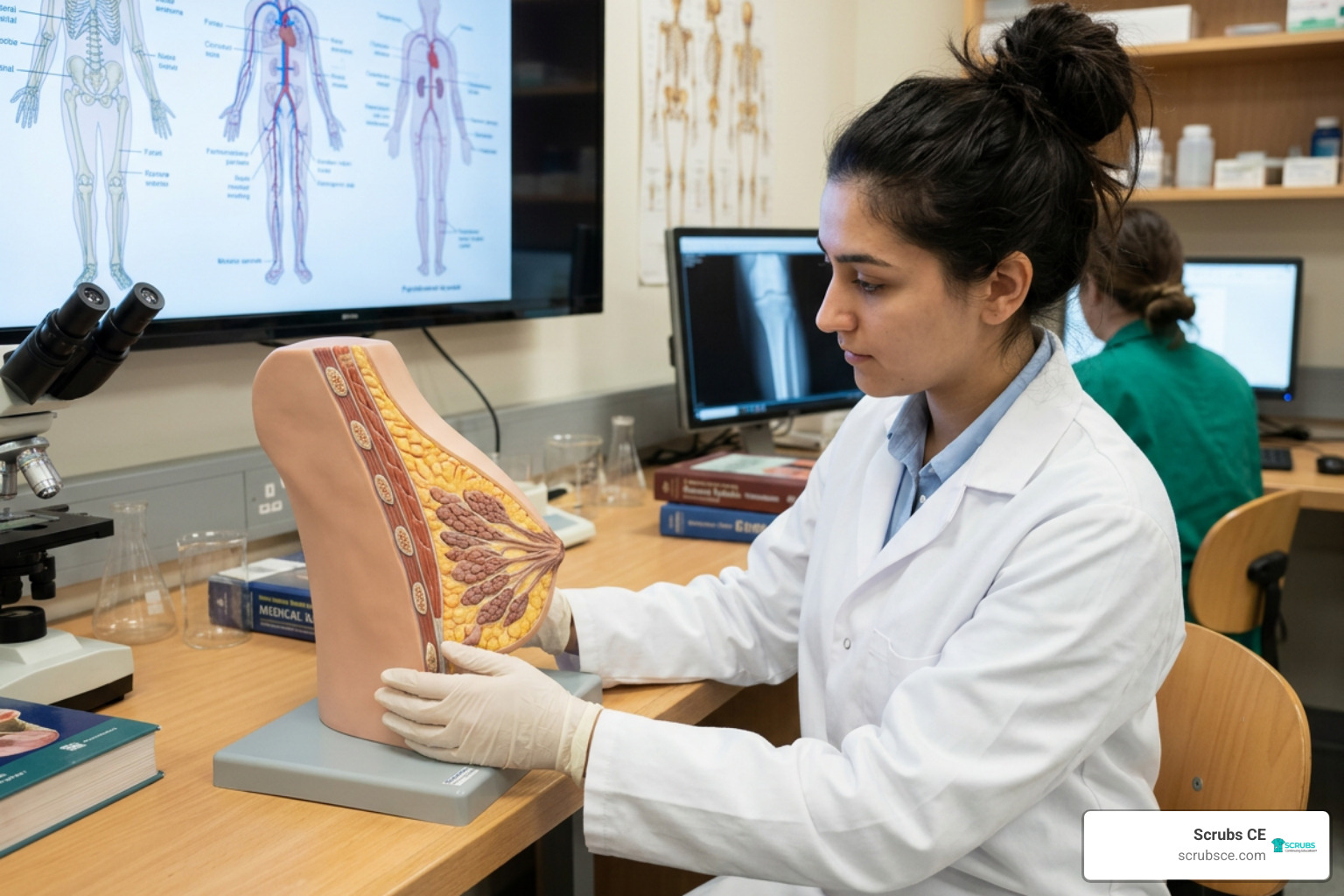
Entering this specialized field requires following a clear sequence of educational and clinical milestones. You cannot enter a mammography specialty program straight out of high school without first establishing a foundational credential in general Radiography.
Core Prerequisites and Steps to Become a Mammography Technician
The foundational prerequisite for any mammography technician is becoming a credentialed Radiologic Technologist. Here is how that journey unfolds:
- Earn an Associate or Bachelor’s Degree: Complete an accredited educational program in Radiologic Technology. These 2-year to 4-year degree programs teach radiation physics, human anatomy, patient care, positioning, and image production.
- Obtain Primary ARRT® Registration: Graduates must sit for and pass the national certification exam administered by the AMERICAN REGISTRY OF RADIOLOGIC TECHNOLOGISTS® (ARRT®) in Radiography. Achieving the R.T.(R)(ARRT®) credential establishes your primary eligibility.
- Enroll in a Specialized Training Pathway: Once certified in general Radiography, professionals transition into specialized mammography education through college certificate programs, hospital-sponsored fellowships, or comprehensive online didactic modules paired with clinical training. For a complete overview of this educational stage, check out our Mammography Technologist Training Complete Guide.
Specialized training programs generally take between 2 to 6 months to complete, depending on whether you study full-time or complete clinical requirements alongside a current job.
Navigating the ARRT® Postprimary Pathway
To earn the official R.T.(M)(ARRT®) credential, candidates must fulfill requirements established under the ARRT® postprimary eligibility pathway. The postprimary pathway verifies that a credentialed radiographer has acquired specialized knowledge in breast imaging.
The pathway requires completing two distinct educational elements:
- Structured Education: Candidates must complete a minimum of 16 structured education credit hours covering all major sections of the ARRT® Mammography Content Specifications (Patient Care, Image Production, and Procedures).
- Core Curriculum Mastery: Coursework must mirror national standards outlined in the ASRT® Mammography Curriculum Framework, covering breast anatomy, pathology, quality control, and specialized equipment physics.
To learn more about preparing for this examination and organizing your study materials, explore our guide on Mammography Mastery: Achieving Your ARRT Certification.
Supervised Clinical Experience and Exam Requirements
Beyond classroom lectures, candidates must prove hands-on clinical competence before applying for the board examination. The AMERICAN REGISTRY OF RADIOLOGIC TECHNOLOGISTS® sets precise clinical procedure minimums that must be performed under direct supervision and logged through the candidate’s online portal:
- 75 Patient Examinations: Candidates must perform a minimum of 75 routine mammographic examinations (including patient preparation, medical history documentation, positioning, and exposure).
- Quality Control Procedures: Perform 10 phantom image evaluations and perform mechanical quality assurance evaluations, such as compression force checks.
- Physician Case Reviews: Review at least 10 mammographic cases directly alongside an MQSA-qualified interpreting physician (radiologist).
- Elective/Interventional Procedures: Participate in, assist with, or observe at least 5 interventional breast procedures (such as stereotactic biopsies, needle localizations, or breast ultrasound).
Once these clinical requirements and structured hours are logged and verified, you are eligible to schedule your postprimary certification exam at a Pearson VUE testing center.
Regulatory Compliance: MQSA Standards vs. ARRT® Certification
A common point of confusion for prospective technologists is the difference between federal MQSA (Mammography Quality Standards Act) compliance and ARRT® board certification. While they share similar training topics, they serve distinct regulatory purposes.
Under federal law enforced by the FDA, a technologist must meet MQSA initial qualification standards before performing mammograms independently on patients. ARRT® certification, on the other hand, is a recognized national professional credential that demonstrates advanced board mastery and is mandated by most hospital employers.
| Requirement Domain | Federal MQSA Baseline Standard | ARRT® Postprimary Certification |
|---|---|---|
| Primary Requirement | Active State Radiography License or R.T.(R)(ARRT®) | Active primary credential in Radiography: R.T.(R)(ARRT®) |
| Initial Education | 40 hours of specialized mammography training | 16 hours of documented structured education |
| Supervised Exams | Minimum 25 supervised patient exams | 75 additional patient exams (100 total combined) |
| Modality Training | 8 hours minimum per specific modality (e.g., 3D Tomosynthesis) | Integrated into Content Specifications and Task Inventory |
| Ongoing Clinical Volume | Perform 200 mammograms every 24 months | Maintain good standing and satisfy biennium rules |
| Continuing Education | 15 mammography-specific CE credits every 3 years | 24 CE credits every 2-year biennium (covering primary + postprimary) |
For a deeper dive into maintaining federal compliance, read our full guide: Stay Compliant: A Guide to MQSA Technologist Requirements.
State-Specific Steps to Become a Mammography Technician in California
State licensing boards can add specific rules that modify the typical training sequence. A prominent example is California, governed by the California Department of Public Health (CDPH) Radiologic Health Branch.
In most states, a radiographer completes 40 hours of education and immediately begins performing 25 supervised mammograms at their clinic. In California, however, the process follows a strict regulatory sequence:
- Complete 40 Hours of Didactic Training: Complete an approved 40-hour classroom course in mammography.
- Pass the California State Mammography Exam: Before touch-testing or imaging any live patients, California candidates must apply for and pass the state mammography permit examination administered by the CDPH.
- Complete Supervised Clinical Hours: Only after passing the California state examination are candidates legally permitted to perform their 25 supervised patient scans and fulfill remaining ARRT® clinical logs.
Technologists in California can review state licensing rules through the official Guide to Becoming a Mammography Tech.
Career Outlook, Salary Expectations, and Maintaining Credentials
Choosing a career in breast imaging provides financial stability, strong demand, and clear advancement opportunities.
Career Outlook and Salary Benchmarks
According to the U.S. Bureau of Labor Statistics, employment for Radiologic Technologists is projected to grow 5% to 6% over the next decade, adding over 16,000 new job openings nationwide. Specialized roles like mammography are even more resilient against workforce fluctuations because specialized technical training and soft skills cannot be easily automated.
- National Average Salary: Mammography technologists earn a nationwide average income exceeding $76,000 per year (approximately $36 per hour), with overall radiologic tech median wages reported at $78,980.
- California Earnings: In California, higher cost-of-living adjustments and state licensing standards push average earnings to over $88,052 per year (approximately $43 per hour).
- Work Environments: More than half of all mammography technicians work in acute care hospital settings, with the remainder employed in outpatient diagnostic imaging centers, mobile screening units, and specialized breast health clinics.
If you are exploring convenient educational pathways to prepare for these roles, view our resources on Mammography Education Online.
Ongoing CE and Recertification Standards
Earning your credential is a major milestone, but maintaining active status requires adhering to regular continuing education cycles set by both federal regulators and the AMERICAN REGISTRY OF RADIOLOGIC TECHNOLOGISTS®.
To keep credentials active, technologists must satisfy two separate CE clocks:
- ARRT® Biennium Rule: Every two years (biennium), registered technologists must complete 24 ARRT®-approved continuing education credits.
- MQSA 3-Year Standard: To remain qualified to perform mammography under federal law, technologists must complete at least 15 mammography-specific CE credits every 36 months.
- MQSA Clinical Volume: Technologists must continuously perform at least 200 mammograms every 24 months.
Pro tip: You can satisfy both requirements simultaneously by selecting mammography-specific continuing education courses that carry approved ARRT® Category A credit. To browse structured courses tailored to these exact requirements, check out our guide on ARRT Mammography CE Requirements and review Career Insights for Mammography Technologists.
Frequently Asked Questions About Becoming a Mammography Technician
How long does it take to complete a mammography training program?
If you are already a registered Radiologic Technologist R.T.(R)(ARRT®), completing specialized mammography education typically takes 2 to 6 months. Full-time certificate programs last approximately one academic semester, while part-time or employer-sponsored fellowships allow candidates to finish structured education and clinical logs over a 6-month period. If starting from scratch without a radiography degree, the total pathway takes approximately 2.5 to 3 years.
Can you perform mammograms without ARRT® certification?
Legally, federal MQSA guidelines allow a state-licensed radiographer to perform mammograms once they complete 40 initial education hours, 8 hours of modality training, and 25 supervised patient exams. However, the vast majority of hospitals and outpatient imaging networks explicitly require the postprimary R.T.(M)(ARRT®) credential for employment and clinical privileges.
What continuing education is required to stay compliant?
To maintain federal MQSA compliance, you must earn 15 mammography-specific CE credits every 3 years and perform 200 clinical exams every 2 years. To maintain ARRT® registration, you must complete 24 CE credits every 2 years (which can include your 15 MQSA credits).
Conclusion
Navigating the steps to become a mammography technician requires dedication, from earning your primary Radiography degree to mastering tissue compression, positioning mechanics, and federal compliance rules. But the professional reward is immense: a well-paying, highly respected career on the front lines of breast cancer early detection.
By completing your accredited primary radiography education, fulfilling your 40-hour MQSA training, logging your supervised clinical exams, and passing the postprimary certification exam administered by the AMERICAN REGISTRY OF RADIOLOGIC TECHNOLOGISTS®, you set yourself up for long-term career success.
At SCRUBS Continuing Education®, we are dedicated to supporting radiologic professionals at every step of their career journey with self-paced, affordable online CE courses designed to meet ARRT® and MQSA compliance standards seamlessly. Ready to complete your continuing education requirements? Explore Radiology CE Courses with Scrubs CE today!