
The Road to ARRT Certification and What to Expect
How to Earn ARRT® Certification

To earn ARRT® certification, choose the right eligibility pathway, meet the education and ethics rules, and pass the exam for your discipline. Start by confirming that your program and degree meet requirements set by the AMERICAN REGISTRY OF RADIOLOGIC TECHNOLOGISTS®.
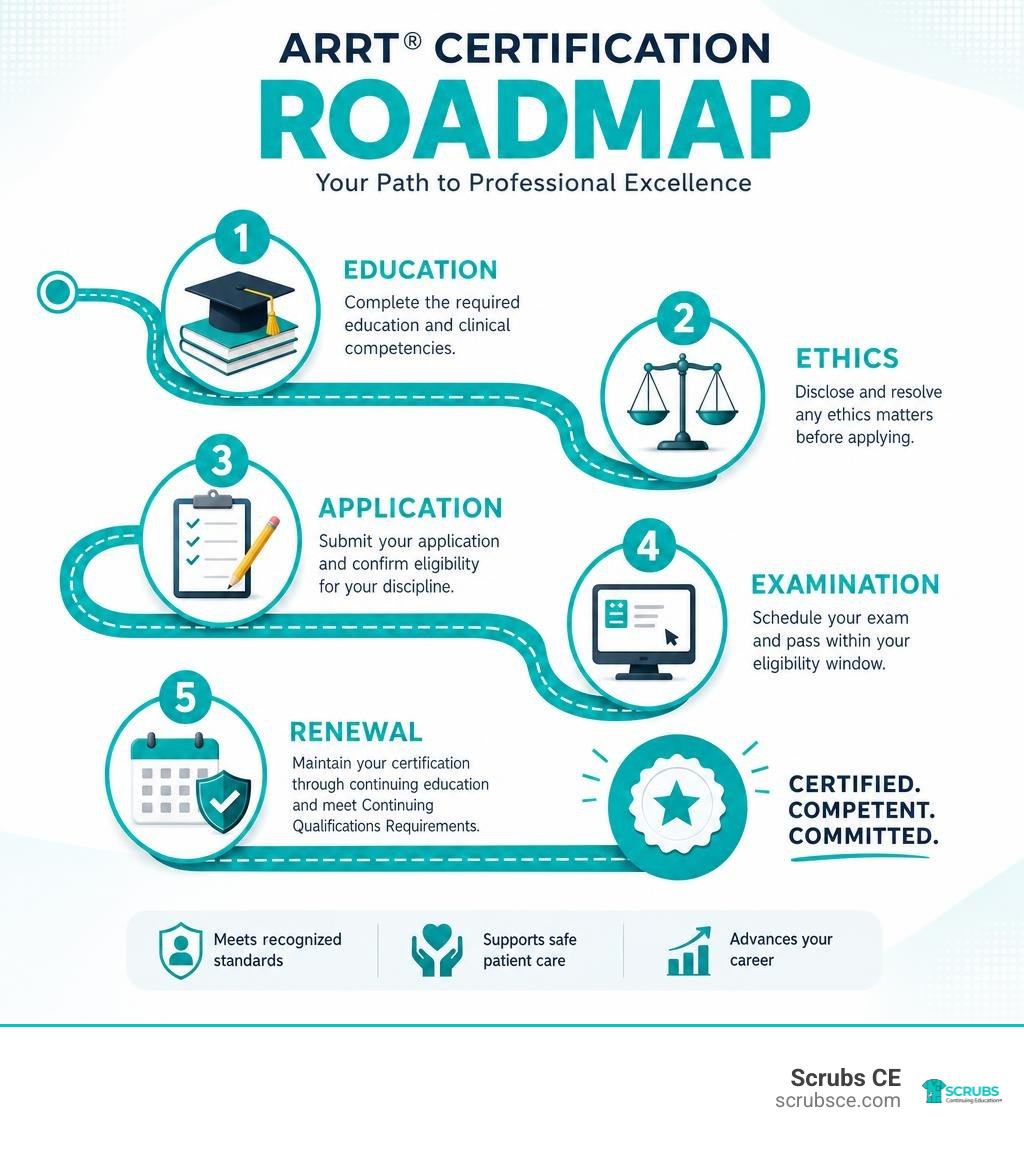
- Complete the required education and clinical competencies.
- Disclose and resolve any ethics matters before applying.
- Submit your application, schedule the exam, and pass within your eligibility window.
ARRT® certification shows employers, licensing agencies, and patients that you meet recognized standards for safe medical imaging or radiation therapy practice. More than 370,000 professionals hold ARRT® credentials, making it a widely recognized benchmark in Radiology.
I’m Zita Ewert, and I lead continuing education programs for imaging professionals through Scrubs CE, including courses that support ARRT® certification maintenance and career growth. This guide breaks down what to expect from your first application through renewal, CE, and Continuing Qualifications Requirements.
Discover more about ARRT® certification:
- radiologic technologist requirements
- mqsa mammography technologist requirements
- x ray technician job requirements
What Is ARRT® Certification and Why Does It Matter?
When we talk about professional excellence in medical imaging, the credentials issued by the AMERICAN REGISTRY OF RADIOLOGIC TECHNOLOGISTS® represent the gold standard. ARRT® certification is an official recognition confirming that a technologist has mastered the didactic knowledge and clinical competencies necessary to deliver safe, high-quality patient care in Radiology.
Holding ARRT® certification and registration provides distinct advantages:
- Employer Recognition: Hospitals, outpatient imaging centers, and specialized clinics overwhelmingly require or prefer ARRT® credentials when hiring.
- Patient Safety & Clinical Excellence: Credentialing ensures that every technologist operating ionizing radiation or complex imaging modalities adheres to rigorous safety protocols.
- National Mobility: ARRT® certification offers a standardized benchmark recognized across healthcare systems nationwide.
It is important to understand the difference between national certification and state licensure. While the ARRT® establishes professional competence and awards credentials like Registered Technologist (R.T.®), individual states govern the legal right to practice within their borders. Many state licensing boards use ARRT® examination scores to issue state licenses, but earning an ARRT® credential does not automatically grant a state license. Professionals must abide by both state boards and the official ARRT® Rules and Regulations. Reviewing standard radiologic technologist certification requirements helps ensure you align your career planning with these distinct regulatory frameworks.
Primary Pathway Steps for ARRT® Certification
The Primary Eligibility Pathway is designed for individuals entering the medical imaging field for the first time or seeking foundational certification in a core discipline.
The disciplines available through the primary pathway include:
- Radiography (R)
- Nuclear Medicine Technology (N)
- Radiation Therapy (T)
- Magnetic Resonance Imaging (MR)
- Sonography (S)
- Vascular Sonography (VS)
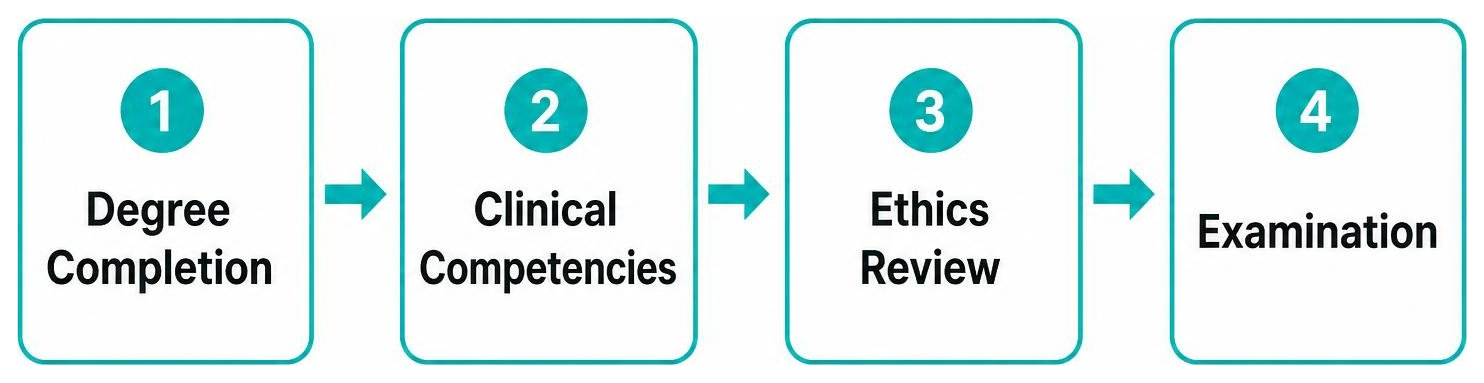
To succeed via the primary pathway, candidates must complete an educational program accredited by an agency recognized by the ARRT® and earn an academic degree (associate degree or higher).
Following practical tips on how to get ARRT® certified without losing your mind can streamline this journey. For comprehensive details on program verification and eligibility rules, candidates should consult the official ARRT® Primary Eligibility Pathway Handbook.
Postprimary and Registered Radiologist Assistant Options
For professionals who already hold a primary credential, the ARRT® offers advanced pathways to expand their clinical scope. The Postprimary Eligibility Pathway allows certified technologists (as well as qualifying credential holders from ARDMS or NMTCB) to earn credentials in advanced modalities without completing an entirely new degree program.
Common postprimary disciplines include:
- Computed Tomography (CT)
- Mammography (M)
- Magnetic Resonance Imaging (MR)
- Bone Densitometry (BD)
- Cardiac Interventional Radiography (CI)
- Vascular Interventional Radiography (VI)
- Vascular Sonography (VS)
- Breast Sonography (BS)
For advanced clinical practitioners, the Registered Radiologist Assistant (R.R.A.®) credential represents an advanced-level radiographer who works under the supervision of a radiologist to enhance patient care. Qualifying for the R.R.A.® requires an ARRT® Radiography credential, extensive clinical experience, and graduation from an ARRT®-approved Radiologist Assistant educational program (with a master’s degree). For candidates transitioning from other advanced roles, the ARRT® R.R.A. Certification Handbook details exact qualification paths.
| Pathway | Prerequisites | Education Requirements | Clinical Requirements | Primary Target Disciplines |
|---|---|---|---|---|
| Primary | High school diploma / GED | Associate degree or higher + ARRT®-approved program | Documented didactic and clinical competencies | Radiography, Nuclear Medicine, Radiation Therapy, MRI, Sonography |
| Postprimary | Supporting primary credential (ARRT®, ARDMS, or NMTCB) | 16 hours of structured education within 24 months | Documented mandatory & elective clinical procedures | CT, Mammography, MRI, Bone Densitometry, CI, VI, BS |
| R.R.A.® | Current ARRT® Radiography (R) credential | Master’s degree from ARRT®-approved R.R.A. program | Extensive advanced clinical preceptorship | Registered Radiologist Assistant |
The Core Requirements: Education, Ethics, and Examination
The foundation of every ARRT® credential rests on the “Equation for Excellence”: Education + Ethics + Examination. Accredited by the National Commission for Certifying Agencies (NCCA), this framework ensures that all credentialed professionals meet rigorous national standards. Candidates can track their progress using a structured Radiology certification requirements checklist.

Degree and Clinical Competency Standards
Educational standards require both classroom learning and hands-on patient care:
- Academic Degree Requirement: Candidates must earn an associate degree or higher from an accredited institution. Under the updated degree rules, candidates completing their professional program must earn their degree within three years of program completion.
- Structured Education: Postprimary candidates must complete at least 16 credit hours of structured education aligned with ARRT® content specifications within the 24 months preceding application.
- Clinical Experience and Logging: Candidates must log clinical procedures directly through their online ARRT® portal. Key rules governing clinical logging include:
- Direct Supervision & Physical Presence: Procedures must be performed with the technologist physically present at the clinical site. Remote scanning is strictly prohibited from counting toward clinical requirements.
- Daily Entry Limits: To ensure authentic documentation, the ARRT® enforces daily procedure logging limits (e.g., maximum of 9 CT entries, 7 MRI entries, 16 Mammography entries, and 15 Bone Densitometry entries per day).
- 24-Month Expiration: Logged clinical procedures expire after 24 months if the candidate has not secured exam eligibility.
For full didactic and clinical regulations, review the official ARRT® Education Requirements.
Standards of Ethics and Background Reviews
Technologists hold substantial trust in clinical settings, making ethical conduct vital. The ARRT® enforces both the Code of Ethics (an aspirational guide) and the Rules of Ethics (enforceable, mandatory rules).
Candidates must disclose any potential violations, including:
- Criminal convictions, misdemeanor charges, court supervision, or nolo contendere pleas.
- Traffic violations involving drugs or alcohol (including driving under the influence). Standard minor traffic infractions like speeding tickets do not need to be reported unless drugs or alcohol were involved.
- Disciplinary actions taken by regulatory boards or honor-code violations during academic training.
If you have a past infraction, you can submit an Ethics Review Preapplication before or during your training (up to eight months prior to graduation) to resolve eligibility questions early. ARRT® reviews ethics cases thoroughly; of the approximately 1,309 ethics reviews completed in 2024, nearly 98% resulted in candidates remaining eligible for certification. Once enrolled or certified, professionals must report any new ethical violation within 30 calendar days.
Exam Logistics and Testing Windows
The final component of the equation is the computer-based certification examination administered at Pearson VUE test centers.
Key exam rules include:
- The Three-Attempt Limit: Candidates have three attempts to pass the exam. If an applicant fails three times, their application is cancelled, and they must re-establish eligibility by restarting and completing an approved educational program.
- The Three-Year Testing Window: Candidates must pass the examination within a three-year eligibility window starting from the opening of their exam window.
- Identification Standards: Test center security requires two forms of valid identification bearing matching legal names, including a government-issued photo ID with signature.
- Scoring: Exams use scaled scoring ranging from 1 to 99, with a scaled score of 75 required to pass. Preparing thoroughly with dedicated ARRT® registry review resources helps candidates pass on their first attempt.
Application Process, Timelines, and Credential Verification
Navigating the application process is straightforward when handled through the ARRT® online account system.

Online Application and Associated Fees
To submit an application:
- Log into your online account at arrt.org and select your pathway.
- Provide program completion documentation, clinical procedure logs, and ethics disclosures.
- Submit the application fee ($225 for primary and most postprimary pathways; $450 for postprimary applications supported by non-ARRT® credentials such as ARDMS or NMTCB).
- Once the application is processed (typically within 2 to 3 business days online), the ARRT® issues a Candidate Status Report, establishing a 365-day window to schedule and sit for the exam at Pearson VUE. Candidates requiring ADA accommodations should request them during application submission through Paradigm Testing.
- If you are practicing in specific jurisdictions, remember to check regional licensure steps, such as obtaining ARRT® certification in Florida alongside national credentials.
Online Directory Search and Letterhead Verification
Employers and credentialing coordinators regularly verify technologist credentials using the official ARRT® online directory search tool:
- Online Directory: Updated daily, this search tool allows employers to check active registration status using a technologist’s first and last name. Searches are case-insensitive and should omit titles or credentials (such as “R.T.” or “B.S.”).
- Official Letterhead Verification: If an employer or state agency requires written confirmation, formal verification on ARRT® letterhead can be requested by providing two personal identifiers (such as ARRT® ID, Date of Birth, or SSN).
Maintaining Your Credentials Through CE and CQR
Earning your credential is the start of an ongoing professional commitment. The AMERICAN REGISTRY OF RADIOLOGIC TECHNOLOGISTS® requires regular continuing education to maintain active status.
Long-Term Maintenance and ARRT® Certification Renewal
Maintaining active credentials involves two ongoing obligations:
- Annual Registration Renewal: Technologists must renew their registration every year during their birth month by submitting the renewal fee and confirming adherence to the Rules of Ethics. Following the step-by-step ARRT® renewal process prevents lapses in standing.
- Biennial Continuing Education (CE): Every two years, R.T.s must complete 24 Category A or A+ continuing education credits. Fulfilling your ARRT® CE renewal obligations through approved online ARRT® continuing education guarantees your credits align with NCCA and ARRT® standards.
Continuing Qualifications Requirements (CQR)
For credentials earned on or after January 1, 2011, technologists participate in the Continuing Qualifications Requirements (CQR) process every 10 years:
- Professional Profile: An online self-assessment reflecting your clinical experience and current practice patterns.
- Structured Self-Assessment (SSA): A timed, non-punitive knowledge assessment that identifies clinical knowledge gaps. You cannot “fail” an SSA; instead, it generates a personalized targeted CE report.
- Targeted CE: If the SSA highlights specific areas needing review, you complete targeted CE credits to satisfy those requirements before your 10-year deadline.
Frequently Asked Questions About ARRT® Credentials
How many times can you take the ARRT® exam?
Candidates are allowed a maximum of three examination attempts within a three-year eligibility window. If a candidate fails on all three attempts, their eligibility ends. To regain eligibility, the candidate must re-enroll in and complete an ARRT®-approved educational program.
What is the difference between ARRT® certification and state licensing?
ARRT® certification is a voluntary, national credential demonstrating that a professional meets standardized benchmarks of education, ethics, and examination. State licensure is a mandatory legal authorization issued by individual state governments granting permission to practice within that state. Many states utilize the ARRT® examination to establish eligibility for state licensure, but the application and maintenance processes for each are separate.
How do I check if my ARRT® certification is active?
You can verify active certification status anytime using the “Verify Credentials” directory on the ARRT® website. By entering your legal first and last name or ARRT® ID number, the directory provides current registration status, verified disciplines, and expiration dates. The public database updates daily.
Conclusion
Earning and maintaining your ARRT® credential is one of the most significant milestones in your medical imaging career. It demonstrates clinical competence, adherence to high ethical standards, and dedication to patient safety across Radiology.
As you plan your professional journey—from passing your initial registry exam to satisfying biennial CE and 10-year CQR milestones—staying ahead of educational requirements ensures your credentials remain secure. At Scrubs CE, we provide convenient, self-paced, and approved Radiology CE courses with instant certificates designed to support your ongoing licensure and career advancement. Explore our course catalog today to fulfill your CE requirements smoothly and keep your career moving forward.