
How to Choose a CT and MRI Technician Course
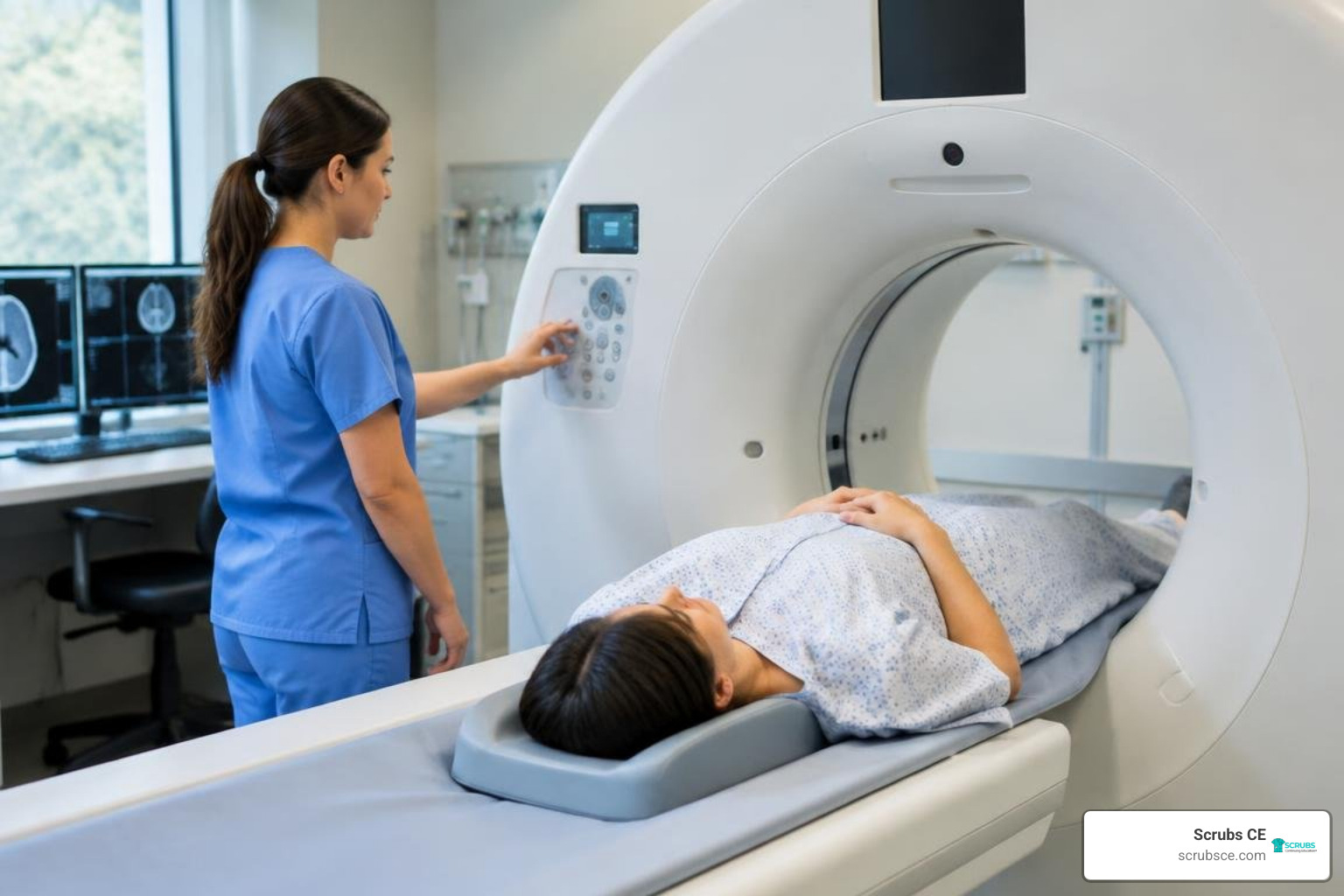
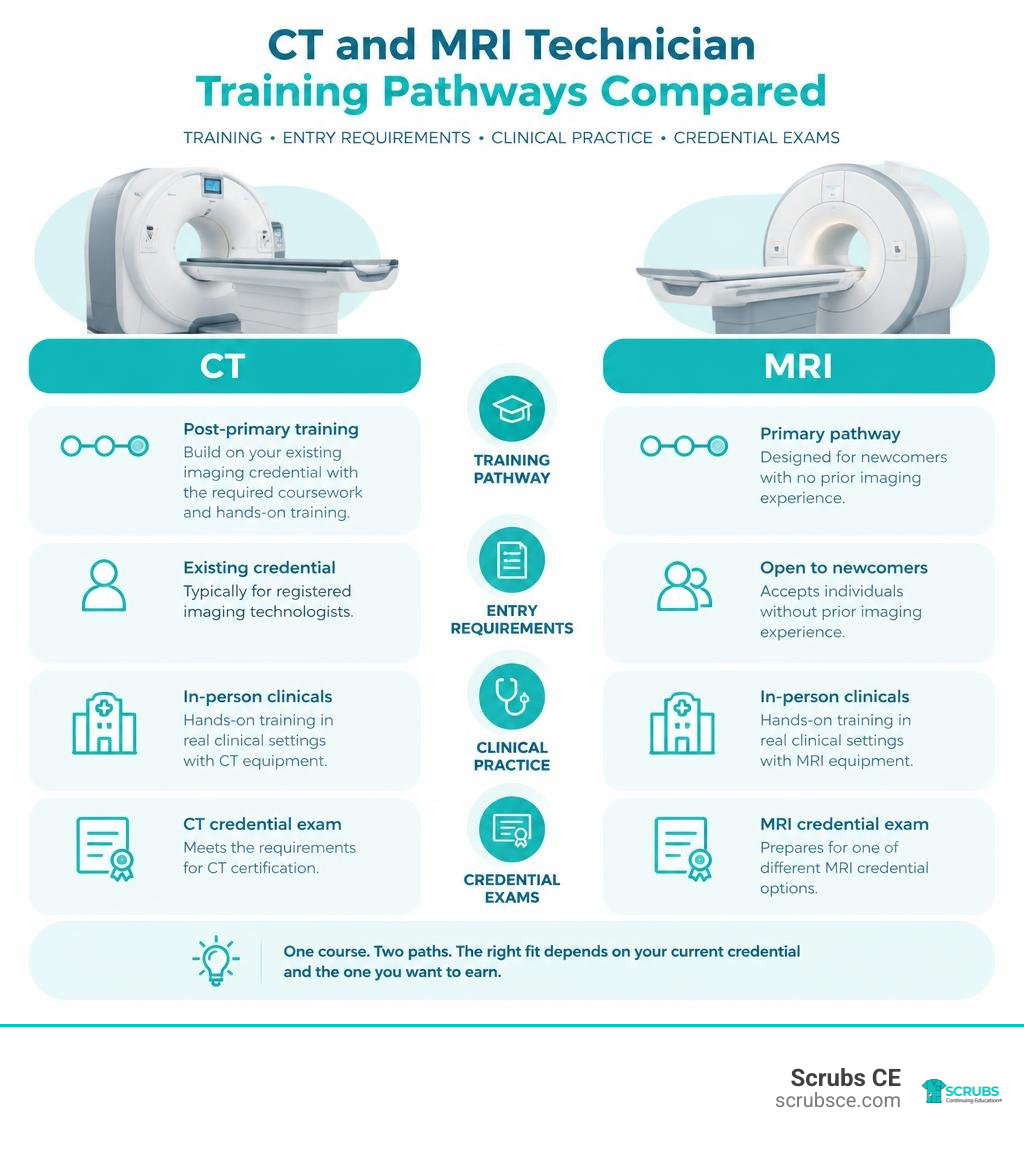
A CT and MRI technician course should match the credential you already hold and the one you want to earn. If you are a registered imaging technologist, look for post-primary training with the required coursework and in-person clinical practice. If you are new to imaging, look for a primary MRI pathway that accepts newcomers. A course with online lessons still requires hands-on clinical training.
Check exam eligibility before you enroll. CT and MRI have separate credentialing requirements, and MRI programs may prepare students for different exams. I’m Zita Ewert, and I lead continuing education for imaging professionals at Scrubs CE. My work on credential requirements and practical online learning informs this guide to choosing a ct mri technician course.
Ct mri technician course helpful reading:
Post-Primary vs. Primary Pathways: Navigating Your Imaging Career
When you decide to expand your clinical skill set into advanced cross-sectional imaging, your starting point dictates your route. The credentialing landscape in modern Radiology recognizes two distinct entry routes: the primary pathway and the post-primary pathway. Understanding the differences outlined in MRI technician clinical pathways helps ensure you choose the right educational curriculum for your background.
Historically, entering advanced modalities required a solid foundation in diagnostic radiography. An imaging professional would first earn an associate in radiologic technology, pass their initial board exams, and cross-train on the job or complete specialized certificates.
While that classic trajectory remains dominant for computed tomography, the educational structure for magnetic resonance imaging evolved significantly when the AMERICAN REGISTRY OF RADIOLOGIC TECHNOLOGISTS® recognized MRI as an independent primary discipline. Whether you are building upon an existing radiography license or starting from scratch, selecting a program that aligns with your educational history saves time, tuition, and frustration.
Primary Eligibility Pathway for Newcomers
If you do not hold an existing imaging credential, the primary pathway allows you to enter magnetic resonance imaging directly without spending two years earning an X-ray license first. Primary programs are designed for career changers, recent high school graduates, or healthcare workers transitioning from non-imaging fields.
To qualify for primary certification through the AMERICAN REGISTRY OF RADIOLOGIC TECHNOLOGISTS®, you must earn an associate degree (or higher) from an accredited institution and complete an approved, structured primary educational curriculum. Admissions criteria for these direct-entry programs are selective. Typical prerequisites include:
- College-level Human Anatomy and Physiology with an in-person laboratory component
- General Physics or Radiologic Physics
- Medical Terminology and Intermediate Algebra (or higher)
- Direct patient care experience (many competitive programs require 80+ documented hours as a CNA, MA, or phlebotomist)
- Documented clinical observation hours (often 12 or more hours shadowing in an active imaging department)
Direct entry lets you focus purely on magnetic fields, RF pulses, and non-ionizing cross-sectional anatomy from day one. However, keep in mind that direct-entry primary pathways apply specifically to magnetic resonance; computed tomography remains exclusively a post-primary credential because it relies on ionizing radiation principles rooted in diagnostic radiography.
Post-Primary Pathway for Certified Technologists
If you already maintain active registration through the AMERICAN REGISTRY OF RADIOLOGIC TECHNOLOGISTS® in Radiography, Nuclear Medicine Technology, Radiation Therapy, or Sonography, your path to adding advanced modalities is the post-primary route.
Post-primary training is streamlined because you have already mastered fundamental radiation biology, patient care, medical ethics, and basic cross-sectional anatomy. Certified technologists must meet structured education requirements—completing at least 16 credit hours of targeted coursework covering modality physics, instrumentation, patient safety, and clinical procedures—along with documenting mandatory clinical competency procedures.
For those pursuing computed tomography, reviewing specific CT technologist requirements ensures your didactic modules and clinical scan logs meet every credentialing benchmark. Because you already understand clinical workflow, post-primary certificate programs can often be completed in 6 to 12 months of dedicated study and clinical rotations.
Choosing the Best CT MRI Technician Course: Formats, Costs, and Accreditation
Choosing where to invest your educational effort requires looking closely at program delivery, clinical site availability, and official accreditation. A top-tier curriculum delivers deep theoretical instruction in cross-sectional anatomy and physics while coordinating hands-on scanner time at approved clinical affiliates.

Accreditation is vital. Enrolling in a program recognized by the Joint Review Committee on Education in Radiologic Technology (JRCERT), the AMERICAN REGISTRY OF RADIOLOGIC TECHNOLOGISTS®, or international bodies like the MR Training Programs – ISMRT directory protects your educational investment. Accreditation ensures that your credit hours qualify for national credentialing boards and meet state licensing laws.
Comparing Program Formats, Length, and Tuition
Training models vary from self-paced online classrooms to intensive hospital residencies. Finding the right balance between didactic delivery and clinical placement determines how smoothly you balance school with your existing personal and work responsibilities.
| Program Model | Average Duration | Typical Tuition Range | Clinical Training Delivery | Best Suited For |
|---|---|---|---|---|
| Online Post-Primary Modules | 3 to 6 months | $1,500 – $4,500 | Independent local clinical arrangement | Registered radiographers with access to scanner facilities |
| Hybrid University Certificates | 6 to 12 months | $5,000 – $15,000 | Structured regional hospital clinical rotations | Techs seeking structured academic pacing and clinical placement |
| Primary Online/Hybrid Institutes | 12 to 18 months | $11,500 – $20,000+ | Coordinated clinical network (Phase 3) | Newcomers seeking direct entry into magnetic resonance |
| Hospital-Based Paid Internships | 6 months | $0 (Paid position + work contract) | Full-time clinical immersion with classroom instruction | ARRT® registered radiographers willing to make a multi-year employment commitment |
Tuition ranges reflect the level of support provided. For example, some university programs cost around $5,000 to $6,000 per academic cycle, while private technical institutes range from $11,500 to over $30,000 for comprehensive primary training. When researching options, be sure to verify cohort start dates and check for temporary program hiatuses, as some college certificate tracks pause admissions periodically for curriculum updates.
Prerequisites and Admission Steps for a CT MRI Technician Course
Gaining acceptance into competitive CT and MRI certificate programs requires careful preparation. Because scanning suites maintain strict safety limits and high academic standards, program admissions committees review your academic history, technical aptitude, and interpersonal skills.
To streamline your application process:
- Audit Your Transcripts: Ensure your cumulative GPA meets the program minimum (typically 2.5 to 2.8, though competitive cohort averages frequently sit at 3.5 or higher).
- Verify Supporting Registrations: If applying for post-primary tracks, confirm your primary ARRT® card in Radiography, Nuclear Medicine, or Sonography is active and in good standing.
- Maintain Healthcare Clearances: Keep your Basic Life Support (BLS) for Healthcare Providers CPR certification current, complete required 10-panel drug screenings, and update all immunization records (including hepatitis B, MMR, and seasonal influenza).
- Confirm Clinical Affiliation: If you choose an online didactic model, verify whether the institution assigns your clinical preceptor or if you must secure written permission from an imaging facility director to log scan competencies at your workplace.
ARRT® vs. ARMRIT: Credentialing Standards and National Recognition
A crucial step in choosing an imaging education program is understanding the credential you earn upon graduation. In the United States, two primary organizations certify magnetic resonance imaging technologists: the AMERICAN REGISTRY OF RADIOLOGIC TECHNOLOGISTS® and the American Registry of Magnetic Resonance Imaging Technologists (ARMRIT).
The AMERICAN REGISTRY OF RADIOLOGIC TECHNOLOGISTS® is the gold standard recognized across hospital networks, academic medical centers, and state licensing boards. It offers credentialing across radiography, computed tomography, magnetic resonance, nuclear medicine, and radiation therapy. Earning post-primary credentials through this board requires passing a comprehensive 200-question computer-based exam covering safety, physics, sequence parameters, and clinical procedures, with a scaled passing benchmark of 75.
ARMRIT, founded in 1991, focuses exclusively on magnetic resonance imaging. ARMRIT certification is widely recognized in private imaging centers, mobile clinics, and outpatient diagnostic facilities. While ARMRIT provides an accessible, high-quality direct entry route without requiring prior ionizing radiation training, some acute-care trauma hospitals and state regulatory agencies specifically mandate ARRT® credentials for clinical employment. Always research the hiring requirements of your local healthcare systems before choosing between an ARRT® or ARMRIT-aligned curriculum.
Core Curriculum Standards for Every CT MRI Technician Course
A comprehensive cross-sectional curriculum covers the distinct physical principles, hardware systems, and patient safety requirements of both modalities.
In computed tomography modules, you study X-ray tube thermal dynamics, slip-ring gantries, multi-slice detector arrays, and image reconstruction algorithms (such as filtered back projection and iterative reconstruction). You will master Hounsfield units, slice pitch, and radiation protection principles (ALARA) to minimize ionizing radiation dose while maximizing diagnostic resolution.
In magnetic resonance modules, the curriculum shifts away from radiation toward high-field quantum mechanics. You explore nuclear magnetic resonance, net magnetization vectors, the Larmor frequency, and radiofrequency excitation. Coursework breaks down T1 recovery, T2 decay, inversion recovery, gradient echo sequences, and advanced diffusion-weighted imaging.
Crucially, instructors teach strict compliance with the four MRI Safety Zones defined by the American College of Radiology (ACR). You will learn to prevent projectile hazards, manage SAR (Specific Absorption Rate) thermal deposition, evaluate metallic implant compatibility, and handle acute claustrophobia.
Both modalities require thorough training in cross-sectional anatomy across axial, sagittal, coronal, and oblique reconstruction planes. Courses also include practical instruction on intravenous venipuncture, power injector mechanics, and contrast agent safety (covering both iodinated CT media and gadolinium-based MRI agents, with focus on screening for renal function and managing adverse reactions).
Clinical Competency Verification and Registry Preparation
Mastering textbook theory is only half the battle; you must also demonstrate real-world clinical competence on live scanner consoles. National registries require students to document verified clinical repetitions across a diverse range of procedures before they can sit for the boards.
In computed tomography, you will log exams covering routine head, trauma facial, soft tissue neck, pulmonary angiography, high-resolution chest, triple-phase abdominal, and specialized musculoskeletal scans. In magnetic resonance, clinical logs require successful performance across brain, cervical/thoracic/lumbar spine, upper and lower extremity joints, pelvic, and contrast-enhanced vascular studies.
To ensure you pass your exams on your initial attempt, reputable programs incorporate structured registry reviews into their final semesters. Working through comprehensive practice question banks helps you identify knowledge gaps early. Utilizing targeted resources like our guide to pass your ARRT® CT exam and an intensive ARRT® MRI registry review provides the testing strategies and confidence you need to succeed on exam day.
Career Outlook, Compensation, and Growth for Dual-Certified Techs in 2026
The healthcare industry in 2026 continues to experience sustained demand for diagnostic imaging professionals. As the population ages and healthcare providers rely more heavily on early cross-sectional detection for neurovascular diseases, oncology, and musculoskeletal trauma, facilities face persistent shortages of qualified technologists.
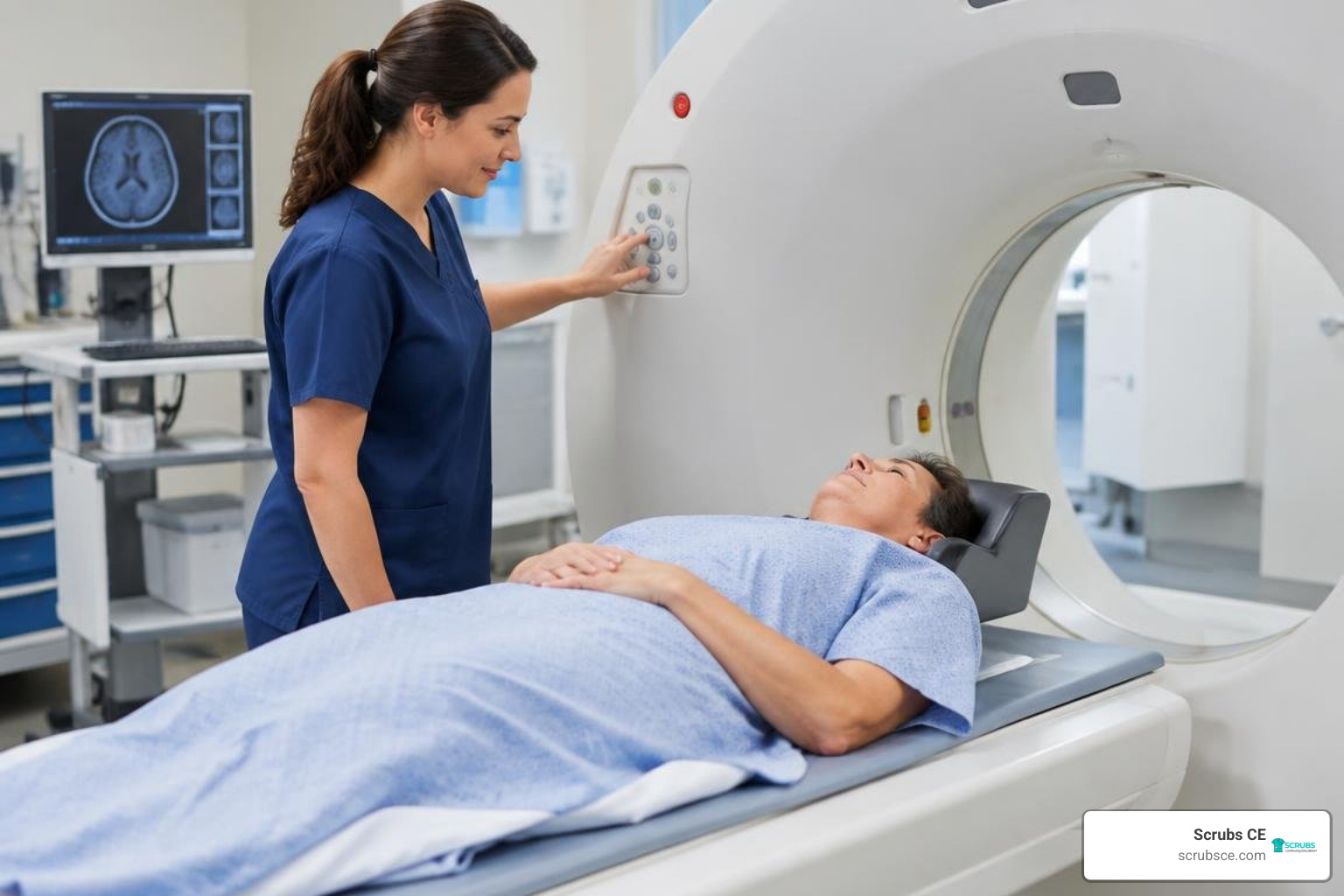
This staffing demand translates directly into high job placement rates, competitive base pay, and strong job security. According to the Bureau of Labor Statistics (May 2025 release), the median annual compensation for magnetic resonance technologists reached $95,480, with the top ten percent of earners making well over six figures. Furthermore, employment growth across specialized imaging modalities is projected at +8% through 2035, outpacing the average growth rate for all occupations.
Holding dual certification in both CT and MRI makes your resume stand out. While a single-modality technician fills a specific schedule gap, a dual-certified technologist gives hospital imaging directors maximum operational flexibility. You can scan emergency department trauma admissions on the multi-slice CT during the first half of your shift, then transition smoothly to running high-field neurological MRI studies during scheduled outpatient blocks.
This operational versatility opens doors to a variety of employment settings:
- Acute Care Level 1 Trauma Hospitals: Fast-paced emergency protocols, stroke alerts, inpatient care, and interventional procedures.
- Outpatient Diagnostic Imaging Networks: Predictable weekday schedules focused on elective neuro, spine, body, and sports-medicine orthopedic studies.
- Mobile Diagnostic Units: Traveling between regional health clinics and rural community hospitals to deliver specialized scanning services.
- Application Specialist and Clinical Consulting Roles: Partnering with medical imaging device manufacturers to train department personnel on new scanner hardware and sequence optimization software.
Reviewing a detailed MRI technologist job description helps you understand the day-to-day workflow, safety duties, and supervisory paths available as you advance in your imaging career.
Frequently Asked Questions About CT and MRI Courses
How long does it take to complete dual CT and MRI training?
The total time depends entirely on your starting educational level and the program format you select:
- Post-Primary Pathway for Certified Radiographers: If you already hold an active radiologic technology license, completing a dual CT and MRI certificate usually takes 6 to 12 months of full-time study, or up to 18 months if completed part-time alongside a clinical job.
- Primary Pathway for Newcomers: Direct-entry primary programs in magnetic resonance imaging generally require 12 to 18 months to complete the necessary didactic coursework, simulator labs, and 800+ required clinical hours. Adding computed tomography later requires earning a primary qualifying credential first.
Can you complete a CT or MRI technician course entirely online?
You can complete all didactic lectures, physics coursework, and exam review modules entirely online, but clinical training must be completed in person. Operating 1.5T/3.0T magnetic resonance suites and high-powered CT gantries involves hands-on patient positioning, intravenous contrast administration, safety screenings, and real-time scanner parameter adjustments that cannot be replicated through computer simulations alone. Reputable online courses operate on a hybrid model, pairing digital classrooms with hands-on clinical rotations at local accredited hospitals or imaging facilities.
What credentialing exam do graduates take after course completion?
Graduates of ARRT®-recognized post-primary programs sit for the national ARRT® Advanced-Level Examination in Computed Tomography and/or the ARRT® Advanced-Level Examination in Magnetic Resonance Imaging. Each discipline requires passing a dedicated 200-question multiple-choice registry exam. Graduates of dedicated non-radiography MRI certificate schools usually take the ARMRIT National Registry Examination. Always confirm that your state’s radiation and medical board recognizes your intended exam for local practice licenses.
Conclusion
Mastering both computed tomography and magnetic resonance imaging gives you exceptional career flexibility, financial stability, and clinical impact in modern healthcare. By choosing an accredited, structured educational program that matches your background, you build the diagnostic confidence needed to capture sharp, clear diagnostic images while keeping patient safety at the forefront of your practice.
Once you pass your registry examinations and step into the imaging suite, maintaining your credentials requires continuous learning. The AMERICAN REGISTRY OF RADIOLOGIC TECHNOLOGISTS® requires technologists to complete 24 continuing education credits every two-year biennium to maintain active registration and stay current on emerging imaging protocols.
At Scrubs CE, we provide convenient, affordable, and fully accredited continuing education credits for MRI technologists and CT specialists. Our high-quality, self-paced courses feature instant certificate generation upon completion, making it simple to satisfy state licensing boards and ARRT® requirements without interrupting your busy clinical shift schedule. Invest in your professional development today and keep your cross-sectional imaging career moving forward!