
MRI Technician Job Requirements and Clinical Pathways Explained
What Does It Take to Become an MRI Technician?
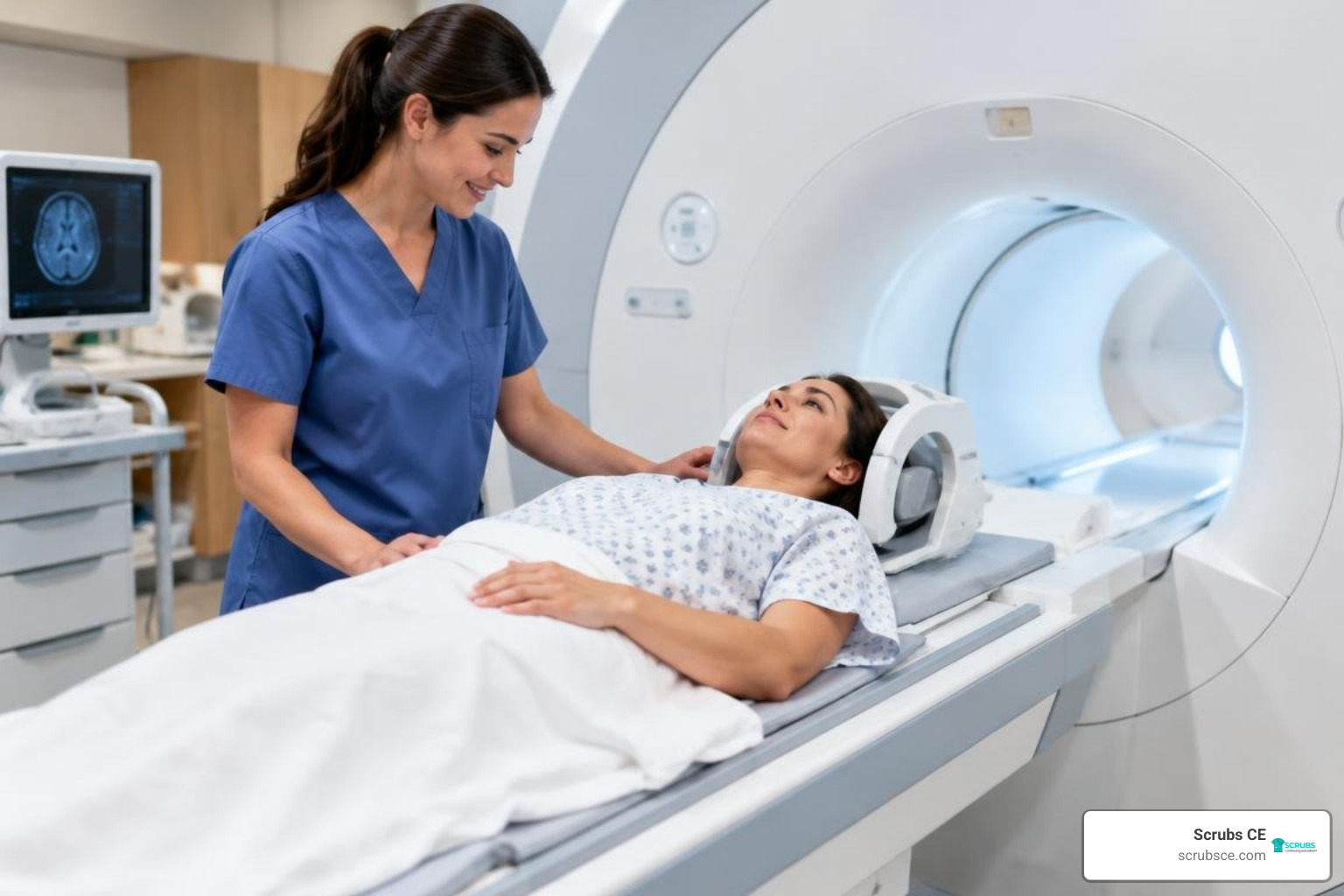
To become an MRI technologist, start with an MRI education pathway that includes hands-on clinical training. Learn to screen patients for safety risks, operate the scanner, check image quality, and respond to emergencies. Then meet the requirements for an accepted credential, such as one from the AMERICAN REGISTRY OF RADIOLOGIC TECHNOLOGISTS® (ARRT®), and check the licensing rules where you plan to work.
I’m Zita Ewert, and I lead continuing education for imaging professionals at Scrubs CE. My work helping technologists navigate training and credential rules informs this guide to mri technician job requirements.
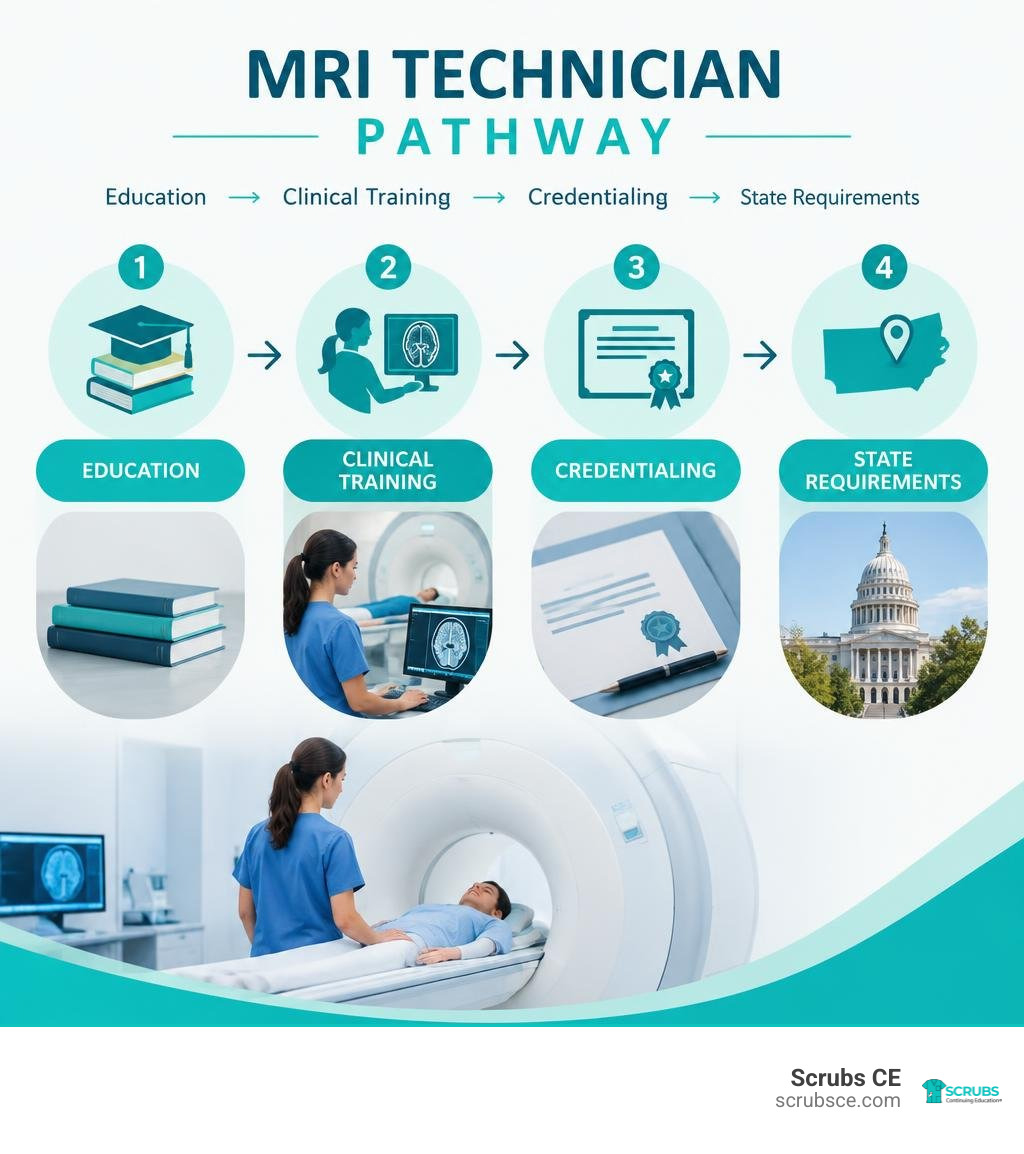
Quick look at mri technician job requirements:
- radiologic technologist requirements
- x ray technician job requirements
- steps to become a mammography technician
Core MRI Technician Job Requirements: Education and Clinical Training
Academic Degrees and Foundational MRI Technician Job Requirements
Embarking on a career in magnetic resonance imaging begins with formal higher education. Industry data shows that approximately 65% of new imaging hires enter the field holding an associate degree or a comparable two-year degree from an accredited institution. Aspiring technologists often review comprehensive educational pathways for imaging techs to decide whether a dedicated associate degree program or a bachelor’s degree aligns best with their goals.
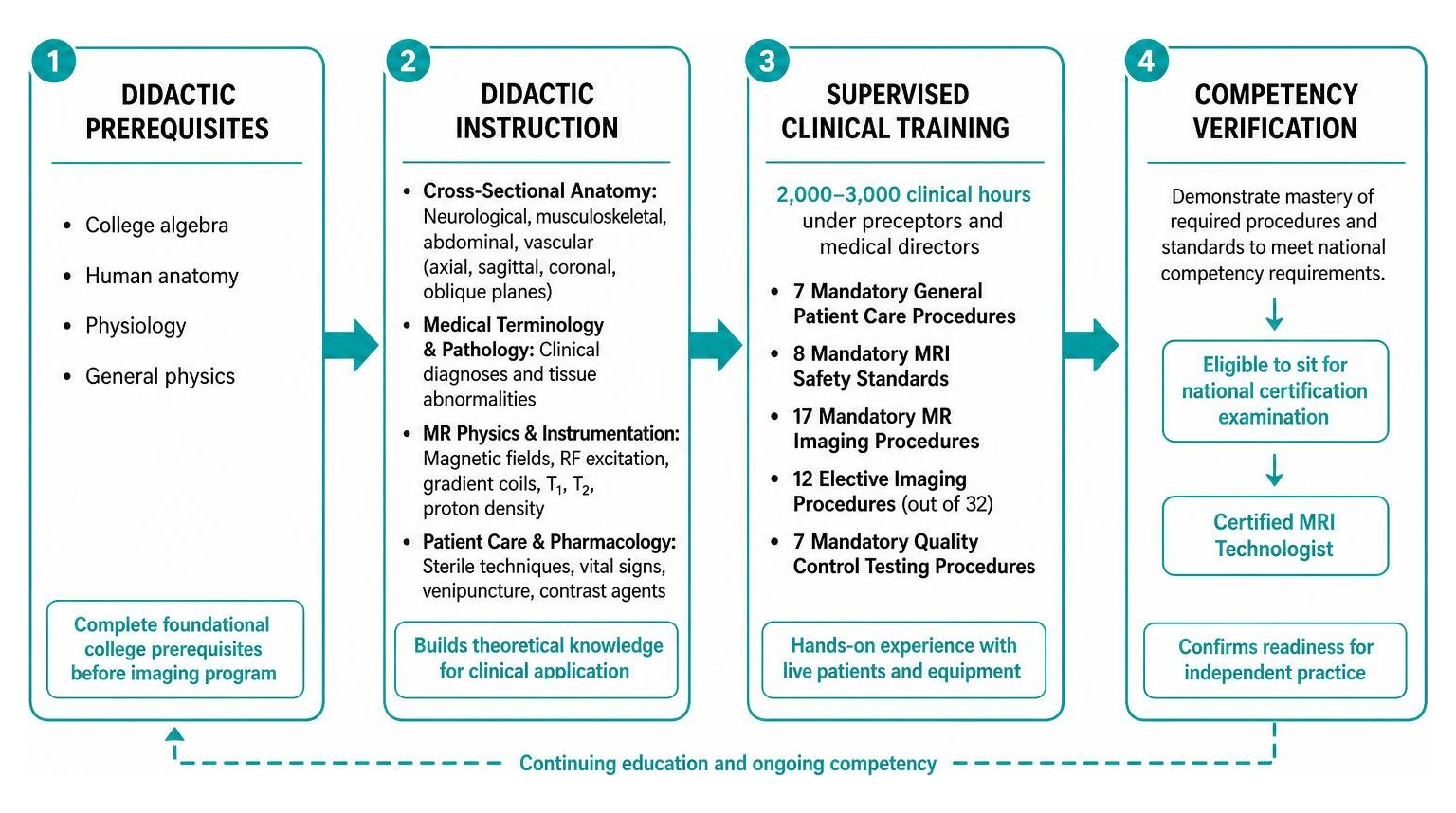
Before entering core technical courses, students must complete foundational prerequisites, including college algebra, human anatomy, physiology, and general physics. Once admitted into an accredited imaging program, didactic instruction dives into specialized subjects:
- Cross-Sectional Anatomy: Identifying complex neurological, musculoskeletal, abdominal, and vascular structures across axial, sagittal, coronal, and oblique imaging planes.
- Medical Terminology & Pathology: Understanding clinical diagnoses, medical jargon, and how tissue abnormalities manifest under resonance imaging.
- MR Physics & Instrumentation: Mastering the behavior of hydrogen protons inside static magnetic fields, radiofrequency (RF) excitation, gradient coil switching, and tissue relaxation times ($T1$, $T2$, and proton density).
- Patient Care & Pharmacology: Learning sterile techniques, vital sign assessment, venipuncture protocols, and contrast agent biodistribution.
Structured guidelines, such as national apprenticeship framework standards, help formalize the didactic curriculum, ensuring that classroom theory directly supports real-world clinical application.
Clinical Competency and Hands-On Training Hours
Classroom knowledge alone will not prepare you for the live scanner suite. Meeting clinical competency standards requires substantial hands-on practice. Clinical training models typically mandate between 2,000 to 3,000 clinical hours under direct supervision from registered preceptors and medical directors. Understanding the time commitment for tech certification helps students balance their academic and personal schedules throughout their training.
The certifying framework established by the AMERICAN REGISTRY OF RADIOLOGIC TECHNOLOGISTS® outlines specific standards that every candidate must master. Under the official ARRT® didactic and clinical requirements, candidates must complete mandatory procedures on live patients rather than remote simulations:
- 7 Mandatory General Patient Care Procedures: Including Basic Life Support (BLS)/CPR certification, vital signs assessment, sterile technique, venipuncture, standard infection control precautions, patient transfers, and medical equipment management.
- 8 Mandatory MRI Safety Standards: Thorough screening of patients and personnel, ACR safety zone enforcement, static magnetic field safety, RF exposure control, gradient noise management, emergency communication, and contrast media screening.
- 17 Mandatory MR Imaging Procedures: Independent execution of standard diagnostic examinations, including brain, spine (cervical, thoracic, lumbar), musculoskeletal joints, and abdominal scans.
- 12 Elective Imaging Procedures (out of 32 options): Specialized examinations like MR arthrography, enterography, pelvic dynamics, or cardiac sequences.
- 7 Mandatory Quality Control Testing Procedures: Daily center frequency checks, signal-to-noise ratio (SNR) tests, image artifact inspection, and visual cryogen pressure monitoring.
Primary Duties and Daily Workflow of an MRI Technologist
Patient Care, Screening, and Image Acquisition
The daily duties of an MRI technologist balance patient care with technical precision. Before touching the scanner console, technologists review physician orders and clinical indications to confirm that the requested exam matches the patient’s medical history.
Conducting rigorous pre-scan contraindication screening is one of the most critical parts of the job. Because MRI scanners use exceptionally powerful magnetic fields, undetected ferromagnetic materials pose severe safety hazards. Technologists review detailed screening questionnaires with every patient, verifying surgical histories and scanning for implanted items such as pacemakers, neurostimulators, cochlear implants, aneurysm clips, or foreign metallic fragments in the eyes.
Technologists manage daily imaging responsibilities by placing specialized surface coils over the target anatomy, positioning patients comfortably with cushions, and providing hearing protection to dampen acoustic noise. For scans requiring contrast enhancement, technologists perform venipuncture and administer gadolinium-based contrast agents while monitoring for potential allergic reactions. The federal O*NET occupational profile confirms that patient screening, reviewing orders, and selecting imaging parameters are core competencies for all practicing technologists.
Technical Skills and Essential Job Competencies
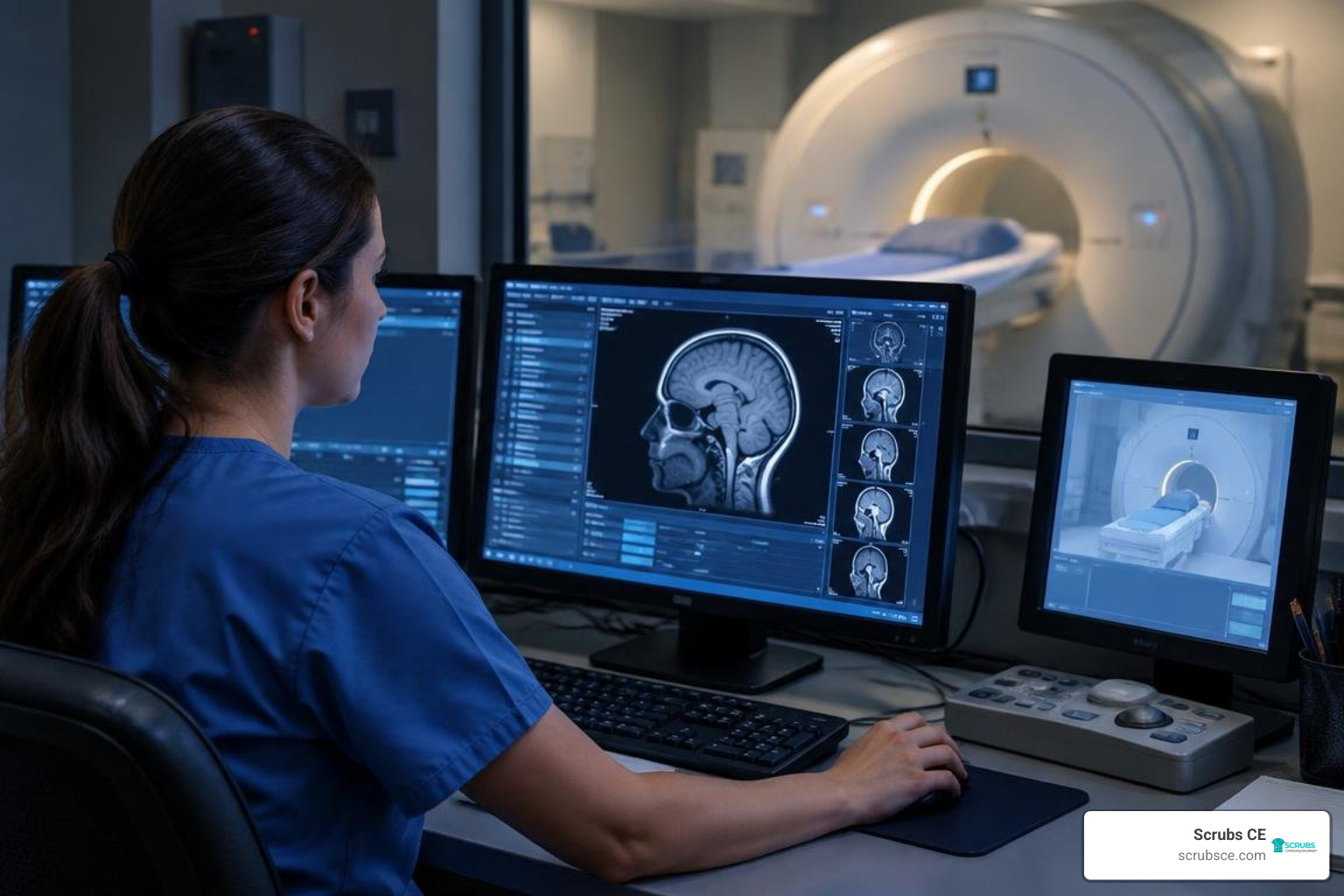
Operating high-field MRI systems (ranging from 1.5 Tesla to 3.0 Tesla and beyond) requires deep technical expertise and strong diagnostic reasoning. Technologists select, adjust, and optimize pulse sequences—such as Spin Echo, Fast Spin Echo, Inversion Recovery (STIR, FLAIR), and Gradient Echo—to highlight specific pathologies.
Essential job competencies include:
- Signal-to-Noise Ratio (SNR) Optimization: Adjusting repetition time (TR), echo time (TE), matrix size, field of view (FOV), and slice thickness to generate sharp diagnostic images without unnecessarily prolonging scan durations.
- Artifact Mitigation: Identifying and correcting image artifacts caused by patient motion, blood pulsation, chemical shift, magnetic susceptibility, and RF zipper interference.
- Attention to Detail and Exactness: Survey data reveals that 83% of professionals rate exactness as critical to their daily duties. Minor parameter miscalculations can compromise diagnostic accuracy or cause patient burns from RF heating.
- PACS Archiving and Image Processing: Performing multiplanar reconstructions (MPR), maximum intensity projections (MIP), and pushing completed imaging studies to Picture Archiving and Communication Systems (PACS) for radiologist interpretation.
- System Troubleshooting: Testing local coil connections, managing calibration errors, and maintaining detailed quality control logs aligned with ARRT® content specifications.
Certification, Licensure, and Credentialing Pathways
Navigating ARRT® vs. ARMRIT Certification Pathways
Earning a recognized national credential proves professional competence and is required by major healthcare systems and outpatient diagnostic imaging facilities. In the United States, two primary credentialing bodies certify MRI technologists: the AMERICAN REGISTRY OF RADIOLOGIC TECHNOLOGISTS® and the American Registry of Magnetic Resonance Imaging Technologists (ARMRIT).
| Credentialing Feature | ARRT® (Magnetic Resonance) | ARMRIT (MRI Technologist) |
|---|---|---|
| Primary Eligibility Pathway | Graduation from an accredited degree-granting MRI program + clinical competencies | Graduation from an ARMRIT-accredited MRI program (1,000+ clinical hours) |
| Postprimary / Cross-Training | Available to ARRT® registered techs, or NMTCB/ARDMS credential holders with structured education + clinical experience | Available to allied health professionals with 2,000+ documented MRI clinical hours |
| Apprenticeship / OJT Option | Structured educational framework required | Approved apprenticeships or 4 years (6,240 hrs) documented on-the-job experience |
| Exam Structure & Length | 200 scored questions + 30 pilot questions (3.5 to 4 hours) | 225 multiple-choice questions (3.5 hours) |
| Minimum Passing Score | Scaled score of 75 | Raw score of 75% |
| Recertification Requirements | 24 CE credits every 2-year biennium | 24 CME credits every 3-year triennium ($300 renewal fee) |
The ARRT® offers two distinct certification routes. The Primary Eligibility Pathway is designed for individuals completing an integrated, degree-granting MRI program. The Postprimary Eligibility Pathway provides a direct route for professionals already credentialed in Radiography, Nuclear Medicine (via ARRT® or NMTCB), or Sonography (via ARRT® or ARDMS) to transition into MRI after completing 16 hours of structured education and documenting clinical procedure logs.
State Licensing and Mandated MRI Technician Job Requirements
National certification is only one part of the credentialing puzzle. Technologists must also comply with state-level healthcare regulations. While some states accept ARRT® or ARMRIT credentials directly for state licensure, others maintain independent radiation and imaging licensing boards that require separate state applications, criminal background checks, and verification fees.
In addition to state licenses, healthcare employers mandate up-to-date credentials, including:
- Active BLS/CPR for Healthcare Providers through the American Heart Association (AHA).
- Formal documentation of venipuncture and intravenous contrast injection training.
- Proof of continuous continuing education (CE) compliance to maintain active clinical privileges.
Safety Protocols and Clinical Working Environments
Four-Zone MRI Safety Architecture and Emergency Protocols
Because clinical MRI systems utilize superconducting magnets that remain continuously energized—even when no scans are actively running—safety in the MRI suite is paramount. Technologists enforce the American College of Radiology (ACR) Four-Zone Safety Architecture to protect patients and staff:
- Zone I: General public areas accessible to patients and hospital visitors without restriction.
- Zone II: Supervised staging and intake areas where screening forms are filled out and patient histories are reviewed.
- Zone III: Strictly controlled access areas housing the technologist console. Non-screened individuals are strictly prohibited, as Zone III directly borders the magnetic field.
- Zone IV: The scanner room itself. This zone carries extreme magnetic attraction risks, radiofrequency energy, and gradient switching fields.
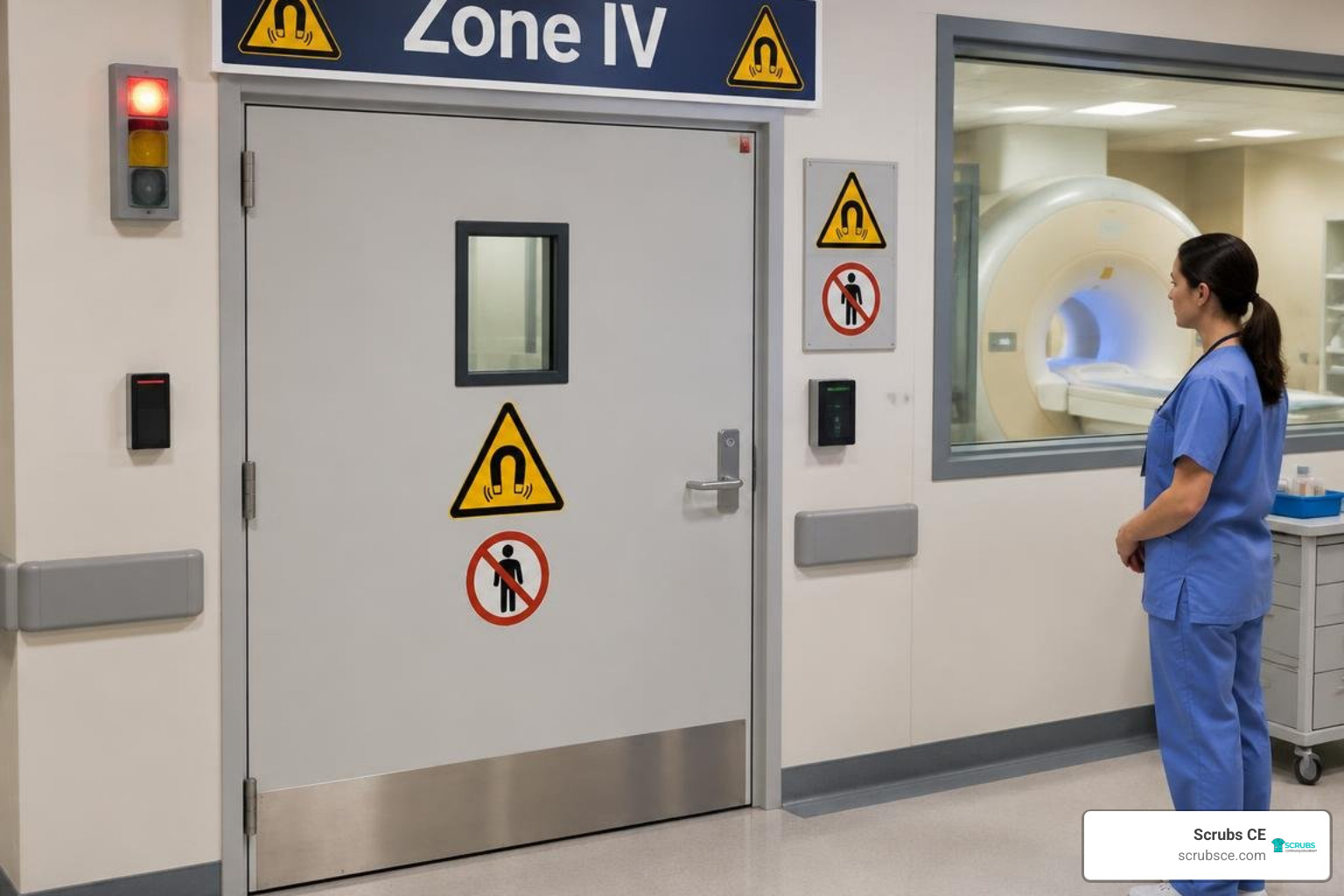
Technologists monitor Specific Absorption Rate (SAR) limits to prevent patient tissue heating, ensure patients wear acoustic ear protection (as scanner gradients routinely exceed 100 decibels), and maintain clear access to the emergency magnet quench system. A quench rapidly vents liquid helium cryogen outside the building to demagnetize the system during catastrophic physical emergencies.
Workplace Conditions and Physical Demands
MRI technologists work in clean, climate-controlled, indoor environments. Federal workplace metrics reveal that 91% of technologists work indoors under controlled conditions every day, with 94% employed directly in the healthcare and social assistance sector.
| Workplace Factor | Hospital Inpatient Suites | Outpatient Imaging Centers |
|---|---|---|
| Acuity of Patients | High (Trauma, ICU patients, post-op cases, monitored lines) | Low to Moderate (Scheduled ambulatory and walk-in patients) |
| Shift Schedules | 24/7 coverage, on-call rotations, overnight and weekend shifts | Standard daytime hours, predictable weekday shifts, rare call |
| Pace of Workflow | Dynamic, urgent emergent priority add-ons | High volume, tightly scheduled scan slots (30–45 mins per patient) |
| Physical Demands | Frequent patient transfers, moving gurneys, heavy positioning | Assisting ambulatory patients onto scanner tables |
Working in these environments requires stamina. Technologists stand at control consoles, position patients on scanner beds, connect heavy surface coils, and clean equipment between procedures following strict infection control protocols.
Career Outlook, Salary Expectations, and Advancement Opportunities
Compensation Benchmarks and Industry Job Growth
Magnetic resonance imaging remains one of the most stable and well-compensated specialized careers in allied healthcare. According to federal wage and labor reports, the median annual wage for MRI technologists is $95,480, which translates to approximately $45.91 per hour.
Technologists working in major metropolitan hospitals, specialized diagnostic laboratories, and outpatient surgical centers often command salaries that exceed six figures, especially when factoring in shift differentials and on-call pay.
The career growth outlook for 2026 and beyond looks very strong:
- Projected Job Growth: Employment is projected to grow faster than the national occupational average (7% or higher) through 2035.
- Annual Job Openings: Approximately 2,300 new openings are projected each year to support expanding healthcare facilities and replace retiring practitioners.
- Demographic Drivers: An aging population requiring advanced diagnostic screenings for cardiovascular, musculoskeletal, and neurological conditions continues to drive demand for resonance imaging.
Specialization, Travel Tech Roles, and Leadership Pathways
A career in MRI offers diverse advancement opportunities. Technologists can expand their clinical impact and increase their earning potential across several exciting career paths:
- Lead or Chief Technologist: Supervising clinical staff, managing department schedules, tracking scanner protocol consistency, and maintaining facility compliance.
- MRI Safety Officer (MRSO): Serving as the lead clinical expert responsible for developing facility safety policies, evaluating complex implants, and enforcing ACR safety guidelines.
- Travel Technologist: Exploring high-paying travel imaging opportunities by accepting short-term (13-week) clinical contracts across the nation, which often provide generous compensation packages and housing allowances.
- Applications Specialist: Working directly for scanner manufacturers to train hospital technologists on new software updates and imaging sequences.
- Department Administration: Earning healthcare management degrees to step into leadership roles as Radiology Directors or Clinical Operations Managers.
Frequently Asked Questions About MRI Tech Requirements
How long does it take to meet all MRI technician job requirements?
Completing all educational, clinical, and credentialing requirements typically takes between 18 months and 4 years, depending on your chosen entry pathway:
- Dedicated Associate Degree Programs: Take approximately 2 years of combined didactic coursework and clinical internship rotations.
- Postprimary Cross-Training: Radiologic technologists certified in Radiography or Sonography can complete their cross-training didactic classes and clinical competency requirements in 6 to 12 months.
- Apprenticeship Programs: Generally require 2,000 to 3,000 hours of supervised on-the-job training alongside classroom study.
Can you become an MRI tech without prior X-ray or Radiography experience?
Yes. You do not need prior experience in X-ray or Radiography to become an MRI technologist. Students can enroll directly in an accredited, degree-granting primary pathway MRI program or an ARMRIT-accredited program. These direct-entry pathways focus entirely on MR physics, cross-sectional anatomy, patient care, and MRI clinical scanning without requiring prior radiography credentials.
What are the continuing education requirements to maintain MRI certification?
To maintain active ARRT® credentials, technologists must complete 24 approved Continuing Education (CE) credits every two-year biennium cycle. Those holding ARMRIT credentials must complete 24 CME credits every three years (an average of 8 credits annually). These ongoing courses ensure technologists stay up to date on evolving safety guidelines, artificial intelligence image reconstruction protocols, and advanced pulse sequence developments.
Conclusion
Meeting all MRI technician job requirements requires dedicated study, technical mastery, and a strong commitment to patient safety. From learning cross-sectional anatomy and mastering magnetic physics to completing over 2,000 hours of clinical scanning, each step builds the foundation for a successful career in diagnostic healthcare.
Once you earn your credentials, maintaining them through approved continuing education ensures that your diagnostic skills remain sharp. At Scrubs CE, we provide self-paced, high-quality, and accredited courses designed to make renewing your credentials straightforward. Explore our catalog of flexible online Radiology courses to fulfill your required CE credits, maintain your ARRT® compliance, and advance your medical imaging career today.