

How to Become a Radiographer
To become a radiographer, choose a radiography program that meets the rules where you plan to work. Complete its classroom and supervised clinical training, then meet your local certification or registration requirements. In the United States, this commonly means earning at least an associate degree, completing an ARRT®-approved radiography program, passing the ARRT® exam, and obtaining a state license if required. Training often takes two to four years, depending on the program.
I’m Zita Ewert, and I lead continuing education for imaging professionals at Scrubs CE. If you’re planning to become a radiographer, I’ll help you understand the training path and why learning continues after your first credential.
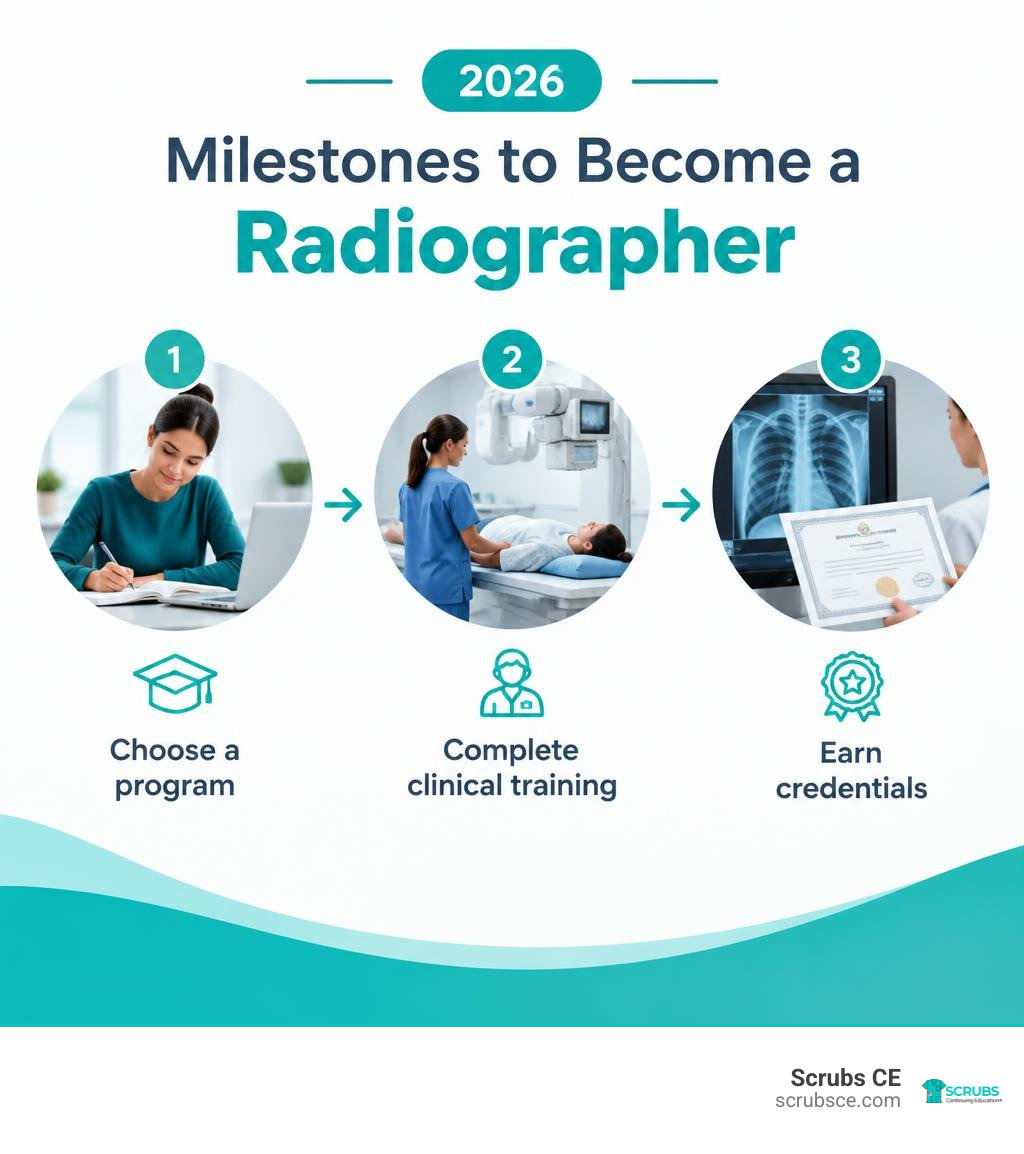
Become a radiographer word guide:
Understanding the Radiographer Role and Clinical Specializations
Medical imaging serves as the cornerstone of contemporary healthcare. Radiographers act as the vital bridge between complex imaging hardware, patient comfort, and clinical diagnosis. When patients arrive with acute trauma, chronic abdominal pain, or suspected respiratory conditions, we utilize advanced radiation physics and equipment to capture diagnostic anatomical records.
The profession splits primarily into two branches: diagnostic radiography and therapeutic radiography.
- Diagnostic Radiographers: Operate sophisticated equipment including digital radiography (DR) suites, computed tomography (CT), magnetic resonance imaging (MRI), and fluoroscopy units. Our goal is image acquisition—positioning the patient with millimeter precision while minimizing radiation dose to uncover disease or injury.
- Therapeutic Radiographers (Radiation Therapists): Work within oncology teams to design, target, and deliver measured ionizing radiation doses directly to tumors, preserving healthy surrounding tissue and monitoring patients throughout multi-week cancer treatment regimens.
Both specializations demand comprehensive knowledge of human anatomy, pathology, radiation safety, and patient care. According to the National Careers Service profile on radiographers, professionals work within multidisciplinary clinical teams across hospitals, outpatient diagnostic centers, and operating theaters.
| Feature | Diagnostic Radiography | Therapeutic Radiography |
|---|---|---|
| Primary Objective | Identify and evaluate pathology, disease, and fractures | Target and eradicate malignant tumors or abnormal cell growths |
| Key Modalities Used | Digital X-ray, CT, MRI, Ultrasound, Fluoroscopy | Linear Accelerators, Brachytherapy, Surface Guided Radiation Therapy |
| Patient Interaction | Episodic, diagnostic sessions (15–45 minutes) | Longitudinal care relationships over daily treatment schedules (several weeks) |
| Clinical Environments | Emergency departments, inpatient wards, operating suites, outpatient clinics | Cancer centers, dedicated radiation oncology departments |
Radiographer vs. Radiologist: Key Distinctions
A frequent point of confusion for prospective healthcare students is differentiating between a radiographer and a radiologist.
- Radiographers (Radiologic Technologists): Complete a dedicated two- to four-year undergraduate imaging degree. We are the hands-on technical and patient care experts responsible for safely operating machinery, positioning patients, managing radiation protection protocols, and acquiring optimal diagnostic images. For an in-depth breakdown of these initial responsibilities, explore our guide on launching a medical imaging career.
- Radiologists: Specialized medical doctors (MDs or DOs) who complete a four-year medical degree followed by a five-year residency in Radiology and optional subspecialty fellowship training. They do not generally operate the scanning machinery during routine appointments; instead, they review, interpret, and diagnose the anatomical images we capture, delivering a formal diagnostic report to referring physicians.
Step-by-Step Educational Pathways to Become a Radiographer
Entering the radiography field requires a structured combination of academic preparation, accredited degree completion, clinical practicums, and credentialing examinations.
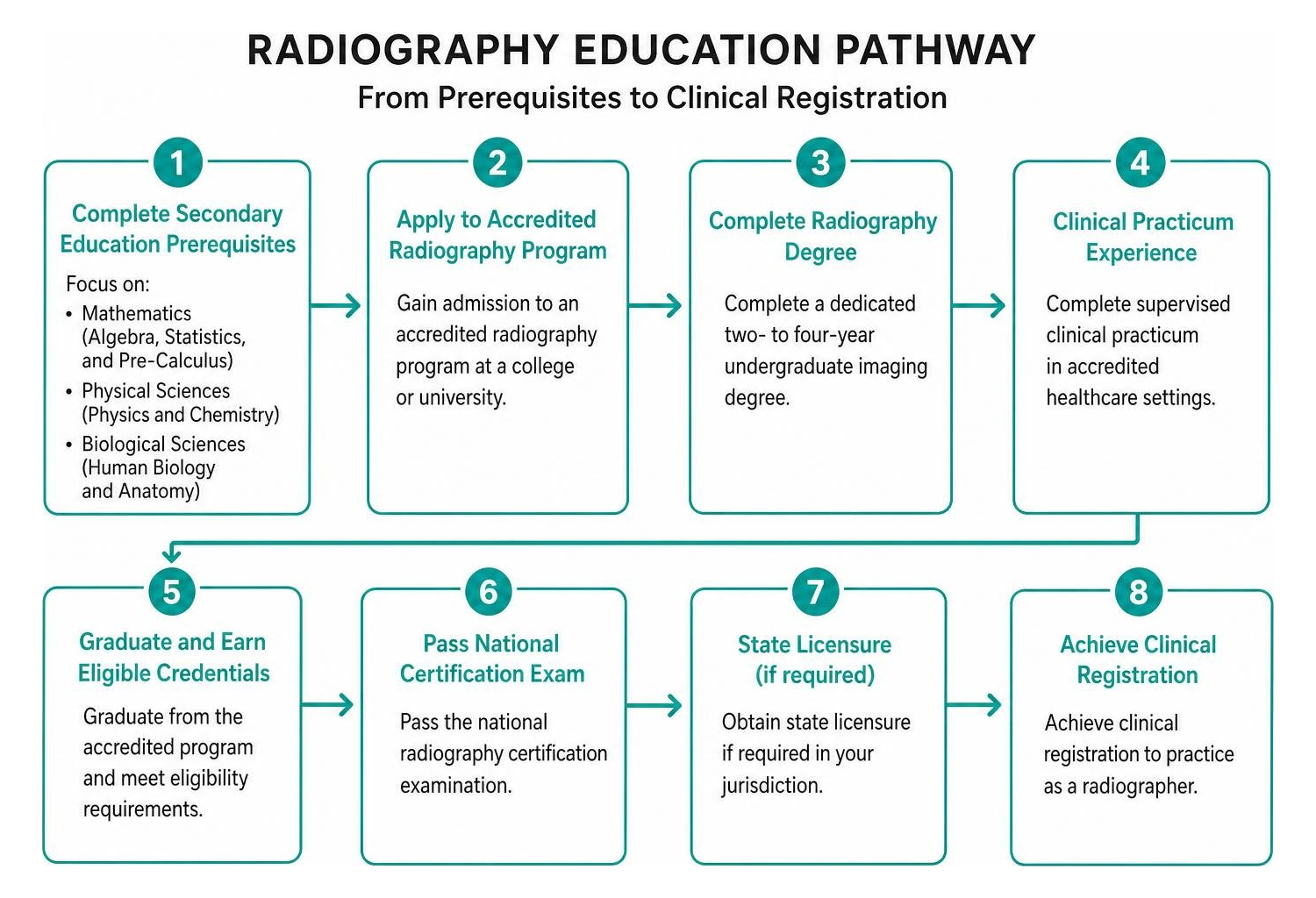
Step 1: Complete Secondary Education Prerequisites
Strong academic foundations in high school or general secondary education make radiography admissions significantly smoother. Prospective students must focus on:
- Mathematics (Algebra, Statistics, and Pre-Calculus)
- Physical Sciences (Physics and Chemistry)
- Biological Sciences (Human Biology and Anatomy)
- English and Communication
Review our thorough overview of radiologic technologist education requirements to ensure your secondary transcripts align with competitive program prerequisites. Institutions like Tacoma Community College Imaging Sciences offer clear prerequisite tracks requiring established GPAs in foundational college sciences before formal application.
Step 2: Enroll in an Accredited Degree Program
Candidates must complete an accredited radiography program recognized by national accrediting agencies such as the Joint Review Committee on Education in Radiologic Technology (JRCERT) in the United States, the Health and Care Professions Council (HCPC) in the UK, or the Medical Radiation Practice Board of Australia.
International programs like the De Montfort University Diagnostic Radiography BSc (Hons) offer intensive three-year undergraduate training, while institutions like The University of Sydney Diagnostic Radiography deliver both undergraduate and two-year graduate-entry Master pathways.
Choosing the Right Degree Program to Become a Radiographer
Students typically choose between two main undergraduate educational tracks:
- Associate of Applied Science (AAS) or Associate of Science (AS) in Radiologic Technology: A structured 2- to 2.5-year track (typically 60–72 credits). Programs like the Carolinas College Radiologic Technology Program combine focused imaging science coursework with over 1,150 hours of hands-on hospital rotations. Read more about the curriculum structure in our guide to the associate in radiologic technology.
- Bachelor of Science (BS) in Diagnostic Radiography or Imaging Sciences: A four-year degree incorporating advanced modalities (such as MRI, CT, and vascular interventional radiography), healthcare management, research, and healthcare informatics. Review the available options through our breakdown of diagnostic radiography degree program options.

Clinical Practice and Licensing Requirements to Become a Radiographer
Earning an academic degree is only half the battle. Radiography programs integrate mandatory, supervised clinical education rotations within active medical centers. During these rotations, students log competencies across dozens of mandatory radiographic procedures—from pediatric chest X-rays to trauma skull views and operating room C-arm fluoroscopy.
Upon completing didactic and clinical competencies:
- United States: Candidates sit for the national certification exam administered by the AMERICAN REGISTRY OF RADIOLOGIC TECHNOLOGISTS®. Over 370,000 healthcare professionals hold credentials through the registry. We provide a step-by-step review in our ARRT® certification roadmap.
- State Licensure: Most US states require state-level licensing before practicing independently, which usually relies on passing the exam from the AMERICAN REGISTRY OF RADIOLOGIC TECHNOLOGISTS®. Check our summary on radiologic technologist certification requirements to navigate these regional mandates.
- International Equivalents: UK graduates register with the HCPC, while New Zealand practitioners register with the Medical Radiation Technologists Board to obtain their Annual Practising Certificate.
Essential Clinical Skills and Day-to-Day Responsibilities
Radiography combines mechanical engineering, anatomical evaluation, and bedside empathy. Our day begins long before the first patient arrives, starting with quality assurance (QA) checks on X-ray tubes, detectors, and collimator assemblies.
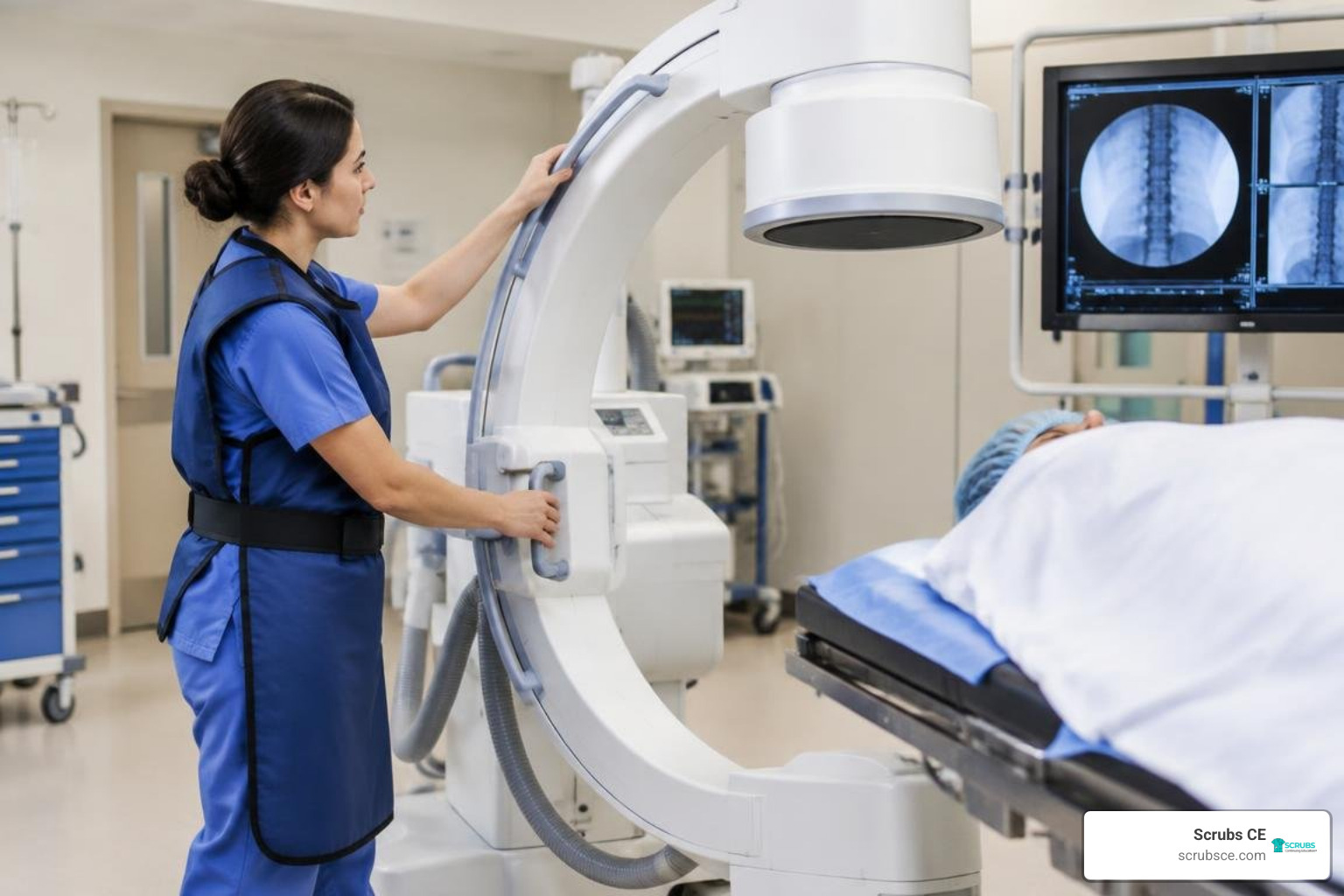
Key day-to-day clinical duties include:
- Patient Verification and Assessment: Reviewing clinical charts, screening for contraindications (such as pregnancy or metallic implants), and explaining the examination clearly to reduce patient anxiety.
- Precision Anatomical Positioning: Aligning the patient’s body, the X-ray tube, and the image receptor to visualize specific structures without anatomical distortion or motion artifacts.
- Radiation Safety and Dose Optimization: Adhering to the ALARA (As Low As Reasonably Achievable) principle. We apply custom collimation, select precise kilovoltage peak (kVp) and milliampere-seconds (mAs), and position protective gonad and thyroid shielding when appropriate.
- Mobile and Surgical Imaging: Transporting mobile X-ray units to intensive care units and operating fluoroscopic C-arms in sterile surgical fields during orthopedic fixations and vascular catheterizations.
- Image Quality Evaluation: Reviewing digital images for diagnostic clarity, appropriate contrast, spatial resolution, and proper anatomical markers prior to sending them across Picture Archiving and Communication Systems (PACS).
To learn more about the technical duties expected in entry-level imaging, read our guide outlining the requirements to become an X-ray technician.
Career Outlook, Salaries, and Advancement Opportunities
The global demand for qualified radiographers remains exceptionally strong, driven by an aging population and advancements in non-invasive imaging.
- United States: The national median annual salary for radiologic technologists ranges from $60,000 to $70,000, with localized averages reaching $80,882 in high-cost metro regions like Brooklyn, NY, compared to $50,754 in areas like Houston, TX.
- United Kingdom: Newly qualified diagnostic radiographers in the NHS enter at Agenda for Change (AfC) Band 5 (approximately £29,000 to £36,000 per year), with experienced practitioners, specialists, and consultants advancing to Band 6 and Band 7 pay scales earning upwards of £48,000 annually.
- New Zealand and Australia: As outlined by the Careers New Zealand Medical Imaging Technologist profile, medical imaging technologists earn between NZ$63,000 and NZ$84,000 during their first six years, rising to NZ$87,000–NZ$118,000 with advanced clinical experience.
Career Progression Pathways
A primary radiography credential serves as an open gateway. With additional clinical experience and post-primary training, radiographers frequently cross-train into specialized modalities:
- Computed Tomography (CT) & Magnetic Resonance Imaging (MRI): Advanced cross-sectional anatomical imaging.
- Interventional Radiology (IR) & Cardiac Cath Lab: Assisting with minimally invasive, image-guided vascular reconstructions.
- Diagnostic Medical Sonography (Ultrasound) & Mammography: Utilizing specialized sound waves or high-resolution breast tissue imaging.
- Radiology Management, Education, and Clinical Applications: Stepping into department leadership, becoming clinical educators, or working for medical imaging hardware and software developers.
Frequently Asked Questions About Becoming a Radiographer
How long does it take to train as a radiographer?
Training typically requires two to four years:
- Associate Degree Programs (AAS/AS): 24 to 30 months of continuous, full-time didactic and clinical study.
- Bachelor’s Degree Programs (BSc/BS): 3 to 4 years of comprehensive academic, scientific, and clinical training.
- Graduate Entry Master’s Pathways: 2 years of accelerated, full-time study for individuals who already hold a bachelor’s degree in a related science discipline.
What is the difference between ARRT® certification and state licensure?
The AMERICAN REGISTRY OF RADIOLOGIC TECHNOLOGISTS® provides the recognized national credential that verifies an individual has met rigid didactic, ethical, and clinical examination benchmarks.
State licensure, by contrast, represents legal authorization issued by an individual state government to practice within its borders. While most state health departments require candidates to pass the ARRT® exam to obtain state licensure, both credentials must be maintained independently. For a clear breakdown of this process, review our step-by-step X-ray tech certification requirements.
Can you complete radiography prerequisites and coursework online?
Certain general education courses (such as English, medical terminology, and basic mathematics) can be completed through distance learning. However, because radiography requires mastery of radiation physics, patient positioning, and clinical equipment handling, all accredited programs require in-person simulation laboratories and hundreds of hours of hands-on hospital rotations. Discover how hybrid training formats operate in our overview of starting X-ray tech education from home.
Conclusion
Becoming a radiographer is one of the most dynamic, technically rewarding, and patient-centered journeys in modern medicine. By selecting an accredited degree program, completing rigorous hospital clinical placements, and earning your credentials through the AMERICAN REGISTRY OF RADIOLOGIC TECHNOLOGISTS® or international regulatory bodies, you establish a solid foundation for a lifelong healthcare career.
Professional growth does not end with your initial clinical license. Maintaining active certification requires staying updated on technological advancements, dose optimization protocols, and emerging diagnostic methods through regular continuing education.
At Scrubs CE, we support your long-term career journey by providing flexible, accessible, self-paced online courses designed to satisfy your mandatory license renewal requirements seamlessly. When you are ready to expand your imaging knowledge and fulfill your continuing education credits, explore our complete library of accessible online Radiology courses to keep your clinical skills sharp.