Anatomy and Physiology for Healthcare Workers Made Surprisingly Simple
Why Anatomy and Physiology for Healthcare Workers Is the Bedrock of Patient Care

Anatomy and physiology for healthcare workers boils down to a simple formula: anatomy is the structural blueprint of the body (organs, bones, tissues), while physiology is how those structures function and communicate to maintain life.
Mastering basic human body systems allows clinicians to recognize normal function, catch subtle warning signs of disease, and deliver safe, targeted care.
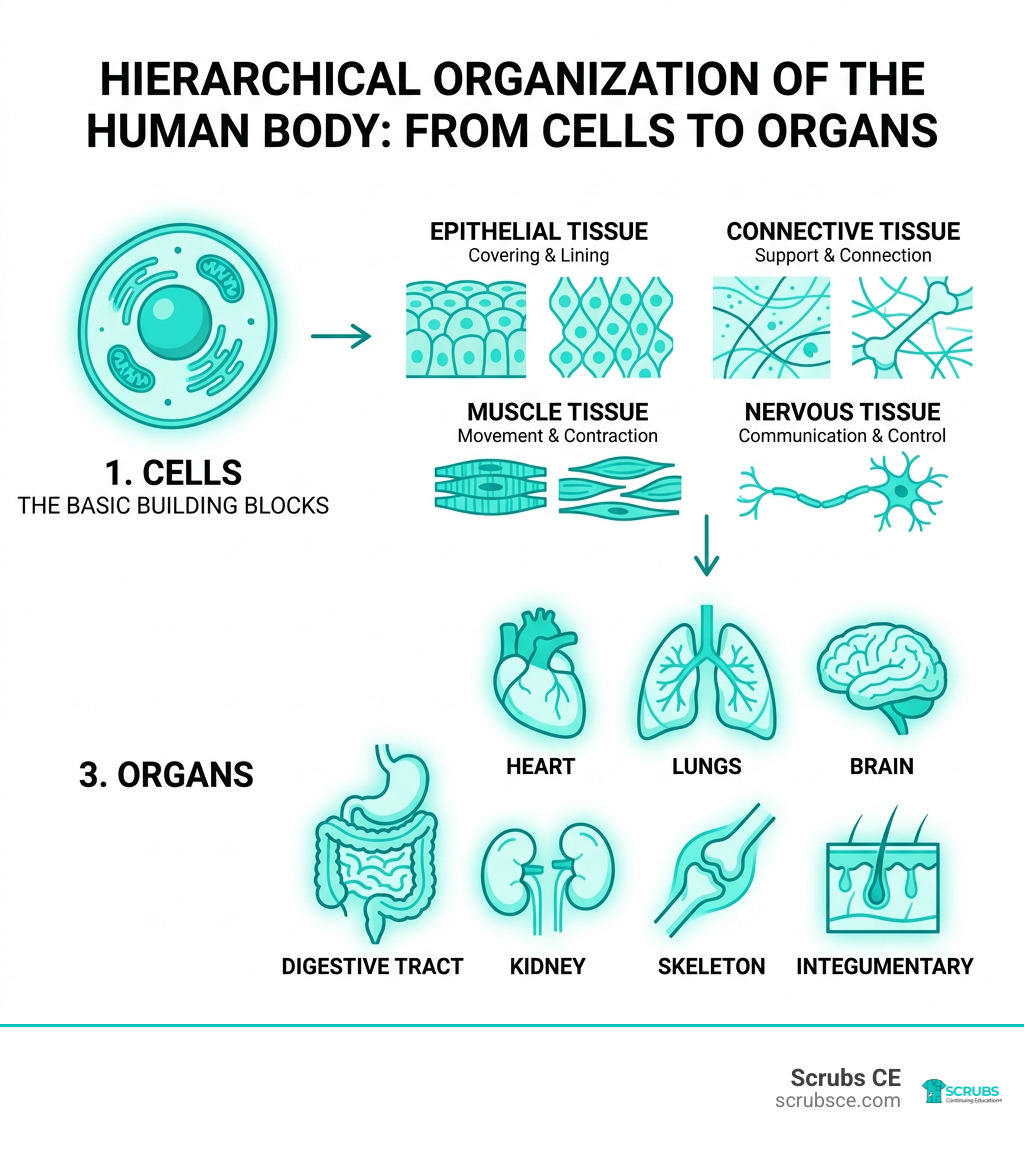
Here is how the 11 core body systems work together to keep patients alive:
- Protection and Support: Integumentary (skin barrier), Skeletal (framework and mineral storage), and Muscular (movement and heat).
- Control and Communication: Nervous (electrical signaling) and Endocrine (chemical hormone regulation).
- Transport and Maintenance: Cardiovascular (blood circulation), Respiratory (gas exchange), Lymphatic/Immune (fluid balance and defense), Digestive (nutrient absorption), and Urinary (waste filtration and fluid balance).
- Continuity: Reproductive (genetic propagation).
In healthcare, knowing where an organ sits and how it functions is what prevents clinical errors—whether you are choosing an injection site, interpreting lab values, or assessing abnormal vital signs.
I’m Zita Ewert, founder of SCRUBS Continuing Education®, where I help imaging and healthcare professionals build clinical confidence with practical courses covering anatomy and physiology for healthcare workers. Let’s break down the human body’s complex wiring into simple, actionable concepts you can apply on your very next shift.
Simple anatomy and physiology for healthcare workers glossary:
- Anatomy and Physiology for Dummies
- Anatomy and Physiology for Dummies Book
- Anatomy and Physiology for Dummies Latest Edition
Core Fundamentals: Structure vs. Function in Clinical Care
Every clinical action we take—from palpating a pulse to setting an intravenous drip rate—rests on the balance between bodily structure and its functional machinery. When structure is altered by trauma, or function is derailed by disease, homeostasis breaks down. Understanding pathological anatomy enables clinicians to trace outward symptoms back to cellular disruptions.
| Dimension | Anatomy (Structure) | Physiology (Function) | Clinical Importance |
|---|---|---|---|
| Primary Focus | Physical parts, locations, landmarks, tissue layers | Chemical, electrical, and mechanical processes | Dictates safe physical entry points vs. functional targets |
| Assessment Tool | Palpation, inspection, imaging anatomy, surgical observation | Vital signs, blood panels, urinalysis, ECG tracings | Distinguishes physical abnormalities from physiological failure |
| Clinical Example | Identifying the gluteal muscle mass and sciatic nerve path | Regulating systemic vascular resistance via arterial tone | Prevents nerve damage while adjusting hypertensive drugs |
Anatomy vs. Physiology: Defining the Bodily Blueprint
To understand the living patient, we must distinguish between gross morphology and dynamic pathways. Gross anatomy deals with structures visible to the naked eye, such as the chambers of the heart or the lobes of the lungs, while microscopic histology examines cellular organization.
Conversely, physiological principles, as outlined in classical Physiology foundational resources, explain how biochemical cascades and negative feedback loops maintain constant internal equilibrium. You cannot master one without the other: anatomy provides the physical framework, while physiology gives it life.
Why Anatomy and Physiology for Healthcare Workers Drives Patient Safety
An accurate grasp of bioscience is a core patient safety competency, not merely an academic hurdle. Research shows that 91.6% of undergraduate nursing students believe every clinician must have a solid grasp of bioscience to practice safely, and 97% of final-year students recognize its direct value at the bedside (Horiuchi-Hirose et al., 2023).
When a clinician recognizes that a patient’s dropping urine output coupled with elevated respiratory rate indicates early metabolic acidosis rather than simple dehydration, they can initiate early interventions that prevent cardiac arrest.

The 11 Core Human Body Systems Explained Simply
The body operates as a linked collective rather than isolated compartments. When one system falters, neighboring systems compensate immediately to maintain life.

Structural and Protective Systems: Integumentary, Skeletal, and Muscular
- Integumentary System: As our largest organ, the skin acts as an external barrier against microbial invasion, synthesizes vitamin D, and regulates body temperature via dermal vasodilation and perspiration.
- Skeletal System: Beyond providing a rigid framework, bones act as a metabolic reservoir for calcium and host hematopoiesis within red marrow. For a focused review of osseous landmarks, review our guide to getting to know your bones.
- Muscular System: Skeletal, smooth, and cardiac muscles generate movement, propel fluids through internal vessels, and produce metabolic heat.
Regulatory and Communication Networks: Nervous and Endocrine Systems
- Nervous System: Operating via rapid electrical action potentials and neurotransmitters, this network coordinates sensory input, central integration, and motor output. Diagnostic procedures in Radiology rely on precise neural mapping, which you can explore in detail through anatomy for radiographers.
- Endocrine System: Slower but longer-lasting, the endocrine glands secrete hormones directly into the bloodstream to regulate cellular metabolism, growth, and fluid balance.
Maintenance and Transport Systems: Cardiovascular, Respiratory, Lymphatic, and Renal
- Cardiovascular System: Propels blood containing oxygen, nutrients, and immune cells through systemic and pulmonary circuits.
- Respiratory System: Facilitates external gas exchange across the alveolar-capillary membrane, while simultaneously regulating systemic pH balance by blowing off or retaining carbon dioxide.
- Lymphatic and Immune System: Collects excess interstitial fluid to prevent peripheral edema and filters it through lymph nodes stocked with B and T lymphocytes.
- Digestive System: Breaks down polymers into absorbable macronutrients while housing the human microbiome—an ecosystem of over $10^{14}$ bacterial cells that support mucosal immunity.
- Urinary System: Nephrons filter metabolic wastes, regulate intravascular volume, and modulate systemic blood pressure through the renin-angiotensin-aldosterone pathway, concepts thoroughly detailed in Fundamentals of Anatomy and Physiology.
- Reproductive System: Governs gametogenesis, hormonal feedback loops, and embryogenesis.
Practical Applications: Integrating Anatomy and Physiology for Healthcare Workers into Daily Practice
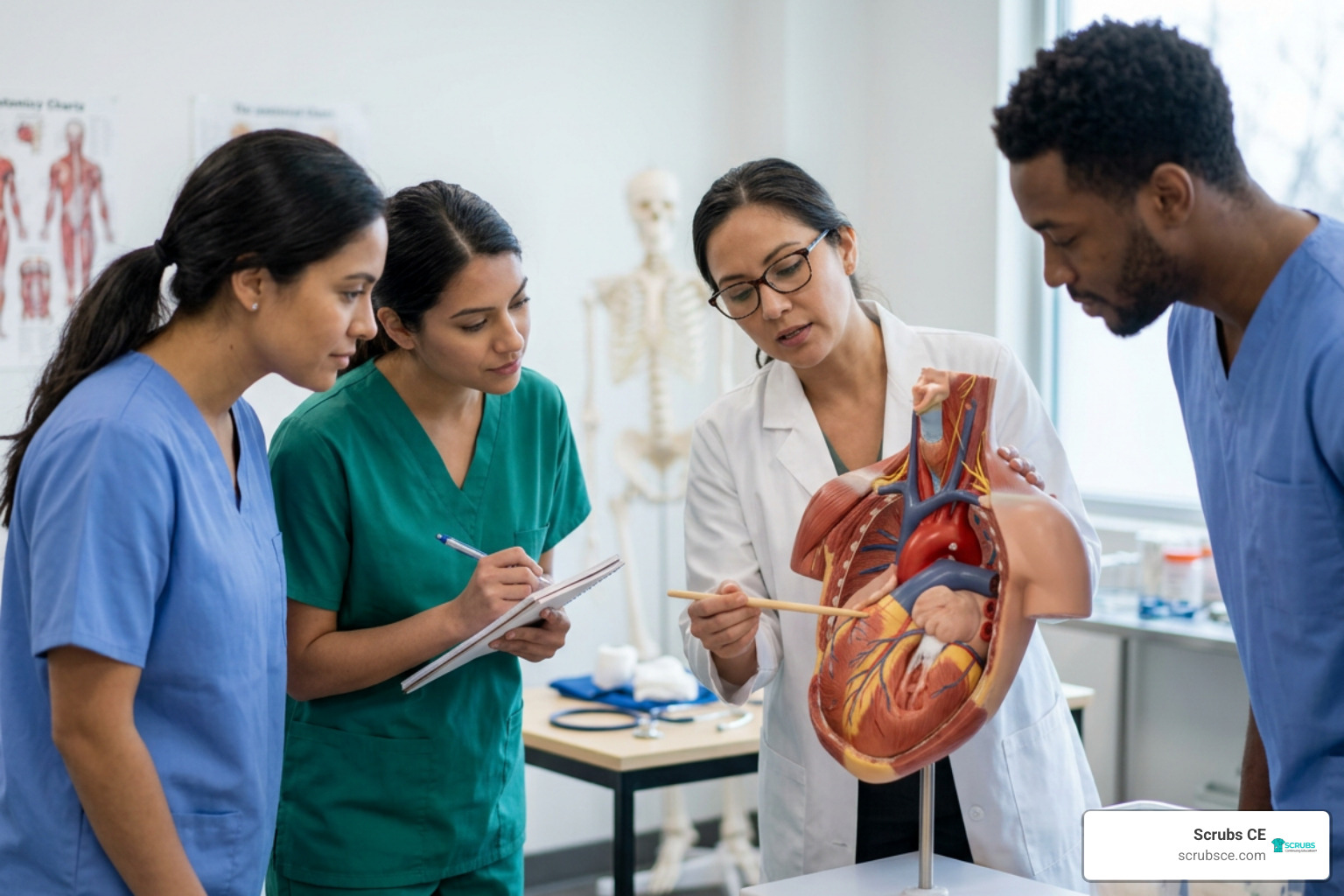
Theoretical knowledge must translate into practical bedside judgment. When we review clinical cues, biological understanding informs our hands-on actions.
Accurate Patient Assessment, Medication Routes, and Clinical Decision-Making
Every diagnostic and therapeutic maneuver relies on structural and physiological knowledge:
- Intramuscular Injections: Selecting the ventrogluteal site relies on identifying the greater trochanter and anterior superior iliac spine, preventing accidental injection into the sciatic nerve or superior gluteal artery.
- Respiratory Distress vs. COPD: Clinicians apply alveolar gas exchange theory to differentiate between acute bronchospasm (treated with bronchodilators) and progressive carbon dioxide retention.
- Renal Clearance: Calculating medication dosages depends on understanding glomerular filtration rates, preventing toxicity from drugs like digoxin or aminoglycosides, as emphasized in Human Anatomy & Physiology.
Enhancing Interprofessional Communication, Preceptorship, and Patient Trust
Using standard anatomical terminology creates clear communication across multidisciplinary teams. In radiographic anatomy, describing a finding as “inferolateral to the right renal pelvis” provides an exact coordinate that prevents confusion.
Furthermore, registered nurses who understand underlying physiology can confidently explain the “why” behind interventions during preceptorship and translate complex diagnoses into clear, reassuring language for patients.
Overcoming the Theory-Practice Gap: Modern Learning Strategies
Despite its importance, 50% of undergraduate nursing students find bioscience coursework extremely time-consuming, and 65.9% consider it more demanding than clinical nursing subjects. Bridging this gap requires effective study habits and practical clinical integration.
Tackling the Challenges of Anatomy and Physiology for Healthcare Workers
A common issue in bioscience education is the disconnect between lecture halls and hospital wards. In fact, 40.5% of registered nurses have reported that the bioscience content taught during their initial schooling felt disconnected from actual clinical practice.
Students often face heavy memorization requirements while preparing for mandatory milestones such as licensure examinations. However, when clinical programs integrate bioscience educators who focus specifically on healthcare applications, over 90% of students report a clearer understanding of patient conditions.
High-Yield Study Techniques: Mnemonics, Active Recall, and Case-Based Models
To master body systems efficiently, try replacing passive rereading with evidence-based active learning methods:
- Active Recall via Flashcards: Test yourself on structures and physiological mechanisms without looking at notes.
- Spaced Repetition: Revisit difficult concepts (such as the renal countercurrent multiplier) across increasing intervals.
- Mnemonic Devices: Use memorable phrases to recall complex lists, such as cranial nerves (“On Old Olympus Towering Tops…”) or carpal bones.
- 3D Interactive Atlases: Visualizing anatomical layers in three dimensions, as featured in texts like Ross & Wilson Anatomy and Physiology, establishes spatial relationships that stick during clinical rotations.
Frequently Asked Questions About Anatomy and Physiology in Healthcare
Why do many healthcare students find anatomy and physiology challenging?
The primary challenge stems from cognitive overload caused by dense terminology combined with abstract biochemical processes. Because students must memorize thousands of Latin-derived terms while understanding fluid, electrolyte, and electrical gradients simultaneously, it requires higher-order conceptual synthesis rather than basic memorization.
How does physiological knowledge prevent medication administration errors?
Physiology dictates pharmacokinetics: how a drug is absorbed, distributed, metabolized by the liver (cytochrome P450 enzymes), and cleared by the kidneys. Knowing a patient’s underlying organ function prevents clinicians from administering standard dosages to a patient with compromised clearance, avoiding severe drug toxicity.
What is the most effective way to retain body systems for clinical rotations?
The most reliable technique is clinical correlation using case-based study. Instead of memorizing isolated cardiac structures, review how left ventricular failure leads to pulmonary vascular congestion and fluid extravasation into the alveoli. Linking anatomical damage directly to patient symptoms creates durable mental models.
Conclusion
A deep understanding of the human body is essential for clinical competence, patient safety, and career growth. By bridging structural anatomy with functional physiology, healthcare workers can interpret vital signs accurately, spot early clinical deterioration, and perform procedures with confidence.
At Scrubs CE, we provide self-paced, high-quality continuing education designed to help healthcare professionals meet licensing requirements and excel in clinical practice. To refresh your knowledge and earn credits, explore our anatomy and physiology continuing education course.
References
Horiuchi-Hirose M, Fukuoka T, Saeki Y. “Integration of anatomy and physiology into nursing practice as perceived by undergraduate students and registered nurses: a scoping review..” BMC nursing, 2023. PMCID PMC10433554.