Clearer Images and Higher Pay: Navigating Your First MRI Training Program
How to Choose an MRI Training Program
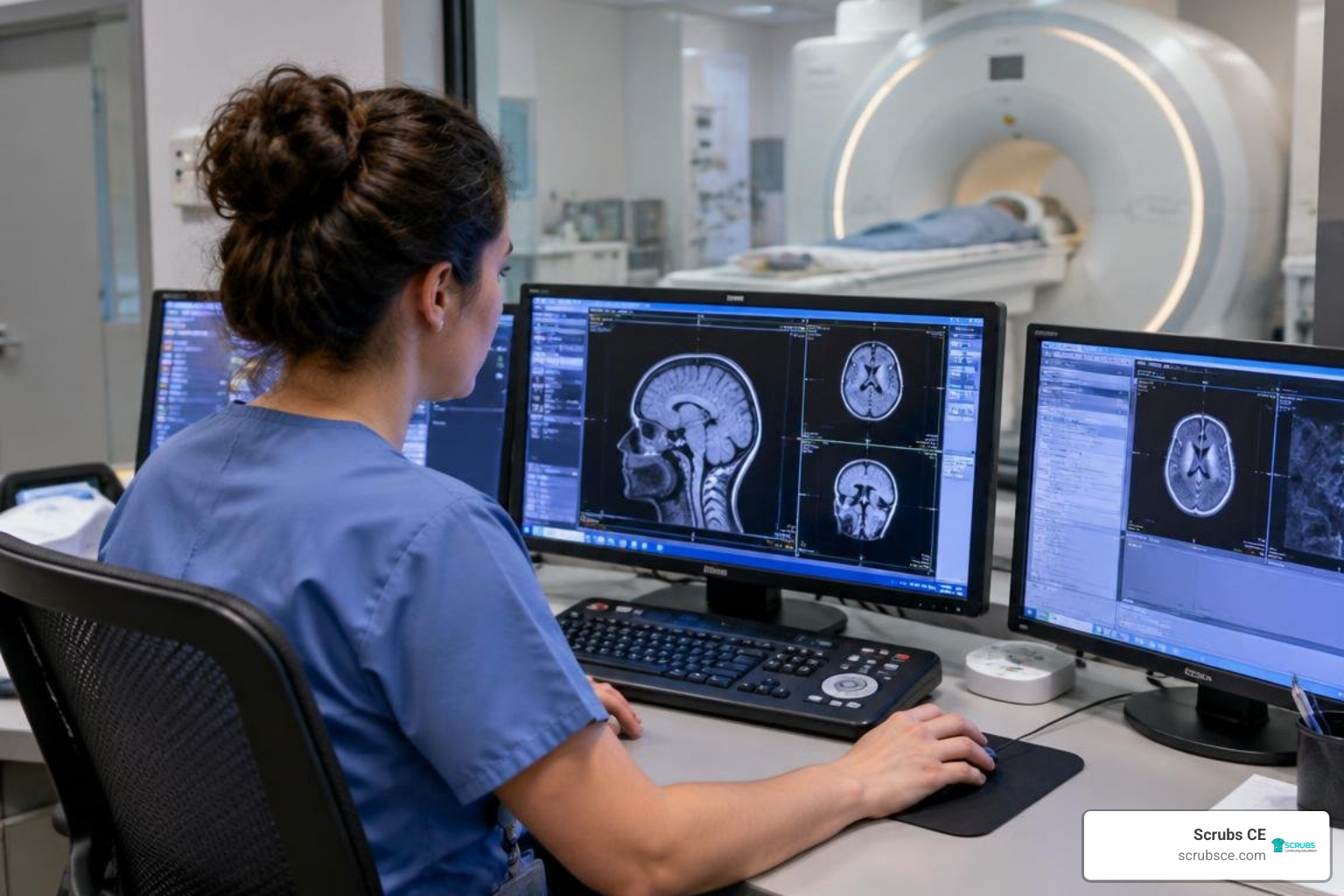
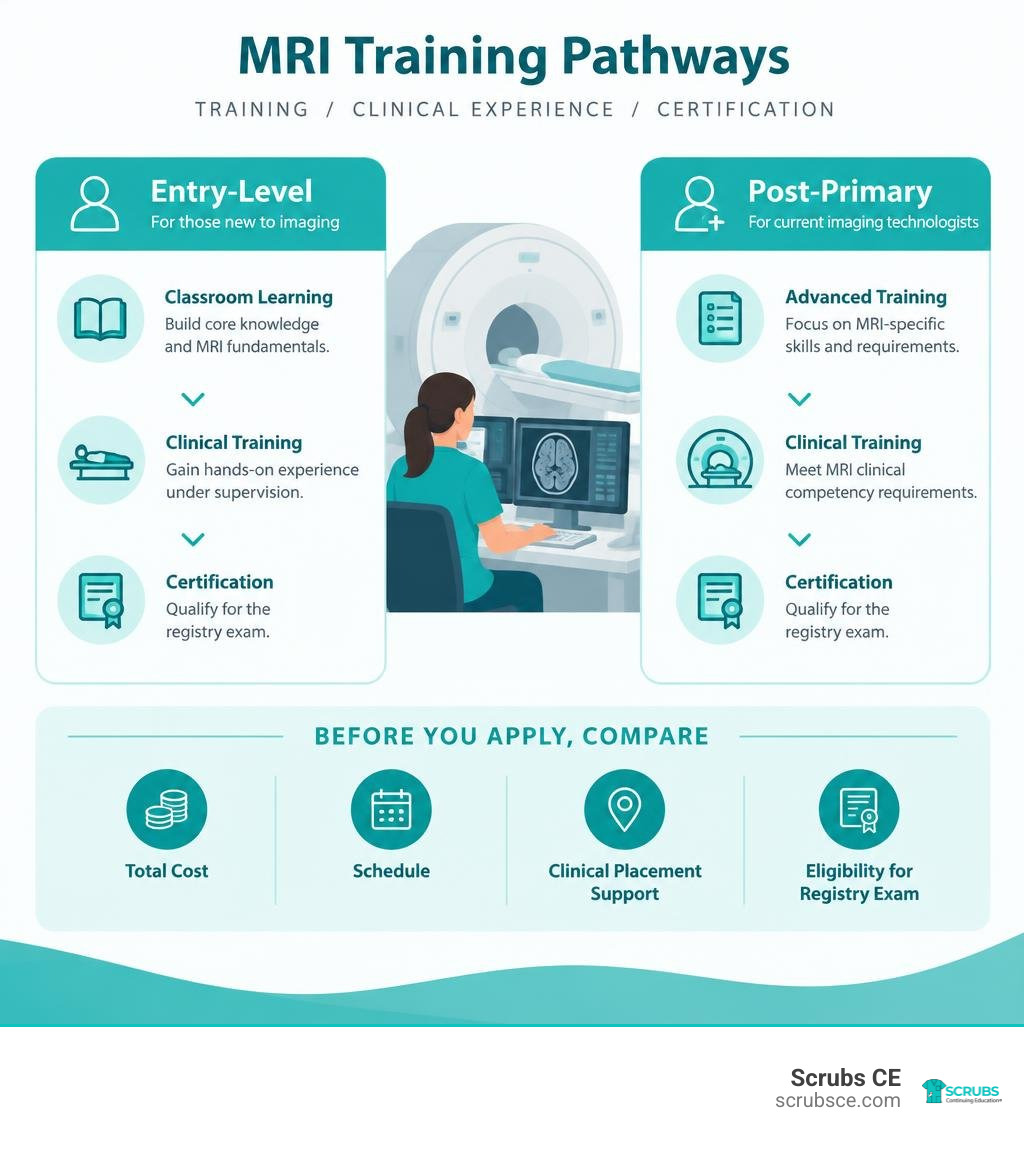
Start with the pathway you qualify for. The best MRI training program depends on whether you already hold an imaging credential:
- New to imaging? Look for a primary or entry-level program that includes classroom study and supervised clinical training.
- Already an imaging technologist? Look for a post-primary program that builds on your credential and prepares you for MRI clinical requirements.
Before you apply, compare total cost, schedule, clinical placement support, and eligibility for the registry exam. Online classes may save travel time, but hands-on clinical training is still essential.
I’m Zita Ewert, and I lead continuing education for imaging professionals at Scrubs CE. My work helping technologists understand credential requirements informs this mri training program guide.
Must-know mri training program terms:
Comparing Pathways: Finding the Right MRI Training Program
When evaluating how to enter magnetic resonance imaging, you will quickly discover that no two educational journeys look completely identical. The landscape spans community colleges, academic health centers, online didactic platforms, and private technical institutes. Choosing the right path requires aligning your educational background with programmatic entry standards, your budget, and your local job market expectations.
To help evaluate your options, explore how top hospital and college MRI training programs compared structure their didactic and clinical requirements.
| Pathway Category | Target Student | Average Duration | Estimated Tuition | Clinical Structure | Primary Credential Eligibility |
|---|---|---|---|---|---|
| Primary Degree (AAS / BS) | High school graduates & career switchers | 18–24 months (5 terms / 80 weeks) | $11,500 – $35,000+ | 800+ externship hours organized by school | ARRT® (MR) / ARMRIT |
| Post-Primary Certificate | Registered Radiographers, RT(N), RT(T), RDMS | 6–12 months | $2,500 – $6,000 | Arranged clinical rotation or hospital site | ARRT® (MR) Post-Primary |
| Hospital Residency / Fellowship | ARRT® certified radiographers | 6 months (Full-Time) | Often paid / employer-funded | Immersive rotations across oncology, trauma, pediatrics | ARRT® (MR) Post-Primary |
| Hybrid Certificate | Varied (some open-entry, some post-primary) | 9–18 months | $5,000 – $13,400 | Virtual simulations plus structured local clinicals | ARRT® / ARMRIT (varies by school verification) |
Institutions like the University of Utah MRI Program offer both primary and post-primary routes, admitting competitive cohorts (averaging a 3.6 GPA) into advanced clinical spaces equipped with 1.5-Tesla and 3.0-Tesla scanners. Meanwhile, academic medical systems provide structured, paid residencies for credentialed imaging professionals seeking advanced certifications.
Primary vs. Post-Primary MRI Training Program Options
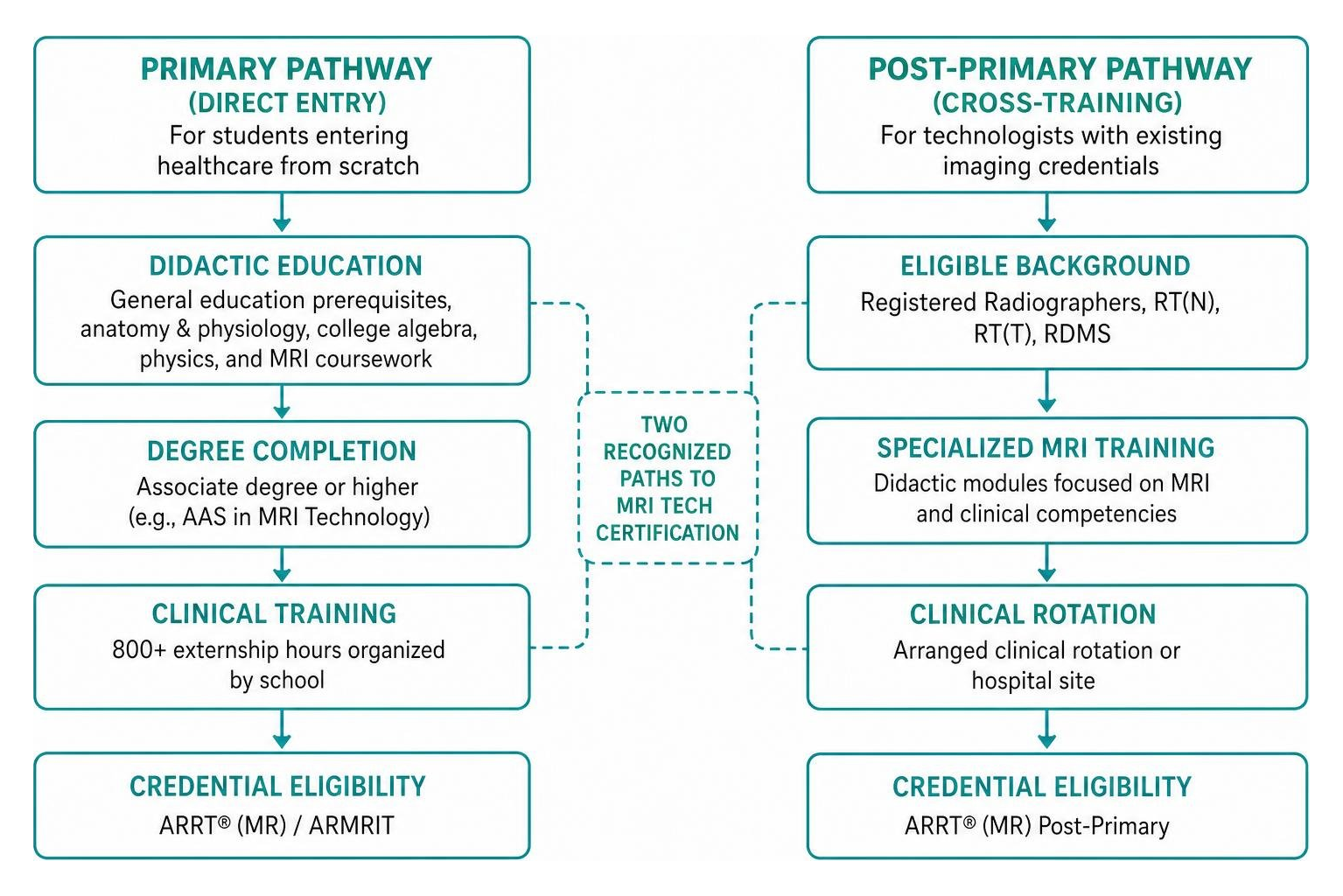
The core fork in the road comes down to whether you are pursuing a primary or post-primary route recognized by the AMERICAN REGISTRY OF RADIOLOGIC TECHNOLOGISTS®:
- Primary Pathway (Direct Entry): Designed for students entering healthcare from scratch. The AMERICAN REGISTRY OF RADIOLOGIC TECHNOLOGISTS® has recognized MRI as an independent primary discipline since 2006. Candidates complete general education prerequisites, anatomy and physiology, college algebra, physics, and specialized magnetic resonance coursework while earning an associate degree or higher, such as an Associate of Applied Science in MRI Technology.
- Post-Primary Pathway (Cross-Training): Designed for technologists who already hold certification in Radiography, Radiation Therapy, Sonography, or Nuclear Medicine. Understanding these specific clinical pathway requirements helps cross-training imaging professionals map their didactic study alongside real-world scanner hours. Technologists can complete specialized didactic modules and clinical competencies without repeating foundational healthcare coursework through programs offering post-primary ARRT® MRI cross-training.
Program Formats: Online, Hybrid, and Hospital-Based Routes
Training formats have expanded significantly to support working adults and regional learners:
- Online and Hybrid Programs: Didactic education covering physics, pulse sequences, and patient care is delivered asynchronously through web modules and virtual scanning simulators. Students then complete in-person clinical externships at approved local diagnostic centers or hospital Radiology suites.
- Hospital-Based Training Residencies: Immersive, full-time programs hosted directly inside large health systems. These programs often feature paid training arrangements tied to employment commitments, giving students immediate exposure to specialized workflows like functional neuroimaging and trauma cases.
Calculating your timeline and availability is key. Reviewing how long it takes to become an MRI tech will help you balance didactic loads, shift work, and hands-on clinical rotations.
Didactic Education and Clinical Competency Standards

Operating an MRI scanner requires deep theoretical comprehension alongside physical dexterity. You must understand how atomic nuclei react inside a powerful magnetic field while calming claustrophobic patients and managing contrast timing. Building this foundation starts with understanding MRI basics and principles.
Evaluating Curriculum and Clinical Externships in an MRI Training Program
High-performing programs adhere to established ASRT® curriculum guidelines. These standards ensure your didactic coursework covers patient assessment, pharmacology, cross-sectional anatomy, advanced imaging procedures, and instrumentation.
Clinical rotations form the backbone of your education. Direct-entry programs often mandate upwards of 800 to 810 hours of supervised clinical externship, ensuring you master:
- Safe patient screening protocols for metallic foreign bodies and implantable devices.
- Intravenous (IV) access techniques and automatic power-injector operation for gadolinium-based contrast agents.
- Multi-planar coil positioning for neuro, musculoskeletal, abdominal, pelvic, and cardiac exams.
- Quality control procedures and image artifact recognition.
If you are wondering is MRI tech school hard, the primary hurdle is managing the steep learning curve of pulse physics while performing accurate clinical scanning under tight hospital schedules.
MRI Safety, Physics, and Pulse Sequencing
Safety is the absolute priority inside any magnetic resonance suite. Because the primary static magnetic field is active 24/7/365—even when the system is not actively scanning—technologists serve as the ultimate gatekeepers of Zone III and Zone IV environments.
Programs provide rigorous training on:
- Static Magnetic Fields & Projectile Effects: Preventing ferromagnetic items from entering the scanner bore.
- Radiofrequency (RF) Power Deposition: Monitoring Specific Absorption Rate (SAR) limits to prevent patient thermal injuries.
- Time-Varying Magnetic Field Gradients: Managing acoustic noise levels and peripheral nerve stimulation.
- Cryogen Safety and Emergency Quenches: Recognizing when and how liquid helium venting occurs.
Mastering the essentials of MRI safety protects patients, clinical teams, and equipment.
Alongside safety, students dive into pulse sequence generation, manipulating repetition time, echo time, and flip angles to produce T1-weighted, T2-weighted, and proton density contrast. Gaining a deeper perspective through a deep dive into MRI image reconstruction clarifies how spatial encoding gradients fill k-space to render cross-sectional images.
Certification Regimes, Exam Prep, and Licensure

Earning a nationally recognized credential is the definitive milestone that bridges educational training with clinical employment. Before committing to a school, you must ensure its curriculum qualifies you to sit for national registry examinations upon graduation. For a complete look at credential pathways, explore our guide to becoming an MRI technologist.
ARRT® vs. ARMRIT Certification Differences
Two primary organizations credential magnetic resonance technologists in the United States:
- ARRT® (AMERICAN REGISTRY OF RADIOLOGIC TECHNOLOGISTS®): The standard credential recognized by hospital networks, academic medical centers, and outpatient facilities nationwide. Technologists earning certification through either the primary or post-primary route hold the prestigious R.T.(MR)(ARRT®) credential.
- ARMRIT (American Registry of Magnetic Resonance Imaging Technologists): An established registry certifying technologists who specialize exclusively in magnetic resonance imaging through dedicated ARMRIT-accredited training curricula.
While both registries establish high standards of clinical excellence, ARRT® registration remains the most universally required credential for hospital privileges and insurance billing reimbursement protocols across diverse healthcare systems.
Registry Preparation and Exam Pass Rates
The ARRT® MRI examination assesses four major domains:
- Patient Care (~8%): Screening, infection control, emergency response, and vital sign assessment.
- Safety (~10%): Static field safety, RF biological effects, contrast safety, and Zone administration.
- Image Production (~53%): Physical principles, pulse sequences, image parameters, quality control, data acquisition, and artifacts.
- Procedures (~29%): Protocol selection, cross-sectional anatomy, patient positioning, and pathology identification.
Graduates of top-tier hospital and college programs achieve high first-time pass rates, frequently ranging between 80% and 99%. Technologists prepare for exam day by preparing for the MRI tech registry and using targeted review tools like passing the ARRT® MRI registry review to reinforce complex spatial encoding and physics formulas.
Salary Expectations, Job Outlook, and Career Growth
Diagnostic imaging continues to experience robust growth as healthcare systems leverage non-ionizing modalities to diagnose neurological disorders, soft tissue injuries, and cardiovascular conditions. Technologists benefit from technical innovations such as artificial intelligence reconstruction and wider patient bores, which you can read about in modern imaging advances.
Regional vs. National Salary Benchmarks in 2026
The magnetic resonance modality ranks among the highest-compensated non-physician imaging careers. According to the Bureau of Labor Statistics (BLS), the national median annual wage for MRI technologists reached $95,480.
Compensation varies significantly based on geographic region, cost of living, and institutional setting:
- National Median Salary: $95,480
- New York Statewide Median: $113,270 (with over 3,240 employed technologists)
- Job Growth Projection: 5% from 2025 to 2035, faster than the average for all occupations.
For a comprehensive analysis of hiring trends, review the MRI tech job outlook and growth.
Work Settings and Professional Specialization
MRI technologists work across diverse clinical environments, each offering unique schedules and clinical demands:
- Inpatient Acute Care Hospitals: Inpatient Radiology suites operate around the clock, managing stroke protocols, trauma clearances, and post-surgical evaluations. Shifts often include evening, overnight, and on-call rotations with shift differentials.
- Outpatient Imaging Centers: Focus on scheduled diagnostic appointments (neurological, spinal, and orthopedic studies) with predictable weekday daytime hours.
- Subspecialty Practices: Pediatric Radiology facilities, orthopedic specialty groups, oncology institutes, and interventional MRI suites performing image-guided procedures for tremor control and tumor ablation.
To see what a standard shift looks like in each environment, check out the daily responsibilities of an MRI technologist.
Frequently Asked Questions About Becoming an MRI Technologist
How long does it take to complete an MRI training program?
Program length depends entirely on your entry pathway:
- Post-primary cross-training programs for registered radiographers generally take 6 to 12 months.
- Primary direct-entry degree programs (AAS or BS) require 18 to 24 months (spanning 80 instructional weeks) to complete general education, imaging physics, and required clinical externships.
Can you enroll without prior Radiology or X-ray credentials?
Yes. Students without prior medical imaging credentials can enroll in direct-entry primary pathway programs. These programs incorporate all required general education, clinical science, and cross-sectional anatomy courses required to sit for the ARRT® primary examination or ARMRIT certification upon graduation.
What is the national median salary for MRI technologists in 2026?
The national median salary for MRI technologists is $95,480 according to recent BLS data, with top-paying metropolitan areas and states like New York reporting medians exceeding $113,270. Earnings can increase further through off-shift differentials, travel assignments, and advanced multi-modality certifications.
Conclusion
Choosing the right educational program sets the foundation for a rewarding, high-paying career in diagnostic imaging. Whether you enter through an entry-level associate degree or cross-train from another imaging modality, selecting an ARRT®-verified program ensures you build the technical competence, safety expertise, and clinical confidence required to excel at the control console.
Once you complete your initial certification and enter the scanning suite, maintaining your credentials and staying current with rapid technical advancements is essential. Expand your clinical expertise, complete your biennial requirements, and stay up to date with convenient continuing education for MRI technologists.