Explore Top Rated Medical Imaging Degrees and Modality Specialties
Which Medical Imaging Degree Fits Your Career Goals?

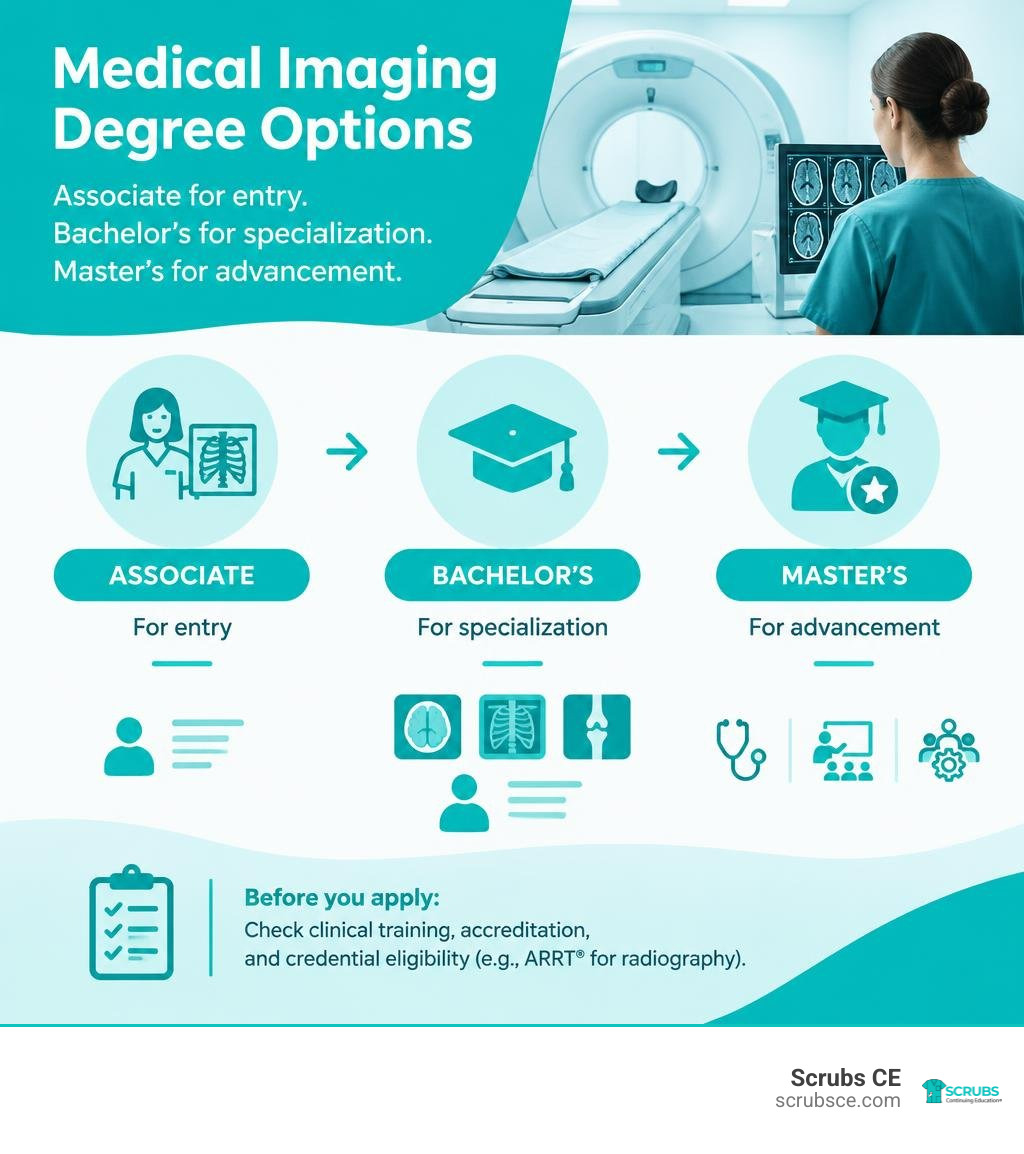
Start with the job you want, then choose the degree that prepares you for it. An associate degree can lead to entry-level radiography work. A bachelor’s degree may offer specialty training or a path into leadership. A master’s degree is usually for advanced clinical, teaching, or management goals. If you already hold an imaging credential, an online bachelor’s completion program may let you study while you work.
Before applying, check the program’s clinical training, accreditation, and eligibility for the credential you need. For radiography, that may include requirements from the AMERICAN REGISTRY OF RADIOLOGIC TECHNOLOGISTS® (ARRT®).
I’m Zita Ewert, and I’ve spent years helping imaging professionals stay current through continuing education at Scrubs CE. In this degree medical imaging guide, I’ll help you compare study paths with your next career step in mind.
Degree medical imaging vocab explained:
- associate in radiologic technology
- diagnostic radiography course
- education needed to be a radiologist
Choosing the Right Degree Medical Imaging Program by Educational Level
Selecting the right program level shapes your clinical capabilities, credentialing options, and lifetime earning potential. Healthcare facilities rely on technologists with different academic preparations depending on clinical complexity and leadership needs.
| Degree Level | Typical Duration | Focus Areas | Career Eligibility |
|---|---|---|---|
| Associate Degree (AAS / AS) | 2 Years (60–72 credits) | Foundational sciences, radiation safety, general radiography rotations | Staff Radiologic Technologist, Clinic X-Ray Tech |
| Bachelor of Science (BS / BSRT) | 4 Years (120–128 credits) | Multi-modality imaging (CT/MRI), sectional anatomy, research, administration | Advanced Modality Tech, Clinical Supervisor, Lead Tech |
| Master of Science (MS / MMI) | 2 Years Post-Grad (30–91 credits) | Advanced clinical decision-making, imaging informatics, education, leadership | Radiologist Assistant, Department Administrator, Educator |
| Online Completion (BS Completion) | 1–2 Years (30–45 residency credits) | Healthcare management, ethics, healthcare policy, advanced modalities | Department Manager, PACS Administrator, Applications Specialist |
Associate Degree in Radiologic Technology (AAS)
An Associate of Applied Science (AAS) in Radiologic Technology is the most common gateway into diagnostic medical imaging. Spanning roughly 24 consecutive months, these intense programs combine classroom lectures in radiation physics and radiobiology with hands-on hospital rotations.
Graduates emerge eligible for primary national certification examinations. Notable public community and technical colleges, such as the NYC College of Technology Radiologic Technology AAS program, report exceptional outcomes—including a 91.6% five-year average pass rate on the ARRT® certification exam and a 97.5% job placement rate.
Selecting a Bachelor of Science Degree Medical Imaging Track
A four-year Bachelor of Science (BS) in Medical Imaging or Radiologic Sciences delivers a deeper dive into multi-modality cross-training, sectional pathology, and healthcare administration.
Programs like the BS in Medical Imaging at Missouri Southern State University allow students to specialize in advanced modalities like Computed Tomography (CT), Magnetic Resonance Imaging (MRI), or Diagnostic Medical Sonography during their undergraduate years. A bachelor’s curriculum develops critical thinkers who can evaluate complex trauma cases and implement hospital-wide radiation safety initiatives.
Master’s and Postgraduate Programs in Advanced Imaging
Postgraduate degrees serve clinicians aiming for advanced practice, research, or executive administration. Specialized programs, such as the Master of Medical Imaging at PolyU, provide fast-track, rigorous training encompassing over 1,300 clinical practicum hours and cross-sectional diagnostic decision-making.
At this level, you can also train to become a Registered Radiologist Assistant (RRA), performing advanced fluoroscopic procedures and initial image evaluations under radiologist supervision.
Online and Degree-Completion Pathways for Working Technologists
If you already hold an active primary credential from the AMERICAN REGISTRY OF RADIOLOGIC TECHNOLOGISTS® (ARRT®), you do not need to restart your education from scratch. Online degree-completion pathways grant block transfer credits—often up to 45 to 60 credits for your associate degree coursework and clinical certification.
Working professionals complete remaining coursework in biomedical ethics, healthcare finance, and quality assurance asynchronously, qualifying for promotions without leaving clinical practice.
Top Medical Imaging Modality Specialties and Career Paths

Modern diagnostic Radiology relies on specialized equipment to evaluate various anatomical and physiological conditions. Selecting your clinical track aligns your daily workflow with specific technologies and patient populations.
Diagnostic Radiography and Fluoroscopy
Diagnostic radiography is the foundation of medical imaging. Radiographers use controlled ionizing radiation to capture digital images of the skeletal system, chest, and abdomen. They also assist physicians during dynamic fluoroscopy studies to evaluate gastrointestinal motility and joint function. Reviewing the requirements to be a radiologic technologist and understanding entry-level X-ray tech certification requirements will prepare you for this essential diagnostic role.
Magnetic Resonance Imaging (MRI) and Computed Tomography (CT)
CT and MRI specialists generate detailed cross-sectional slices of internal structures. CT utilizes rotating X-ray tubes and digital detectors to assess acute trauma, stroke, and oncological staging rapidly.
MRI uses strong magnetic fields and radiofrequency pulses to create detailed soft-tissue images of the brain, spinal cord, and musculoskeletal system without ionizing radiation. Many clinicians compare top MRI technologist training programs or enroll in targeted CT and MRI certificate programs to gain secondary credentials.
Diagnostic Medical Sonography and Echocardiography
Diagnostic medical sonographers use high-frequency sound waves through handheld transducers to map soft tissues, vascular structures, and developing fetuses in real time. Because ultrasound involves zero ionizing radiation, it is an essential frontline tool for abdominal, obstetric, and vascular evaluations.
Echocardiographers focus exclusively on the heart, using specialized Doppler imaging to assess chamber dimensions, wall motion abnormalities, and valvular function.
Nuclear Medicine Technology and Molecular Imaging
Nuclear medicine evaluates organ physiology at the cellular level. Technologists prepare and administer small amounts of radiopharmaceuticals to patients before imaging them with gamma cameras or hybrid PET-CT scanners.
These scans detect early-stage bone metastases, cardiac perfusion defects, and neurological disorders. Enrolling in accredited nuclear medicine technologist courses equips students with specialized skills in radiopharmacy, radiation physics, and hot-lab quality control.
Women’s Health and Interventional Radiography
Specialized tracks in women’s health center around digital mammography, breast ultrasound, and 3D breast tomosynthesis for cancer detection. Reviewing the clinical steps to become a mammography technician clarifies how to enter this screening and diagnostic field.
Interventional radiographers work in sterile surgical suites alongside interventional radiologists, operating specialized fluoroscopy systems during cardiac catheterizations, angioplasties, and stent placements.
Curriculum Standards and Clinical Practicum Requirements
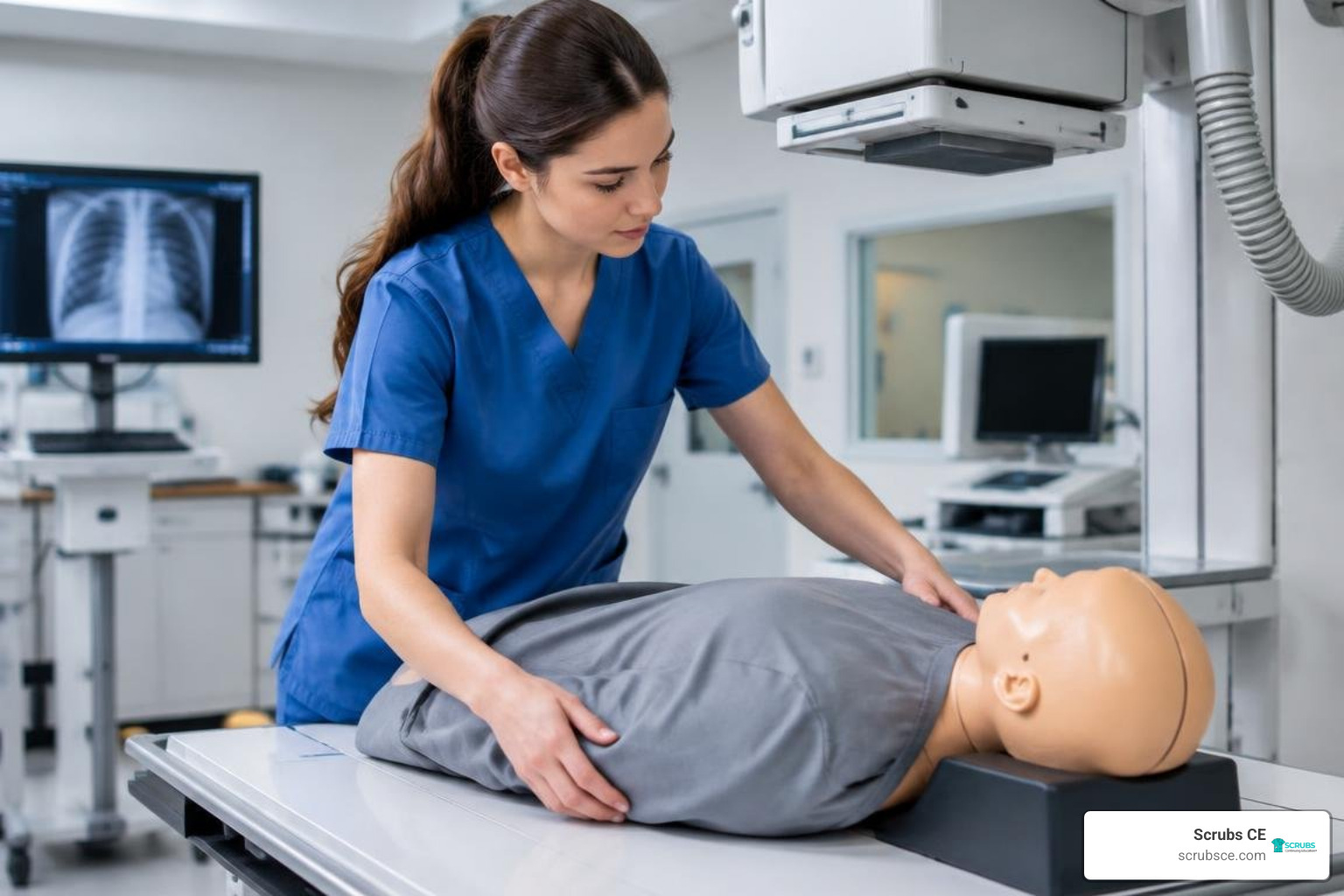
A comprehensive degree in medical imaging balances rigorous academic coursework with supervised hospital training. Programs prepare students to navigate emergency rooms, specialized operating suites, and outpatient clinics safely.
Core Didactic Coursework and Radiation Physics
Classroom instruction builds a strong foundation in diagnostic sciences before students work directly with patients. Standard curricula include:
- Radiation Physics & Equipment Operation: X-ray tube construction, circuit dynamics, ultrasound acoustic physics, and magnetic resonance field safety.
- Radiation Biology & Protection: Cellular radiation interactions, dose measurement, ALARA (As Low As Reasonably Achievable) principles, and patient shielding protocols.
- Sectional Anatomy & Pathology: Identifying anatomical structures and common disease states across axial, sagittal, and coronal planes.
- Patient Care & Medical Ethics: Pharmacology, vital signs monitoring, sterile technique, contrast media administration, and HIPAA privacy rules.
Clinical Placement Hours and Affiliated Hospital Rotations
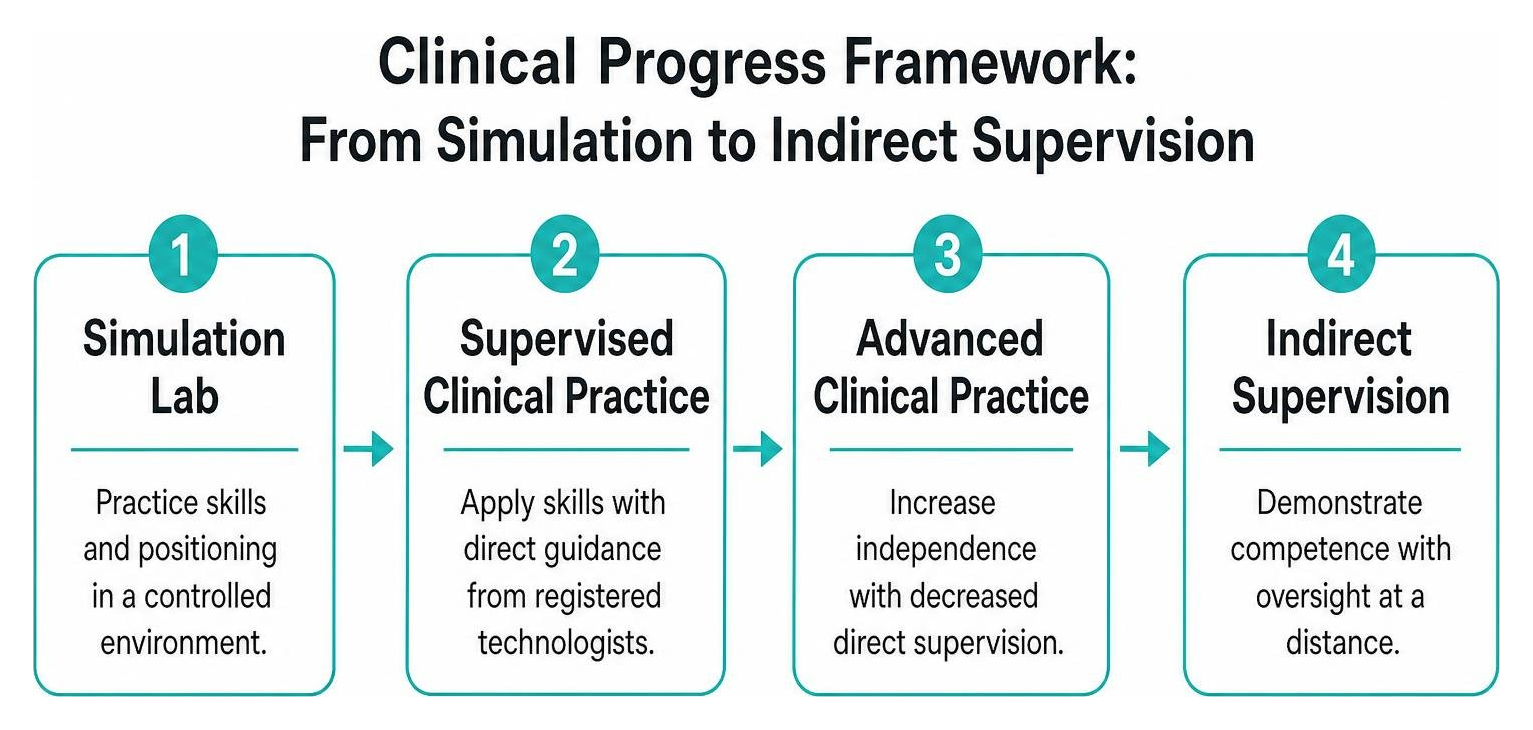
Didactic theory translates into practical expertise during clinical practicums. Students complete hundreds to thousands of contact hours at regional trauma centers, children’s hospitals, and diagnostic imaging centers. Globally recognized programs, including the Bachelor of Medical Imaging (Honours) – University of Auckland, pair structured classroom modules with extensive clinical placements where students document competencies under the direct supervision of registered technologists.
Admission Requirements for a Degree Medical Imaging Program
Admission to accredited imaging programs is competitive. Academic institutions limit class sizes to match available clinical placement slots. Standard admission prerequisites include:
- Foundational College Sciences: Completion of Human Anatomy & Physiology I & II (with labs), College Algebra, General Physics, and Written Communication with a minimum 2.5 to 3.0 GPA.
- Clinical Shadowing Experience: Documented observation hours inside a working hospital Radiology department.
- Technical Standards Compliance: Physical ability to lift patients, transport mobile imaging units, stand for prolonged periods, and maintain fine motor control.
- Health Clearances & Screenings: CPR/BLS certification, complete immunization panels, background checks, and drug screenings.
ARRT® Certification Pathways and Professional Accreditation
Professional credentials validate your technical competence and are required for state licensure and hospital employment across the United States.
ARRT® Primary and Postprimary Eligibility Pathways
The AMERICAN REGISTRY OF RADIOLOGIC TECHNOLOGISTS® (ARRT®) administers credentialing examinations for medical imaging professionals. Understanding baseline radiologic technologist certification requirements and the road to ARRT® certification helps you plan your academic trajectory.
- Primary Pathway: Designed for first-time candidates completing an accredited program in radiography, nuclear medicine, sonography, MRI, or radiation therapy.
- Postprimary Pathway: Allows registered technologists to earn secondary credentials (e.g., CT, MRI, Mammography, Vascular Interventional) through structured education and documented clinical competencies without completing another full degree.
Postprimary Credentialing and Dual-Modality Specialization
Earning multiple credentials expands your career opportunities. A radiographer who earns postprimary credentials in CT and MRI becomes a versatile asset for hospital departments. Documenting mandatory and elective clinical repetitions prepares you to pass the postprimary registry examination and handle emergency trauma imaging with confidence.
Program Accreditation Standards: JRCERT, JRCNMT, and CAAHEP
Always verify programmatic accreditation before applying to an institution:
- JRCERT (Joint Review Committee on Education in Radiologic Technology): The primary programmatic accreditor for radiography, CT, MRI, and radiation therapy programs.
- JRCNMT (Joint Review Committee on Educational Programs in Nuclear Medicine Technology): Evaluates nuclear medicine technology curricula.
- CAAHEP (Commission on Accreditation of Allied Health Education Programs): Accredits diagnostic medical sonography and cardiovascular technologist programs.
Salary Outlook, Career Growth, and Advancement
Medical imaging careers offer competitive salaries, clinical variety, and strong long-term job stability driven by an aging population and advancements in diagnostic technology.
| Modality Specialty | Median Annual Wage | Projected 10-Year Growth Rate |
|---|---|---|
| Radiologic Technologist (X-Ray / Fluoroscopy) | $65,140 – $71,202 | 6% |
| Diagnostic Medical Sonographer (General Ultrasound) | $84,470 | 14% |
| Nuclear Medicine Technologist (PET / SPECT) | $85,646 – $95,080 | 6% |
| Echocardiographer (Cardiac Sonography) | $124,680 | 14% |
| MRI Technologist | $80,090 – $84,000 | 6% |
Modality Salary Benchmarks and Industry Demand
According to the U.S. Bureau of Labor Statistics and national workforce surveys, imaging professionals earn salaries well above the national median for all occupations. Radiologic technologists earn a median wage of $65,140 to $71,202, while specialized modalities like nuclear medicine ($95,080) and echocardiography ($124,680) command higher compensation due to the specialized physics and technical training involved.
Career Progression: Department Management, PACS, and Clinical Education
Earning a bachelor’s or master’s degree unlocks career paths beyond direct patient scanning:
- Radiology Department Administrator: Directing clinical staffing, capital equipment procurement, and multi-million-dollar imaging budgets.
- PACS / Imaging Informatics Administrator: Managing Picture Archiving and Communication Systems (PACS), DICOM routing, and enterprise electronic health record integration.
- Commercial Applications Specialist: Training clinical teams on newly installed imaging suites for medical device manufacturers.
- Clinical Educator & Program Director: Teaching the next generation of technologists at colleges and academic medical centers.
Data from the American Society of Radiologic Technologists (ASRT®) shows that radiologic technologists with a bachelor’s degree earn an average of $5,000 more annually than those with an associate degree, largely due to eligibility for supervisory and administrative positions.
Frequently Asked Questions About Medical Imaging Degrees
How long does it take to earn a degree in medical imaging?
An associate degree (AAS) requires two years of full-time study (60–72 credits). A traditional bachelor’s degree (BS) takes four years (120–128 credits). If you already hold an associate degree and an ARRT® credential, an online BS completion program can be completed in 12 to 24 months of part-time study.
Is a bachelor’s degree in medical imaging worth the extra time?
Yes, if you plan to move into leadership, education, PACS administration, or advanced multi-modality roles. In addition to higher compensation over an associate degree, a bachelor’s degree provides broader foundational training in healthcare management, research, and quality assurance.
What is the difference between radiography, sonography, and nuclear medicine?
Radiography uses diagnostic ionizing X-rays to assess anatomical structures like bones and lungs. Diagnostic medical sonography uses high-frequency sound waves with zero radiation to map soft-tissue structures, blood flow, and fetal development. Nuclear medicine uses radiopharmaceuticals to record metabolic and physiological cellular processes using gamma cameras and PET scanners.
Conclusion
A degree in medical imaging provides a rewarding career combining patient care with sophisticated healthcare technology. Whether you start with an associate degree for rapid clinical entry or pursue a bachelor’s or master’s degree for leadership, selecting an accredited program ensures you build strong clinical competence and meet registry standards.
After earning your credentials and entering clinical practice, maintaining your professional edge is an ongoing commitment. At Scrubs CE, we provide self-paced, high-quality Radiology continuing education courses with instant certificates to help you fulfill your ARRT® and state license renewal requirements seamlessly throughout your career.